Chennault, who had a long-standing strained relationship with the top brass of the U.S. military, was dismissed and returned to the United States a few days before Japan's surrender. His absence from the surrender ceremony in the China theater became his biggest regret during his eight years in China. However, he returned to China at the end of 1945. In addition to planning to propose to his Chinese girlfriend Anna Chen, who was thirty years younger than him, he also purchased decommissioned military transport aircraft after the war to establish a civil aviation fleet to operate domestic civil aviation transportation business in China.
Due to his close relationship with Chiang Kai-shek and his wife, the Civil Air Transport (CAT) Fleet, which opened in October 1946, stood alongside China Airlines and Central Airlines. Although it was an American company jointly established by General Chennault and businessman Whiting Willauer, it was nominally under the Executive Yuan's Relief and Rehabilitation Administration. As a result, the Civil Air Transport Fleet was even able to receive more government business than the other two state-owned airlines. This tactic of currying favor with Chiang Kai-shek and his wife to obtain special privileges made him successful in China, but it also offended many people, from high-ranking U.S. military officials during the war to the two China and Central Airlines after the war.
At the time, many wartime surplus military supplies were being sold off on the market at extremely low prices, almost scrap, including the C-47 transport planes that I used extensively during the Hump. I immediately bought one and named it "China Pearl II" in honor of Annie. I even imitated Annie's original design, painting the plane yellow and adding the Ch'ing Dynasty emblem of a blue dragon vying for a red pearl to the nose.
I leased the planes to the Civil Air Transport (CAT) Fleet for operation, and sometimes I also worked as a pilot myself. At that time, civil aviation regulations weren't as strict, so this was possible. This wasn't a problem for the intelligence group either, because there were precedents even before the war. When I was recruited by Mr. M into the naval intelligence group stationed in China in 1928, my superiors agreed to retain my original "Shanghai Dragon Airlines" and even invest in it as a cover for my work. Now, as long as there were no new regulations in London, I could serve as a special envoy of the British intelligence agency in China while also being a shareholder in the CAT and occasionally dabbling as a pilot.
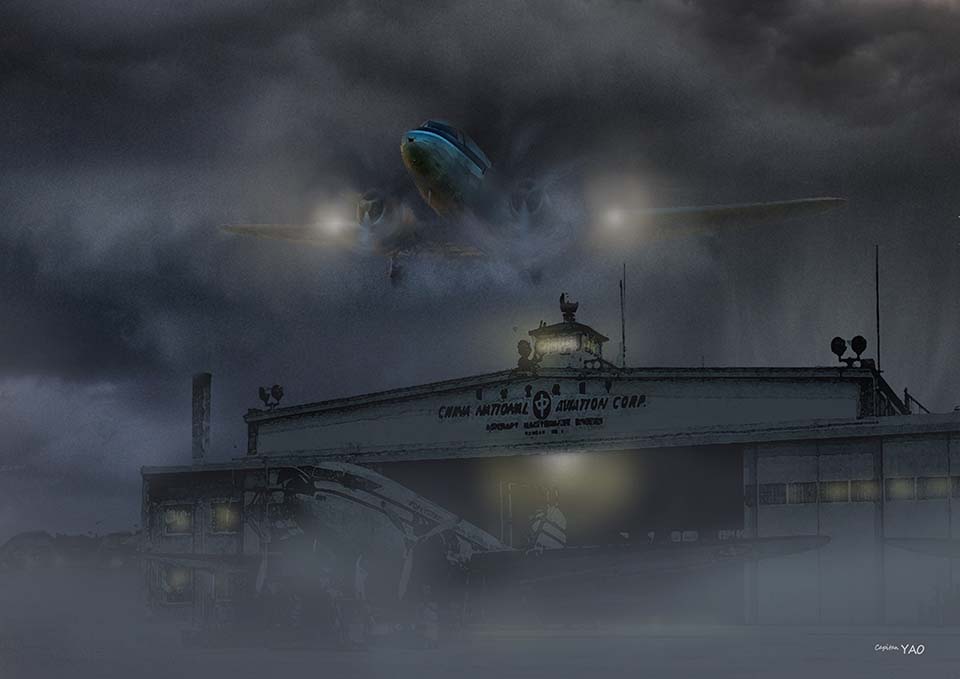
(Figure 6-6-1) The "Black Christmas Night" incident in 1947, in which three plane crashes occurred at the same location at Shanghai Longhua Airport in one day.
However, the management of China's civil aviation industry was not very good at that time, and flight safety accidents occurred frequently. On December 24, 1946, a China Aviation Corporation (CNAC) C-47 CA48 flight of the Central Airlines from Wuhan to Shanghai flew over the runway and crashed into a house while landing at Kiangwan Airport, killing eleven people on board and one person on the ground.
On the same day, Air China C-47 Flight 140 crashed while landing at Longhua Airport, killing all on board. Also on the same day, another Air China C-47 Flight 115 lost its way while landing at Longhua Airport and crashed nearby; of the 44 people on board, only three survived, plus nine lives lost in destroyed homes on the ground. Another Air China Flight 135, which was also originally scheduled to land at Longhua Airport, diverted to Kiangwan Airport due to heavy fog, miraculously avoiding a fourth accident.
Three air crashes occurred in Shanghai in one day. All three were C-47 aircraft that took off from Chungking, flew via Wuhan, and were bound for Shanghai Longhua Airport. They crashed on the airport runway or near residential areas due to navigational difficulties caused by dense fog, instrument failure, and insufficient fuel. The three accidents resulted in the deaths of eight pilots and sixty-two passengers, and the incident became known as the "Black Christmas Night" incident.
Because it was Christmas Day, the American pilots were eager to return to Shanghai for the holiday. As a result, an incident occurred at Wuhan Airport where pilots ignored air traffic control's instructions and took off without authorization. Several of these pilots, such as Captain James M. Greenwood of CNAC Flight 140 and Captain Rolf Preus of Flight 115, were friends of mine who flew the Hump route during the War of Resistance against Japan. In any case, three plane crashes occurring at the same location in one day is an unprecedented record in the history of civil aviation.
Two weeks later, on January 5, 1947, another CNAC DC-4 Flight 121, en route from Shanghai Longhua Airport to Tsingtao, crashed into Laoshan Mountain, killing all 44 people on board. The apparent causes of these crashes were heavy fog at the airport and pilot error, but the primary reason was China's lack of a professional civil aviation management agency. On January 20, 1947, the Kuomintang government finally established the Civil Aviation Administration, but bureaucratic corruption persisted, and flight accidents continued to occur frequently over China. Within a week of the Civil Aviation Administration's establishment, two more planes crashed in Chungking!
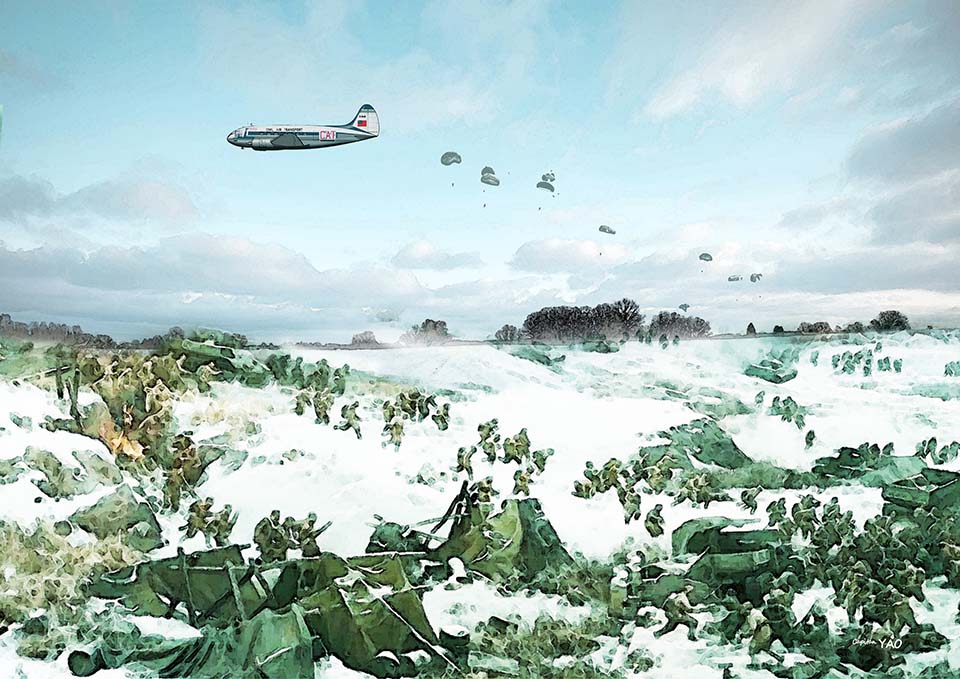
(Figure 6-6-2) Many besieged Nationalist Army positions could only rely on airlift for supplies.
The CAT Fleet was established during the Chinese Civil War. As the Kuomintang army retreated, many areas became isolated islands surrounded by the Communist army. All supplies, external transportation, and the transport of important local materials depended on the aircraft of the CAT Fleet. Therefore, its market demand was very large. This made Chennault always feel that he did not have enough aircraft, so I had the opportunity to buy a C-47 to operate.
Chennault's monopoly on the Kuomintang's wartime transportation market was incredibly lucrative, but it also carried significant risks. One risk was that his planes might be shot down by Communist artillery, and another was the risk of not receiving payment. As the Kuomintang's financial situation deteriorated, it frequently defaulted on freight charges. The CAT fleet couldn't afford to refuel and had to put the bills on hold. Eventually, all the oil companies refused to refuel their planes anymore.
Furthermore, with the advance of the Communist army, the CAT Fleet was able to operate fewer and fewer routes, and its income became increasingly worse. By the time it completely withdrew from the mainland market in 1950, it was already operating at a loss. This was the main reason why Chennault later had to sell the entire CAT Fleet to the CIA.

Interestingly, Kim Shin spoke Mandarin with a Sichuan accent, so we communicated in Chinese. He explained his purpose: his father felt it was inappropriate for a foreigner to stay in China to fight in the civil war, and since Korea was about to become an independent nation, he hoped Kim Shin would return to his homeland as soon as possible to help build the air force. However, since Kim Shin was still a member of the Republic of China Air Force combat unit, he could not leave without permission, so he asked me to speak to higher authorities. This was not a big deal. I explained Kim Shin's situation to Soong Mei-ling, and she instructed the air force leadership. Kim Shin soon retired from the Chinese Air Force and returned to Korea to devote himself to the construction of the new air force, becoming the founder of the South Korean Air Force. He later rose to the position of Chief of the Air Force and in 1962 became the South Korean ambassador to Taiwan. Returning to the post-war civil aviation industry, from 1946 to 1948 I flew between Shanghai and Peiping many times and was very familiar with this route. By the end of 1948, Beiping had been surrounded by the Communist army, and the Kuomintang general Fu Zuoyi, who was defending the city, was likely unstable. Chiang Kai-shek ordered the rescue of scholars from several famous universities remaining in Peiping. On December 15th, a plane took off from Nanyuan Airport carrying Hu Shi, the president of Peking University, and a group of scholars. During the war, Hu Shih served as the ambassador to the United States. He was also Chiang Kai-shek's choice to run for the first presidential election in his place, but Hu declined. After 1949, Hu Shih went into exile in the United States and did not return to Taiwan until 1958 to serve as the president of the Academia Sinica.
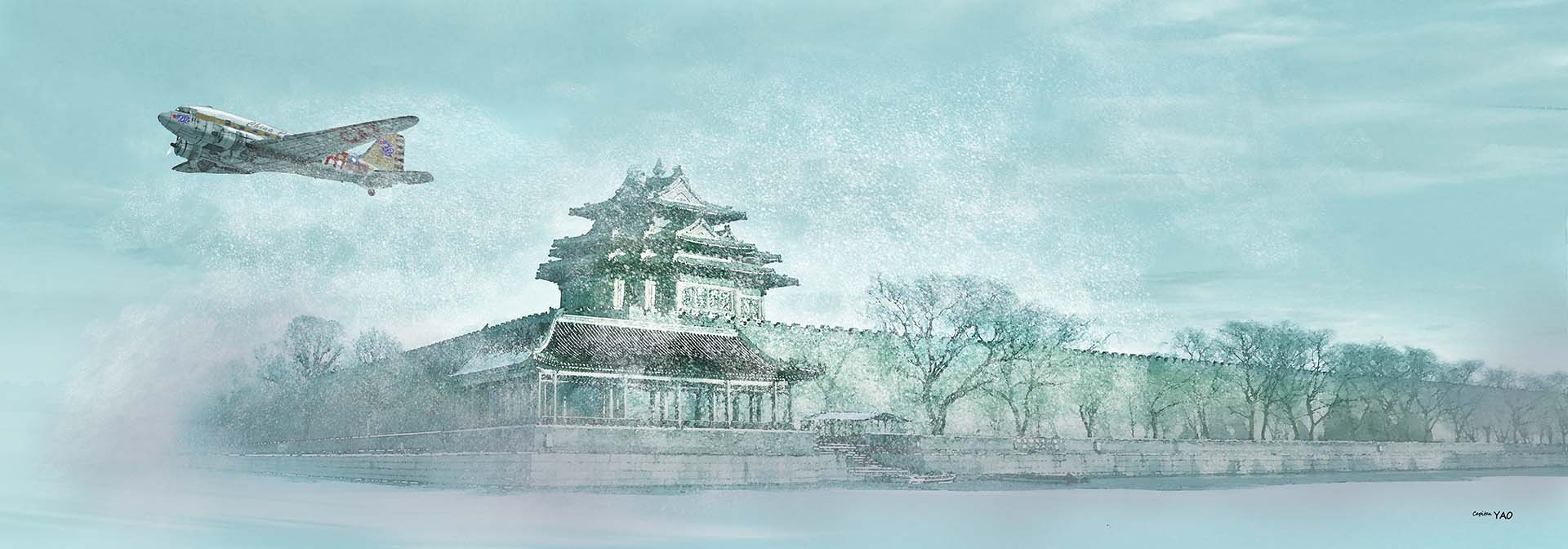
(Figure 6-6-3) The "China Pearl II" took off from the newly built airport in Peiping City.
After takeoff, I deliberately flew around Peiping. It was snowing heavily that day, turning the entire city into a silver world. From the air, the Forbidden City's layers of yellow rooftops were covered in snow, and many people wept with tears in their eyes. This farewell would take me twenty years to return, and most of them would never see the splendor of the old capital again in their lifetime. That afternoon, the plane landed smoothly at Nanking Ming Palace Airport. I overheard President Mei telling reporters that the runway at the new airport in Peiping was too soft, limiting the load to 3,000 pounds, so they couldn't bring more professors out. I was quite surprised to hear this. We could have carried more than double that number of people, but there were clearly only a few people waiting at the Peiping airport. How could the runway be too soft? I felt that many professors and scholars were unwilling to leave Peiping, and President Mei felt it would be difficult to explain to Chiang Kai-shek, so he used this excuse. This was the last plane to take off from Peiping. In January of the following year, Fu Zuoyi surrendered completely to the People's Liberation Army. The once-famous city changed hands without bloodshed once again, and China was once again at the point of changing dynasties.
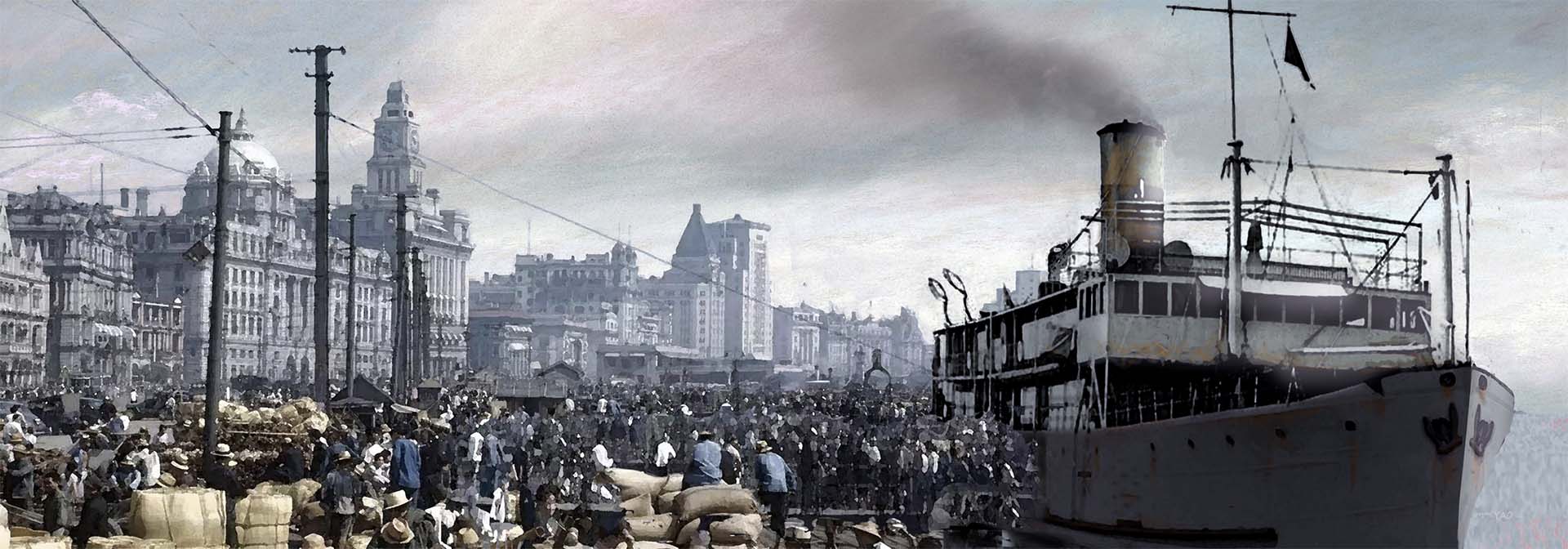
(Figure 6-6-4) Shanghai docks were crowded with refugees.
The Bund was still brightly lit on Christmas Day in 1948, but the joyful memories of the pre-war period were fading further and further away. At that time, the Kuomintang and the Communist Party were mobilizing more than 1.4 million troops for a decisive battle near Hsuchow. The Kuomintang called it the Hsuchow-Bangbu Campaign, while the Communists called it the Huaihai Campaign. The battle lasted from early November 1948 to January 16, 1949. The Kuomintang army, which had the advantage in both equipment and manpower, suffered a crushing defeat. Five main army corps were annihilated, with 560,000 casualties. Two army corps commanders committed suicide, and Deputy Commander-in-Chief Tu Yuming was captured. The Communist army won the battle at the cost of 130,000 casualties and seized control of the entire Central China region. They were about to cross the Yangtze River and threaten the safety of Nanking, the Kuomintang capital. I have been observing this largest battle in the Chinese Civil War. Many people found the outcome unexpected, but I have a different view. Chiang Kai-shek pinned down 800,000 troops equipped with American aid to Hsuchow, preventing mechanized forces from utilizing their mobility advantage. Even though it was an inside line operation, he did not take the initiative. Chiang Kai-shek even bypassed Tu Yuming and personally gave orders to the front line. This was exactly the same situation in World War II when Hitler ordered the German Sixth Army to hold Stalingrad to the death and not allow any breakout. In the end, the five army groups were encircled and annihilated by the Communist army. In my opinion, this is not surprising at all. Of course, the success of the Communist army's espionage campaign was also one of the reasons for the victory. For example, we later learned that Lieutenant General Liu Fei, the deputy chief of staff in charge of operations, and Lieutenant General Guo Rugui, the director of the Third Bureau of the Ministry of National Defense, were both Communist spies. This was truly astonishing, because the same operational orders from the Nanking Ministry of National Defense might have already been on Mao Tsetung's desk before they even reached the frontline commanders. This reminds me of Richard Sorge, who was able to provide intelligence of the same quality as Stalin's back then. 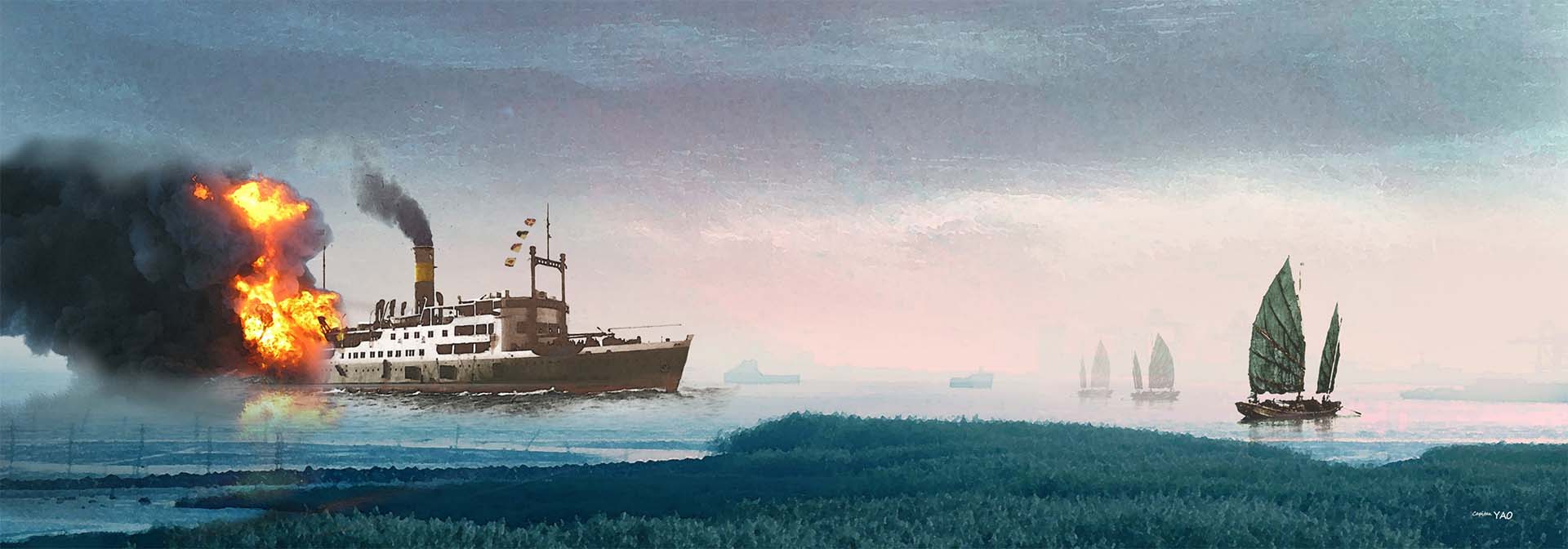
Chiang Kai-shek lost all his capital in this high-stakes gamble and was forced to announce his resignation on the 21st, with Vice President Li Zongren acting as acting president. The Kuomintang's rule on mainland China was already on its last legs. With the Kuomintang's military setbacks, the people of Shanghai were in turmoil, and those with connections fled by ship to Hong Kong or Taiwan. In chaotic times, human life is especially cheap. On the afternoon of December 3rd, the China Merchants Steam Navigation Company's "SS Kiangya" , en route from Shanghai's Shiliupu Wharf to Ningbo, suddenly exploded at Bailonggang on the Yangtze River estuary. About 900 people were rescued by nearby ships, but over 3,000 drowned. This is likely the deadliest maritime disaster in peacetime. Some say it was a mistaken bombing by a Kuomintang air force plane, but the true cause remains unconfirmed.
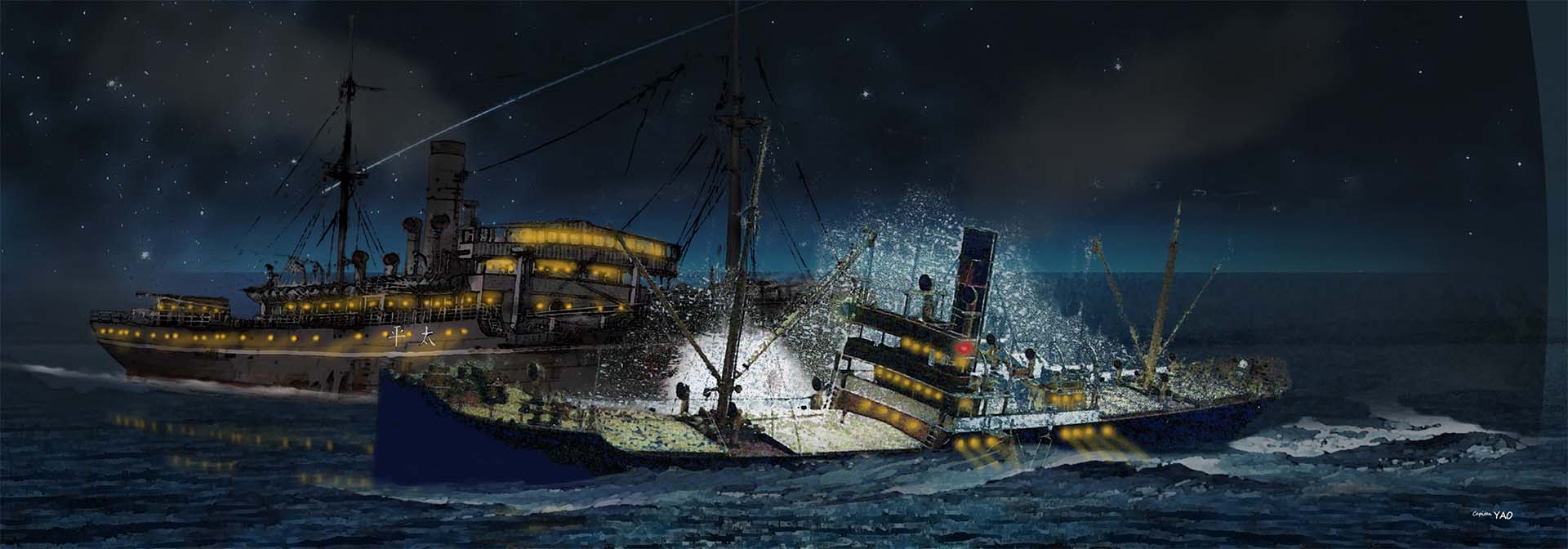
(Figure 6-6-6) The "SS Taiping", a vessel operated by China United Shipping Company, collided with the "SS Kienyuan" in the waters near the Choushan Islands. Both ships sank, resulting in the deaths of more than a thousand people.
On January 27th of the following year, the night before Chinese New Year's Eve, the "SS Taiping", a ship belonging to the China United Shipping Company, collided with the "SS Kienyuan" in the waters near the Choushan Islands while en route from Shanghai to Keelung. The bow of the "SS Taiping" cut into the cargo hold of the "SS Kienyuan", causing it to sink immediately. The "SS Taiping" held on for another 15 minutes before also sinking. Seventy-two crew members, including the captain, drowned on the "SS Kienyuan", with two survivors. Approximately one thousand people, including the captain and passengers, drowned and froze to death in the winter waters of the "SS Taiping", with only thirty-six survivors.
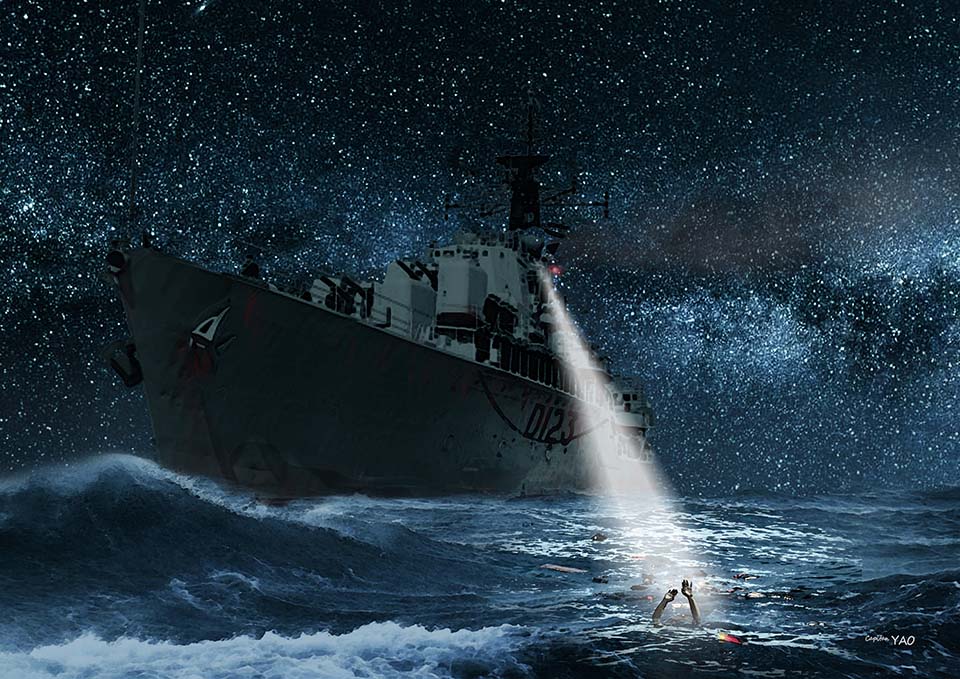
(Figure 6-6-7) The Royal Australian Navy destroyer "HMAS Warramunga" rescued people who fell into the water from the "SS Taiping".
The "SS Taiping" carried many wealthy Shanghai businessmen fleeing to Taiwan, along with large amounts of gold and silver. Although the death toll was not as high as that of the "SS Kiangya", it garnered more attention, much like the "RMS Titanic," because the victims were mostly wealthy and prominent figures. Even half a century later, I still hear the media mention this "RMS Titanic" incident in China. However, this claim is somewhat exaggerated. The "SS Taiping" was not luxurious at all, and its displacement was small with a low freeboard. Originally a cargo ship transporting fruit from Central and South America, it was sold to Shanghai several times and leased by the China United Shipping Company to operate the Shanghai-Keelung route. Even compared to other ships operating on this route, the "SS Taiping" appeared rudimentary. However, due to the difficulty of obtaining tickets for refugees, people had no choice but to board this small ship.
This accident can be said to be entirely due to human factors. First, the ship was severely overloaded; second, the lights were turned off in order to sneak out during curfew; and third, because the Chinese New Year was approaching, the crew members were drinking and gambling in the cabins, and no one was on watch, which led to the collision with the "SS Kienyuan" .
Originally, China's own maritime disaster had nothing to do with me, but the person who fell into the water from the "SS Taiping" was rescued by the passing Australian Royal Navy destroyer "HMAS Warramunga". At that time, the Australian Navy's operations in China were to be coordinated with ours, so the report came to my desk.
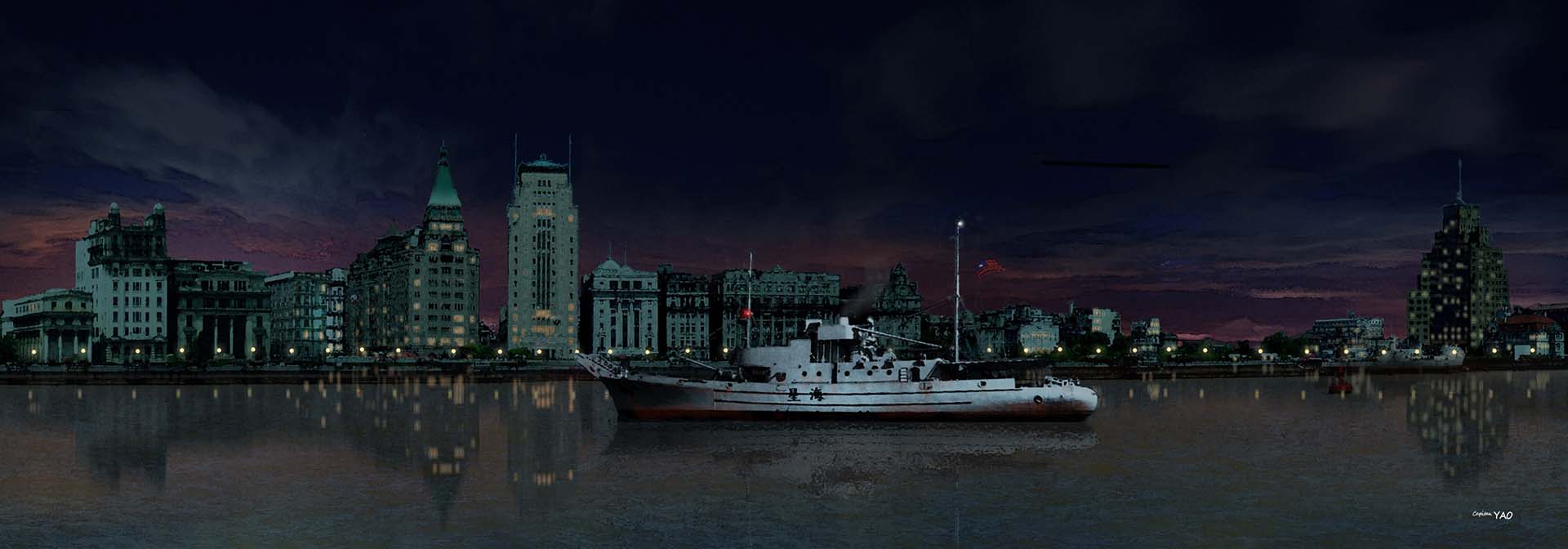
(Figure 6-6-8 Customs anti-smuggling ship "Hai Xing" loads gold from the Central Bank at the Bund dock and transports it to Taiwan.)
This scene piqued my professional interest. If it was a ship of a thousand tons, it should be for transoceanic transport. Was the destination Amoy? Kuangchow? Hong Kong? Or Taiwan? Why use a customs vessel? Had the Kuomintang government reached the point where it needed to move gold out of Shanghai? I ultimately concluded that this gold was likely destined for Taiwan. At that time, Chiang Kai-shek had already appointed his trusted confidant Chen Cheng as the head of Taiwan, and the possibility of evacuation to Taiwan was high if mainland China fell. Although many high-ranking Kuomintang officials thought they would retreat to Chungking as they had during the War of Resistance against Japan, I believed that Chiang Kai-shek, having suffered losses in land battles against the Communists, would choose a location difficult for ground troops to cross—that place was Taiwan, separated by the strait!
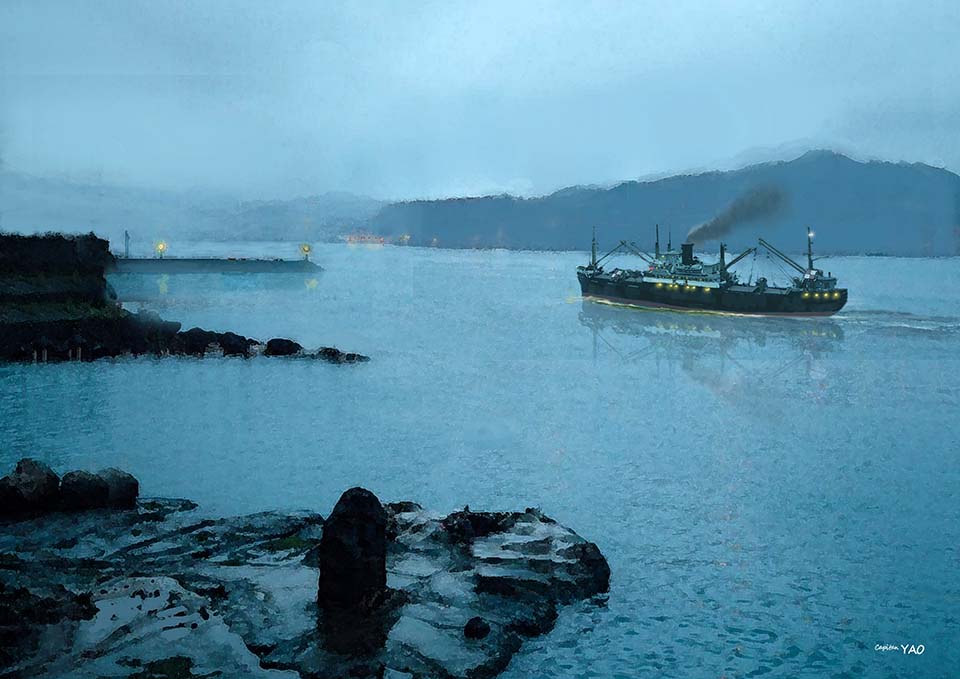
(Figure 6-6-9) The China Merchants Steam Navigation Company's "SS Hanmin", which was also conscripted to transport gold, quietly entered Keelung Port at night.
My guess was right. This operation was indeed handled personally by Chiang Kai-shek's son, Chiang Ching-kuo. I informed headquarters of this intelligence through internal channels. At the time, a British journalist who was sending a press release from the telegraph room of the Cathay Hotel also witnessed the gold-moving operation taking place right under his window. He immediately drafted a report and sent it. The next day, the news spread throughout the world, causing serious concern in the US government. When my report reached headquarters, they still thought I had written it based on a newspaper article—how absurd!
This incident caused an uproar in China, as the rapidly depreciating gold yuan was issued by the Kuomintang using this batch of gold as collateral. Now that the collateral had been moved overseas, the gold yuan's fate of becoming worthless was practically sealed. It seems several more gold-transport operations were conducted afterward. Later intelligence indicated that Chiang Kai-shek transported at least $500 million worth of gold, silver, foreign currency, jewelry, and other valuables to Taiwan. Shortly after, Chiang Kai-shek announced his resignation, and Acting President Li Chongren discovered that the national treasury had been emptied by Chiang Kai-shek.
Using customs ships to transport gold is quite bizarre; it should usually be carried out by naval vessels. Some say this is because the navy was unstable at the time, with the possibility of mutineers at any time, so they dared not use warships for transport. But the second trip was carried by the navy's transport ship "Kunlun," so how can this be explained? However, the "Kunlun" ship later mutinied, resulting in the tragedy of the captain and his family of three being executed by the Kuomintang.
|