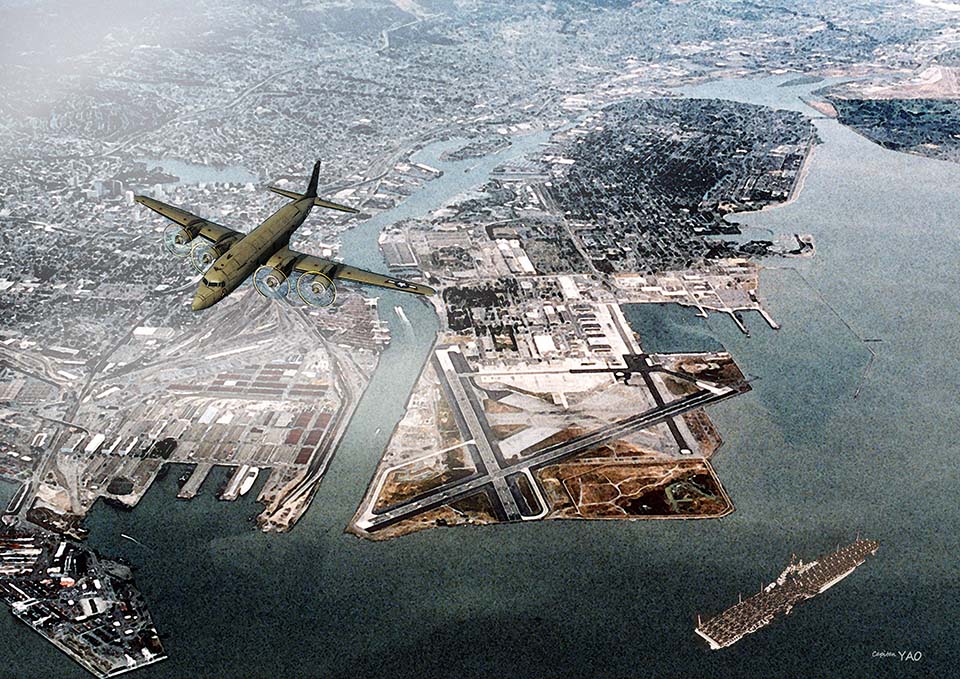
(Figure 6-5-1) Paul Draken's DC-6 military transport plane flew from Tokyo to San Francisco.
In late March, I flew from Shanghai to Tokyo on a U.S. Navy plane, then transferred to an Allied DC-6 transport plane flying across the Pacific, stopping at Wake Island and Honolulu, Hawaii, before arriving in San Francisco. The flight time was approximately 30 hours. The development of large, long-range bombers during World War II had a significant impact on the postwar civil aviation industry. More people chose to travel by air rather than by ship, not only because it was faster, but also because it reduced the cost of food and lodging, and the large passenger capacity of large aircraft made airfares increasingly competitive.
I have been engaged in civil aviation in China since 1928, so I have a certain sensitivity to this industry. In early 1938, when I was on a plane with Mr.Tripp, the president of Pan Am, and we were discussing the future development trend of the civil aviation industry, I held this view. At that time, he did not take it seriously. Now, in 1948, it seems that my prediction is about to come true.
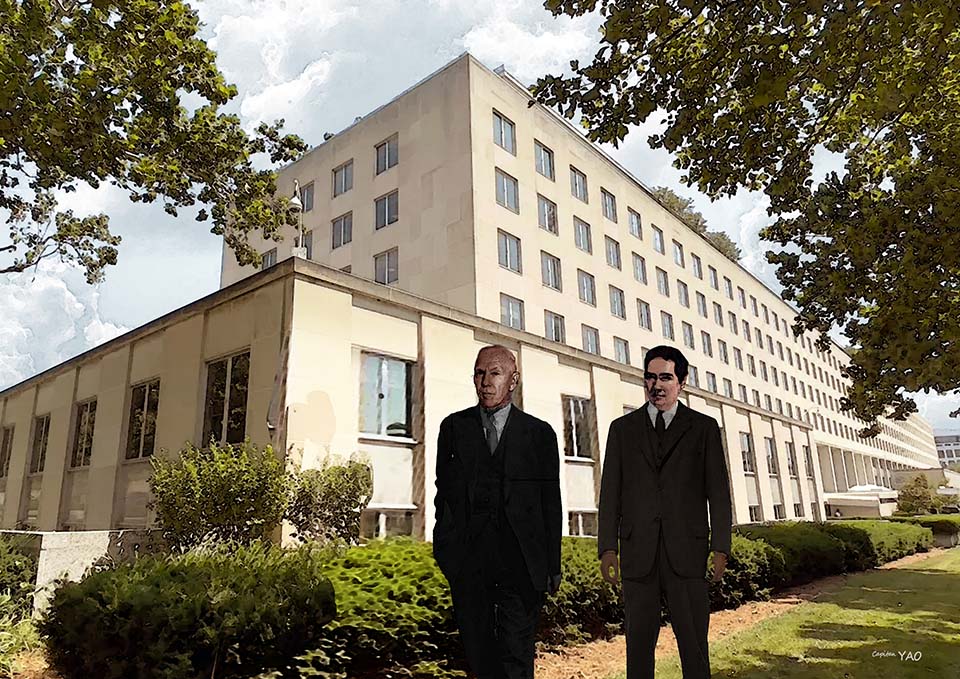
Upon arriving at the military airport in San Francisco, I happened to catch a direct flight to Washington, D.C., which allowed me to meet with Secretary of State Marshall at the State Department on April 3rd. That day marked the signing of the Marshall Plan by President Truman, officially commencing this grand European Recovery Program. Marshall was delighted and invited me to lunch. Afterwards, we strolled and talked on the lawn of the State Department.
American money to support the post-war reconstruction of European countries, with the amount roughly allocated according to population size. Based on the Allied relationship during World War II, the Marshall Plan originally included the Soviet Union and Eastern Europe, but after Churchill proposed the "Iron Curtain," distrust between the two sides increased. The United States did not want its money to become capital for Soviet confrontation, so it set many conditions that the Soviet Union could not agree to. Ultimately, the Soviet Union withdrew, threatened Eastern European countries not to participate, and even organized its own similar plan, thus marking the beginning of the Cold War between the East and West.
The majority of the funds from the Marshall Plan were used to purchase food, energy, transportation, and production equipment, most of which were sourced from the United States, so the funds quickly flowed back to the US. The Marshall Plan filled the huge gap in US manufacturing capacity left after the war, which was very beneficial to the United States.
(Figure 6-5-2) Paul and Marshall walk and talk at the State Department.
Furthermore, through the Marshall Plan, the United States also linked the previously independent financial systems of European countries with its own, meaning that these countries would lose some of their sovereignty, raising considerable concerns. During negotiations with European countries, the United States kept a caveat, stating that the final decision would depend on a congressional resolution. While this is understandable in a democratic system, it allowed the Americans to have a backup plan, as the agreed-upon terms could potentially change. In fact, many members of the US Congress opposed the Marshall Plan, because using taxpayer money to aid foreign countries was difficult for lawmakers to justify to their constituents, not to mention isolationist Republican lawmakers.
Although Britain received the most aid in the Marshall Plan, the United States had already gone to great lengths to replace Britain as the world's dominant power after the war. The United States promoted national self-determination after the war, and many colonies gained independence. The cheap resources and vast markets of the colonies were the lifeblood of the British Empire. If Britain lost its overseas colonies, it would be reduced to a third-rate country on the periphery of Europe.
Secondly, the United States had already leveraged its advantages from World War II in 1944 to establish the Bretton Woods system, preparing for the dollar to replace the pound sterling as the international currency after the war. When other countries no longer settled transactions in pounds sterling, the British Empire would completely lose its financial operational space and influence.
Despite the aid of the Marshall Plan, even close brothers must keep clear accounts. Britain could not default on the war loans it had taken out from the United States, and calculations showed that it would probably not be able to repay them until the next century. I had heard Master Chiu predict the decline of the British Empire back in Peiking in 1928, so I was not surprised at all, but I did not expect that the United States would take advantage of my misfortune.
Marshall also discussed the US's stance on Germany, stating that Britain and France wanted to severely punish Germany, but everyone knew that the cause of World War II was the excessively harsh reparations demands imposed on Germany after World War I, which led to economic collapse and created the opportunity for Hitler's rise. Now that World War II was over, the US had absolute say through the Marshall Plan and had no reason to be led by the nose by Britain and France, repeating the mistakes of World War I. Therefore, Marshall did not rule out providing aid to Germany.
In fact, there wasn't much conflict between the United States and Germany during World War II. The United States declared war on Japan because of the attack on Pearl Harbor, and only because of the Axis alliance did it also declare war on Germany and Italy. There was no animosity towards Germans within the United States; in fact, many high-ranking generals were of German descent, such as General Dwight D. Eisenhower, the Supreme Commander of the Allied Forces.
In both World War I and World War II, Britain tried every means to drag the United States into the conflict, helping Britain defeat Germany. The United States, on the other hand, used World War II as an opportunity to seize Britain's position as the world's leading power. These are all things Marshall said. He knew I was a British spy, yet he still spoke so frankly, probably because at that time, the United States was at the height of its power and didn't care if the British knew.
Because Marshall needed to travel to Europe to negotiate with various countries, he invited me to ride on his private plane to England, thus saving me the cost of a ship ticket. This trip, starting from Shanghai and entirely by plane, gave me new insights into the future development of the international civil aviation industry.

During my meeting with Churchill, I discussed our views on World War II. We talked about a wide range of topics, but the most important point was: "Was World War II a historical inevitability or a contingency?" Historians generally agree that World War II was a consequence of World War I, a historical inevitability, the only question being how and where it began. From a scholarly perspective, this is beyond doubt. However, from the perspective of an intelligence officer involved in the conflict, some questions remain unanswered. To put it bluntly, if Churchill hadn't championed anti-Nazi rhetoric, would World War II have actually occurred? Of course, I can't directly question Churchill like that, hence my roundabout approach. 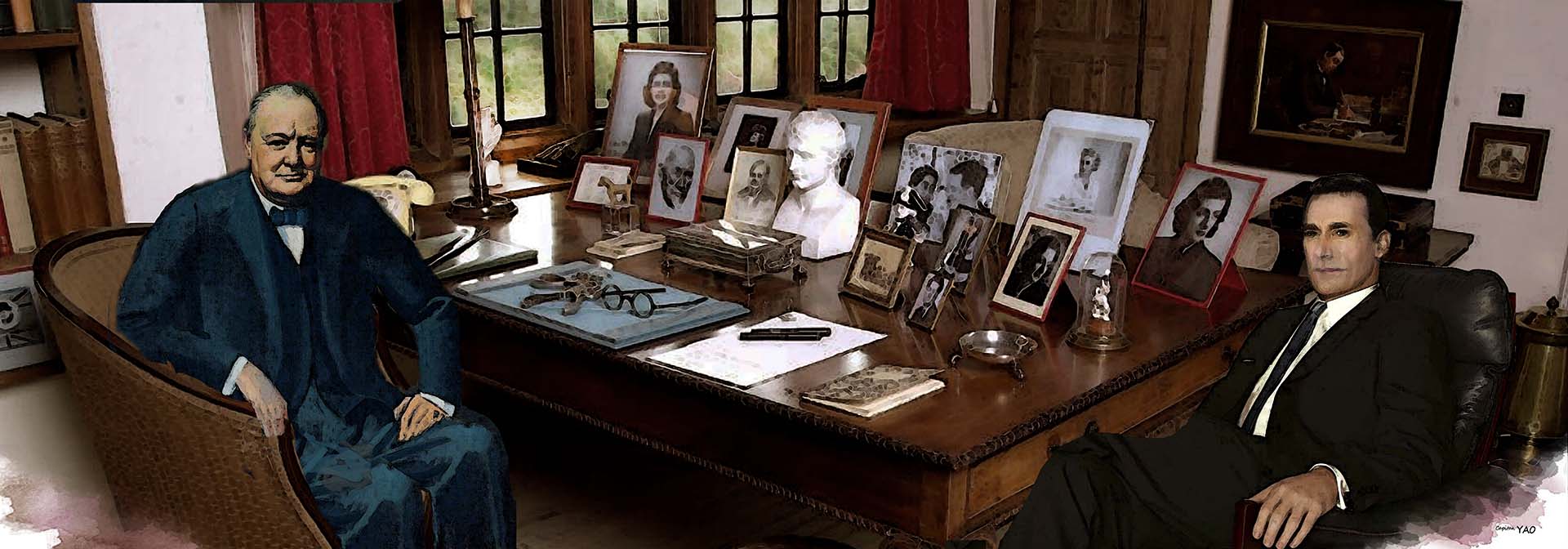
(Figure 6-5-3) Paul Draken meets Churchill in his study. The most typical example is the exaggeration of the "Franco-German rivalry." Britain and France have been enemies for a thousand years, dating back to before Joan of Arc, when the nation of Germany did not even exist. However, Britain took advantage of France's defeat in the Franco-Prussian War, inciting the French desire for revenge and provoking the devastating First World War. Britain then carried out devastating retaliation against Germany after the war, which was the underlying cause of World War II. Britain's instigation and divisive tactics led to Germany and France, two major European powers, fighting each other for half a century, depleting their national strength to the point of near collapse, leaving them with no power to threaten Britain. Following this logic, Churchill's fervent anti-Nazi rhetoric becomes perplexing, as he positioned Britain as a participant in the conflicts of continental Europe, rather than an instigator—something his predecessor, Prime Minister Chamberlain, had consistently avoided, yet Churchill criticized him as a weak appeaser. Churchill was hailed as a hero for the victory in World War II, but was considered political poison by his own party at the time, indicating that Chamberlain's views were the mainstream in British politics. Looking at Churchill's past experiences, his role as First Sea Lord in World War I, where he orchestrated the Gallipoli campaign—a disastrous but ultimately fruitless campaign—is a testament to his skill. After the war, as Chancellor of the Exchequer, he again wreaked havoc on the British economy. However, Churchill was eloquent and adept at seizing upon his opponents' weaknesses to launch a powerful critique, often turning the tide of the war. But whether the policies that won the debate were truly beneficial to the country was another matter entirely. Because of my extensive contact with the Duke of Windsor and my dealings with Ribbentrop, I understand that Hitler originally had no intention of being an enemy of Britain. If Britain and Germany had divided their spheres of influence and agreed not to aggression, allowing anti-communist Germany to attack the communist Soviet Union, both sides would have suffered heavy losses, and Britain could have avoided war. Of course, some might say that Germany and the Soviet Union also signed a non-aggression pact, yet war still broke out. But that was the result of ideology overriding national interests; purely from the perspective of the German-Soviet pact itself, it wasn't wrong. As for "ideology," wasn't Churchill's "anti-Nazi" ideology also a kind of ideology, just like his later advocacy of "anti-communism"? However, Britain was ultimately a victor in World War II, so Churchill's anti-Nazi views were seen as prophetic. But the key to Britain's victory was the United States' entry into the war, which gave Churchill the confidence to confront Nazi Germany directly. This, however, also allowed the US to usurp Britain's global dominance after the war. Therefore, it's difficult to generalize about Churchill's right and wrong; only history can judge. As a professional intelligence officer, I can only follow orders, and even if I have doubts, I can only grumble in private. Regardless of historical evaluations of his merits and demerits, Churchill's six-volume memoir of the Second World War, which won him the Nobel Prize in Literature in 1953, can be considered a significant achievement in his life.
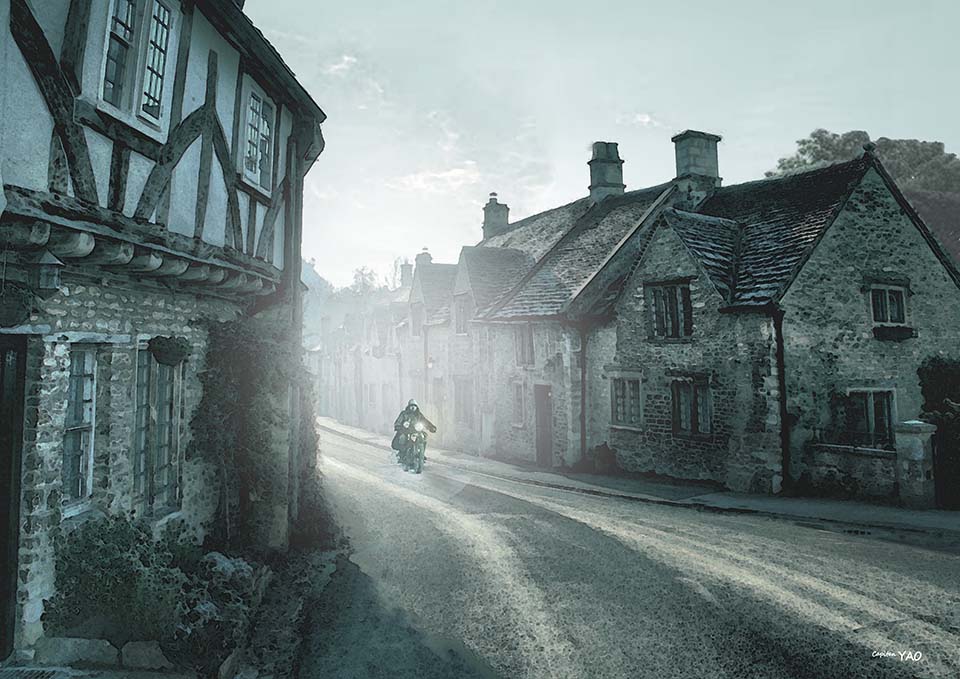
(Figure 6-5-4) Paul Long rented a motorcycle and rode it from Portsmouth to the Boxay family estate in Dorset.
While in Portsmouth, I accepted Boxer's invitation to visit his hometown in Conygar, a suburb of Bridgeport, Dorset. It was about 50 kilometers from Portsmouth, so I rented a motorcycle and rode there myself for convenience.
Boxer's family estate was very large. There I met Emily Hahn and their daughter, Carola Militia Boxer. Carola was born in Hong Kong on the eve of the war. She was seven years old when I met her. At that time, Emily was pregnant again, with her due date in October.
I had a long talk with Boxer about World War II and the postwar situation. Many British people, upon hearing that the Marshall Plan was about to begin, thought that postwar reconstruction and a return to the glory days of the past would be just around the corner. But those of us who had worked in intelligence in the Far East saw the loss of colonies and the rise of the United States. We knew that the British Empire would eventually fall and that there was no chance of recovery, which was truly disheartening.
Since Boxer was a Japanese expert in the British Army, I discussed the performance of the Japanese army in the Pacific War with him. I found the Japanese to be a strange people; on the battlefield, they didn't pursue efficiency in eliminating enemy manpower, but instead considered entering the Yasukuni Shrine as an achievement. Take the Battle of Iwo Jima as an example: Commander Kuribayashi Tadamichi was already short of troops, yet his soldiers were still eagerly requesting suicide, causing him great distress. In the Battle of Okinawa, over four thousand Japanese soldiers in an entire brigade committed suicide in tunnels. This unit, trained and equipped with vast sums of money, wiped out the American forces without firing a single shot—something truly difficult for Westerners to understand.
Boxer found it difficult to comment, as he had spent the entire war in POW camps and missed every battle, but he was deeply impressed by the brutality of the Japanese army, including the Japanese storming a hospital and stabbing all wounded Canadian soldiers during the Battle of Hong Kong in 1941. I responded that if the Japanese treated their own soldiers like that, how could they possibly be kind to enemy prisoners of war? I had even heard that Japanese soldiers who were captured and released had no choice but to die, and were all forced to commit suicide. This was truly a nation with twisted and extremely perverse humanity.
I also inquired about the situation of the faculty at Boxer University, and he showed me a small book that he had just bought for £47. I was astonished to see it; wasn't this the same booklet with many color pictures that I had seen in the Holland House library in Kensington in 1930? I had even considered stealing it back then.
Buying an antique manuscript for £47 seems like a good deal today, but in postwar Britain, where many people were still on the verge of starvation, £47 was equivalent to more than a month and a half of a worker's income. Moreover, even Boxer didn't know the value of this little book at the time, making it a luxury investment. However, since Emily Hahn could earn US dollars through writing, they should have been able to afford it.
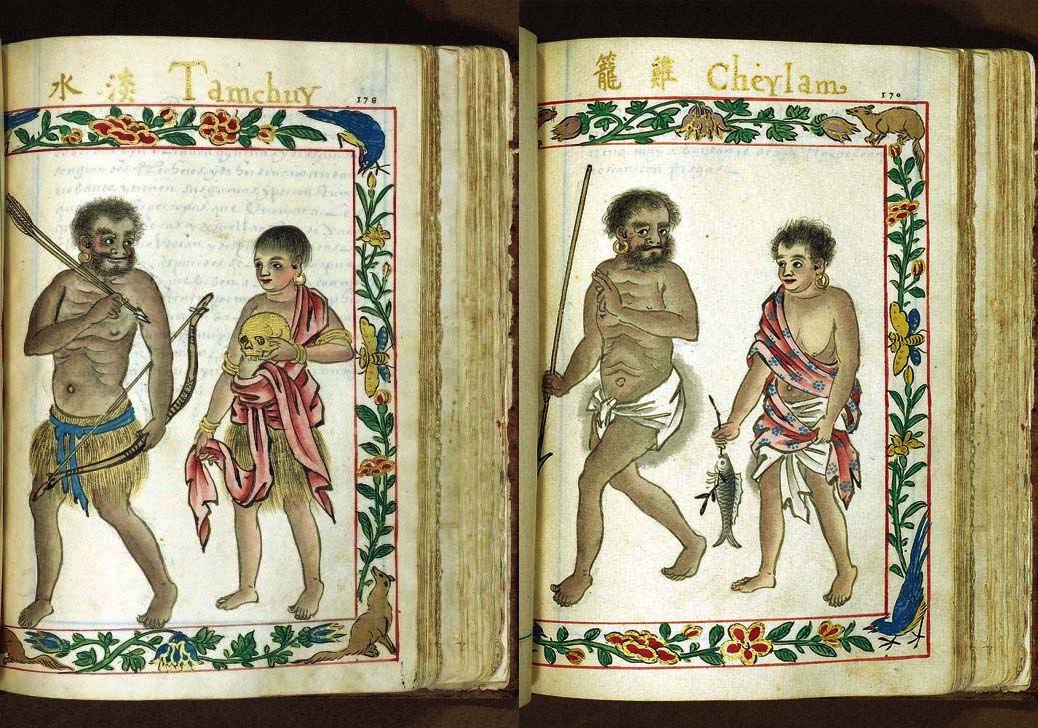
(Figure 6-5-5) The left page of "Boxer Codex" is "Tamchuy", and the right page is "Cheylam".
When Boxer first received the little book, he didn't realize its importance and temporarily set it aside. Seeing my interest, he casually asked me about the relationship between the Chinese characters and Romanized spelling on the illustrations, as he couldn't understand them at all. I discovered that he was reading the Chinese characters in Japanese, but the Romanized spelling was clearly not Japanese. I flipped through the pages and found two pages labeled "Cheylam" and "Tamchuy," which should be Keelung and Tamchuy in Taiwan, places I had visited many times. Therefore, I guessed it was Hokkien, the common language in Taiwan at the time, because I had visited these two places many times and often heard locals pronounce the place names, so it had left an impression.
Indeed, this booklet was commissioned by the Spanish in Manila in the 17th century to present local customs and culture to the king. It was drawn by a Chinese artist. Since the Chinese in the Philippines at that time were mostly Hokkien speakers, the Chinese characters were translated based on the Hokkien dialect, resulting in the pronounce in the booklet. After my interpretation, Boxer realized that he had acquired a rare treasure.
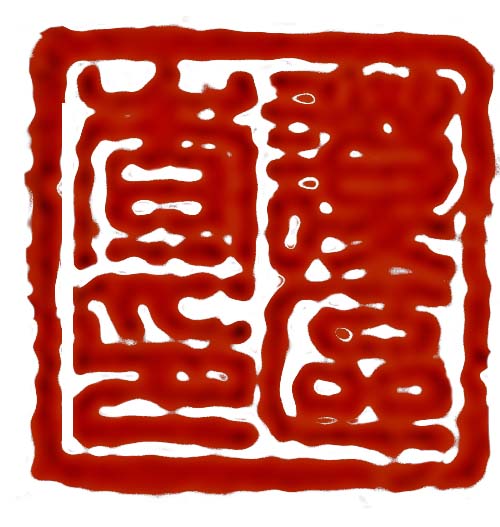
Boxer took out a bookplate and stamped it on the last page. This seal, engraved with the Chinese characters "Mo-Chu-cha", later became very famous in academic circles. Many people were unclear about its origin. In fact, "Mo-Chu-cha" is the Japanese spelling of "Boxer", which Boxer told me. Boxer learned Chinese characters through Japanese, so he didn't really understand Chinese and needed my help. This made us partners who were both teacher and friend in the field of academic research.
(Figure 6-5-6) Boxer's "Mo-Chu-cha" book seal.
This small book, later known as the Boxer Codex, is one of the most important documents for studying the Spanish colonies in the Far East during the 16th and 17th centuries. The fact that an ancient manuscript can be named after its collector speaks volumes about Boxer's stature in the field, but I also deserve some credit for the discovery of this manuscript's value.
After being released from a POW camp in Guangzhou in August 1945 following the end of the war, Boxer returned to Hong Kong to search for Emily Hahn. I provided timely information, and Boxer immediately traveled to the United States at the end of October to meet Hahn, who was then in New York. The news of their marriage on November 28th became headline news in major media outlets. Afterwards, Boxer went to work for the Far Eastern Committee of the Allied Powers in Tokyo. A year later, he accepted an invitation from King's College London to teach at the "Camões Portuguese Lectures." At the end of October, he resigned from the Far Eastern Committee and returned to his hometown of Conygar, a suburb of Bridgeport, Dorset, England, with his wife and daughter. He officially retired from the military at the end of that year.
I had assumed that Emily Hahn, now a mother, would have settled down and settled into family life, but after meeting her, I found that this was not the case. Her high-profile romance with Bouxey in Hong Kong could not maintain its intensity and eventually cooled down. The gloomy life in the English countryside made her unhappy, and sure enough, two years later she moved to New York alone to rent a house and write for The New Yorker, leaving Boxer and their daughter in England. Even so, Boxer maintained his marriage with her and also left England to settle in the United States in 1967.
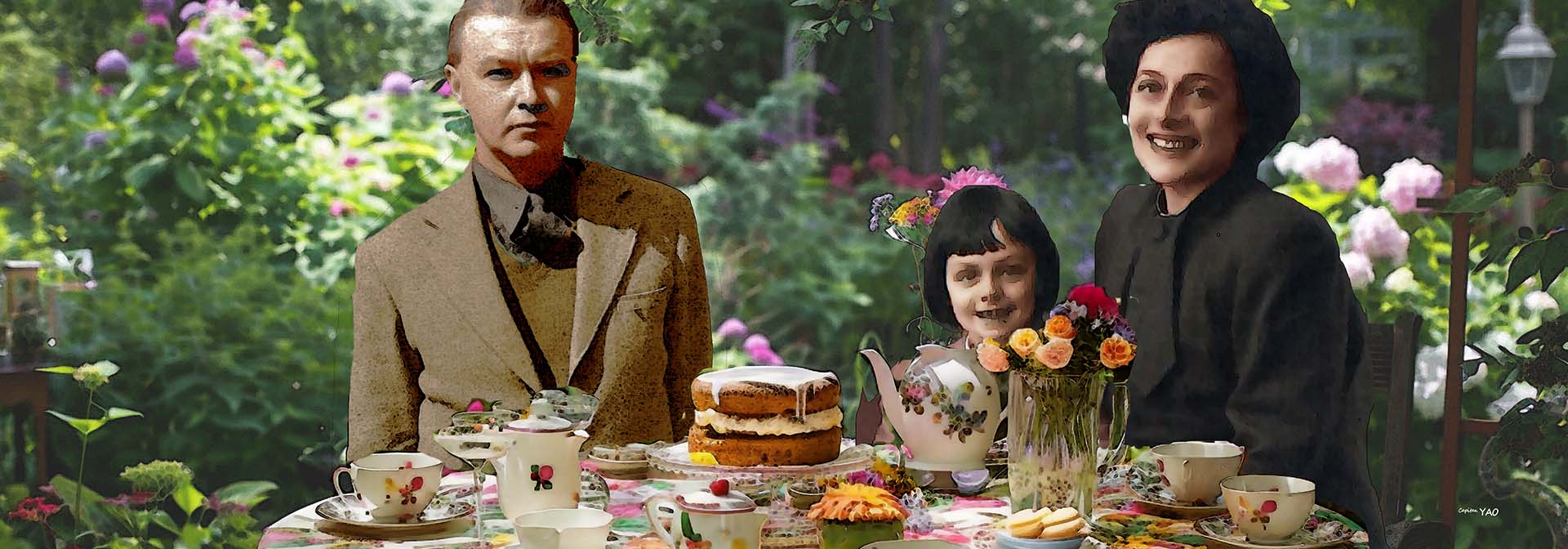
(Figure 6-5-7) Mr. and Mrs. Boxer, and their daughter Carola invite Paul Draken to afternoon tea. It's only about 20 kilometers from Boxer's hometown to Bovington Camp, where Colonel Lawrence died in a car accident, so I rode there on my way back to pay my respects to my old friend. I retraced his route to the station to pick me up, trying to figure out why the accident happened, since Lawrence's death has sparked many conspiracy theories, but I didn't find any clues, so I rode all the way back to Portsmouth.
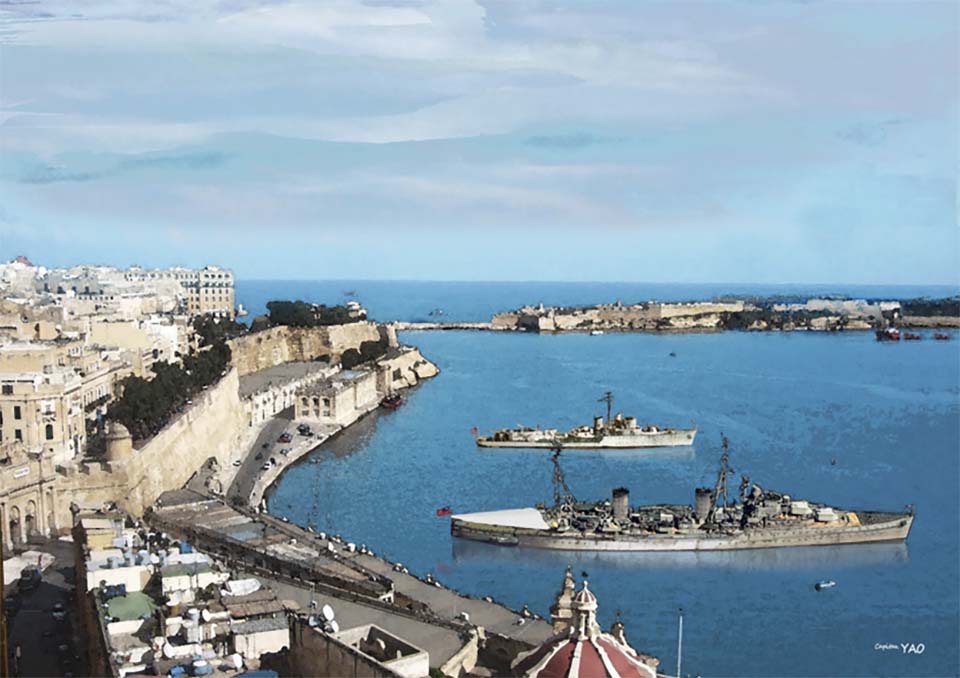
(Figure 6-5-8) The ships "Chungking" and "Lingfu" entered Malta on their way back to China.
"HMS Aurora" was built by the British Navy's Portsmouth Dockyard, launched on August 20, 1936, and commissioned in November 1937. It served in the Mediterranean during World War II, earning a distinguished service record. After the war, it was donated by Britain to the Chinese Navy and received at Portsmouth Naval Base on May 29, 1948. After transiting Malta and Singapore, it arrived in China on August 8 of the same year. At the time, it was China's largest, most heavily armed, and best-performing warship.
The "Chungking" was 500 feet long, 51 feet wide, and had a draft of 13.9 feet, with a standard displacement of 5,270 tons. Its main armament consisted of three twin-mounted main gun turrets with six 6-inch guns (50-caliber), four twin-mounted secondary gun turrets with eight Mk16 45-caliber 4-inch guns, two quadruple-mounted 40mm (Pom Pom) guns, and six Oregon 20mm anti-aircraft guns. It had a complete fire control system. In addition, it had two Mk4 21-inch triple-mounted torpedo tubes (six torpedoes) and a depth charge system. Originally equipped with seaplanes, these were removed upon delivery. The propulsion system consisted of four heavy oil-fired boilers, coupled with Parsons turbine main engines, providing four shaft propulsions with a power output of 64,000 shaft horsepower, a top speed of 32 knots, and a range of 4,000 nautical miles. The crew complement was 574.
The "Chungking" had a crew of nearly 600, which was simply not enough for the then-weak Chinese navy. They even had to recruit university students to fill the ranks, but university students were a rare breed in China at the time. Although they joined the army out of patriotic fervor for the war effort, many left to seek better jobs after the war, which became a hidden danger for the "Chungking." If a mere light cruiser was so short-handed, how could it possibly have the capacity to receive larger warships? No wonder the US Navy told Kui Yungching, "You can't even afford the rope to lead the sheep!" Furthermore, most of the Japanese reparations ships that arrived in China were inoperable, rusting in river channels and ports. This led to my being rebuffed when I tried to request the transfer of the reparations ships allocated by Britain to China.
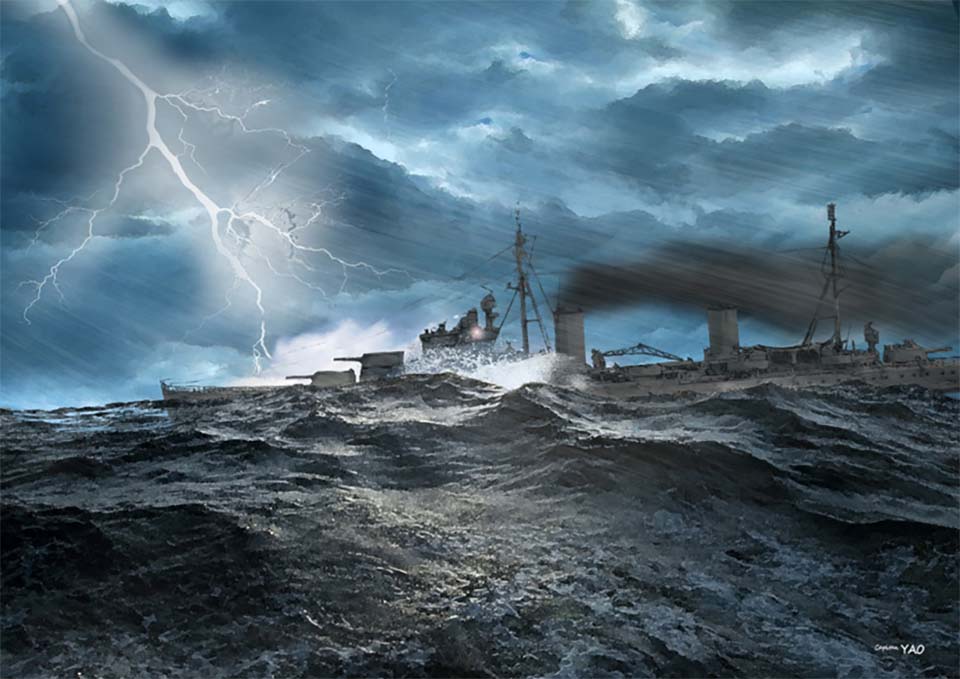
(Figure 6-5-9) The "Chungking" cruiser encountered a storm off the coast of Singapore.
After the two ships were taken over, I returned to China aboard the "Chungking," essentially representing the Royal Navy in bringing their daughter to her new home. During the journey from Britain to China, I spent over two months on board with Captain Teng Chaohsiang, acting as a bridge between the British crew and the Chinese crew. Because the war had just ended, the Chinese officers and soldiers had a sense of pride, feeling that the "Chongking" was their own territory and that they didn't need outsiders to tell them what to do. However, the British officers on board didn't share this sentiment. They believed that the Chunese navy, whether officers or soldiers, lacked experience in long-distance voyages, and despite two years of training in Britain, they were still novices who needed strict discipline to avoid endangering the ship. Furthermore, since it was originally a British warship, they naturally treated the Chinese crew with the attitude of masters.
I was well aware of the communication barriers between East and West. Seeing the conflict escalating during the voyage, Captain Teng asked me to mediate. The final agreement was for the British officers to disembark in Hong Kong and return home. However, a group of Hong Kong-born engineers recruited in Britain also left the ship. This was because the Chinese fleet lacked qualified steam turbine engineers, forcing them to recruit overseas Chinese seamen in Britain; otherwise, they wouldn't have dared to send the "Chungking" across the ocean. Their departure was a major headache for me. Fortunately, we had already reached the Chinese coast, and we managed to barely manage to sail back to Nanking to report back.
While Britain ostensibly donated warships to other countries, the donations were actually accompanied by numerous terms and conditions. Local intelligence units were responsible for monitoring the ship's movements and operations to prevent the recipient country from taking actions inconsistent with the donation's purpose or even violating the interests of the British Empire. This was my responsibility. Compared to other donated warships, the "Chungking" attracted more attention because it was not only the largest warship Britain had donated to China after the war, but also a ship of great merit in the Royal Navy during World War II. If anything were to happen to it, I would be in serious trouble!
I once saw the "Chungking" cruiser anchored on the river in Hsiakuan, Nanking. It was truly the most beautiful warship I had ever seen. Its slender hull and typical British long forecastle design were dignified and elegant. The light gray and white paint contrasted against the dark green waterfront, making it look like a watercolor painting. The sound of sailors blowing their whistles echoed on the river, and I still remember it vividly to this day.
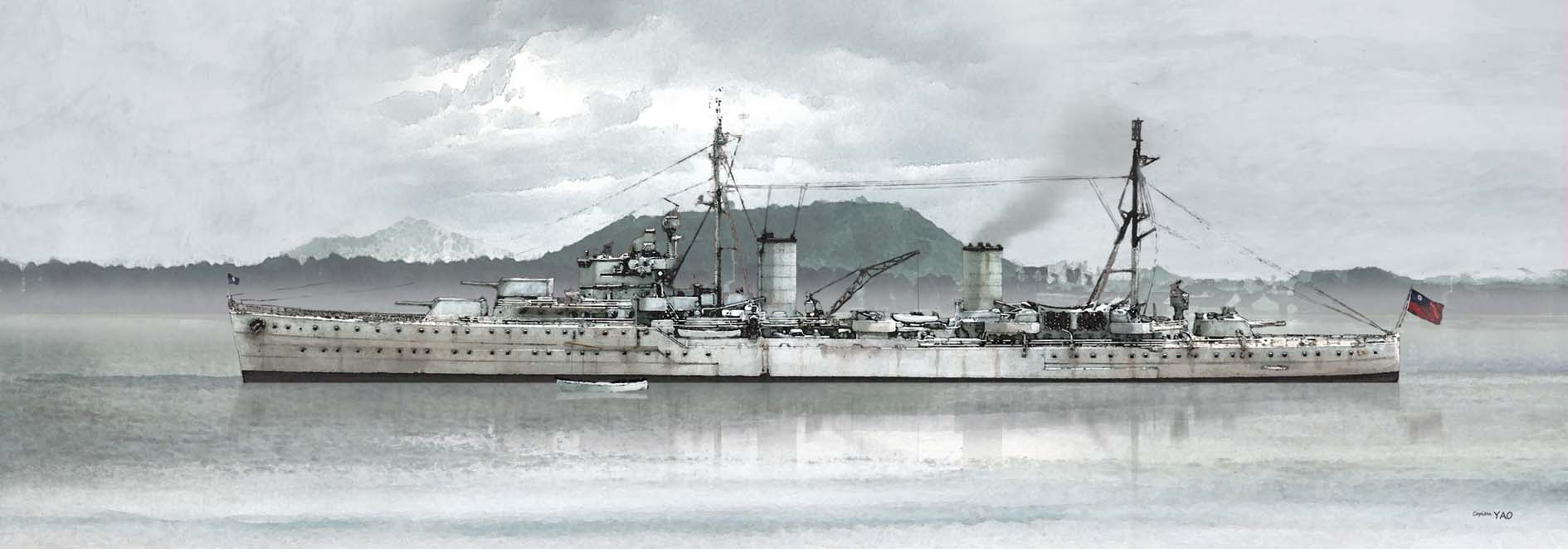
(Figure 6-5-10) The "Chougking" ship is anchored on the Yangtze River in Nanking.
|