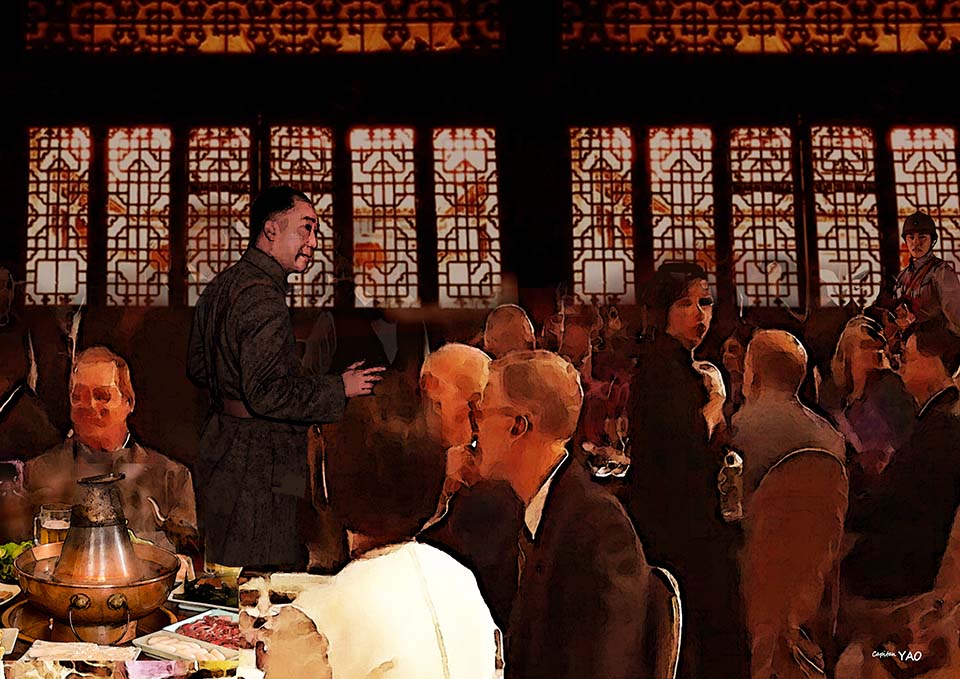
(Figure 6-4-1) Tai Li hosted a banquet in Peiping for "traitors" of all ranks, and announced the list of arrests at the banquet.
After the Japanese surrender, many Chinese officials who had served the Japanese—the so-called "traitors"—did not flee to other places and disappear into obscurity. Instead, they continued to live a life of luxury under the guise of special envoys to Chungking, which aroused great criticism from society. In early 1946, Tai Li came to Peiping and hosted a banquet, inviting all those in North China who had served the Japanese occupation forces or puppet regimes to dinner. After the meal, he announced that all the attendees were traitors and to be arrested and imprisoned. This was a very dramatic scene at the time, but Kim Bihui escaped. However, she was eventually arrested and imprisoned by agents of the Military Intelligence Bureau.
At the time, I was in Peiping assisting Mr. M in arranging the assassination plot against Tai Li, and also paying attention to Marshall's mediation efforts in the Chinese Civil War. After hearing about this from our intelligence network, the idea of visiting her in prison took hold of me. This wasn't just because I had been intimate with her, but also because I heard that Tai Li was furious with the head of the Military Intelligence Bureau's Peiping station, Ma Hansan, for not arresting her promptly, which was relevant to our mission. However, I hadn't seen her since 1938, though there was also an element of nostalgia involved.
I used my connections to bribe the guard captain with some pounds. In the prison's meeting room, I saw Kim Bihui being led in by the jailer. She was wearing a gray cheongsam and a floral cotton-padded jacket, her short, shiny hair was combed back, and her face was pale, making her look a bit old. But her haughty expression and foxy eyes were still so familiar, unchanged even though she was now a prisoner.
"Yoshiko, it's been a long time!" I said.
"Now only you call me Yoshiko, everyone else insists on calling me Kim Bihui, not treating me as Japanese, so they can accuse me of being a traitor." Kim Bihui said quietly, "Traitor, traitor, I'm not Han, how can I be accused of being a traitor?"
"What are your plans?" I asked.
"Tai Li turned his back on us! What did he say when we had our secret talks in Chungking?" Kim Bihui said indignantly.
I was utterly shocked: "What? You went to Chungking to see Tai Li?"
"What's so strange about that? The Chungking newspapers reported it back then, but Tai Li denied it. I almost got killed by the Japanese because of it!" Kim Bihui said. "Let me tell you, those people in Chungking were just like Wang Kingwei. Everyone wanted to communicate with the Japanese. If it weren't for the outbreak of the Pacific War and the United States' entry into the war, Chiang Kai-shek would probably have returned to Nanking in 1942 to replace Wang Kingwei."
"If what you say is true, then you may be in a very dangerous situation right now!"
"Who says otherwise! The Americans helped win this war, and these guys all become war heroes? What fucking heroes! Now, what I fear most is someone revealing their past acts of begging for peace with Japan. I think that's why Tai Li is so eager to arrest me!" Kim Bihui said. "I'm going to expose all their dirty deeds in court and see what they can do to me!"
"Aren't you afraid you'll be silenced immediately?"
"I have considered it, so I will first try to prove that I am a Japanese citizen, so that they cannot accuse me of being a traitor, and then decide based on the situation."
"Perhaps by then, Tai Li won't be able to cause you any trouble?" I said, with a double meaning, but I don't think Kim Bihui understood my underlying message.
I continued by asking her another question I wanted to know: "By the way, did you hand over the Chianlong Emperor's sword to Ma Hansan? Is that why he didn't arrest you before?"
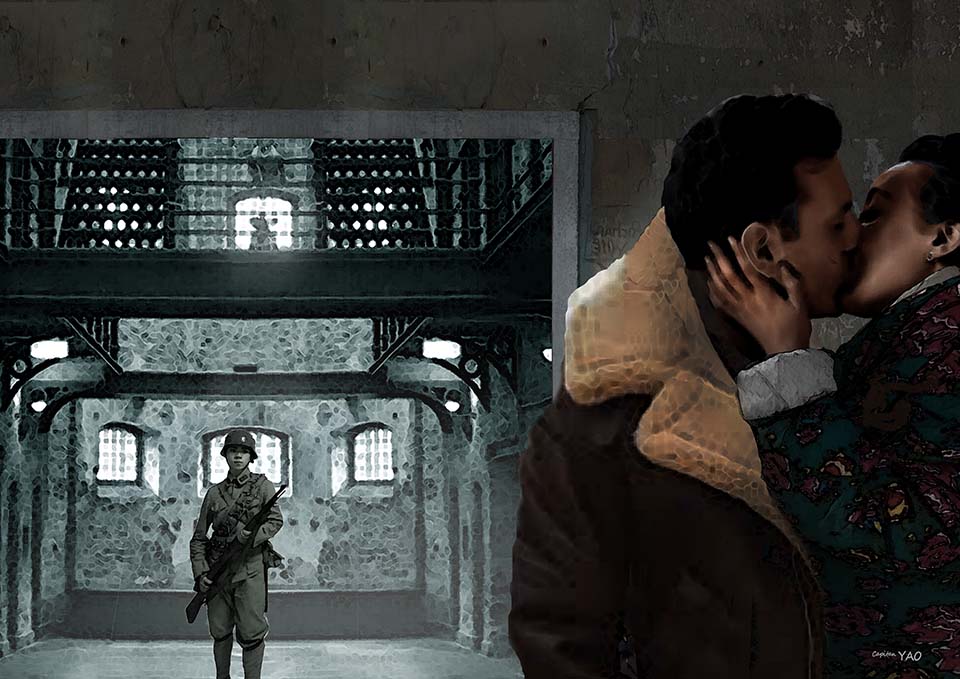
(Figure 6-4-2) Paul Draken visits Kawashima Yoshiko , and they kiss behind the door, avoiding the guards' gaze.
Kim Bihui glanced at the guards outside the door, and after confirming that no one was watching, he reached out and rubbed my thigh: "Paul, your information network is really good. It's true, but he didn't know about my relationship with Tai Li, which is why he dared to do this. He panicked when Tai Li arrived and said he would offer the sword to Tai as a bribe, but that can only save him, not me!"
"I'll help you figure something out!" I comforted her before leaving. "I'll come back to you again, don't lose hope."
Just before leaving, she grabbed my tie and pulled me to the door, avoiding the guards' gaze, and kissed me deeply with her dry lips.
Did Ma Hansan plan to bribe Tai Li with the Chianlong sword? When I got back, I told Mr. M this new information, and he immediately had an idea: why not deliberately leak this matter through a specific channel, creating the impression that Ma Hansan, fearing punishment from Tai Li after his crimes were exposed, hid a bomb in the Chianlong sword and killed Tai Li? These processes all have witnesses and physical evidence, so it should be easy to believe.
At the end of March, after completing the assassination mission against Tai Li, I left Peiping for the Allied Committee in Tokyo, Japan, and temporarily put the matter aside. I thought that Kim Bihui should be safe for the time being after Tai Li's plane crash. The conspiracy of Ma Hansan that we deliberately spread also began to circulate within the Military Intelligence Bureau. All that was left was to find a way to rescue her from prison.

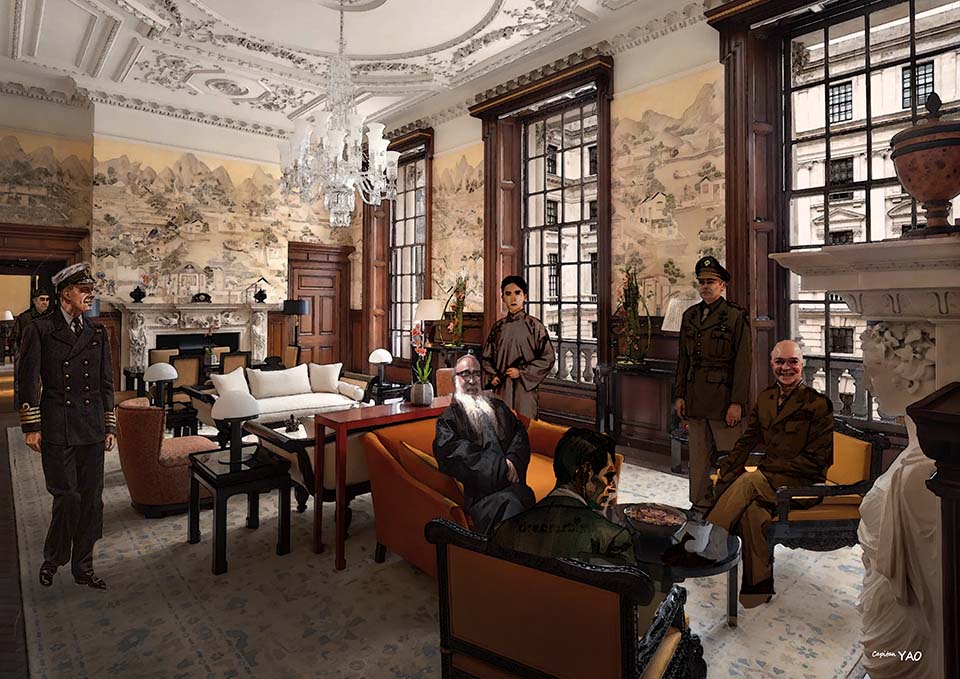
(Figure 6-4-3) Paul Draken arrived at the lobby of the International Hotel and once again encountered Master Chiu.
Unexpectedly, I met Master Chiu again in Peiping, at the same hotel where I first met him in 1927. Strangely, he always appears at the right time whenever I need someone to guide me. The difference this time is that he is surrounded not by tourists, but by American soldiers.
In order to prevent the Soviet Red Army from entering Northeast China and taking advantage of the gap in Japan's surrender to move south into the pass, a large number of US Marines urgently landed in Peiping, Tianjin and Tsingtao. According to intelligence, the number of troops was as high as 50,000, so much so that the streets of Peiping were full of American soldiers on leave and jeeps driving around recklessly.
Upon seeing me, Master Chiu left the American officer he was talking to, and walked up to me with a smile, saying, "Your Highness, it's been a long time! It must have been fifteen years, right?"
"Master Chiu has a good memory! It's been exactly fifteen years since 1931!"
Master Chiu pulled me to sit down on the sofa and said, "Are you fretting over the princess's fate?"
"A princess?" I felt a pang of guilt. "What princess?"
Master Chiu laughed and said, "What else could the Fourteenth Princess be but a princess?"
"Oh! Right! How could I forget?" I exclaimed, slapping my forehead. That's right! Kim Bihui was the fourteenth princess of Prince Su of the Ching Dynasty, Emperor Puyi's cousin, a true princess!
"Do you remember what I said: there is one Queen, one Empress, one Princess, and one Fortress Princess?" Master Chiu said, "The Princess and the Queen will not have a good end in the capital, the Empress will disappear in the chaos of war, and the Fortress Princess will die young on a deserted island."
"Is the bandit princess Lomui? Could the empress be Wanrong? Is the princess Anastasia? And what about Kim Bihui?" I wondered to myself. "And who is the queen?"
Master Chiu stared at me intently, as if he could see right through my mind: "Originally, this destiny chart should have belonged to a Russian princess. You let her go, so the Fourteenth Princess will take her place."
"So, does that mean the Fourteenth Princess's life is over?" I asked.
Master Chiu shook his head and said, "That's not necessarily true!"
"Does that mean there's still a way?" I asked eagerly.
"Yes, we do. We'll find another princess to replace her!"
"Where am I supposed to find another princess?" His words left me completely bewildered.
"I ask you, is the Empress's daughter considered a princess?" Master Chiu asked me in return.
"Of course it counts!" I nodded.
"That's right! Empress Wanrong gave birth to a daughter in 1934..."
"Enough, enough! I know!" I buried my head in my hands and bent over.
On the night of Puyi's ascension to the throne in 1933, the incident between me and Wanrong in the palace resulted in her giving birth to a baby girl the following year. Upon seeing the baby, the Japanese doctor immediately injected her with poison and threw her into a furnace to burn her. This matter was a top secret in Manchukuo. I only found out about it because Kim Bihui told me in 1938.
Was it truly fate that I was destined to exchange my own daughter's tragic death for Kim Bihui's life?
"You should think of it this way: if she were alive, she would be a princess of Manchukuo, not your daughter!" After saying this, Master Chiu got up and drifted away.
After Tai Li's death, I thought I would have a chance to help Kim Bihui get out of prison, but because I was often away from China at that time, it was delayed. After being imprisoned for nearly two years, she finally had her trial on October 15th and 16th, 1947. Kim Bihui was full of confidence and spoke eloquently in court. It was expected that there would be a second trial, but unexpectedly, the verdict was hastily announced a week later. When she heard the death sentence, Kim Bihui was stunned in court. When she came to her senses and was about to shout, the guards quickly took her away from the courtroom. The whole time was less than half an hour. I received word that I had bribed the guard captain again to try and see Kim Bihui, but this time he only accepted US dollars or gold bars and refused to accept British pounds! This snob, even in something like this, makes me feel the decline of the British Empire and the rise of America. In the end, I had to find a way to exchange a lot of US dollars for just 5 minutes of visitation time. This time, she seemed quite calm: "Paul, you're the only one who's good to me. Look at my brothers and sisters, they all keep their distance from me. They wouldn't even ask my godfather to help prove I'm Japanese. Sigh! I've already accepted my fate."
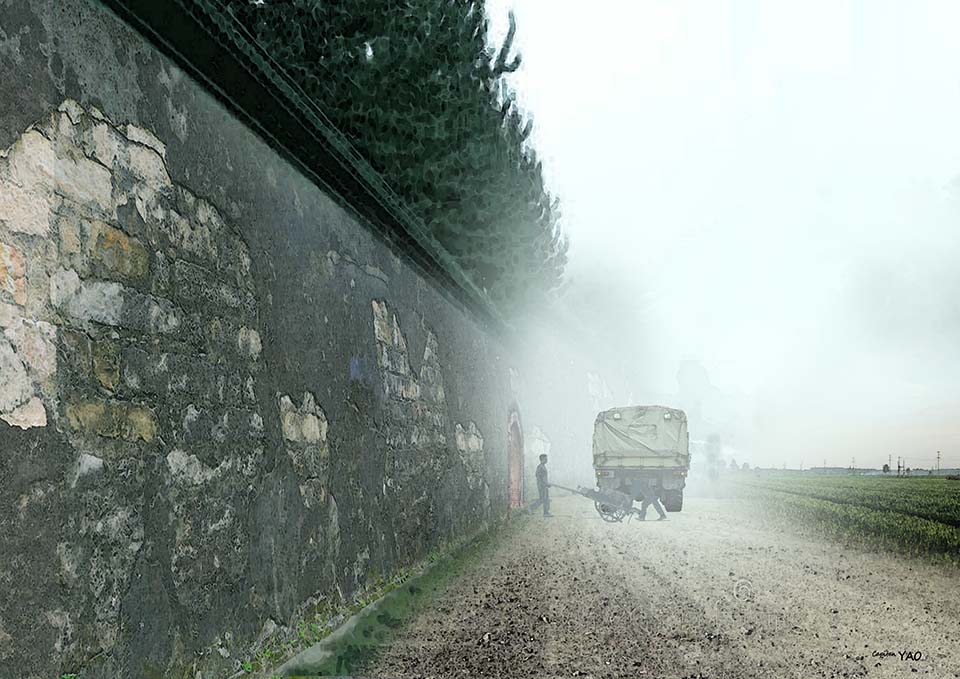
(Figure 6-4-4) Paul Draken and Mr. M secretly smuggled Kawashima Yoshiko out of the prison through the back door.
"Don't say that, I've already thought of a plan."
Of course, I only went to her after I had a plan. I couldn't have handled this alone; I used a considerable amount of gold bars to ask Ma Hansan for help. Only he had the extraordinary ability to rescue someone from the brink of death. He told me not to worry about the method he used, so I genuinely didn't know the details. The rumor was that a substitute named Liu Fengling was bought to take the death in her place. Later, someone actually complained to the newspaper, claiming that Liu's mother had sold her daughter's life for ten gold bars, but only received four. After the execution, when she went to ask for the other six gold bars, she was beaten by the prison guards and never returned home.
On March 15, 1948, the day of the execution was indeed unusual. In the past, the execution of war criminals and traitors was carried out in public with the public watching. This time, only two so-called Western media were present, one of whom was me and the other was Mr. M. All Chinese media, including official ones, were isolated outside the high walls of the prison.
There was no gunman present and no blank firing whatsoever. We simply stuffed Kim Bihui, who was under the influence of drugs and unconscious, into a sack and dragged her out through the back door of the garbage collection area on a handcart. As we left, we heard gunshots coming from inside the prison. Then the prison gate opened to let the media in, and we saw a female corpse lying on the door panel, her face torn apart by bullets and unrecognizable. No one could confirm whether it was Kawashima Yoshiko.
I immediately loaded the sacks onto the car I had prepared and headed to the airport. That same day, I used my own plane to take her from Peiping to Manchuria. At that time, the battle between the Kuomintang and the Communist Party in Northeast China was raging. I landed at an abandoned Japanese airfield that few people knew about. When we parted, we hugged for a long time. In the end, I pushed her away and told her to go as far away as possible without an identity. She said she was going to the border between Mongolia and the Soviet Union to seek refuge in her father Prince Su's territory. I never heard from her again.
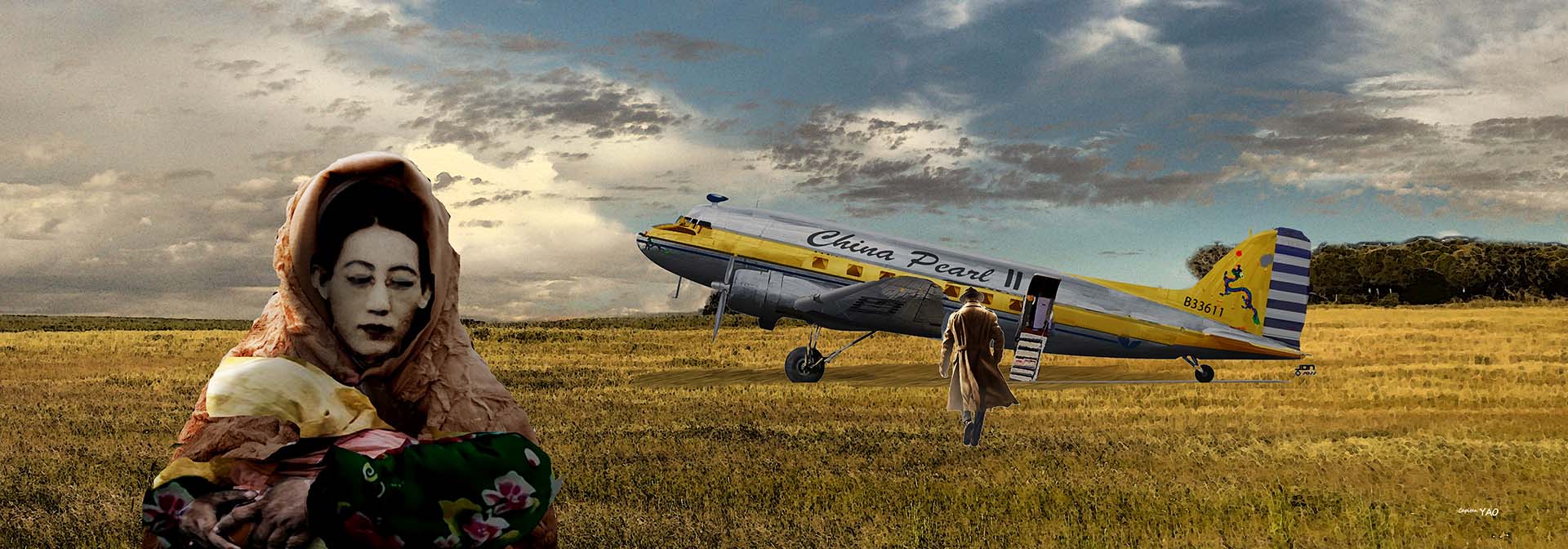
(Figure 6-4-5) Paul Draken used his "China Pearl II" to transport Kawashima Yoshiko from Peiping to the Mongolian-Soviet border for exile. My reason for helping Kawashima Yoshiko escape the death penalty might be because of a past romantic relationship with her, but why did Mr. M get involved? Using Ma Hansan as a scapegoat was merely a pretext; we could fabricate lies as a smokescreen without Kawashima. Mr. M's involvement stemmed from Kawashima providing a more valuable bargaining chip: intelligence about the Chungking high command's secret dealings with the Japanese during the war. Kawashima initially thought this would be her lifeline, but with Tai Li's death, the Chungking high command, lessened by one factor, decided to silence her to prevent future trouble, thus turning it into her death knell. Mr. M believed that possessing this top-secret intelligence could be used to blackmail the Kuomintang high command in the future, but Kawashima distrusted Mr. M, fearing he would renege on his promise after handing it over, and only agreed to entrust the intelligence to me. Therefore, Mr. M had no choice but to cooperate with this charade. When we parted, Kawashima tore open her cotton-padded coat and took out a small package. It turned out she had used her spy camera to photograph all the documents on film, which allowed her to hide them for so long. This top-secret intelligence ensured Hong Kong remained in British hands for half a century after the war, because we discovered that the intelligence involved not only Chungking but also Yan'an. Although Chiang Kai-shek agreed to exchange Hong Kong for Taiwan at the Cairo Conference, Mao Tsetung did not agree. Although I explained the Hong Kong issue to Mao when we met in Chungking on September 27, 1945, it wouldn't have lasted so long without strong leverage. In the 1990s, when Prime Minister Thatcher was negotiating the renewal of the lease on the New Territories with China, I heard that someone had contacted me through connections with this document. I denied its existence. In the end, Mrs. Thatcher lost all her leverage, and not only the New Territories but also Hong Kong Island returned to China. Disturbed, she fell on the steps in front of the Great Hall of the People, showing the world the decline of the British Empire. I think even if Thatcher had obtained this document, it probably wouldn't have been very effective, because all the parties involved have passed away, and the new generation of leaders probably wouldn't care about this threat. Compared to Kim Bihui, Li Hsianglan is a stark contrast. Kim Bihui was originally from China, but after being adopted by the Japanese Kawashima Naniwa, she changed her name to Kawashima Yoshiko, and most people assumed she was Japanese. Li Hsianglan was originally from Japan, her original name being Yamaguchi Yoshiko. After being adopted by the Chinese Li Kichun, she had the Chinese name Li Hsianglan, and almost everyone assumed she was Chinese. This difference resulted in a life-or-death difference during the post-war trials of war criminals.
Compared to Kim Bihui, Li Hsianglan is a stark contrast. Kim Bihui was originally from China, but after being adopted by the Japanese Kawashima Naniwa, she changed her name to Kawashima Yoshiko, and most people assumed she was Japanese. Li Hsianglan was originally from Japan, her original name being Yamaguchi Yoshiko. After being adopted by the Chinese Li Kiichun, she had the Chinese name Li Hsianglan, and almost everyone assumed she was Chinese. This difference resulted in a life-or-death difference during the post-war trials of war criminals. 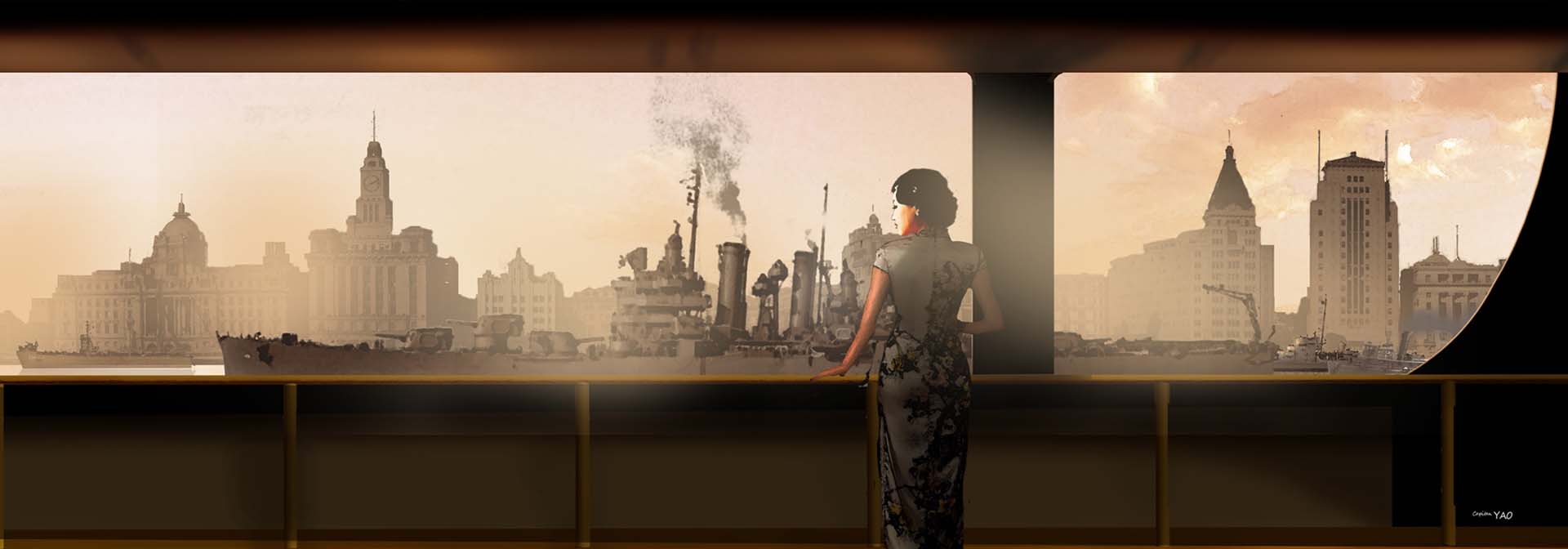
Li Hsianglan escaped execution by obtaining proof of her Japanese identity. In March 1946, as she boarded the "Unsen Maru," a ship bound for Japan, and sailed away from Shanghai in the sunset, watching the magnificent Bund buildings disappear into the distance, the ship's loudspeaker played "Night Fragrance," marking the end of the legendary first half of Li Hsianglan's life in China. She was only twenty-six years old that year, yet she had already lived a more brilliant life than many others, and a long and equally brilliant life lay ahead of her. After the Kawashima Yoshiko affair was settled, I immediately prepared to return to England, as I was to represent the Royal Navy in overseeing the return of the British-donated cruiser "Chungking" to China in mid-May. I decided to fly across the Pacific from Tokyo on an American transport plane, which would save me a considerable amount of travel expenses. Then I would take a train across the United States to Washington, D.C., to visit Secretary of State George Marshall, and then take a ship back to my hometown in England. I had already telegraphed Boxer to say that I would visit him and Emily Hahn. Because the schedule was quite tight, I'd better set off before the end of March.
|