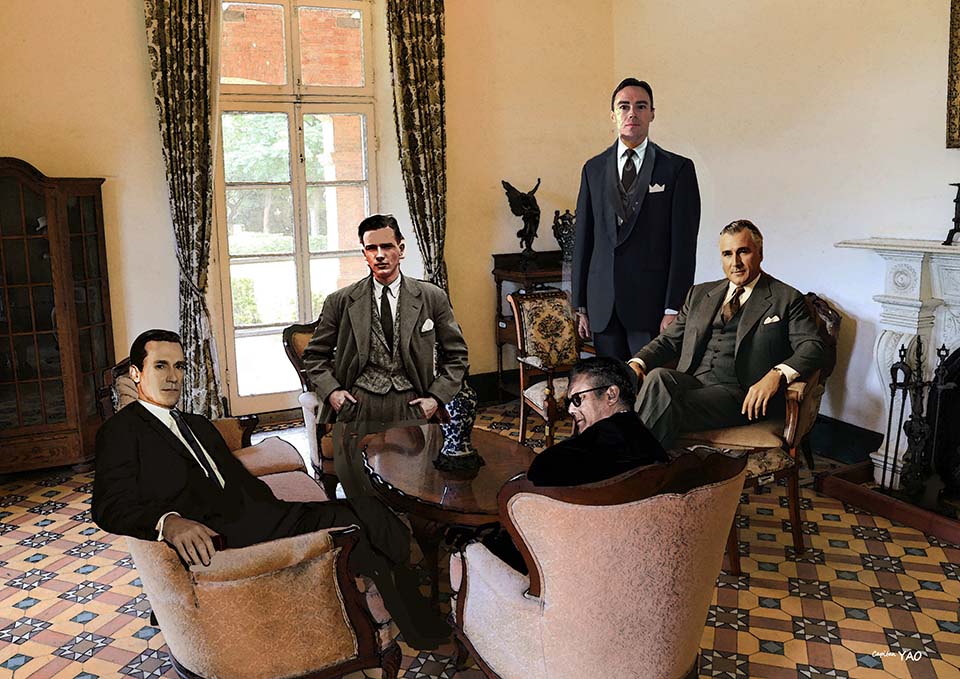
In early March 1947, the consulate in Tamsui, Taiwan, called to say that armed riots broke out among the people in various parts of the island and the situation seemed to be out of control. Since we did not have a professional intelligence unit in Taiwan, it was difficult to deal with the situation. Therefore, my superiors hoped that I would go there to find out the situation, because I was the most familiar with Taiwan among all the people.
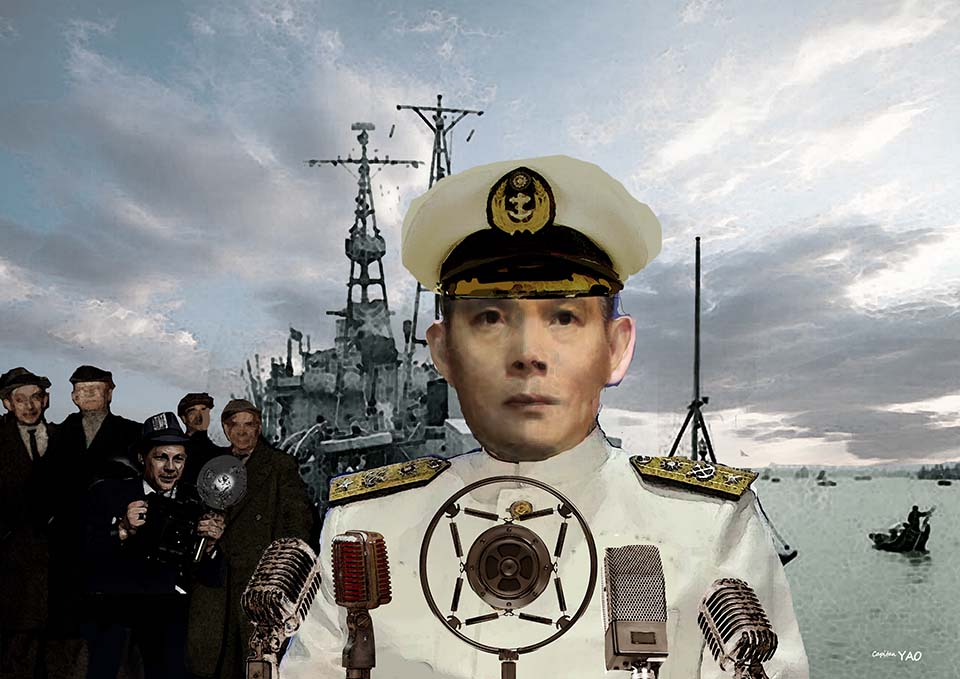
The fastest way to get to Taiwan is by plane, of course, but the situation is unclear, and it might be dangerous for someone to fly out of the airport alone. Ideally, a warship would be sent to escort and protect them, but the Royal Navy simply couldn't spare any at the time. I speculated that the Chinese Navy would likely send ships to Taiwan to suppress the unrest, so I called Rear Admiral Fang Ying, commander of the Shanghai Naval Region. He was a member of the Fookian clique and an old acquaintance of mine. Fang Ying said that the orders from his superiors had just arrived, and they were to depart that very night; if I wanted to go, I should hurry.
I immediately asked a colleague to drive me to Wusong Naval Port and board the flagship of task squadron, the "Taikang," an escort destroyer (DE), one of the "eight ships" recently received from the United States, and its captain was Kao Ju. The task squadron also included the "Chonghai" and the "Fupo." The "Chonghai" was a tank landing ship (LST) received from the Central Naval Training Regiment in Tsingtao, while the "Fu Po" was a "Flower-class" corvette donated by Britain, the same type of ship that I had sunk by German torpedo boats off Calais in 1944.
Because Captain Gao Ju was a commander and I was a naval captain, I received special treatment on board. They gave me the best cabin, and I sat in the seat of honor during meals. During the voyage, Captain Gao briefed me on the general deployment of the navy. He said that the tank landing ship "Chong Chuan" had previously visited Keelung with naval academy students and was still in port. Including "Tai Kang," "Chong Hai," and "Fu Po," there would be four warships in Keelung harbor. At the same time, the China Merchants Steam Naval Shipyard's "Hai Ping" would be carrying the 4th Military Police Regiment from Fuchow to provide reinforcements. In addition, two medium landing ships (LSMs), "Mei Song" and "Mei Le," were dispatched to Kaohsiung harbor. This was the navy's current deployment for this incident.
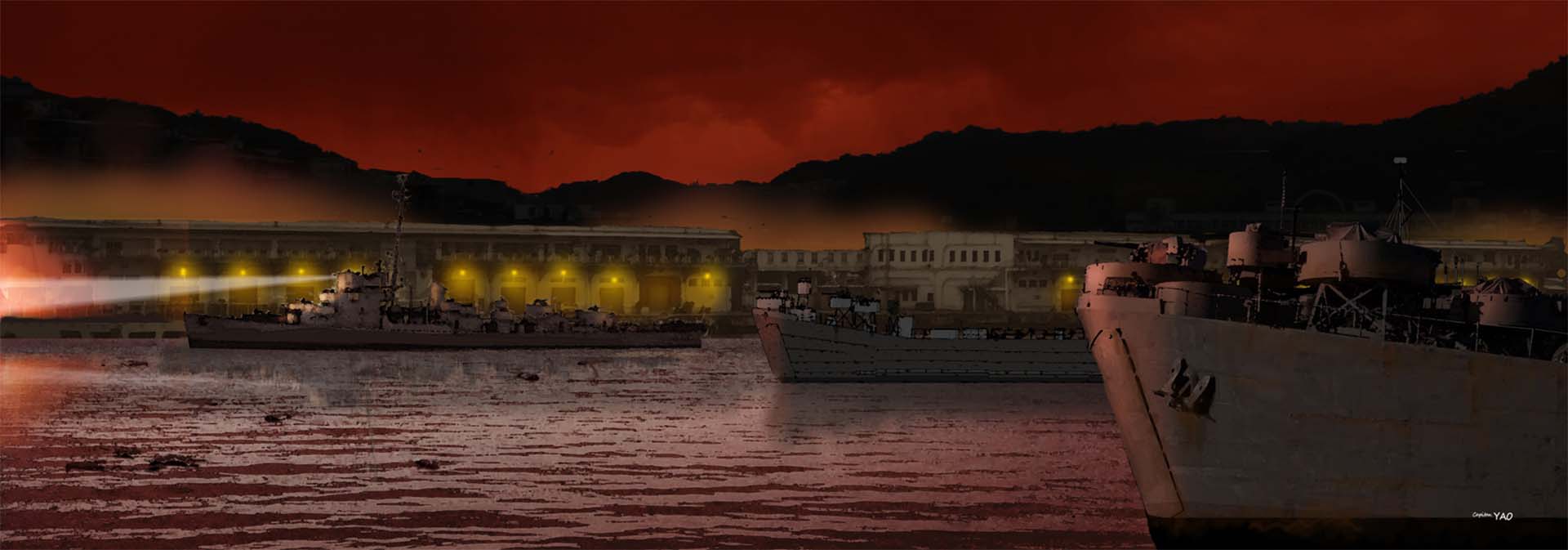
(Figure 6-2-1) The three warships "Taikang", "Chonghai" and "Chongchuan" at Keelung Harbor on the night of March 7, 1947. 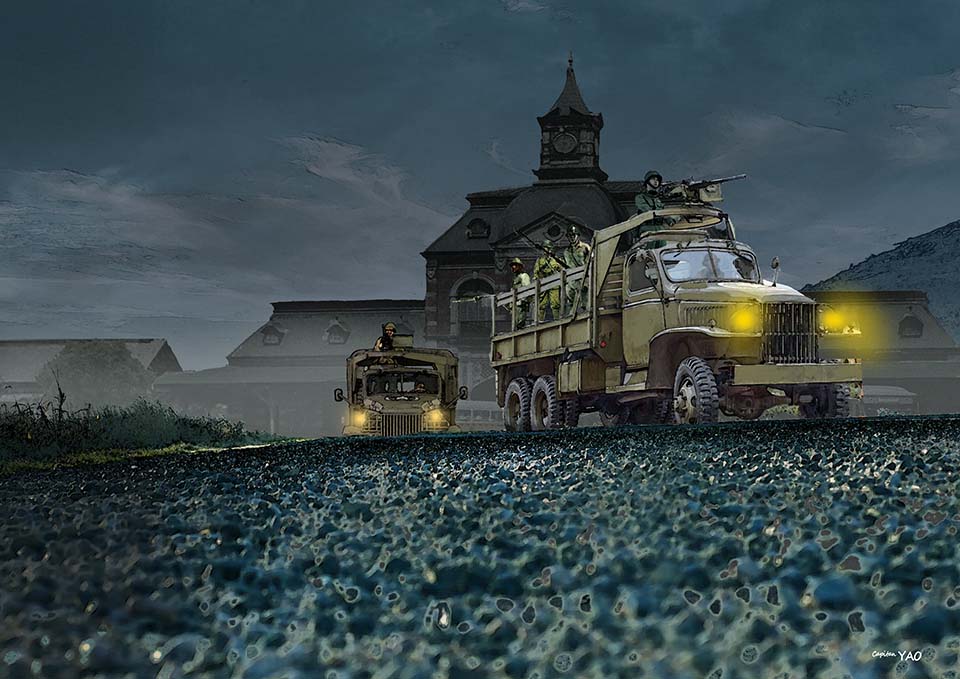
(Figure 6-2-2) The 4th Military Police Regiment escorted the special envoy delegation from Keelung Port to Taipei in the early morning of March 9.
Fortunately, Yang Lianggong, the special envoy of the Control Yuan of the Nationalist Government who came from Fuchow on the gunboat "Haiping" on the morning of March 8, decided to go ashore to Taipei after the 4th Military Police Regiment, which was brought from Fuchow by the China Merchants Steam Navigation Company on the "SS Haiping" that evening, arrived in Keelung. I quickly asked them to let me go with him. The convoy of several military trucks set off from Warehouse No. 14 at 2:00 a.m. Along the way, they were attacked by snipers, but were repelled by the military police. Members of the special envoy's delegation were also injured.
The convoy arrived in Taipei at 3:00 AM. After a brief rest, they proceeded to the Naval Office in Yuanshan District, where they discovered numerous corpses lying on the ground in front of the warehouse. They learned that the convoy had been attacked the previous night and the bodies were left behind after being repelled by the defending forces. A man at the scene briefed the special envoy, introducing himself as Lin Tingli, the head of the Taiwan station of the Bureau of Investigation and Statistics!
What? He's "Lin San"? The one Uncle Chak introduced to Tai Li? I guess Lin Tingli probably doesn't recognize me, but he probably thinks it's strange that a foreigner would be with a special envoy. He looked at me suspiciously. I quickly turned my head to the other side and saw a train station nearby. I realized it was the "Miyanoshita" station where Annie and I got off when we came to the Taiwan Shrine. At that moment, a gasoline express train was about to leave for Tamsui. So I quickly left the investigation team and jumped on the train. Soon after arriving at Tamsui Station, I walked to the British Consulate, which was the Dutch castle where Annie and I had afternoon tea with the consul when we docked the "China Pearl" on the Tamsui River.
The consul was surprised that I had arrived in Tamsui amidst such chaos. At the time, there were many Westerners gathered in the consulate, mostly British merchants and missionaries in Taiwan. Through conversation, I roughly understood the situation. Simply put, it was a "gap in expectations." After half a century of relatively modern, systematic, and efficient Japanese rule, Taiwan suddenly faced corruption and exploitation from traditional Chinese bureaucrats and the military. This led to comparisons and subsequent rejection, widening the rift between the two sides. If the rulers did not handle it properly, a small spark could ignite an uncontrollable conflagration.
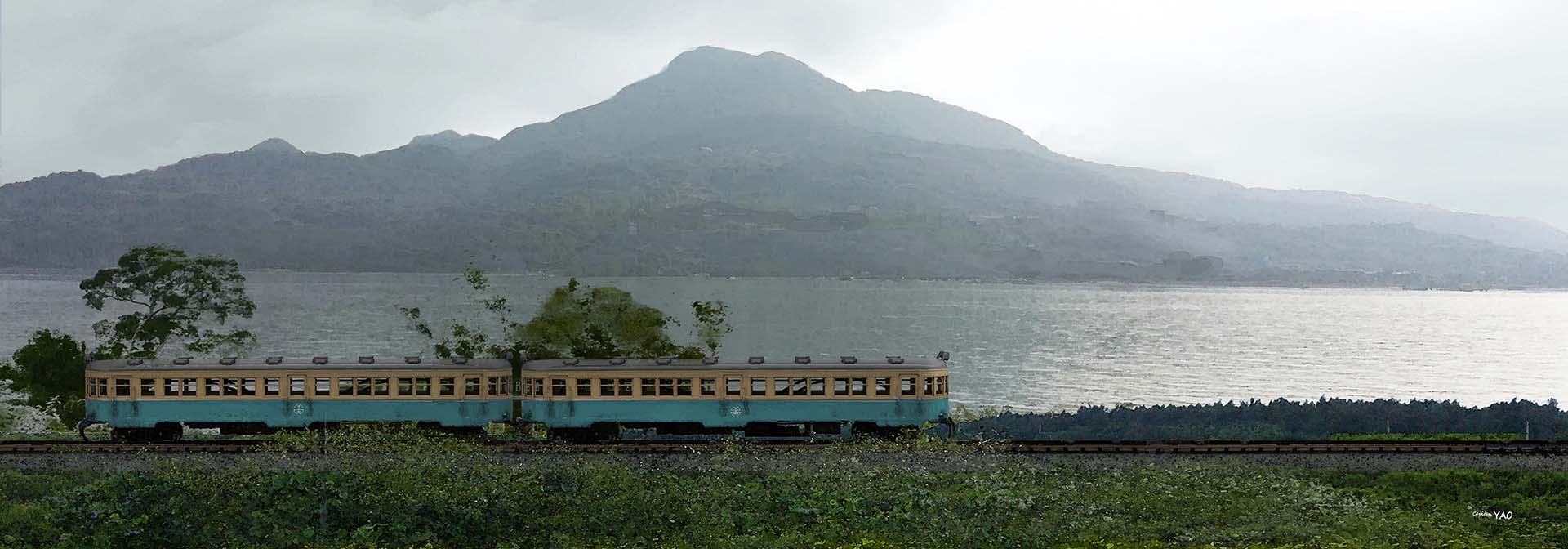
(Figure 6-2-3) Paul Draken took a gasoline express train from Miyanoshita Station to Tamsui. Chen Yi, who served as the head of the Taiwan Administrative Office, was also at the heart of the problem. This position combined military, political, and judicial power, similar to the Japanese governor-general in his time. Among the Kuomintang officials, Chen Yi was undoubtedly the most qualified for this role. A graduate of the Japanese Army War College and married to a Japanese woman, he should have had a good understanding of Japan. He had previously served as the chairman of Fookian Province, possessing administrative experience and benefiting from the connection between Fookian and Taiwan. Based on his past achievements, Chen Yi was indeed a reasonably good official with considerable ideals, but he was still unable to reverse the corruption within the entire bureaucratic structure, leading the Taiwanese people from initial high expectations to disappointment, ultimately making Chen Yi the target of public criticism.
(Figure 6-2-4) Paul Draken arrived at the British Consulate in Tamsui and heard the local British expatriate community discussing the incident.
Chen Yi's military deployment was also perplexing. When the Chinese army took over Taiwan in October 1945, it stationed an army in both the north and south. However, after Chen Yi took power, he believed that Taiwan did not need these troops and ordered them to return to the mainland, leaving behind less than a division. Some say this was Chen Yi's trust in the Taiwanese people, but the reality was that when riots broke out and civilians attacked military bases in various places, the army was powerless to resist and its weapons were confiscated, further escalating the situation.
My interpretation is that Chen Yi still harbored a warlord mentality of controlling his own territory. Taiwan is an independent island with so much public infrastructure left by the Japanese, and its people are obedient and orderly, making it the ideal place for self-governance. However, the more central government troops were stationed there, the less autonomy he had. Therefore, using the seemingly legitimate reason of the need for civil war on the mainland to force these troops to leave became a necessary tactic for him. But when the situation spiraled out of control, he kept demanding reinforcements from Chiang Kai-shek. The hastily dispatched 21st Reorganized Division was of poor quality, causing many problems later on. Later generations often confuse the Kuomintang troops received in 1945 with those involved in the 1947 Incident, hence the term "beggar soldiers."
As for those who say this is the people expressing their opinions, not a rebellion, from our British perspective, what is a few hundred people attacking a military airfield and fortress base with machine guns and artillery if not a rebellion? The same thing happened in Northeast China, where the Communist army mobilized local armed forces to attack Kuomintang positions, naturally encountering a war-level response. In comparison, Taiwan's situation this time is far from reaching that level.
The February 28 Incident was quickly quelled by the army, but it became a taboo subject for the Kuomintang. No one dared to mention it, let alone study it. With the truth unclear, only individual interpretations remained. The hatred did not dissipate with time, but instead became more intense after the Kuomintang's authoritarian rule weakened.

The consul said, "The contradictions in British rule over India were even greater. We've seen all sorts of situations. If the British had handled this Taiwan incident, it would never have turned out like this." I replied, "Your Excellency, Taiwan is different from India. India was a colony, while Taiwan was Chiang Kai-shek's own people, so the way they were treated was naturally different." Under my father's years of tutelage, I was completely unaware of how the British ruled India. The most important method of colonial rule was "proxy politics": first, find a small group of privileged individuals, grant them privileges, and let them control the majority of the common people, Instead of expecting us to manage them ourselves. To maintain their privileges, they would relentlessly exploit the lower classes, making them contribute profits to the colonizers and preventing rebellions. Because of the significant conflicts between the privileged class and the common people, the two would never unite to expel the colonizers. This was the colonial policy that ensured long-term stability and maximized profits. However, because Chiang Kai-shek considered the Taiwanese people as his own citizens, he did not use class-based control methods. Instead, he used ideological means to purge pro-Japanese groups, such as through land reform. This touched a nerve with the vested interests, leading to resistance. If Chiang Kai-shek had used the British method with India, he should have appeased the powerful families, granting them privileges and allowing them to control the lower classes. Perhaps the incident would not have occurred, or at least a scapegoat could have been found. However, comparing it to British rule over India might be inappropriate. The examples of France and Algeria are more similar. France did not treat Algeria as a colony, but rather as a province of France. This is similar to Chiang Kai-shek's concept of Taiwan. But therein lies the problem: when the post-war movement for national self-determination arose, Britain could abandon India and allow it to become independent, but France could not. For a national leader, relinquishing territory would be tantamount to political suicide, leaving France with no choice but to send troops to suppress it. This caused France considerable trouble in Algeria, ultimately forcing it to withdraw and ending the Fourth Republic. Taiwan was a Japanese colony. A defeat and withdrawal wouldn't cause a political upheaval domestically, but for Chiang Kai-shek, Taiwan was territory. Losing Taiwan so soon after winning World War II would likely have ended his political career. Therefore, some people's demands are destined to be unfulfilled, a fact that foreigners clearly understand. Besides Taiwanese, mainlanders were also killed in the incident. Most of the mainlanders were killed by mobs using a so-called "language check" method; anyone who couldn't speak Taiwanese or Japanese was executed on the spot. In addition to those killed by the military crackdown, many Taiwanese were framed by each other, for reasons ranging from personal vendettas to financial crimes. For example, Lin Tingli, the head of the Taiwan station of the BIS, was Taiwanese. He organized a "special operations team" to assist in the "cleansing" and arresting political prisoners, which raised many suspicions. The mentality of the Taiwanese people is also quite intriguing. I witnessed the 62nd Army landing in Kaohsiung and didn't perceive any negative image; the welcoming scene from the people seemed genuine. Given that China was the victor, it's understandable that Taiwanese people might have wanted to bask in the glory, even resorting to beating and verbally abusing Japanese soldiers who hadn't yet been repatriated. However, some Taiwanese, serving as prisoner-of-war camp administrators during the war, were even more brutal towards Allied POW than the Japanese, which is why many Taiwanese were sentenced to hanging by military courts after the war. The Taiwanese's subservience to the Japanese, coupled with their swagger towards prisoners of war, reflects a compensatory mentality and a sense of inferiority. This might be criticized as mere recollection, but here's a concrete example: the "Yoizuki Hell Ship Incident."
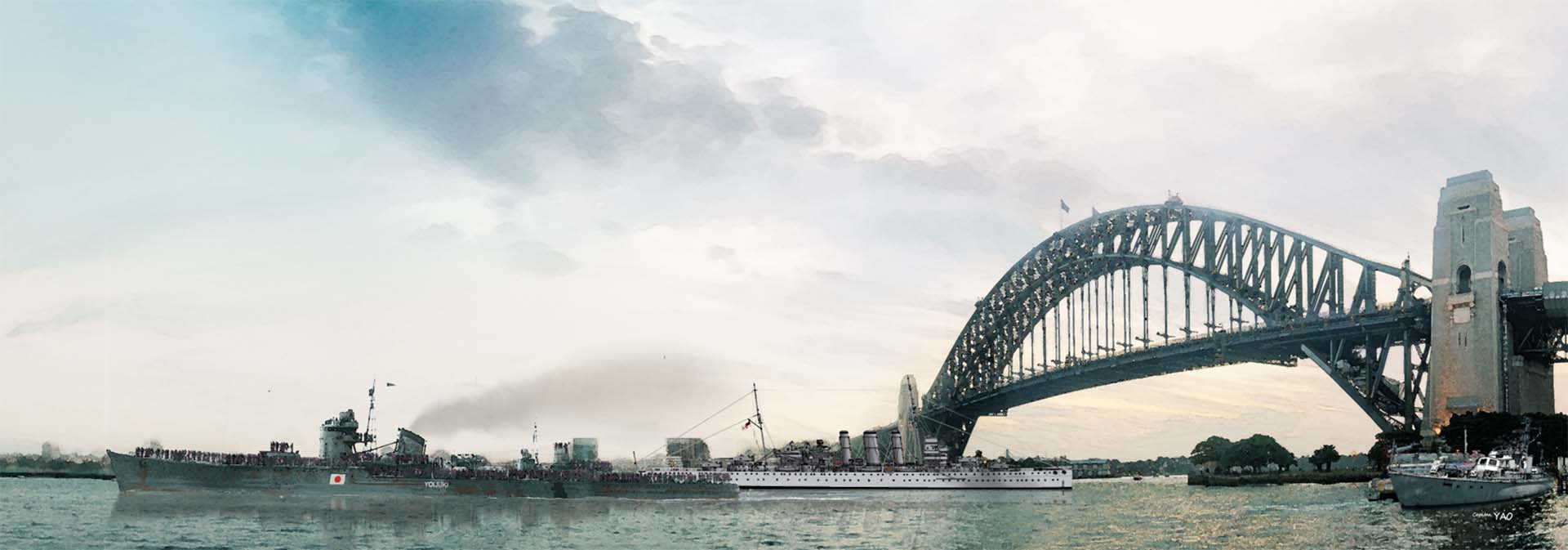
(Figure 6-2-5) The "Yoizuki", which has been disarmed and used as a special transport ship for demobilization, is carrying repatriated personnel and leaving Sydney Harbour, Australia. Among the Allied forces, Australians hated the Japanese the most. In their eyes, Taiwanese people were no different from Japanese people, and this did not change because they claimed to be citizens of the victorious nation. The "Yoizuki Hell Ship Incident" also shows the realistic side of Taiwanese people.
When I traveled from Shanghai to Keelung aboard the "Taikang," Captain Gao mentioned that the task squadron included the "Fu Po," but it never appeared in Keelung harbor. What was the reason? It turned out that it had sunk in a maritime accident on its way. London was very concerned, and a telegram from MI6 headquarters in Hong Kong reached the consulate in Tamsui, urging me to return to Shanghai immediately to handle the situation. However, given the current circumstances, this was far from easy. I didn't want to return to Keelung harbor; that would be too troublesome. So, I asked the Hong Kong headquarters to inquire whether any Royal Navy warships had recently passed through the Taiwan Strait. The reply stated that a Sunderland seaplane was flying from Hong Kong to Shanghai, but it was inconvenient to land in Tamsui harbor, and I should find a way to transfer it at sea myself. I then asked the consulate to contact the Tamsui Naval Patrol Office at the foot of the mountain to see if a small gunboat could be dispatched to take me to the open sea to board the plane. Fortunately, everything went smoothly, and I returned to Shanghai in the shortest possible time. Speaking of the "Fu Po" ship, it is the Flower-class patrol ship "HMS Petunia" which was received at Portsmouth Naval Base in the UK on January 12, 1946. It was the first British aid ship received by the Chinese Navy. On August 8 of that year, it returned to China via the Mediterranean Sea under the command of Captain Liu Hetu, and arrived in Nanking on December 14 for public viewing. I also spoke at the press conference on behalf of the British government. On the night of March 19, 1947, the "Fu Po" collided with the "SS Haimin" of the China Merchants Steam Navigation Company in the waters near Turnabout Island near Fuchow and sank. Except for the chief engineer, Lieutenant Chiao TeHsiao, who was rescued, all the other more than 130 people, including the captain, Lieutenant Commander Kiang Yu, perished, including 18 naval academy trainees.
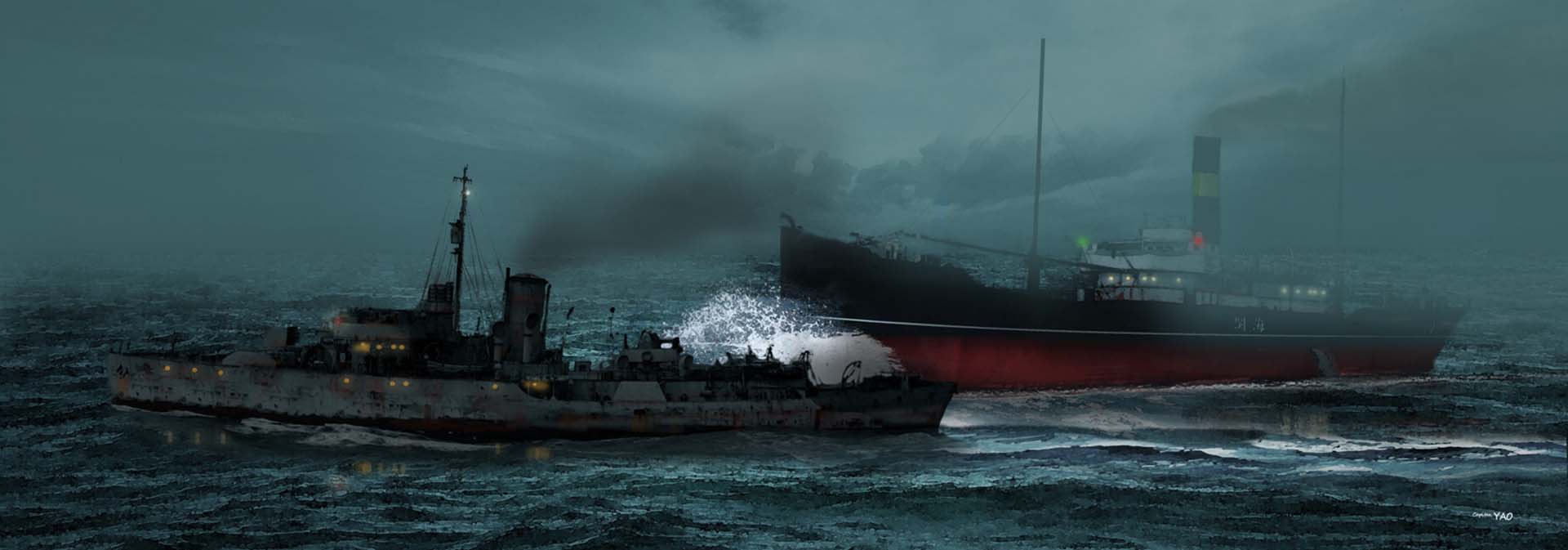
(Figure 6-2-6) The "Fu Po" corvette collided with the "SS Haimin" cargoship of China Merchants Group and sank. The accident involving the "Fu Po" warship triggered a sharp factional struggle within the Kuomintang Navy. At a press conference, Rear Admiral Fang Ying, commander of the Shanghai Military Region, claimed that the accident was entirely due to Kui Yungching's attempt to purge the Fookian faction by replacing Captain Liu, who was originally in charge of the ship, with Kiang Yu, the deputy commander of the M.C.S. school, as the ship's captain. He claimed that Kiang's lack of professional knowledge and experience led to this tragedy that should never have happened. Rear Admiral Fang Ying then announced his retirement and severed ties with Kui Yungching.
(Figure 6-2-7) Rear Admiral Fang Ying, commander of the Shanghai Naval Region, held a press conference to criticize Kui Yungching for the sinking of the "Fu Po" corvette, which triggered the later "navy white terror".
(Figure 6-2-7) Rear Admiral Fang Ying, commander of the Shanghai Naval Region, held a press conference to criticize Gui Yongqing for the sinking of the "Fubo" ship, which triggered the later "Naval White Speed Terror".
Fang Ying criticized Kiang Yu for not being able to be directly promoted to captain, citing British naval tradition that a deputy commander must serve as captain of the next lower-ranking ship before returning to their original position; they cannot be promoted directly from the same ship. This is because if a deputy commander could be promoted directly, the captain would not trust them. Secondly, a naval deputy commander is not the same as a vice-captain; a deputy commander is more like an executive officer, managing all the ship's affairs. Kui Yungching, being from the army, doesn't understand the significance of a deputy commander, assuming that in the army, if a regimental commander dies, the deputy regimental commander should take over. Why can't a naval deputy commander be directly promoted to captain from the same ship? Kui Yungching is narrow-minded and stubborn. Arriving in the unfamiliar navy, he doesn't humbly learn but insists on bringing his army's warlord-like style to the navy, leading experts with an outsider's knowledge, resulting in even more contempt.
Because the British Navy traditionally trusted officers from Fookian and agreed with Fang Ying's remarks, it began to distrust Kui Yungching's abilities. This cast a huge shadow over future cooperation between the Chinese and British navies. London had originally thought it could win over Kui Yungching as a proxy for the British Navy, which is why it kept increasing its aid. However, it found that Kui's performance did not meet its expectations, so it began to withdraw its investment. Many of the warships that were originally planned to be donated were refused to be handed over, or even canceled outright.
Fang Ying was one of the few remaining powerful figures in the Fookian clique after Chen Shaokuan stepped down. Her remarks to reporters directly challenged Kui Yungching's authority. Although Fang Ying retired from the military immediately after speaking out, Kui Yungching harbored resentment towards the entire Fookian clique and launched a bloody purge, marking the beginning of the "White Terror in the Navy." The vast majority of victims were Fookian clique officers and students from the Mawei Naval Academy. Because of this, most Fujian clique generals chose to remain on the mainland after 1949, becoming a crucial foundation for the establishment of the People's Republic of China's navy. It's unexpected that the February 28 Incident would lead to so many other events.
The White Terror in the Navy marked the beginning of the White Terror in Taiwan in the 1950s. While there was some causal relationship between the White Terror and the February 28 Incident, they were fundamentally different. During the February 28 Incident, China's capital was Nanking, and the measures taken were essentially the central government's suppression of a riot in a remote area, with a relatively simple objective. By the time of the White Terror in the 1950s, Chiang Kai-shek only had Taiwan left. All measures were aimed at self-preservation, with the underlying theme of anti-communism and counter-espionage. The addition of thought control led to a wider range of persecution and made the situation even more terrifying.
So what was the impact of the February 28 Incident on Britain? Before the war, Britain was the leading power among all the major powers in China, and pursuing stability was in Britain's best interest. Therefore, according to pre-war strategies, Britain would likely have supported Chiang Kai-shek in quickly quelling the rebellion. However, after the war, the United States replaced Britain's position, so the Nationalist government was more concerned about the US's attitude, and Britain became insignificant. This brings me to my peers, George Henry Kerr, who was the naval attaché at the US Embassy in Chungking and was actually a member of the Office of Strategic Services (OSS). After accompanying Chen Yi to Taiwan in October 1945 to take over, he stayed at the Taipei consulate and witnessed the incident firsthand, much more deeply than I, a mere bystander. However, Kerr was enthusiastic about Taiwan's "trusteeship" and "independence," actively intervening in the incident. There were even rumors that he provided weapons and funds to the instigators. I have no evidence to confirm this, but I think Britain wouldn't have done so, since the whole of China was in Britain's interest, and there was no reason to cause trouble on a remote island, only to suffer greater losses for less.
Kerr's stance is very clear, but it should only represent his own opinion. Obviously, the State Department did not accept it, otherwise the US government would not have remained unchanged to this day. My father often reminds me not to forget that I am an official of the British Empire just because I have been in China for a long time. Similarly, I wonder if Kerr has forgotten that he is an official of the US State Department because he has been in Taiwan for a long time.
|