With the end of the war, the issue of rebuilding the Chinese navy began to surface. Anyone familiar with the factional struggles within the Chinese navy before the war knows that this was by no means a simple matter. The problem was further complicated by the competition between the United States and Britain for dominance in postwar China.
China's modern navy began in Fookian. In the late 19th century, Shen Paozhen established a shipyard and naval academy in Mawei, on the Min River in Fuchow. Due to its advantageous location, the majority of those joining the navy came from the northern Fookian region of Fuchow. This tradition continued until 1945. At that time, the Naval Headquarters led by Chen Shaokuan was essentially the stronghold of the Fookian faction, with almost 70% of the officers being from Fookian. The Mawei Naval Academy, established entirely in imitation of the British system, employed many British instructors, and most graduates were sent to study in Britain, thus maintaining the closest ties with the British Navy.
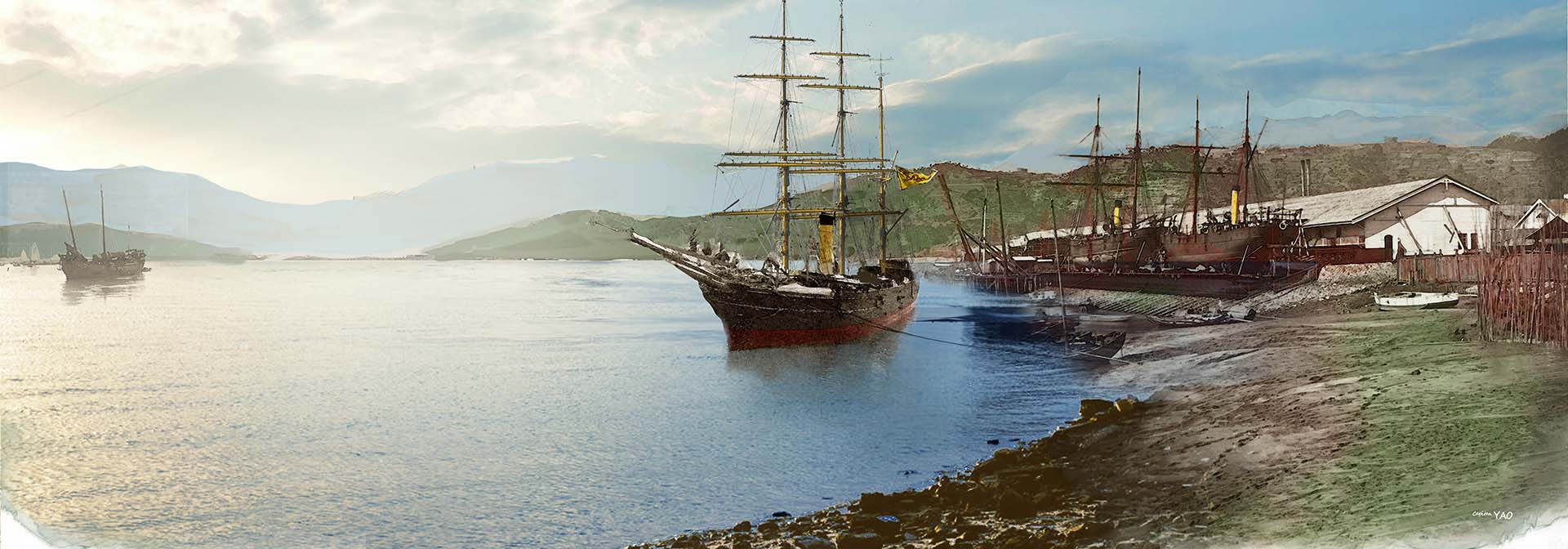
(Figure 6-1-1) The origin of China's modern navy, Fookian Mawei Shipyard.
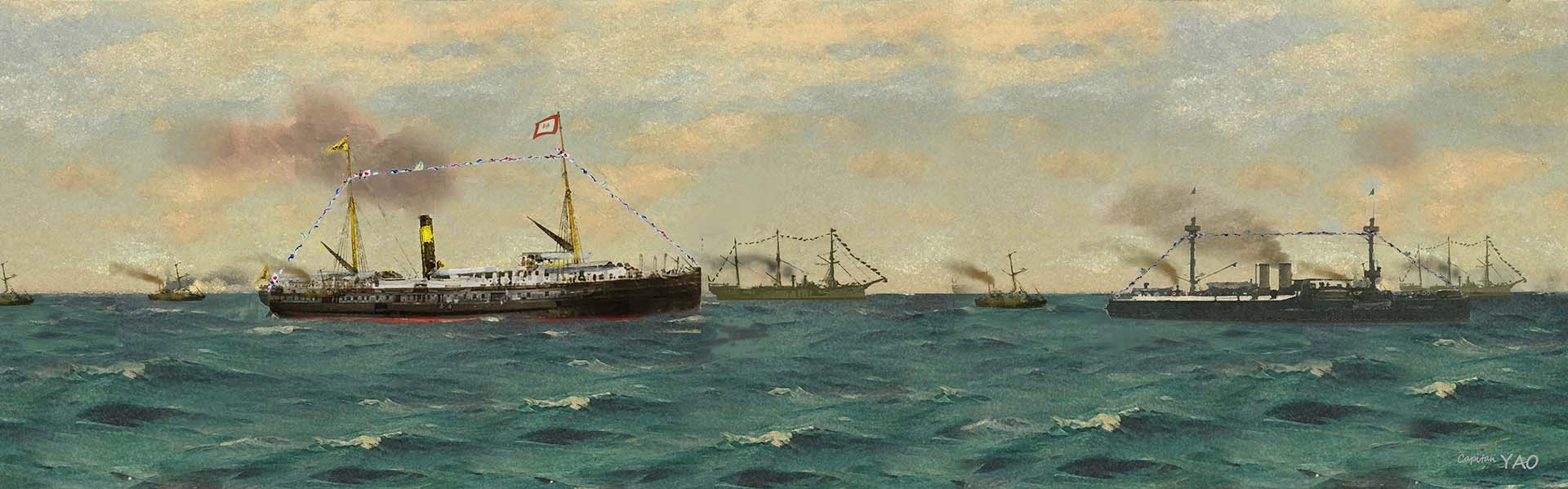
(Figure 6-1-2) The grand drill of the Beiyang Fleet in the Bohai Sea in 1886, presided over by Prince Chun, was a glorious moment for the Beiyang Fleet. Almost simultaneously with the Fookian clique, Kuangchow in the south also established its own local navy. The Canton navy was essentially a naval police force, consisting mainly of small gunboats. The Canton navy was primarily composed of graduates from the Whampoa Naval Academy. Due to its geographical advantage and close ties with Hong Kong, it also had long-standing relations with the British navy, though not as directly as the Fookian clique. The Northeast Navy was established by Shen Honglie with the support of Chang Zuolin . Because it mainly consisted of graduates from the Tsingtao Naval Academy, it was also known as the Tsingtao Clique, and it primarily modeled itself after the Japanese Navy. The M.C.S. School was established by Chiang Kai-shek in hopes of creating his own direct navy. It was the shortest-lived and had the closest ties with Germany. Of the four factions, the Fookian naval clique had the best academic foundation, followed by Tsingtao and Canton, while the M.C.S. faction had the worst short-term training. Next, the Tsingtao clique, having received Japanese-style education, had the best fighting spirit; the Fookian officers were weak and unlike typical soldiers; the Canton navy had a strong commercial personality and was most adept at smuggling; the Dianlei faction considered themselves the emperor's disciples, prioritizing politics and excelling at internal strife. This isn't my opinion, but rather that of my teacher, Adm. Shen Honglie, and I wholeheartedly agree with his assessment. Because the Fookian clique always considered itself the central navy and excluded all other factions, it made enemies everywhere. Chiang Kai-shek also felt a thorn in the side of this non-direct-lineage navy and had always wanted to find an opportunity to control it. However, he lacked qualified naval personnel under his command, so he established the M.C.S. School to plan for the future. After the outbreak of the War of Resistance against Japan, the Tsingtao and the M.C.S. School merged, and Chiang Kai-shek took advantage of the resentment of the graduates of these two schools towards Chen Shaokuan to launch a major purge of the Fookian clique.
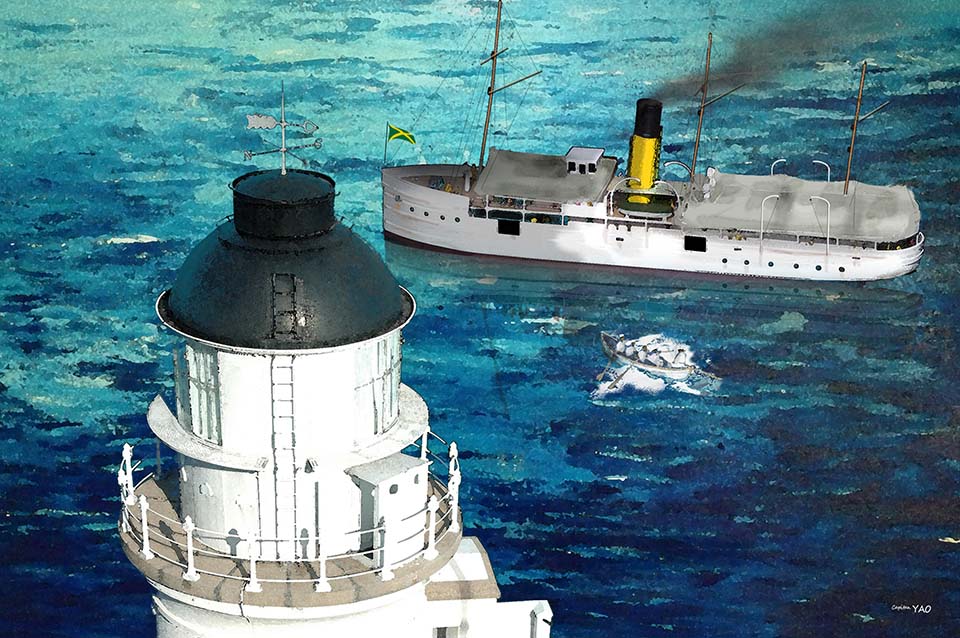
(Figure 6-1-3) Tung Chung Lighthouse and Customs Lighthouse Supply Ship. In China, lighthouses are under the jurisdiction of the Customs.
In China, there was another force that, while not officially a navy, functioned similarly to one: the Customs Anti-Smuggling Fleet. Due to historical reasons, the Chinese Customs Service was mortgaged to Western powers, so most of its senior officials were Westerners. In the mid-19th century, Sir Robert Hart, the British Inspector General of Customs, assisted China in ordering warships from Britain to establish the Naval Fleet. He also simultaneously established a Customs Anti-Smuggling Fleet with a distinctly British character. Therefore, the Chinese Navy and the Customs Fleet can be said to share a common origin.
Furthermore, China's port and maritime affairs were managed by the customs, a precedent unparalleled in the world. Therefore, before the war, the British firmly controlled China's ports, shipping, taxation, and even telegraph and postal services—crucial for a maritime power like Britain, primarily reliant on trade. Although Britain announced in 1942 that it was relinquishing its privileges under unequal treaties in China, the Chinese coast was already occupied by the Japanese. The so-called relinquishment was merely a convenient prelude, and didn't have much real impact. However, now that the war was nearing its end, Britain began seriously considering the possibility of restoring its pre-war privileges.
However, a new hegemon emerged in the post-war world: the United States. Britain, due to its war losses, became a second-rate power, and its privileges in China faced challenges. But the British Empire would not easily relinquish its dominance. Britain has always viewed everything from the perspective of controlling the seas, and therefore saw controlling the post-war reconstruction of the Chinese navy as a crucial key to its return to China. This is why my mission is so important.

Perhaps no one in all of Britain has a more extensive network of connections among the four major factions of the Chinese Navy than I do. Shen Honglie of the Northeast Navy is like a teacher to me; Ouyang Ge of the M.C.S. faction is like a brother to me, as I helped him purchase torpedo boats from Britain; Chan Chak of the Canton Navy is someone I became sworn brothers with during the Hong Kong escape operation; as for the Fookian faction, my Chinese classmates at the Royal Naval Academy in Greenwich are now key officers in the Fookian faction, and I also accompanied Chen Shaokuan on a trip to Taiwan. Britain wants to lead the reconstruction of the Chinese Navy after the war and thus restore its privileges in China, and London is well aware that I will be a key figure. I know that London still plans to support the Fookian-based navy led by Chen Shaokuan, just as it did before the war. I, however, hold a different view. I know that Chiang Kai-shek had long been dissatisfied with the Fookian clique, which is why he established his own elite M.C.S. school to replace it. Although Ouyang Ge was later executed and the M.C.S. school was dissolved, this reason did not disappear. China's already weak naval fleet had been almost completely destroyed by the Japanese in 1937, leaving Chen Shaokuan as a lone naval commander-in-chief. This presented Chiang Kai-shek with a golden opportunity to eliminate the Fookian clique. After the war, China needed to rebuild its navy, and Chiang Kai-shek would certainly not give Chen Shaokuan that opportunity again. I believe that another person must be considered when rebuilding the Chinese navy after the war: Tai Li, the head of the secret service. He originally had absolutely no connection to the navy, but through intelligence cooperation with Commander Miles, he developed a close relationship with the US Navy, which sparked his interest in the navy. I heard him say more than once that he hoped to pursue a career in the navy after the war; if the Americans had supported him, it wouldn't have been impossible for him to become the first Commander-in-Chief of the Chinese Navy after the war. However, for various reasons, Tai Li harbored deep resentment towards the British; if he had been in charge, British influence would likely have been completely driven out of China.
In September 1945, as soon as Japan surrendered, Chiang Kai-shek began his purge of the Fookian clique. He first established a naval department under the Military Commission, with his confidant, Army General Chen Cheng, serving as its director. Chen neither understood the navy nor had time to work around, so the actual work was handled by Rear Admiral Chou Hsianchang, who came from the Fookian clique. But I knew this was a transitional smokescreen. Chiang might appoint Tai Li as deputy director after he finished his post-war purge of traitors, and then make him the actual leader of the navy.
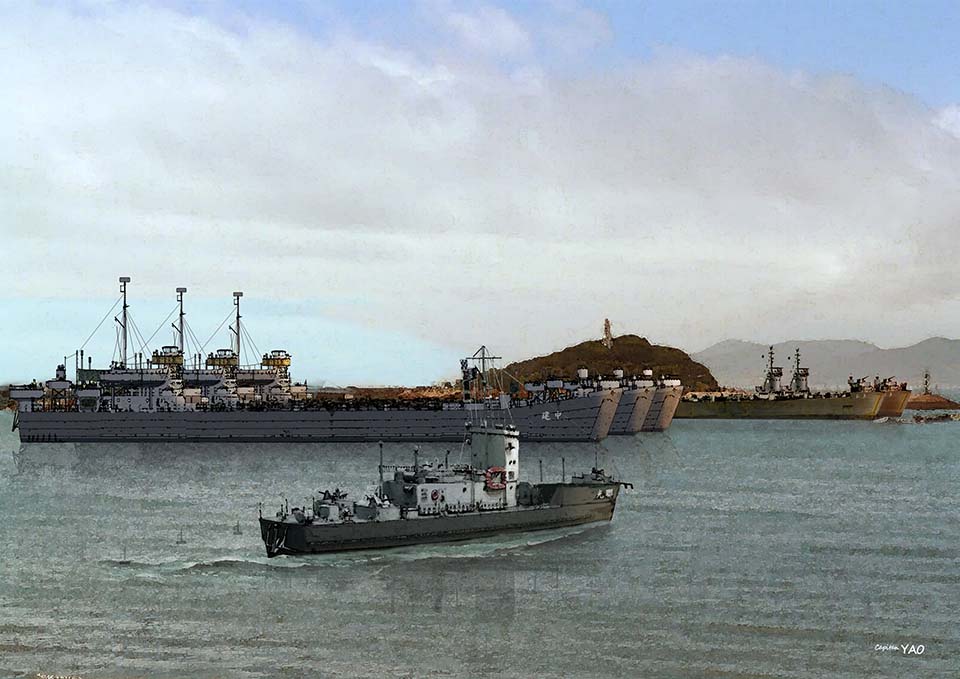
(Figure 6-1-4) The Tsingtao Central Naval Training Regiment trains and simultaneously receives landing ships donated by the United States.
In 1944, the United States announced the donation of two escort destroyers, six minesweepers, and patrol vessels to the Chinese government. Reports indicated that over a hundred more ships would be donated to assist China in rebuilding its navy after the war. Simultaneously, the US Navy assisted in establishing the Central Navy Training Center (CNTC) in Tsingtao, where it trained and received a large number of amphibious landing ships donated by the US. This aid was entirely led by the Naval Department of the Military Commission; Chen Shaokuan's Naval Headquarters had no involvement whatsoever. American support further boosted Tai Li's influence.
On New Year's Day, 1946, news came from Nanking that the Naval Headquarters had been disbanded and Chen Shaokuan had been dismissed. Tai Li flew back and forth between Nanking and Tsingtao to secretly discuss matters with the commander of the U.S. Pacific Fleet. London was very anxious about this. If we cannot change Tai Li's prejudice against Britain, we can only try to prevent him from becoming the Naval Commander-in-Chief.
In early 1946, I was summoned to Peiping to meet with Mr. M. He brought top-secret instructions: the high command ordered that no effort be spared to prevent this possibility, and instead supported Lieutenant General Kui Yungching, head of the military delegation to Britain, to take command of the post-war Chinese Navy. Britain offered very generous terms, including light cruisers and submarines that the US Navy was unwilling to provide. London was truly investing heavily this time, determined to challenge the US!
Speaking of Kui Yungching, I visited him at the Chinese Military Mission to Britain when I was in London; at that time, he was a Major General. This General Kui was a student of Chiang Kai-shek's first class at the Whampoa Military Academy. Before the war, he studied in Germany and was a fervent admirer of Hitler and the Nazi Party. Now that Germany had been defeated, I wonder if he felt embarrassed being sent to the victorious Britain. However, I noticed he had found a new interest. Many Chinese naval officers and men came to Britain for training, including Teng Chaoshiang and 600 sailors, whom I mentioned earlier who came to receive cruisers. These naval personnel were all under General Kui's command in Britain, which fueled the Major General's strong interest in the navy. I felt that for Britain, he seemed a more worthwhile investment than Chen Shaokuan.
"Dai Li was China's top intelligence chief; how could he be assassinated so easily?" I said. "He's been flying around a lot lately, so why don't we blow up his plane and make it a plane crash or something..." At this moment, Mr. M suddenly remembered the time in 1930 when we set fire to the Wizard Nalan in Peiking: "By the way, your special incendiary agent works really well, why don't we use that stuff to cause a plane crash?" This special incendiary agent was first invented in 1905 by a Sino-Russian assassination squad when they detonated the "Mikasa" to assassinate Adm. Togo Heihachiro. I also used it when I smuggled Princess Annastasia to America. It is a colorless and odorless liquid that ignites automatically when poured onto cloth and dried without any fuse or timer, making it difficult to detect. The only problem is that the timing is difficult to control, but through years of experience, we have mastered some methods, such as using the concentration of the solvent to change the drying time. In particular, we have discovered that the thin air at high altitudes accelerates the evaporation rate, and it ignites immediately once it descends to normal atmospheric pressure. This characteristic makes it the best tool for destroying aircraft. On March 9, 1946, Tai Li arrived in Peijping on Special Plane No. 222, dispatched by the Aviation Commission. He was scheduled to leave for Tsingtao on the 17th. We bribed the Aviation Commission official in charge of dispatching planes, and at the last minute before Tai Li's plane took off from the western suburbs of Peiping, we temporarily replaced the original pilot with the unsuspecting Chang Yuanren. Because of the suddenness of the event, Tai Li's bodyguards didn't have time to clear the cabin, and no one believed the pilot would carry a bomb on board. Furthermore, Tai Li was pressed for time and ordered the plane to take off immediately. Unbeknownst to them, Chang Yuanren's luggage contained a special incendiary agent that we had secretly placed there.
Our original plan was to make the special plane explode upon landing in Tsingtao to create the illusion of an accident. Based on our experience, this was highly reliable. However, Tai Li made a last-minute decision not to land in Tsingtao but to fly to Shanghai instead. Due to heavy rain in Shanghai, the plane was then diverted to Nanking. However, when the special plane arrived at Nanking Ming Palace Airport, it circled at low altitude several times due to bad weather before flying away again. Finally, the plane crashed while passing over Kiangning County, killing all 11 people on board.
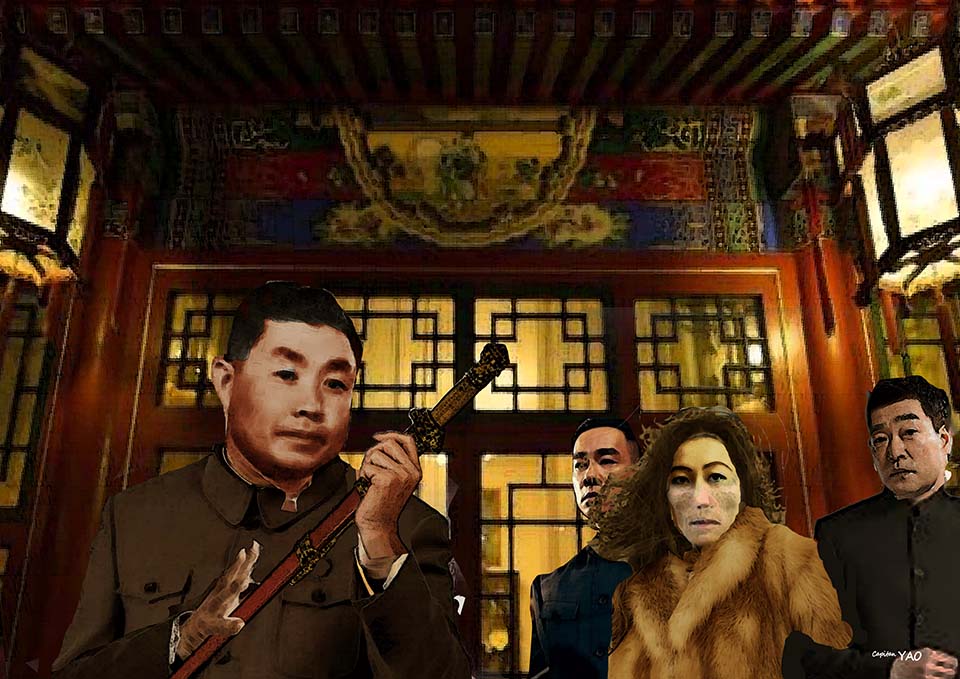
Several versions of Tai Li's death have circulated for decades, the most common being that Ma Hansan, the head of the Military Intelligence Bureau's Peiping station, accepted a Chianlong Emperor's sword as a bribe and released Kawashima Yoshiko, allowing Tai Li to discover her. Ma then presented the sword to Tai as a bribe, with his assistant Liu Yuzhu secretly planting a time bomb inside, causing the plane to explode in mid-air. Common sense dictates this is impossible. Where could a long, narrow sword conceal a bomb? How could the ticking of a timer be concealed? Tai Li's bodyguards were highly experienced; surely they would have discovered it during a raid. However, the Chianlong Emperor's sword was unearthed alongside Empress Dowager Cixi's luminous pearl during Sun Dianying's tomb raiding, and this incident also involves Kawashima Yoshiko, also known as Kim Bihui. This has piqued my interest greatly. Could this be related to the Wizard Nalan Changshu?
Another theory suggests that the assassination was orchestrated by the Office of Strategic Services (OSS, later reorganized into the Central Intelligence Agency). This was because the OSS and the Office of Naval Intelligence had always been at odds. Tai Li's one-sided support for the U.S. Navy displeased the OSS, hence the plan to assassinate him. Yet another theory posits that it was carried out by Chinese Communist Party agents, as the CCP would have been the biggest beneficiary of Tai Li's death.
Later, we discovered that whether Tai Li's plane crash was related to our special incendiary was still questionable. The original captain was Major Chao Hsin, who had received instrument piloting training in the United States. The co-pilot, Captain Feng Chunchong, was an experienced pilot, but he failed his flight skills assessment and, like Lieutenant Chang Yuanren, lacked instrument piloting expertise. If Chao Hsin had been paired with Feng Chunchong, or even Chang Yuanren, there wouldn't have been much of a problem. However, Chang Yuanren was assigned to replace the co-pilot, thus making Feng Cunchong the captain. Both technically challenged individuals encountered heavy rain and were unable to use instrument piloting in poor visibility conditions, leading to the accident. Furthermore, we bribed the aviation commission's dispatching official to replace him, without specifying who. It's understood that Chang Yuanren wasn't actively dispatched by the aviation commission but obtained the mission through bribery because he wanted to make money through independent operations in Shanghai. However, Chang Yuanren's qualifications were insufficient for captaincy. So why didn't Chao Hsin partner with Chang Yuanren instead of removing Chao Hsin before takeoff and having Feng Chunchong take over as captain? This seems to reveal something unusual.
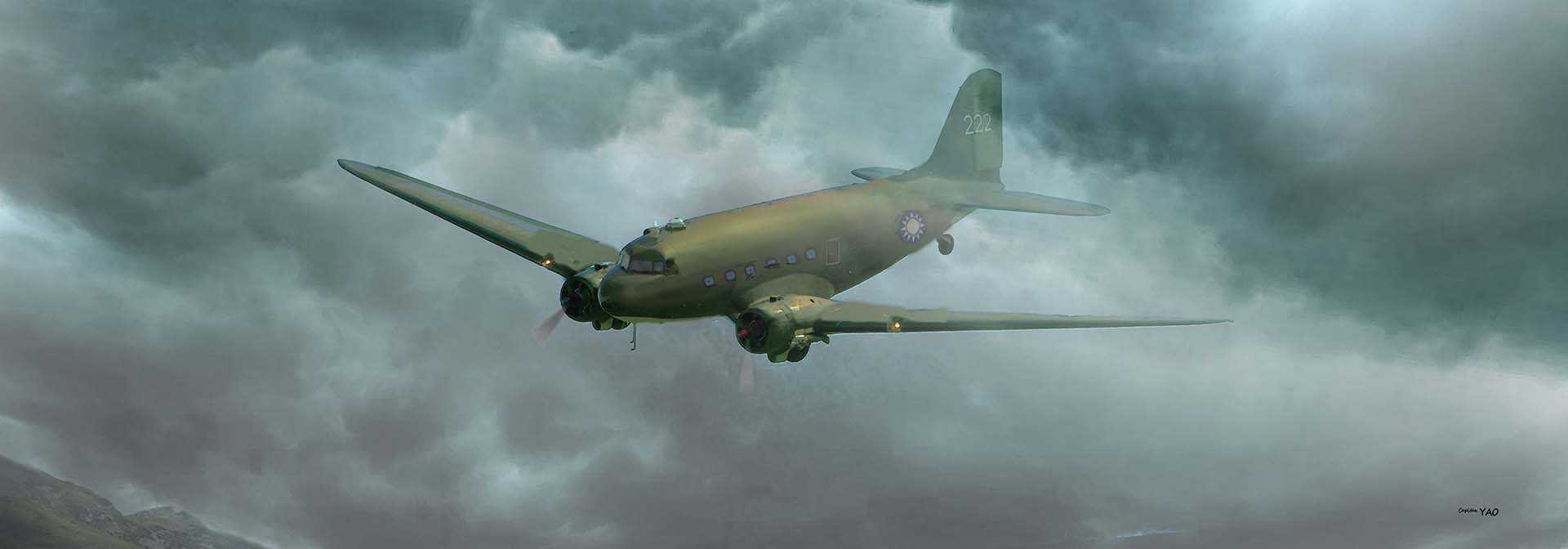
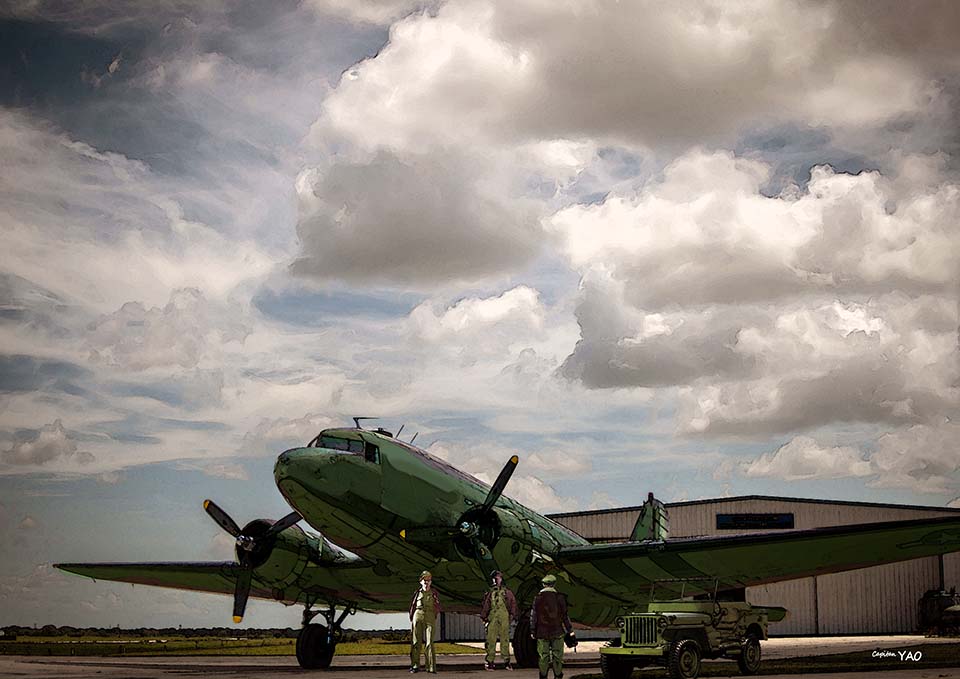
(Figure 6-1-6) Tai Li's C-47 special plane "222" is about to crash into a mountain in the rain and fog. Perhaps our arrangements were ineffective. The heavy rain and humid air that day may have delayed the combustion process, and with the technology at the time, it would have been difficult to investigate whether the propellant had ignited before the plane crashed. If this is the case, then pilot error is the most likely cause. One possible explanation is a misjudgment of altitude leading to a collision with a mountain, while another is exhaustion of fuel. What's unusual is that the investigation was closed just three days after the crash, suggesting some hidden agenda. Regardless of the cause of the plane crash, Tai Li's death had serious consequences. Many of the people who had infiltrated behind enemy lines were under his direct leadership. With Tai's death, these people lost their connection and became unwitting spies. Li Yunhe was one such example. Many other officials of the Wang Kingwei regime who had worked for Chungking during the war were now arrested and executed as traitors because they had no way to testify. Therefore, some say that Tai was assassinated on Chiang Kai-shek's orders. Chiang was worried that the officials in the Wang Kingwei regime under Tai's control knew too much about Chiang's secret dealings with Japan, and that Tai might have used this information to blackmail Chiang. If Tai were assassinated, those Wang Kingwei officials could be legitimately executed as traitors to silence them. This is an interesting inference, with some plausibility, but it cannot be proven. In September 1948, Ma Hansan and Liu Yuzhu were secretly executed. Although the reason was never publicly announced, everyone believed it was due to the Tai case, a claim that persists to this day. In reality, they were scapegoats. The cunning Mr. M had already set a trap while carrying out the operation, using the internal strife within the Military Intelligence Bureau as a smokescreen to deceive everyone and prevent MI6's conspiracy from being exposed. He had used a similar tactic when assassinating Marshal Chang Zuolin at Huanggutun. Since the blame was placed on Ma Hansan and Liu Yuzhu, no one wanted to investigate the real reason anymore. In any case, Tai Li's death essentially paved the way for Kui Yongching. In October 1946, Kui returned to China from England to assume the position of Deputy Commander-in-Chief of the Navy, effectively wielding power. Although this fulfilled London's wishes, circumstances were beyond our control. The wealthy Americans had become the patrons of the Kuomintang government, and with the unfolding civil war, Kui Yungching was forced to rely entirely on the US Navy. Later, Sino-British relations deteriorated further. By 1950, after Britain recognized the new Chinese government, the Kuomintang Navy even confronted the British fleet at the mouth of the Yangtze River, nearly resulting in a naval battle—something truly unexpected at the time.
After the victory in the War of Resistance against Japan, Chiang Kai-shek repeatedly stated publicly that he wanted to abolish the MIB, arguing that it was no longer suitable for peacetime. However, this was generally interpreted as Chiang fearing the MIB's growing power and potential for unchecked influence. Regardless of the true reason, Chiang's statements instilled a sense of crisis in Tai Li, prompting him to urgently seek a way out. Tai Li envisioned two main exit strategies for the MIB: one was a police force, reorganizing the Loyal and Patriotic Army into the Traffic Police Corps. However, Chiang Kai-shek delegated police administration to others after the war, leaving Tai Li with no way to intervene. The other was to develop the MIB towards the navy, transforming armed agents into a marine corps. However, Chiang Kai-shek had already appointed Chen Cheng as acting head of the Navy, blocking Tai Li's path as well, which was the source of Tai Li's frustration. During the war, Tai Li maintained good relations with the US Navy through Miles, and therefore sought to win over high-ranking US naval officials to support his appointment as Commander-in-Chief of the Chinese Navy after the war. This explains his flight from Tsingtao to Shanghai, as it was to coordinate with the itinerary of Admiral Charles M. Cooke Jr., Commander of the US Seventh Fleet. However, he died in a plane crash en route. Immediately after Tai Li's death in March, the BIS was dismantled in June. The armed intelligence division was placed under the Second Bureau of the Ministry of National Defense, headed by Cheng Jiemin, while the intelligence and counterintelligence division was established as the Bureau of Investigation and Statistics of the Ministry of National Defense, headed by Mao Renfeng. This became MI6's new counterpart unit in China.
As for the Chianlong Nine-Dragon Sword, which was believed to contain a bomb that caused Tai Li's plane crash, it was taken from the underground palace of the Chianlong Yuling Mausoleum by Sun Dianying when he looted the Eastern Ch'ing Tombs in 1928. This sword later came into the possession of Ma Hansan, a Kuomintang secret agent. After the Japanese occupied Peiping, Ma was arrested and used this sword to bribe Kawashima Yoshiko to get released. Kawashima then used the sword as bait to have an affair with General Ueda Kenkichi, the commander of the Kanton Army. In 1939, Ueda resigned and returned to Japan due to the defeat in the Battle of Khalkhin Gol. Because it was inconvenient to carry it with him, he entrusted the Chianlong sword, along with other treasures, to Kawashima Yoshiko for safekeeping.
After the war, Ma Hansan became the director of the Military Intelligence Bureau's Peiping station. He led a team to raid Kawashima's residence at night and arrested her. Kawashima offered this precious sword as a bribe to Ma Hansan, who agreed, and the sword was returned to its rightful owner. However, when Tai Li came to Peiping to convene a dinner for so-called "traitors" and announced their arrests on the spot, he discovered that the famous Kawashima Yoshiko was missing. He turned to question Ma Hansan and demanded that he be held responsible. In order to escape punishment, Ma had no choice but to give the sword to Tai Li. This is the origin of the story that Ma Hansan gave Tai Li the Chianlong sword containing a bomb, causing the plane to explode. In fact, the beginning is all true; only the last story about the sword containing a bomb was deliberately spread by Mr. M.
Ma Hansan was executed on September 27, 1948, without being charged with assassinating Tai Li, and more than two years had passed, so the two seemed unrelated. According to intelligence sources, Ma Hansan's public support for Li Zongren in the presidential election incurred Chiang Kai-shek's wrath, prompting Mao Renfeng to carry out the assassination. However, the reason of killing for political infighting was difficult to state openly, so the past assassination attempt on Tai Li was deliberately used as a smokescreen. The newly appointed head of the BIS, Mao Renfeng, was someone Tai Li had personally promoted. Previously, because Tai Li was so prominent, he hadn't attracted much attention, resulting in little interaction between us. I heard that this man was even more cunning and ruthless than Tai Li, and for some time afterward, he was a formidable figure I would have to learn to deal with.
Tai Li's death also allowed Yang Huimin to be released from prison. Yang had helped Tai Li's mistress, the famous movie star Hu Die, transport her luggage to Chungking, which was then robbed. In order to please Hu Die, Tai Li imprisoned her despite the lack of any evidence showing that Yang Huimin had embezzled the luggage. While Tai was still alive, no one dared to release her. Now that Tai was dead, Hu Die had also left Chungking for Hong Kong and returned to her husband Pan Yousheng's arms, and Yang Huimin was finally released by the BIS.
|