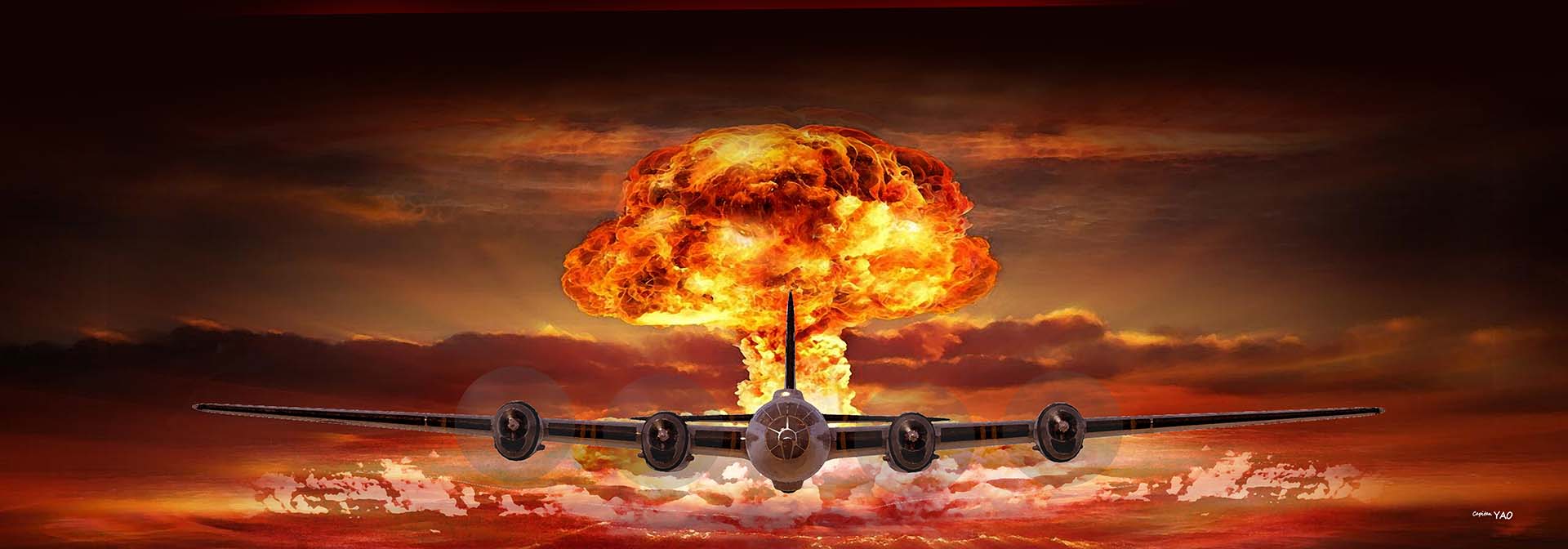
(Figure 5-10-1) A U.S. B-29 bomber dropped an atomic bomb on Hiroshima. Post-war control of Hong Kong should have been included when Britain renounced all unequal treaties with China in 1942, but Prime Minister Churchill firmly opposed this. This displeased Chiang Kai-shek at the Cairo Conference, but he had to agree in exchange for the return of sovereignty over Taiwan. The problem was that Chiang Kai-shek did not explain this to the Chinese government after returning home, leading the Chinese military to believe that everything north of the 16 degrees latitude, including Hong Kong, was within China's sphere of influence. I immediately searched for British troops that could be stationed in Hong Kong in the shortest possible time. I found that a Royal Navy fleet was cooperating with the US Navy in the Pacific and was currently anchored in Subic Bay in the Philippines. It was the only mobile force that could possibly arrive within one or two days. I immediately coordinated with them to set sail for the waters off Hong Kong as soon as possible. Their response was swift; within days a British task force led by Rear Admiral Cecil Harcourt had arrived at its designated location. The next thorny issue I had to deal with was how to avoid a military conflict with the Chinese forces advancing by land. Ostensibly, this matter was handled by the British ambassador to China to mediate the conflict between the two countries, but in reality, I was the one shuttling between them. Compared to other British officials, I knew Chiang Kai-shek better; I already knew that Chiang selectively released the Cairo Conference resolutions to avoid provoking opposition from his political enemies at home. In fact, I was present at the conference. If the evidence were truly laid bare, Chiang Kai-shek would have absolutely no legal standing, but to consolidate his power, he had to choose to be hypocritical. This was not the first time, nor would it be the last, that he did this. Another issue was the attitude of the United States. The US naturally wanted to use this opportunity to expel British influence from Asia and establish its own dominance. Fortunately, the rise of the Soviet Union after the war made the US feel threatened and realize it needed to win over Britain as an ally. This made it difficult to antagonize Britain on the Hong Kong issue. Therefore, President Truman changed President Roosevelt's strategy and supported Britain's continued rule over Hong Kong after the war.
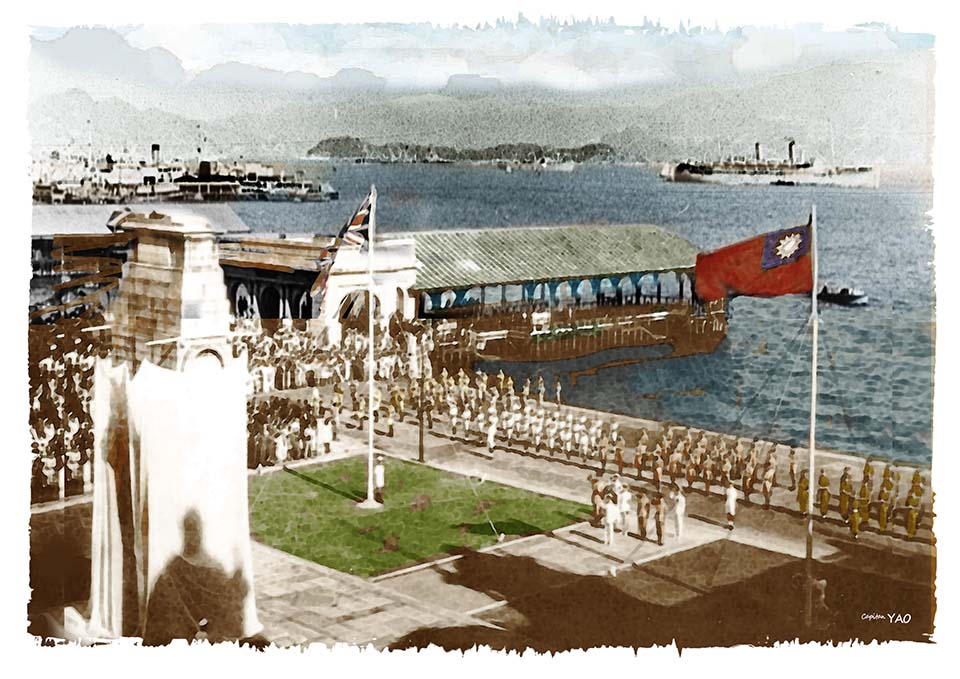
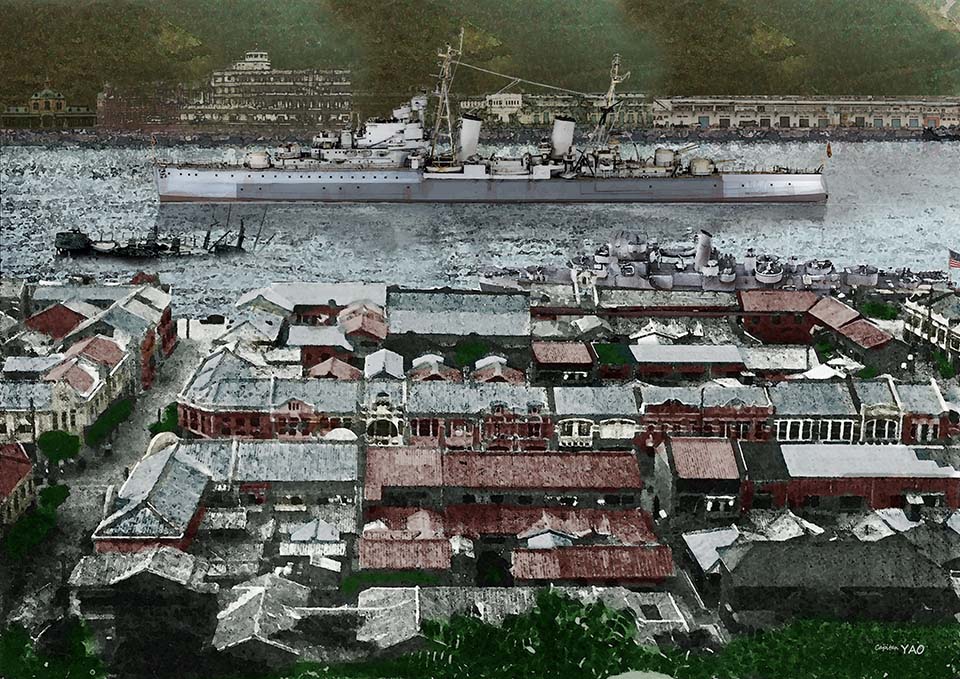
(Figure 5-10-2) The handover ceremony at the Central Ferry Pier in Hong Kong was marked by the simultaneous display of the Chinese and British national flags, symbolizing the dual significance of the Republic of China legally owning Hong Kong but entrusting its governance to the United Kingdom.
With Admiral Harcourt's fleet arriving, I had leverage. I suggested that Chiang Kai-shek, in his capacity as the supreme commander of the China Theater, "appoint" an Allied officer—specifically, Rear Admiral Harcourt, who was already waiting off Hong Kong—as Chiang's plenipotentiary representative, entrusting the British Navy with the takeover of Hong Kong. This way, nominally authorized by the Chinese government, Chiang Kai-shek could appease his domestic audience, saving face and bringing the matter to a satisfactory conclusion. Chinese politics is truly fascinating; London thought war was imminent, but it wasn't that serious!
On the morning of August 30, I followed Admiral Harcourt's flagship into Hong Kong. Unexpectedly, three Japanese suicide boats came out from Repulse Bay. Fortunately, British aircraft were already on alert in the air. They immediately sank one, damaged another, and the third escaped.
The British fleet sailed into Victoria Harbour with great pomp, and the Marines immediately landed to guard the area. A former Hong Kong government official, recently released from a concentration camp, organized a provisional government and appointed himself acting governor. When Admiral Harcourt landed, he symbolically handed over power to Harcourt. On September 16, Admiral Harcourt, representing Chiang Kai-shek, the supreme commander of the China Theater, accepted the Japanese surrender at Government House. The three years and eight months of Japanese rule over Hong Kong officially ended. Admiral Harcourt then established a military government to act as governor of Hong Kong until the following summer, when the former governor, Sir Mark Young, who had been captured during the war, returned to Hong Kong to continue his unfinished pre-war term.
I met some colleagues in Hong Kong who had just been released from concentration camps, including Major Boxer. The first thing he asked me was about Emily Hahn's whereabouts, and thankfully I was still able to answer his question. These people, who had been imprisoned in concentration camps during the war, were emaciated from malnutrition. When they saw each other, it was as if they had never met before. Everyone cried with emotion. They were considered lucky; some had already died in foreign lands due to the abuse they suffered at the hands of the Japanese occupying forces.

"Transporting POW? Why me?" "Because you're the only one who's been to Taiwan!" That's outrageous! How could anyone give such a reason? However, I did indeed travel around the world with Annie in 1930 aboard the "China Pearl" aircraft, and in 1932 I visited Taiwan aboard the "Chenhai" warship of the Northeast Navy, where I visited Taihoku, Tamsui, Keelung and other places. Time was of the essence, so I had no choice but to immediately take a two-seat reconnaissance plane from the British aircraft carrier "HMS Indomitable" in Hong Kong to the "USS Block Island", an escort carrier anchored off the north coast of Taiwan. Then I transferred to a US Navy TBM torpedo bomber and flew with the US POW representative to Taihoku Airfield (now Songshan Airport).
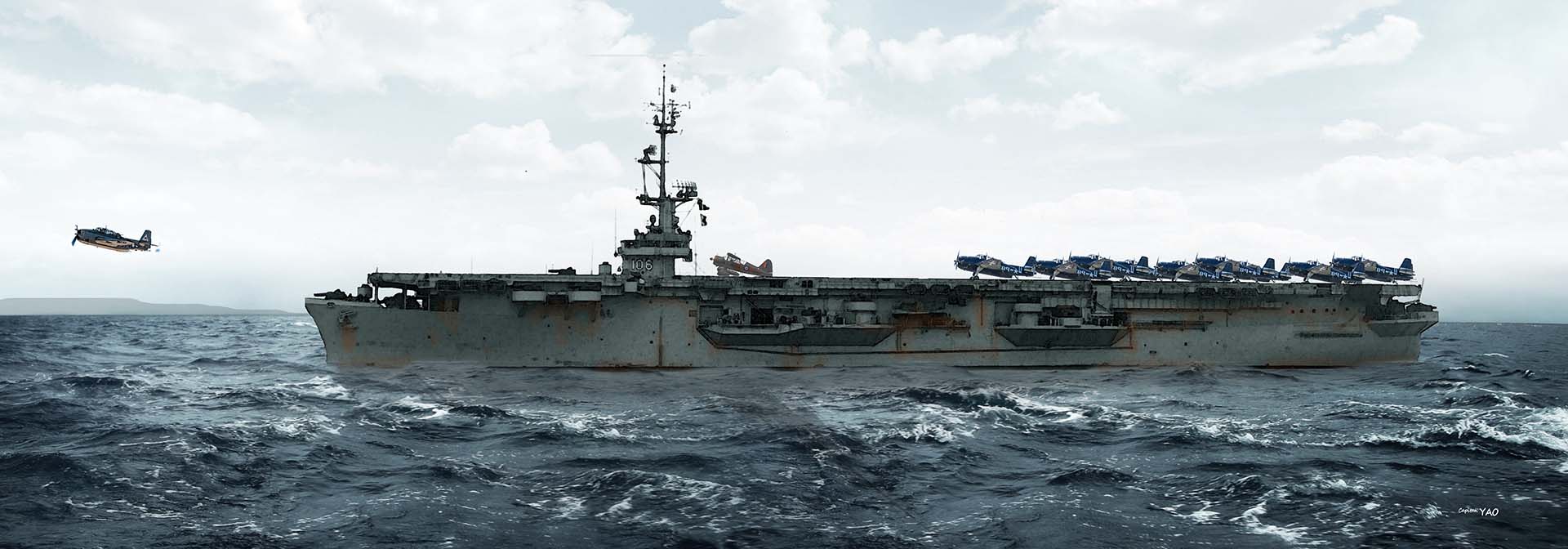
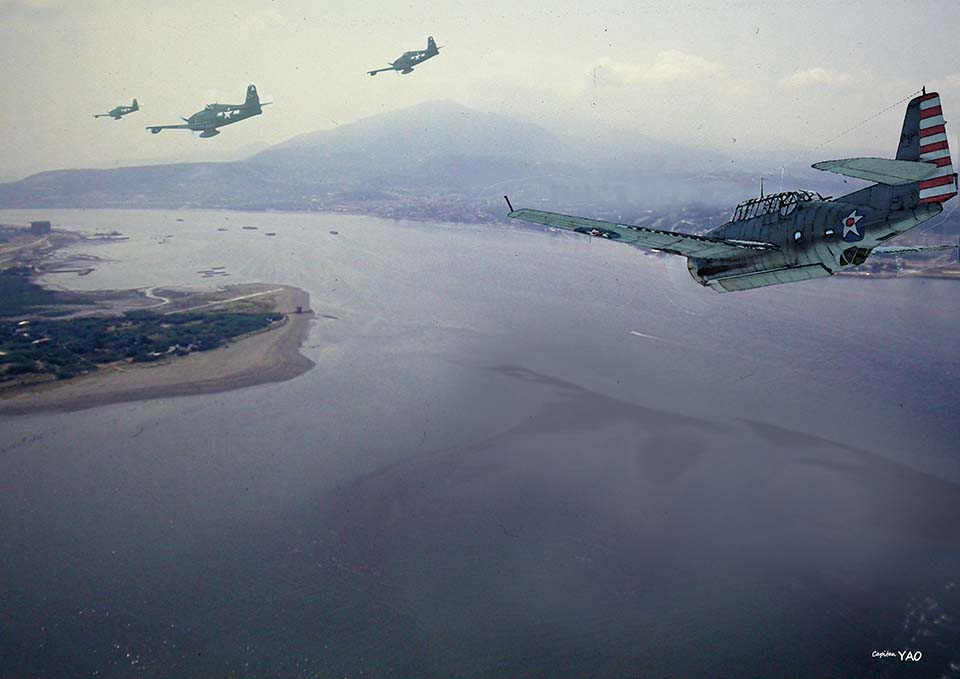
(Figure 5-10-3) Paul Draken boarded a US Navy TBM torpedo bomber and took off from the escort carrier "USS Brock Island" to Taihoku Airport in Taiwan.
(Figure 5-10-4) Paul Draken's TBM torpedo bombers entered the mouth of the Tamsui River from the open sea and will search for the Taihoku airfield along the river.
"Captain Draken, I heard you've been to Taiwan?" asked Major Peter Folger, a U.S. Marine Corps officer traveling with him.
"I've not only been to Taiwan, but I also visited Japanese-occupied Shanghai during the war and met with Admiral Yamamoto Isoroku !"
"You're joking, Captain Draken!"
These naive Americans had no idea that war was not as simple as they imagined, thinking that they could just swing a sledgehammer a few times and the enemy would surrender.
To be honest, we were quite nervous before we set off. Although the Japanese had surrendered, we didn't know how they would react to Allied planes landing at their airports. So we dropped leaflets beforehand, specified the way to contact them, and loaded all the machine guns on the planes with bullets before departure. Of course, the F6F Hellcat fighter squadrons would provide cover for us along the way and over the airports.
We took off from the US aircraft carrier on the morning of September 6th and soon saw the rocky coastline of northern Taiwan. We chose to enter through the mouth of the Tamsui River and soon arrived over the Taihoku airfield. From the air, many buildings appeared to have been destroyed by Allied air raids, but the location of the Taihoku airfield, situated beside a river, was still easy to spot.
No Japanese planes took off except for us. Several fighters and transport planes were parked on the ground, along with some wrecked aircraft. Some of the airport's maintenance hangars were reduced to skeletons, which reassured us considerably. After circling the airport and making contact via radio, we landed on the runway. While taxiing, the plane suddenly lurched, apparently to avoid some debris by the roadside.
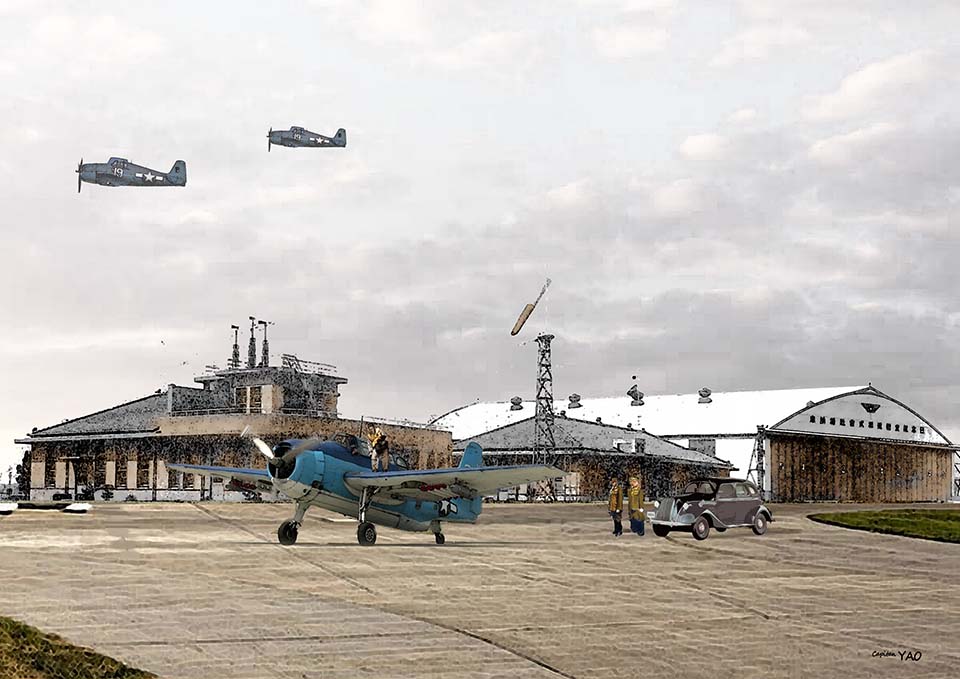
After the plane landed, several Japanese officers with swords were waiting beside a car. The officers bowed and apologized: "We are so sorry, this is the best car we could find, the official vehicle of the Governor-General of Taiwan!"
(Figure 5-10-5) Paul Draken's TBM torpedo bombers landed at Taihoku Airfield under the cover of F6F aircraft, where Japanese officers were already waiting.
To maintain my image as the victor, I ignored the Japanese flattery and turned to question why the pile of wreckage at the end of the runway hadn't been cleaned up. Perhaps my Japanese wasn't clear enough, because the Japanese officer only understood that I was asking what it was, and he bowed and replied, "That's the Indian president's plane; it crashed during takeoff about two weeks ago."
"The President of India?" I guessed he was referring to Subhas Chandra Bose. We in the Far East intelligence group certainly knew him. He and Gandhi were both our enemies, the difference being that Gandhi insisted on "non-violent non-cooperation," while Bose advocated "radical armed struggle." To counter Britain, he chose to cooperate with the Axis powers, establishing a regime under Japanese control—similar in nature to Wang Kingwei's Nanking government. We only knew that he left Burma after Japan's surrender, possibly heading to Japan, but there was no news of his arrival; apparently, his plane crashed at Taihoku Airfield.
Now that I know that Bose's plane crashed in Taiwan, I naturally want to bring back evidence to headquarters. This would be a great achievement without lifting a finger. So I turned to the Japanese officer and said, "Send someone to prepare all the relevant information about this matter and send it to me at Keelung Port tomorrow. Now, let's go to the POW camp."
After exchanging a few words with the person next to him, the Japanese officer beckoned us to get in the car and ordered the driver to head to the Cuiufen POW camp as quickly as possible. During the journey, I had the opportunity to see Taiwan after the war; everywhere were remnants of Allied bombing raids. At this point, the Japanese officer, with a fawning expression, asked me, "Captain Draken speaks such good Japanese; I wonder where you learned it?"
Of course, I couldn't say that I learned it in order to understand the classified Japanese information that "Deep Purple" spat out. Instead, I had a sudden inspiration and said, "I learned it from Li Shianglan."
The Japanese officer's eyes widened as he asked, "Li Shianglan? Captain Draken, you know Li Shianglan?"
Seeing his surprised expression, I teased him, saying, "Of course! Li Shianglan is my girlfriend!"
The Japanese officer was stunned, then gave a thumbs up and said, "Haha! Captain Draken, you're really something."
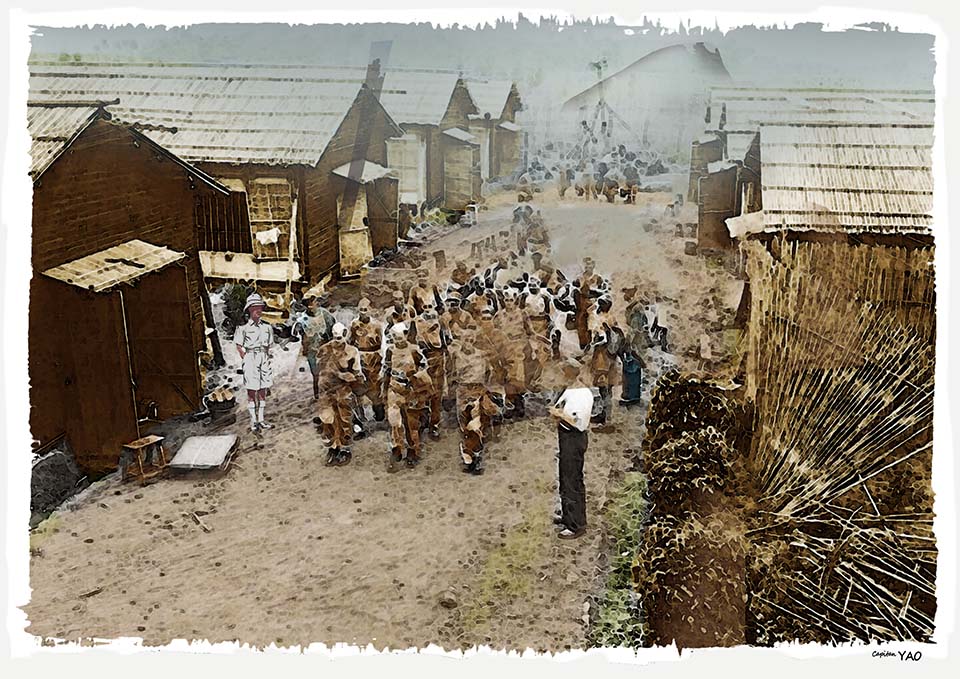
(Figure 5-10-6) Prisoners of war leave the POW camp to board a train.
He probably thought I was bragging, but I didn't care whether he believed it or not; the defeated had no right to question. However, what I said wasn't too exaggerated; Li Shianglan really was my "female friend." At that moment, I suddenly thought of "Baron Munchausen". If I use that as a nickname would be quite fitting.
The road conditions along the way were far from ideal, riddled with potholes, and even more treacherous as we approached the Chiufen mountain area. After about two hours of bumpy travel, we finally arrived at our destination. The scene before us was shocking: all the POW were emaciated, some unable to even stand, and their living conditions were appalling. The prisoners told us that their working conditions in the mines were even worse, but we didn't have time to inspect the mines. We had to immediately take roll call to verify their identities and demand that the Japanese arrange transportation to take all the POW to Keelung Port for assembly.
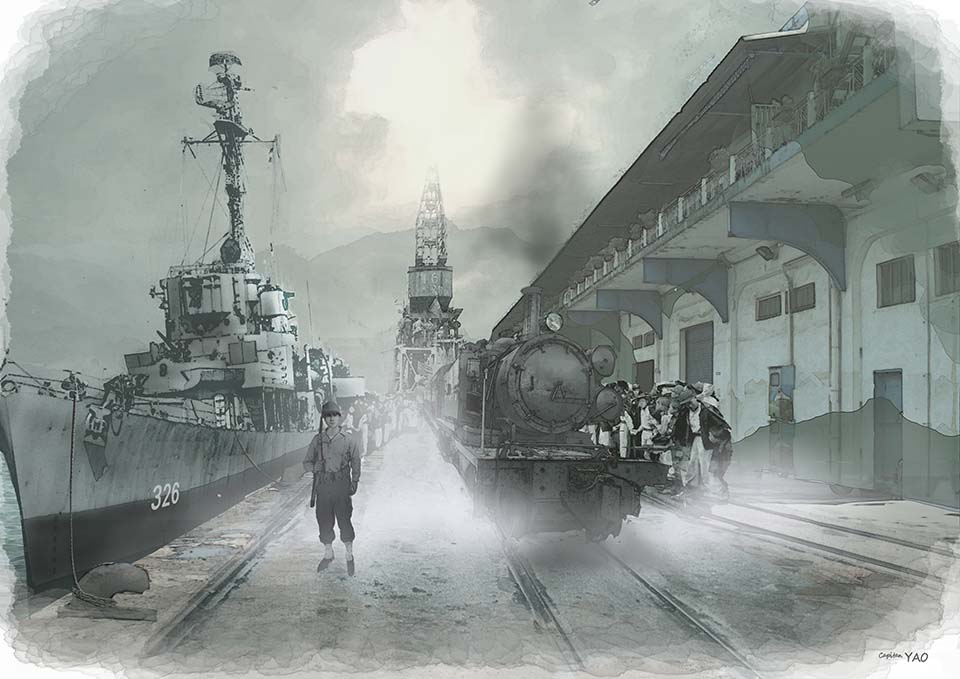
Fortunately, there was a railway branch line at the foot of Chiufen connecting to Keelung Port. It would only take less than half an hour to transport the POW to the dock. The Japanese efficiently provided a steam locomotive and several passenger coaches. At the same time, we notified the "USS Kretchme" and "USS Thomas J. Gary", which were waiting outside the port, to enter the harbor. When the first special train carrying prisoners of war slowly pulled into the Keelung Port dock, the US warships had already docked and sent sailors and stretcher bearers to meet them. The prisoners of war would be sent to the escort carriers anchored off Keelung and then transferred to the US Naval Base at Subic Bay in the Philippines. In addition to physical examinations by military doctors, military law units would also investigate the conditions in the POW camp as evidence for prosecuting war criminals.
(Figure 5-10-7) The US escort destroyer that arrived at Keelung Port to pick up POW, and the train carrying the POW arrived at the dock.
Later statistics showed that the mortality rate of Allied prisoners of war in Japanese POW camps during World War II was ten times higher than in German POW camps. This explains why many commanders and administrators of Japanese POW camps were sentenced to hanging after the war. Allied POWs in Japanese camps not only suffered hunger and inhumane treatment, but also faced the danger of being bombed by their own planes and attacked by submarines during transport. We had long heard that a ship in Taiwan was sunk by Allied aircraft, resulting in the deaths of many POWs. This visit confirmed with the Japanese side that on January 9, 1945, the "Enoura Maru" was sunk by American air raids in Takao (Kaohsiung) Harbor, drowning 480 POWs. Their ashes were buried on the beach south of Takao Harbor. The US government knew about this, but kept it a secret during the war to avoid affecting morale.
After handing over my duties to the American representative on board, I disembarked, as I was to greet the British fleet arriving the next day. That evening, the Japanese military hosted me for dinner in a large tatami room, accompanied by waitresses. The Japanese representative repeatedly hinted that we could bathe in the hot spring with these waitresses, which reminded me of the banquet hosted by Puyi, the Emperor of Manchukuo, in Port Arthur in 1932. The venue and atmosphere were quite similar, but these gaudy waitresses were far inferior to Jin Bihui's cousin, Chong Ruolan. Comparisons are odious; thinking of the past made the present seem uninteresting, and I quickly closed the paper door and went to sleep.
The next day, a messenger from Taihoku delivered a briefcase containing many documents and photographs. I glanced through it and learned that after Japan's surrender, Bose led some of his followers on a Japanese plane from Burma to Vietnam, intending to transit through Saigon to Taihoku and Tokyo before flying to Dalian. He was attempting to contact the Soviet Union for support, but the plane crashed and caught fire during takeoff from Taihoku Airfield. Bose was severely burned and died after being taken to the hospital. His body was cremated in Taihoku and then sent to Tokyo. The Japanese efficiently completed the collection and organization of the information overnight and delivered it to me the following day, confirming Bose's death. I believe this must have been very important intelligence for the British government.
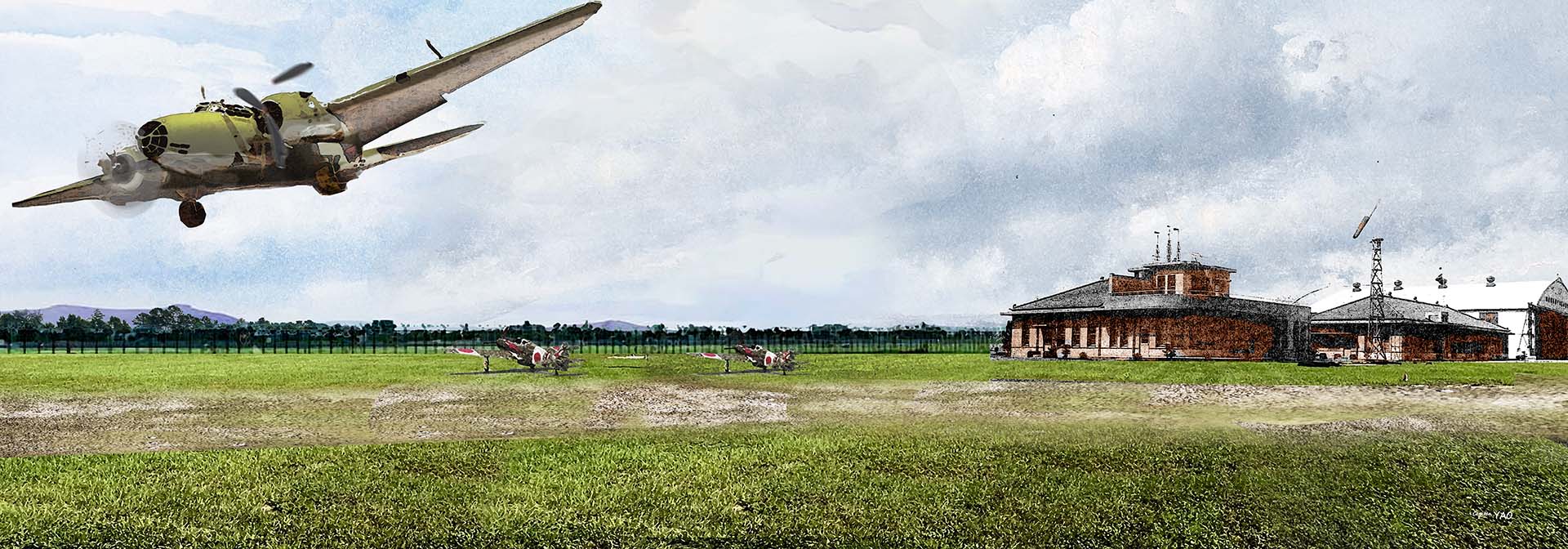
(Figure 5-10-8) On August 18, 1945, the plane carrying the Japanese-backed Indian "President" Bose crashed during takeoff from Taihoku Airfield.
(Figure 5-10-9) The British Royal Navy light cruiser "HMS Argonaut" enters Keelung Harbor.
After the "HMS Argonaut" finally docked, I immediately boarded the ship to meet the captain. I was astonished to learn of the size of the British fleet; it was even larger than the American fleet. The Pacific Fleet Task Force (TG 111.3), led by Vice Admiral R.M. Servaes, included the flagship light cruiser "HMS Bermuda", the light cruisers "HMS Argonaut" and "HMS Belfast", the aircraft carrier "HMS Colossus", the destroyers "HMS Tumult", "HMS Tuscan", and "HMS Tyran", the escort ships "HMS Barle" and "HMS Helford", and the tanker "SS San Amado". In addition, the Royal Australian Navy destroyer "HMAS Queberon" and the New Zealand hospital ship "Maunganui" will join the fleet the following day. The British fleet will evacuate 90 severely frail prisoners of war, who will be transported to Manila by the hospital ship "Maunganui". The fleet is scheduled to depart on the 11th for Shanghai to attend the Japanese surrender ceremony.
There was a reason why such a massive force was mobilized to transport ninety POW. Similar to the British fleet's takeover of Hong Kong, the British government believed it was necessary to deliberately project military power to intimidate the American forces in its former Far Eastern colonies; otherwise, British influence in Asia would be quickly replaced by the United States after the war. Although the war in Europe had ended in May, and the Royal Navy had the capacity to move its main fleet eastward to the Pacific, the post-war British Empire was now outwardly strong but inwardly weak, unable to maintain the massive wartime fleet. From 1946 onwards, the fleet was largely decommissioned, making these grand surrender ceremonies a thing of the past.
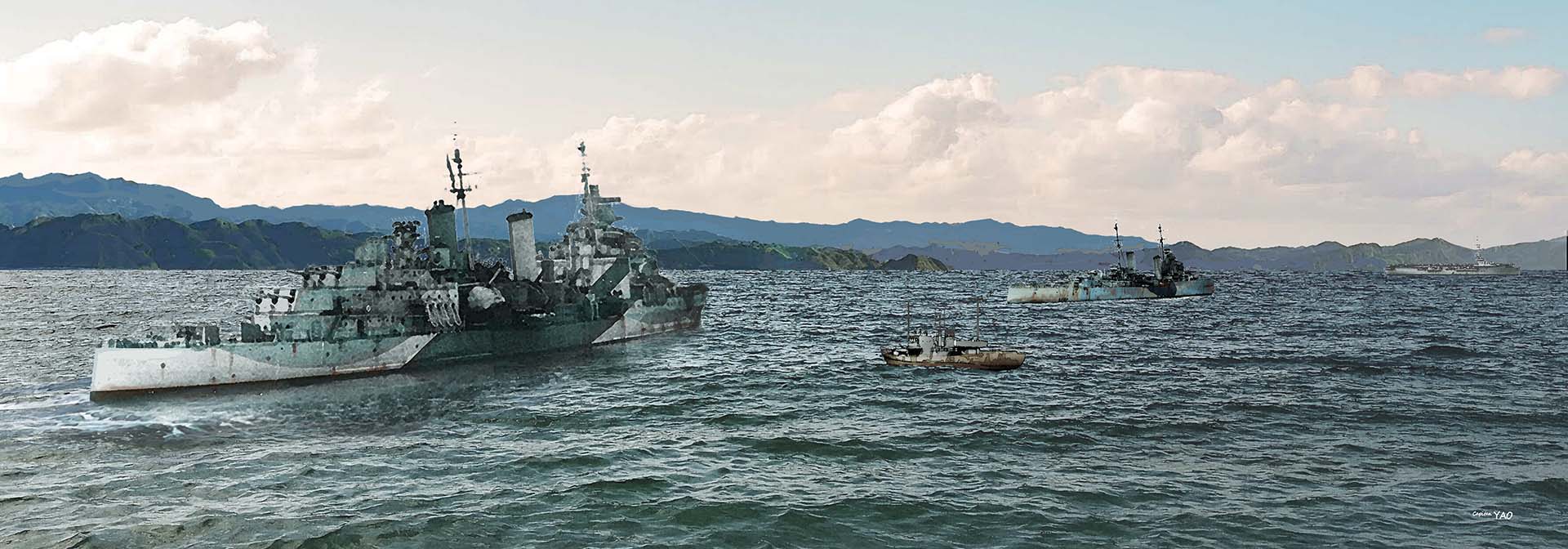
(Figure 5-10-10) The massive British POW fleet was anchored off the coast of Keelung Harbor, with the light cruiser "HMS Belfast" in the foreground.
On September 12th, I departed Keelung for Shanghai aboard the cruiser "HMS Belfast". This cruiser is currently a museum ship on the Thames River, and many Taiwanese tourists have visited it, but few people know about its connection to Taiwan.
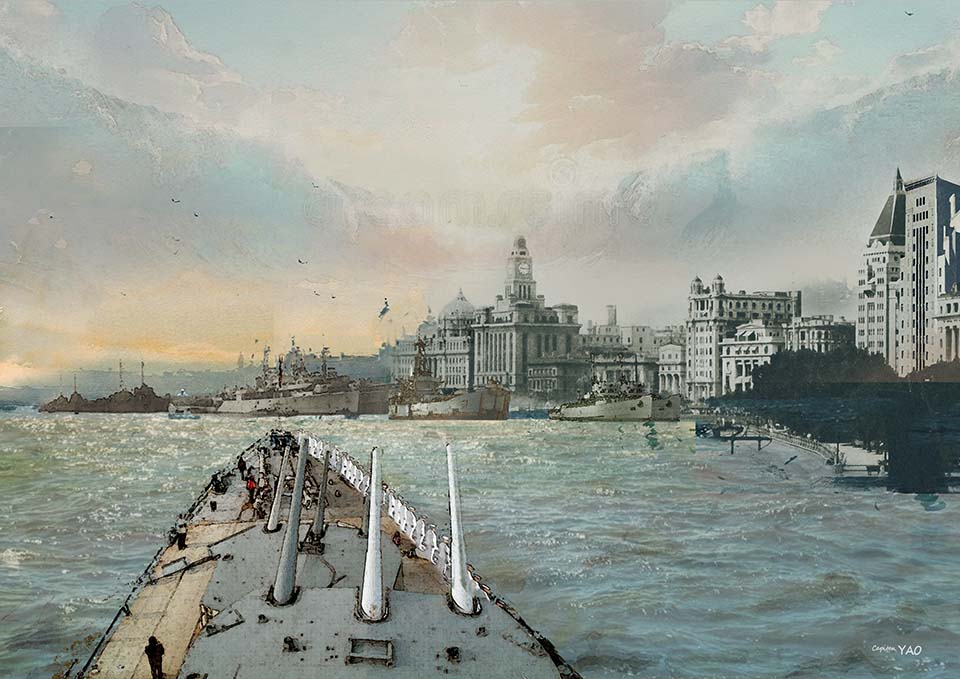
(Figures 5-10-11) The cruiser "HMS Belfast" sails into the Whampoo River and all crew members stand in line.
When the cruiser "HMS Belfast" entered the Whampoo River, the captain ordered all flags to be hoisted and all crew to stand at attention. Through binoculars, familiar buildings such as the Broadway Building, Sassoon House, the Customs House Clock Tower, and the HSBC Building came into view one by one. Witnessing this scene was truly exciting. Although I was here less than three months ago, the Whampoo River felt incomplete without British warships.
At this moment, the American fleet also sailed into the Whampoo River. I noticed that there was an old-fashioned Japanese warship in the formation, which eventually docked at the Nikko Pier. This made me very curious. Upon closer inspection, I realized that it was the flagship of the Japanese river gunboats squadron stationed in China, the "Atake". What was going on? After going docked, I went straight to the pier to find out what was happening.
It turned out that the "Ataka" had secretly slipped out of Shanghai last night, intending to sail back to Japan. It was carrying many war criminals and a full load of supplies when it was intercepted by the US fleet, including a destroyer and twelve minesweepers, which had come from Okinawa to take over Shanghai. The captain of the US destroyer assigned a lieutenant, along with two officers and fifteen sailors, to board the "Ataka" for inspection and act as captain, escorting it back to Shanghai.
I met the captain at the dock and listened to his account of the escort process. Originally, twelve minesweepers were dispatched to clear the mines in the Yangtze River before entering the port, but that would have been a long and arduous process. Fortunately, the "Ataka" was captured, so she was put in charge of minesweeping. As the acting captain, he not only had to monitor the entire ship of Japanese prisoners to prevent a mutiny, but also worry about triggering mines; the process was extremely dangerous. When he learned that I had just come from Keelung, he was very curious and wanted to know how a ship as large as a cruiser could smoothly enter Keelung Harbor, which was full of shipwrecks and mines. I said it was simple: just order the Japanese to send their best pilot beforehand and request the local naval commander to board the ship and accompany them.
At that moment, a whistle was heard, and the captain turned to salute the aft mast of the "Ataka" , where I saw a US flag being raised to the top of the mast.
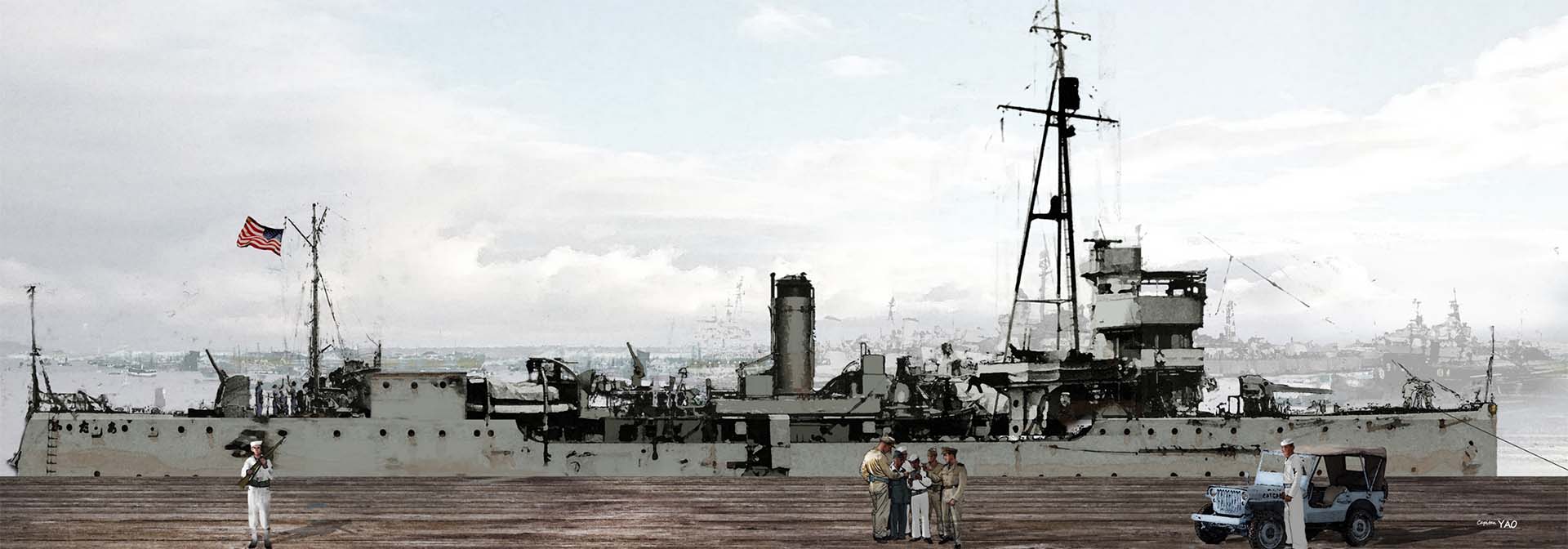
(Figure 5-10-12) The U.S. navy received the "Ataka" and raised the American flag. Lieutenant Zumwalt was handing it over at the dock. After September 11th, many more American warships sailed into the Whampoo River, ranging from cruisers to landing craft, probably several hundred in total, filling the river. Although I had returned to Shanghai in 1942 and 1945, those were brief visits under the watchful eyes of the Japanese during the war. This time, I really wanted to return to my pre-war life, but I found it impossible. The British were no longer the big brother of Shanghai, and China was no longer the China of the past. When I saw the Whampoo River filled with all kinds of American warships, I felt that time was running out. The more direct feeling was that I was often called "American" when I walked on the street, which was really outrageous.
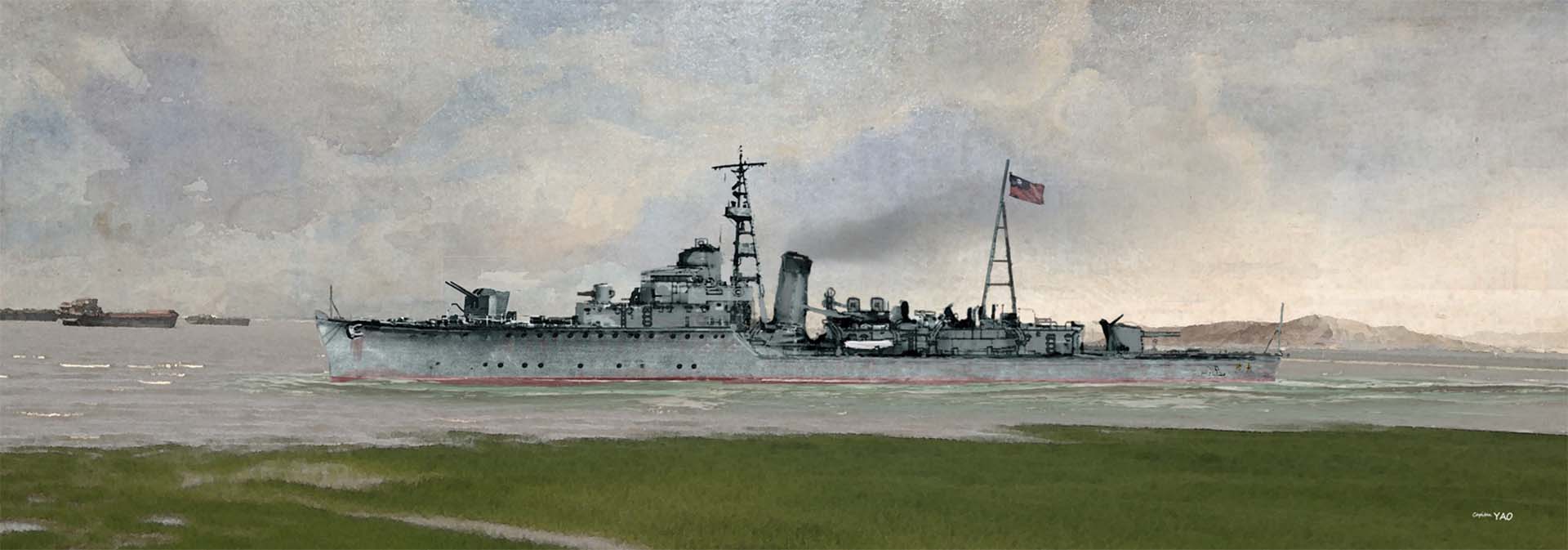
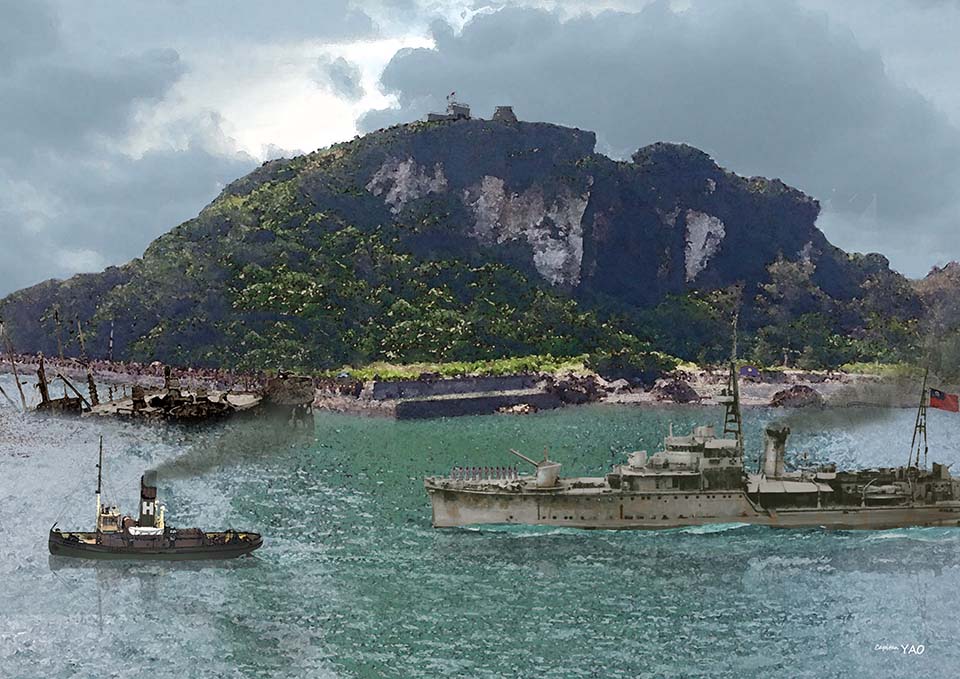
(Figure 5-10-13) The "Uji" ship was transferred to the Chinese Navy and renamed "Changchih".
After being taken over by the Chinese Navy, the "Uji" was renamed "Changchih" and its first captain was Commander Teng Chaoshiang, who was my classmate at the Royal Naval Academy Greenwich. Because the "Uji" ship had many advanced equipment, the Chinese side requested that the Japanese navy leave 28 officers and soldiers behind to assist in training. Shortly after the "Changchih" was received, Chiang Kai-shek ordered it to sail to the Bohai Bay to participate in the battle against the Communist army. However, Navy Commander-in-Chief Chen Shaokuan was unwilling to participate in the civil war and instead claimed that he would lead the "Changchih" to Taiwan for repairs. Chen Shaokuan had his reasons: the "Changchih" used a steam turbine engine, and the Kiangnan Shipyard in Shanghai lacked the capability to repair it. The closest shipyard to Shanghai with the capability to repair steam turbines was the former Japanese Navy shipyard in Makong, Pescadores. Based on the technical requirements for the regular maintenance of warships, it was necessary to go there. (Figure 5-10-14) The "Changchih" enters Kaohsiung (Takao) Harbor.
At that time, I boarded the ship in Shanghai to visit Teng Chaoshiang. Just then, Chen Shaokuan came to announce the order to sail to Taiwan. Upon hearing this, I requested to accompany him, and Chen Shaokuan agreed. Because I was representing the British Navy in assessing the post-war aid of warships to China, he dared not offend me. The "Changchih" first went to the Makong Shipyard to repair its main engine, and then sailed to Kaohsiung (Takao) Harbor under the guise of sea trials. Since many of the original Japanese officers and men on board operated the ship, there were no problems.
When the "Changchih" ship entered Kaohsiung Harbor, it was discovered that the harbor was littered with sunken ships destroyed by Allied aircraft. I also accompanied Chen Shaokuan on an inspection of the Zuoying Naval Base, which was not yet fully completed by the Japanese. In the Japanese plan, Zuoying held a higher status than Kaohsiung and Makong, and at that time, the headquarters originally located in Makong had already been moved to Zuoying. Chen Shaokuan was very satisfied with the conditions of Zuoying Port and planned to establish the largest naval region there in the future.
During the inspection tour with Chen, he told me that in order to reduce the budget during the War of Resistance, the Ministry of the Navy was downgraded to the Naval Headquarters, and that it must be restored after the war because he had a grand vision for the post-war Chinese navy: "twenty aircraft carriers." He believed this could only be achieved if he were reinstated as Minister of the Navy. I felt this seemed somewhat unrealistic, because at that time China couldn't even afford to maintain one aircraft carrier, let alone what the strategic objectives of twenty aircraft carriers would be.
Just as Chen Shaokuan was outlining his grand vision of a future navy in Taiwan, Chiang Kai-shek had reached his breaking point. Not only did he refuse to reinstate the Ministry of the Navy, but on December 26th, he abolished the Naval Headquarters, dismissing Chen Shaokuan. Chiang Kai-shek established the Naval Administration under the Ministry of Military Affairs, later upgrading it to a new Naval Headquarters, with Chief of the General Staff Chen Cheng acting as Commander-in-Chief. The actual work was overseen by Deputy Commander-in-Chief Kui Yungching, who had an army background. This marked the end of the Chen Shaokuan era and foreshadowed the beginning of a comprehensive purge of the "Fookien clique." Faced with such a major transformation, I suspect that plans for the post-war reconstruction of the Chinese navy will have to be devised from scratch.
The second category consists of Japanese reparations ships. After the war, many Japanese warships were disarmed and used as "special transport ships" to transport demobilized Japanese soldiers and civilians back to Japan. After the mission ended in 1947, the Allied General Headquarters in Tokyo divided more than one hundred of these ships into four parts and allocated them by lottery to the four victorious powers: the United States, China, Britain, and the Soviet Union. The largest of these ships was a destroyer, and all of them were disarmed. Therefore, most of them were scrapped and sunk by the British and Americans after they were received. China's ships were left on the banks of the Whampoo River until they were towed to Taiwan in 1949, where they were repaired and armed due to wartime needs. The third category involves the United States, under Act 512 (also known as the "Naval Aid to China Act"), which authorized the US to assist the Republic of China in rebuilding its navy after the war. This involved the transfer of over 270 small, surplus ships to China through "sale, exchange, lease, donation, and transfer." The first batch consisted of the so-called "Eight Ships" including two escort destroyers (DE) and six minesweepers (AM, two of which were patrol gunboats, PCE). One of these ships was commanded by Cmdr. Tsui Hang, Chan Chak's adjutant at the time. China sent naval officers and soldiers to the US for training during the war, and they were only brought back after the war. The leader of the "Eight Ships" was Commander Lin Tsun, the military attaché at the Chinese Embassy in the US. He was also my classmate at the Royal Naval College, Greenwich, though at that time his name was Lin Chun.
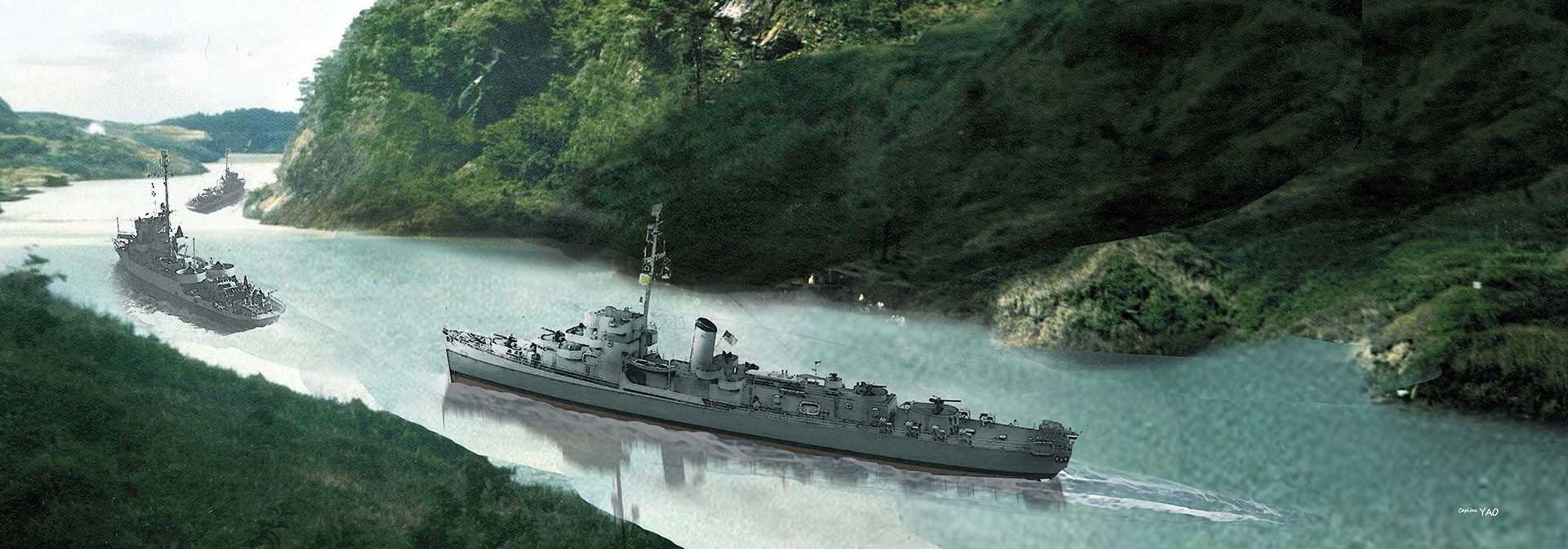
(Figure 5-10-15) The "Eight Ships" departed from Miami and returned home via the Panama Canal. Therefore, when Kui Yungching used Britain as an example to request larger warships from the United States, the US Navy replied, "I can give you sheep, but you can't even afford the rope to lead them!" Later, the warships Britain donated to China indeed started having problems with the very rope, ultimately leading to a complete failure. The century-long naval relationship between China and Britain ended there, and were entirely taken over by the Americans. This was a problem at the higher levels; I was merely an executor powerless to reverse it, but I find it extremely regrettable. If the higher-ups had consulted me beforehand, things might not have ended up so tragically.
At the time, the war had only recently ended, and Shanghai was still in a state of desolation. The once arrogant Japanese were now like stray dogs; some were sent to construction sites for voluntary labor, some sold their belongings on the streets to make a living, and some even carried weapons to help maintain order. The Kuomintang army was still far behind the lines and, unless transported by American planes, couldn't be deployed to the major coastal cities in time, creating a power vacuum. Many Chinese officials who had previously sided with the Japanese had now transformed into secret agents in Chungking, making it difficult to distinguish the genuine from the fake—a situation that was both laughable and pathetic. These Chinese officials who sided with the Japanese did play a stabilizing role during the Chungking government's takeover process. However, once the situation was gradually brought under control, the purge of "traitors" began. This part will be discussed later. Here, I want to raise a psychological issue: those who followed Chiang Kai-shek into Sichuan during the War of Resistance endured eight years of hardship, while those living in Japanese-controlled areas enjoyed relative stability. This aroused envy. When the war ended and people were demobilized, these people from Chungking felt resentful towards those in the occupied areas, thinking, "Why are you living better than me?" So they adopted a condescending attitude. If they were government "takeover officials," they would arbitrarily seize supplies and real estate under the guise of "enemy property." For example, before the war, I stayed in a villa owned by Annie's father's friend, a wealthy British businessman, which was forcibly seized by a Kuomintang general. It took a lot of money to redeem it. The people in the occupied territories lived relatively peacefully, largely due to the cooperation between local gentry and the Japanese. However, when the Nationalist government returned from Chungking, these individuals were labeled "traitors." According to the standards of the time, anyone holding a leadership position, regardless of the size of their organization, was executed. Conversely, the corruption and plundering of the officials who took over the territories, compared to life under enemy rule during the war, meant the people felt no joy in the victory against Japan. Disappointed, they turned to the Communist Party with hope. No wonder the Nationalist regime completely collapsed and fled to Taiwan in just four years. As a foreigner who stayed in both Chungking and the occupied territories during the war, my perspective may be more neutral and objective. Of course, not all traitors were punished. As long as they could escape the peak period in the years following the war, once the Cold War began and the witch hunts shifted to the Communist Party, no one was interested in pursuing them anymore. For example, Hu Lancheng, who abandoned Eileen Chang and fled to Japan with She Aichen, was one such case. Many others fled to Taiwan with their property, living in anonymity as recluses.
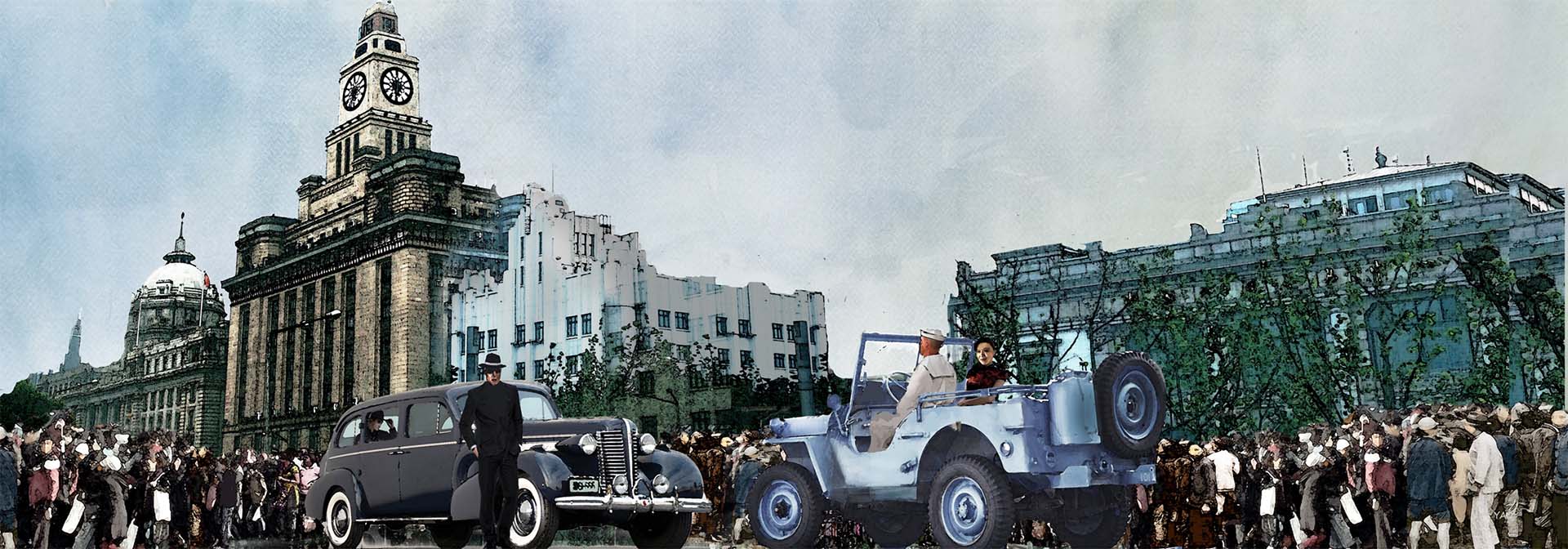
Another interesting phenomenon occurred after the war. Major coastal cities in China, such as Shanghai and Tsingtao, were occupied by the US military first. Because the US military was a highly mechanized force, the influx of military vehicles also affected Chinese traffic rules. Before the war, most Chinese cities, such as Shanghai, were on the left due to British influence, but American military vehicles drove on the right. Since the number of US military vehicles was enormous, even exceeding the number of cars already in China, the government uniformly mandated that all vehicles drive on the right in 1947. Overnight, all traces of British influence were completely erased. Whenever we, the older British residents of Shanghai, saw American sailors driving jeeps carrying Chinese women in cheongsams, speeding through the streets, it filled us with sadness. The elegant gentlemanly taste of the concessions was gone forever with the decline of the British Empire.
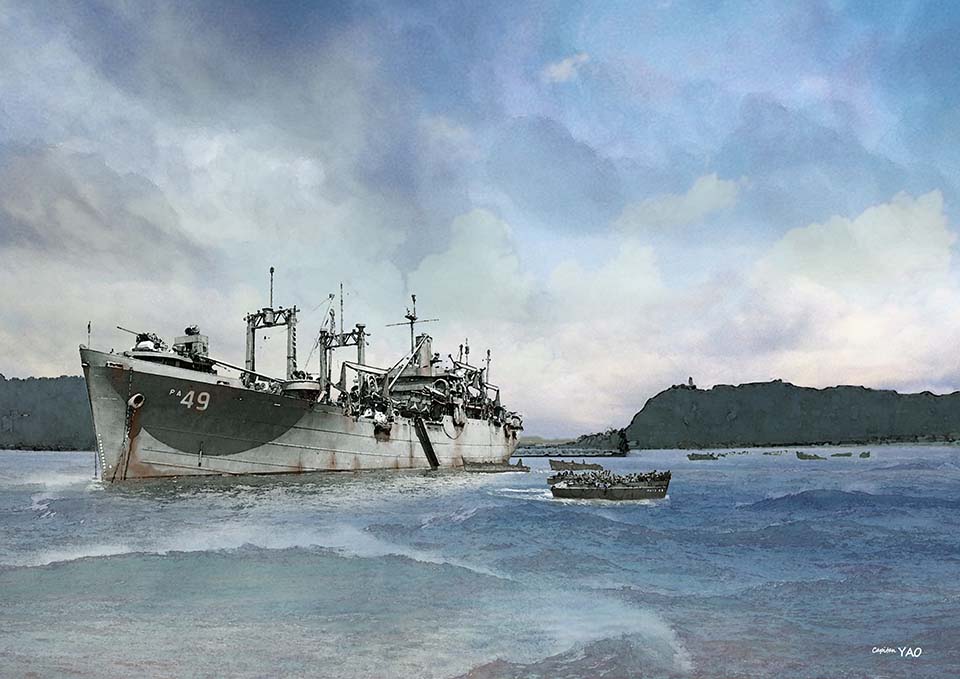
(Figure 5-10-17) The Kuomintang 62nd Army arrived at Kaohsiung Harbor aboard the USS Ormsby and transferred to landing craft to disembark.
The post-war demobilization situations on the mainland and in Taiwan were drastically different. The people in the Japanese-occupied areas of the mainland remained Chinese, but in Taiwan, according to the laws of nationality, they were Japanese. Without other explanation, they were considered to be from a defeated and surrendered enemy nation, and some might even face war criminal trials for their actions. However, because Chiang Kai-shek considered Taiwan as part of the motherland, in January 1946, he issued an order to "restore" the nationality of all Taiwanese to the Republic of China. Since China was the victorious nation at the time, the roles of Taiwanese and Japanese were reversed, giving them a sense of pride and allowing most to accept the situation. This was the atmosphere I observed during my research in Taiwan at the time.
In late November, the Kuomintang's 62nd Army, having traveled from Kuilin through Haiphong, Vietnam, boarded the "USS Ormsby", a US Navy personnel transport ship, and arrived in Kaohsiung. I greeted them at the pier. Army Commander Huang Tao told me that these troops had changed into new uniforms and received training before departure. Commander Huang Tao was a graduate of the German Army University, and I told him about my meeting with Hitler. He said he had studied in Germany from 1930 to 1932, before Hitler came to power.
Based on my observations, the 62nd Army's military bearing was quite good, and the welcoming crowds and students on the shore were very excited, with good interaction. It seems our concerns were unfounded. I heard that the 70th Army, which landed in Keelung from Ningbo on a US landing ship in mid-October, did something similar. Our intelligence group has photos, but their actual actions are still unclear. It seems the "228 Incident" in Taiwan in 1947 may not have been caused by disappointment with the "beggar soldiers" as some have suggested, but rather by other reasons. This is something we, as professional intelligence workers, need to investigate in depth, because public opinion is also an important piece of intelligence, as it can influence Britain's policy decisions towards China.
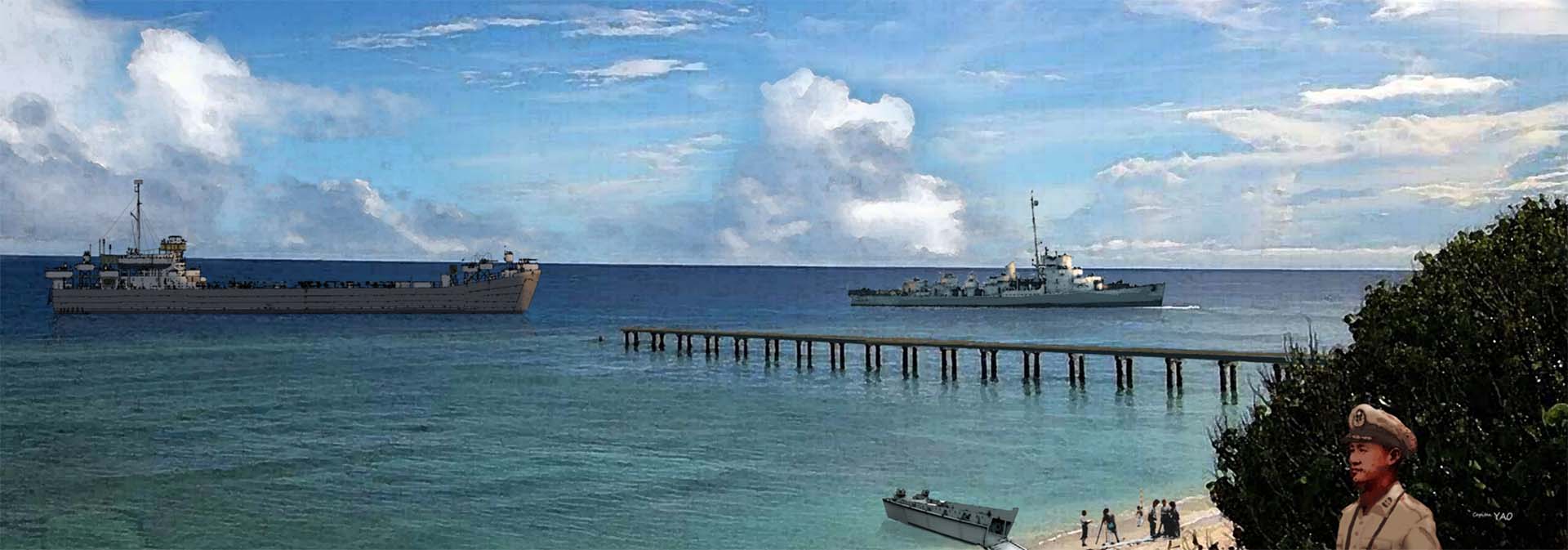
(Figure 5-10-18) The "Taiping" and "Chngye" are in front of the iron pier at Taiping Island, with Lin Zun as the officer in the foreground.
|