4. The Red Square Murder
Before going to Japan, I was ordered to return to England to report on my duties. This trip back to China was because my superiors wanted to temporarily transfer me back to the department to assist in the preparations for the London Naval Conference to be held in 1935. The five-year deadline following the last London Naval Conference was fast approaching. Whether this conference could reach an agreement to extend the terms of naval armament restrictions was the key to whether the world could continue to be at peace for the next five years. The biggest obstacle was Japan. The Japanese Navy had long expressed its dissatisfaction with being restricted to the same tonnage and artillery caliber as Britain and the United States; it clamored that if it could not be raised to the same level, it would not hesitate to withdraw from the convention.
I happened to be in London during the last meeting and even met with Rear Admiral Isoroku Yamamoto of the Japanese delegation. I heard that Yamamoto would be the chief negotiator for Japan this time, so my impression of him became an important basis for the British side to formulate their negotiation strategy.
In the past five years, Japan has exploited various loopholes in the treaty restrictions to build more than 100 new warships, far exceeding the growth quotas of other treaty countries such as Britain, the United States, France, and Italy. The Japanese Combined Fleet has become one of the world's top three naval forces, with a strong chance of becoming second only to Japan.
I was already a well-known expert on the Far East navy at MI6 headquarters in London. My superiors needed me to have firsthand intelligence on the Imperial Japanese Navy Combined Fleet and to understand the thinking patterns of their leaders. So, after the funeral of Admiral Togo, I would like to stay in Japan for a longer period of time to conduct research.
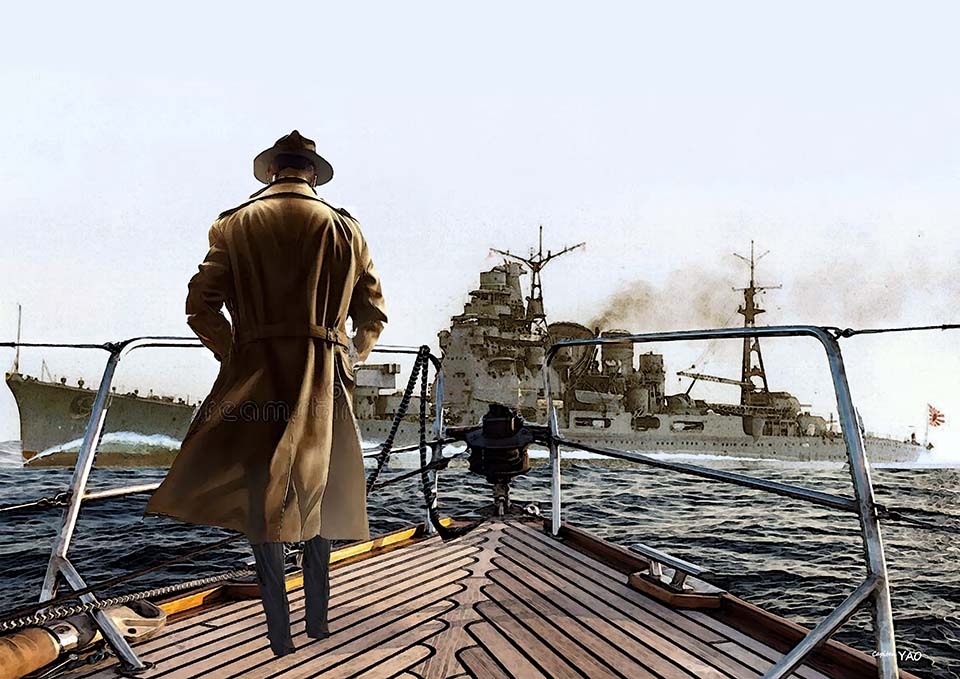
(Figure 4-4-1) Paul Draken takes a photo of a "Takao-class" heavy cruiser from a steamboat in Tokyo Bay.
On this trip, I brought my Leica camera and took many photos of Japanese warships when they entered port at Moji and Yokohama aboard the "Ninghai" cruiser. After landing in Japan, to avoid unnecessary trouble, I specially designed a way to attach the camera to my belt, making it look like a metal buckle from a distance. At that time, most people perceived cameras as large boxes, and few knew they could be made so small, so it wouldn't easily attract attention.
Furthermore, I integrated the shutter release cable with my trench coat buckle; as soon as I slightly opened my trench coat to reveal the lens, the shutter would automatically press, and when I closed the coat, it was completely invisible. In addition, my diplomatic status provided an extra layer of protection. I have to thank my superiors for allowing us intelligence team members to also serve as consulate staff in order to save money; although we complained constantly, this time it finally produced some positive value.
To photograph Japanese warships, simply waiting on the shore on land wasn't enough to get a good angle. Luckily, Sorge invited me to take a ride on a steamboat owned by a boatman he knew in Tokyo Bay, and I readily agreed, as that was exactly what I wanted to do. I expected him to bring a group of ladies, but when we arrived at the pier, it was just the two of us. After setting off, Sorge told the captain to head towards Yokosuka. As we passed the naval port, he stood on the gunwale, watching intently, then turned back. It was at this moment that I had already finished shooting an entire can of film.
I didn't understand Sorge's intentions. Later, I wondered if he wanted to use my identity as a diplomat to cover up his espionage activities. Although he had an office in the German embassy, he was not a diplomat after all. Moreover, at that time, the relationship between Germany and Japan was not as close as it would later become. The general public's impression was that Germany was a defeated enemy of Japan in World War I, and its protective umbrella was far less reliable than that of the British Empire.
My trip back to China was also to arrange for the Canton government and the M.C.S. School to order torpedo boats from Thorncraft Company. It had been three years since my last visit home, and this time I also needed to report to my father about the return of the uminous pearl and the disappearance of Annie. Although I had already explained this by telegram, I think my father still wanted me to tell him in person how the daughter-in-law was about to marry had disappeared.
But then I received a telegram from the embassy, ordering me to immediately end my trip to Japan and go to Moscow to receive Mr. M's instructions. Although I was a hundred times unwilling, I had no choice but to obey orders, because there was never anything good where Mr. M was. I was very experienced in this, and it turned out to be true.
London also suggested that I didn't need to return to Shanghai, but could go directly from Japan to Manchuria, and then take the Trans-Siberian Railway through the Soviet Union back to Europe. Before coming to Japan, I had a feeling that this trip back to England would involve a relatively long stay, so I had made some arrangements before leaving Shanghai. Later, it turned out to be true, and I was not able to return to China until 1936.
But what to do with the large number of rolls of film that had already been shot? They couldn't possibly carry them all the way to Moscow. The risks along the way were too high, and they couldn't have them processed at a photo studio in Japan. So they had to buy chemicals and develop all the film in the bathroom of their embassy accommodation. Since they didn't have an enlarger to print the photos, and carrying a whole stack of large prints would be too conspicuous, they ended up cutting all the negatives into strips, putting them in a sealed bag, and having the embassy's "King's Messenger," who was special in delivering diplomatic secrets, deliver them to London.

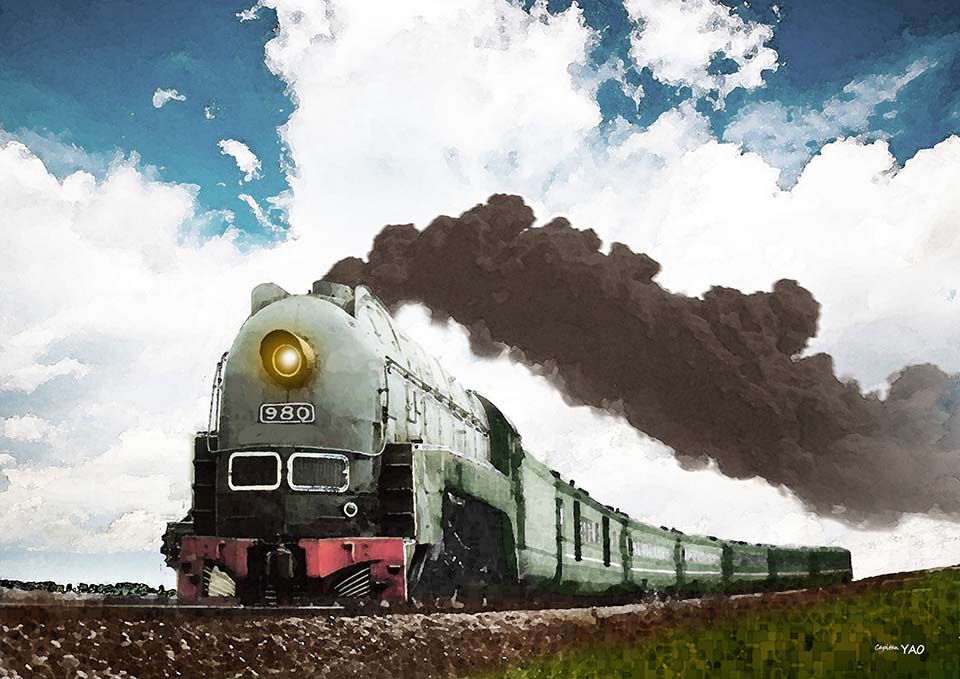
(Figure 4-4-2) From Talian to Sinking, the super express "Pashina"
.
I took a ship from Yokohama to Talian, and this trip had a special arrangement: to take the newly completed "Pashina," a high-speed train with a speed of 100 kilometers per hour, to Sinking. The "Pashina" officially began operation on November 1st, and it is currently in the testing phase. I used my connections to get a sneak peek.
The distance from Talian to Sinking is 701.4 kilometers, and the journey takes only seven and a half hours by train on the "APashina" (Asia Express) has a sleek and stylish exterior, and the interior is also very luxurious, equipped with air conditioning, and its level of sophistication even surpasses that of railways in Japan.
My last trip to Sinking was only half a year ago. I didn't have time to explore the city then. This time, without Yoshiko Kawashima accompanying me, I was happy to be free. But as soon as I got off the train, I saw Chong Ruolan coming to greet me and claiming that she had been assigned to be my tour guide. So I took the car she arranged and drove along the wide avenues of Sinking. On both sides were newly built towering buildings and magnificent public facilities, which was truly an eye-opener.
Through Chong Ruolan's introduction, I discovered that Japan spared no expense in building a new amusement park in Manchuria that was even more modern than those on the Japanese mainland. Chong Ruolan accompanied me again that evening, and when I asked her why she went to such lengths, she said, "You are a special envoy from the British Empire to Manchuria, so of course you must be received with the highest level of hospitality throughout! By the way, when would you like to meet the Emperor? I'll arrange it immediately."
"Uh... I've already booked my train ticket to Moscow and I have to leave tomorrow. I think maybe next time." I could only find an excuse to decline, because I was afraid of seeing Empress Wanrong again.
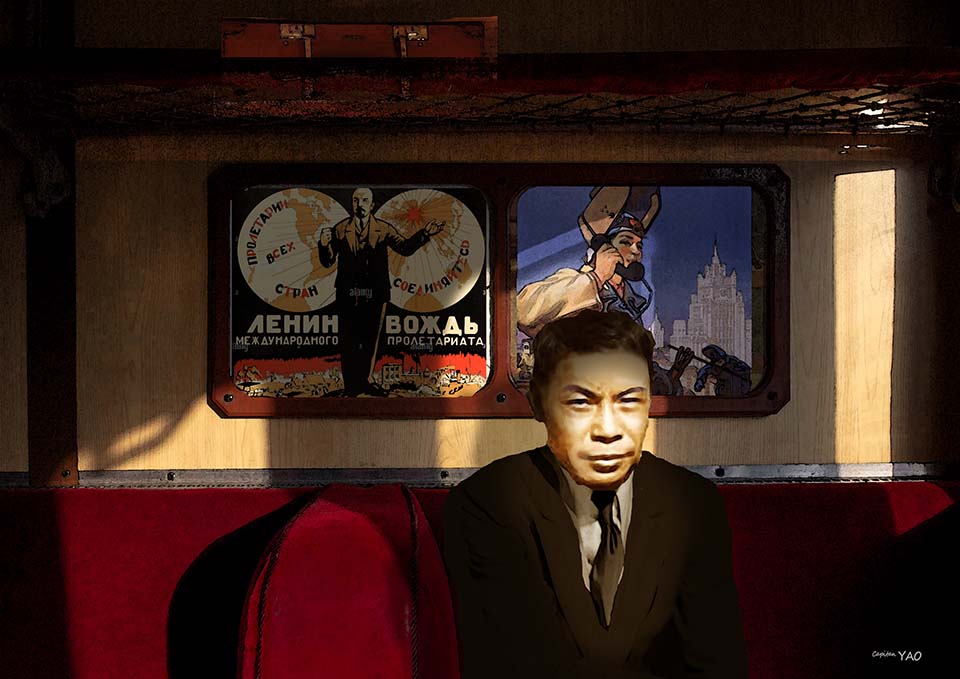
After leaving Sinking, we continued by train to the Manchurian-Soviet border, then transferred to the Trans-Siberian Railway and headed west. In the summer of 1915, I followed my father along the same route to St. Petersburg to take up a job. That was almost twenty years ago, during the time of the Tsarist Russia. The train passed Yekaterinburg in the Ural Mountains, the place where the Tsar's family was said to have been executed. When the train stopped, I deliberately got off to get some fresh air on the platform. I wanted to see where Princess Anastasia and her family had met their end, but I was stopped by armed guards after only a few steps. I had no choice but to return to the train, only to find that my previously empty cabin now had a young man who looked Chinese sitting opposite me. Out of curiosity, I asked him a question in Chinese. He was initially surprised, but then answered in Mandarin with a Shanghai accent. Since I have lived in Shanghai for a long time, it wasn't a problem for me. "I am Paul Draken, a British officer from Shanghai, China. May I ask your name?" "I am Nikolai Vladimirovich Elizarov..." He stumbled over his words while translating his Russian name into Chinese, then smiled sheepishly and said, "Never mind, my Chinese name is Chiang Ching-kuo!"
(Figure 4-4-3) Paul Draken met Chiang Ching-kuo, who boarded the train in Yekaterinburg.
I was shocked when I heard this. In fact, most Westerners in China at the time did not know who Chiang Ching-kuo was. However, because of my special relationship with the Chiang family, I knew that Chiang Kai-shek had a son who had been studying at Sun Yat-sen University in the Soviet Union since 1925. But I was very suspicious that the young man in front of me who did not look like Chiang Kai-shek at all was Chiang Ching-kuo.
"I'm quite familiar with your father, Chiang Kai-shek!" I said this with the intention of exposing his true intentions.
To everyone's surprise, he immediately said with a serious expression, "I am ashamed that he is my biological father. He used the name of revolution to engage in the activities of an imperialist agent, which is even worse than that of a warlord!"
"But he's still your father. Isn't filial piety very important in China?"
"I oppose his betrayal of the revolution, not his lack of filial piety towards his parents. I, for example, am very filial to my mother!"
"Oh! I know your mother very well too; I even met her in Nanking before I came here!"
As soon as I finished speaking, I realized I had said the wrong thing. I forgot that Chiang Ching-kuo was born to Chiang Kai-shek's first wife, Mao Fumei, while Chiang's third wife, Soong Mei-ling, lived in Nanking. Madame Mao only lived in Chiang's hometown of Fenghua County, Chekiang Province, and never went to Nanking. Chiang Ching-kuo had always held a hostile attitude towards Soong Mei-ling because his biological mother was abandoned by Chiang.
Unexpectedly, Chiang Ching-kuo didn't react to my slip of the tongue. Instead, he looked at me intently and said, "If you see Chairman Chiang, please convey my wish to have the opportunity to report to him in person what I've learned here. If it can have a transformative effect on him, then with his position and power, it will be of great help to the Chinese revolutionary cause!"
I said, "Mr. Chiang, please rest assured! I will definitely pass on your message when I have the chance!"
"Just call me Comrade Nikolai!" he said.
Many years later, I learned that he initially thought I was a spy sent by the Soviet Ministry of Internal Affairs to monitor him, so he was very careful with his words. It wasn't until I said, "Oh! I know your mother very well too!" that he realized this person might be a conduit to deliver messages to his father, which is why he said, with a hidden meaning, "I hope to have the opportunity to report to him in person what I've learned here!"
Chiang Ching-kuo's suspicions were justified, because as soon as he arrived in Moscow, he was indeed monitored and restricted by Soviet NKVD agents. At that time, Wang Ming, the CCP leader in the Soviet Union, telegraphed him to go to Moscow, so he took a train from Yekaterinburg in the Ural Mountains, where he worked, and happened to be on the same train as me.
Wang Ming wanted Chiang Ching-kuo to go to Moscow because he had already written a letter for Chiang Ching-kuo publicly severing ties with Chiang Kai-shek and wanted him to sign and send it out. If Chiang Ching-kuo refused, Wang Ming planned to send it out himself and have the contents published in the Pravda newspaper. To prevent Chiang Ching-kuo from revealing the secret when he contacted the Chinese side, he also specifically asked the Soviet Ministry of Internal Affairs to supervise Chiang's freedom of movement. This is the origin of the incident known in history as Chiang Ching-kuo criticizing his father and drawing a line between himself and Chiang.
Chiang Kai-shek was furious after reading Chiang Ching-kuo's open letter criticizing him. He threatened to arrest Chiang Ching-kuo on charges of being a communist if he returned to China, which was exactly what Wang Ming wanted. At the time, Stalin seemed to want to place his bets on the powerful and prestigious Chiang Kai-shek rather than Mao Tsedong in Yan'an or Wang Ming in Moscow. Sending Chiang Ching-kuo back to China would not only be a gesture of goodwill towards Chiang Kai-shek but also establish a direct communication channel between Nanking and Moscow. Wang Ming wanted to play a role in the future relationship between the Soviet Union and China, so he had to destroy this possibility. One of his bad ideas was to make Chiang Ching-kuo publicly break with Chiang Kai-shek.
Here I want to talk about Stalin's strategic thinking. In order to avoid the Soviet Union falling into the predicament of fighting on two fronts at the same time, Stalin believed that only a unified China could have a substantial restraining effect on Japan. And at present, no one but Chiang Kai-shek was capable of unifying the Chinese anti-Japanese front. He never thought that Mao Tsedong in Yan'an or Wang Ming in Moscow were capable of this.
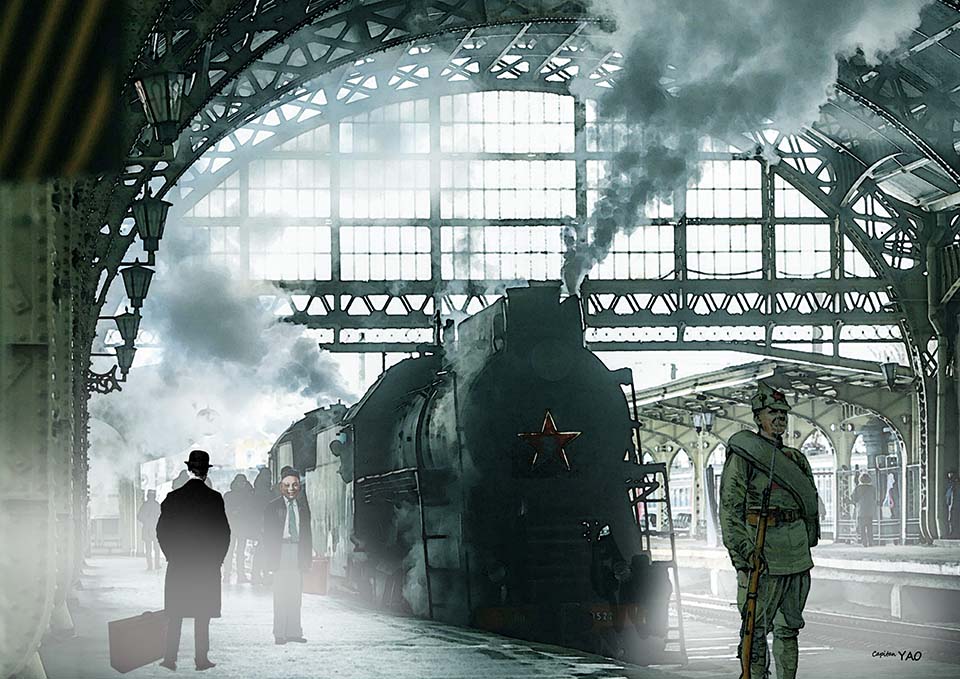
(Figure 4-4-4) Paul Draken and Chiang Ching-kuo parted ways at the Moscow train station. They pretended not to know each other and only exchanged glances.
Stalin's strategic thinking played a crucial role in the Sian Incident of 1936. Due to his insistence, Mao Tsedong and Chou Enlai were forced to release Chiang Kai-shek, whom they had already captured, making Chang Hsueh-Liang a scapegoat. Stalin then released Chiang Ching-kuo the following year as a gesture of goodwill towards the Kuomintang. Stalin's realism sowed the seeds of conflict between the Chinese Communist Party and the Soviet Communist International; the Sino-Soviet split of the 1970s actually had its roots in the 1930s. Of course, I didn't have the foresight to see that far ahead at the time, but this serendipitous encounter marked the beginning of my half-century-long friendship with Chiang Ching-kuo.
When the train arrived at Moscow station, Chiang Ching-kuo said goodbye to me. The so-called goodbye was just a slight exchange of glances; there was no handshake or hug, and the two of us seemed like complete strangers.
As soon as I exited the station, I saw Mr. M personally driving to pick me up. Upon seeing me, he pulled me into the car and quickly drove away from the train station. He remained silent the entire way, which was quite different from my previous impressions of him when I met him in China, which puzzled me a bit.
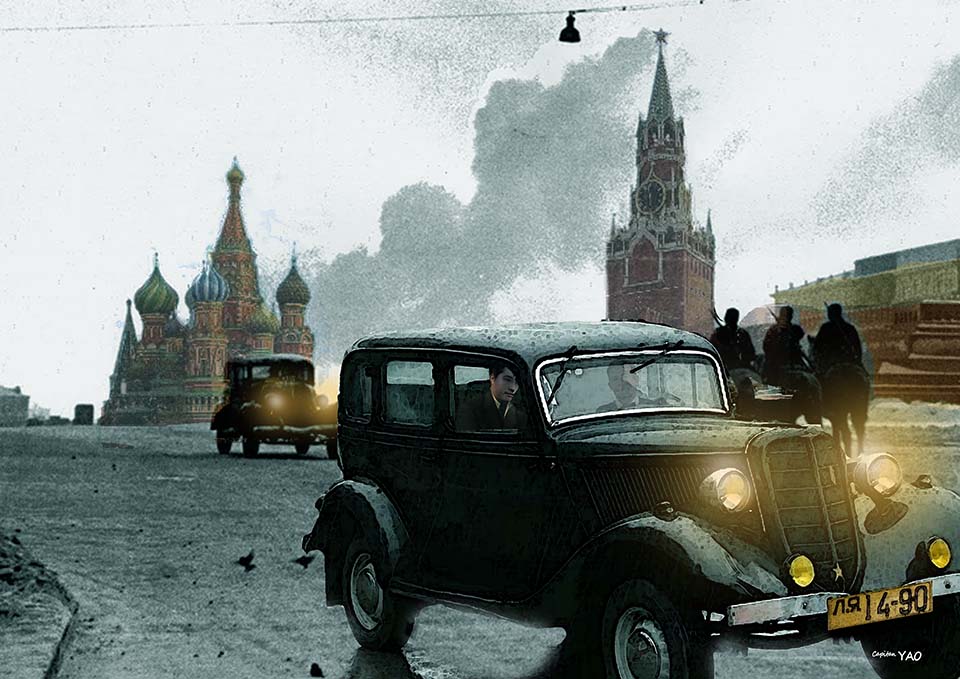
(Figure 4-4-5) Mr. M drives a car to pick up Paul as they pass through Red Square.
Mr. M drove his car into the courtyard of the British Embassy. He led me to a room in the very center of the building, drew all the curtains, and then whispered to me, "You'll stay here tonight, and go to Leningrad first thing tomorrow morning!"
"Leningrad?"
"It's the old St. Petersburg, the place where you lived for several years." Mr. M handed me a package: "Go there and deliver this package to the address on the note."
"What is this?" I knew it was against intelligence officer protocol to ask such a question, and I didn't expect him to answer anyway, but Mr. M thought for a moment and said, "It's good that you know, it's a pistol and a pass!"
"A gun? You want me to take this thing to St. Petersburg... no! Leningrad?" I said in surprise.
"Don't be afraid! You have a diplomatic status, they won't do anything to you."
"You're the same way, why do I have to go?"
"Because I'm too conspicuous here, everyone in the Soviet NKVD knows I'm a British spy; you're different, you've just arrived and they don't yet know your background or whereabouts, so you're the most suitable candidate." Mr. M leaned close to my ear and said, "None of the Soviet staff here can be trusted, everyone could be a spy sent to infiltrate, I only trust you in this kind of thing."
We were silent for a while. I opened the cloth bag and saw a revolver. I wanted to ask Mr. M why he sent the gun to Leningrad, but the atmosphere didn't seem right, so I wrapped the gun up again and put it in my leather bag.
That night I stayed in the embassy. Looking out the window at the Kremlin's spire, I felt a little uneasy. I wondered what kind of person Stalin was, and how he ruled the world's first communist country.
The next day, Mr. M personally took me to the station to see me off on the train to Leningrad. Along the way, police boarded the bus to check my documents, and I was very nervous. Fortunately, he looked at my British diplomatic passport and returned it to me without checking anything. However, I saw with my own eyes some passengers being escorted off the bus by gunners for some unknown reason.
My childhood memories of Leningrad, also known as St. Petersburg, are still vivid. I quickly found the designated spot, put the gun and documents in a trash can, and completed the task. I had planned to stay in Leningrad for a week, but Mr. M wanted me to leave the country as soon as possible after the mission. So I hurriedly boarded a ship bound for Hamburg, Germany, to continue my European trip, and my Russian journey came to an abrupt end.
Upon returning to England, I received news at the end of that year that Sergei Kirov, the Soviet Communist leader in Leningrad, had been assassinated by a man named Leonid Nikolayev.
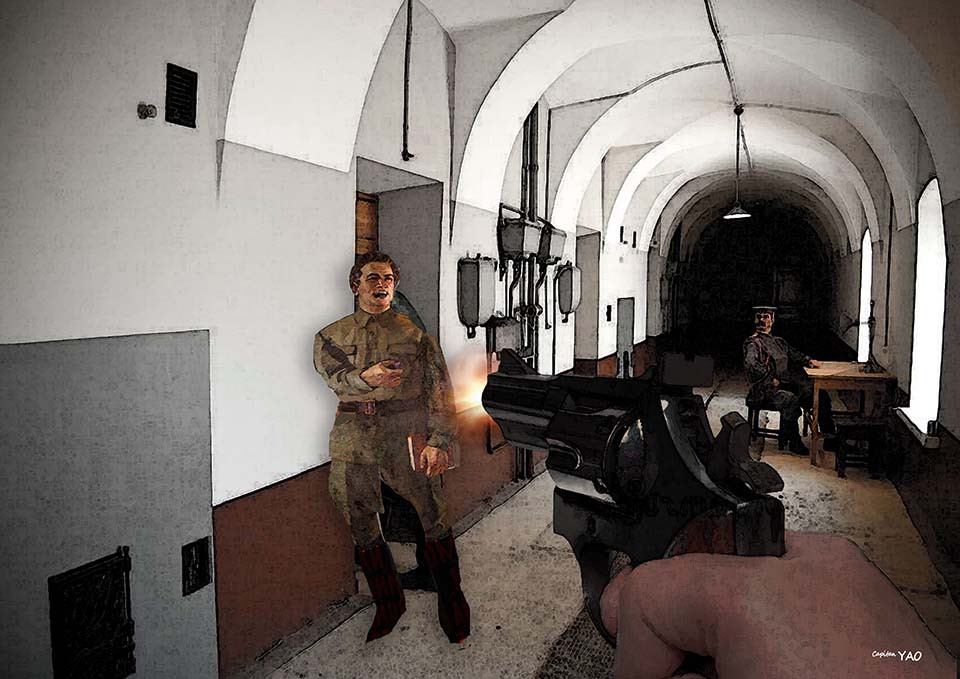
(Figure 4-4-6) Kirov, the leader of the Leningrad Communist Party, was assassinated by Nikolayev.
This happened on December 1, 1934. On that day, Kirov was in a meeting in his office in Leningrad when his bodyguard came to inform him that there was a phone call for him outside. When Kirov went out of the meeting room to answer the call, he was shot and killed at close range by Nikolayev, who was hiding behind the door. Nikolayev was arrested on the spot.
At the time, there were rumors that the murder was caused by Kirov's affair with Nikolayev's beautiful wife, but no one could explain how Nikolayev obtained the gun and the pass, which was quite incredible in the Soviet Union at the time.
"Was the gun that assassinated Kirov brought to Leningrad by me?" I think it's very possible, but at the time I could only guess, because no one would confirm it to me.
Subsequent developments surprised me. News from the Soviet Union revealed that Nikolayev was arrested and secretly executed on the spot, followed by the secret execution of the public security officers in charge of the investigation, then the executioners who carried out their executions were also secretly executed, and then their families. It was clear that a covert operation to eliminate anyone who might know the inside story was gradually unfolding within the Soviet Union. If it was just a crime of passion caused by jealousy, was it necessary to go to such lengths?
Because Kirov was very popular in the Soviet Union, it is said that telegrams were sent from all over the country demanding that Stalin avenge Kirov with blood. Soon after, it was reported that someone in the high command of the CPSU Central Committee provided Nikolayev with a gun and a pass to carry out the assassination. Stalin then ordered the secret police to launch an arrest operation. The scope of the operation and the cruelty of the methods were unprecedented.
According to statistics, of the 15 founding fathers of the Soviet Union, 8 were executed or died in prison (of the remaining 5, one was Lenin, who was already dead; another was Trotsky, who had been exiled and later assassinated by Stalin; and the third was Stalin himself); 98 of the 139 Central Committee members and alternate members were executed; 4 of the 6 Red Army marshals were executed by firing squad; almost all the commanders of the military districts and the navy and air force were executed, such as the naval fleet commanders, who were reduced to only one; and 296 of the 415 division and brigade
commanders were executed by firing squad; of the 2.8 million party members in the entire Soviet Union, 1.22 million were expelled from the party, exiled, or arrested and executed. During the three years of purges, at least 18 million people died in the Soviet Union due to executions, exile, and famine.
Kirov's popularity in the Soviet Union made him a potential political rival to Stalin, who used his assassination as a pretext to launch a massive purge, achieving two goals at once. I suspect Stalin may have known the British were involved, but he deliberately kept quiet, guiding events in his favor. I even suspect that Mr. M might have been a pawn used by Stalin.
Regardless, this brutal purge severely weakened the Soviet Union. By 1941, when Germany planned to invade the Soviet Union, it was completely powerless to resist. The initial setbacks in the war resulted in the deaths of more than 12 million Soviets. The deaths of these 30 million people can be said to have been entirely caused by the pistol I was transporting.
After the war, I discussed this incident with Mr. M. He confirmed that it was the gun I brought to Leningrad that assassinated Kirov, but he denied being used by Stalin, instead claiming that he had used Stalin. Mr. M argued that it was all for the benefit of the British Empire, and that the gun and identification were indeed secretly obtained from the top echelons of the Soviet Communist Party to frame Stalin's political enemies. Mr. M also boasted that the subsequent purges were all within his expectations. Mr. M said that Nikolayev was a low-ranking member of the Communist Party of the Soviet Union. His wife was very flirtatious and attracted many suitors among the high-ranking Communist Party cadres. However, Nikolayev was extremely jealous and once threatened to kill the high-ranking cadres who flirted with his wife while drunk. This remark happened to reach Mr. M's ears. "Since someone is willing to go all out, what's the point of killing a few high-ranking party and government officials? If you're going to kill someone, kill a rich guy!" Mr. M said. "At that time, Kirov was following the mass line in Leningrad, which meant appealing to the direct will of the people. This was very different from the high-ranking officials in Moscow who were locked up in the Kremlin and far removed from the masses, and it aroused Stalin's suspicion." I later encountered political figures like Kirov in Britain who wanted to break away from the traditional system and appeal directly to the masses. Although they didn't cause the deaths of millions like in the Soviet Union, their impact on the political arena and modern history was still significant. I also happened to become a key figure in this. But I'll leave that for later and go back to Kirov's assassination.
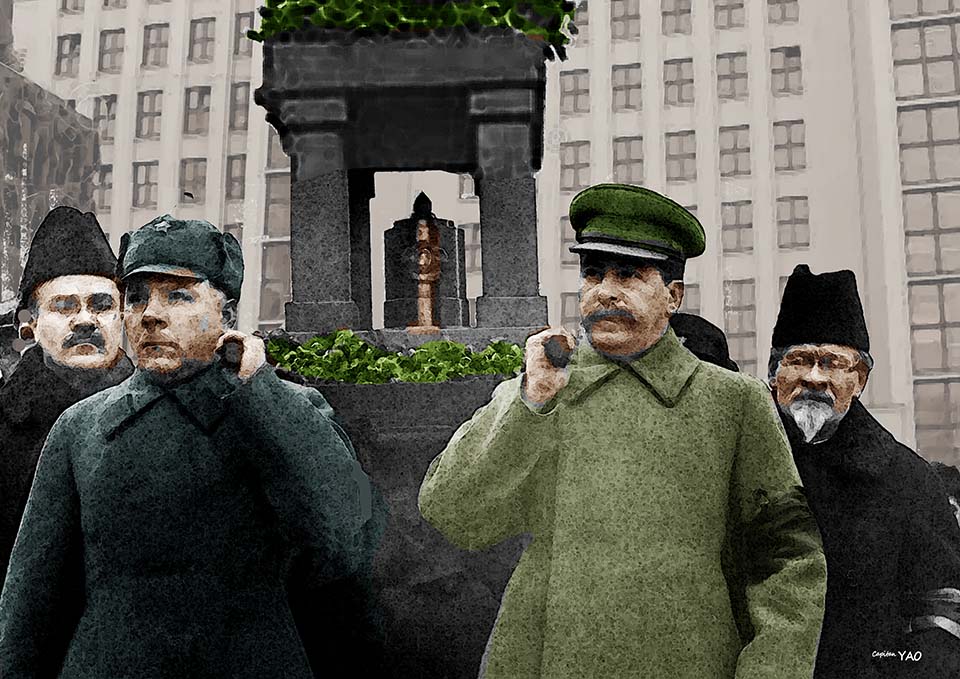
(Figure 4-4-7) Stalin personally carried the coffin at Kirov's funeral, but used the opportunity to launch a major purge.
"So you orchestrated Nikolayev's assassination of Kirov?" I asked Mr. M.
"That's not entirely true. In fact, Stalin already had this idea in his mind, and we just put the opportunity in front of him."
Mr. M said, "The news of Nikolayev's complaints was cleverly leaked to Stalin's confidants, who implied that the man could be used against Kirov; they would handle the rest themselves."
"If that's the case, why do I still need to transport the pistol to Leningrad?"
"That's the key point! Stalin initially only had the idea of getting rid of Kirov, but that wasn't enough for us. If we could seize the opportunity to create a major earthquake in the Kremlin, the Soviet Union wouldn't have time to export the communist revolution," Mr. M said. "Moreover, Stalin would definitely worry that this matter would be used by other opponents as leverage to bring him down, so I helped him create a target and a reason to silence him, and tried to expand the scope of the involvement as much as possible."
Mr. M lit his pipe and continued, "At first, Stalin may have bypassed Genrikh Yagoda, the head of the NKVD's secret police, and directly ordered the Leningrad secret police branch to carry out the operation in order to maintain secrecy. But this would limit the future purges to the Leningrad region, which was not enough. So I managed to get a pistol and a pass from the NKVD and gave them to Nikolayev in Yagoda's name. But the gun wouldn't just run off to Leningrad by itself, so you came in handy."
I glared at him, and Mr. M continued, "Therefore, after the assassination, Stalin rushed from Moscow to Leningrad to personally interrogate Nikolayev, asking him where he got the gun and pass. He originally intended to frame the Leningrad authorities, but when Nikolayev was questioned, he pointed to Yagoda behind Stalin, shocking everyone present. That very night, Nikolayev was killed by Yagoda to silence him. Stalin was initially secretly surprised, but he immediately saw this as an opportunity; upon returning to Moscow, he launched a 40-month-long purge."
I was stunned. Mr. M blew a smoke ring into the air and said, "This was a very clever arrangement. The mission was accomplished smoothly, and Britain was able to extricate itself completely. Otherwise, would I still be alive and talking to you today?"
"But there's one thing I still don't understand. Logically, Britain needed a strong Soviet Union to contain the emerging Nazis on the Eastern Front to reduce the pressure on Britain, France, and other Western European countries. But we actually let this force collapse on our own, allowing Germany to launch a full-scale war against Western Europe in 1939 without any worries about its rear?" I asked.
"You're oversimplifying things!" Mr. M said. "If the Soviet Union weren't weak enough, it wouldn't be enough to lure the Nazis into an attack. Instead, they might have joined forces to eliminate the influence of our British Empire across Europe. Didn't they do that in Poland? But the weaker the Soviet Union becomes, the more it acts like a suction cup, making Hitler think he sees an opportunity, ultimately leading him into the same predicament as Napoleon."
Mr. M exhaled a puff of smoke and said, "The highest level of intelligence operation is to make the other side believe that it is their own discovery."
"I never imagined that the gun I was transporting would cause the deaths of tens of millions of people!" I exclaimed.
"If it weren't for the gun you gave us, the Soviet Union's power today would be far greater; we'd probably be trapped behind the Iron Curtain by now!"
Our conversation took place during the Cold War, when the Soviet Union was at the height of its power and half the world was behind what Churchill called the "Iron Curtain." Mr. M's words sent chills down my spine.
Some of the things Mr. M and I discussed can never be made public, not even the classified information that must be declassified by law upon expiration. Besides, most of them don't even have a written record!
The emergence of communism in the 20th century has always seemed like a strange thing to me. The original ideal of communism was very lofty: the global proletariat transcends race and nationality, interacts equally, helps each other, and makes selfless contributions. This internationalist ideology is why the early communist revolutions were able to attract so many passionate young people to join them. However, after Stalin launched a major purge using the "Kirov Affair" in 1934, internationalism degenerated into nationalism, and collective leadership became a personal dictatorship. The ideal society of the proletariat was monopolized by the emerging privileged class, and the selfless spirit of sacrifice and dedication could only eke out a living under the totalitarian terror.
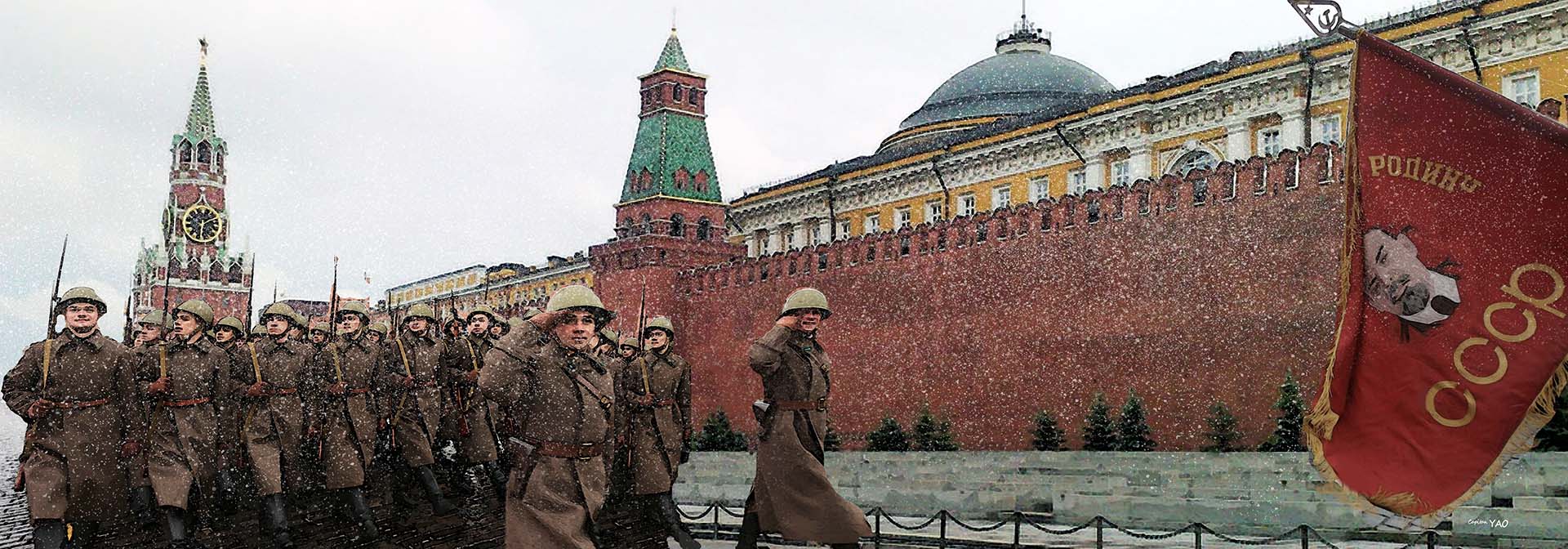
(Figure 4-4-8) After the Stalin era, the Soviet Union became a dictatorship and invested heavily in heavy industry and military construction. My view on this issue is that the original communist ideology was an idealistic utopia, unfavorable to ambitious rulers; it could only be used as a facade and could not be truly implemented. Therefore, almost all the so-called communist countries that emerged after World War II were authoritarian regimes. Where was the idealism of original communism to speak of? The only usable value of communism for these rulers was "one-party dictatorship." Therefore, it can be said that there is no truly communist country in the world today. At most, there are socialist countries that claim to be "transitioning to a communist paradise," or simply pseudo-communist countries ruled by family dictatorships, no different from feudal monarchies. This is true not only of the communist bloc within the Soviet system, but also of many countries within the so-called democratic bloc of the United States and the West, such as the military governments in Central and South America, or the Chiang Kai-shek regime in Taiwan. The Taiwan mentioned here is closely related to the latter part of my life. The Kuomintang (KMT) in Taiwan claimed to implement Sun Yat-sen's Three Principles of the People and considered itself part of the Western democratic camp. However, in my view, the KMT, from Sun Yat-sen's time, was a Leninist party, not much different from the Chinese Communist Party, and Chiang Kai-shek's family rule was even less in line with democratic standards. After Chiang Ching-kuo came to power, he implemented a planned economy similar to that of a communist country, achieving some success, but it was definitely not the kind of capitalism that Westerners imagined. I knew Chiang Ching-kuo since his time in the Soviet Union and knew he was a thorough Bolshevik, only forced to don a pro-Western facade in the Taiwanese context. Some intelligence agencies failed to see this and were prone to misjudging. Logically, those of us working in intelligence shouldn't get too involved in politics. However, if we can't see through the political rhetoric behind it, it's difficult to understand the logical contradictions in actual operations, and intelligence analysis may go wrong. I've received a lot of guidance in this regard from my father, and coupled with my years of interaction with high-level officials in both the East and West, I've developed my own set of views. They may not conform to academic theory, but they are very practical.
|
 However, my unexpected encounter with Chiang Ching-kuo in the same train thwarted Wang Ming's scheme. After arriving in Moscow, I told Mr. M my judgment, and Mr. M agreed wholeheartedly. He then informed Chiang Kai-shek through his channels, so that he would understand Chiang Ching-kuo's true intentions and not fall into Wang Ming's trap. At this time, the Soviet Ministry of Internal Affairs also discovered that Wang Ming was using them to pursue his own political interests. Stalin therefore believed that it would be detrimental to the Soviet Union for Chiang Ching-kuo to publicly criticize Chiang Kai-shek at this time. After many twists and turns, Chiang Ching-kuo finally returned to China in March 1937 after a thirteen-year absence.