5. European Turmoil
In mid-July, I traveled by ship from Leningrad to Hamburg, then took a train to tour various parts of Germany, finally arriving in Berlin in late July. While in Japan, I had already asked Sorge to introduce me to some of the new Nazi elites. Sorge, through his familiar diplomatic circles, recommended Joachim von Ribbentrop, Hitler's foreign policy advisor. With Sorge's letter of introduction, and given that Ribbentrop was already aware of my father's influence in the British Foreign Office, he immediately made time to meet with me.
Ribbentrop was a close confidant of Hitler and a leading candidate for Foreign Minister. He was about to be appointed as the League of Nations representative to London as a special envoy, so he was particularly trying to win me over, hoping to build connections in British politics through my father. Seeing that he wanted something from me, I mustered up the courage to ask him to arrange a meeting with Prime Minister Adolf Hitler. To my surprise, Ribbentrop agreed immediately.
I was informed that Hitler would meet with me on July 25th. That day, dressed in my formal naval lieutenant uniform, I went to the Reich Prime Minister's Office with Ribbentrop to wait. However, after waiting for a long time, I was not summoned and finally had to leave disappointed. It turned out that Hitler was secretly instigating the Austrian Nazi Party to seize power, and on the 25th, news of the assassination of Austrian Prime Minister Engelbert Dollfuss arrived. Hitler's plan seemed to be on the verge of success, and naturally, he had no time to bother with a nobody like me.
Unexpectedly, the coup attempt was quickly quelled by the Austrian military and police, many Nazis were arrested, Hitler's plot was thwarted, and the Austrian affairs were temporarily put on hold. At this point, he had time again, and I was informed that Hitler would summon me on August 2nd.
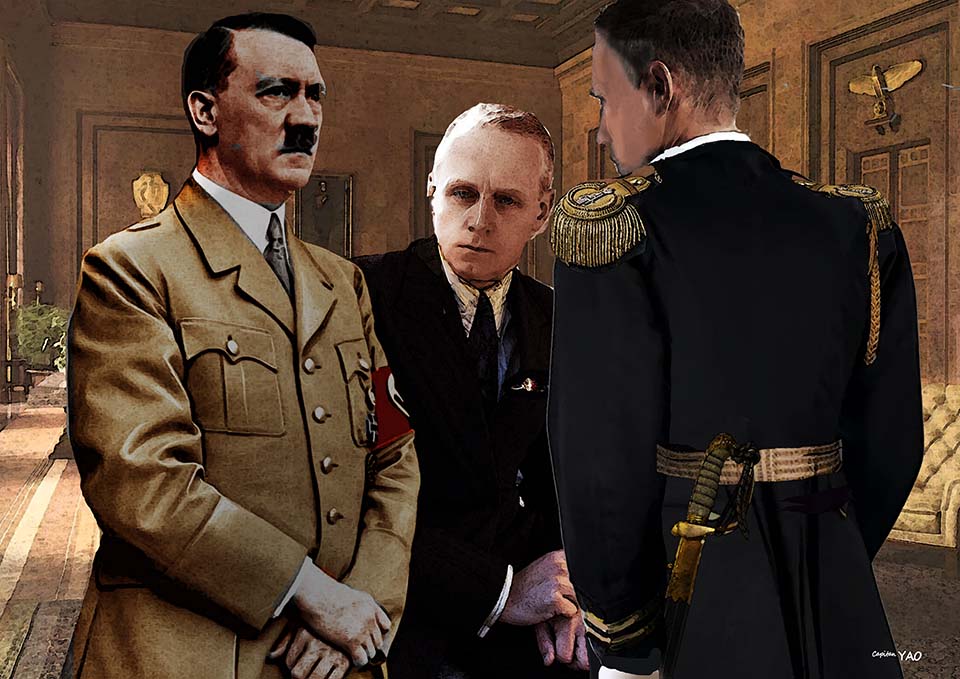
I donned my formal attire again and reported to the Reich Prime Minister's Office on time. Ribbentrop told me to wait in the drawing room while he went in to announce my arrival. I guessed Hitler must be in a good mood today, since the Nazi-majority Reichstag had just passed a resolution yesterday that if President Hindenburg died, he could hold both the positions of Prime Minister and President, wielding absolute power. And everyone knew that President Hindenburg was bedridden and probably didn't have many days left.
Hitler, dressed in a brown-yellow uniform, entered the reception room, followed by Ribbentrop. I rose to greet him and extended my hand to shake his. Hitler, who had already extended his hand, hesitated upon seeing me, then withdrew it and turned to Ribbentrop, asking, "Is he Jewish?"
Although I have never studied German, I could still guess what Hitler was asking Ribbentrop. This wasn't the first time I had been mistaken for a Jew. My mother's ancestry was close to Central Asia, which made me look somewhat like a Middle Eastern Jew. However, I spent most of my time in the East and wasn't very familiar with the Nazis' anti-Jewish policies at the time.
Ribbentrop was caught off guard by Hitler's question and was momentarily speechless, which made him a little embarrassed. I quickly said to Ribbentrop, "Please tell the Prime Minister that my father is British and my mother is Chinese."
Ribbentrop was relieved to hear this and translated my words to Hitler. Only then did Hitler extend his hand to shake mine and apologize for breaking our promise last time.
"Our greatest enemies in Germany are the Jews and the Communists. Germany and Britain should form a united front against communism to jointly prevent the expansion of the Soviet Communist Party," Hitler said. "You come from China, so you should know that we are now helping Chiang Kai-shek's government in China build an army to eliminate the Communists. I think the British should do the same..."
Hitler went on and on about his anti-communist and anti-Semitic theories, and I could only listen; I couldn't get a word in edgewise.
At that moment, the adjutant suddenly came in and whispered a few words in Hitler's ear. Hitler's eyes suddenly lit up, and he immediately stood up and said that he had to see the guest off early because of an emergency. I was relieved that my ears could finally rest for a while, but I was also surprised that the meeting ended so suddenly. I had to take my leave in a hurry. This was the only time I ever saw Hitler in person.
It turned out that the adjutant came in that day to report that President Hindenburg was dying. The next day, the government declared a national day of mourning, and Hitler became both Prime Minister and President, with his title changed to "Führer". I was fortunate enough to witness the beginning of the Third Reich.
Ribbentrop had a bold idea regarding Hitler's directives for the German-British anti-communist front and intended to use me as a pawn (of course, he wouldn't tell me this), to unknowingly draw me into this greatest political secret of the 20th century, and almost helped Ribbentrop succeed.

My identity piqued the interest of German intelligence, and Admiral Wilhelm Canaris, head of the German military intelligence agency "The Abwehr," invited me for a talk, hoping to learn about the situation in the Far East. Because Germany had lost all its Far Eastern colonies after World War I, it felt somewhat isolated from intelligence sources in the East.
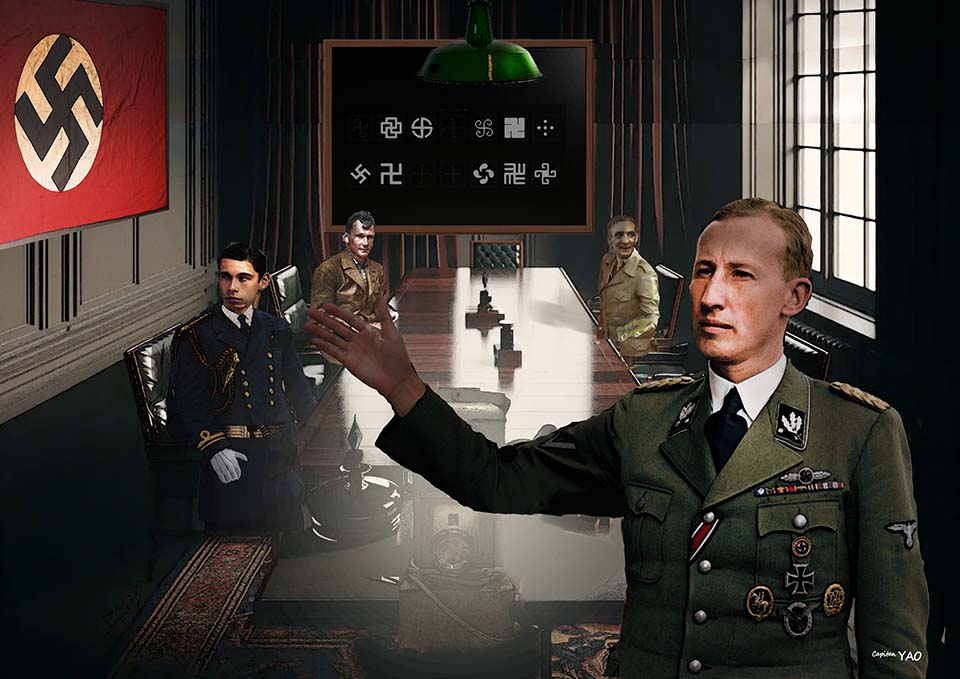
Carnass's actions displeased another intelligence chief, Reinhard Heydrich, who was then the head of the Berlin Gestapo and a favorite of Himmler. To demonstrate that he was the core of the German intelligence system, Heydrich insisted on inviting me to their headquarters for a talk.
Karnas was a traditional military man, while Heydrich was quite different; he was a complete Nazi fanatic. Before joining the Nazi Party and becoming the head of intelligence, he was merely a naval lieutenant intelligence officer. This was why Karnas couldn't tolerate Heydrich being his equal and even wanted to replace him. Later, the two fought endlessly for intelligence territory, but now Heydrich, following Himmler's instructions, was keen on creating various Nazi myths, and his purpose in inviting me was to discuss "Tibet"!
When I arrived at the conference room at Heydrich's headquarters, I found László Almásy , the Hungarian count I had met in Egypt, also there. I told him about Annie's disappearance in her plane, and Almásy was so shocked that he couldn't speak.
"So you two already know each other! Count László Almásy is our archaeological advisor." Heydrich entered the room and pointed to another young man at the conference table. "This is Heinrich Harrer, a mountaineering expert from Austria. He will be in charge of climbing Mount Everest in search of Shangri-La."
"Shangri-La?"
Shangri-La, the so-called Lost Horizon, is a secluded place in Western legend, and some even say it's the original homeland of the Aryans. This theory piqued the interest of the Nazis. Based on this theory, Almásy, a scholar specializing in Near Eastern civilizations, introduced the Sanskrit swastika symbol to the Nazi Party, making it their emblem. This swastika symbol is exactly the same as the one I see everywhere in Buddhist temples in China, except one is clockwise and the other is counterclockwise.
Even with the swastika symbol, Heydrich felt it wasn't enough. If he could find the legendary Shangri-La, he could find the purest Aryan bloodline, which was akin to religious worship for Nazi fanatics, something difficult for outsiders to understand. This was why Heydrich sought out Harrell.
At that time, climbing Mount Everest was a death-defying endeavor; countless Western mountaineers had perished in failed attempts, let alone the prospect of reaching a country whose very existence was uncertain. Heydrich invested countless sums of money and Germany's latest technology, and after several years of preparation, finally enabled Harrell to arrive in India in 1939 to begin his ascent. My intelligence, MI6, already knew Harrell's purpose. Just then, World War II broke out, and Harrell was imprisoned in a concentration camp as a citizen of an enemy nation, and was barred from being included in the deportation list.
In 1945, Harel escaped the concentration camp, crossed the Himalayas, and entered Tibet, becoming the Dalai Lama's private tutor. He remained there until 1952, seven years later, when the Chinese Communist Party army entered Tibet, at which point he returned home. His book, "Seven Years in Tibet," based on this extraordinary experience, not only became a bestseller but was also reportedly made into a movie!
But how easy is it to escape from British concentration camps? In fact, this was a deal we secretly arranged, making Harrell the front man for MI6 to control Tibet. Through him, Britain continuously transported weapons across the Himalayas to Tibetan troops. A few years later, it developed into a large-scale armed rebellion, which attracted the Chinese government's army to the border. In the end, the Dalai Lama was forced to leave Tibet and has been in exile in India ever since.
Returning to Heydrich, quite coincidentally, we were both naval aviators and intelligence officers, so he was particularly affectionate towards me. Heydrich was a tall, handsome man in a high position, with countless women eager to throw themselves at him, but I knew about his relationship with Almásy.
Strangely, I was always surrounded by people like him: Heydrich, Almásy, Lawrence... and so on. Heydrich's homosexuality and his one-quarter Jewish ancestry were top secret at the time. He silenced his opponents by intensifying his efforts to exterminate Jews; if that failed, he would simply assassinate them.
My fate intersected with that of Heydrich again during the war. In May 1942, two Czech agents trained by MI6 were airdropped by British planes onto the outskirts of Prague, Czechoslovakia, where they assassinated Heydrich on a country road. The Nazis retaliated by massacring thousands of men, women, and children in a nearby village. At the time, I was in China, but MI6 used a great deal of information about Heydrich that I had provided to accomplish this mission.
I arrived in Paris from Berlin in early August. The summer sun made Paris even more beautiful and romantic. Every Frenchman was enjoying life, which was completely different from the somber atmosphere I had seen in Berlin.
At the time, communist and anarchist ideologies were rampant in France. Intellectuals scoffed at the idea of building a military and preparing for war, and there were even cases of deliberate sabotage of defense factories. The general public, meanwhile, indulged in a life of luxury and pleasure. Senior military leaders were also complacent, believing the impregnable Maginot Line to be insurmountable. Moreover, Germany had not fully recovered from its defeat in World War I, and the French viewed the German army as a defeated foe, not daring to take it seriously. I sensed a hint of danger in the French reaction.
Paris was not only a place to enjoy life, but also the birthplace of revolution and a refuge for many politically persecuted victims. From the mid-19th century, when students in Paris lifted red tablecloths from their taverns, tied them to sticks, and carried them into the streets—becoming the first red flag in the history of human revolution—the world adopted the red flag as a symbol of resistance against existing authoritarian regimes. Those who failed in revolutions or were politically deprived often chose Paris as a refuge. For example, Leon Trotsky, who had failed in his struggle against Stalin, was residing in Paris at this time. However, due to strong pressure from the Soviet Union, the French government had notified him to leave the country as soon as possible, but no country dared to accept him. This provoked fierce criticism of the French government from Trotskyist supporters.
I didn't come to Paris with any specific purpose; I was simply on vacation, enjoying life. Years ago, Annie and I flew over Paris in the "China Pearl" without landing, I had promised her that I would bring her to Paris for a vacation after I returned to England, but that promise was never fulfilled.I'm returning to London in early September, so I only have two or three weeks to relax after the hard work of the past few years. I'm staying in a small hotel next to a lovely little café, which I frequent. I've read some of Ernest Hemingway's writings about his time in Paris in the 1920s, and I often imagine myself as him. Over time, I've come to realize that this seemingly very masculine Hemingway was actually gay—something beyond the imagination of most readers. But I've heard this story among the Anglo-American community in Paris, and some people even remember what Hemingway looked like at the Ritz Hotel.
Paris truly lives up to its reputation as the City of Lights, not only in its architecture but also in the attire and style of its ladies. Of course, one must mention Coco Chanel, whose clothing designs and Chanel No. 5 perfume captivated the upper class worldwide. I didn't know her personally, as Chanel was working in Hollywood at the time, but I heard many stories about her while in Paris. I spoke with a girl who worked at the Chanel boutique in the Ritz Hotel. Because Chanel was known for her strictness with her employees, they were happy to share her romantic escapades as a form of catharsis, especially when the boss wasn't around.
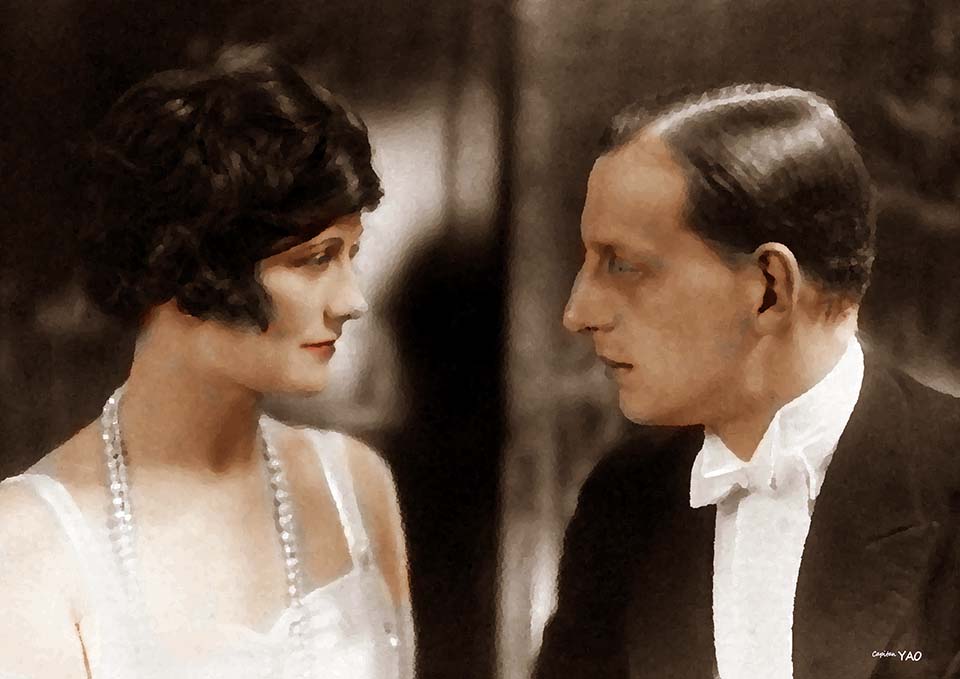
Indeed, besides her clothing and perfumes, Chanel's fascinating love life is also widely talked about. One of her favorites was a Russian duke, whose name I found to be someone I knew: Dmitry Pavlovich, the same guy who assassinated the sorcerer Rasputin in St. Petersburg.
After the Russian Revolution, Pavlovich fled to Paris with a large sum of money and lived as a recluse. Soon after, he ran out of money and began an affair with Chanel. Pavlovich was of noble birth and handsome appearance, making him a perfect candidate for a gigolo. Chanel spent a considerable amount of money on him, but the two eventually broke up, and Pavlovich married another wealthy woman.
Chanel's last affair, however, is related to me. During the German occupation of Paris in World War II, her lover was Hans Gunther von Dincklage, a subordinate of Ribbentrop and the German Foreign Ministry's representative in Paris. The two openly cohabited in a room at the Ritz Hotel, allowing Chanel to continue her clothing and perfume businesses even amidst the chaos of war in Europe. Because Chanel was already a world-renowned figure before the war, with high-ranking connections in Britain and the United States, when Germany's defeat became apparent, she even attempted to use her connections to establish a peace channel with the British government and secretly contacted Churchill.
After Paris was liberated by de Gaulle in 1944, Chanel's affair with a German made her a French collaborator. Churchill intervened on her behalf, arguing that Chanel had attempted to negotiate peace with Britain, and she was spared being publicly humiliated with a shaved head. Later, I helped secure the release of von Dincklage from war crimes trials, allowing them to live out their lives in Switzerland.
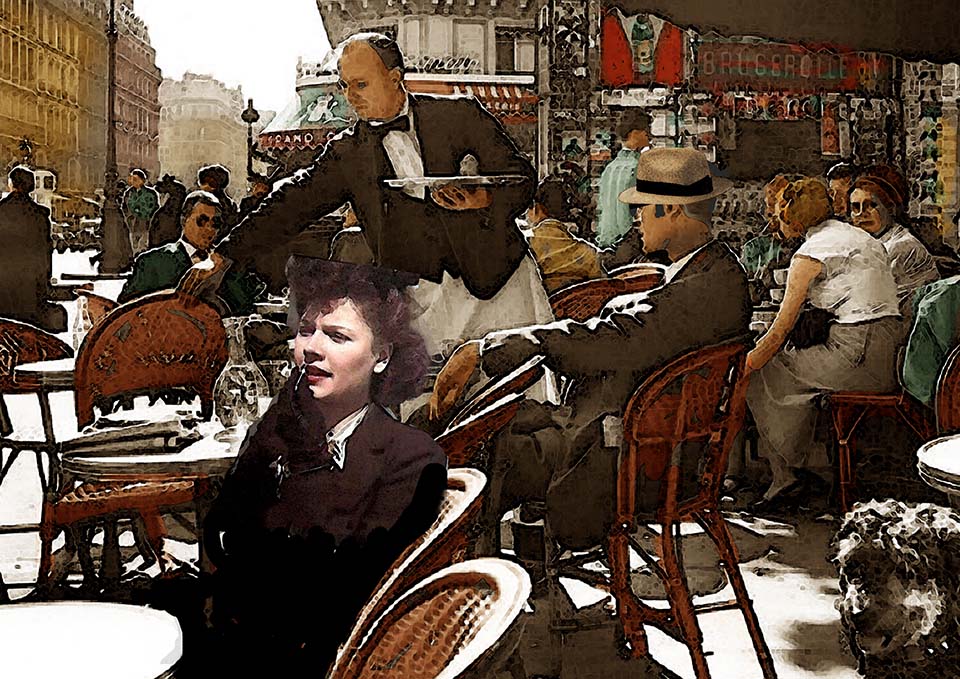
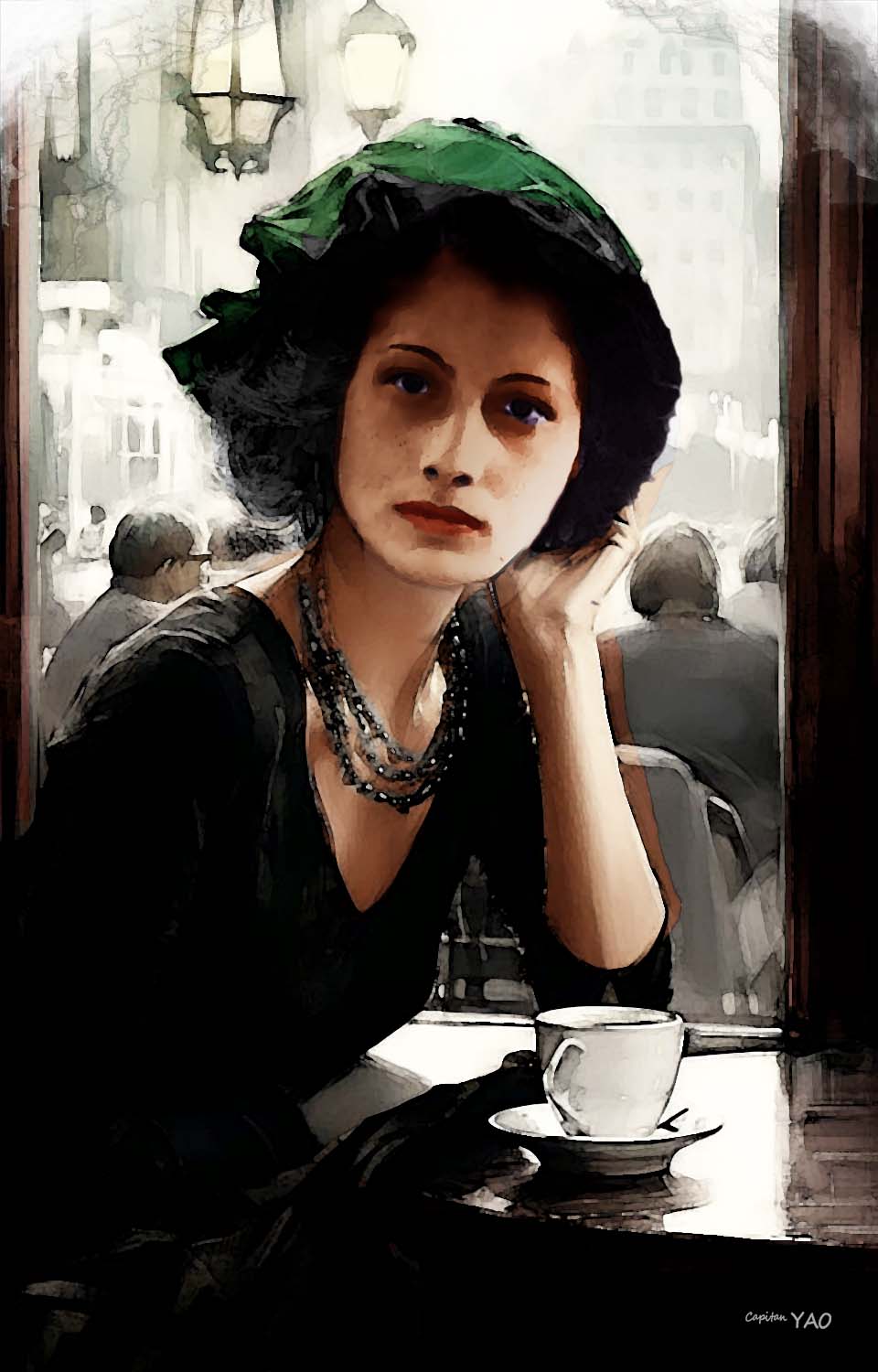
(Figure 4-5-6) "Princess Noor", painted by a street artist in Paris, was the girlfriend that Paul Draken met in Paris..
One day I stumbled into a bookstore, where a salon was being held to introduce a young children's book author. From her name, "Noor-un-Nisa Inayat Khan," could tell she was Indian. Noor was very beautiful, elegant, and tasteful. She was also a student at the Paris Conservatory, and I was immediately captivated by her. I took the opportunity of signing a book to get her contact information. We met at a café and discovered we had many things in common. She was a descendant of the Sultan of Mysore, India, and her mother was American. She was born in Moscow, Russia in 1914, and her family moved to France in 1921. She grew up in Paris in a very wealthy family and spoke fluent French and English. I also shared my background, including my experience as a British intelligence officer, which interested her greatly.
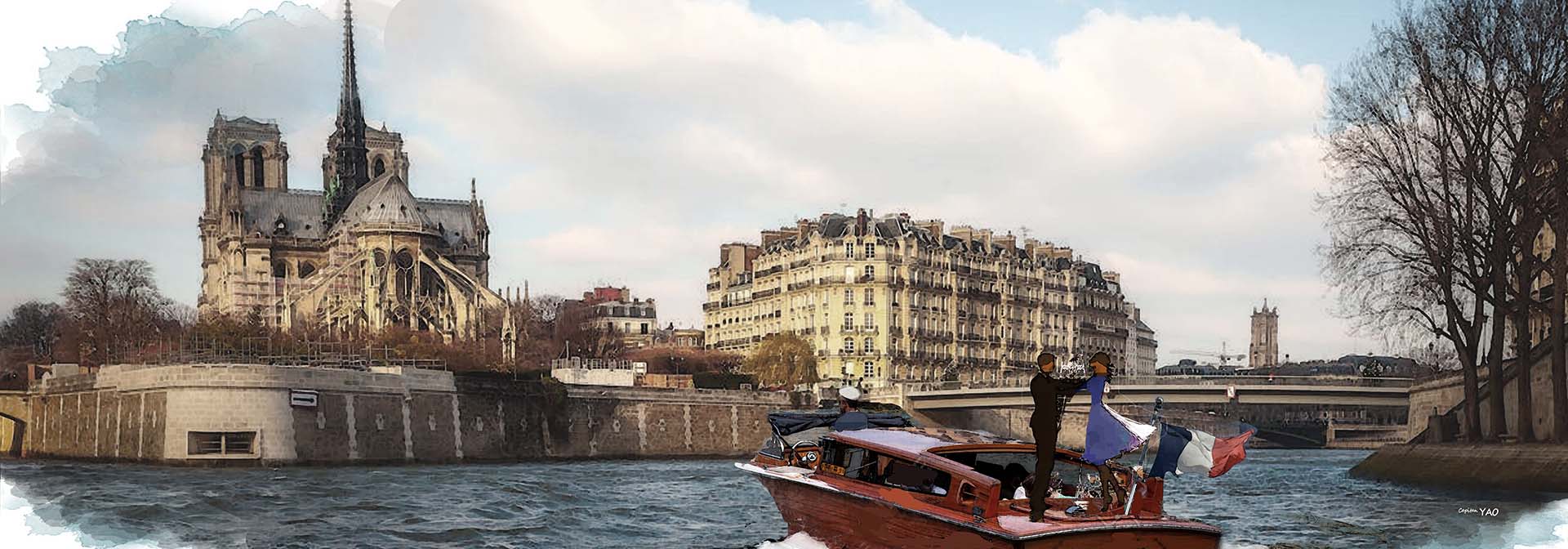
We drove around Paris together, make a wish at the Eiffel Tower, dancing on a yacht on the Seine. The scene was exactly like my romantic fantasy of Paris. But gradually I discovered that Noor was actually quite absent-minded, forgetful, and easily excitable beneath her elegant exterior. I didn't think much of it, and even started to dream about the future. Until one day I suddenly remembered what Chiu Taoch had said about "the curse of the queen and the princess." Noor seemed to be a princess too. Will something happen? I didn't dare to think any further.
Good times fly by, and before I knew it, it was the end of August. I was about to take the ferry back to my home in England. In reality, I couldn't stay in Paris forever, and Noor couldn't leave her home either, so we had to keep in touch by sending letters and hoping for another chance to visit Paris.
|