2. The Fookian Incident
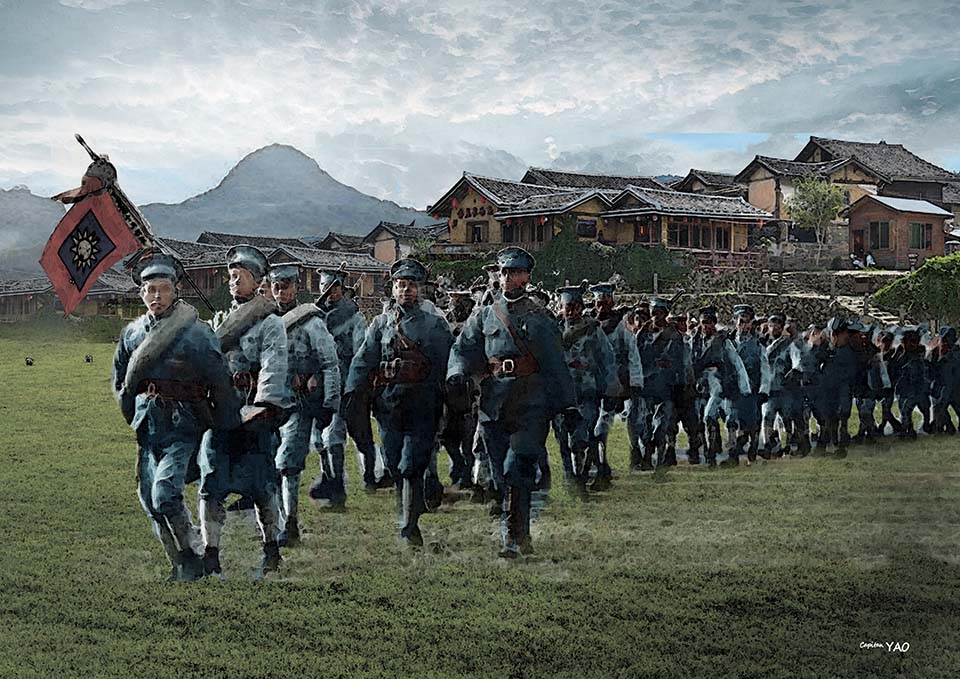
Since the Shanghai Incident in early 1932, Chiang Kai-shek transferred the 19th Route Army, which had made meritorious contributions in the anti-Japanese war, to Fookian Province, which aroused dissatisfaction among the army. At the end of November 1933, the generals of the 19th Route Army, including Chen Mingshu, Cai Tingkai, Chiang Guangnai, and Li Tsishen, joined forces with the Fookian Provincial Government and the Communist Party to establish the "People's Revolutionary Government of the Republic of China," breaking away from Chiang Kai-shek's regime in Nanking and declaring independence to resist Japan. Chinese history refers to this as the "Fookian Rebellion."
Fookian was the most fiercely contested area between Britain and Japan. Logically speaking, the emergence of an anti-Japanese regime would be ideal for the British government. However, the situation was not so simple when it came to "opposing Chiang Kai-shek." This was not only because Nanking was already the central government recognized by various countries, but also because Chiang Kai-shek was clearly much more reliable than the Communist Party in terms of protecting Western interests. Therefore, Britain decided to wait and see and even secretly support the Nanking government. This task fell to me again.
Fortunately, I had more than one source of intelligence in Fookian. First, there were many British instructors at the Mawei Naval Academy, who already had a fixed communication channel with our naval intelligence group. Second, Yoshiko Kawashima, also known as Kim Bihui, would provide us with surprisingly accurate Communist intelligence. I also had an old acquaintance from the Northeast Navy, General Chiang Bin, the former Director of Transportation, who flew planes with Chang Hsueh-Liang. He was currently unemployed at home in Fookian because of Chang Hsueh-Liang's resignation. Since he was a radio expert, we had maintained telecommunications contact, and now he was proving useful.
The Fookian Uprising was launched by generals under unfavorable circumstances in terms of timing, location, and popular support. The 19th Route Army originally entered Fookian to suppress the Communists and had fought several fierce battles with the Red Army. The Fujian Uprising initially proclaimed itself as "anti-communist, anti-Chiang Kai-shek, and anti-Japanese," but later changed it to "alliance with the Communists to oppose Chiang Kai-shek and resist Japan" to avoid fighting on two fronts. However, the alliance with the Communists deterred Chen Tsitang of Canton and Li Zongren of Kuangsi, who had originally intended to participate. The CCP was also internally divided into two factions due to the debate over whether to join forces with the 19th Route Army, which was originally their enemy. In addition, Fookian was originally the old territory of the navy, and the 19th Route Army would first face resistance from the navy if it wanted to seize it. Even the generals of the 19th Route Army had internal conflicts, which gave Chiang Kai-shek the opportunity to divide and win them over.
Through intelligence channels, we had grasped the entire situation from the very beginning of the Fookian Rebellion. I secretly passed the intelligence to Chiang Kai-shek through Dai Chunfeng. Chiang immediately dispatched Chiang Tingwen's Second Route Army to deploy in strategic locations in Fookian. In addition, the heavy artillery regiment, naval fleet, and air force were all mobilized. The 19th Route Army did not expect Nanking's reaction to be so fast. It was defeated as soon as it came into contact with the enemy. The rebellion was resolved in just over a month. The leaders of the rebellion fled one after another. The 19th Route Army was disbanded and incorporated into other units. This heroic anti-Japanese force disappeared from history.
The Fookian Rebellion also caused internal divisions within the CCP, giving Chiang Kai-shek an opportunity to launch the fifth encirclement campaign. Ultimately, Chiang was forced to abandon his base in South China and begin the Long March at the end of 1934. The outcome of the Fookian Rebellion made Chiang Kai-shek the biggest winner.
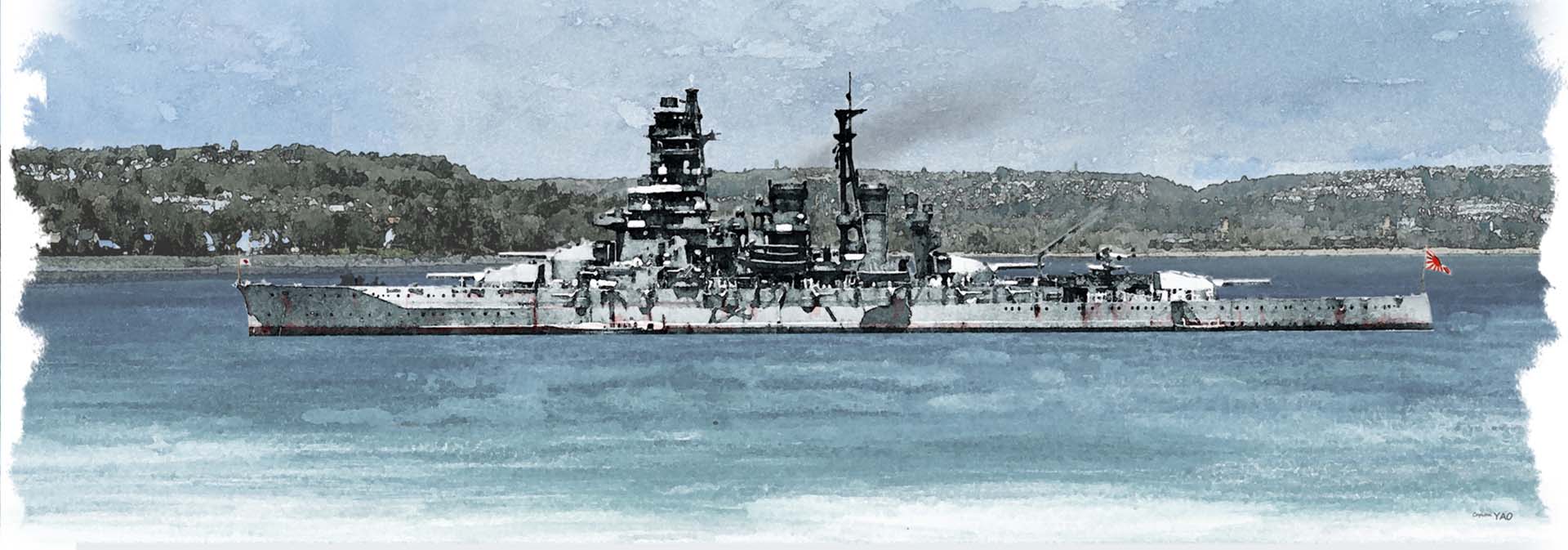
However, things might not have turned out this way. At the beginning of the incident, Japan used the excuse that Chiang Kai-shek was busy suppressing the Communists and had no time to deal with the situation, so it sent warships from Taiwan to the mouth of the Ming River to demonstrate. Under the guise of supporting Chiang, Japan actually wanted to take the opportunity to occupy Fookian. This made the British government very nervous. Seeing that the September 18 Manchuria Incident was about to be repeated in Fookian, I quickly activated the communication channel with Yoshiko Kawashima.
It was around Christmas time, and I arranged to meet her in Shanghai. This was my seventh year in China since 1927. The Bund was as dazzling as ever, and seeing this scene reminded me of Annie. I had proposed to her here last year at this time! Thinking of this, my eyes welled up with tears.
But the harsh environment didn't allow me to be sentimental. Before meeting with Kawashima, I had to think about what bargaining chips I had. I knew she was currently busy preparing for Puyi's enthronement ceremony and wanted to create an atmosphere of peace and prosperity. She certainly didn't want to cause trouble at this critical juncture. Moreover, I was well aware of the contradictions between the Japanese army and navy. I had to create a trap for her to fall into.

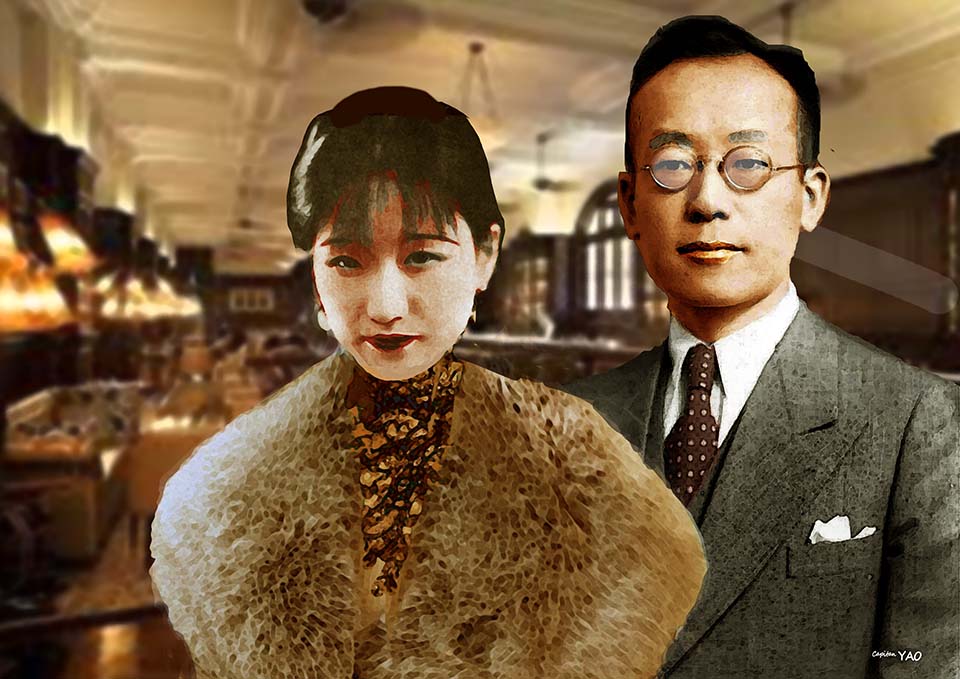
Kawashima was wearing a mink coat today. She hugged me as soon as we entered the restaurant, and I whispered in her ear, "The Royal Navy won't stand idly by after your actions in Fookian. Henry's coronation next spring will probably turn into a very ugly affair!"
Kawashima, feeling framed and enraged, shoved me aside, saying, "That's none of our business! That was the Navy acting on its own!"
She took the bait. "Okay! Let's solve this problem together!" I pulled out a chair and sat down, taking the opportunity to steer the conversation towards the fact that this was a problem for both of us.
"The Royal Navy may not need to deploy, but your warships must withdraw!"
"Our army has no jurisdiction over the navy!" Kawashima protested.
"That's your problem. You need to find out who has jurisdiction over the Navy!" I said.
"That was sent by the Makong Port Command, this..." Kawashima thought for a moment and said, "Perhaps if the Governor-General of Taiwan intervenes, the navy will have no choice but to comply!"
"Then hurry up and go find it!"
"Who do you think the governor is! You think you can just send people here whenever you want?" Kawashima threw a punch, which I grabbed. Our wrestling motion attracted the attention of the people in the restaurant. Kawashima turned around and yelled, "Bagyaru! What are you looking at!"
Everyone pulled their heads back, but whispers continued.
"That's right! I have someone I can try!" Kawashima said.
"who?"
"Ku Sienrong!"
"Who is Ku Sienrong?" I asked.
"Nobody knows Ku Sienrong? He's the richest man in Taiwan!" Kawashima said. "I heard that he led the way when the Imperial Army attacked Taipei. Later, Japan gave him a monopoly as a reward, and he gradually became rich through that. He and the Governor-General were very close!"
"Do you know him?"
Kawashima feigned mystery, smiling and shaking his head: "Don't know him!"
"Don't you know him? Then why are you mentioning him?"
"Let's start getting to know each other now!" Kawashima leaned closer to me and said, "If you behave well, I'll help you get to know more people, and faster!"
Yoshiko Kawashima resorted to her old tricks again. To be honest, I was already a bit tired of her sarcastic remarks, but to accomplish the mission, personal sacrifice for the country was nothing. Besides, Annie had been gone for a year, and I hadn't been in contact with any woman in that year... I embraced her and went straight to the hotel suite upstairs. By this time, Kawashima had become addicted to opium. With the help of the drug, we spent the night in a daze.
"You absolutely must come to Sinking next March!" Kawashima said.
"Where is Sinking?" I asked, knowing the answer already.
"Bage...Sinking is the old Changchun!"
"What brings you to Sinking?"
"My cousin Henry is going to ascend the throne as emperor!" Kawashima exclaimed. "Our Great Ch'ing Empire has hope again!"
Yoshiko Kawashima's only desire was to revive the Ch'ing Dynasty. The Japanese were merely tools she used. But it was hard to say who was using whom. Anyway, it wouldn't hurt to use her for a while. With that thought, he felt relieved and picked her up, making her moan wildly once again.
When she left at noon the next day, she claimed that she was going to Taiwan to find Koo Hsien-jung.
I'm not sure if she actually knew Ku Sienrong, or even if she ever went to Taiwan, but Ku Sienrong was indeed asked to go to the Governor-General of Taiwan, Nakagawa Kenzo. As soon as the Governor-General intervened, the navy withdrew, and the crisis in Fookian was averted. This matter was highly classified and never made public; very few people knew about it.
After the Fookian Incident was resolved, Chiang Kai-shek appointed Chen Yi, the Vice Minister of Military Affairs, as the Chairman of Fookjian Province. I knew General Chen Yi because I often visited one of his subordinates, Yu Tawei, the Director of the Ordnance Department. Yu was a student who had studied in Germany, and Chen Yi greatly admired him during his inspection tour of Europe, so he brought him back to China to take up his post.
Among Chen Yi's provincial government team was a graduate of St. John's University in Shanghai named Yan Chiagan, who worked in finance. After arriving in Taiwan, by a twist of fate, he became president after Chiang Kai-shek's death. However, he only dared to continue Chiang Kai-shek's unfinished term, quickly handing it back to Chiang Kai-shek's son, Chiang Ching-kuo, as soon as the election came, and spent his days amusing himself with photography. As for Chen Yi himself, he was extremely unlucky; in 1949, while serving as the chairman of Chekiang Province, he was summoned to Taiwan by Chiang Kai-shek, arrested, and executed!
My reasons for contacting Yu Tawei were twofold: firstly, I hoped to sell British arms to China; secondly, I had a personal connection with him. It turned out that Li Yunhe's boyfriend in Tsingtao was Yu Tawei's nephew, Yu Chiwei. I wanted to find out Li Yunhe's whereabouts. At the time, I didn't know that she had come to Shanghai in 1933 and entered the film industry as the erotic star "Lan Ping," living not far from me.
Dealing with Yu Tawei wasn't very successful. The Chinese arms market was dominated by German products at the time, and German military advisors controlled the Nanking government's military strategy. As for Li Yunhe, the Yu family had just gone to great lengths to get Yu Chiwei out of prison (he had been arrested the previous year for supporting the Communist Party), and they had already parted ways, so naturally, no information could be obtained from him. However, I later became quite familiar with this Director Yu in Taiwan. At that time, he had become the Minister of National Defense and was even related to Chiang Kai-shek's son, Chiang Ching-kuo, by marriage.
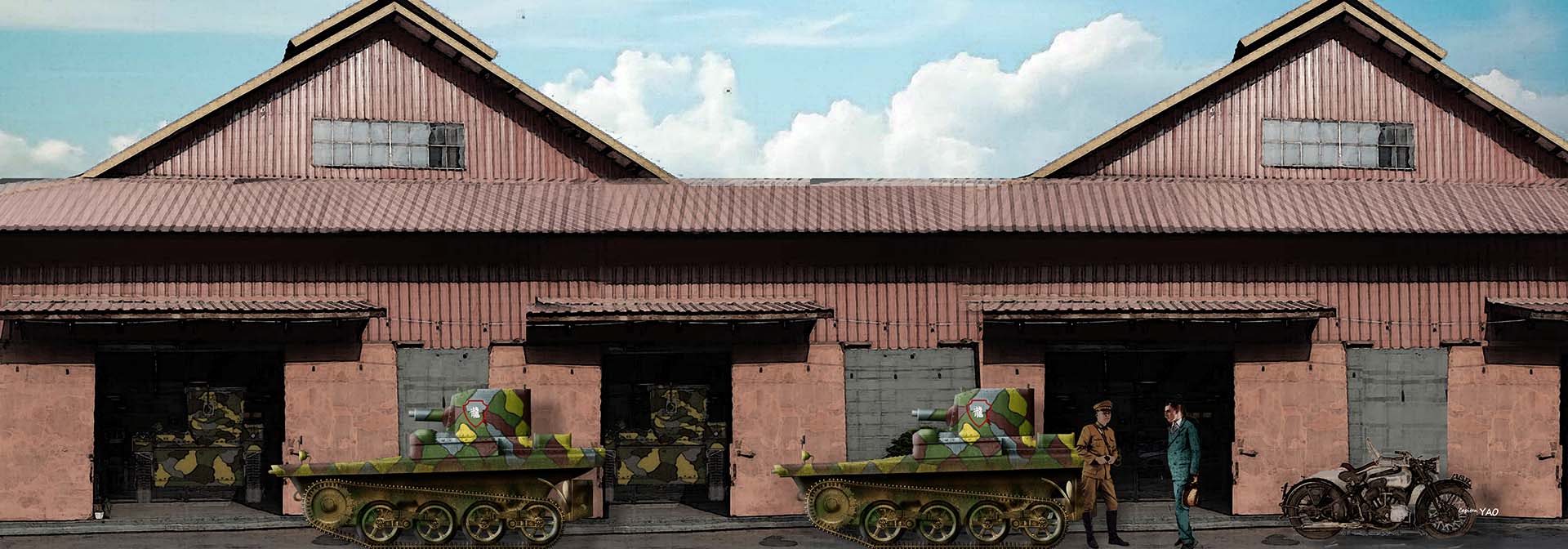
Since selling weapons to the Ministry of Military Affairs was not an option, I had no choice but to turn to the Tax Police Corps of the Ministry of Finance. The Tax Police Corps was a private army established by Chiang Kai-shek's brother-in-law, Soong Mei-ling's brother, and the then Minister of Finance, T.V. Soong. Although it was nominally a tax police corps, its training and equipment were far superior to those of the Chinese army at the time.
They had already purchased 18 Vickers armored cars made in Britain, and now I wanted to try approaching Minister Soong again. What channels should I use? I remembered his sister, the current First Lady, Soong Mei-ling. Through her connections, I finally managed to sell them a batch of 32 Vickers tanks (16 amphibious and 16 47mm gun versions), which were delivered in November 1934.
Most of the officers in the tax police regiment were Chinese who had studied at British and American military academies, and their style of doing things was relatively Westernized, so I found it easy to deal with them. I had quite a bit of business dealings with Colonel Sun Liren, the newly appointed commander of the Special Forces Regiment. He was a graduate of the Virginia Military Institute and a typical soldier, but to be frank, he had a low level of political sensitivity, which explains why he was later purged and imprisoned by Chiang Kai-shek in Taiwan for more than 30 years. I also had considerable contact with his 4th Tax Police Regiment when it was reorganized in the concession area after the outbreak of the war against Japan and sent to Burma to fight alongside the British army.
The Major General Commander of the Tax Police Corps was Wang Geng, a graduate of West Point Military Academy. When I came into contact with the Tax Police Corps, he had already left his post because he had caused a major disaster during the Shanghai Incident in early 1932. At that time, he led the Tax Police Corps to fight against the Japanese army in Shanghai in conjunction with the 19th Route Army. After obtaining the 19th Route Army's troop deployment map at a meeting in the command post, he secretly took the map to a dance hall that night and was caught by a Japanese patrol team. The Japanese wanted to execute him on charges of espionage, but he was soon released by the American consul.
This time, the 19th Route Army was in an uproar, believing that Wang Geng was a spy who had leaked information to the Japanese army. As a result, he was arrested by the Chinese military and sentenced to death. He was imprisoned for a year before being released on bail by Song Ziwen.
I specifically mentioned him because he was the ex-husband of Lu Xiaoman, Xu Zhimo's second wife. This Major General Wang Geng, who was said to have been in the same class as Eisenhower at West Point, never rose to prominence in the Chinese military; in fact, he suffered a series of misfortunes and eventually died in Cairo, Egypt.
Major General Wen Yingsing, who succeeded Wang Geng, was also a graduate of West Point Military Academy. Before becoming the commander of the regiment, he had served as the president of Tsinghua University in Peking! He had a son named Wen Hashiong who later studied at the Virginia Military Institute in the United States. I met him a few times when he was working in the United States. Later, he also rose to a high position in the Kuomintang army in Taiwan.
|