1. The Mutinous Ship
In early 1933, the Japanese carried out a series of military activities in North China. The Kanton Army attacked Shanhaiguan, occupied Rehe, and advanced on Peiping. The Chinese army was unable to resist. The situation only eased after the signing of the Sino-Japanese Tanggu Truce at the end of May. Chang Hsueh-Liang resigned and went abroad as a result. Under these circumstances, my opportunities to go to North China increased again, because a large number of secret telegrams and intelligence exchanges between the two sides needed to be brought back to the Hong Kong headquarters for analysis and interpretation.
In mid-April, I saw Chang Hsueh-Liang and his family off to Europe from Shanghai. The sexy and beautiful Aida Mussolini and her husband Count Ciano also accompanied them.
Then, in mid-June, I visited Admiral Shen Honglie in Tsingtao. He had called several times to urge me to come, but I had been too busy to make the trip. Now, on my way back to Shanghai from Tiantsin, my ship happens to be stopping in Tsingtao, and I want to ask him if the large order he verbally promised two years ago can be fulfilled. Of course, our relationship isn't entirely pragmatic. He has now become my teacher and friend, and I always try my best to help him when needed. Interestingly, besides dealing with the British government, I sometimes even have to relay messages and smooth things over with his superior, the Young Marshal Chang Hsueh-Liang.
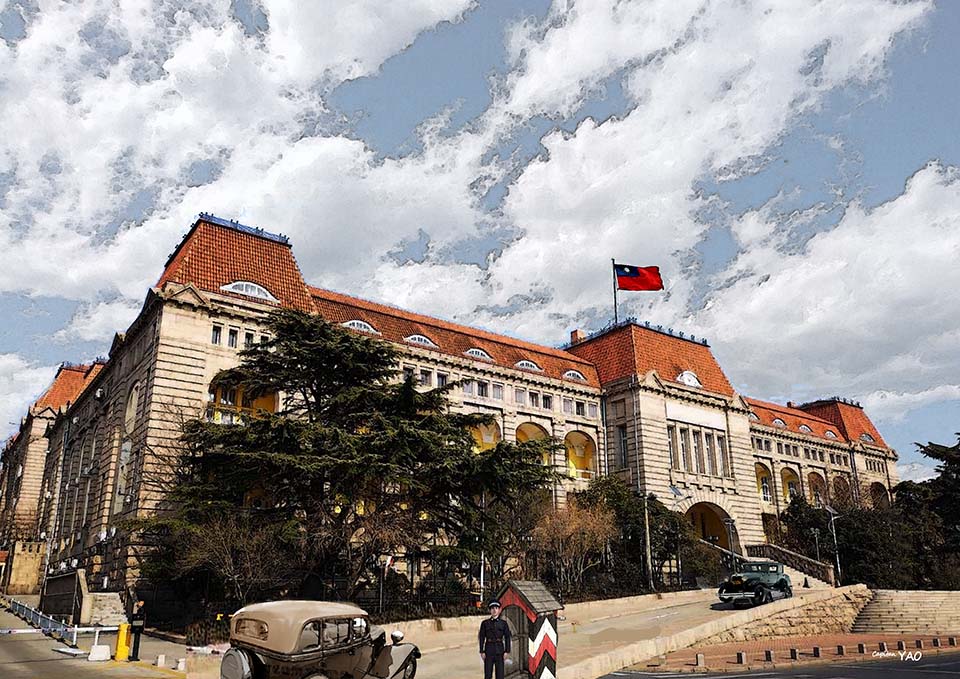
I met with Shen Honglie alone at the Tsingtao Municipal Government. At the time, he was also the mayor of Tsingtao. He chose the municipal government instead of the naval headquarters to avoid being seen by others in the Northeast Navy. He had suffered greatly over the past two years and looked much older. Since leaving his Manchurian stronghold in Tsingtao after the September 18 Incident in 1931, the Northeast Navy's territory had shrunk significantly, and it relied on the revenue of the Tsingtao Municipal Government to survive. This was the reason why Shen concurrently served as mayor of Tsingtao, but it also caused internal conflicts within the Northeast Navy to increase day by day. At the end of the previous year, his classmates who had studied in Japan, Ling Xiao, Liu Tianpu, and others, felt that he had monopolized the benefits, so they kidnapped him at Shangqing Palace in Laoshan and demanded that he relinquish power and take a position in the municipal government. He refused, and was later rescued by Tong Muzeng (the original Bohai Fleet faction) and the Northeast faction. As a result, many of Shen's classmates who had studied in Japan in the Northeast Navy went into exile.
Tong Muzen had saved the fleet and was rewarded for his service. The original Bohai Fleet faction seized power, while the Northeast faction, which had also made contributions, was sidelined and removed from important positions in the fleet, which aroused their sense of crisis. Shen Honglie also vaguely sensed that something was wrong, but he did not know that the Northeast faction blamed him for the Bohai Fleet faction's monopoly of power.
"I'm going to the Chenhai ship tomorrow to give a speech to the captains. Would you like to come with me? I'd also like to report on the latest developments in naval technology," Shen Honglie said.
"Well... I'm not an expert either," I said, "but if the commander wants me to go, I'll go! Besides, I really have an affection for the Chenhai ship!"
"affection? Both of your kidnappings were related to the Chenhai ship. Do you want to do it a third time?" Shen Honglie laughed heartily, his laughter carrying a hint of vicissitude and self-mockery.
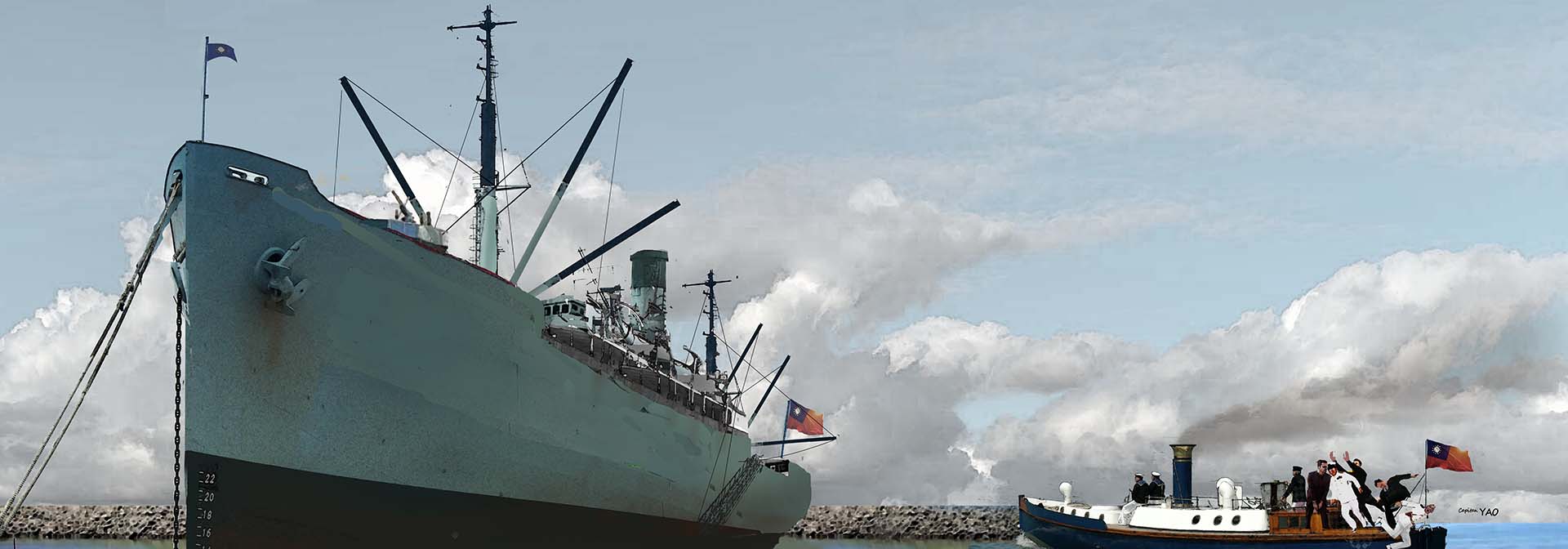
The following afternoon, I first accompanied the ship to inspect the swimming competition venue of the North China Games, and then went to the Dagang Customs Wharf to board the small steamer sent by the Chenhai. The boat was led by the second officer on duty, Lieutenant Feng Zhichong, a graduate of the Huludao Naval Academy. I had met him last year when I went to Taiwan on this ship, and we had even had some conversations. Strangely, when Feng Zhichong saw me, his expression froze, and he quickly turned his head away, pretending not to recognize me.
Shen Honglie, several guards, and I boarded a small steamboat and headed towards the Chenhai ship. Gazing at the Chenhai moored at Pier No. 4, the familiar silhouette of the ship evoked a deep sense of warmth. In 1927, when I first returned to China, I was kidnapped and forced into mercenary service. It was from the Chenhai that I flew my plane to bomb Shanghai. Around this time last year, I traveled to Taiwan by ship, only to be kidnapped again by Doihara and brought to Manchuria to meet Puyi. Therefore, I have a complex and multifaceted feeling towards the Chenhai ship.
Admiral Shen stood behind the helmsman on the stern deck, with his two bodyguards standing on either side. I followed behind them, and at the very back was Feng Zhichong, the officer on duty. I found Feng's reaction a bit strange, and thinking that I might have mistaken him for someone else, I turned around and glanced at him again, only to find that he was pulling out a pistol and pointing it at Admiral Shen.
"Commander Shen!"
I shouted loudly and turned around, kicking Feng Zhichong into the water. The other guards rushed forward and tackled Shen Honglie to the deck. Even after falling into the water, Feng Zhichong still managed to fire three shots at the boat, but was eventually shot and captured by the guards.

"This is treason! They should all be arrested and executed!"
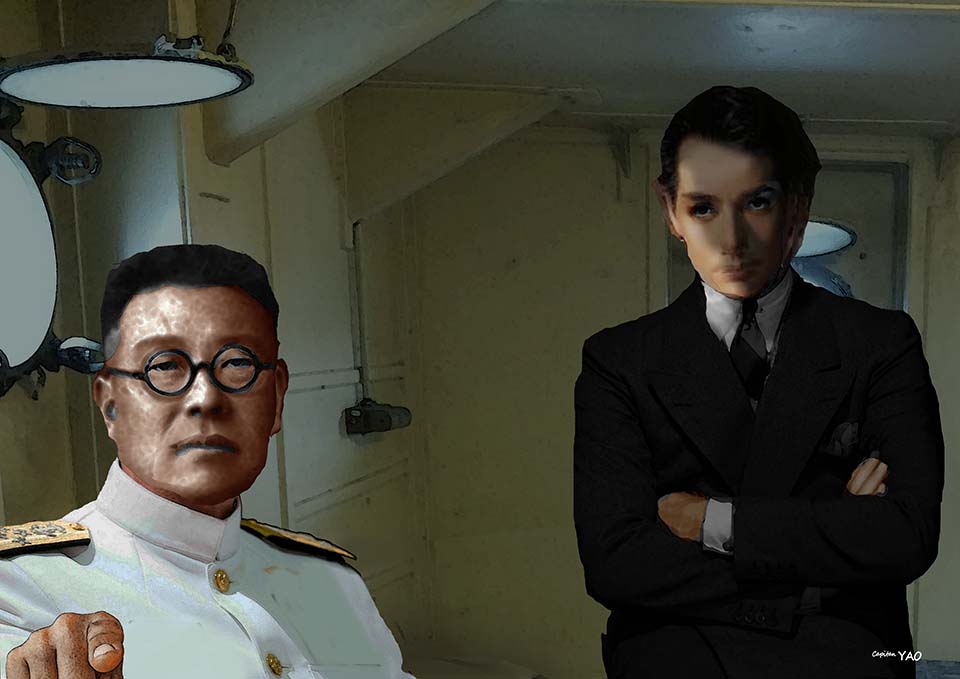
In the large cabin of the Chenhai, the former Bohai Fleet officers, now holding the important position of captain, stood up and spoke, demanding a severe crackdown on the Northeast faction. Shen lowered his head, closed his eyes, and remained silent, letting these new power holders clamor. Finally, he raised the corner of his eye and gestured to me: "What do you suggest, Captain Draken?"
(Figure 4-1-3) Admiral Shen asked Paul to express his opinion and set the tone for the Feng Zhichong incident.
"Him? He's an outsider! What right does he have to speak?" Officers from the Bohai Fleet expressed their dissent.
"Captain Draken is no outsider; he was personally appointed by the old marshal!" Admiral Shen opened his eyes, clenched his fists, and said coldly, "What rank were you when Captain Draken was a flight squadron leader?"
"this....."
"Paul, just say it!" I had no choice but to stand up and address the room full of hostile officers from the Bohai Fleet: "Plotting to assassinate a superior is unforgivable in any country's military, so Lieutenant Feng must be court-martialed. However, the other officers cannot be arbitrarily accused of treason unless there is concrete evidence." I said earnestly, "This matter should be considered from the perspective of the overall interests. If the Northeast faction is used as an opportunity to purge, the Northeast Navy will be finished, and everyone will have to bow down to the Fookien faction for a living. Is that what you want?"
"Well said! Feng Zhichong will take full responsibility for this matter; the rest will be spared!" Admiral Shen abruptly stood up and left the cabine: "Where are Kiang Siyuan and the others? Where are they hiding?"
Kiang Siyuan, formerly known as Kiang Yanchong, is now one of the leading figures of the Northeast faction. At this moment, he is convening a meeting of Northeast faction officers on the Haichi cruiser, preparing to launch a coup and arrest all former Bohai Fleet officers if Feng Zhichong succeeds. However, news arrives that Feng Zhichong's assassination attempt failed and he has been executed. "He who kidnapped him can still be spared, but we who saved him are being shot. Feng Zhichong's death is too tragic!" Many officers from the Huludao Naval Academy wept uncontrollably upon hearing the news.
"We only have one option left now, or we'll all be dead!" Kiang Siyuan said, pointing to the nautical chart, "Let's go to Canton and seek refuge with Chen Tsitang!"
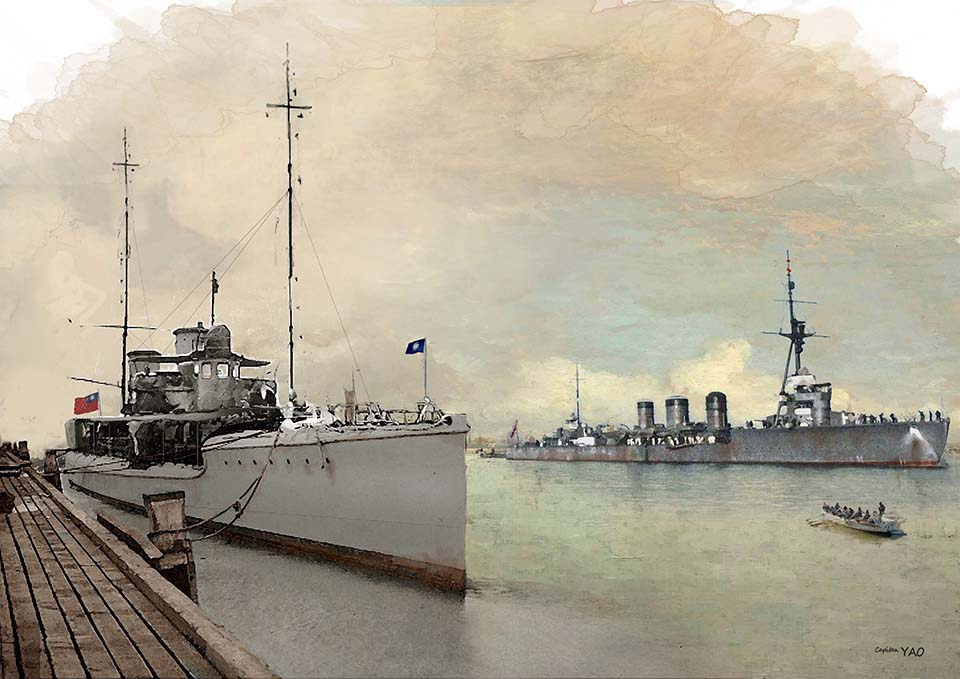
"The three ships we currently control, 'Haichi,' 'Haichen,' and 'Chaohe,' can leave immediately, but the 'Tung An' is too small, and its fuel supply may not be sufficient for long-distance voyages. We also fear it will slow down the fleet and lead to pursuit," the officers said.
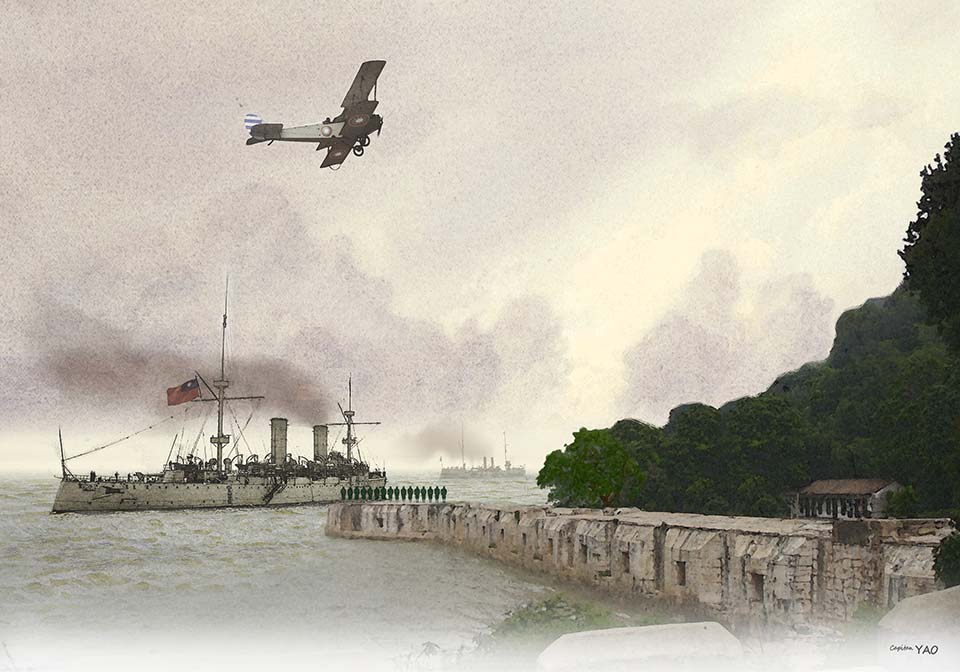
(Figure 4-1-4) The three mutineers fled to Canton, leaving the "Tung An" destroyer behind.
"Then abandon Tung An. All other ships must immediately declare martial law. No one is allowed to leave or board without my permission!" Kiang Siyuan said. "All ships, proceed to Laoshan and anchor. We'll leave tomorrow!"
On the evening of June 25th, the cruisers Haichi, Haichen, and Chaohe quietly departed Tsingtao. These three cruisers were not only the most powerful and largest warships in the Northeast Navy but also in all of China. Their departure caused the Northeast Navy, which had previously held the top position in China, to plummet in strength. When Shen Honglie discovered the three ships were missing, in addition to seeking assistance from Japanese connections, the Second Fleet Commander Yuan Fangqiao also pleaded with me to request assistance from the British Royal Navy's Far East Fleet stationed in Tsingtao. Finally, intelligence reported that the three ships had reached the waters off Hong Kong.
"I forgave their treason, yet they treat me like this. Are these the soldiers I trained?" Shen Honglie said to me sadly.
After so many setbacks, Admiral Shen was completely disheartened and immediately resigned from his positions as commander of the Northeast Navy and mayor of Tsingtao. He left Tsingtao shortly afterward.
In the autumn of 1933, I was summoned by Chen Tsitang in Kuangchow. At that time, the three ships, including the "Haichi", had just been transferred to Canton. Chen was full of ambition and wanted to vigorously develop the navy. I seized the opportunity and completed my first transaction to sell British naval products.
Chen Tsitang summoned me to commend me for my contributions during the bombing of the "Feiying" destroyer in 1932. Since my role could not be made public, Chen Tsitang asked me, "We Chinese value gratitude and repaying kindness. Just tell me, what do you need me to do for you?"
I realized that Ouyang Ge's torpedo boat order had not yet been finalized, so I thought I might as well try to reach out to Canton first. So I said to Chen Tsitang, "I personally don't need anything, but I believe that Canton needs high-performance torpedo boats to develop its navy, and I am willing to serve the general in this regard."
Chen Tsitang was overjoyed upon hearing this and immediately agreed to place an order with the Thorncraft Company, which I had recommended, for two torpedo motorboats, scheduled for delivery in January 1934. They were named "No. 1 Torpedo Boat" and "No. 2 Torpedo Boat" respectively; two more would be purchased later to form a torpedo fleet.
Since Canton had placed the order first, Ouyang Ge's S. M. C. School soon followed suit, resulting in the largest naval equipment procurement deal in China before the War of Resistance, second only to the "Ninghai" and "Pinghai" ships, finally winning back some ground for Britain.
However, the torpedo boat that Chen Tsitang bought was later used by his nemesis Chen Chak to deal with him, which was unexpected.
I also met Kiang Siyuan in Kuangchow. He was appointed fleet commander by Chen Tsitang, but in order to seize power, Kiang transferred the officers of the Huludao Naval Academy who had gone south with him out of the fleet. The old fox Chen Tsitang used this to his advantage, approving all the transfers but not allowing any new transfers and replacing them with officers from Canton. In no time, Kiang Siyuan became a commander without any troops.
In 1935, Chen used the pretext that Kiang's three major warships were being smuggled from Hong Kong to cancel the merger of the fleet command and the river defense fleet and to assume the position of commander himself, thus bringing down Kiang Siyuan.
Chen Tsitang's actions led to the departure of the three main warships again in 1935. Kiang Siyuan was dismissed and detained by Chen, but was later released and went to Shanghai to live as a recluse. When I was in Shanghai, I often met him in brothels. Unable to bear the loneliness, Kiang Siyuan later joined the Japanese as a "traitor." I will tell you these complicated stories later.
|