
5. A Round-the-World Journey (Part 2)
The training ended at the end of September, and the 27th was my birthday. We had a small party at home, and Annie gave me a pipe as a birthday present, saying that it would make me look like a captain.
That very day, I received a letter from China. The sender was Jin Bihui, also known as Yoshiko Kawashima. The letter stated: "The luminous pearl that Sun Dianying gave to Soong Mei-ling was a fake. The real luminous pearl is now enshrined at the Taiwan Shrine in Taiwan. A grand ceremony will be held on October 27th this year, which will be an opportunity."
Jin Bihui also attached a map showing the location of the treasure hall of Taiwan Shrine. It turns out that after the luminous pearl was stolen by the captain, it was handed over to the Kwantung Army. The Japanese sent a special ship to transport it from Manchuria to Taiwan, where it was enshrined at Taipei Shrine along with the Three Sacred Treasures of Shintoism. October 27th was a day specially chosen by the priests, and on that day, all shrines in Taiwan would hold festivals simultaneously.
October 27th? There's only a whole month left, and we still have half the world to go! Obviously, we can't stay in England any longer, so we immediately called Short Company to prepare to depart on the morning of October 2nd. Annie had already made most of the preparations for supplies, so we could set off at any time.
On the day we left home, my father insisted on personally seeing us off at the train station. He didn't know when we would return, and his heart was conflicted. On one hand, he was reluctant to let his son and fiancée leave; on the other hand, he had to find the luminous pearl... As the train pulled away from the platform, watching my father's aged figure gradually disappear into the smoke, I made up my mind that this time I must find out the truth.
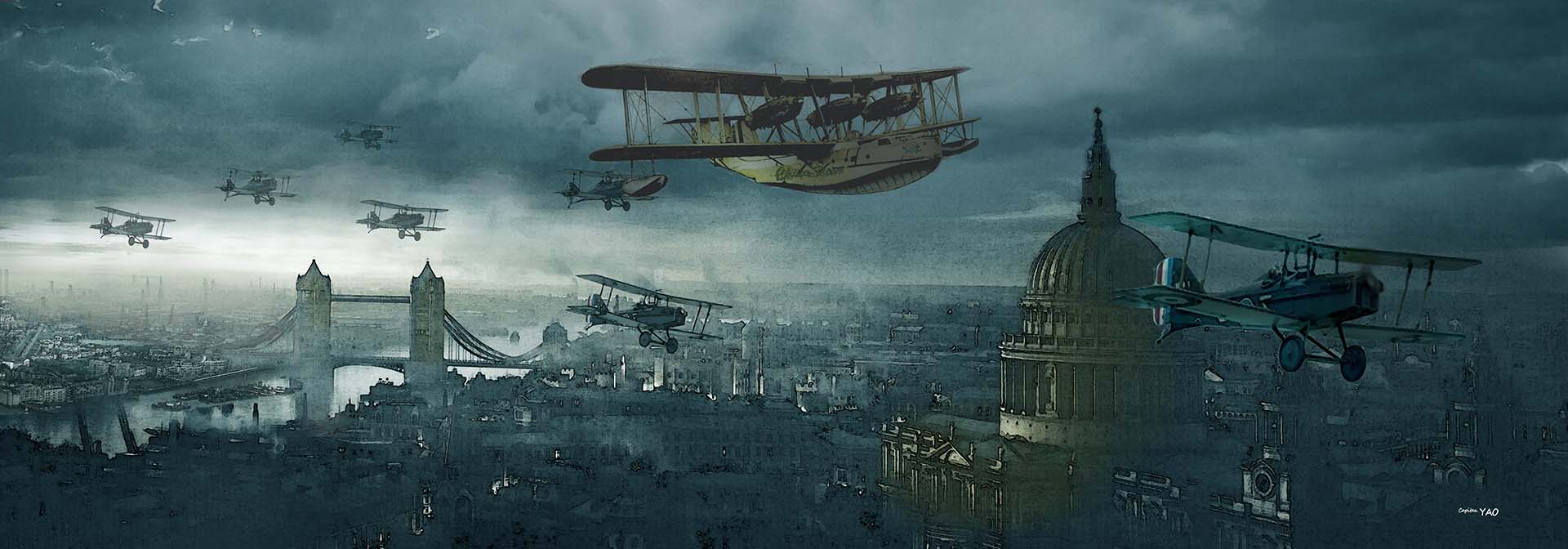
(Figure 3-5-1) The "China Pearl" flew over London in the early morning, accompanied by training aircraft from the aviation school.
The Royal Air Force, hearing that the "Chinese Pearl" was leaving Britain, hoped to conduct a demonstration flight over London for publicity purposes, and said that flight school teachers and students would accompany it. Flying over it wasn't a problem for us, but we stipulated that we could only pass through, not circle around, because transoceanic flights require careful fuel management, and it was best to depart early to take advantage of the daylight. Therefore, we chose to fly over London in the early morning, when most people were still asleep. The Royal Air Force felt a little disappointed, but couldn't make any further demands. Although I served in the Royal Navy, I maintained a friendly relationship with the Air Force, which greatly benefited my later career. Regarding fuel, before departure, Annie and I discussed temporarily using the water tank as fuel, hoping to cross the Atlantic without landing. Otherwise, arranging a sea landing to rendezvous with the ship for refueling would be very troublesome. However, things didn't go as planned, and we ended up having to coordinate with the Royal Navy to refuel once at sea and then again in Newfoundland. The straight-line distance from London to New York is about 3,500 miles, which should take 20 hours at the speed of the "China Pearl," but with the refueling time, it took us two days to arrive in New York. It seems that further modifications to the aircraft's internal space are needed to store more fuel for the trans-Pacific flight. 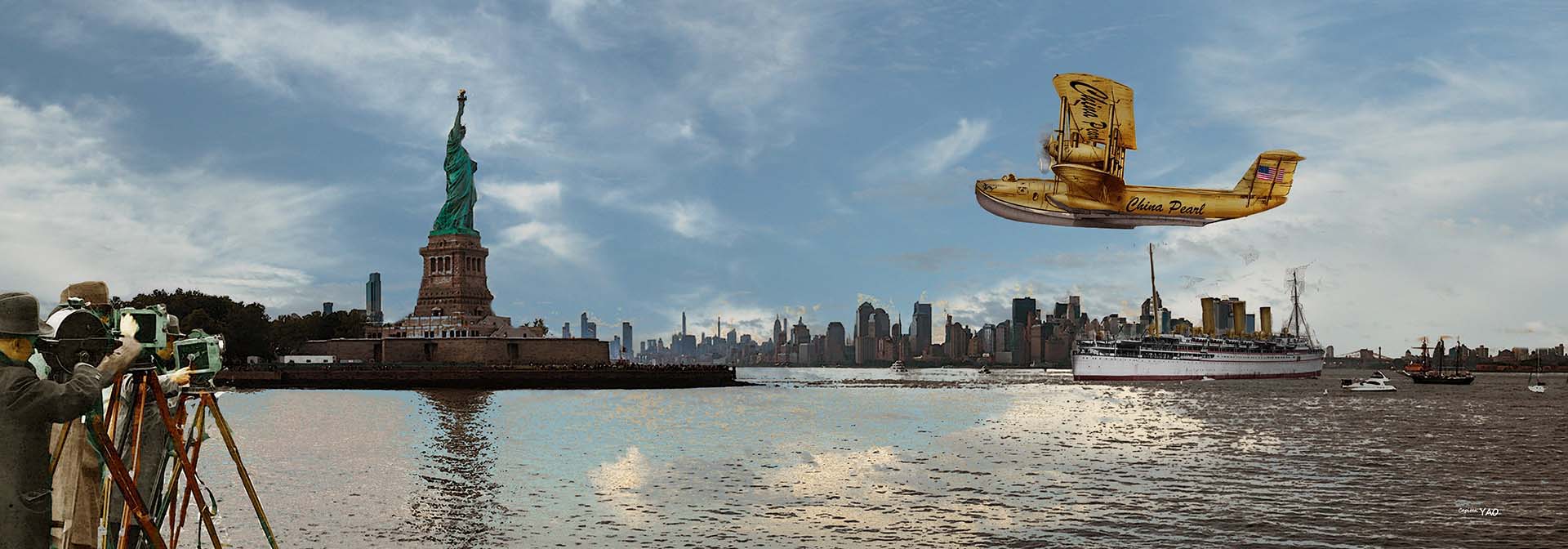
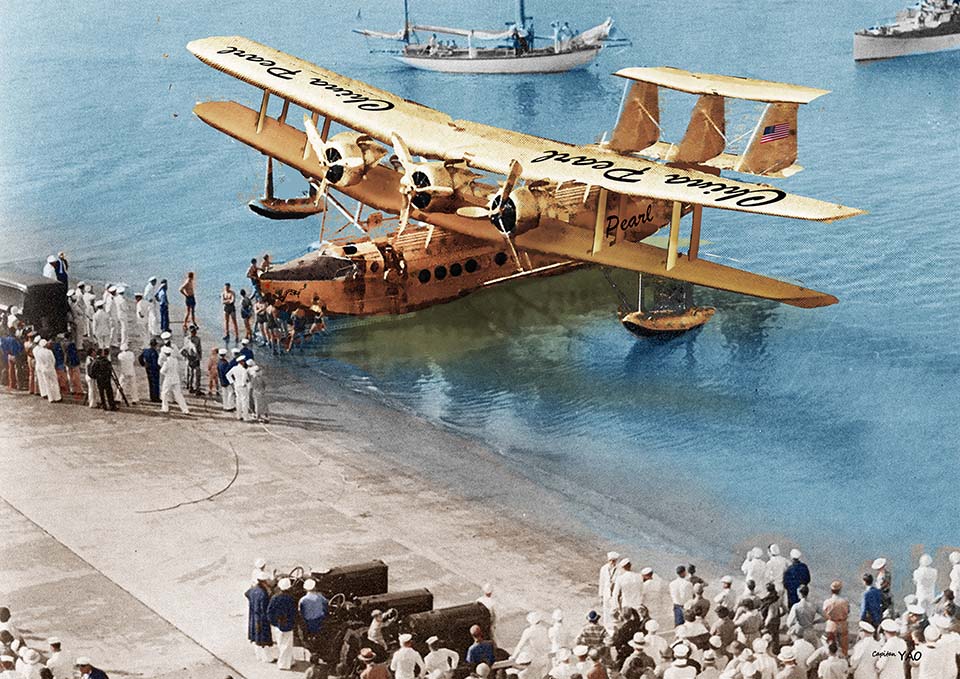
(Figure 3-5-2) The "China Pearl" arrived at New York Harbor, where many media reporters were waiting.
We spent four or five days in New York and met with some of Annie's friends. One of them, a stunning woman named Emily Hahn, left a deep impression on me. Like Annie, she loved adventure and had once driven solo across America. This was no small feat back then, before highways existed.
"I'll soon be going to Congo to work for the Red Cross and also write for The New Yorker, a career I've longed for," Emily said. "However, if China is really as interesting as you say, maybe I'll come to Shanghai to visit you in two years."
As expected, Emili Hahn arrived in Shanghai in 1935, beginning the most splendid period of her life. However, during our first meeting in New York, Emily's gaze remained fixed on me, which greatly displeased Annie. I could see the burning jealousy in her eyes.
Annie's flight instructor, Mr. Charles Lindbergh also came to see us. He brought some friends from the aviation industry with him. We had a great time chatting. I invited everyone to fly in China. Mr. Lindbergh was very interested and indeed came the following autumn.
Among Lindbergh's friends is an Army Air Corps captain, Claire Lee Chennault, who was originally a squadron leader stationed in Hawaii and is currently training in Virginia. He is a very good pilot and emphasizes that the importance of fighters should exceed that of bombers, but this is incompatible with the prevailing views, so he has been sidelined for a long time. He is in his thirties and is still only a captain. He said he has already made plans to retire.
I recalled that Madame Chiang Kai-shek had once said she hoped to find foreigners to come to China to help train pilots, so I probed him about it. Chennault neither agreed nor disagreed, but agreed to pass on the message to his colleagues. Later, several people did come to China one after another, and finally, he himself came to Shanghai in May 1937 to become an advisor to Madame Chiang Kai-shek's aviation committee, thus forging an indissoluble bond with China.
I also took a day off on my father's orders to take the train to Washington, D.C. to meet President Hoover. He was an old friend of my father's from Tianjin. When my father and I came to the United States in 1923, we also visited him when he was the Secretary of Commerce, so Hoover still remembered me.
Because the US economy was entering the Great Depression at the time, Hoover, who had long served as the Republican economic policy leader, became the target of public criticism. As president, he had no solutions and was soon defeated by the Democrat Roosevelt in the election. Since he was overwhelmed with problems at the time, he didn't have much energy to receive me and took his leave after a few polite greetings.
However, my visit to the president in Washington D.C. caught the attention of FBI Director Edgar Hoover. He sent agents to monitor my and Annie's every move and took a large number of private photos, but I was completely unaware of it at the time. It wasn't until the 1960s, when I went to the White House again to assist President Kennedy in dealing with the FBI, that Director Hoover confronted me with the photos. But that's another story.

We took off from New York again on October 10th, flying across the continental United States to San Francisco on the West Coast. While passing through the Midwest, I resisted the urge to visit Korniloff and Princess Annastasia, because Anne was with me, and I couldn't let her know that the princess was using her identity!
i
We flew to the naval seaplane base in the Bay Area of San Francisco and prepared to cross the Pacific Ocean. This was our biggest challenge. We had to be ready in three days so that we could reach Taiwan before the 27th.
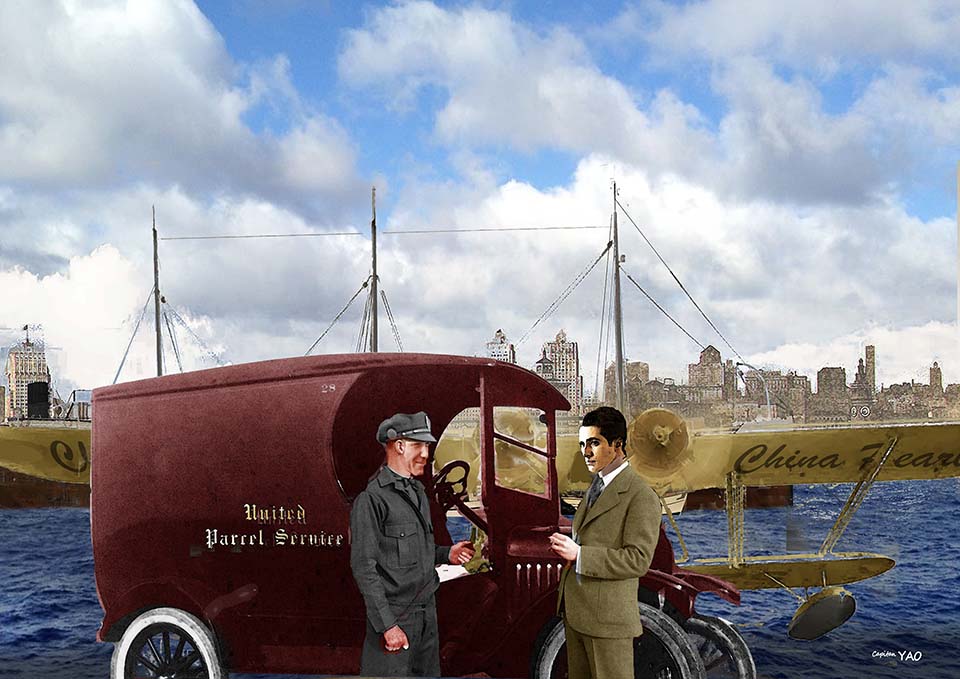
We ordered some supplies, which were delivered to San Francisco by a parcel delivery company in Seattle. When I received the package, the person handed me a business card and introduced himself as Mr. Jim Casey, the owner of the small company. He drove his own car from Seattle to deliver goods for various department stores to cities on the West Coast. He was very interested in my airmail business in China.
"Maybe I should buy a plane to deliver goods, so customers can receive their orders the next day."
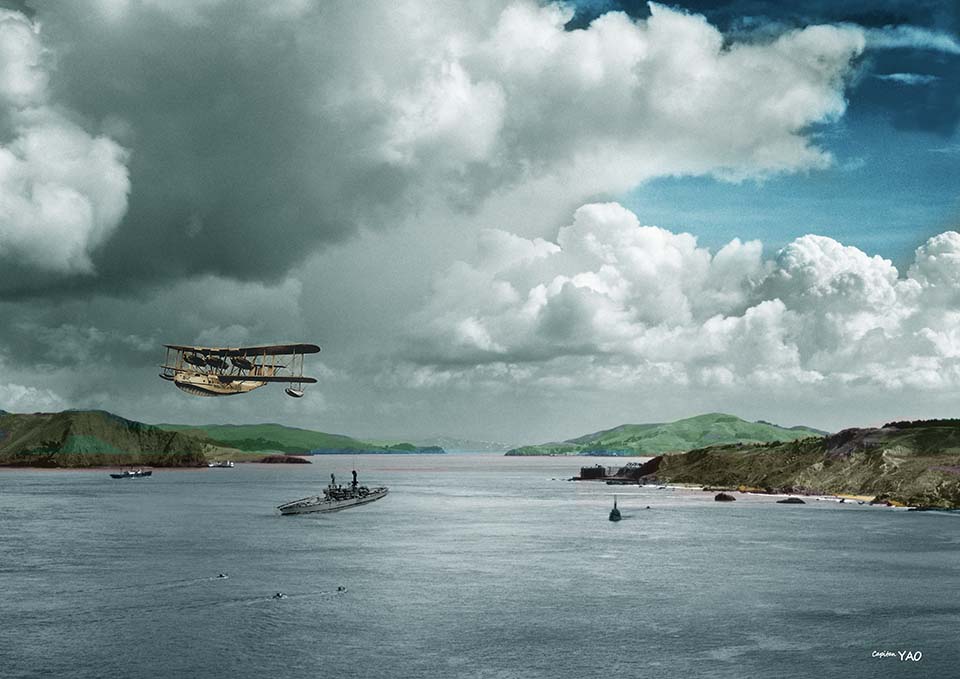
(Figures 3-5-6) The "Chinese Pearl" flew out of San Francisco Bay, before the Golden Gate Bridge was built.
I encouraged him to do so because my experience in China told me it was a highly profitable market. I never saw Mr. Casey again, but until recently I still frequently used his company's services because after returning to Seattle, Mr. Casey persuaded the shareholders to establish a fleet of aircraft and renamed the company "United Airways Express," which is the predecessor of today's UPS.
Navigation is crucial for long-haul transoceanic flights, something I didn't learn in flight school. For general army or air force pilots, terrestrial navigationion is used. Before departure, an approximate bearing is set, and upon reaching the destination, the terrain is compared to determine if there's any deviation and corrections are made. Because land-based flights are shorter, the deviation isn't too significant, and there's ample ground navigational support, such as rivers, railways, or landmarks, making it less likely to get lost. Our flight from East Asia westward to the UK basically followed this method.
Naval aviators face a different challenge. Transoceanic voyages involve vast distances, and a 0.1-degree error in the departure point can result in a final error of tens of nautical miles. Furthermore, crosswinds can cause unnoticed deviations during flight. Adding to this, the scarcity of identifiable landmarks at sea makes corrections impossible, and running out of fuel during the search could lead to a crash into the sea. Therefore, naval aviators must learn celestial navigation using sextants to observe celestial bodies, much like ships navigating the ocean. This is the challenge they will face on their upcoming trans-Pacific voyage.
A sextant is used to measure the angle between celestial bodies and the sea level, providing latitude data. However, to determine longitude, one must obtain the correct time using an astronomical clock and then consult a nautical almanac. Since we were flying east-west, longitude was more important than latitude. Using a sextant is best done in an open environment. For example, it's difficult to observe large aircraft through narrow windows inside the cabin; this is why the cockpit of the "China Pearl" was designed to be open. Especially since aircraft move at high speeds, observation maneuvers cannot be too slow to obtain accurate data. Because I only received basic celestial navigation training at the Royal Naval College, I was clumsy and often needed Annie's help.
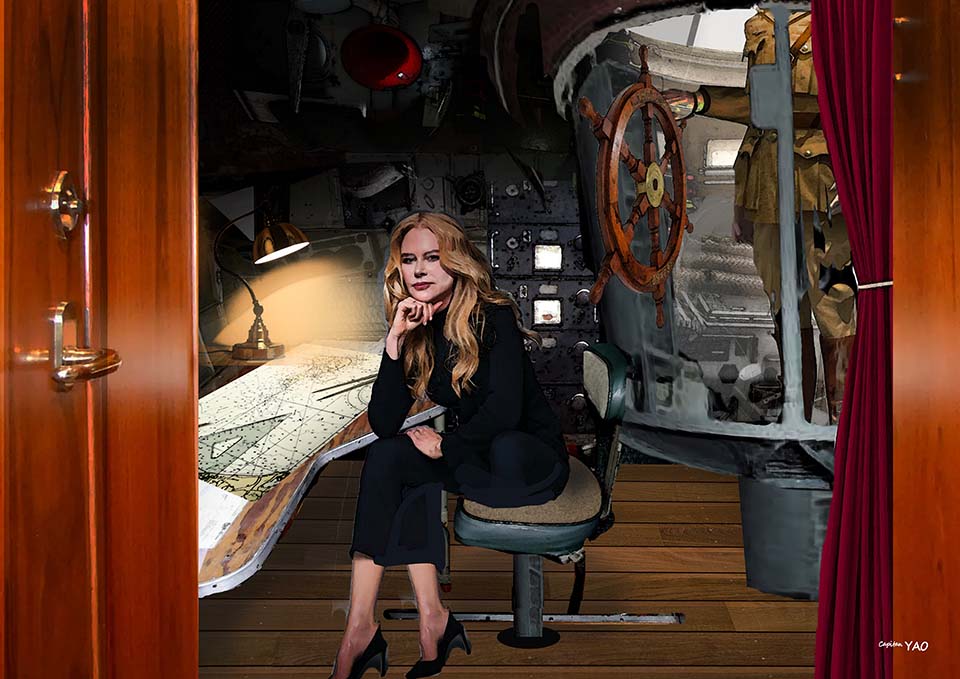
(Figure 3-5-7) The cockpit and chart/communication room of the "China Pearl".
(Figure 3-5-7) The cockpit and chart/communication room of the "China Pearl".
The cockpit of the "China Pearl" is open-air. Some might worry that the pilots would get soaked in the rain, but this is an overreaction. The "China Pearl" has a sloping windshield at the front of the open cockpit. During flight, rainwater is swept away overhead by the airflow, preventing it from splashing into the cabin. This concept is derived from the curved railings of a ship's bridge that swirl wind and rain upwards. Below the cockpit of the "China Pearl" are the chart table and communication equipment, which I and Annie usually divide, but can also be operated by one person during solo flights.
At the time, the US Navy had already established radio navigation systems on various islands in the Pacific, which were more accurate and stable than astronomical navigation. However, the US Navy did not allow us to use them, so the "China Pearl" was equipped with a rudimentary autopilot system consisting of several gyroscopes. Although not very reliable, it still reduced our workload in open waters. The Japanese Navy paid close attention to the "China Pearl's" transoceanic flights, hoping to gain technical experience. Later, during World War II, Japanese carrier-based aircraft often had to fly thousands of kilometers solo, which was unimaginable in the early 1930s.
In addition to navigation, long-haul transoceanic flights also require solving the problem of refueling. Our plan was to fly over Hawaii, Midway, Wake Island, Tokyo, and Taiwan before finally returning to Shanghai. The route leading to Japan was lined with US Navy bases, and each segment was quite far. To increase the range, we not only used water tanks as fuel tanks again, but also placed several spare fuel drums in the cabin. During the flight, someone had to use a pump to evenly distribute fuel to each tank to maintain balance. The strong smell of gasoline throughout the aircraft made this leg of the journey very uncomfortable.
After a long flight, the "China Pearl" finally landed in Tokyo Bay and docked at Yokohama Port. We only stayed here for one night to refuel and did not plan to go to Tokyo. Here, we unloaded the empty oil drums, filled the fresh water tank, took a hot shower, changed into clean clothes, and opened the cabin door to let the gasoline smell inside slowly dissipate.
The British Consulate in Yokohama was where my father used to work, so I made a special trip ashore to visit the Consul General. He said that Japanese society was also affected by the Great Depression, with severe bankruptcies, unemployment, and poverty. The far-right was taking advantage of this to demand a more decisive approach to governance, which had gained the support of the majority of the people. I remember my father telling me before I left England, "The collapse of capitalist society will cause the people to rise up and pursue fascist efficiency."
Germany and Japan are showing similar tendencies now, especially Germany, which still has huge war reparations to pay and a government deficit of 17 billion marks, almost bankrupting it. I heard that a man named Adolf Hitler there is leading a far-right party that is gaining increasing support from the middle class. What about the United States and Britain? And what impact will it have on China? How long will the Great Depression last? The closer we get to our destination, the more questions fill my mind. I suddenly think how wonderful it would be if the old man Qiu Daoji were by my side.
On the morning of the 26th, we flew from Tokyo to Taiwan. When we flew over Kobe, we noticed many small dots on the distant sea. I turned around and flew closer. In the dim light, I looked through my binoculars and was shocked to find a large number of ships lined up on the sea ahead, including aircraft carriers, battleships, cruisers, destroyers, submarines, and auxiliary ships, arranged in four rows. There were at least a hundred ships. This was the most spectacular scene I had ever seen.
Soon I spotted a squadron of military aircraft heading our way. My gut feeling told me it was best to slip away as soon as possible, so I immediately turned south, and the planes didn't follow. I later learned that the Japanese Navy was holding its largest naval review in history that day, with over 130 warships and hundreds of aircraft participating. Emperor Hirohito was reviewing the fleet aboard the battleship "Kirishima." We had no idea beforehand and almost flew into a hornet's nest. If we hadn't run fast enough, we would definitely have been shot down.
|
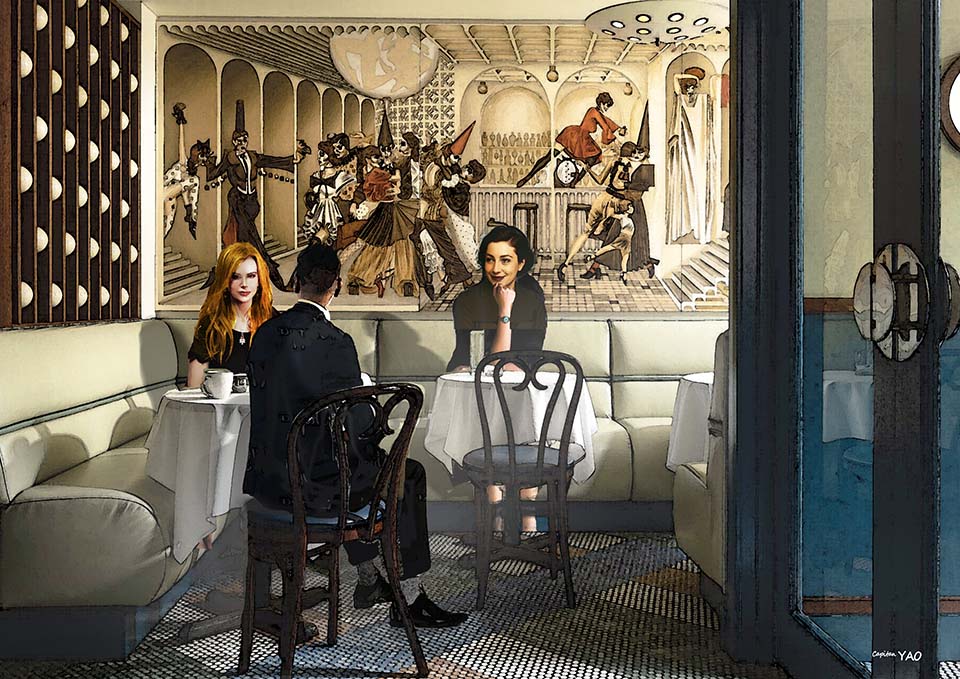
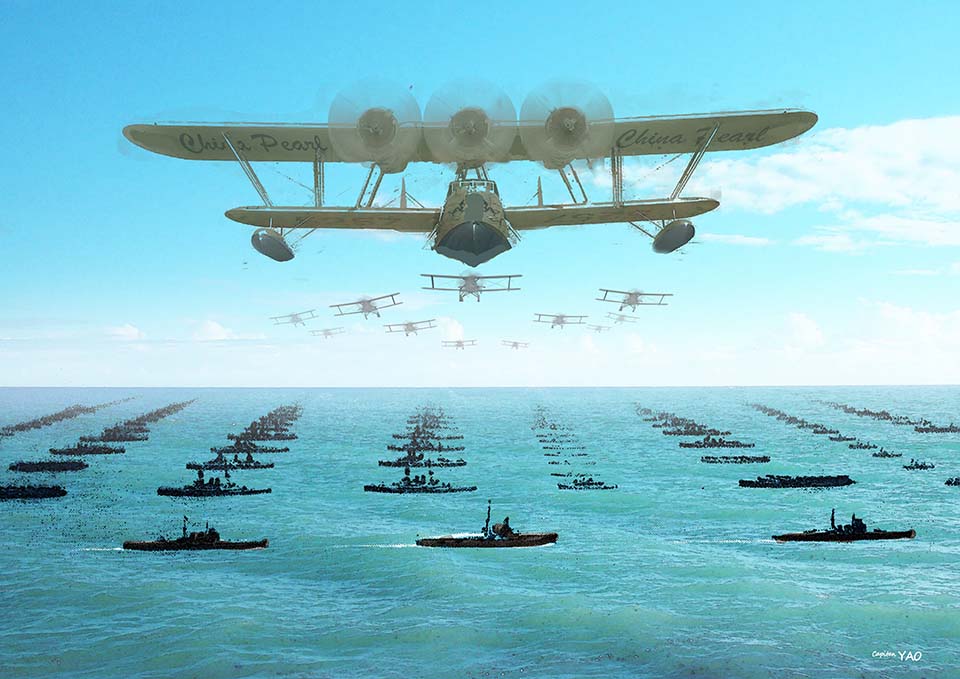 (Figure 3-5-8) The "China Pearl" escapes from the Kobe Combined Fleet's naval review.