4. Naval Academy
Shortly after New Year's Day, I reported to the Admiralty in London. Before leaving, I specially put on my naval ensign's dress uniform and looked at myself in the mirror. I thought I looked quite presentable. I rarely have the opportunity to wear this uniform in China, and since I was going there on official business, I took the opportunity to wear it and enjoy it.
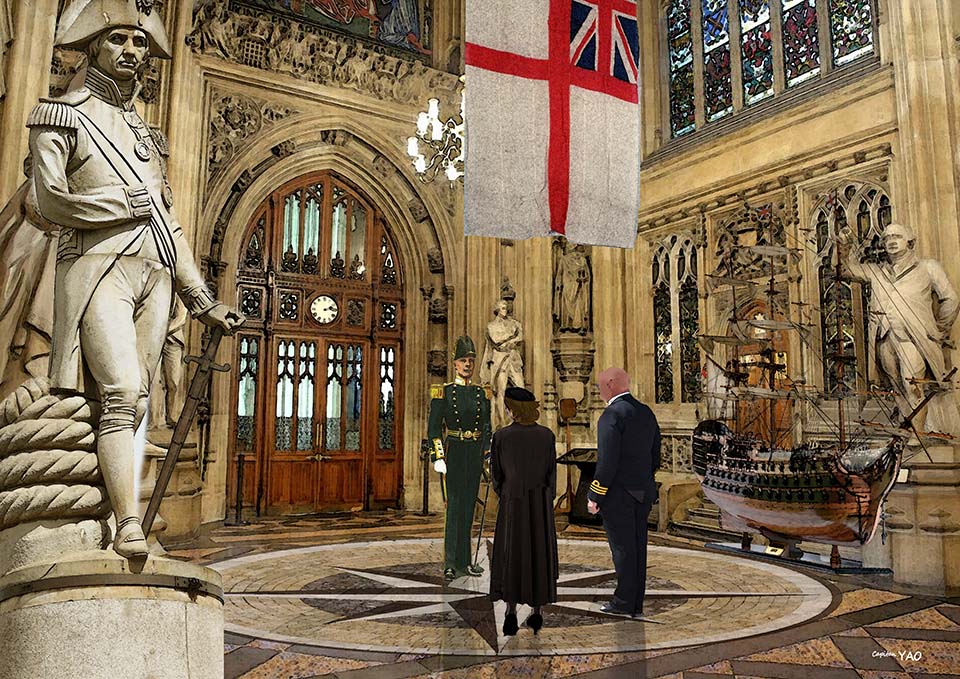
When I arrived at the Admiralty to report for duty, after stating my name in the lobby, the personnel clerk searched through the huge registers but could not find my information.
"You didn't misspell your name, did you?"
"Who would misspell their own name? My name is Paul Draken, madam!"
"Strange, where can I find Ensign Paul Draken? What school did you graduate from? What year did you become an officer?"
I told her everything, and she brought out another huge book from inside to look it up, and finally...
"Ah! Found him! Paul Draken, assigned as a Midshipman but failed to report for duty? Never even been a midshipman before, how did you get to be a ensign?"
"Me? But this intelligence group assignment order isn't fake, is it? And the Royal Naval Academy admission notice isn't fake either. It clearly says Ensign Paul Draken, that's me!"
"Something must have gone wrong. Please wait a moment while I go in and ask my superior."
Shortly after the woman went inside, a naval lieutenant commander came out and said, "Mr. Draken, there is a problem with your qualifications. Although you have completed your aviation school training, you do not have the qualifications of a naval midshipman. According to regulations, you cannot be awarded the rank of ensign. Therefore, if I may be so bold, your rank is at most that of a sergeant."
"This... the naval intelligence team should have verified everyone's identity with us before assigning them! I suggest you go talk to your superiors about this," the lieutenant colonel said. "Until things are cleared up, I advise you not to wear that uniform to avoid any misunderstandings, Mr. Draken!"
I emerged from the Admiralty in a disheveled state and sat on a chair by the river, trying to sort out my chaotic thoughts. That's right! Shortly after graduating from aviation school in 1927, I came to China during a vacation, only to be kidnapped by Chang Zuolin. I didn't return to London until the end of last year. I never served as a trainee officer, nor was I ever awarded the rank of ensign. To the conservative Admiralty, the so-called Ensign Draken was a non-existent "unofficial officer"!
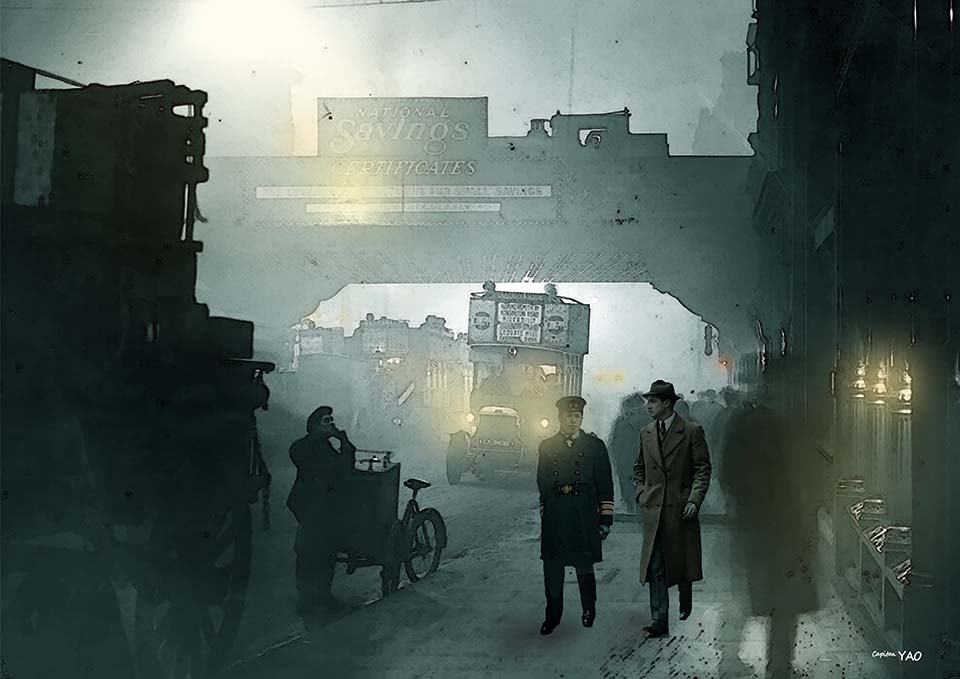
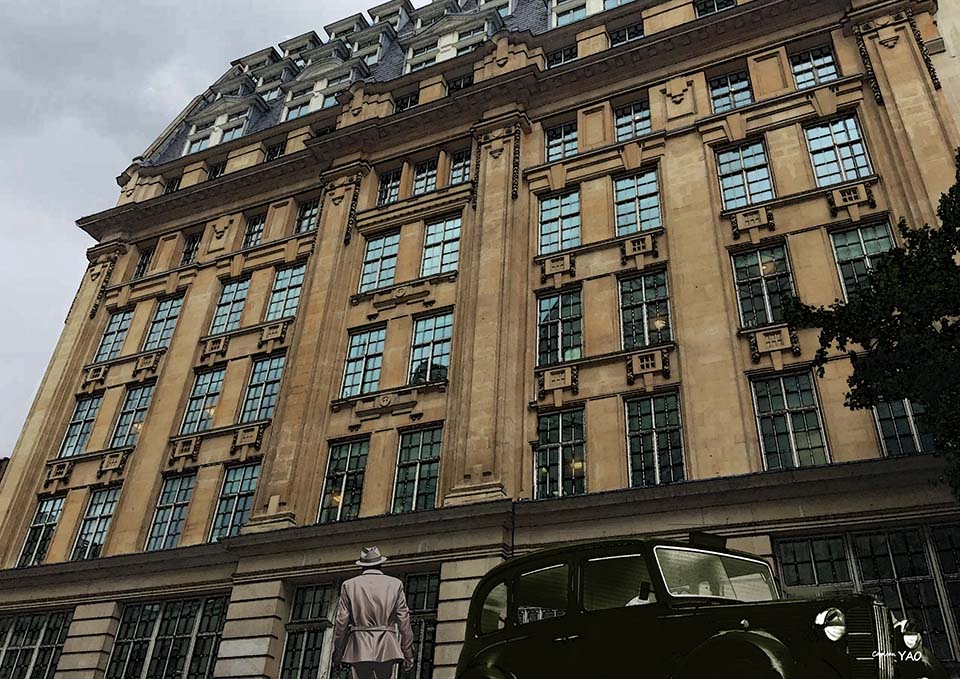
But the Navy intelligence group couldn't deny it! I immediately took a taxi to MI6 headquarters at 54 Broadway, but before that, I needed to find a familiar clothing store to borrow a set of casual clothes to change into.
(Figure 3-4-2) Paul Draken took a taxi to MI6 headquarters at 54 Broadway.
"Mr. Draken, I don't quite understand your question. Are you saying that your rank is not recognized by the Navy? How could such a thing be?" the intelligence group secretary said.
She then looked at my dispatch order, looked up, smiled, and said, "Your dispatch order was signed by Mr. M. He happens to be here today. Would you like to ask him directly?"
"Mr. M is in London? That's great! Of course I'll have to ask him what's going on."
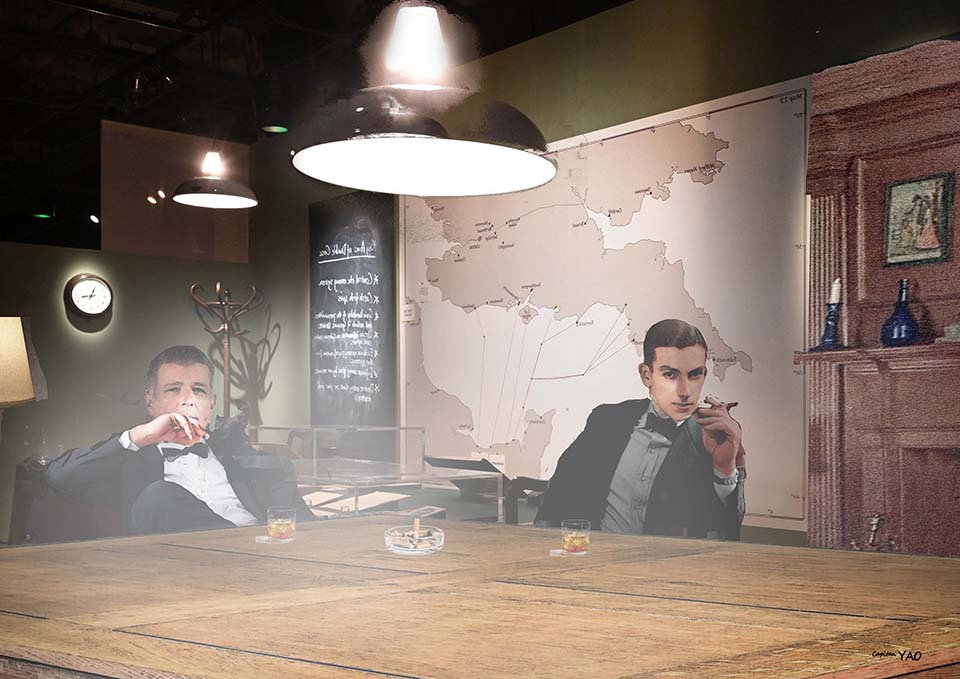
I was led into a smoke-filled office. As soon as I opened the door, I saw my nemesis, Mr. M, sitting in a large leather chair smoking a cigar. Next to him sat a young man smoking a cigarette. I took a closer look and was taken aback.
"Ian?"
Ian Fleming, my neighbor and classmate at Eton. Ian and I were kindred spirits at school; his father was a hero who died in the European War, and his brother was a top student at Eton. Ian, however, always lived in the shadow of his father and brother, merely the good-for-nothing son and brother of the Fleming family. So, like me, Ian often chose to escape or hide in his own fantasy world.
We lost contact after Ian left Eton to attend Sandhurst Military Academy. How come I see him here today? And he's even involved with that scourge Mr. M.
"He's Ian Fleming, a reporter from Reuters, here for an interview."
"I've known him for many years longer than you have!" I walked up to Mr. M, placed my hands on his desk, pointed at his nose, and shouted, "Stop talking nonsense and tell me what's going on!"
Mr. M avoided my gaze, turned around, and stood up from the side: "Uh... let's put it this way, I wrote your appointment order myself..."
"What? You wrote it yourself? Does that mean I've been working for free for over two years?"
Mr. M's expression turned serious as he said, "You've never worked for free! You're still getting paid while traveling and sightseeing. Has the country ever treated you unfairly? And doesn't your airline have our money in it too? Let me tell you, my most valuable intelligence agent didn't even get a formal order; he got everything from my word. I at least gave you a piece of paper. It's not that serious!"
"Not serious? I traveled all the way back from China just to get into the Royal Naval College, and you ruined it all!"
"That's easy, I'll definitely help you solve it! You must get your ensign rank back, and you must get into the Royal Naval College, is that alright?"
Mr. M was indeed incredibly resourceful; he kept all his promises. He somehow managed to get the conservative Admiralty to grant me the rank of Ensign and guarantee my admission to the Royal Naval College. However, this also made me an unpopular figure in the Admiralty, and I never rose to a high position in my lifetime.
"I simply told the Navy that you don't want him, but the Air Force would love to!"
Later, Mr. M told me that this was what he said to the Navy. I never dared to believe his words too much, but it was a fact that the newly established Air Force and Navy were fiercely competing for personnel at that time. Most of my classmates from aviation school joined the Air Force. I think if I had really joined the Air Force back then, perhaps I wouldn't have suffered so much later.
Ian was still inside when I left Mr. M's office, so I didn't get a chance to speak to him. I didn't believe he was there to interview Mr. M; when had MI6 ever been open to journalists? Later I learned that Ian hadn't even graduated from military academy before going to study in Austria, and later became a Reuters correspondent in Moscow. Mr. M happened to be the special envoy in Moscow and recruited him. During World War II, he had become a senior officer in the naval intelligence group, and could be considered my direct superior. I just didn't know at the time that he was the one remotely controlling me from London.
Ian knew many of my stories, which later became an important basis for his writing of "007 Agent". However, since there was no market for Eastern themes at the time, he changed the background to Moscow and Eastern Europe, which he was familiar with.

In early January, I saw in the newspaper that the Japanese delegation to the London Naval Conference had arrived, and one of the members was Rear Admiral Isoroku Yamamoto. This piqued my interest because we had met in the United States in 1923. If I remember correctly, I was the one who inspired his interest in naval aviation. Seven years later, I was fortunate enough to become the first naval pilot in Asia with combat experience, and I was determined to show off to him in person.
The Japanese delegation rented a house opposite the Japanese Embassy in London as its headquarters. Since the delegation included important figures such as the former Japanese Prime Minister, the Minister of the Navy, and the Ambassador, the London police were on high alert both inside and outside the house. When I went to the door to identify myself and ask to see Yamamoto, I was not allowed to enter. Instead, Yamamoto came out to meet me.
"Hey! Kid! I heard you bombed Shanghai with a plane? That's pretty impressive!" Yamamoto punched my shoulder as soon as he saw me. It was freezing cold outside in London in winter, so we walked and talked along the street.
"You've been promoted to Rear Admiral?" I saw his gold embroidered badge.
"You were just promoted last month, don't talk about that, tell me about the bombing of Shanghai!"
Yamamoto had a strong thirst for knowledge and was eager to absorb the experience of anyone. Sure enough, on January 28 two years later, the Japanese naval air force launched an air raid on Shanghai and engaged in a major battle with the Chinese army. This battle also changed my life.
The London Naval Conference was a continuation of the Washington Naval Conference, primarily discussing the limitation of naval armaments among the major powers. Each nation sought to retain significant strength, leading to constant intrigue and probing among themselves. Although Japan sent a large delegation, the true chief negotiator was Rear Admiral Yamamoto. After numerous difficult negotiations, an agreement was finally reached. However, far-right groups within Japan were dissatisfied with the outcome and assassinated Prime Minister Hamaguchi Osamu in November. Even Yamamoto narrowly escaped death several times, indicating a growing trend of fascism in Japan.
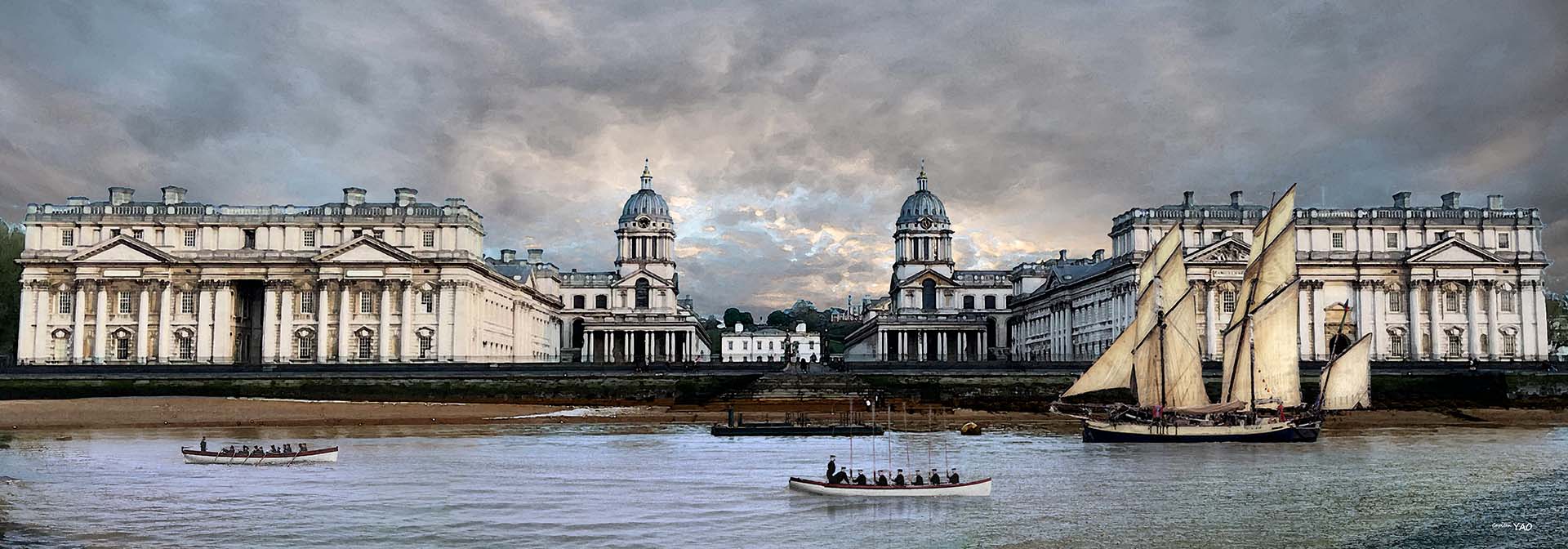
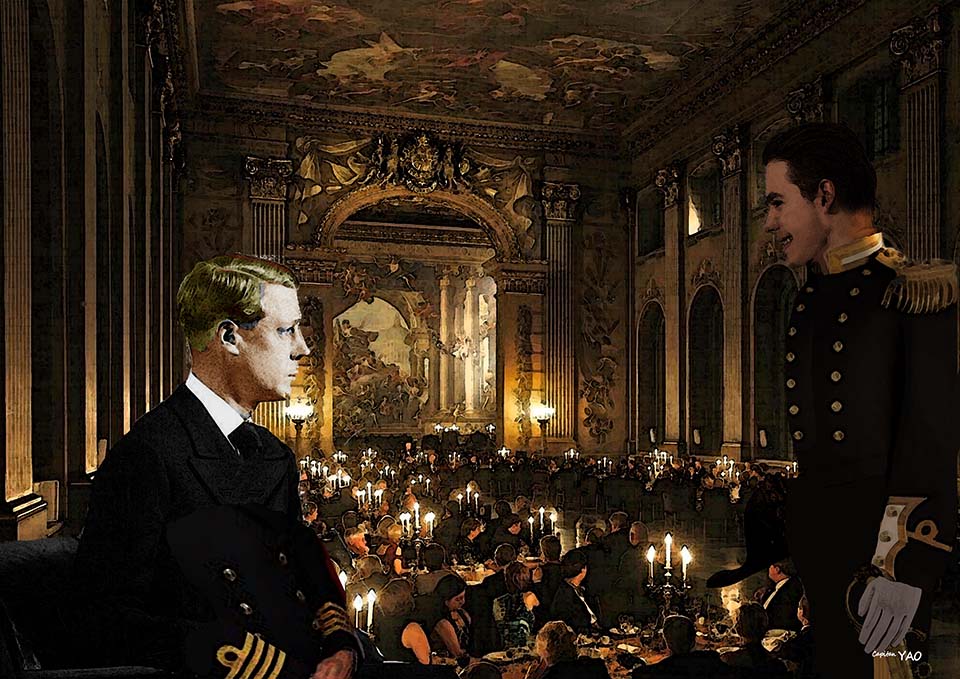
(Figures 3-4-5) Royal Naval College, Greenwich, with the Greenwich Observatory in the hills behind it, where the Prime Meridian passes.
However, I have a deep understanding of legal courses, including international law, the law of the sea, and the law of war. Having spent the past few years on the front lines overseas, I have firsthand experience, and many things that were unclear before became clear after the courses. Training in the law of the sea is essential for naval officers, as they often act as diplomats overseas. For example, a ship's captain can be authorized to sign treaties with other countries, issue visas and passports as an acting consul, or have the rights and obligations to inspect merchant ships at sea. Without legal knowledge, this could lead to international disputes—qualities that army officers often lack. It's no wonder that retired naval officers often become diplomatic envoys. For someone like me working in intelligence, it's even more important to understand how to conduct potentially illegal missions under the protection of international law. The Royal Naval College, located on the banks of the Thames, boasts magnificent buildings. Students there live a life of luxury, each residing in a single suite, their shoes polished and placed at their doorsteps every morning. The dining hall, adorned with ornate murals, is particularly spectacular. Waiters in white gloves attend to your orders and serve your food. While other students seem accustomed to this, having spent nearly three years in China, I found it rather astonishing.
Don't think that all I remember about the Royal Naval College is the dining hall and meals. The dining hall here is so famous that even the royal family often uses it to entertain foreign guests. Our graduation banquet was held here, hosted by the Prince of Wales. He had probably heard that there was a half-British, half-Chinese naval officer who was doing very well in China, so he specially summoned me before the banquet began.
"You can come to see me anytime in the future. I want to know more about the situation in the Far East."
"Yes, Your Highness!"
Before leaving England, I actually visited him, and I took Annie with me. Annie was so excited when she heard that the Prince of Wales wanted to see me that she spent several days worrying about what to wear. She also asked a lot of questions about the etiquette of the audience, which bothered me a lot.
The Crown Prince entertained us with afternoon tea at the palace. When he learned that Annie was American, he became very interested and asked us many questions about it. At the time, I didn't know why, but I only understood later after his affair with Mrs. Simpson was revealed. However, only a few people, including me, knew the real reason he abdicated the throne.
At the Royal Naval College, I also met many Chinese cadets who had arrived in Britain in August. Although we were not in the same class, we were especially warm to each other because I was also from China, and some of them were even old acquaintances. Many of them had made a name for themselves in the Chinese Navy after the war, and knowing them was very helpful to my work. I still remember some of their names, such as Lin Zhun, Deng Zhaoxiang, Lin Xiangguang, Zhou Xianzhang, Zhou Yingcong, and Cheng Fakan.
The days of studying at the Royal Naval College passed quickly, and half a year was up in the blink of an eye. Then I was ordered to go to MI6 headquarters to study communications and cryptography for three months to prepare for future work needs.
Here I would like to give a brief introduction to MI6: Britain has two intelligence agencies, one is MI5, which is responsible for domestic security and counter-espionage, and the other is MI6, which is responsible for overseas intelligence operations. In the past, the army, navy and foreign ministry each had their own intelligence agencies, each doing its own thing and even targeting each other. Not only could resources not be integrated and shared, but sometimes big mistakes would also occur (like when Lord Kitchener, the Secretary of War, was sunk by a German submarine during his visit to Russia in 1917). Later, the government learned from its mistakes and separated all the intelligence agencies from their original units and integrated them to form MI5 and MI6. My father was the one who led this project. Although he has retired, he is still their advisor.
At that time, the concept of overseas intelligence work was not as advanced as it was during World War II. Most MI6 units overseas were affiliated with local British military, political, and diplomatic institutions. While having a powerful backer made things easier, it also made their identities easily exposed. For example, every member of our naval intelligence group in Shanghai had a file on them with the Japanese. When the Japanese entered the Shanghai concessions in December 1941 after the outbreak of war between Britain and the United States, they used these files to track down our members. Some were arrested, and others fled, including me. British intelligence work in China, which had lasted for over a century, was thus interrupted, leaving only the Chinese group I had established to still be somewhat effective. In fact, most of the intelligence organizations that were effective during World War II were newly established systems.
Let me add a bit more about MI5. Some people think that MI5's job of catching spies domestically is easy, but that's not the case. If you're sent to Ireland, it's not going to be fun. I know some MI5 personnel working in Ireland, and their families are constantly under the shadow of assassination attempts and bomb threats, especially those sent undercover. If they're discovered, their deaths are often gruesome. Fortunately, most naval personnel are deployed overseas, and those sent to MI5 are mostly from police backgrounds.
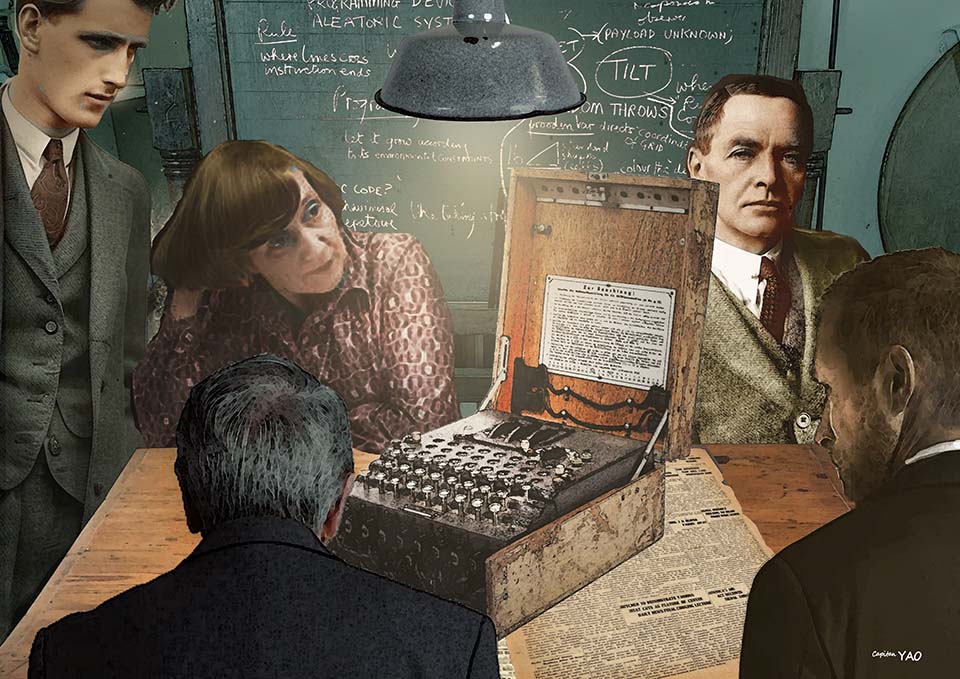
When I reported to MI6 headquarters, I discovered that I was the only person from all the Far East intelligence units selected to receive cryptographic training at MI6. This was the first time I had ever seen a cipher machine. It looked like a typewriter but with many more dials and circuits. When typing encrypted telegrams, the keys passed through the mechanical dials connected to different circuits, reassembling the content into incomprehensible combinations before sending it out. At the receiving end, the same equipment was required to restore it.
The advent of the cipher machine made intelligence encryption work both fast and convenient. During World War II, Germany and Japan used similar technology and firmly believed that it could not be cracked. However, it was eventually cracked by British intelligence. The Allies kept this secret for many years after the war. Our code-breaking team made a great contribution to the Allied victory in World War II!
At the time, MI6 treated that cipher machine as top secret, with only a very few people having access to it. Later, I learned that it was just a commercially available model that could be purchased from outside. At that time, Britain was beginning to crack the German code, and without being able to obtain the German military-grade cipher machine, they had to buy a commercial model for research. It wasn't until 1941 that they found the real military-grade cipher machine (Enigma) on the captured German submarine U-110.
During the day, I studied cryptographic communications, and at night I had to cram on basic intelligence work skills, such as tracking, counter-tracking, coded messages, photography, and explosives. In the past, I was hardly a professional; I relied on my wit and luck to get by. My superiors knew this, so they took advantage of my trip to London to give me intensive training. For two months, I was busy from morning till night, leaving me exhausted.
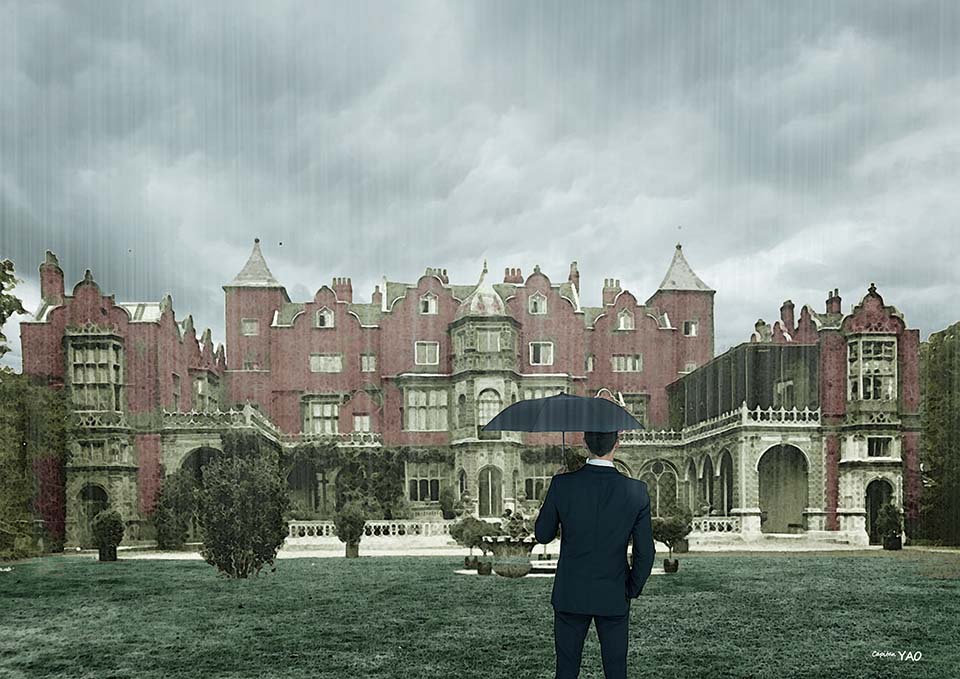
During my time in London, I visited the Holland House library in Kensington. Holland House is a 17th-century aristocratic estate, once a meeting place for politicians and a venue for arts and cultural events, and is very famous in London. The private library at Holland House houses many ancient documents collected from East Asia, and my purpose was to find any information about the luminous pearl. During my search, I discovered an interesting little book, which contained colorful illustrations of various East Asian ethnic groups drawn on Chinese paper, with a style very similar to those I had seen in China. The main text was Spanish, but there were Chinese characters annotations; I remember seeing the words "Tamchuy" and "Cheylam" among them.
The Dutch House once hosted many guests with overseas experience, such as the poet George Gordon Byron, who had various possible sources of information. For example, the British Royal Navy occupied the Philippines for 20 months in the 18th century and looted a great deal of artifacts, which leaves much to the imagination. However, because the management did not understand Chinese, it was placed in a corner that was not easy to find.
I secretly wished I could own this little book, and even considered asking the librarian if I could buy it, but felt it would be too presumptuous. I even considered stealing it; after all, the book was small, and the librarian didn't seem to recognize its value, but that was clearly not something an English gentleman should do, so I gave up the idea. I never dared to dream that it would be sold, but it actually was in 1947 after the war. During the war, German air raids destroyed Holland House, and the remaining books that hadn't been burned were auctioned off after the war. The buyer was my friend Charles Ralph Boxer, who bought it for £47. This little book made him famous and even titled with "Boxer Codex". Actually, Mr. Boxer had no idea what he had bought at the time; it was only later (in 1948) when he showed it to me that I told him I had already seen it more than a decade earlier. If I hadn't been busy with post-war affairs in East Asia in 1947, this good fortune probably wouldn't have come his way, but that's another story.
|
 "Sergeant? The naval intelligence group's assignment order clearly states that Ensign Paul Draken is being assigned as the group's intelligence officer! Could this document be fake?"