3. A Round-the-World Journey (Part 1)
We departed from Shanghai at the end of November, first flying to Hong Kong, then to Saigon in Indochina, and then south to Singapore to visit her father. After a few days, we flew north to Bangkok, then south through Calcutta in India to Ceylon (now Sri Lanka), crossed the Indian Ocean to the Arabian Peninsula, followed the Red Sea and the Suez Canal into the Mediterranean Sea, and finally arrived in England via Malta, Italy, and France; the entire trip, including stops, took approximately three weeks.
We followed a traditional sea route, and in the age of sailing ships, winter was the ideal season to sail from Asia back to Europe, so the itinerary was fairly reasonable. Our route passed through almost entirely British territories or military bases at the time, so anchorages and resupply points were easy to arrange. The only regret was that Annie wasn't in a good mood, which meant the journey lacked the joyful atmosphere of a typical tourist trip.
When I flew over Hong Kong, I made a special stop near Long Island to row ashore and search for Luo Mei's grave. But it was overgrown with weeds and I had no idea where to begin. I could only pay my respects at the spot where she died from my gun. Annie was unusually quiet today. She used to be jealous of Luo Mei, but today she didn't say a word. I don't know why.
We continued our flight to Saigon, a French colony. We only spent the night at the mouth of the Mekong River and didn't actually enter Saigon city, but the romantic atmosphere of the French colony was still very charming, though the social order was somewhat chaotic. Thirty years later, I returned to Saigon to work for the CIA, where I stayed for several years. In comparison, Saigon after the American involvement in the Vietnam War felt much worse.
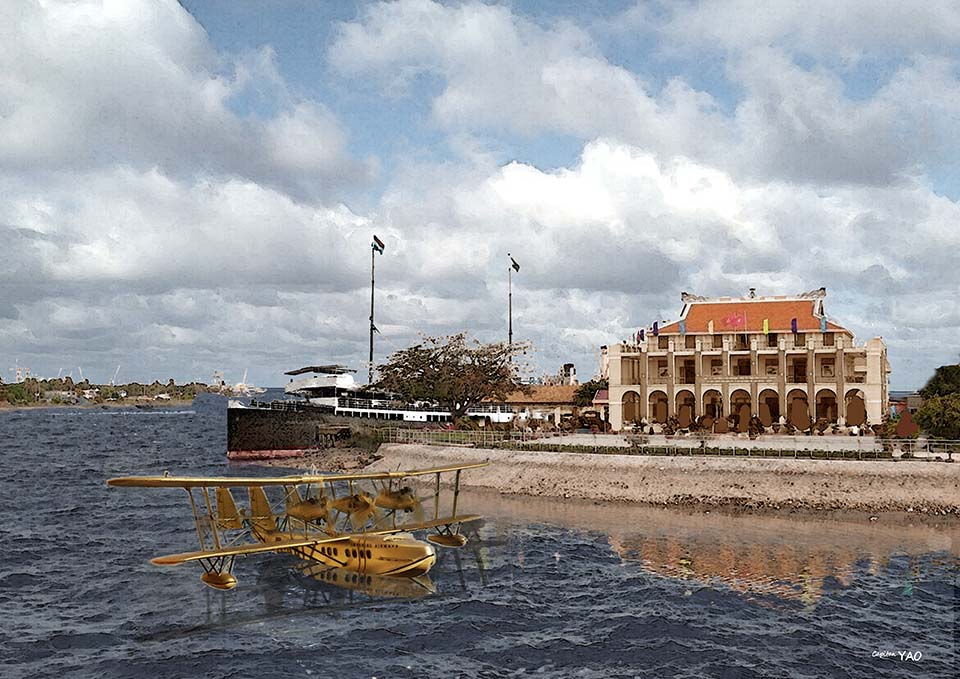
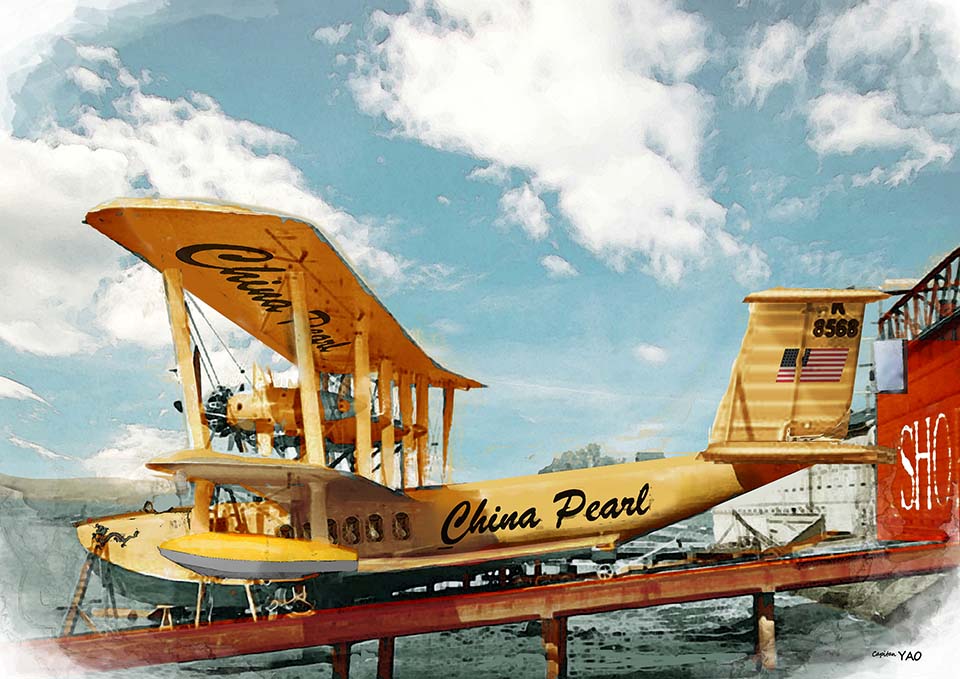
Next, we flew from Saigon to Singapore, the most important British naval base in the Far East, much like Malta in the Mediterranean. We anchored the "China Pearl" at the mouth of the Singapore River, where a Stephen Company oil barge came up to refuel us free of charge. Stephen himself boarded the plane in his private boat, and he brought a group of Chinese cooks and servants to take over our kitchenette, so this time we didn't have to do anything ourselves.
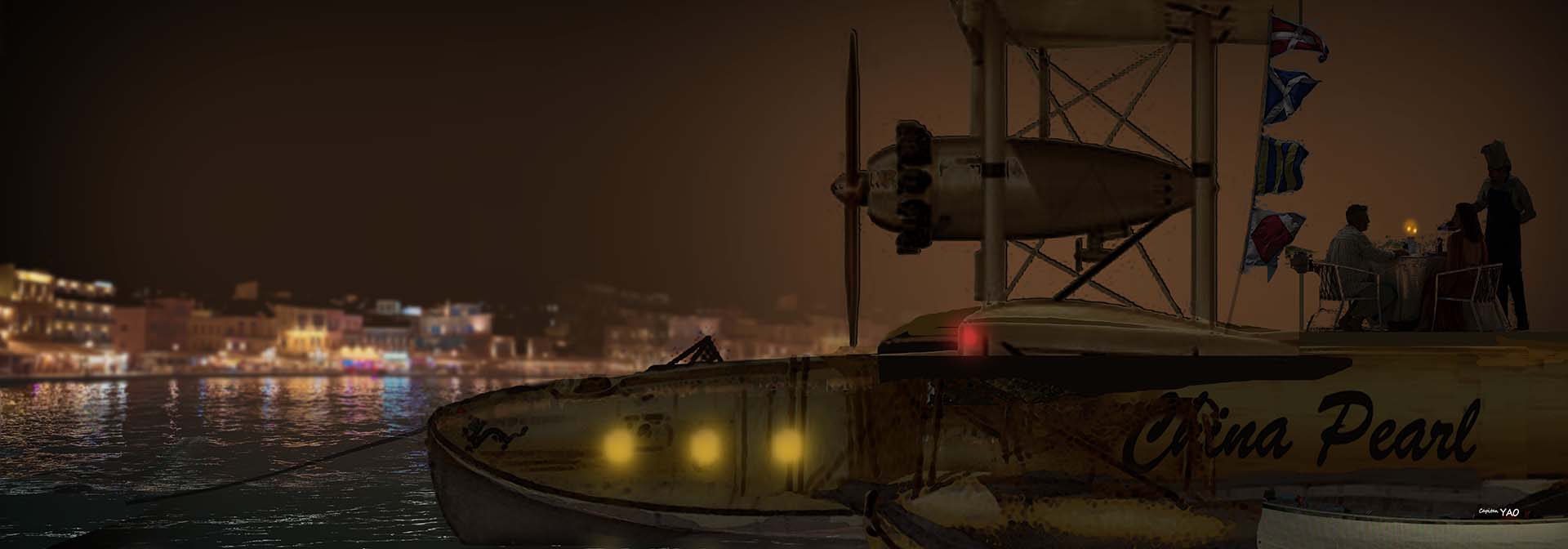
(Figure 3-3-2) The "China Pearl" is docked at the mouth of the Singapore River, and a dinner is held on the top of the plane.
We set up tables and chairs on the roof and enjoyed a delicious and hearty dinner in the sea breeze of the evening. Stephen didn't seem to appreciate my profession much and kept urging me to go into the international oil business with him. He also mentioned that he had a lot of money on Wall Street, and now all his stocks were worthless, but he seemed to take it all in stride and continued to chat and laugh. "All Americans have suffered heavy losses recently, with one exception: my cousin Joseph. He is a banker on the surface but runs a bootlegging business in private. Not only is he unaffected, but he has also made a fortune from it. Because the more depressed people are, the more they need to drown their sorrows in alcohol. He dared to join forces with the underworld to smuggle alcohol across the border from Canada and Mexico, so he has become the only one who is currently profiting." I later met this Joseph he mentioned in New York. He was the one who approached me first because he had somehow found out that my father was very influential in the British Foreign Office and wanted to use this connection to influence President Roosevelt to appoint him as the US ambassador to Britain. At the time, I thought it was wishful thinking, but he actually managed to get his hands on him. But that's another story. While in Singapore, Anne moved into her father's mansion, while I visited my classmate at the Royal Naval Headquarters in Singapore every day. I lingered there for three or four days before flying to Bangkok. Bangkok was a beautiful and charming place; the golden roofs of numerous Buddhist temples reflected on the Chao Phraya River left a deep impression on me. The peaceful life there, far from the war, was enviable, so in the late 1960s, when I was flying transport planes for the CIA in Vietnam, I specifically chose to live in Bangkok. We only stayed there for two days before leaving for Kolkata, India. Annie's bad mood almost cost us both our lives. After leaving Calcutta, we were supposed to fly south to Ceylon, but Annie suddenly decided to cross the Indian subcontinent. I rejected this unplanned route, and Annie had a big fight with me because of it. In the end, I couldn't resist her princess temper and had to give in to her. After all, it was her plane. But that's when things went wrong!

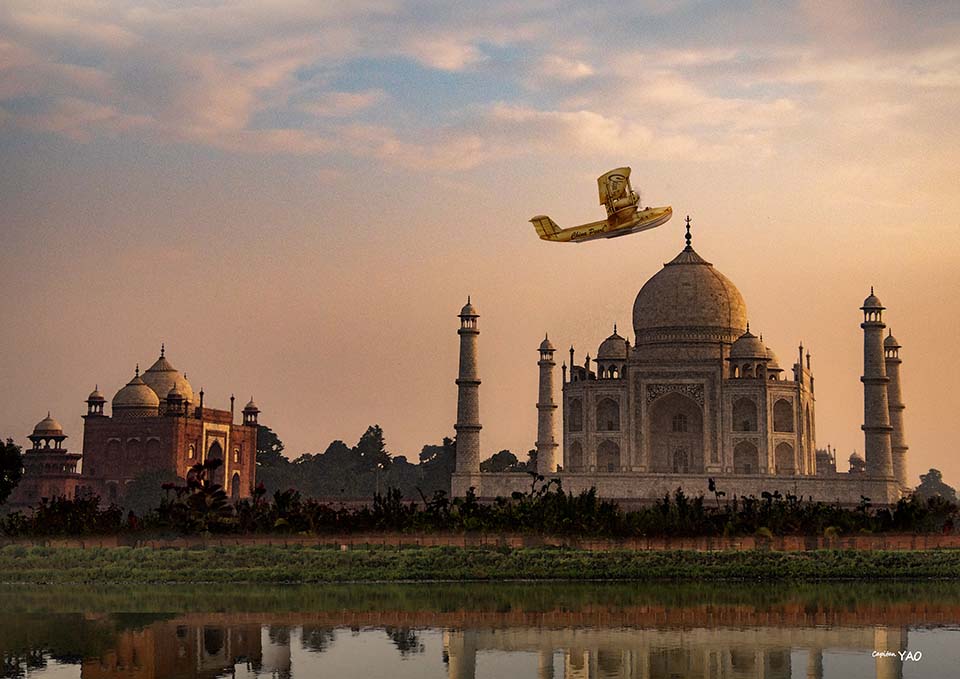
It turned out that Anne insisted on crossing the Indian subcontinent to visit the Taj Mahal. We flew to Delhi first, and then the next morning we flew to Agra, more than 120 miles southeast of Delhi, and anchored on the Yamula River, from where we could see the Taj Mahal on the riverbank.
The Taj Mahal is an exquisite building constructed in 1648 by the Italian Geronimo Veroneo. It features a long central pool and towering Muslim-style minarets at the four corners. Its massive white marble exterior gleams brilliantly in the morning sunlight. The Taj Mahal is a memorial to Shah Jahan for his deceased wife. After hearing the local guide recount this romantic love story, Annie was deeply moved and frequently wiped away tears.
Although it was winter, the local climate was extremely hot. By the time we got back on the plane in the afternoon, we were almost dizzy from the heat. Annie sat in the cockpit, started the engine, and wanted to take off quickly to enjoy the cool air. However, Annie and I were used to flying in cooler areas and forgot that the air density in tropical regions is lower, resulting in relatively weaker buoyancy, so a longer taxiing distance is needed for takeoff. When Annie took off from the river, she didn't notice that the climb altitude was lower than usual. By the time I realized something was wrong, the Taj Mahal was almost completely in front of the windshield.
"Oh my god! The Taj Mahal is going to be destroyed by our hands!"
I quickly helped Annie pull the plane up, but as we passed the dome, we heard a scraping sound from the belly of the plane. Looking back, we saw that the crescent moon symbol on the dome was gone. We quickly flew away, and upon landing, we found the crescent moon symbol embedded in the belly of the plane. Annie had quietly removed it and hidden it, not daring to make a sound. As far as I know, the dome of the Taj Mahal has never had that symbol put back on since.
Annie knew she was in the wrong after causing a big mess, and became much quieter in the following days, just burying herself in her work. I felt a little sorry for her and sometimes tried to make her laugh. In this atmosphere, we flew over the sweltering Indian subcontinent, passing through Mumbai on our way to the Arabian Peninsula.
The voyage was extremely arduous. The humid and hot climate of the Indian Ocean left us drenched in sweat, while the weather became dry and hot once we entered the Arabian Peninsula. The landscape was monotonous, with only endless yellow sand, which put us in a bad mood every day, and the two of us often argued over trivial matters.
Annie has a habit of filling her large enamel bathtub with hot water every night for a good soak, changing into comfortable clothes before having dinner. I guess this is an American habit? But for me, who has experienced the preciousness of fresh water while serving on a ship, this is simply an unacceptable waste. Moreover, it causes considerable trouble for our fresh water supply, because I often have to hire water boats to replenish our water supply in the port where we are docked, which costs a lot of money and time.
Once, she said I could use her bathtub to take a bath. When I replied that it would be too wasteful, she got angry and said, "You men are so strange. I'm offering you something to enjoy, and you don't want it. It's not like I'm spending your money."
We flew along the Suez Canal through Cairo to Alexandria on the Mediterranean coast, a beautiful harbor dating back to ancient times. I took my motorcycle ashore and drove through the streets and alleys. Alexandria is full of historical traces left by ancient Egyptians, Greeks, Romans, Arabs, French, and British. Although Egypt had broken away from British protectorate status seven years earlier, the British still held absolute dominance in Egypt.
When we returned to the plane that evening, Annie had several antiques that she claimed were three thousand years old. I teased her, saying she'd been ripped off by an antique dealer, but she replied, "I didn't buy them. They were a gift from an archaeologist, a handsome, charming, and considerate Hungarian count!"
Why would someone give you something they're not related to?
"Because I'm beautiful!" Annie deliberately raised her chin and said, "What do you think? The Earl is a bit more prestigious than you, the son of a baron!"
I was furious, but I held my temper and said, "What Hungarian count could possibly come from a place like this? You'd better be careful not to get tricked by bad people!"
"Oh! Jealous? Worried? How about inviting him over for coffee tomorrow?"
"No need! I'll go find him myself!" I went into the crew cabin at the tail of the plane and slammed the door shut.
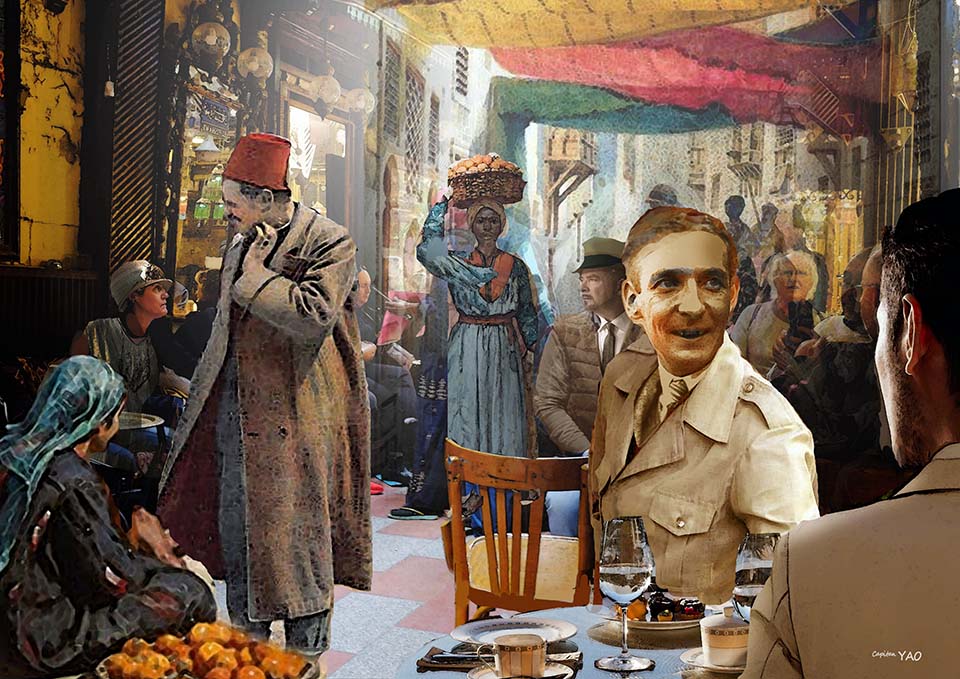
The following afternoon, I met Laszlo Almasy, who introduced himself as the Hungarian Count, at an Arabic café in an alleyway of the Grand Market. He was a refined-looking, slender, and seemingly sophisticated middle-aged man. We pulled out chairs and sat facing each other, waiting for the other to speak. Finally, he introduced himself first. I had come with hostility, but when he began to recount his legendary tales of desert exploration and ancient excavation, I was completely stunned and listened to him for the entire afternoon!
He was born in 1895 into a noble family in Hungary, which was then part of the Austro-Hungarian Empire. He said he had been interested in flying airplanes since childhood and served as an Austro-Hungarian pilot during the war.
"Paul, we're both enthusiasts when it comes to flying!" Laszlo said.
"I'm currently on an archaeological expedition in Egypt with members of the Royal Geographical Society, hoping to find the mysterious oasis city of 'Zerzura' in the Sahara Desert, as described in ancient texts. I frequently fly between our desert base and Cairo; yesterday I heard you arrived in Alexandria by seaplane, so I came specifically to see you. But you were speeding around the streets on your motorcycle, and I couldn't keep up. So I had to follow Miss Anne and chat with her. I hope you don't mind; she's a real beauty. But I'm looking for you!"
"Looking for me?"
"Hmm! Would you like to talk about the luminous pearl?"
"A luminous pearl? You know about luminous pearls? Who told you that?" I was taken aback. Someone in Egypt actually wanted to talk to me about luminous pearls? This was too bizarre!
Laszlo lit a cigarette and continued, "Remember Sergeant Show, the one most people know as Lawrence of Arabia? He's a good friend of mine."
"Did he tell you?"
Laszlo didn't answer me directly. He continued, "We've discovered many commonalities in the water worship rituals of desert peoples in the East and West, only they're presented in different religious forms. For example, here it's Islam, and in ancient China along the Silk Road it was Buddhism, but they all actually originated from the most primitive beliefs of their respective regions. We are studying their commonalities and the possibility that they come from the same source."
"For example, recently we were looking for a cave in the desert that is said to have images of swimming figures. Swimming in the desert? That's strange, isn't it? But I think it's related to the worship of water." Laszlo showed me some photos, in which the primitive but fluid brushstrokes depicted undulating human silhouettes, which seemed familiar to me.
"My father's diary contains some drawings copied from the Loulan murals, and the flying celestial maidens in one of them look somewhat like this..."
"Really? Can I see it?" Laszlo's eyes widened.
"I didn't bring it with me."
"That's such a pity!" Laszlo sighed.
I've heard this claim from my father. Some say that Hungary was a branch of the Huns who migrated to Europe after losing a war with China. But the expression on László's face when he said this always struck me as odd. Because of the connection with the Loulan Pearl, I begged Laszlo to take us to visit the "Cave Of Swimmers " the next day, but Laszlo said that the place was called Gilf Kebir, near the Libyan border, and it was about a thousand miles away, a five or six-hour flight each way. That was the limit of the "Pearl of China's" range, and it was uncertain whether we could refuel there for the return trip, so we had to give up. In that case, I suggested we fly directly across the Mediterranean to Malta the next day, but Annie said, "How can we come to Egypt and not even see the pyramids and the Sphinx?"
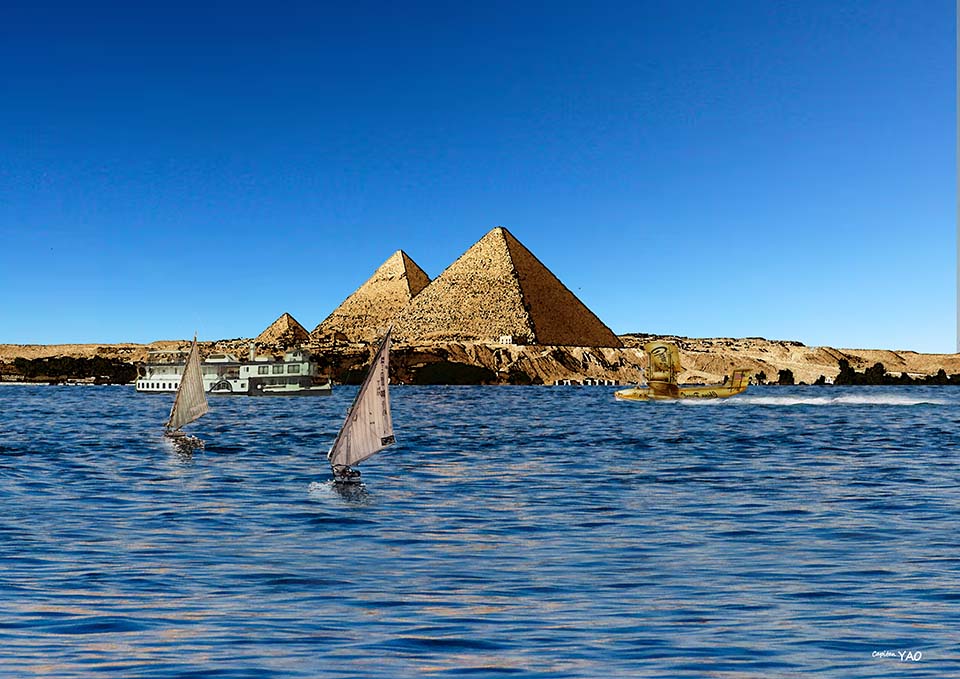
That makes sense, so we flew to Cairo the next day. The two places are only a little over 100 miles apart, and it only took us a little over an hour to get there. Moreover, the Great Pyramid of Khufu is right on the Nile River. We landed the plane at the cruise ship terminal, unloaded our motorcycles, and went there.
This trip was rather rushed; the impromptu trip to Cairo only allowed for one day. I never imagined that I would have the opportunity to come to Cairo again more than ten years later, during the Cairo Conference in 1943, which took place during World War II.
Regarding World War II, Count László Amásé's later relationship with the Germans has always been a mystery. He was the male lead in the 1990s film "The English Patient," where he was portrayed as a great lover to explain his act of handing over the map to the German army. But here I can confirm that he was indeed a German intelligence agent who led the German army across 2,000 miles of desert during World War II to attack Cairo from the rear. For this, he was awarded the rank of major and the Iron Cross by Field Marshal Rommel. British intelligence knew everything about him.
As for the movie's claim that he stole someone else's wife, I think that's highly unlikely, because as far as I know, he's gay! You ask how I know? I won't answer that now; I'll tell you later. On November 15, 1996, "The English Patient" premiered in London. I saw Princess Diana walk past me in Hyde Park on her way to the ceremony. She had just divorced three months earlier. I wonder what she thought after seeing the plot of this movie.
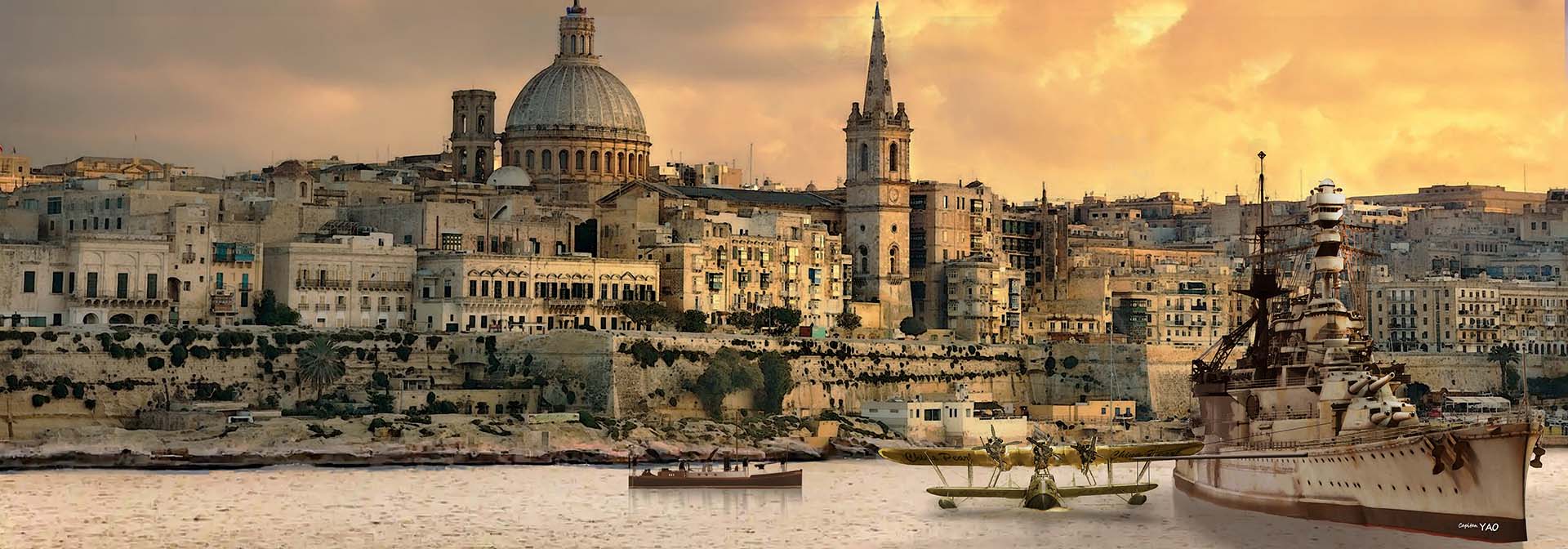
(Figure 3-3-6) The "China Pearl" landed in Malta and moored next to a Royal Navy battleship.
The fleet commander invited us ashore for a formal dinner and sent a private motorboat to pick us up from the plane. Annie chose her most glamorous evening gown and undoubtedly became the center of attention that night. All the young officers tried to chat her up and ask her to dance. At the end of the dinner, some even got into a fight over who would take her home, causing such a commotion that the military police had to come and greatly embarrassed the commander. I felt she was deliberately trying to provoke me, but I really couldn't say anything. I also met a member of the royal family here, Major Louis Mountbatten, the assistant communications officer to the fleet commander. He is Queen Victoria's great-grandson, making him a cousin of the current royal family. I still remember his wedding to the wealthy socialite Edwina Huxley at Westminster Abbey—it was a grand event throughout Europe. I had many opportunities to interact with Mountbatten during World War II when he served as Governor-General of India, so I want to mention him here.
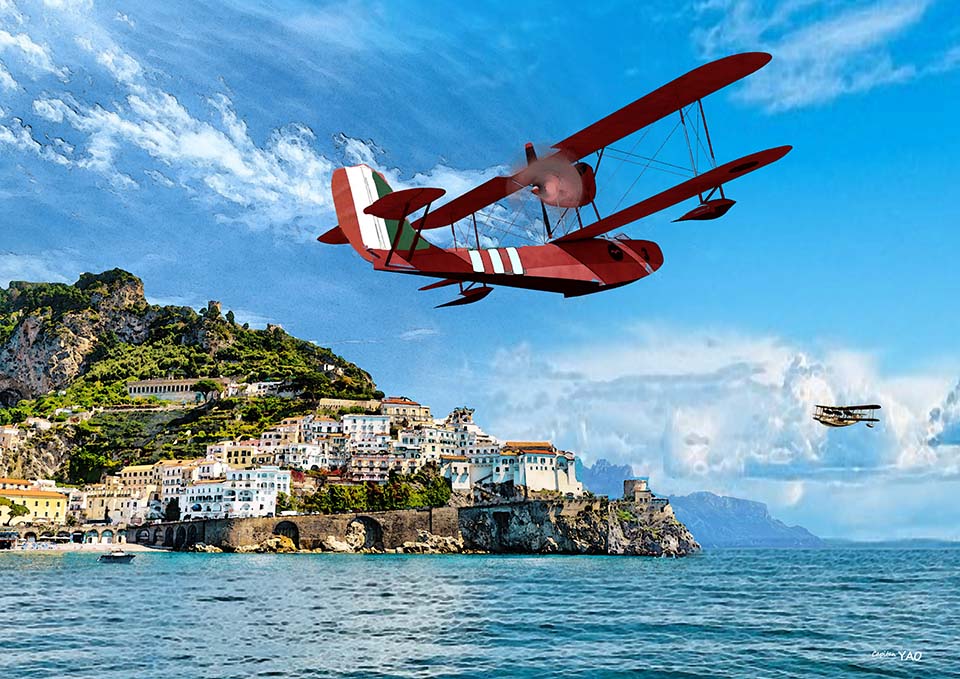
The next afternoon, as we passed Naples in southern Italy, I spotted a bright red Macchi M-7bis seaplane approaching us. It was my friend, General Francesco de Pinedo of the Italian Air Force, who had completed a round-the-world flight in 1925. At that time, few people had such a record, so he naturally became the person we sought his advice from. Through prior telegram communication, he warmly invited us to dinner in the port of Naples.
Pinedo led us through dinner, saying that he had just led a large formation of 35 Italian Air Force seaplanes on a 3,300-mile long-haul flight around Eastern Europe in June. However, his interest remained in solo flights, which clashed with the opinions of high-ranking officials in the fascist regime, who were all sycophants of Mussolini, ambitious and eager to carry out another large-scale formation flight in the South Atlantic to demonstrate national power. Pinedo did not want to participate again and indicated his intention to retire.
Pinedo was a very enthusiastic person who shared many experiences and precautions for long-haul flights with me. He also mentioned that during his round-the-world flight in 1925, he had visited Tamsui in Taiwan and received an official welcoming ceremony in Taipei. He described in detail the local flight and hydrological conditions. Unexpectedly, we flew to Tamsui the following year, and many things happened there. The information he provided was very helpful to me.
The next morning, after seeing Pinedo off and taking off, Annie and I rode our motorcycles along the coastal road to the ancient ruins of Pompeii and Amalfi. The romantic scenery along the Mediterranean coast was simply the perfect place for a honeymoon. We stayed there for three or four days before reluctantly leaving.
Three years later, Pinedo indeed left the military and went to New York, where he bought an airplane from Avia Bellanca, an Italian-owned company in the United States. On September 2, 1933, he took off from New York, planning to take his favorite solo long-haul flight of 6,300 miles to Baghdad. However, during takeoff, the plane overturned at the runway threshold and caught fire, burning Pinedo to death inside the cabin.
The manga "The Age of the Flying Boat," published by Japanese animator Hayao Miyazaki in 1989, was based on Pinedo, and was adapted into the animated film "Porco Rosso" in 1992.
Before World War II, the Italian Air Force was among the best in the world in terms of both tactical theory and aircraft manufacturing. In 1935, China also introduced Italian advisors to establish an aviation school in Luoyang. However, the romantic nature of the Italians meant that the combat power of the Chinese Air Force was only on paper and could not withstand the test of actual combat, which greatly disappointed Chiang Kai-shek. This gave Chennault's American Volunteer Group (Flying Tigers) the opportunity to rise. I was involved in all of these events and will mention them again later.
We also rode along the La Moyenne Corniche road along the coastal cliffs to Monaco to try our luck at the Monte Carlo casino. Annie won a little and was happy all night. As long as she was happy, I was at ease.
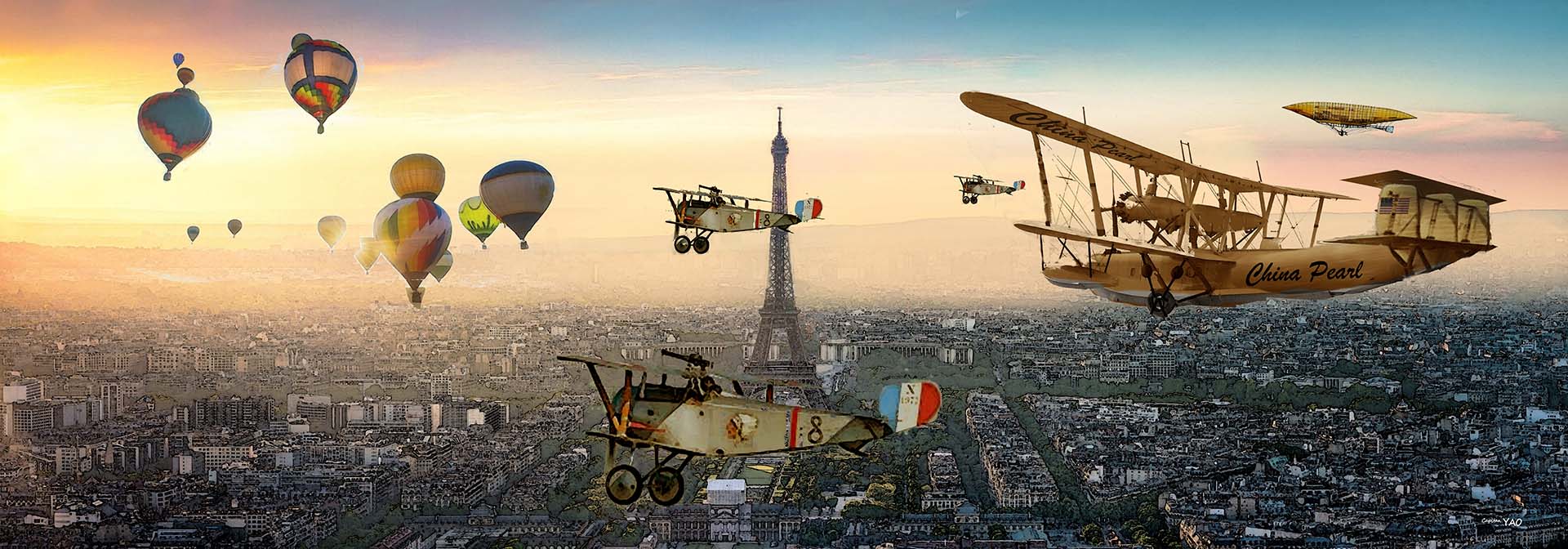
(Figure 3-3-8) The "China Pearl" flew over Paris, and various planes and airships from the local flying club took off to greet it.
The following morning, we traveled through Provence and into the French interior, deliberately choosing to pass through Paris. As we approached our destination, we were suddenly surrounded by planes, airships, and hot air balloons of all colors, shapes, and sizes—a truly spectacular and lively sight. It turned out that the local flying club knew of the "China Pearl's" arrival and had all come out to greet us. However, we didn't land in Paris because it would only take another two hours to reach our destination, and there was no need to stop in between. Although Annie really wanted to, I had to coax her by saying that I would take her to Paris after we got home and settled in, and she finally agreed. Shortly after passing over Paris, we crossed the English Channel and finally landed on the waters of Rochester, a naval port on the Thames estuary where the Short Brothers company is located. We were guided to the No. 3 factory airship dock to park and moor. For the next six months, this will be the home of the "China Pearl," where she will undergo inspection and refurbishment at the Short Brothers factory in preparation for flying across the Atlantic to the United States next summer.
"Three years! I'm finally home!" I opened the plane door and took a deep breath of the cool, damp English air, feeling both familiar and strange. Suddenly, a flash of light, and a group of reporters surrounded us.
After escaping the reporters' entanglement, we were finally able to get into the car that Short Company had prepared for us and take us to the train station. We were going to take the train to Oxford, where my father's car would pick us up at the station and take us home.
The English countryside remained unchanged. After passing the Duke of Marlboro's estate, we were almost at my home. My father personally greeted us at the door; he had aged considerably in the three years since we last met. Annie stepped forward and embraced my father. He was beaming with joy, probably already considering her his future daughter-in-law. The butlers also came forward to greet us and help with the luggage.
After dinner, I sat in the hall with my father and Annie for tea. I told him about everything that had happened in China over the past three years. Annie, who was sitting next to me, was hearing many of our family's legends for the first time.
"Father, I'm sorry! I still haven't found the luminous pearl. I heard it's with Chiang Kai-shek's wife!"
"Come! Let me see the golden flute around your neck!" my father said. "This golden flute must not be lost; whether we find the luminous pearl depends entirely on it!"
My father also inquired about Annie's family background and hoped we would get married as soon as possible, but neither of us had ever thought about it. We spent Christmas 1929 at home, and after New Year's Day I was to report to the Royal Naval College, Greenwich.
|