
6. Pirate Sister 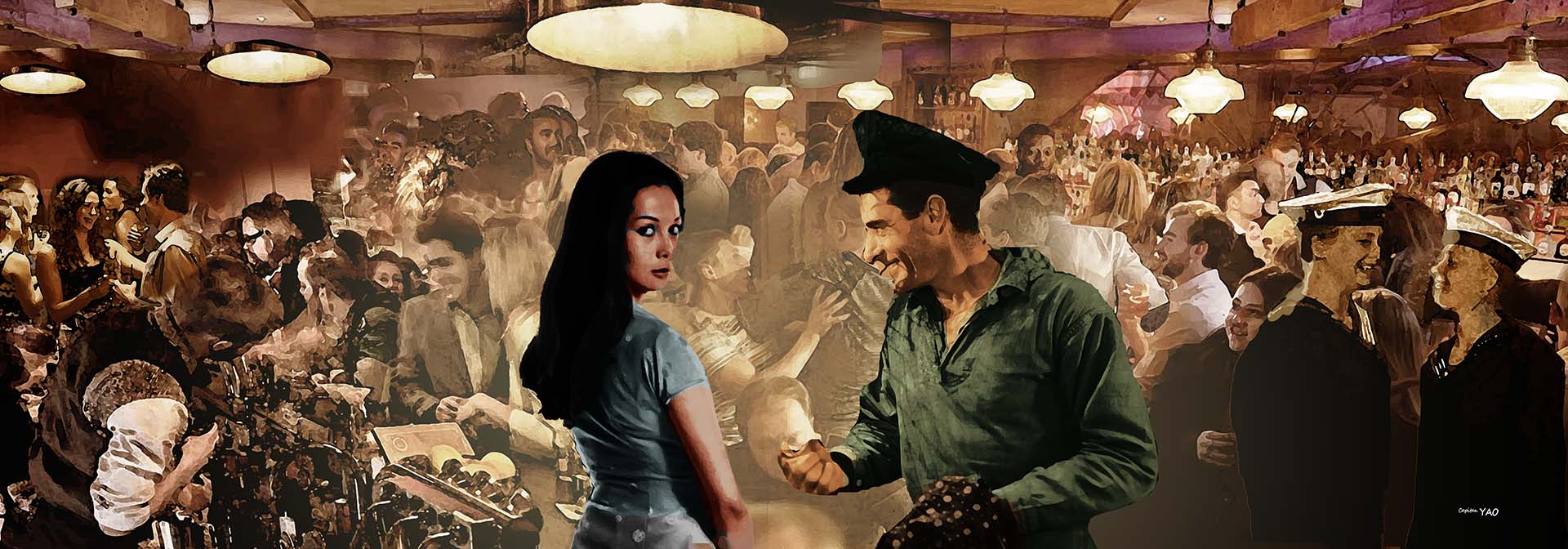
(Figure 2-6-1) The "Seamen's Bar" in Lan Kwai Fong, Hong Kong, where Lomui works, is a gathering place for many seafarers.
I noticed a pretty young woman with long, black hair, big eyes, not very tall, with slightly dark skin, but with a shapely figure. She kept chatting with an American merchant ship sailor sitting next to me. The sailor was already half drunk and was talking incoherently. "We're heading to Yokohama tomorrow... Will you miss me?... " "I want to! I want to! But what time do you actually depart? That way, people can go all the way to Lei Yue Mun to wave goodbye!" "What time does it depart? Let me think... um... around 8:35 PM, it will pass through Lei Yue Mun!" "8:35? It was already dark that day, how could you possibly see me?" "It's dark? Then look at what's written on the stern of our boat... 'Pacific Queen,' and I'll turn on the lights to show you!" "Really? You must! By the way, tell me what kind of ship you are? What's on board? That way I won't mistake it for something else!" "Look...we're a cargo ship with a chimney and four masts, loaded with tens of tons of imported cloth, hundreds of barrels of gasoline, and..." I found it amusing, but the sailor had already passed out drunk. The young woman turned to me and said, "I'll go out for a bit. Can you buy me a drink later?" After the woman finished speaking, she turned around and left. I went to the restroom and looked out the small window. I saw her whispering with a little boy at the back door and she gave him something. The little boy then ran towards the dock.
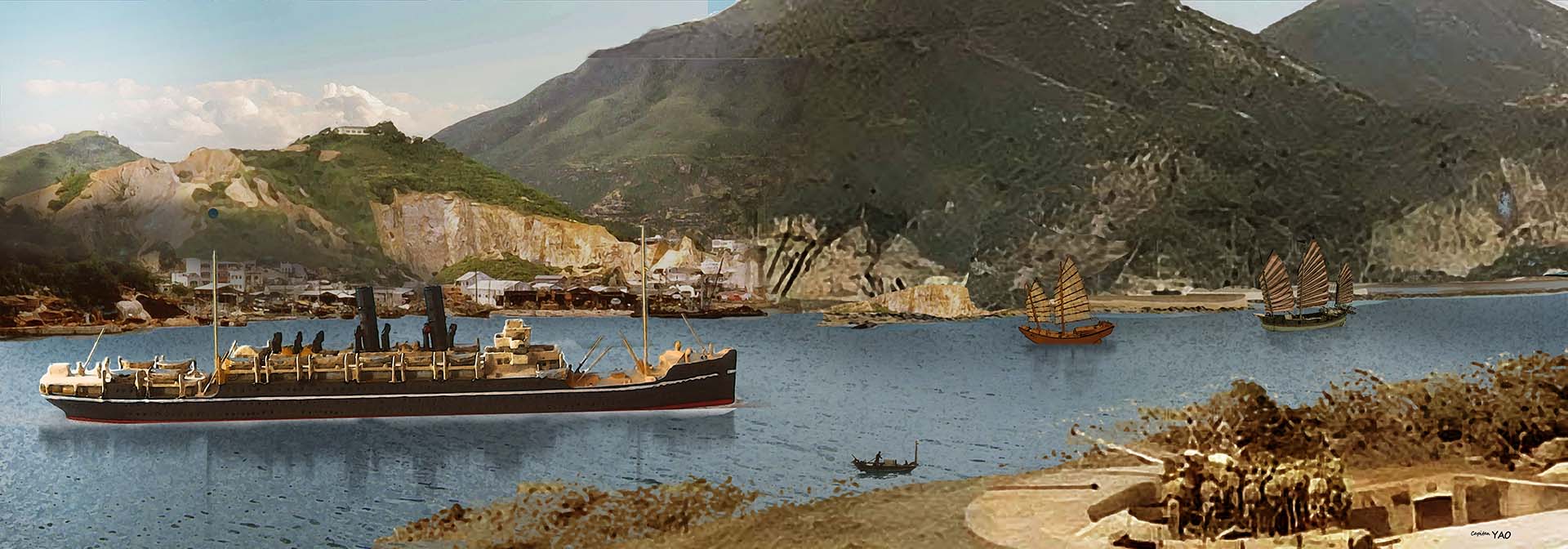
(Figure 2-6-2) The Lei Yue Mun Waterway in Hong Kong sees many Chinese and foreign ships coming and going every day, making it a target for pirates.
"I'm not a sailor, I'm a pilot!" "A pilot? Well... never mind!" She paused for a moment, then turned to leave, but after only a few steps, she suddenly turned back: "Hi! Pilot! What's your name?" "What? Changed your mind? I'm Paul Dragon!" "I'm Lomui! Hello!" Lomui was a very interesting girl, lively and cheerful, quick-witted and knowledgeable, and the two of them had a very pleasant conversation. When the bar closed, I offered to take her home, but she refused, saying, "I live on a boat, you don't need to take me!" "Are you a Tanka?" Tanka means boat people. She smiled, shook her head, touched her lips with her finger and then pressed it to mine, before turning and disappearing into the darkness. A warmth filled my heart, and I walked home peacefully. After that, I frequented the "Seamen's Bar", always bringing her imported luxury goods. Whenever she saw me, she'd follow me all night. One day, as the bar was closing, I said to her, "Living on a ship isn't so bad! Why do you never ask me to bring you home?" She thought for a moment and replied, "Okay! I won't go to the bar tomorrow. Let's meet at the ferry terminal tonight, and I'll take you there."

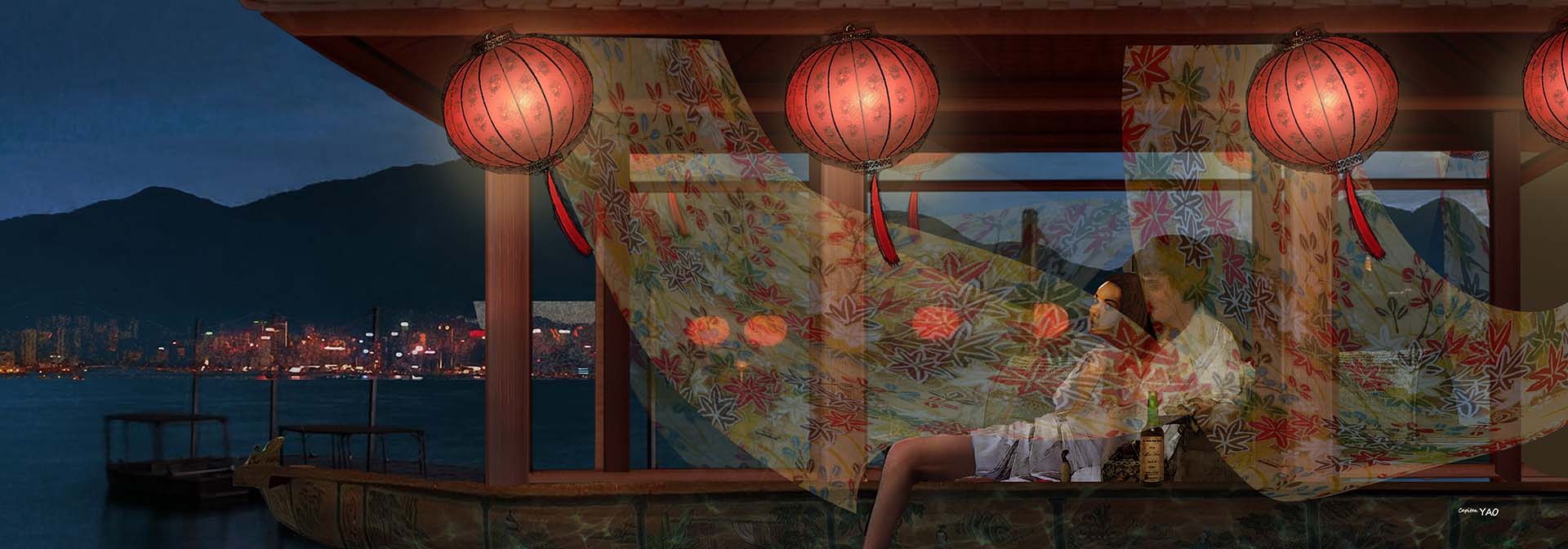
(Figure 2-6-3) Paul Draken and Lomui on a painted boat.
"Why do you ask so many questions? Come, have some tea!" She brought out a Chinese-style tea tray, and the two sat on the floor, reclining as they drank tea. It had a delicate jasmine fragrance, which perfectly complemented the atmosphere. "Is there anyone else on board? Sorry for asking another question!" She smiled and shook her head. The sea breeze made the curtains on the door flutter, and the boat swayed rhythmically. I felt a little dizzy. I leaned closer to Lomui, and she suddenly turned and kissed me. Then we embraced on the cabin floor, kissing and caressing each other. Luo Mei was a very healthy girl, not very experienced but very proactive. Our bodies moved in sync with the swaying of the boat, creating an ultimate pleasure. Lomui moaned as she scratched my back with her nails, leaving marks. Her long, disheveled hair occasionally bothered my sweaty face. I brushed it aside, but she put the ends of her hair in her mouth, then rolled over and took the top position, pressing down on my shoulders and launching wave after wave of intense thrusts. Afterwards, she snuggled up to me and said, "Do you think I'm very lewd?" "How could this be? Is this your first time?" She nodded, and I kissed her deeply. Soon after, we did it again.
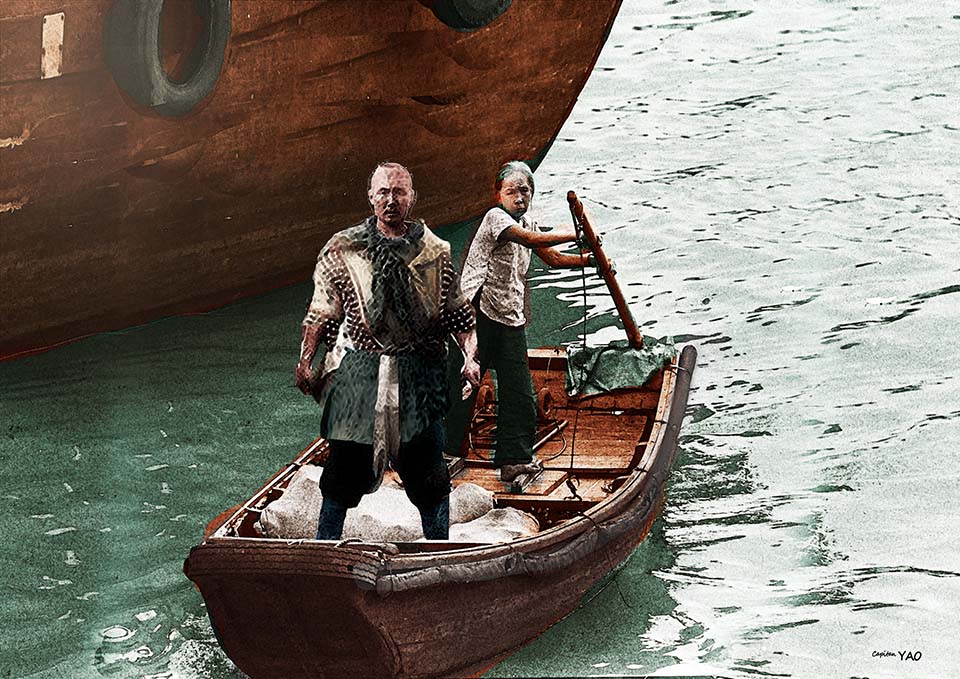
After that, I often stayed overnight on Lomui's boat. One afternoon, my scheduled flight was canceled at the last minute, and on a whim, I hired a small sampan to come to her boat. There, I saw her with a burly man with a shaved forehead but long hair at the back of his head. Lomui was a little surprised to see me. Perhaps afraid that I would misunderstand and be jealous, she took the initiative to introduce me, saying, "This is my brother, Lohon!" Lohon turned to Lomui and asked, "Who is he?" "He is Paul, a pilot." "What pilot?" Lohon stepped forward and stared at me, his tone aggressive. I replied, "A pilot for Dragon Airlines!" "What nationality?" He circled me, sizing me up. I was annoyed by his rudeness and deliberately raised my chin arrogantly, replying, "British!" Upon hearing this, Lohon turned and left, jumping off the boat and quickly boarding a small sampan, where he was rowed away. I was somewhat taken aback: "What's wrong with me being British or a pilot?" Lomui came over, hugged me, and comforted me, saying, "That's just how my brother is, don't mind him!"
(Figure 2-6-4) The Lohon jumped onto the sampan and hurriedly left, as if he sensed that something bad was about to happen.
"No, no, no, you're a jinx to me! I'd better stay away from you!" "Hmm... your airline seems to be doing quite well! Do you need my help? I happen to be in this area..." "Fine! You slippery little devil!" Sensing the hidden meaning in his words, I had no choice but to get in the car. "You've really put me in a terrible situation!" I complained to him. "This isn't my fault. Want to know who tipped me off?" "certainly!" "Li Yunhe!" "What? That's impossible!" "Do you know that her brother-in-law is named Wang Keming, who was your former battalion commander?" "Really? So, she's here to avenge her brother-in-law?"
"Poor Yunhe..." I couldn't help but fall silent as I thought of her tragic fate. "Let's put aside matters of romance for now; I have something more important to discuss with you today." "What is it? Are you trying to get me into trouble again?" "I've also been ruined by your woman. Because of your accident, I, the head of the North China intelligence team, was transferred to Hong Kong to fight pirates!" "Fighting bandits?" I chuckled and almost spat out my dinner.
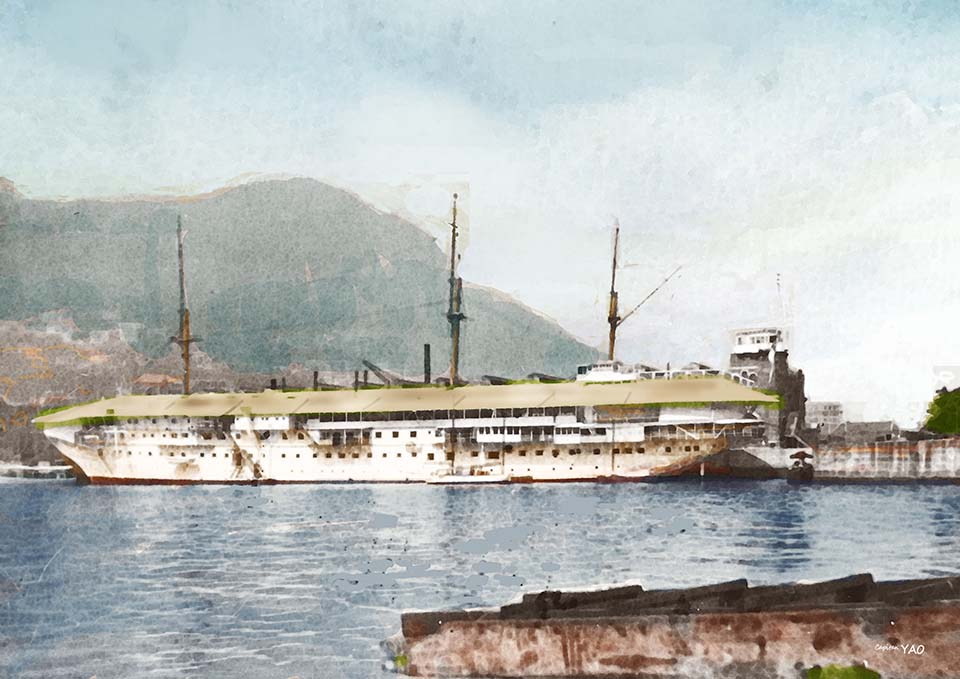
(Figure 2-6-5) The HMS Tamar, now a barge, is Mr. M's office.
Mr. M drove the car out of Lan Kwai Fong and turned into the British naval base. He asked me to get out of the car and board the HMS Tamar with him. It was an iron-hulled troop transport ship built in 1863. All the masts had been removed and covered with a canopy to be used as a base ship. Mr. M's office was located in the former captain's room at the stern.
"Please have a seat! What would you like to drink?" Mr. M asked.
"Oh no! I just drank too much!" I looked around his office. One wall had several windows facing the bay, and the teak interior and furniture were very luxurious. It was a very comfortable place.
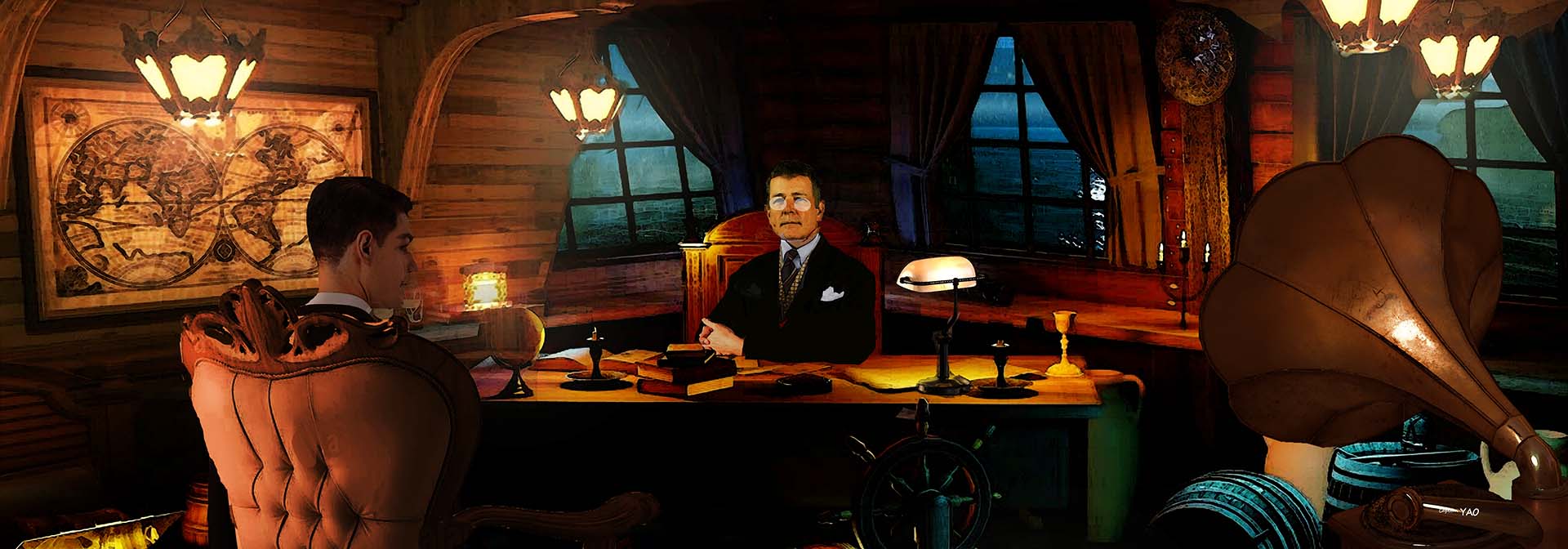
(Figure 2-6-6) Mr. M discusses the fight against pirates with Paul Draken in his office at the stern of the HMS Tamar.
"I called you here to talk about fighting pirates!" Mr. M poured himself a glass of whiskey, pulled up a chair, and sat down in front of me. "There's a group of pirates in the waters around Changchow. Their leader is called Lohon. They have many ships, many men, strong firepower, and accurate intelligence. They're extremely ruthless when they rob. Like last month, the American merchant ship 'SS Pacific Queen' was robbed, and several sailors were killed..."
"The Pacific Queen was hijacked?" I recalled the sailor I first met at the "Seamen's Bar": "With pirates so rampant, what is the Royal Navy doing?"
"On January 9th of this year, the Royal Navy dispatched two aircraft carriers, HMS Argus and HMS Hermes, to bomb pirate ships in Dumbbell Island (Changchow). Captain L.J. Mackintosh led the Marines ashore and burned all the ships, sampans, and houses on the island, killing men, women, and children alike. Despite this large-scale operation, the pirates remained rampant. Therefore, the local Chinese community spread rumors that the last time they had mistakenly killed civilians in a village, threatening to take the matter to London. The Admiralty, alarmed, transferred me from North China."
"Using two aircraft carriers to fight pirates? How can you use aircraft carriers for something like that?" I said dismissively.
"Aircraft carriers? We've even used submarines!" Mr. M said.
I know he was referring to the incident a few months ago when the Royal Navy's submarine HMS L4 sank the hijacked China Merchants Steam Navigation Company ship SS Airen, along with its pirate passengers. The Airen was a regular liner operating between Canton and Hong Kong. In 1894, it was chartered by the Chinese government to transport troops to Korea. At that time, another ship in the fleet, the SS Kow-Shing, chartered from Jardine Matheson & Co., was sunk by the Japanese cruiser Naniwa, resulting in the drowning of nearly a thousand people and triggering the war between China and Japan.
The Hong Kong government and the Royal Navy are clearly desperate to combat the countless pirates and bandits. The sinking of the SS Airen by the HMS L4 sparked heated discussions in Hong Kong society, and the China Merchants Group even sued the ship, but later lost the case.
"That's why I came to see you. Pirates have informants everywhere in Hong Kong. It's difficult to keep a large warship a secret when it's deployed, and the speed of movement is slow. By the time we arrive, the pirates will have already hidden themselves, so what's the point of clearing them out?" Mr. M said. "But if our aircraft carrier sets sail a few days earlier and waits in the open sea, and the landing force is transported by large seaplanes, and then you conduct aerial reconnaissance, I know you are very familiar with the waters around Hong Kong, so you will be able to find them very quickly. Once you discover the pirates, you will immediately notify the aircraft carrier to take off and lead the team to the scene for bombing and landing. With such secrecy and mobility, we will definitely catch Lohon off guard."
"That sounds familiar... That's right! Isn't this the tactic Admiral Shen used when attacking Shanghai at the end of March? Haha! You must have copied this idea!" I said after hearing his plan.
"Hmm... I did take some into consideration!" Mr. M said a little embarrassedly, "But the fact that you participated in that battle is the very reason why I insisted on asking you for help."
"Why should I help you?" I shook my head and said, "Our commitment to the Hong Kong government is only for search and rescue. You're fighting a war. What if something happens to you? Who will compensate me?"
"You talk like it's none of your business. Don't forget I'm a shareholder too!" he said. "Remember that thousand pounds?"
This person has a really good memory; they always bring up old grievances. But I'm quite wealthy now, and a thousand pounds is nothing to me: "I'll return the thousand pounds to you; it's no big deal!"
"Easy for you to say. You think MI6 is so easily dealt with? Once you've taken the money, you have to deliver, or else… *bang*!" Mr. M pointed to his temple with a threatening tone, "Let's not talk about those dirty deeds. I think we should start our operation around Christmas!"
Christmas Eve fell on a Saturday, and the "Seamen's Bar" was bustling with activity. Most of the sailors were officers and sailors from the aircraft carrier "Argus," and they were all talking about setting sail the next morning to suppress pirates. That evening, I brought a valuable Christmas gift to see Lomui. It was a platinum necklace with small diamonds that I had carefully selected a week ago. I was sure Lomui would love it. I bumped into her as soon as I entered the room. She was about to leave, but seeing me, she went back to sit at a table by the window. I helped her put on her necklace and noticed she seemed a little restless, frequently looking outside. Around eight o'clock, she finally couldn't contain herself and whispered to me: "Paul, I have to go home now!" "I'll take you!" "It's not going back to our home on the boat, it's going to our home on an island. You can't go with us!" Are there still any boats available? "My family will send a boat to pick me up..." Lomui said anxiously. I knew my Christmas Eve was ruined. The aircraft carrier set sail on the morning of the 25th, and from the 26th onwards, Song Feihu and I took turns flying a plane to patrol the coast and islands near Changchow Bay. We simulated normal flights, each making only one round trip per day to avoid arousing suspicion. We were quite familiar with the area, and any changes would be easily detected, but after flying for four days, we didn't find anything unusual. On the afternoon of the 30th, as I passed a small island very close to the shore, I suddenly felt a flash of light in the bushes on the shore. I decided to fly around it again to observe, but was shot at by machine guns in the forest. I immediately knew that this was the hideout of the pirates. I turned around and flew out to sea, while sending the coordinates to Mr. M by telegram.
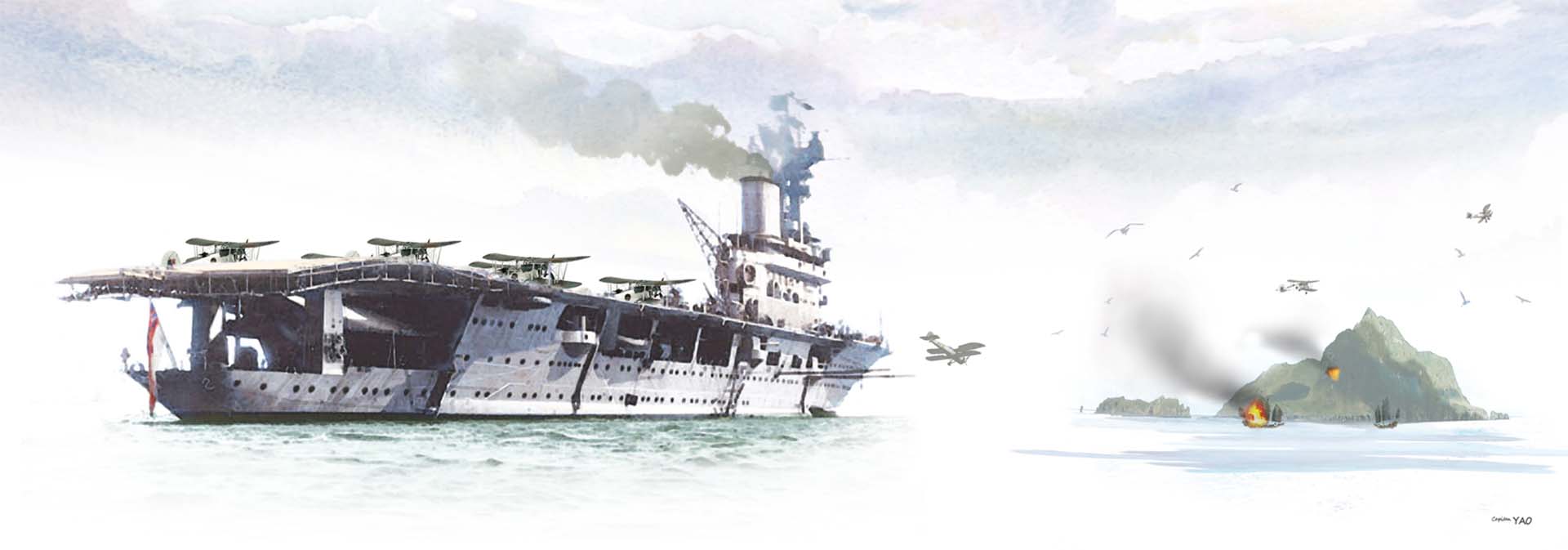
(Figure 2-6-9) The Royal Navy aircraft carrier HMS Hermes launches planes to bomb pirate-infested islands.
I yelled at him, "Hurry! He should have realized we've found him! I need to fly back to the scene now, you go back to the ship!" At that moment, the roar of engines filled the air on the aircraft carrier. One after another, planes took off, circling in the sky as those that took off later prepared to form a formation. I was really anxious: "It's not like we're going to fight an air battle, why are we forming formations? If we keep forming formations, all the pirates will escape!"
I took off and followed the squadron to the scene. I saw that the dozens of junks that had been quietly anchored on the sea were now running around in a frenzy, as if a pot had been boiled over. It turned out that these were pirate ships. The squadron immediately swooped down to bomb and strafed, and every ship was hit and caught fire. I saw from the air many people screaming and jumping into the sea after their bodies were on fire. Then I guided another squadron of planes to bomb houses on land. I could hear sporadic machine gun fire from the ground, but it posed no threat.
At that moment, I saw three large seaplanes fly low and land very close to the shore, with more than a dozen marines wading ashore. I also landed my plane on the shore and planned to go ashore as well. Suddenly, I remembered that I should have a weapon for self-defense, so I took out the Mauser pistol that Chang Hsueh-Liang had given me from my bag and clipped it to my belt for later use.
I waded ashore and saw Marines firing their guns, killing the pirates one by one. Houses were burned down one after another, flames soaring into the sky and thick smoke obscuring the sun. The tragic scene was truly like hell on earth. One large house was blown open by several grenades thrown by the Marines. Dozens of children were thrown out of the house, all bleeding from their seven orifices and dying. It was a gruesome sight. To this day, I still think of it as a school.
I later learned that Chinese pirates often involved entire villages, so the suppression of them inevitably resulted in the killing of groups of innocent elderly, women, and children. This sight shocked me. I even suspected that these Marines were only capable of such indiscriminate killing of people of Asian descent. When I saw an officer shoot an infant in the head, I began to regret bringing them here.
After the second wave of seaplanes brought reinforcements, the group advanced inland. By this time, the pirates' organized resistance had completely collapsed, and the troops began a search operation across the entire island. The island wasn't large, and it was searched in an hour. Since the Marines believed everyone on the island was a pirate, they opened fire on any figure they saw, like hunting wild boars in the jungle.
Mr. M also arrived on the island. After examining all the bodies, he said to the commander, "Lohon isn't inside. It's getting dark, so we must search quickly, otherwise he'll escape after dark!"
I said to Mr. M, "Is it right for the Royal Navy to massacre unarmed women and children?"
Mr. M replied indifferently, "This entire village is full of pirates. There are only distinctions between big pirates, small pirates, male pirates, and female pirates—they're all pirates!"
That's utter nonsense! I protested loudly, "Do you think babies can be pirates?"
The Marine Corps commander walked up to me, patted me on the shoulder, and said, "Kid! The things the Royal Navy really does on the battlefield aren't written in textbooks! Are we going to leave or not? It's getting dark!"
The troops continued their search when suddenly a burst of gunfire rang out beside a stream. A Marine fell to the ground, and everyone immediately took cover. I also drew my Mauser pistol, ready for use. Several long minutes later, another shot rang out, and another sergeant was also shot down. Mr. M could no longer contain himself. He grabbed a rifle from a nearby soldier, adjusted the sights, and carefully aimed into the distance. When the enemy fired a third shot, he immediately returned fire. A figure carrying a long gun stumbled out of the bushes, seemingly about to fire again. Mr. M fired the final shot, and the man collapsed to the ground, unable to get up.
Mr. M got up smugly and went forward to inspect the scene when suddenly a dark figure screamed and darted out of the woods towards him.
"Mr. M!" I shouted a warning, and grabbed my pistol to fire at the figure. Although he was moving very fast, a small starlight strangely flashed from the assassin's neck, which helped me track and aim. So I hit him in the chest accurately. The assassin turned around, slashed through the air, sprayed blood on me, and collapsed to the ground, still clutching a dagger in his hand.
Mr. M, holding the photograph, stood next to the first corpse he had just shot and compared it to the body, saying, "That's right! This is Lohon! At least he didn't survive 1927!"
I looked towards the corpse and saw a burly man with a shaved forehead and long hair at the back of his head. This… isn't this Lomui's brother, Lohon? I quickly turned back to look at the person I had just knocked down… "My God! It's Lomui!"
The necklace I gave her was still hanging around her neck, its diamonds sparkling in the setting sun, until it was finally swallowed up by the gushing blood flowing from her chest.
"Lomui! Why did I kill you...?" I cried and screamed as I picked up Lomui, who was no longer breathing.
God really knows how to joke! I suddenly remembered that the fortune teller Chiu Taochi, whom I met in Peking, once said: "The bandit princess will die a violent death on a deserted island!" Could the bandit princess be referring to Lomui?
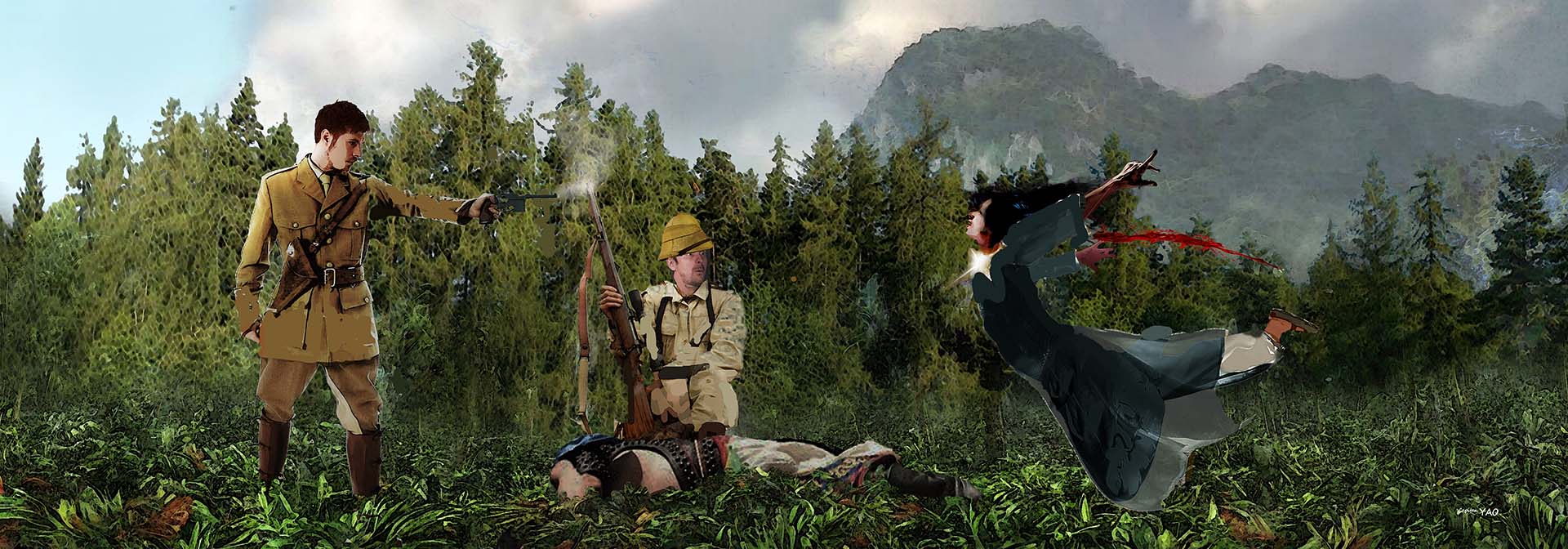
(Figure 2-6-12) Long Baolu accidentally killed Luo Mei with the Mauser pistol given to him by Chang Hsueh-Liang.
On New Year's Day 1928, which fell on a Sunday, I sat on the rooftop balcony of my hotel, gazing at Victoria Harbour. I reflected on how busy 1927 had been. From a kidnapped Royal Navy ensign to a flight captain under Great Marshal Chang, and the first pilot to bomb Shanghai, I had met my first love, Li Yunhe, only to suddenly become a refugee like a stray dog because of her betrayal. After escaping to Hong Kong, I inexplicably became an aviation tycoon. Finally, my grudges and passions with pirates led me to kill my beloved Lomui with my own hands. Life truly is like a play!
How do I plan to spend 1928? I'm quite wealthy now, and perhaps I can finally fulfill my long-held wish of buying a Supermarine S-Series aircraft to participate in this year's Schnieder Trophy, the coveted honor of every seaplane pilot, not only for the 75,000 franc prize (the cost of preparing for the competition might exceed that), but also because the winner will become the ultimate hero in the industry. Last year, the British team's Webster set a record of 283.3 mph, and this year I'm sure I'll break 300 mph—that's my goal. My formidable rival will be the Italian Macchi M.52.
According to the rules, last year's champion country can host this year's event, so 1928 will definitely be held in the UK, which will be very advantageous for me. The Schnieder Trophy has been held between September and November in recent years; last year it was on September 26th in Italy, so I must make arrangements quickly. I plan to go back to the UK, not only to visit my father but also to check out Supermarine and perhaps I can buy the latest S.5s model.
As for the task my father assigned me to find the luminous pearl, I think there's really no way to do it unless I go tomb raiding. When I was in Tsingtao, I telegraphed my father to report this news, and I can imagine the old man's disappointed expression. However, he still telegraphed back telling me not to give up, and that the information he heard might be incorrect. The old man always held onto a glimmer of hope. Now that I'm going home, I still don't know how to tell him.
As I was deep in thought in my wicker chair, Song Feihu burst in, shouting. It turned out that one of our major clients, a shipping company, had called to request that we set up a branch office in Shanghai. Many passengers and mail traveling between Shanghai and the East China Sea required express air freight services. They were offering very favorable terms, so Song Feihu was eager to secure this business.
It seems that my return to England will have to be postponed for a few months. I discussed with Song Feihu that I would fly a plane to Shanghai first to set up a company, while he would take care of the Hong Kong business for the time being. I appointed him as the manager of the Hong Kong company and instructed him to purchase a few old planes from the second-hand market and recruit some pilots from the Canton Air Force to join the ranks of pilots.
Right after the Spring Festival, I flew to Shanghai and rented a small office on the Bund to establish "Shanghai Dragonair," while the Hong Kong company was renamed "Hong Kong Dragonair." People generally referred to us as "Shanghai Dragon" and "Hong Kong Dragon." Interestingly, 60 years later, another "Hong Kong Dragonair" appeared in Hong Kong, also with a red dragon logo. Unfortunately, we didn't know to register the trademark back then, and now we have no way to assert our rights.
|
 "That's not true. What kind of sister-in-law would sacrifice herself to avenge her brother-in-law? Actually, most of what she told you was true. She did come to Tsingtao to find her brother-in-law, but you were the new captain, so she had to end up on the streets! Later, when Wang Keming found out she was with you, he forced her to extract information from you to use as dirt on you to inform the Great Marshal."
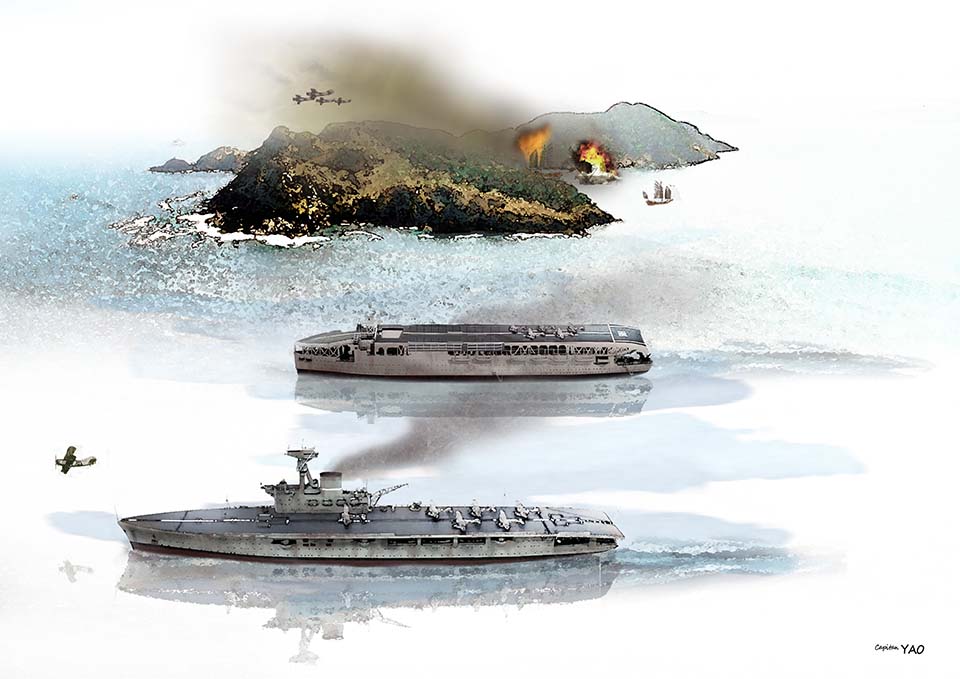
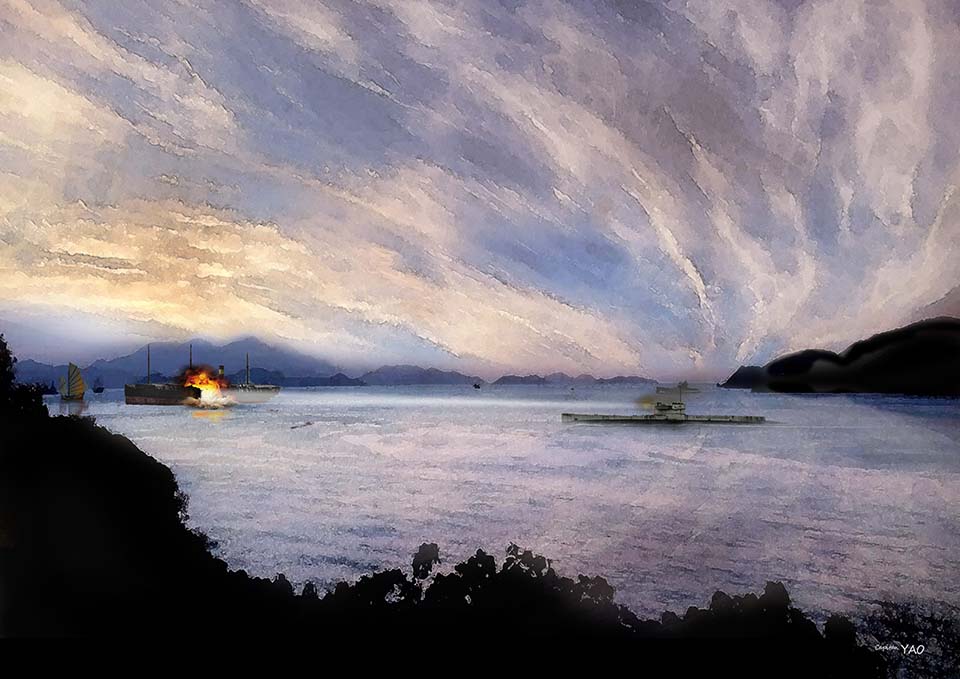 (Figure 2-6-7) The Royal Navy deployed two aircraft carriers, HMS Argus and HMS Hermes, to attack the pirate village on Changchow Island . (Figure 2-6-8) The Royal Navy submarine HMS L4 sank the hijacked China Merchants Steam Navigation Company ship "Airen" along with its pirate passengers in Bias Bay.
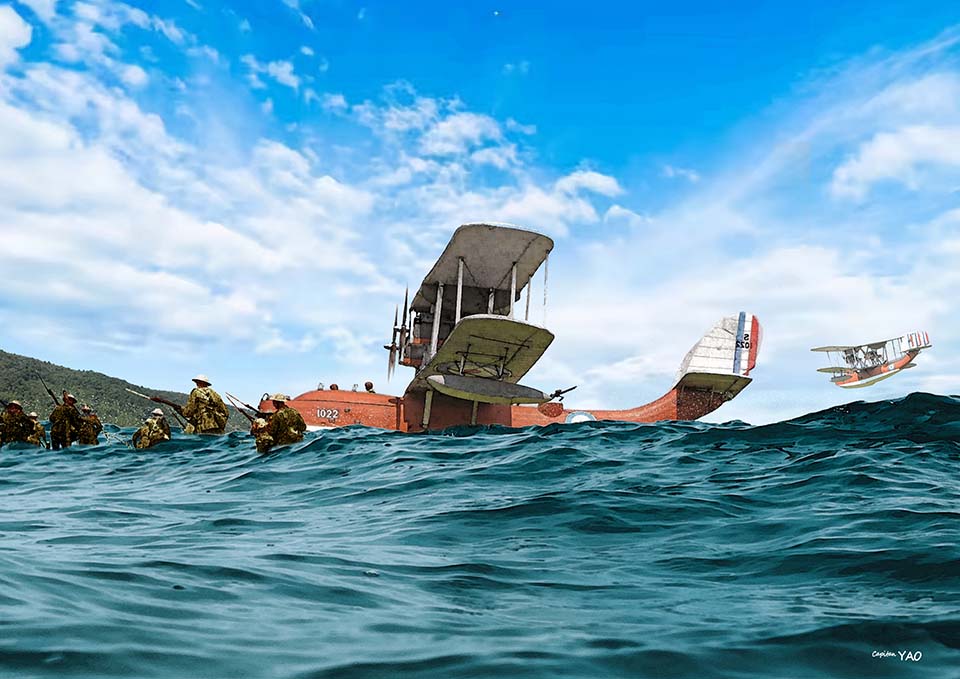 (Figure 2-6-10) Three large seaplanes carrying Royal Marines waded ashore.
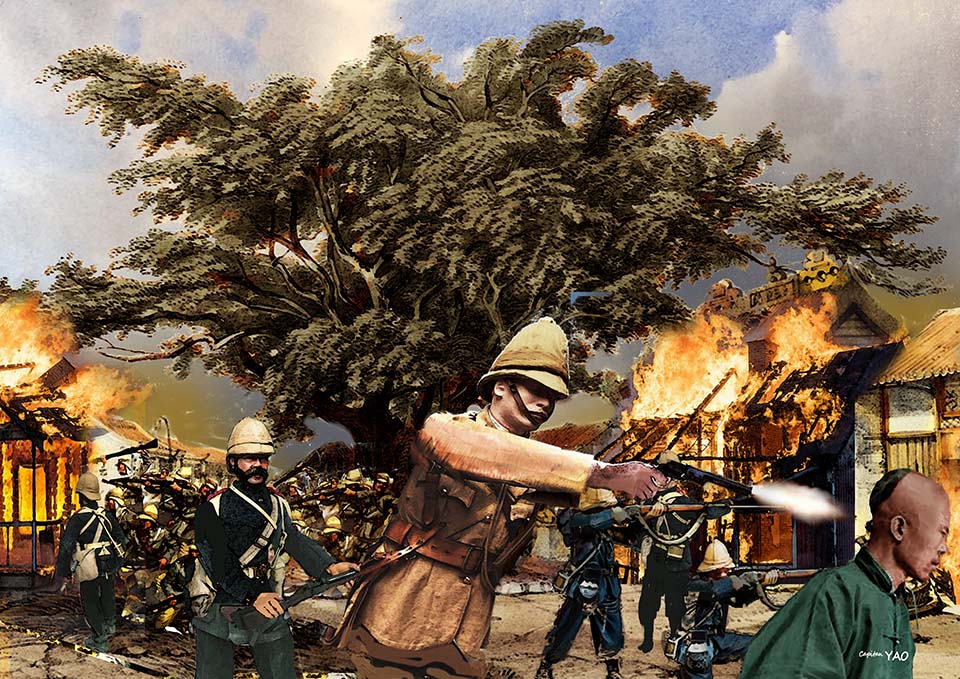 (Figure 2-6-11) Royal Marines massacred villagers on the island.
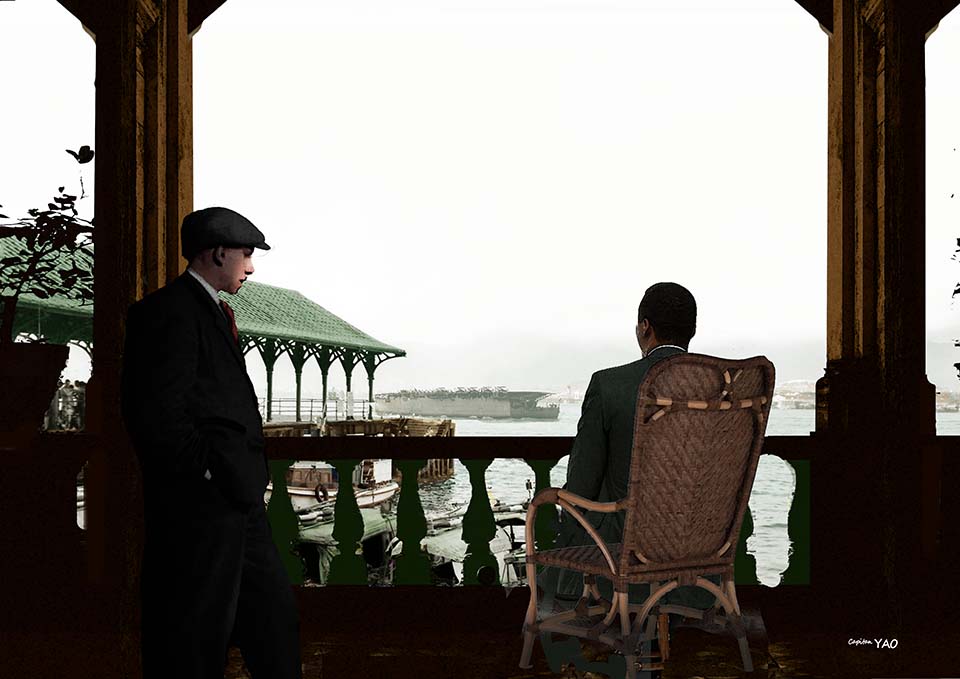 (Figure 2-6-13) Paul Draken and Song Feihu discuss the establishment of a branch office in Shanghai.