5. Aerial Acrobatic Troupe
Song Feihu and I arrived in Hong Kong around the end of September or the beginning of October 1927. After staying in the hotel for more than a week, we were quite bored. Song Feihu suggested that we set up an airline that would also operate air transport and stunt shows. I had the same idea in mind, so we immediately began preparations.
We formed a "Dragon Airline" and a "Dragon and Tiger Aerial Acrobatics Troupe." I used the five thousand pounds bestowed upon me by the Marshal and one thousand pounds from Mr. M to purchase two used ADBoat seaplanes from a trading company. They were painted red and green, and a golden dragon was painted on the tail, imitating the design of the Ch'ing Dynasty flag. One was named "Dragon" and the other "Tiger," and we took turns flying one plane per person.
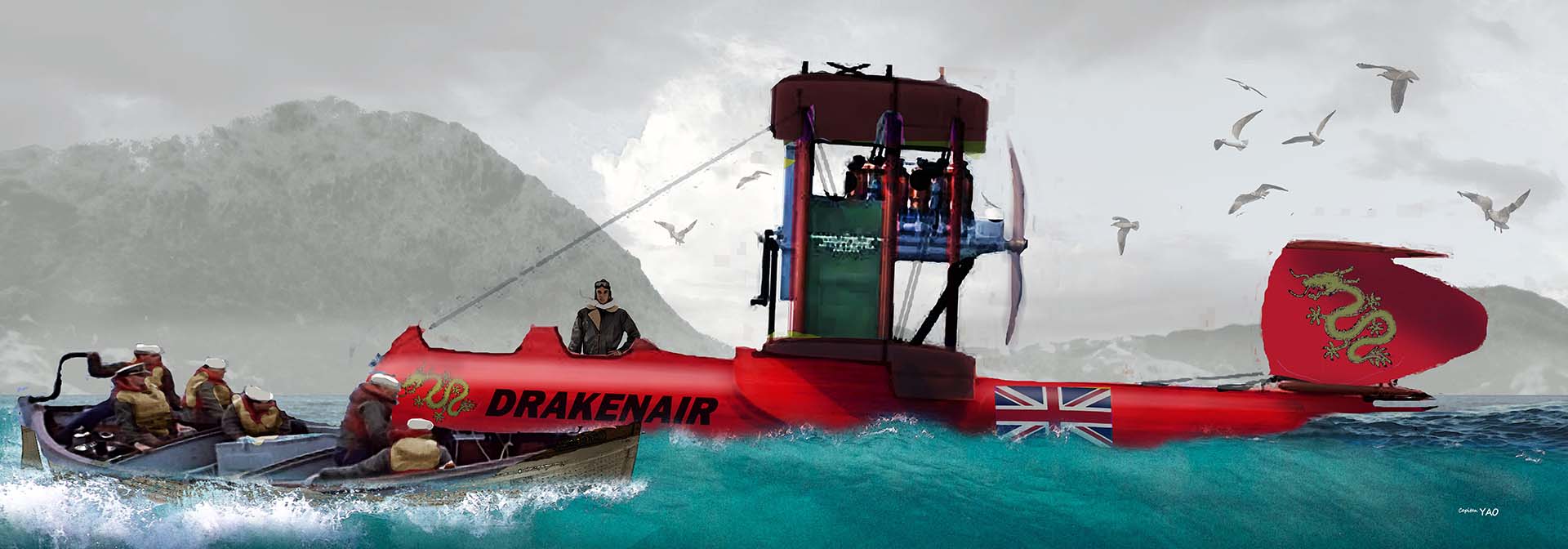
(Figure 2-5-1) Paul Draken opened "Dragon Air" in Hong Kong, using Air Dept. Boat seaplanes to land in the waters of Kai Tak Airport, and small boats to pick up passengers and cargo.
Dragonair's main businesses include:
I was originally very fond of the British Supermarine S.5 seaplane that SN Webster piloted to victory in the 1927 Snyder Cup. It was a low-wing monoplane with a slender and long fuselage, and its floats extended like two large feet underneath, making it very sleek and beautiful. It had a powerful Napier Lion 900-horsepower engine and could reach speeds of up to 319.57 miles per hour. However, its cabin was too small and only suitable for racing. It couldn't fit mail or passengers at all, and getting on and off was also very troublesome. In addition, there was no stock available, so I had to give up on it. The Air Dept. Boat we purchased was a two-seat airship of the Royal Navy from the late stages of World War I, built by Pemberton-Billing, the predecessor of the Supermarine, and was about nine years old. It was 30 feet 7 inches long and had a wingspan of 50 feet 4 inches, and could be folded for storage. The observer and pilot's seats were arranged longitudinally at the very front of the fuselage. Originally, it was equipped with a .303 machine gun, but this had been removed before we purchased it. The Air Dept. Boat was powered by a Hispano Suiza 200-horsepower water-cooled tandem engine, propelled by a four-bladed propeller. With an empty weight of 2,508 pounds and a payload of 3,567 pounds, a top speed of 100 mph, a climb time of 30 minutes to 10,000 feet, and a flight time of approximately four and a half hours, it was a very practical aircraft. Its hull lines were also quite attractive, and its appearance was very similar to the French-made seaplanes used by the Northeastern Navy's air wing. We rented a shed in the newly built Kai Tak Airport in Kowloon to park our planes. Maintenance, storage, and offices were all in one place. At first, we even lived there. We only moved to a better hotel after we made a lot of money. At that time, the runway at Kai Tak Airport was still grass. Although seaplanes could take off and land at sea, we chose to use the airport as our base for the convenience of maintenance and storage.

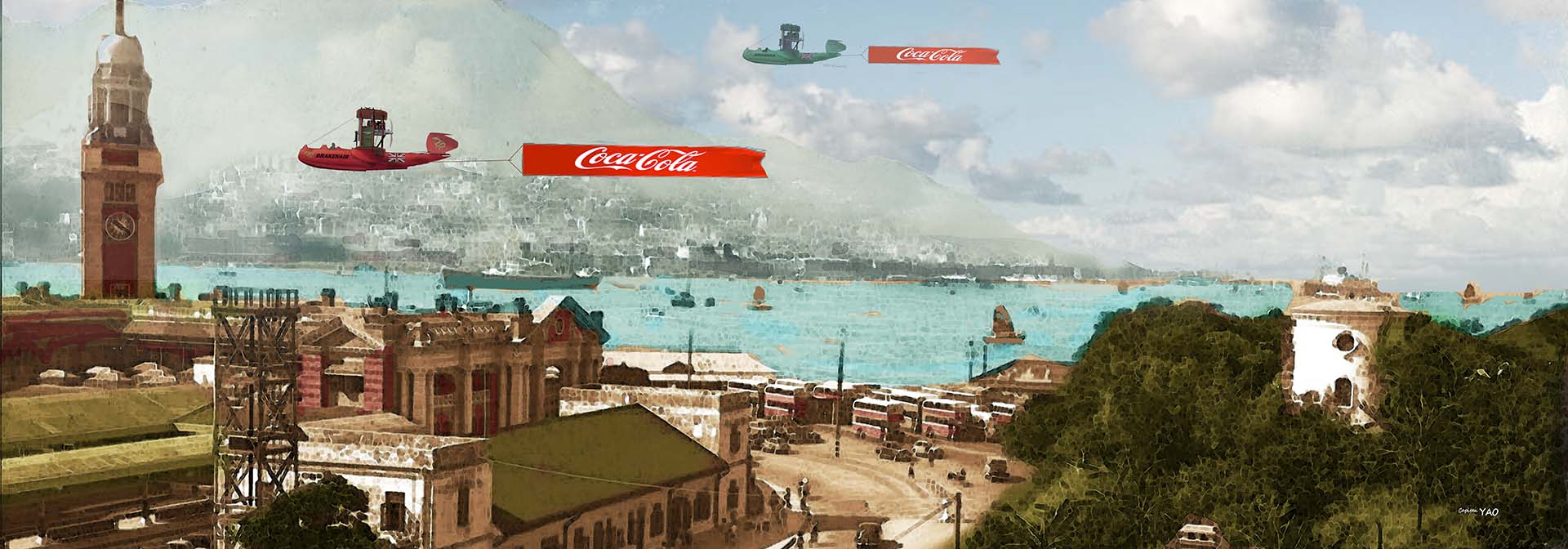
(Figure 2-5-2) Dragon Airlines also engaged in aerial advertising, including the first Coca-Cola entry into Hong Kong in 1928.
Airmail is a regular service that operates daily; if it happens to carry passengers, that trip is considered profitable. Another type of airmail involves steamship companies chartering ships to transoceanic cruise ships to deliver and collect mail, allowing passengers to send and receive their mail earlier. Sometimes, they also pick up a passenger eager to disembark and bring them to Hong Kong; these trips usually involve generous tips. Another type of business is aerial tours. We not only fly the plane but also act as tour guides, so I not only memorized information about Hong Kong's attractions perfectly but also improved my Cantonese by leaps and bounds. The advertising business involves towing a long banner behind the plane and flying around Hong Kong Island and Kowloon, charged by the time.
As for aerobatic displays, we've toured coastal towns in southern China. During special festivals or horse racing seasons, large companies sponsor our performances, allowing the general public to watch freely. I've always wanted a newer, more suitable aircraft for aerobatics, because the current models are just too slow and cumbersome. I think one day I'll buy a Supermarine S.5 to fly with!
Another unique service was serving as a Royal Volunteer Air Force officer, supporting the Hong Kong Marine Police and the British Armed Forces in maritime search and rescue and reconnaissance operations. Because Dragon Tiger Airways flew daily to the coast and outlying islands, we were far more familiar with the terrain than the rigid Royal Navy and Air Force, especially in tracking elusive pirates, which required our keen observation skills. However, for these missions, we only received fuel from the government; everything else was voluntary. But this was a tradition among British gentlemen, so we enjoyed it immensely. Of course, the Hong Kong government's special permit for the aviation industry was a form of reward.
Since there were no such companies in Hong Kong before, Dragon Airlines was very successful as soon as it opened. The two of us flew several flights every day, and after deducting fuel and maintenance costs, we made a net profit of several thousand pounds a month. As a result, Song Feihu and I transformed into big shots, living a life of luxury by going in and out of high-end clubs every day.
Detecting pirates is a very interesting job, even though it doesn't bring in any revenue for the company.
At that time, the waters off southeastern China were rife with piracy, posing a major threat to both China and the British Hong Kong government. Most of the pirates were from Chaochow, who sailed Chinese-style junks and specialized in robbing merchant ships and small fishing villages on outlying islands. Their weapons included broadswords, pistols, rifles, and some even light machine guns and homemade cannons. These weapons were mostly obtained through robbery, smuggling, or supplies from Chinese warlords.
Sweeping them away is extremely difficult because their pirate ships look exactly like ordinary Chinese fishermen's boats, making them indistinguishable from other vessels in a large fleet. Secondly, they are highly well-informed; they scatter like birds whenever the naval police are deployed, making it impossible to tell who are law-abiding citizens and who are pirates. They also freely enter and exit the lawless waters between Canton and Hong Kong, taking advantage of gaps in naval patrols. The Hong Kong government is practically helpless, which is why they resorted to using civilian volunteer air force personnel for reconnaissance.
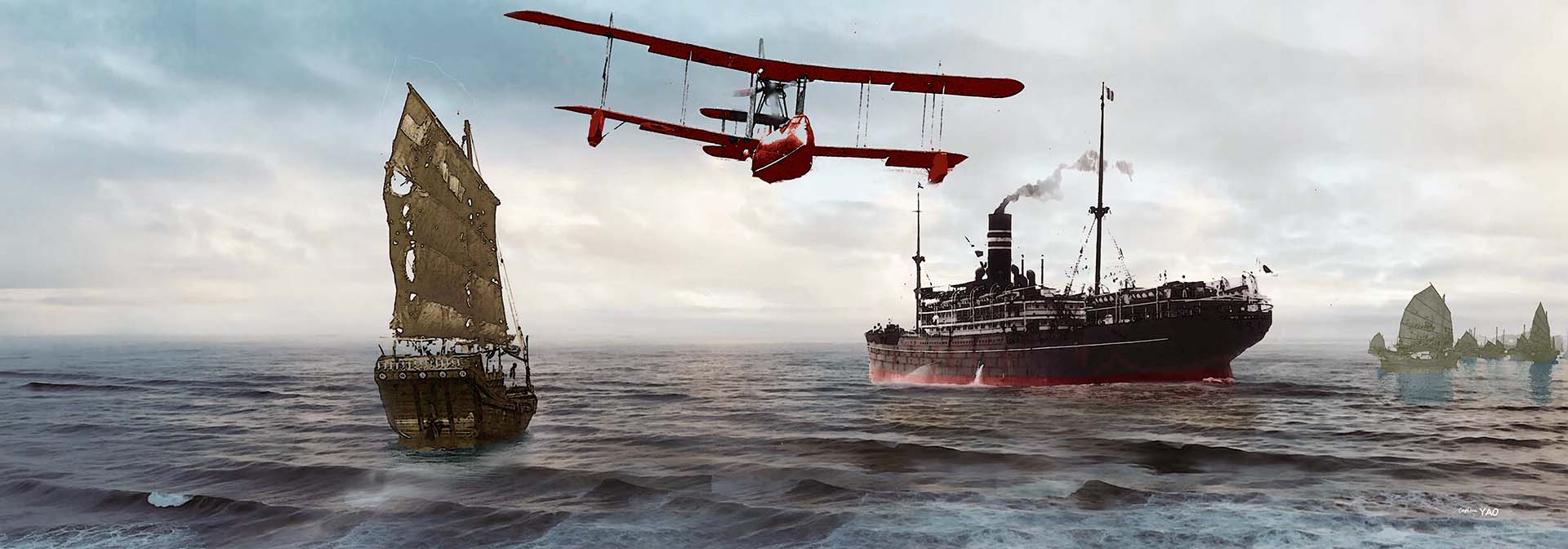
(Figure 2-5-4) If a Dragonair aircraft spots a suspected pirate ship at sea, it will report it to the Hong Kong Marine Police Headquarters.
According to regulations, the Volunteer Air Force was only allowed to conduct reconnaissance and reporting missions and could not carry out attack missions. However, once a wealthy British businessman installed a machine gun on his private plane and attacked a pirate ship during a reconnaissance mission. From then on, whenever pirates saw a civilian plane passing by, they would think they had been discovered and would flee immediately. The advantage was that it could deter pirate ships that were in the act of robbing. The disadvantage was that when pirate ships started to shoot at all passing civilian planes, it made it increasingly difficult for airlines to do normal business. I once took advantage of a trip to Guangzhou to deliver mail to visit Huang Guangrui, who had flown me on my first flight in the "Le Shiwen" aircraft carrier. Huang is now the top figure in the Canton Air Force. He was very pleased that I had been inspired by him to take up flying, and he was even more surprised when he learned that I had been the squadron leader of Marshal Chang and was the same guy who led the air raid on Shanghai at the end of March. After visiting a few times, I became quite familiar with the people in the Canton Air Force. We were all young people and pilots, so we had a lot in common. Many of them were overseas Chinese who had returned from the United States, like Huang Guangrui himself. At first, I didn't understand, but later I learned that many families from Canton Province had immigrated to the United States since the last century. Their children learned basic flying skills in the United States and found that only by returning to China to join the newly established Air Force could they get more opportunities, so it became a trend. Given this context, I observed that the Chinese Air Force at the time was less of an army and more like a polo club for the upper class, a social hub for wealthy young men and Westernized individuals. It existed aloof from the general public and ground troops, becoming a special entity, often acting independently and disdaining coordination with other branches of the military even in combat. This composition raises doubts about the thoroughness of its training and its endurance under combat conditions. Since the Southern Revolutionary Government's army launched its Northern Expedition, the air forces of both sides haven't had many opportunities to engage in combat. Since I had served as the captain of the Northern army's naval air squadron for only a little over a month, they considered me a valuable asset and were eager to extract intelligence from me. I, on the other hand, tried to avoid getting involved. Partly, I feared being kidnapped and forced to become a mercenary in China again; partly, I feared another mysterious figure like Mr. M would emerge and coerce me into becoming an intelligence agent. Either way, it was unappealing. Right now, all I wanted was to be a wealthy businessman.
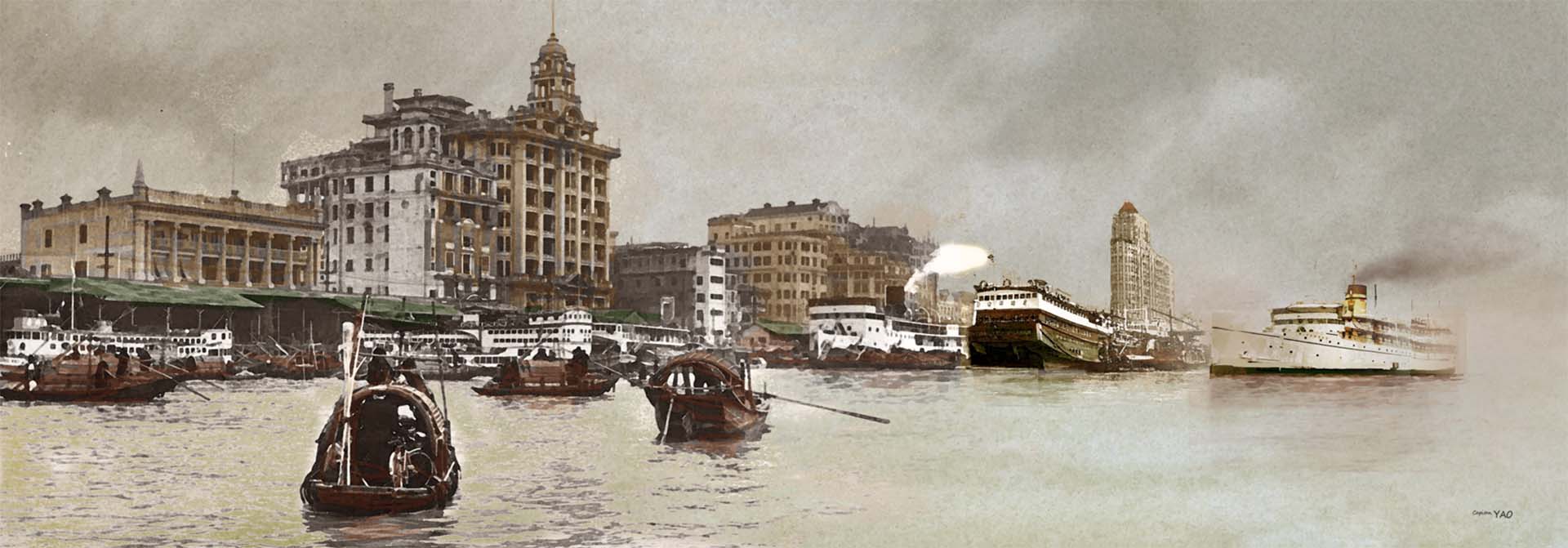
(Figure 2-5-5) Paul Draken often traveled from Hong Kong to the Hsidi Wharf in Kuangchow by boat to disembark.
My friendship with the Canton Air Force pilots laid the foundation for later persuading them to defect from Chen Jitang and fly north to join the Nanking government, but that was several years later. After hearing my story of investigating Hong Kong pirates, Huang Guangrui offered to install a machine gun on my plane at his factory, and even supplied underwing bomb racks and bombs, but I declined. Kuangchow is a place I visited in the summer of 1923, but I only had a brief visit with my father and didn't remember much. Now, I go to Kuangchow almost every week, and with the help of my Air Force friends, I've become quite familiar with the place and can be considered a semi-"Kuangchow expert" after a few visits! The biggest difference between Kuangchow and other cities in China is probably the food! In Kuangchow, I've seen all sorts of strange and wonderful dishes, such as "Dragon Tiger Fight," which is a dish of cat and snake cooked together, "Five Snake Soup," which is a thick soup made from several kinds of venomous snakes, and various dishes with dog meat as the main ingredient. But what I remember most vividly is the monkey brains that some pilots took me to eat once.
Back then, eating monkey brains was no longer something that could be openly advertised with menus, but regular gourmets still knew where to get it. I remember it was at Liansheng Restaurant, the most famous restaurant in Guangzhou. The room had a table that could be split in two in the middle, with a round hole at the joint. When joined together, it could fit a monkey's head perfectly, much like the wooden shackles used to restrain prisoners in China. Before being locked into the table, the monkey was, of course, still lively and jumping around. Someone had tied its hands and feet tightly to the bottom of the table with thin ropes, leaving only its head sticking out of the hole. The monkey's hair had already been shaved clean with a razor.
Diners waited around the table. The chef then took a silver hammer and smashed the monkey's head open. He used a silver knife to make a circular cut around the skull, then lifted the top of the head like opening a candy jar, exposing the brain. He poured soy sauce and sesame oil into the brain and stirred it. The diners then used silver spoons to scoop out spoonfuls of the brain fluid and ate it. Meanwhile, the monkey under the table was still squealing and struggling, while the diners at the table ate and discussed the deliciousness of the monkey brain. By the time the brain fluid was finished, the monkey was already dead. The chef pulled the table aside, put the monkey's body into a sack, and took it away.
I've only ever eaten monkey brains once in my life, and whenever I tell Westerners about this amazing experience, they look at me with the same astonishment they'd seen an alien. But when I tell Chinese people, the reaction is completely different. Most of them look at me with envy, their expressions seeming to say, "We haven't even tasted such a delicacy yet, and a foreigner got to try it first!"
Hong Kong and Kuangchow have a peculiar relationship, much like the relationship between the Tiantsin concessions and Peking. Politicians and warlords who lost out in the struggles of Kuangchow would flee to Hong Kong to live in seclusion. A few of them had the chance to make a comeback and return to the limelight, but most spent their remaining years in Hong Kong. Therefore, in Hong Kong's teahouses and taverns, you can often see many once-famous and powerful figures, such as General Chen Jiongming.
The Hong Kong British government wisely employed a two-pronged approach. Once both sides, including their entire fleets, entered Hong Kong, they had to obediently lay down their weapons under the colonial umbrella, while the pursuing side could only stand by helplessly in the open sea. The aforementioned "Haichi" cruiser had once sought refuge in Hong Kong in 1935 to escape the dual pursuit of the Canton Air Force and the Fukian-based Central Navy, but that is another story.
At this time in China, the revolutionary army camp in the south had stopped the Northern Expedition due to the conflict between the Nanking and Wuhan factions. In mid-August, Commander-in-Chief Chiang Kai-shek stepped down. The situation in China was so complicated and chaotic that no one could figure it out. At this time, it was another piece of news that modern people call "gossip" that caught my attention.
I remember that on the night of September 27th, the day after I fled Tsingtao, when the ship docked in Shanghai, I saw Chiang Kai-shek's "Family Announcement" published in the Republic of China Daily, the same day he was put on board. The announcement stated that he was currently divorced and single, and had no marriage agreement with two women. This announcement continued to be serialized in the newspaper until I arrived in Hong Kong on the third day. Because I had met General Chiang Kai-shek briefly in Kuangchow four years prior, I was particularly interested in this matter and asked my Air Force friends in Kuangchow about it. They all laughed and said, "Not long ago there was a 'Mrs. Chiang' named Chen Jieru'!"
On November 26th, I opened the newspaper and finally saw the announcement of Chiang Kai-shek and Soong Mei-ling's marriage. "Soong Mei-ling?" I guessed that this Miss Soong and Soong Ching-ling, the wife of Sun Yat-sen who invited me to ride on the plane back then, must be sisters, right?
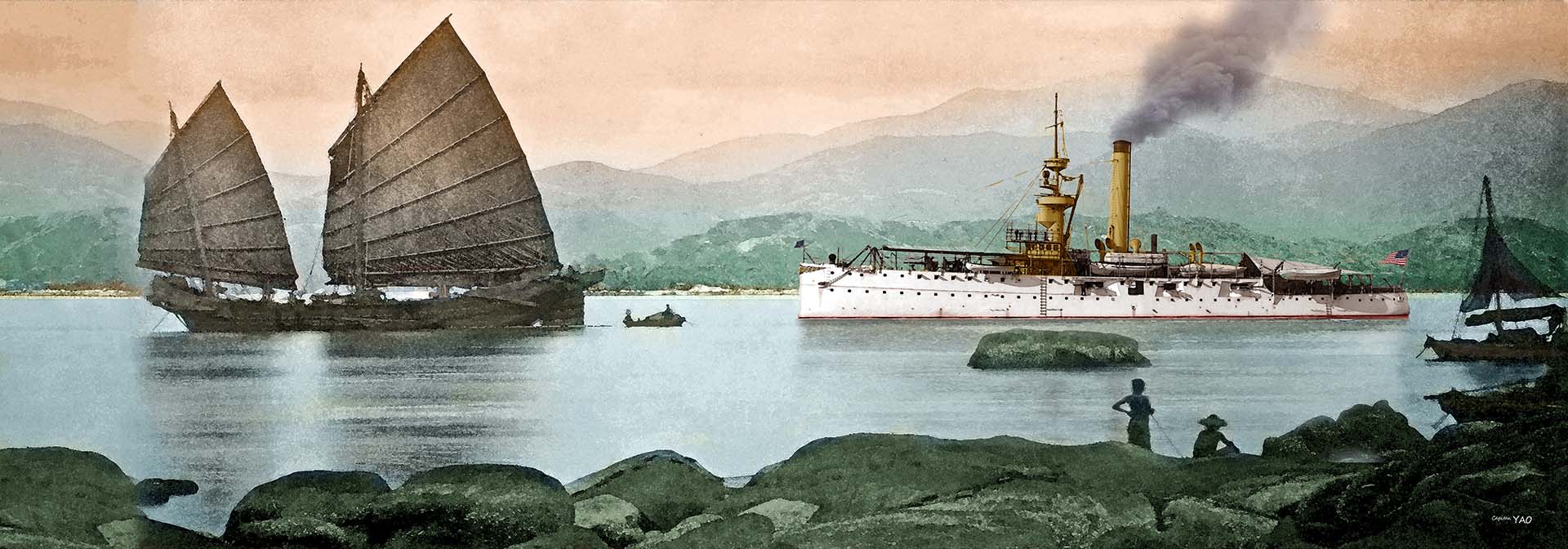
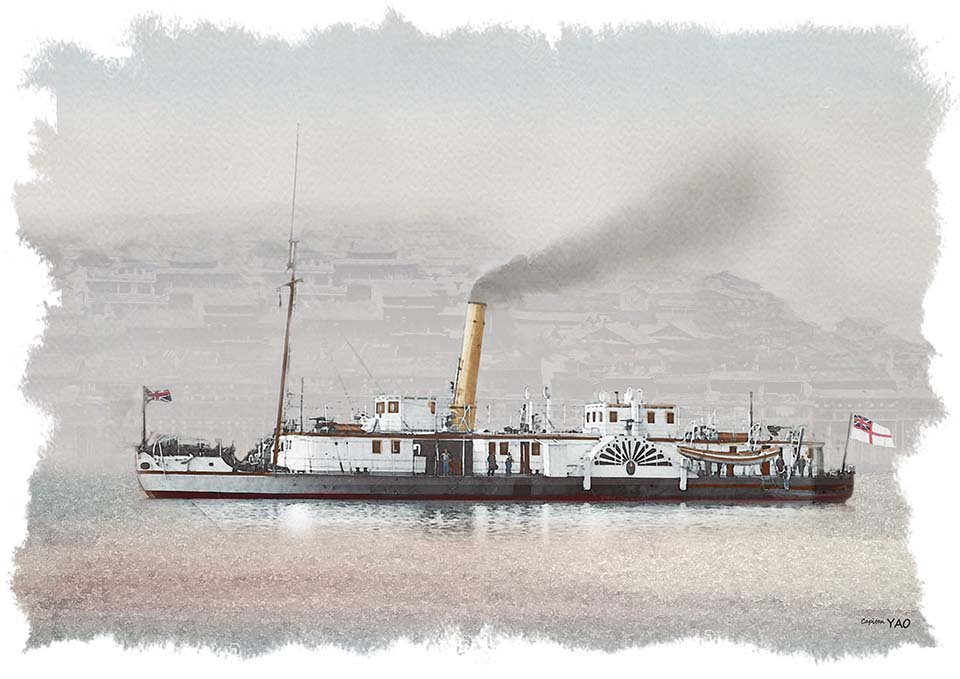
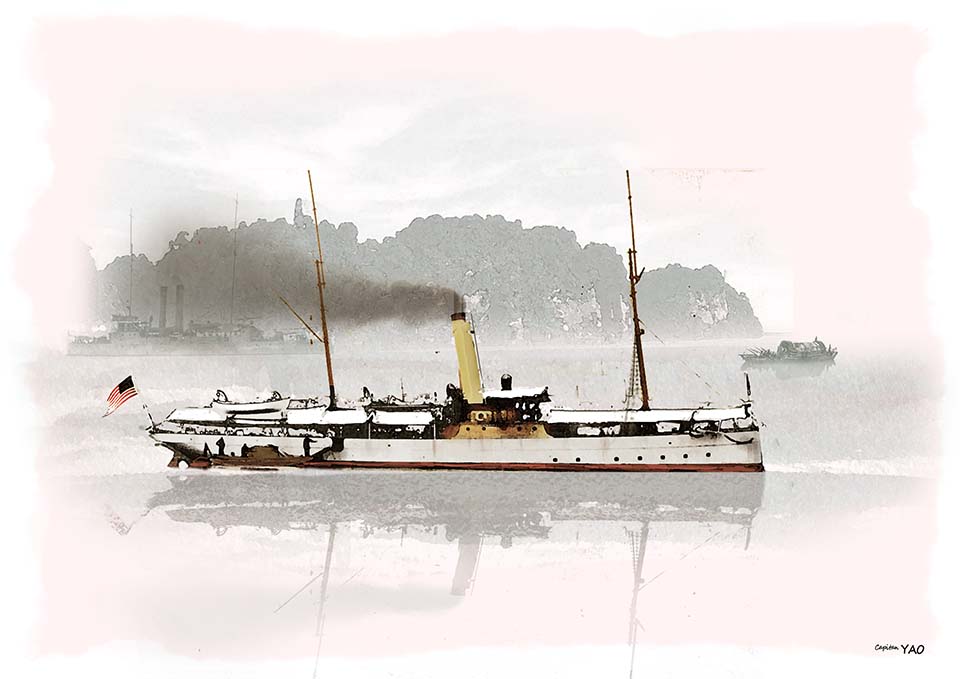
(Figure 2-5-7) The USS Helena, a US Navy gunboat, is on an inland waterway in Canton.
The Soviets provided money and effort, only to be betrayed in the end. No wonder the Chinese Communist Party always believed Chiang Kai-shek had stolen the fruits of the revolution, leading to a confrontation that lasted over 20 years until 1949 when the spoils were finally returned to their rightful owner. The most awkward figure in this situation was Soong Ching-ling. As Sun Yat-sen's wife, she was a strong supporter of the "alliance with the Soviet Union" policy, and therefore shared the Communist Party's view that Chiang Kai-shek had betrayed the revolution. However, Chiang also became her brother-in-law, making the sisterly relationship between Soong Mei-ling and Soong Ching-ling extremely delicate. My father commented on Soong Ching-ling, believing her to be too naive and romantic, far less shrewd than her sisters. He felt she was only used throughout her life because of her status as Sun Yat-sen's wife and the "Mother of the Nation." He considered her pro-Communist stance purely idealistic, as the Communist Party's atheism clashed with her family's values, leading to a distant relationship between Soong Ching-ling and her family. My father, on the other hand, held Chiang Kai-shek in higher regard, believing he had greater potential, though he couldn't have foreseen that China would become a communist country. At that time, the biggest point of conflict between China and the West was the so-called "unequal treaties." This issue was quite complex. My father tried to explain it, but I never fully understood it. However, there are a few key points that are relevant to my current situation, so I can briefly describe them. One is "concessions," and the other is "inland navigation rights." For example, Shamian Island, where I live in Kuangchow, was a British and French concession.
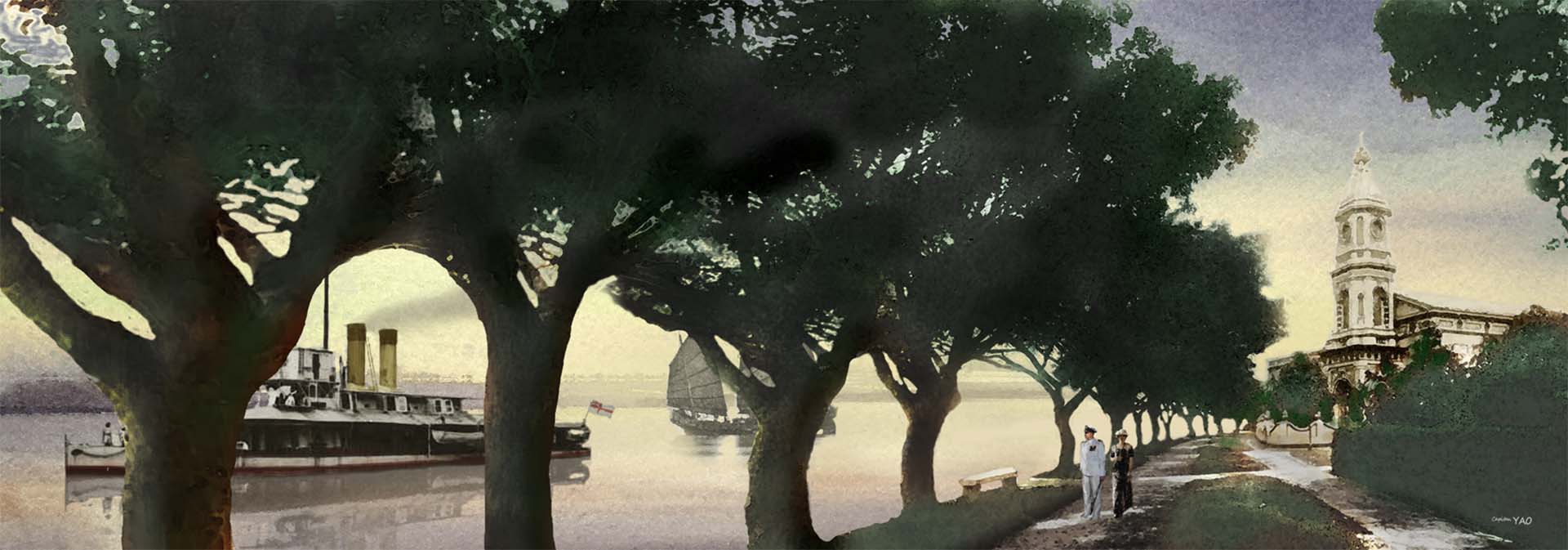
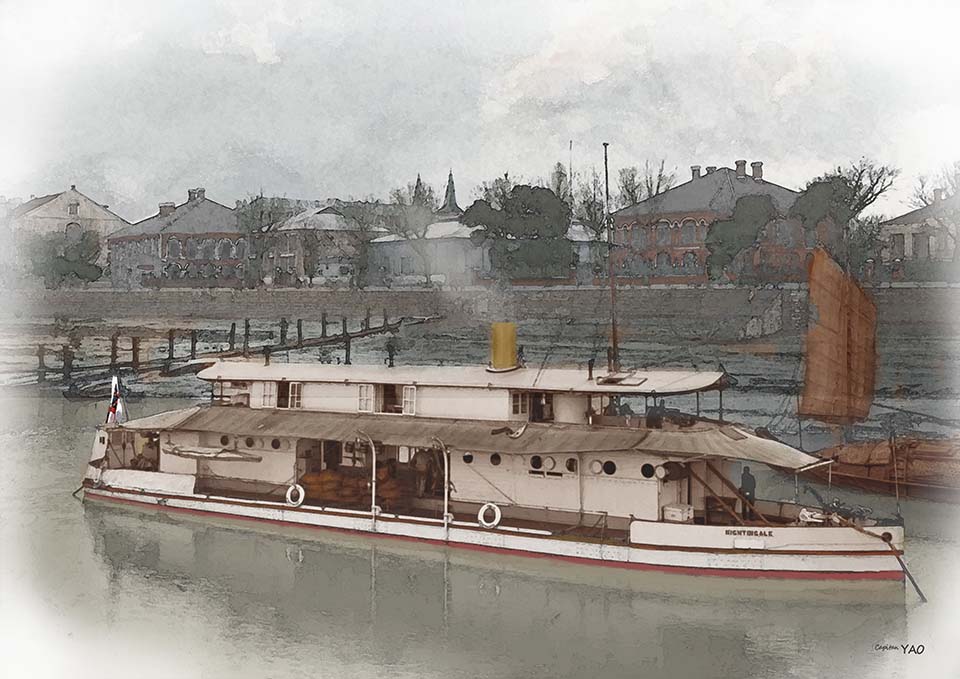
(Figure 2-5-8) The tree-lined avenue along the Pearl River in the British and French concessions of Shamian. The church behind it is "Shamian Church". The British naval river gunboat "HMS Moorhen" is moored on the Pearl River.
Secondly, there was the issue of "inland navigation rights." In principle, inland waterways are part of national territory, and foreigners should not be allowed to enter arbitrarily. Even after the signing of the Treaty of Nanking in 1842, Britain adhered to this principle. However, traditional Chinese inland waterway shipping was extremely inefficient, with low capacity, slow speed, frequent accidents, and rampant piracy. As a result, the trade promised by the treaty could not be realized because goods could not be transported out of the country. The West demanded the use of steamships, but the Chinese government did not allow Chinese to own steamships. Ultimately, foreign shipping companies had to act as intermediaries, creating the abnormal situation where Chinese people could not operate shipping on their own inland waterways. Consequently, many Chinese secretly purchased steamships and registered them under the banner of foreign shipping companies. Therefore, while it appeared that foreign ships were ubiquitous on Chinese inland waterways, many of them were actually owned by Chinese merchants.
The term "inland navigation rights" later gave rise to "gunboat diplomacy." The problem stemmed from the Boxer Rebellion of 1900. Due to the siege of the Legation Quarter in Peking by mobs and Ch'ing troops, which cut off all communication routes between Tiantsin and Peking, the Legation Quarter, which had held out for 55 days, would have inevitably fallen if the Eight-Nation Alliance had not subsequently invaded Peking, and thousands of foreigners would have been killed. Based on this painful lesson, the treaty specifically stipulated the deployment of railway protection teams along the railway lines and shallow-water gunboats patrolling the inland waterways to protect foreign property and personal safety and prevent a recurrence of the incident. For example, the Japanese railway protection team that stationed 15 men per kilometer along the South Manchurian Railway later became known as the "Kwantung Army," but it was not nearly as powerful as China portrayed during the Mukden Incident.
As for inland waterway patrols, this was originally the responsibility of the Chinese government, but they were unable to undertake it, so foreign intervention was necessary. Although these gunboats were dispatched by the navy, their mission was more like that of a water police force. This problem was related to the poor infrastructure in inland China. Many places were only 100 kilometers apart as the crow flies, which could be reached in a few hours by rail or road. However, most of China's inland transportation relied on river transport, which was limited by the winding terrain and the slow speed of boats, often taking a week or even longer. In addition, many bandits hid in the harbors along the way, making the river gunboat fleets constantly on the move. With the anti-foreign movement that began in 1926, Westerners in various places basically had to rely on these gunboats for protection, boarding them for refuge in emergencies or relocating to safer places like Shanghai.
Navies of various countries initially lacked shallow-draft river gunboats for inland waterways. Therefore, they either used coastal patrol gunboats as substitutes—for example, the US Navy used small Spanish vessels captured in the Philippines—or converted riverboats, as was the case with Britain and Germany. Only later did they begin to build specially designed vessels. These shallow-draft river gunboats are closely related to my future career in China, so I will explain them here first.
|