2. Chinese Mercenaries
On March 25th, the "Chenhai" quietly departed from Tsingtao Port. The entire ship was under light control. Korniloff and I hid in the cabin, drinking tea and chatting. The Russian way of drinking tea, which involves scooping a large spoonful of jam into the teacup and stirring it, struck me as quite cloying. However, Commander Shen had specifically ordered Korniloff to forbid drinking alcohol before missions and designated me to supervise this, so I had no choice but to keep him company while he drank tea.
"Hey! Lieutenant Commander Korniloff , are you the one who planned to rescue the Tsar from St. Petersburg by seaplane back then?"
"Huh! How did you know about this?" Korniloff jumped out of bed, staring at me with wide eyes. "But His Majesty refused to leave, and in the end only took an Englishman and his child with him..."
"I am that child!"
Korniloff paused for a moment, then suddenly slapped his forehead and exclaimed, "That's right! It's Sir Draken! I remember now! No wonder your surname is Draken, how come I didn't think of that?" He then burst into tears, "What a pity we failed! It caused such a terrible death for the Emperor's family! For the past ten years, I've been repenting every day; it's all my fault!..."
A burly man bursting into tears in front of me startled me, and I finally calmed him down by secretly giving him a few sips of vodka.
Then we talked about the royal family, the revolution, and the Communist Party. Korniloff whispered, "There are Red Party spies everywhere in the north now. You'd better be careful!"
"Red Party? What's the Red Party?"
"The Red Party was a Soviet-backed regime in southern China that called itself a revolutionary army but was actually an atheistic and devilish organization..."
"Really? I went there a few years ago!"
"Hmph! Anything supported by the Communist Party is no good!" Korniloff said, slamming down his teacup and standing up. He seemed to be a staunch royalist.
It was later learned that the Chenhai ship was not discovered by the Communists when it set sail. Instead, the Haichi and Yung Shiang, which set sail from Yantai and Tsingtao respectively the next day, were reported to the Shanghai Revolutionary Army Headquarters by Southern spies who had infiltrated the local telegraph office. However, due to the loss of discipline in the Revolutionary Army after occupying Nanking the previous day, which resulted in over a thousand casualties from being bombarded by British and American warships, the headquarters was in chaos and failed to pass on this important intelligence to the Fu-chien Navy, thus creating a favorable opportunity for the Northeast Navy.
(Figure 2-2-1) Foreign warships bombard the revolutionary army during the Nanjing Uprising.
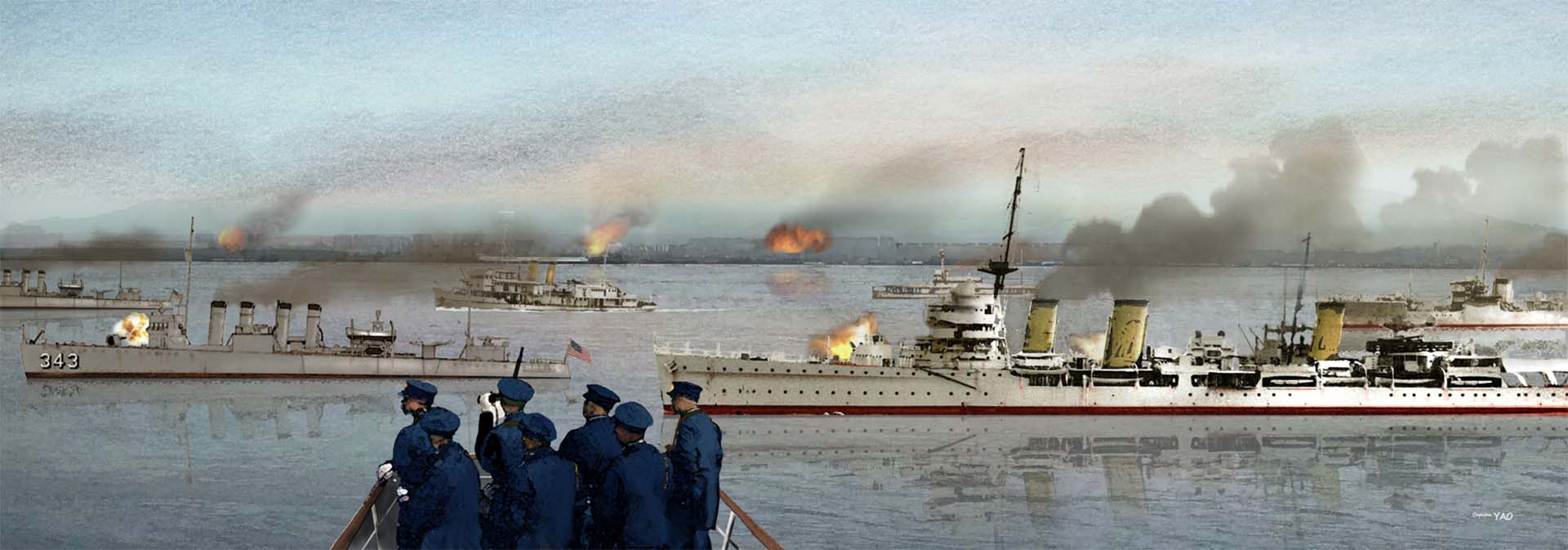
(Figure 2-2-1) Foreign warships bombard the revolutionary army during the Nanking Uprising.
Among the major powers, the United States reacted most actively, viewing the incident as a repeat of the Boxer Rebellion in Peking twenty-seven years earlier, and advocating for a large-scale military intervention by various countries. Japan also dispatched several destroyers to anchor on the Yangtze River near Nanking, but remained on the sidelines. Japan was already observing whether Chiang Kai-shek could lead a Chinese regime capable of serving as a buffer zone between Japan and the Soviet Union, and therefore wanted to give Chiang some room to maneuver. This judgment later proved correct, as Chiang Kai-shek sided with the West the following month and, in turn, purged communist elements within the revolutionary army. The situation was extremely chaotic. The Ministry of Foreign Affairs hoped my father would go to China to assist, but time was of the essence. Since I was traveling in China at the time, they telegraphed me in Peking. My father had kept me by his side as his assistant for the past few years and had some confidence in my abilities. However, because I was currently in the hands of the Northeast Navy, he missed the telegram and did not respond. My father then sent another telegram to the British intelligence unit in Shanghai, which later played a role in Chiang Kai-shek's change of stance.

At midnight on the 26th, the ships "Chenhai" and "Haichi" met at sea and entered the Yangtze River. Taking advantage of the high tide, they rushed past the shallows at the mouth of the Huangpu River. The "Chenhai" anchored next to the oil tanks of Taikoo Company, while everyone watched the "Haichi" continue to surge upstream. Korniloff and I were already dressed in our flight gear on the deck, waiting for the sailors to hoist two seaplanes from the stern deck onto the river. At this time, it was still dark, with only a faint glimmer of dawn appearing in the east, but it was enough for us to make all the necessary preparations for takeoff.
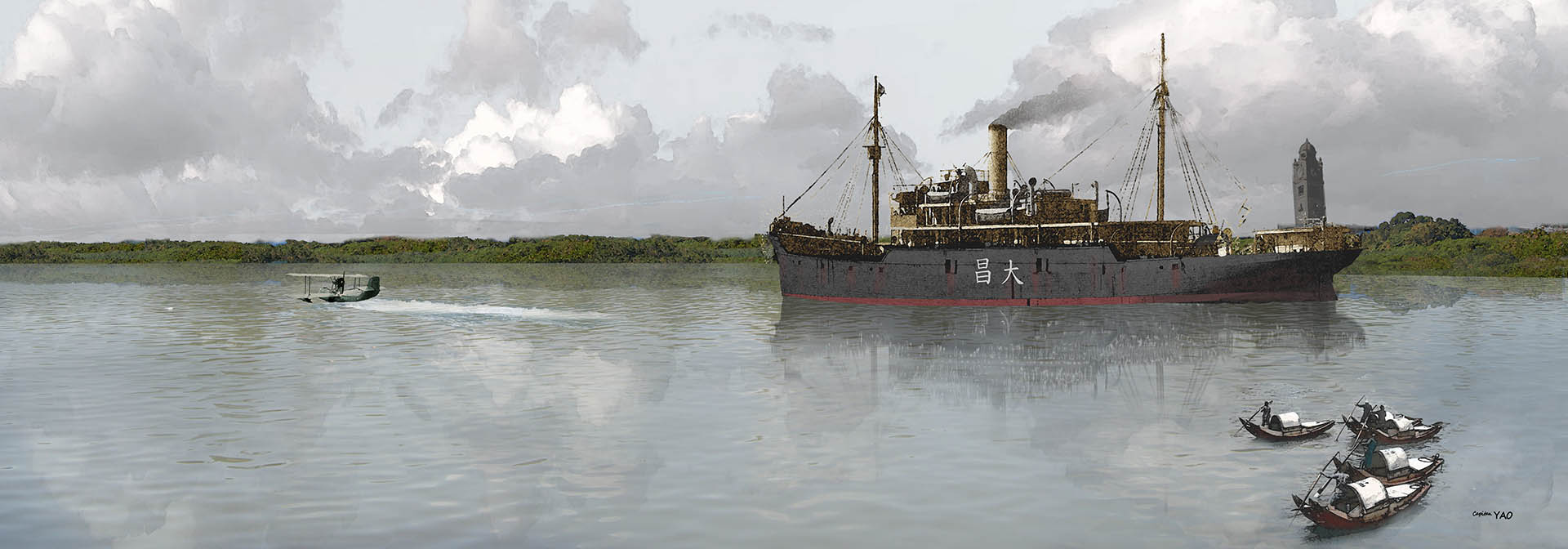
(Figure 2-2-2) The seaplane carrier "Chenhai" releases two seaplanes at the outlet of the Huangpu River in preparation for an air raid on Shanghai.
Both planes started their engines, the whirring sound echoing across the river in the early morning. Once the engines had warmed up to the required temperature, Korniloff gestured and began gliding on the water. I quickly followed. After gliding only a few hundred yards, Korniloff noticed his engine starting to spin erratically and emitting black smoke. Finally, it stalled and came to a stop on the river. I was immediately at a loss, unsure whether to take off. Just then, a signal came from the ship urging me to take off immediately. I gritted my teeth, floored the throttle, and the plane quickly gained buoyancy, lifted off the water, and took off. I, who was supposed to be a supporting character, had now become the star! My assigned target was the Kiangnan Shipyard at Gaochangmiao in Shanghai. This large target on the riverbank was easy to find, but dropping the four 50-pound bombs on a truly valuable target was difficult. Partly because the aircraft lacked advanced targeting equipment, and partly because my skills were too inexperienced, I didn't achieve any concrete results. However, because this was the first time Shanghai had been attacked by air, and the enemy didn't even know where the planes were coming from, it created a significant psychological shock. I could clearly see the crowds on the ground running around in panic like headless flies, with absolutely no anti-aircraft fire to retaliate.
In fact, if torpedoes had been used in this attack, they could have caused far greater damage to the enemy ships. However, China doesn't seem to have the capability for aerial torpedoes yet, and the Huangpu River appears too shallow; the torpedoes might have sunk into the sandy riverbed. But technical issues related to equipment can always be resolved. Eventually, it will be possible to use aircraft to penetrate deep into enemy naval ports, launch a surprise attack, and completely annihilate the anchored fleet—something a combat fleet could never achieve.
After the bombing, I flew around the Huangpu River in front of the Bund as planned to demonstrate before returning to the aircraft carrier. At that moment, I suddenly remembered Captain Yamamoto, whom I had met in the United States. Now I could confidently tell him, "This is no longer just theory; I did it!"
I flew back to the Chenhai and had the sailors hoist the plane up. Korniloff , looking ashen-faced, greeted me on the deck. After shaking hands, he went into the cabin without saying a word. The Chenhai immediately weighed anchor and headed downstream to return to port.
Just then, an enemy warship approached. Displacing about two thousand tons, its complex rigging indicated it was a dual-purpose ship, with all its main guns mounted on the sides. It appeared to be a very old French-style vessel. I heard an officer on the bridge shout, "Chipo!Chipo!"
I asked the sailor next to me, "Who is Chipo?"
The sailor replied, "Chipo is the training cruiser Tungchi! Most of the officers trained on that ship when they were students."
At that moment, Chenhai raised a signal flag to signal her to surrender, and I saw that a white flag was immediately raised on the mainmast of Tungchi.
"Wow! surrendered so quickly?"
As I was wondering what was going on, the sailor standing next to me at the 7.5mm gun position showed no sign of letting up. He whispered to me, "Look at how we Chinese fight in naval battles."
Suddenly, the Tunchi opened fire and sped away. The sailors immediately returned fire, hitting the Tungchi. However, because the cannon was a hastily installed field gun, it caused little damage. The Tungchi quickly moved out of range, and the Chenhai was unharmed. At this moment, the flagship Haichi rushed down from upstream and passed by the Tungchi but did not pay it any attention. The two ships quickly met and prepared to leave the Huangpu River.
At that moment, a buzzing sound came from the sky. Looking up, three enemy planes were chasing after them. They seemed to be French-made Nieuport aircraft. The Haichi opened fire fiercely on the air. The lead plane was hit and crashed into the reeds by the river. A cheer broke out on the ship. The other two planes probably did not dare to provoke the Haichi and instead attacked the Chenhai ship, whose air defenses seemed weaker.
Although the "Chenhai" was not equipped with dedicated anti-aircraft guns, this issue had been considered before departure, and a squad of infantry from the naval training camp had been stationed on board. As soon as the aircraft approached, they fired rifles, light machine guns, and mortars indiscriminately into the sky. The gunnery officer, Zhao Erhu, even stood on the bridge atop his pistol, gesturing as if to fire, which was quite intimidating. Seeing this, the enemy aircraft dared not approach, dropping their bombs from a distance before flying away. The "Chenhai" thus successfully sailed out of the Yangtze River and reached the open sea.
Suddenly, the gunboat turned and headed towards the shallow waters near the shore, clearly taking advantage of the Haichi's deep draft and refusing to enter. The Haichi and Chenhai, not to be outdone, immediately opened fire. I clearly saw the 4.7-inch secondary gun on the Haichi's side hit her hull and cause a violent explosion in the cabin. At that moment, her two anchors on the bow suddenly fell into the water automatically, and the ship immediately slowed down and came to a stop.
(Figure 2-2-4) The "Haichi" cruiser captured the "Kiangli" gunboat of Fukien Navy in the waters off Zhejiang.
The "Haichi dispatched a small boat carrying a capture team to board the gunboat, disarm her, and ordered her to follow the "Haichi." The flagship also sent a signal for me to report to the "Haichi immediately, as Commander Shen wanted to see me. So I boarded the "Haichi in a small boat. Commander Shen saw me and offered me words of encouragement, then ordered me to stay on the flagship.
So the Chenhai went first, the warships followed in the middle, and the Haichi brought up the rear, all sailing back to Tsingtao together. It was only then that I learned from the name engraved on both sides of the stern of the captured warship that it was the Kiangli, a shallow-water river gunboat built in Japan during the Ch'ing Dynasty.
The flagship was filled with a jubilant atmosphere of victory. According to the ship's officers, after the "Haichi" and "Chenhai" parted ways, they sailed directly up to the Yangshupu River and found the Fu-chien Navy's cruisers "Haichou" and "Yingrui" anchored there. However, a British aircraft carrier was anchored next to the "Yingswui". Commander Shen was afraid that the guns might miss and hit the British ship, causing an international dispute. So he changed his target to the "Haichi" and ordered a full-scale bombardment with the 8-inch main guns and the side guns. This old German-made cruiser, which was of the same class as the Northeast Navy's "Haichen", was completely unprepared at the time. After hearing the gunfire, the sailors hurriedly took their positions, but it was too late.
At a distance of nearly two thousand yards, being bombarded by the heavy guns of a giant ship like the Haichi would have undoubtedly meant the end for the Haichou. However, perhaps due to the aging of its ammunition, many of the penetrating plates failed to detonate, allowing the Haichou to sink only due to leaks rather than disintegrate. Furthermore, the Haichi's observation decks on its fore and aft mainmasts were equipped with multiple one-pounder cannons and 7.9mm Mark II machine guns, which fired down on the Haichou's decks, causing heavy casualties. Even its lieutenant commander chief engineer was decapitated, with half his body falling into the bilge and dying.
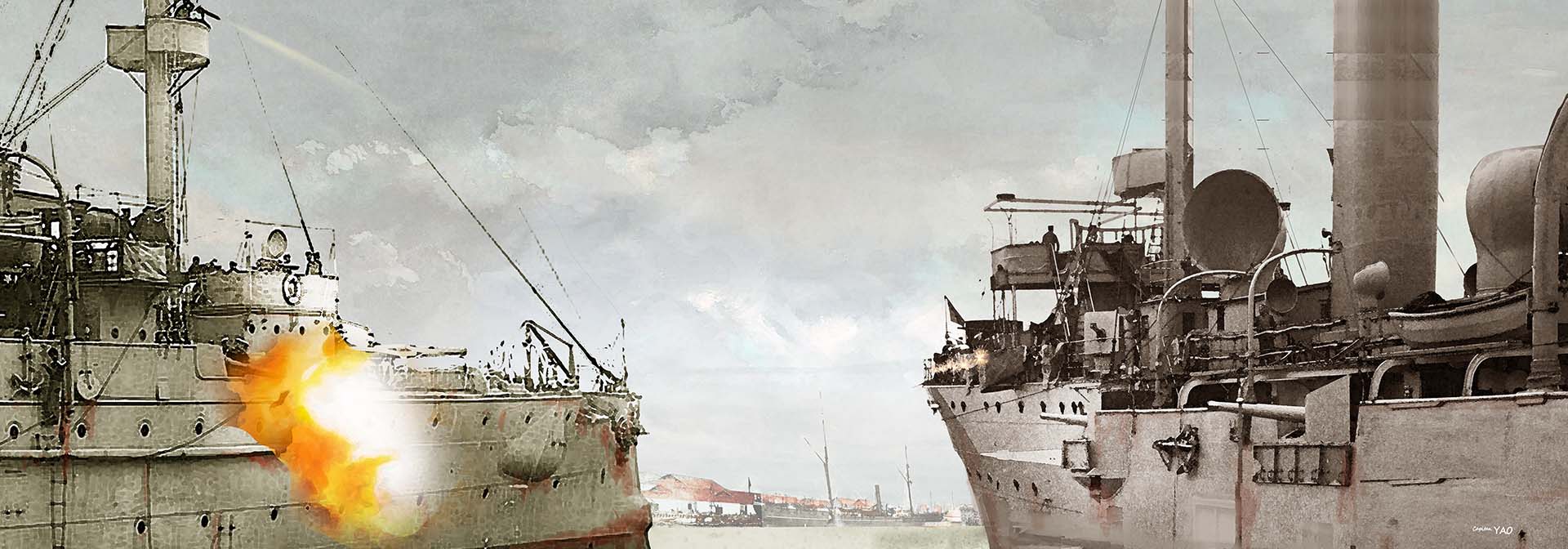
(Figure 2-2-5) The Fukien Navy's cruiser "Haichou" was sunk in the Huangpu River by the Northeast Navy's "Haichi".
The capture of the "Kiangli" gunboat outside Ningbo Port was even more outrageous. As soon as the Fujian sailors saw the "Haichi" ship appear, they all hid in the cabins. No one dared to come out to stand in the gun position. The captain immediately picked up a tablecloth from the official dining table and raised it as a white flag. However, because there were seven revolutionary army officers on board who were afraid of being captured and shot, they held guns and forced the captain to speed up and move to shallow water. But the ship was immediately hit by a cannon shot from the "Haiqi", which penetrated the hull and exploded in the cabin. At this moment, a sergeant major dropped both anchors without waiting for the captain's order, and the ship stopped immediately. When I was aboard the "Haichi" cruiser, I saw those seven officers locked up together, looking dejected. Commander Shen was very satisfied with the results, and the Marshal even sent a telegram announcing that the officers and men of both ships would receive an additional three months' pay as a reward!
hile aboard the "Haichi", one day after dinner, Commander Shen invited me for a walk on the aft deck. He inquired about my education, background, and family history, showing great interest in my unique Chinese origins. He also raised many questions about British naval aviation tactics. I felt that Commander Shen was a thoughtful and intelligent commander, but at the time I was young and lacked experience and knowledge, so I couldn't answer in great depth.
(Figure 2-2-6) Paul Draken and Shen Honglie talking on the aft deck of the "Haichi."
Admiral Shen said, "Speak!"
"You often talk about the Fu-chien-based navy, but I don't know much about it. Could you please explain what the Fukien-based navy is?"
"Hahaha! Good question!" General Shen seemed to have anticipated my question and said confidently, "Min refers to Fukien, or more precisely, the Fuzhou area in northern Fujian. In the late Qing Dynasty, ministers such as Zuo Zongtang and Shen Baozhen advocated the establishment of a modern navy. A shipyard and naval academy were established in Mawei, Foochow. Due to its geographical advantage, most of the naval officers and soldiers at that time were from northern Fukien. This was the beginning of the Min faction."
"It's normal for any country's navy to have a higher proportion of its population in a particular region, right?"
"That's right! When the Japanese Navy was first established, most of its officers and men came from Kagoshima, which is understandable," General Shen said. "But after sixty years, this proportion has not only failed to balance out but has actually increased, which is abnormal. You know, the population of northern Fujian only accounts for one percent of the total population of China, but in the navy, they account for eighty or ninety percent of it, and all the high-ranking officers are from northern Fu-chien. In their navy, they only speak Foochow dialect, and people from other provinces simply cannot survive. What's even more infuriating is that, due to historical factors, they actually call themselves the Central Navy and treat us all as local warlords? ... I came to join you, Admiral, because I disdain associating with these Foochow people, hoping to create a new situation and establish a navy that truly represents all of China, not just the people of Foochow!" Admiral Shen's tone became increasingly indignant as he spoke.
"Then, could you compare the differences in quality between the Fuchien-based navy and the Northeast Navy?" I asked curiously.
"The Fuzhou Mawei Naval Academy provides a British-style education, producing officers who are all very knowledgeable, each resembling an English gentleman, with impeccably tailored uniforms and gleaming brass plating. However, in actual combat, they lack everything in terms of combat skills, tactics, courage, and boldness. How can they be considered soldiers? Just look at how we captured the Kiangli!" Admiral Shen said. "But our Northeast Navy is different. I studied naval affairs in Japan in my early years, so my standards are as strict as those of Japanese soldiers. Officers trained in the Northeast may not be as knowledgeable as those from Mawei, but when it comes to fighting, those Foochow guys are no match for us!"
Admiral Shen continued, "The morale and discipline of the Fu-chien-based navy are also very poor. They'll side with whoever pays them, they have no integrity whatsoever, which naturally makes them despised by their subordinates! Our ship originally belonged to the Fu-chien-based navy. The veteran sergeants on board, whom we collectively call 'chiefs,' control the soldiers and formed a gang. Officers can't command them without going through them, and they even often threaten officers to obey them. There's absolutely no military discipline!"
"How could such a thing happen?" I asked in surprise.
"Let me tell you a story," Shen said. "This ship used to have a Boatswain named Tian Chi, who was one of those kinds of men. Once, he ordered a sailor to steal the captain's shoes while he was sleeping as a show of force, implying that he could kill the captain at any time if he disobeyed. The captain couldn't do anything about it." Admiral Shen continued, "As soon as I took over the Haiqi, I arrested Tian Chi, stuffed him into a sack with stones, and sent a tugboat to take him to the waters off Laoshan and throw him into the sea to feed the fish. From then on, no one dared to disobey!"
I was speechless, utterly astonished by the Chinese method of using violence to combat violence. The nights at sea were still very cold at the end of March. I bid farewell to Admiral Shen and returned to my cabin to brood. I had learned another lesson about China, a lesson that left a very deep impression on me.
Back in Tsingtao, we had just anchored when we saw a small gunboat approaching from the shore. Everyone on board tensed up and ran around the boat. I grabbed a sergeant and asked him, "What's the matter that's so tense?" "Didn't you see that gunboat, the "Haiyan"? That's the Young Marshal's yacht, so it must be him coming. I think even the Old Marshal might come. Kid, you've done a great service in this battle; they'll definitely come to summon you and reward you! But I think Deputy Captain Korniloff is probably finished this time!" I was taken aback. At that moment, I saw the small boat of "Chenhai" already moored to the side of the ship. Korniloff was escorted onto "Haichi" by the captain and two gunners with his hands cuffed behind his back. When our eyes met, he deliberately turned his head to the other side to look at the open sea.
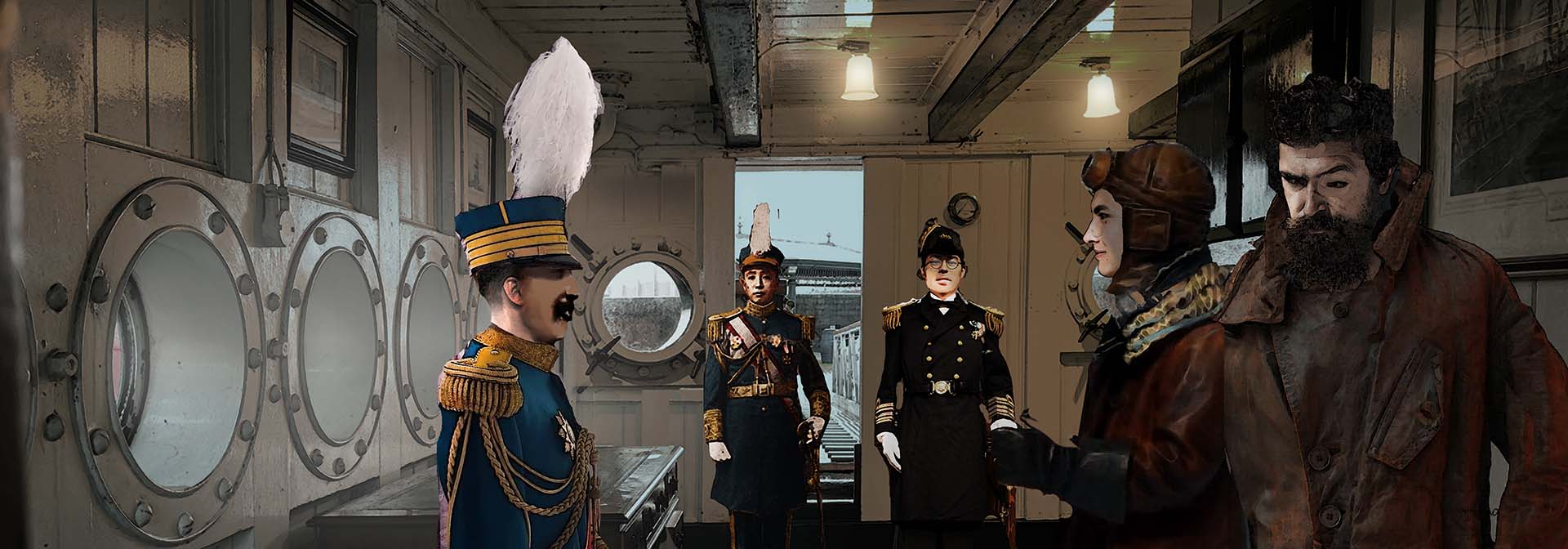
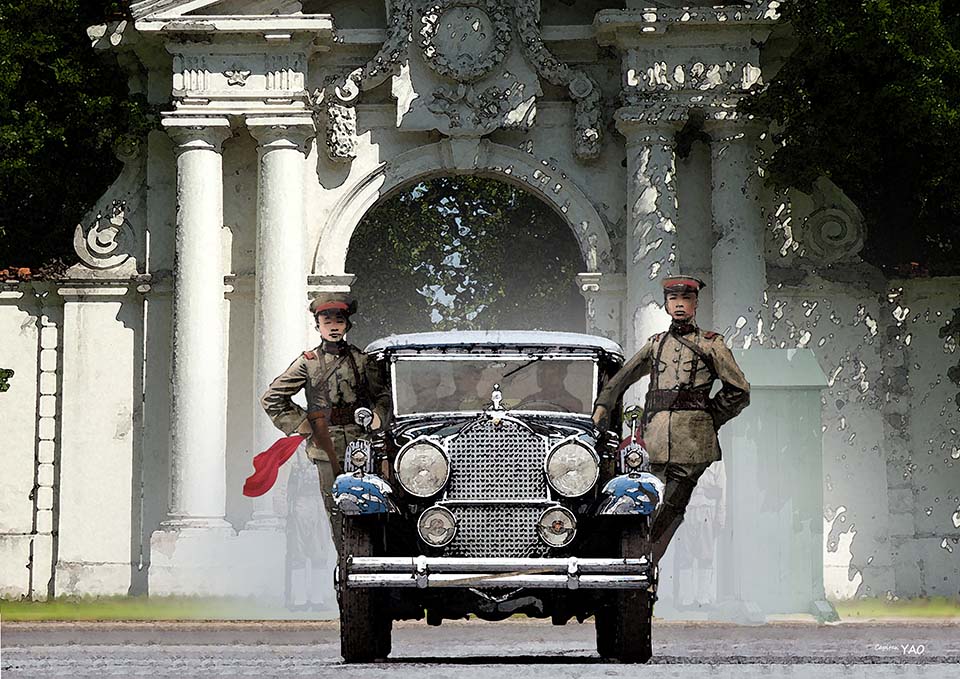
(Figure 2-2-7) Chang Zuolin and Chang Hsueh-Liang boarded the "Haichi" warship to reward the Northeast Navy for their southward surprise attack.
"Good lad! What's your name?" Commander Shen, who was standing to the side, stepped forward and said, "Reporting, Commander! He is British, named Paul Draken!" I replied, "My name is Paul Draken; "Draken" in Chinese is "Long"!" The old marshal said, "Long"? That's great! Wouldn't 'Long Paul' sound impressive?" Those around him immediately chimed in, "The commander-in-chief has a great name!" "Good! Good! Paul Long, I'll definitely reward you handsomely later!" He then turned to Korniloff and said, "Vice Captain Korniloff , what tricks are you playing, you Russian swindler? I've spent so much money raising a bunch of useless trash, and now that I really need you, you're all useless! You son of a bitch, drag him out and shoot him!" Seeing that things were going badly, I immediately pleaded for Khonirov: "Reporting to the Commander! This can't be entirely blamed on Deputy Captain Korniloff . It was due to mechanical failure. If Deputy Captain Korniloff had wings, I believe he would have taken off to fight the enemy immediately, but he's not a bird..." In my haste, and because my Chinese wasn't fluent enough, I was speechless and couldn't understand a word. "Korniloff is a bird? Hahaha!" The old Marshal laughed so hard the two gold epaulets on his shoulders trembled. I thought everything was over, but then he turned around, his face darkening, and said, "Even if he's a bird, he'll still be shot!" I wanted to continue arguing, but when I saw the young marshal standing behind the general making a gesture to silence me, I had no choice but to swallow back the words that were on the tip of my tongue. The young marshal said to the old marshal, "You don't need to worry about this, I'll handle it. In a few days, Inspector Zhang is going to execute someone, I think we should do it together and make it more interesting!" The old marshal nodded and said, "Good! Let's do it the way you suggested, in a grand manner! As for Paul Long, he'll be rewarded with five thousand pounds and promoted to lieutenant colonel to take over as deputy squadron leader!" Then, surrounded by his guards, he swaggered away. I really wanted to yell after the old marshal, "Hey! I'm na ensign in the Royal Navy, not some lieutenant colonel or deputy squadron commander!" But the words caught in my throat. I thought to myself, if I don't play along now, what if the old Marshal gets rid of both me and Korniloff? Wouldn't that be even more ridiculous!
On the morning of April 5th, I visited Korniloff in his cell. He was in relatively good spirits. I had intended to arrange for an Orthodox priest to perform his final religious rites, but he declined. A large crowd had already gathered at the Tsingtao naval dockyard that morning. The "Commander-in-Chief Zhang" mentioned by the Young Marshal, namely Zhang Zongchang, had already arrived with his White Russian guards, escorting two prisoners. Curious, I asked the surrounding crowd who these two men were, who were to be executed. "It's Bi Shucheng, the commander of the Bohai Fleet under General Zhang Zongchang (known for his dog meat business), and his bodyguard Ma Wenlong!" "Why was he executed?" I asked curiously. In Britain, the execution of a fleet commander was huge news. "What reason do these warlords need to execute someone? But this guy Bi does have a crime to his name. Governor Zhang sent him to Shanghai to resist the revolutionary army as the commander of the Eighth Army and the Bohai Fleet. Once in Shanghai, this guy was bought off by Chiang Kai-shek. He spent his days indulging in pleasure and neglecting his duties. When the revolutionary army entered Shanghai, he simply fled back to Tsingtao. Wu Zhixin, who wanted to take his place, secretly impeached him for his crimes. Governor Zhang cursed him, and it was no wonder that Commander Bi was going to get shot!" Then a bugle call sounded, and Chang Hsueh-Liang's guards escorted Korniloff in from another direction. After exchanging a briefing, Zhang Zongchang's side began. A group of executioners picked up their rifles and fired wildly. Bi Shucheng and Ma Wenlong were riddled with bullets and fell to the ground dead before they could even utter a sound. Zhang Zongchang walked up, kicked the corpses a few times with his big boots, and spat on them. Only after confirming that they were dead did he leave the scene with satisfaction. Zhang Zongchang's firing squad was about to carry out Korniloff's execution by firing squad when Chang Hsueh-Liang's adjutant suddenly stepped forward and announced, "Our own people should be dealt with by ourselves!" The guards then surrounded him, drew their pistols, and fired several shots at close range. Korniloff fell to the ground, and the guards immediately carried his body away, and the crowd gradually dispersed. I remained at the scene for a long time, unable to come to my senses. My God! What kind of country is this where human life is so worthless? Even killing a high-ranking official is so easy. I can never forget Korniloff, who died in a foreign land. He was a really good friend, but at the time I had no idea that things would take such a dramatic turn.
The old Marshal specially sent his tailor to make me a uniform, including a magnificent dress with a tuft of chicken feathers on the top of the military cap. He also sent a new adjutant, driver, guards and orderly. I was not used to being served by so many people, but I had to accept it. I guessed they were probably there to keep an eye on me so that I wouldn't take the opportunity to escape!
The Northeast Navy's seaplane squadron consisted of eight French-made seaplanes, stationed at bases in Tsingtao, Huludao, and Changshan Island, as well as aboard the seaplane carrier "Chenhai." The Chinese squadron leader, Colonel Wang, was a former army officer and couldn't fly; the actual command was held by the deputy squadron leader. There was also a lieutenant colonel named Bankov, the chief mechanic, who was also White Russian. My job was to train Chinese pilots and lead the squadron into combat during missions. The work was relatively easy, but the pay was excellent, especially considering China's extremely low cost of living; I could practically live like a "Petty Warlord".
After I took over, I suggested strengthening the training of attacking enemy ships at sea. Based on the experience in Shanghai, torpedoes are the best weapon, but the Northeast Navy did not have air-launched torpedoes, so it could only look on with envy. When I received intelligence that the Foochow Arsenal of the Fukien Navy had begun to manufacture two "D" type seaplanes that could carry torpedoes, I was naturally very anxious. So when the Young Marshal came to inspect the team, I asked him to urgently purchase this equipment.
The Young Marshal Chang Hsueh-Liang loved flying. He often came to the base to discuss flying techniques with me, and sometimes we would practice flying together. Our similar ages made us good friends quickly. Actually, for a pilot, if he really wanted to escape, he could have flown away at any time. I didn't have any relatives here to hold me hostage, so the Marshal couldn't really hold me back. One of the reasons he let me stay here was probably because I had made friends with Chang Hsueh-Liang .
In the squadron, there was another very talented Chinese pilot named Song Feihu. He was only 18 years old, and with just a little guidance from me, he quickly grasped the techniques. In just a few weeks, he was able to practice some simple formation aerobatic maneuvers. In addition, Gao Zhihang, an instructor from the Northeast Air Force Flight School, often came to exchange flying skills. He had just returned from graduating from the French East Flight School and was nicknamed "Gao Delong" because of his exceptional skill flying the French-made Caudron trainer aircraft! We were all close in age and shared similar interests, and we quickly became close friends.
In late May, news came from France that American Charles Lindbergh had single-handedly piloted a plane named "Spirit of Saint-Louis" across the Atlantic Ocean, landing at Le Bourget Airport near Paris, making headlines worldwide. I felt a deep sense of loss: "Alas! World aviation records keep being broken, yet I'm stuck in a corner of the Far East coast helping the Chinese fight a civil war!"
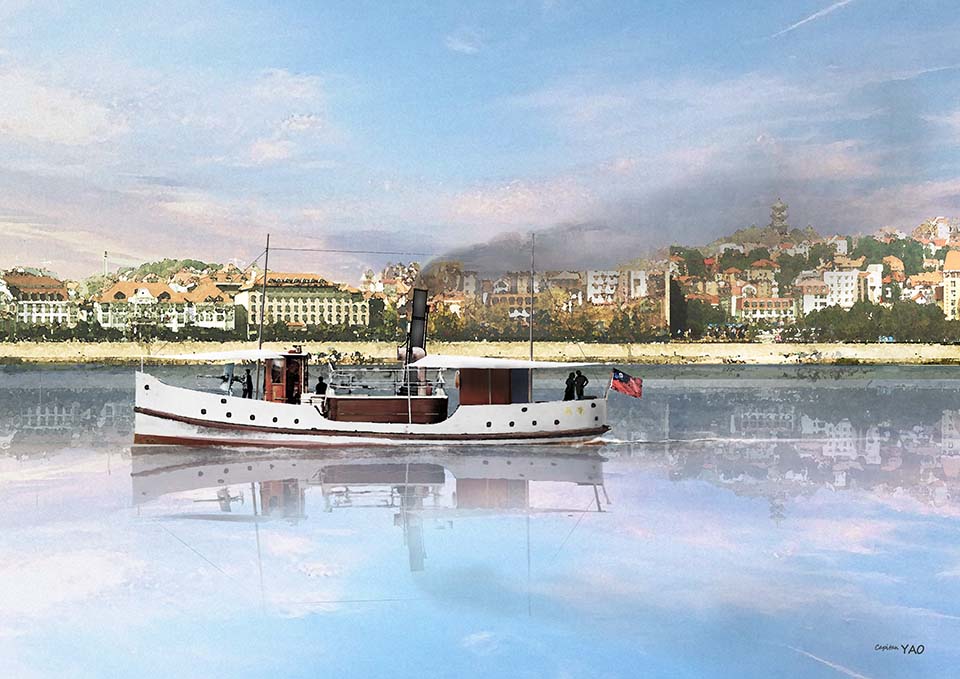
In the early summer of that year, Chang Hsueh-Liang invited me to go out to sea on his yacht, the "Haiyan". It was a small, wooden-hulled gunboat of more than 200 tons, built by the Tagu Shipyard and ten years old. Its main engine was a 250-horsepower steam engine, and its speed was only 9 knots. It was equipped with a 3.7mm cannon on each side and two Maxim machine guns on the bow. It was very small and cute in appearance. The interior of the "Haiyan" was very luxurious and comfortable, especially the cabin at the stern, which was the young marshal's bedroom. There was a large double brass bed, and the cabin was fully furnished with sofas, furniture, and carpets, just like a hotel. I remember that his concubine, Gu Ruiyu, and his half-brother, Chang Hsueh-si, were also on the trip that day. I remember he was only 11 years old at the time. As we sat on the deck of the submarine under the canopy, enjoying the cool air, Chang Hsueh-Liang told me about his life story and the rebellion of Guo Songling two years prior. It was then that I learned that Lin Huiyin's father, Lin Changmin, had been killed in that very incident. No wonder Mr. Liang Qichao hesitated to speak about Uncle Lin's death. Guo Songling, a graduate of the Japanese Military Academy, was a close friend and mentor to Chang Hsueh-Liang, someone he deeply respected. However, Guo Songling was arrogant and disdainful of others. He rebelled at the slightest provocation, almost succeeding in his rebellion; ultimately, he was defeated, and both he and his wife were executed, along with Lin Changmin. According to the commander who captured Guo Songling, "Execute him on the spot immediately. If we wait for the Young Marshal to arrive, this guy won't die!" Chang Hsueh-Liang was too late; by the time he arrived, Guo Songling and his wife had already passed away. He still deeply regrets this. I think the Young Marshal possessed considerable leadership charisma and was very loyal to his friends, but his excessive mercy towards his enemies might have been a fatal flaw in the future, especially since Guo Songling had rebelled against his father! Speaking of Chang Hsueh-Liang's wife, everyone in the army knows that Yu Fengzhi, who lives in the Marshal's Mansion in Mukden, was his first wife. Gu Ruiyu, on the other hand, had always followed him in the army. But when we were on the ship, Zhang Xueliang secretly told me that he was going to Beidaihe in a few days to meet a Miss Zhao. He said, "I have no regrets in my life, except for loving women!"
The "Haiyan" was sailing in Chiao-chou Bay . The early summer weather was sunny and bright, with a cool sea breeze that wasn't too stuffy—perfect for a boat trip. As a naval officer, the captain politely invited me to try sailing. Actually, I'd only ever brushed the deck of a training ship when I enlisted in Britain; I knew absolutely nothing about sailing. Fortunately, Chiao-chou Bay was calm, and the accompanying patrol boats had already driven the fishing boats away, so there were no difficulties.
While I was steering, I noticed Chang Hsueh-sistanding to the side, watching enviously:"Brother Draken! Being a captain is so cool!"
"Brother Draken flies airplanes only, I am a fake captain, but you can study in the navy and become a real captain!"
"What future is there in the navy in China? There are only a few ships..." Chang Hsueh-Liang walked over and interjected, "If you want to be a soldier, go study in the army! Which of the current prominent figures isn't from the army? Once you've seized power, you can appoint yourself as the commander-in-chief of the navy if you feel like it!"
That's true. I once saw Chang Hsueh-Liang inspecting the "Haichi" flagship wearing an all-white naval summer uniform. The photo is still hanging in the center of the "Haiyan"'s cabin!
"Yours is a fake navy guy too!"
Chang Hsueh-si pointed at the photo, finished speaking, and ran away in a flash, leaving Chang Hsueh-Liang with a livid face.
Chang Hsueh-si was such a person, always at odds with his powerful father and brothers. He was the only member of the Chang family to join the Communist Party, and after 1949 he even became the Chief of Staff of the People's Republic of China Navy.
|
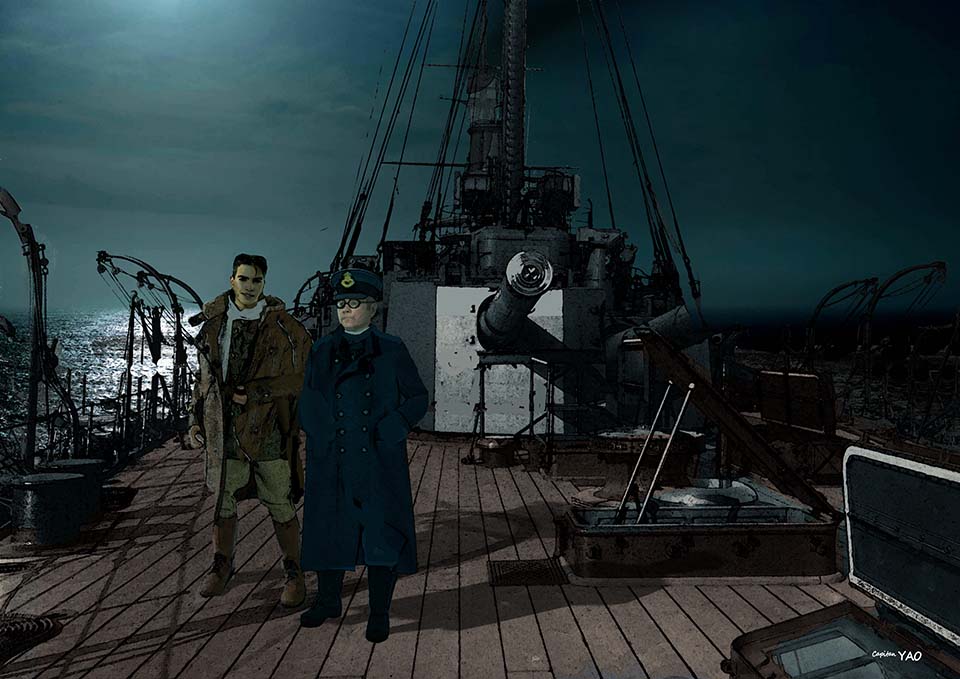
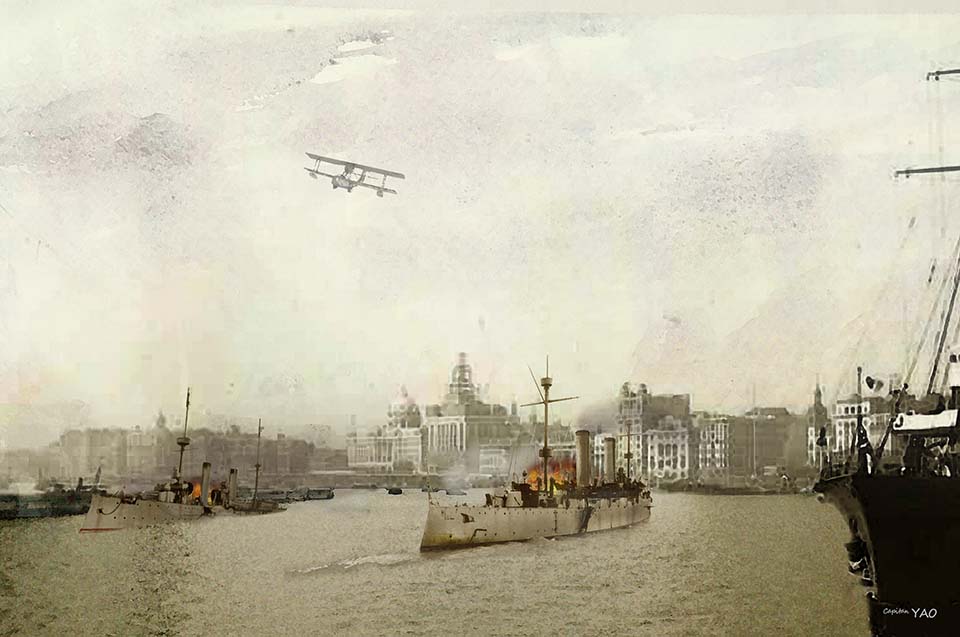 (Figure 2-2-3) Paul Draken pilots an air raid on Shanghai.