1. Kidnapping in Peking
In late September 1923, I returned to my home in England from the United States, and early the following year I entered aviation school to learn to fly. My dream of flying began when I boarded the "Rosamonde" with Soong Ching-ling in Kuangchow, and it became my obsession. Although my father hoped that I would go to Oxford University to study law and politics and then follow in his footsteps in the Foreign Office, I had already found my own interests and direction, and my father could only respect that.
I yearn for a career where I can soar freely without needing to interact with others. The flight training course lasts a year and a half, and most of the students are graduates of military academies who come to learn their profession. However, I entered directly because of my father's connections, so my future prospects in the military are somewhat unclear. But I don't care. As long as I can learn to fly, it doesn't matter if I can't get a military rank.
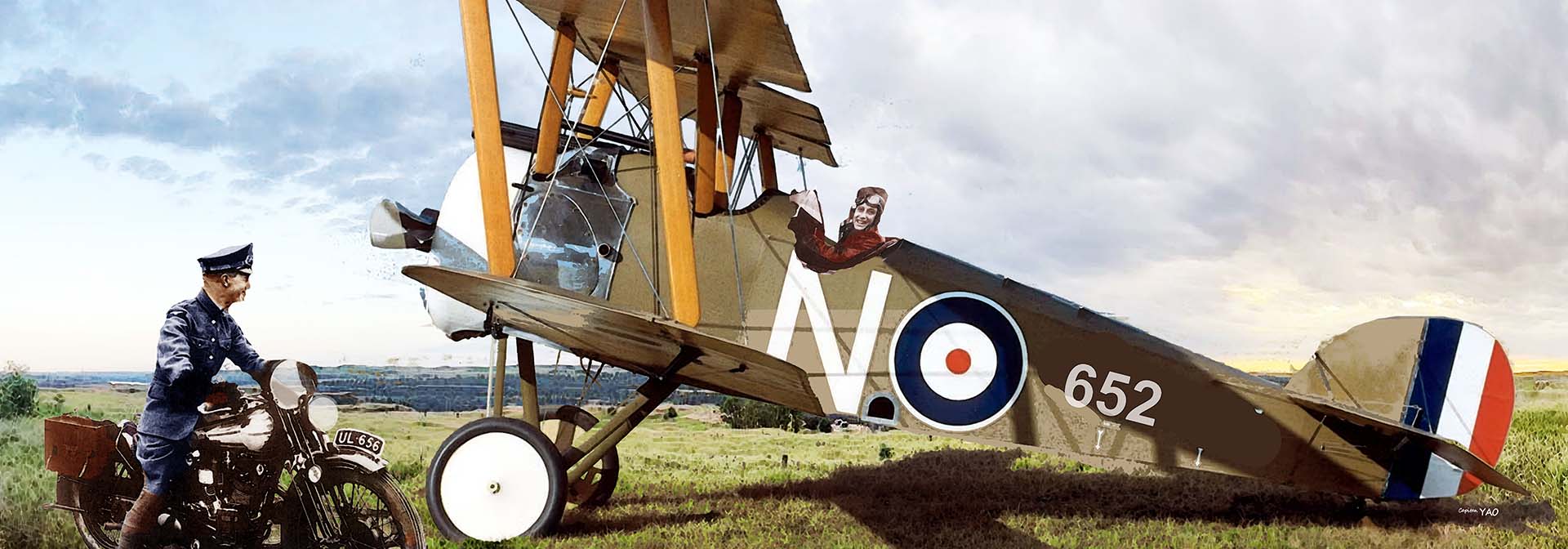
At the aviation training school, an Air Force sergeant named Thomas Shaw was in charge of our daily lives. He often transported students between the classrooms and the planes on a motorcycle. Sergeant Shaw was very knowledgeable, and the students loved to surround him with questions. He was particularly concerned about me and, near graduation, suggested I join the Navy as a pilot, guaranteeing me a formal officer position with the Admiralty. At the time, I had no idea about this, but I took his advice anyway. Most of my classmates joined the newly formed Air Force, and not many went to the Navy, because they thought the Royal Navy was too conservative and not as glamorous as the Air Force.

After graduating from aviation training school at the end of 1926, I planned to continue my studies at the Royal Naval College in Greenwich. Since I had decided to pursue a career in the Navy, this was a necessary qualification for future promotions. Before that, I had a rare vacation and thought I should take advantage of it to go on a trip and then return to serve in the Royal Navy. Little did I know that this trip to China would last for three years, and my whole life would take a dramatic turn.
When choosing a travel route, it just so happened that Sir Reginald Fleming Johnston, a classmate of my father's from his Oxford days, was about to take up the post of Administrator of the Weihaiwei Colony in China. He suggested that my father send me along as his adjutant, and my father happily agreed on my behalf. Before my departure, he specifically instructed me repeatedly to keep an eye out for the whereabouts of the luminous pearl once I arrived in China.
We traveled by ship from England to Hong Kong, our first stop in the Far East, via Italy. Here, Johnston was going to visit his classmate, Governor Sir Cecil Clementi. Clementi was also a classmate of my father, but unlike my father, who worked in the Foreign Office, he and Johnston were both officials in the Colonial Office, so they were closer.
We met and had afternoon tea at the magnificent Governor's Residence. Clementi was a very capable official who rose to a high position early on, and he had a deep understanding of Chinese society and culture, making him the most well-regarded Governor of Hong Kong. This visit was fortunate for me, as he later provided me with considerable assistance.
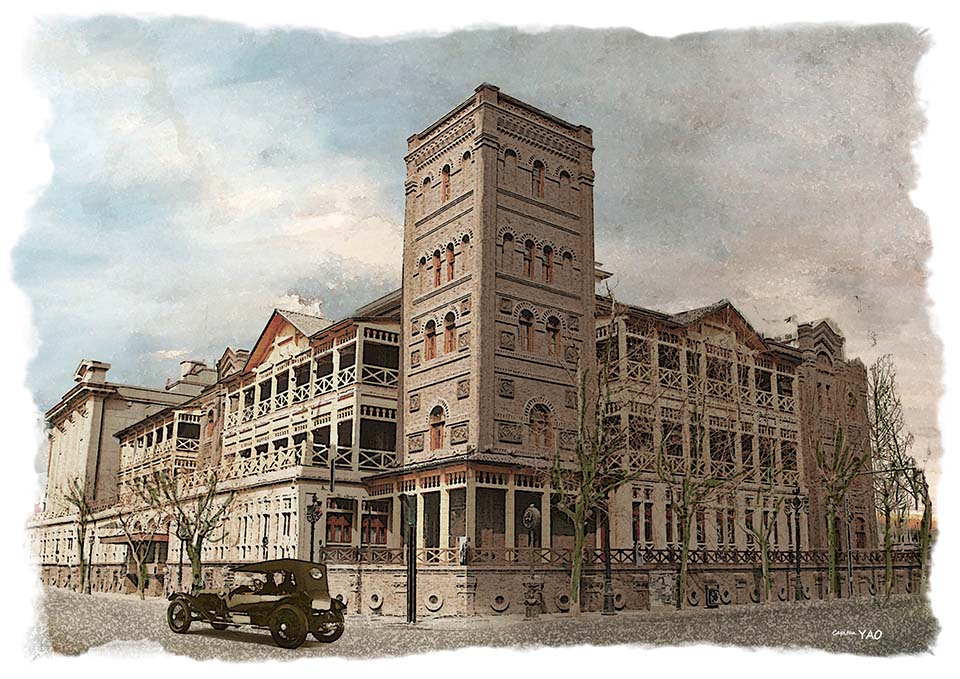
After a three-week stay in Hong Kong, we arrived in Tagu by ship in early March 1927 and checked into the Astor Hotel in Tiantsin. Johnston was eager to visit his student Puyi, but since Puyi was already under Japanese control, only Johnston was allowed to meet him due to Puyi's insistence; I, on the other hand, was turned away. This was fine, as it gave me the opportunity to leave Johnston and go out on my own.
(Figure 2-1-2) Tiantsin Astor Hotel.
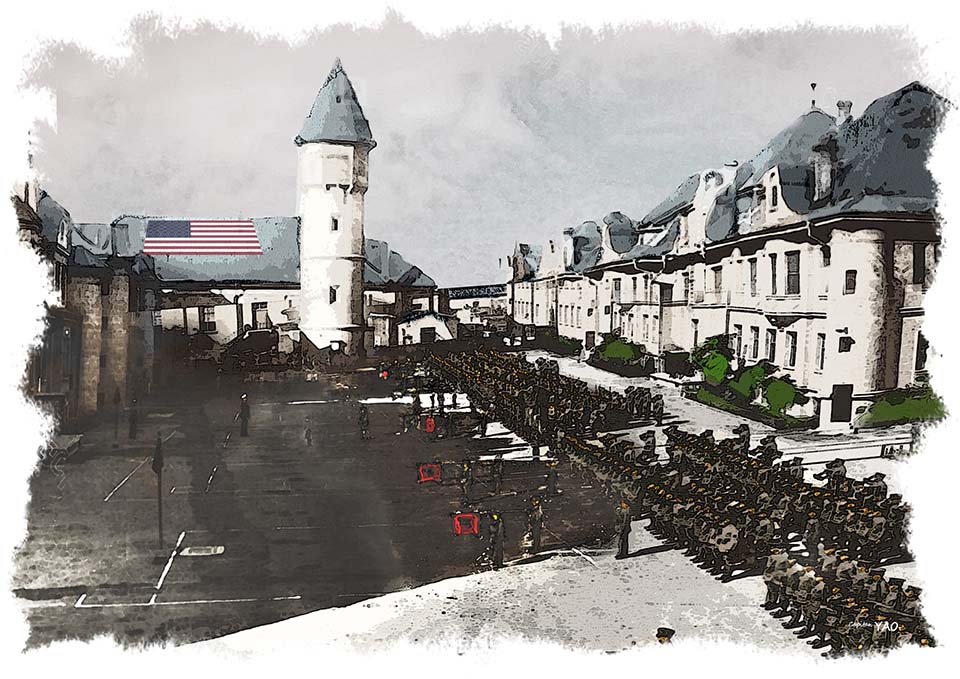
Tiantsin is where I lived as a child. My father, Sir Draken, served as the British Consul General there from 1906 to 1914. Tiantsin was also the place with the largest concentration of Westerners in North China. At that time, my family lived in the so call "Nine-Nation Concession", with the Haihe River in front of our house, next to what was known as the "German Compound" (German military barracks in Tiantsin). But when I returned to Tiantsin, it had become the "American Compound." It turned out that in April 1917, China declared war on Germany, causing Germany to lose all its property in China. The German Compound was then taken over by the US Army and became the barracks of its 15th Infantry Regiment.
(Figure 2-1-3) The original "German compound" has been transformed into an "American compound," where the U.S. 15th Infantry Regiment is stationed.
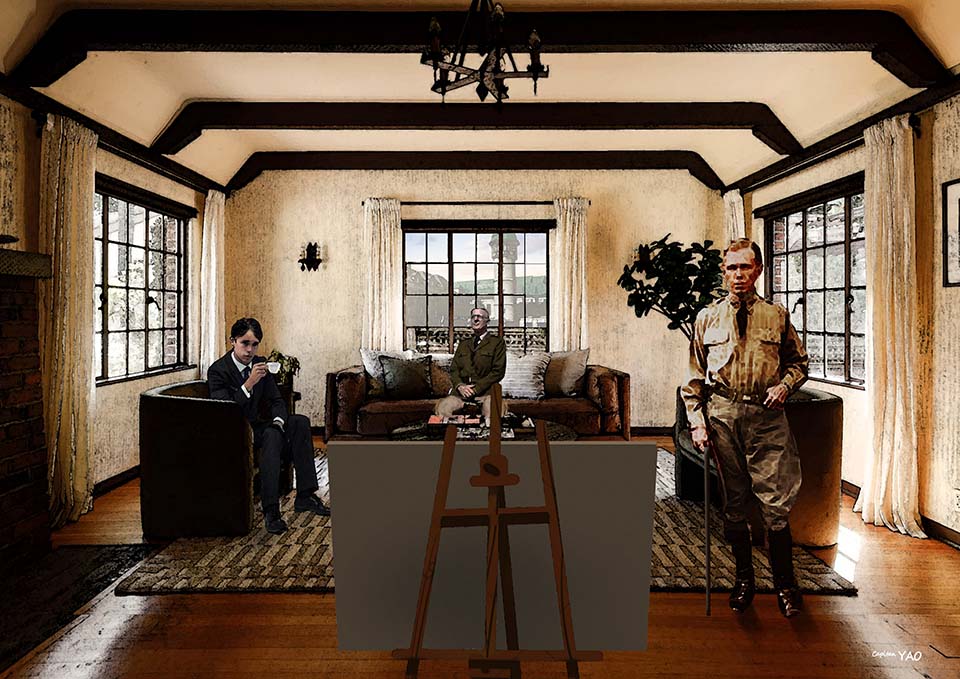
I went to visit our old home, now inhabited by Lieutenant Colonel George C. Marshal, the acting commander of the 15th Infantry Regiment. Marshal happened to be home when I arrived and warmly welcomed me in for afternoon tea. One of his battalion commanders, Major Joseph Stilwell, was also present. During our conversation, they expressed concern about recent developments in China, noting that the United States had deployed an additional Marine brigade to Tiantsin to bolster defenses.
At that time, the original president of the Peking government, Cao Kun, had been ousted due to bribery during the election. The premier was Gu Weijun, but actual power was held by the warlord Zhang Zuolin. The situation in China at this time was vastly different from when I arrived in Kuangchow in 1923. The revolutionary government, previously confined to a corner of the south, although affected by the death of its leader Sun Yat-sen, had launched its Northern Expedition in July of the previous year and achieved significant victories thanks to substantial aid from Soviet advisors, funds, and weapons. Despite this, the West still regarded the Peking government as legitimate, and all embassies were located in the eastern suburbs of Peking. One reason was that they were still observing the situation, and another was that they did not want a Soviet-backed communist regime to emerge in China and threaten Western interests.
However, by this time, the revolutionary fervor in the south had spread throughout the country, evolving into a powerful anti-Western imperialist movement. Furthermore, the joint deployment of 10,000 troops by Britain and France to Shanghai starting in January further fueled a widespread xenophobic sentiment among the people. Incidents of Westerners being killed, robbed, humiliated, and imprisoned occurred everywhere. The concessions in Hankow and Kiukiang were occupied by mobs in early January. Therefore, upon my arrival in Tiantsin, British consulate officials warned me not to linger alone in areas frequented by Chinese people to avoid any unforeseen incidents.
This is not an intimidation tactic. In 1929, three British citizens were beheaded and their heads displayed by Communist thugs in Changsha, Hunan Province, causing Westerners to flee in droves. I heard this from Erich Alfred Hartmann, a renowned German Luftwaffe pilot and world record holder for 352 aerial victories, after World War II. He was living with his father, a doctor, in the foreign settlement of Orange Isle in the Shiangkiang River in Changsha. This was what he witnessed firsthand, and it terrified his entire family, forcing them to leave overnight and take the Trans-Siberian Railway back to Germany.
This event also forms the backdrop for Richard McKenna's novel "The Sand Pebbles," which was adapted into a Hollywood film of the same name in 1965, as I will mention later.
(Figure 2-1-4) Paul discusses the situation of the Chinese Civil War with Lieutenant Colonel Marshall and Major Stilwell.
While having afternoon tea at the Marshalls' house, I asked them, "What are your views, Americans, on the current situation of the civil war in China?"
Marshall said, "Major Stilwell is the China expert among us, and we should listen to his opinion."
"I came to China in 1920 and spent four years here helping those warlords build roads and fortifications, so I think I should know their thinking quite well," Stilwell said. "But the revolutionary government in the South was a red regime supported by the Soviet Communist Party, and I know less about them."
"The commander recently wanted to send someone to the southern battlefield to observe and understand the true situation of the Revolutionary Army, and I think Major Stilwell is undoubtedly the best candidate," Marshall said.
"That will be an extremely dangerous mission, because both sides are hostile to the Westerners, but right now no one is more suitable than me, because among the American officers in China, I understand the Chinese best." Stilwell turned to me and said, "Paul, I can answer your question when I return in three months, but the prerequisite is... you must come back alive!"
I am far less senior than both of them, but I believe Lieutenant Colonel Marshall and Major Stilwell are both insightful soldiers, and there is much I can learn from them. Interestingly, the three of us Westerners chatted entirely in Chinese, because their entire regiment of officers had organized a Chinese language class, and it was stipulated that everyone must speak Chinese that day. (Note 1)
Editor's Note 1: George Marshall served as Chief of Staff of the U.S. Army during World War II and later as Secretary of State. He attempted to mediate the failed Chinese Civil War in China. Joseph Stilwell served as Chief of Staff of the China Theater during World War II but resigned due to disagreements with Chiang Kai-shek.
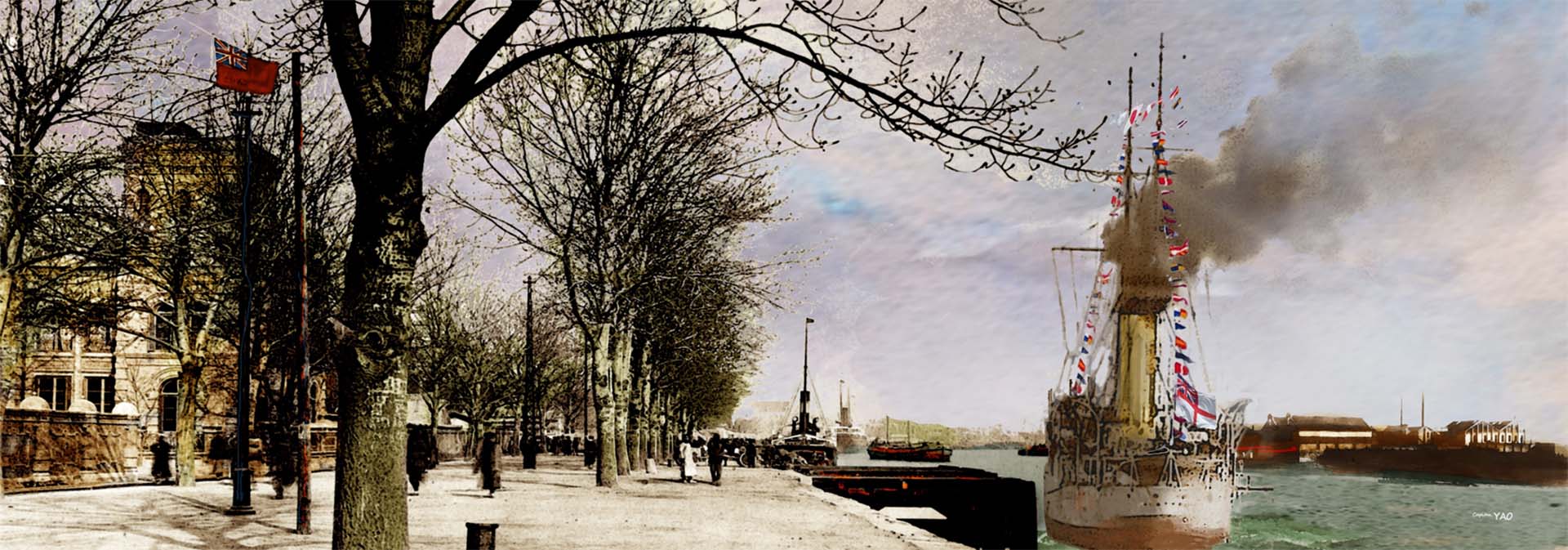
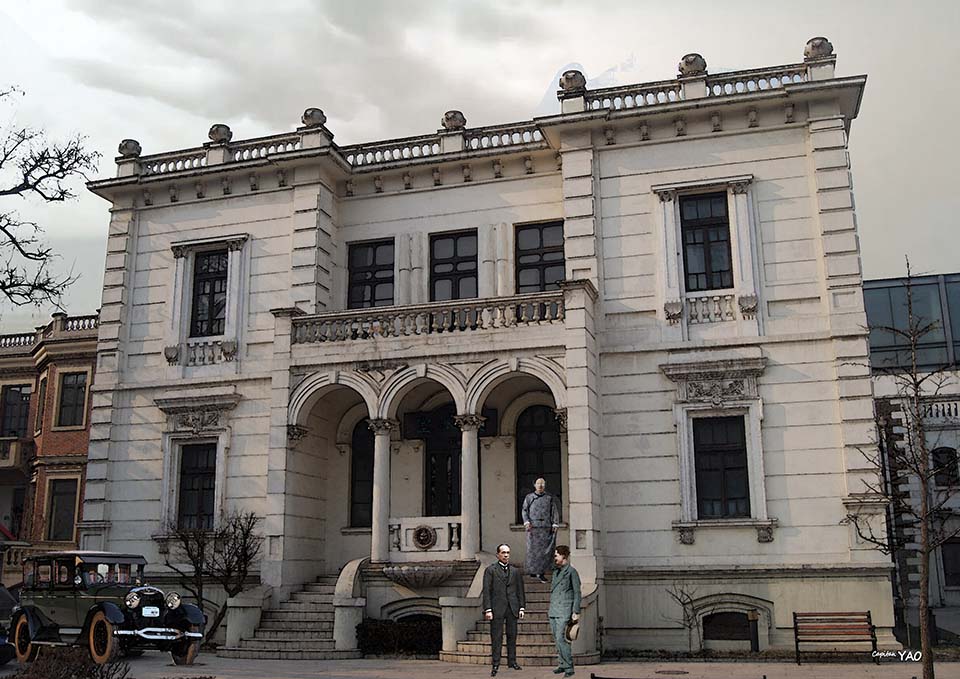
(Figure 2-1-5) The British Consulate in the Tiantsin International Settlement, where Sir Draken served as acting consul general for eight years. My father and Mr. Liang Chichao were old friends for many years. They had been neighbors in Yokohama, Japan. My father arrived in Japan four years later than Liang Chichao but returned to China six years earlier. The Liang family returned to China after the establishment of the Republic of China in 1912, when I was five years old. We were neighbors with the Liang family in Tiantsin for two years. In 1918, Mr. Liang attended the Versailles Peace Conference and took the opportunity to travel to Europe, where he stayed at our home for a period of time. Liang Chichao's eldest son, Liang Sicheng, was six years older than me. We didn't keep in touch much when we lived in Tiantsin, but I was very close to his dozen or so younger siblings. When I visited the old gentleman, Liang Sicheng had already gone to study in the United States. He showed me a picture of Sicheng's future wife, and I immediately recognized her. Wasn't that beautiful girl with big eyes Lin Huiyin, the daughter of Uncle Lin who had visited my home in England six or seven years ago?
(Figure 2-1-6) Liang Chichao’s residence in Tiantsin was called “Yinbing Room”(Drink Ice Room). Paul went to visit him on his father’s orders.
Liang Chichao and Lin Changmin both served as cabinet ministers in the Chinese government and were considered important figures in politics. They were frequent friends of my father. When I inquired about Uncle Lin Changmin's recent situation, Mr. Liang said that he had passed away at the end of the year before last. Seeing that he seemed hesitant to speak further, I decided not to ask any more questions. Mr. Liang also mentioned that his teacher, Mr. Kang Youwei, had passed away in Tsingtao at the end of last month. Although the two of them had served together in Emperor Guangxu's reform movement and went into exile at the same time, and were regarded as leading figures of the "constitutional monarchy" faction, they later fell out due to their differing stances on supporting Puyi's restoration.
These names and stories were ones my father often mentioned and that I was very familiar with, but my Chinese friends of the same age seemed more interested in the love story of Lin Huiyin and the poet Xu Zhimo.
Uncle Liang asked me to talk about the flight school. At that moment, a little boy who looked about ten years old was staring blankly at me. Uncle Liang smiled and pulled him over, saying, "This is Uncle Lin's son. The third one is called Lin... Heng. I always get confused. Lin Huan, Lin Heng, Lin Yuan... all the brothers' names look so similar! How could Changmin name his children like this..."
When Uncle Lin was mentioned, Uncle Liang sighed again and said, "Alas! Now that my father is gone, I can only come here to stay occasionally."
"Brother Paul, you can really fly a plane? That's amazing! I want to learn to fly a plane and become a pilot when I grow up!"
"How old are you?" I asked him. "I'm twelve!"
"Great! Study hard now, exercise, and in a few years you can go to aviation school to learn to fly planes and become a pilot!"
"Yes!" the little boy answered, puffing out his chest. From his earnest gaze, I could tell that he had already decided on his life's ambition at that moment, which reminded me of four years ago when I took off on the "Rosamonde" from Kuangchow Dashatou Airport. Wasn't this just like me back then? (Note 2)
Editor's Note 2: Lin Heng enrolled in the tenth class of the Central Aviation School before the War of Resistance against Japan. He was killed in an air battle with Japanese aircraft over Shuangliudui, Chengdu, Sichuan on March 14, 1941. Lin Huiyin wrote an article in his memory.
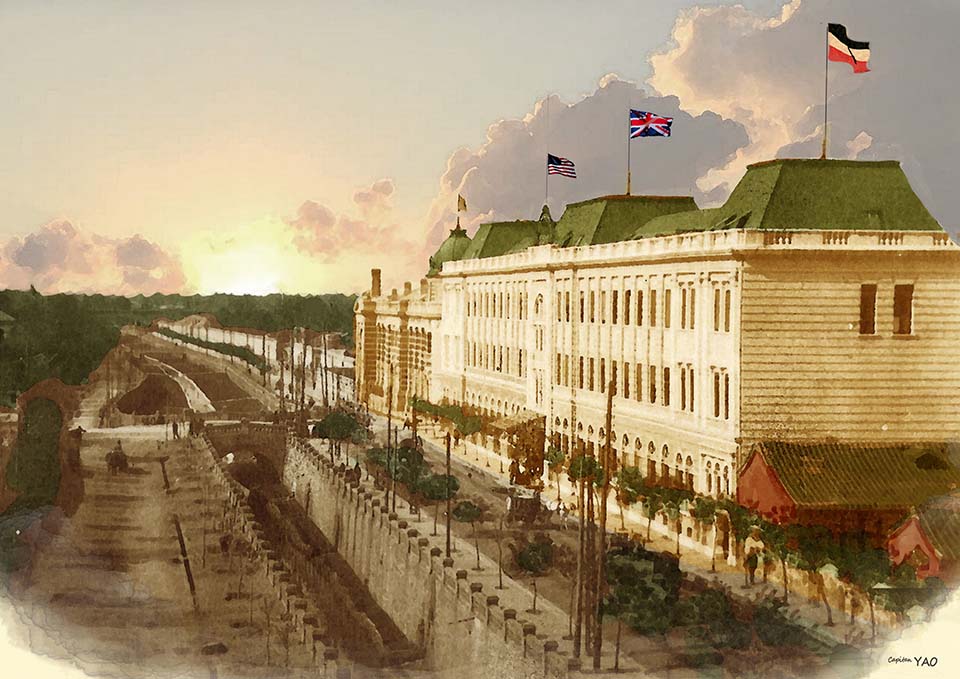
After leaving Tiantsin, I took the train to Peking and stayed at the International Hotel near Dongjiaomin Lane. Peking has been the capital of China throughout history. In the center of Peking is the Imperial City, the Forbidden City, which is surrounded by high walls and a moat. It is said that there are 9,999 palaces inside, the largest of which is called the Hall of Tai Ho, used for receiving foreign envoys and for celebrations.
(Figure 2-1-7) Peking International Hotel.
After the establishment of the Republic of China in 1912, the new government still allowed the former emperor to retain his imperial organization and ceremonies within the Forbidden City, creating a peculiar situation of "a country within a country." When the Ch'ing Dynasty imperial family and the Republic of China government signed this treaty, fearing the other party might breach it, they specifically asked the British ambassador to act as a witness; that matter was handled by my father, Sir Draken. However, two years before my recent trip to Peking, Emperor Puyi had already been expelled from the Forbidden City, and the Forbidden City is now a museum.
I recognized the last emperor because my father was well-acquainted with the royal family. Every time he came to Peking, he would take me to the palace, as the palace teachers had chosen me as the young emperor's playmate for learning English. I remember my eyes stinging every time I came back from the palace, but I was too young to know why. This time, after careful observation, I suddenly realized why. It turned out that there were almost no trees in the Forbidden City to prevent assassins. The countless red walls and yellow tiles under the direct sunlight were really hard on the eyes, quite different from the lush green landscapes that the British were used to.
While in Peking, I was also sent by my father to visit Sven Hedin, a Swedish explorer who was in China at the time. He was an old friend of my father's and became famous in 1900 for his excavation of the ancient city of Loulan. Fortunately, Mr. Hedin was also staying at the same hotel, so we arranged to have tea in the lobby.
Mr. Hedin arrived in Peking at the end of last year. He said this was his fifth visit to China, and he planned to conduct a thorough archaeological exploration. He was currently negotiating with the Chinese government, but he was worried about the instability of the Chinese political situation and the rise of nationalism, which made his trip uncertain. However, Mr. Hedin eventually signed a nineteen-point agreement with the Chinese government, granting China control and the right to distribute antiquities, allowing the expedition to depart in June. This nineteen-point agreement became a precedent for future Western expeditions to China, causing great distress to Western expeditions accustomed to free movement within China. They bitterly accused Sven Hedin of cutting off their source of income, but conversely, it earned Mr. Hedin a very good reputation in China.
My father originally intended to ask Hedin's opinion on the matter of the luminous pearl and request his assistance in keeping an eye out for it. Perhaps I was too young and lacked the professional knowledge to express myself in depth, so I could only briefly touch on the topic before taking my leave.
As I escorted Mr. Hedin upstairs, I saw a group of Westerners surrounding an elderly Chinese man on the other side of the lobby. He had long white eyebrows and a beard, wore a gray-blue robe, was thin, and had an air of otherworldly wisdom; he looked to be at least eighty or ninety years old. I asked the waiter what they were doing. The waiter said that it was Chiu Taochi, the most famous fortune teller in Peking, who frequently traveled around major hotels in Peking to tell fortunes for foreigners. Today it was the turn of International Hotel to come. Intrigued, I went over to see what was going on.
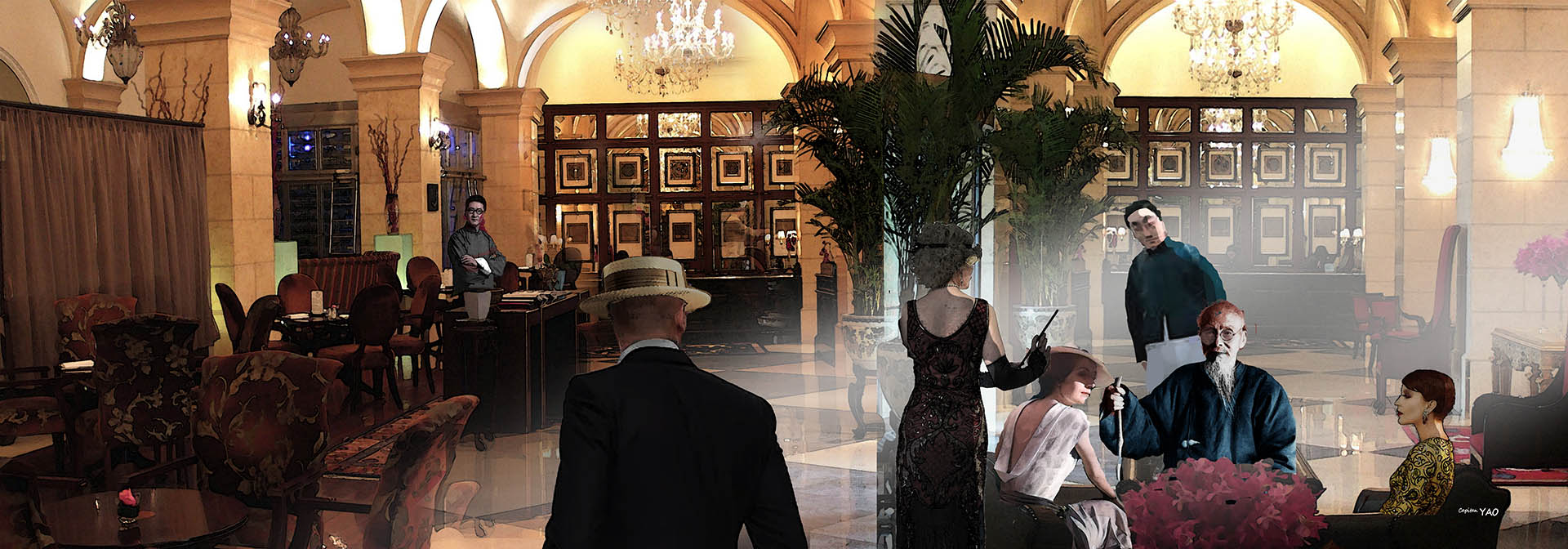
(Figure 2-1-8) Chiu Taochi, an elderly man who tells fortunes for Western ladies in the lobby of the International Hotel. As I watched, Chiu Taochi was telling the fortune of a plump French lady. He glanced up and saw me standing in the crowd, his gaze suddenly freezing. Pointing at me, he said through the translator, "This gentleman is destined to be a prince consort!" The translator, fearing I wouldn't understand, added, "A prince consort is the husband of a princess or queen!" "That's quite a stroke of luck! May I ask if she's a princess or a queen?" I asked him. "They all have them! There's one queen, one empress, one princess, and one princess guarding the bandit's den!" Chiu Taochi calculated with his fingers and said, "But in the end, nothing came of it!" "Isn't that obvious?" "Your fate is truly extraordinary. The princess and the queen will both meet tragic ends in the capital, the empress has disappeared amidst the chaos of war, and the princess who was imprisoned died young on a deserted island. As for you, sir..." Chiu Taochi said, "You will live even longer than I have! However, you will encounter calamity the moment you step out of the house, but you will turn misfortune into good fortune and become a high-ranking official! But..." "But what?" "Strange..." Chiu Taochi said, "Your life is truly extraordinary. I've had my eyes opened today, so I won't take your money!"
I thanked the old man and left, feeling utterly absurd. It all sounded so illogical. Anyway, all the charlatans were spouting nonsense, so I didn't care whether it was true or false. I went back to my room, changed into some clothes suitable for going out shopping, and then left the hotel, heading towards Liulichang. This time, on my father's instructions, I spent a lot of time browsing antique shops in Liulichang during my trip to Peking. Liulichang is the largest market in Peking selling antiques. At that time, Puyi had just been expelled from the palace, and many retired eunuchs secretly brought the palace's treasured antiques, paintings, and other valuables to sell here. So I thought that maybe I could find the trace of that luminous pearl.
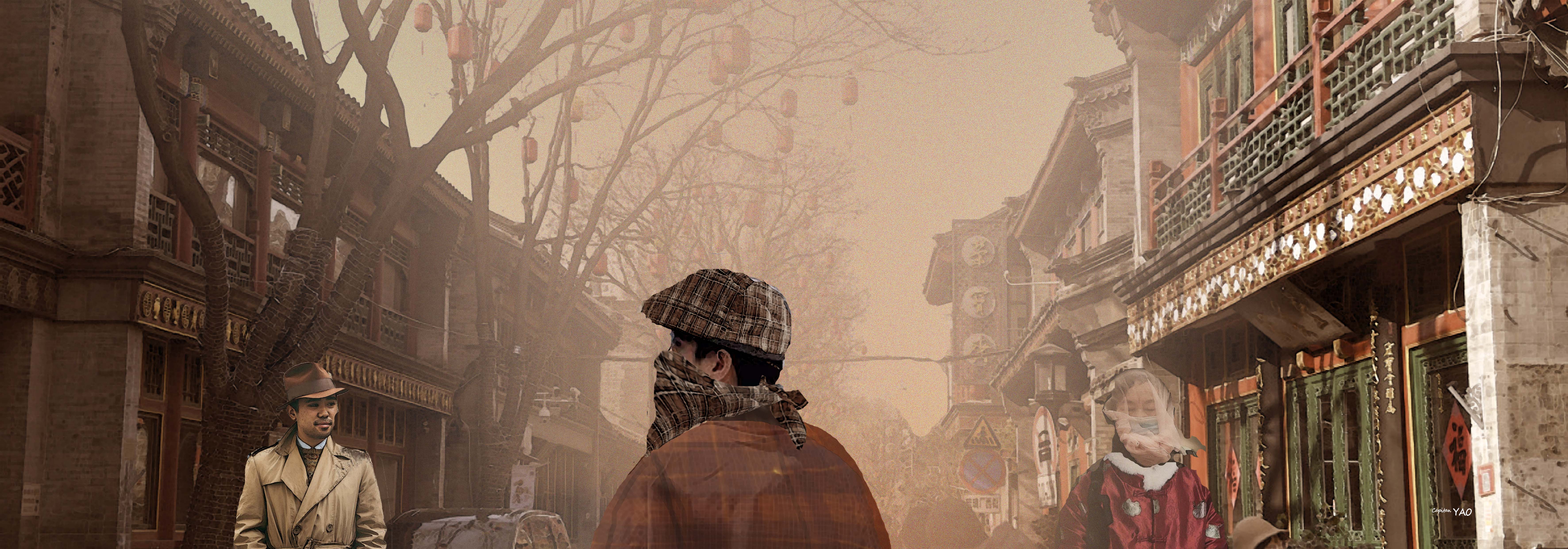
(Figure 2-1-9) Paul strolls through Liulichang, Peking's antique street, amidst a sandstorm. "Probably because of my neither-here-nor-there appearance!" I thought to myself. The next place I went into yielded the same result, making me feel like a plague carrier. As I walked, I entered a rather large antique shop. An elderly gentleman, who seemed to be a customer, sat on a chair nearby, smoking a pipe. When he heard me ask the shopkeeper a question, he shouted at me, "The Empress Dowager's luminous pearl? Go dig it up from the Eastern Tombs! It's already been placed in the Empress Dowager's mouth, don't you know?" "What?! Buried with him?" I was stunned, my vision blurred. How could this be? "Gentlemen, please don't discuss this matter in our humble shop. Please leave!" The shopkeeper politely asked them to leave, which seemed to be a taboo in all antique shops in Liulichang! "The luminous pearl is in the Empress Dowager's mouth? What should I do? Am I supposed to go grave robbing?" It seems I have no choice but to go back to the hotel and send a telegram to my father. Sigh! I can imagine his disappointed expression. The sandstorms in Peking were fierce this time of year, and many people covered their faces with cloth. More elegant women wore hats and then covered themselves with a veil, resembling gas lamps. As I came out of the antique shop, several masked, burly men surrounded me. Suddenly, they covered my mouth and nose with handkerchiefs soaked in chloroform, then covered me with a cloth bag and dragged me into a nearby alley. I was dazed and could only let them do as they pleased. I vaguely felt myself being lifted into a car and driven away quickly. In the car, I finally succumbed to exhaustion and fell asleep.
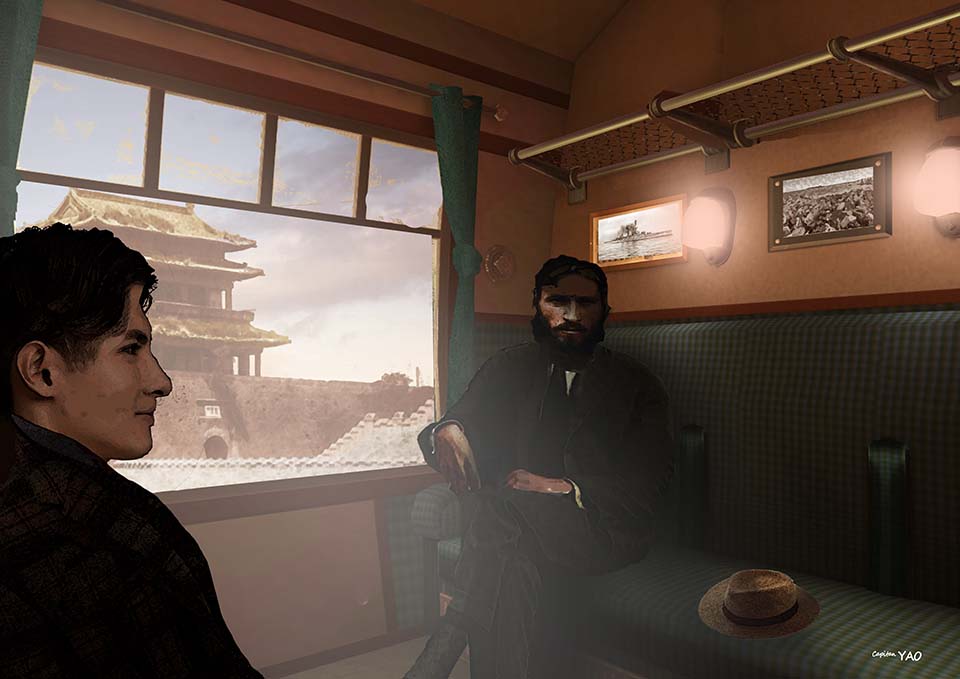
After what seemed like an eternity, I awoke to the swaying and noise of the train and found myself lying on the sofa in my compartment. A large, burly Westerner sat opposite me. I felt a sense of relief; at least I hadn't been kidnapped by anti-Western Chinese revolutionaries. So I struggled to my feet and said to him, "I am an officer of the British Empire..."
(Figure 2-1-10) Paul was held hostage on a train bound for Tsingtao.
"I know who you are, you are Ensign Paul Draken of the Royal Navy!" The burly man spoke English with a peculiar accent, and my intuition told me he was probably Russian. I inwardly groaned; I had run into a revolutionary, and their Soviet advisor at that.
"How could you kidnap me if you knew who I was?"
"Excuse me! Let me introduce myself first. I am Lieutenant Colonel Dmitri Korniloff , the deputy squadron leader of the aircraft squadron of the Chinese Northeast Fleet..."
"He really is Russian!" I thought to myself, wondering who this person was. The name seemed familiar.
"We need your assistance, and we can pay you a very generous reward after it's done, whether it's gold, pounds, or US dollars, depending on your specifications..." Korniloff continued.
"My assistance? How can I assist you?"
"If I tell you now, you'll have no choice but to participate. We have an important operation in the south in a few days, but we lack qualified pilots. It will only take you about a week, and you'll get paid immediately upon completion. We'll keep it absolutely secret from the British government!"
"What kind of action?"
"We can't tell you right now, you'll find out when we arrive in Tsingtao!"
"What? We're going to Tsingtao?"
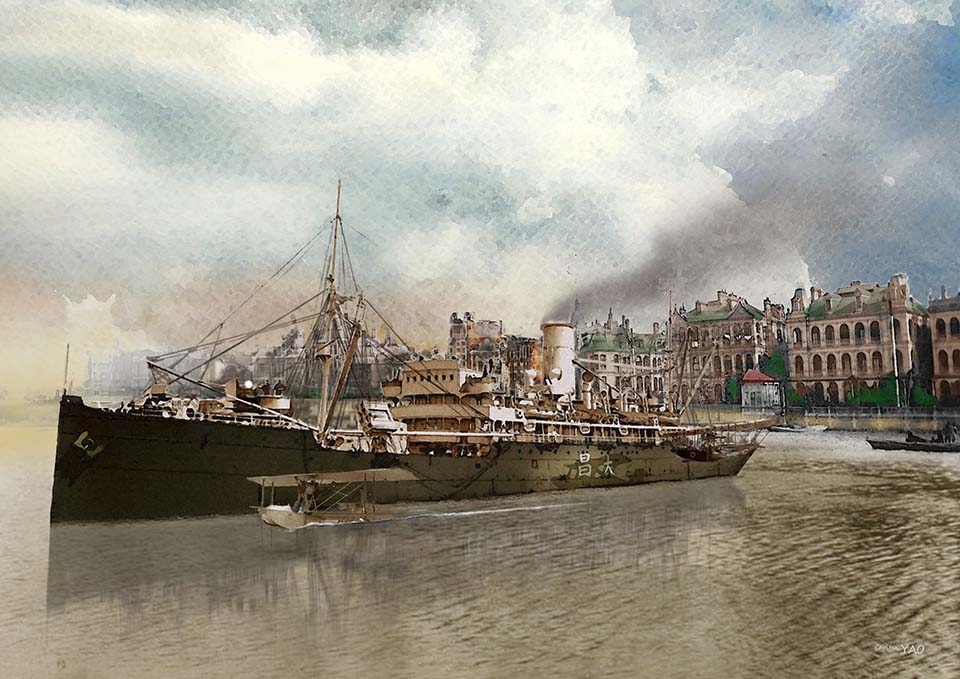
We arrived in Tsingdao on March 22nd. It's a beautiful coastal city that was a German colony before the war. The city has many European-style buildings with white walls and red tiles. I visited Tsingtao as a child on a British warship; my father took me there to visit the German East Asia Squadron. Now it's also the most important naval port in northern China, where British, Japanese, and American warships frequently dock. We boarded a ship of about two thousand tons at the Tsngtao Port naval dock. The air was filled with the smell of fresh paint. The ship had a black hull, a white superstructure, and brown masts and booms, making it look like a merchant ship. There were two piles of things covered with canvas on the stern deck, but we didn't know what they were. Lieutenant Colonel Korniloff told me, "This is the Chenhai of our Northeast Fleet, the only seaplane carrier in all of China."
(Figure 2-1-11) The Northeast Navy's seaplane carrier "Chenhai" was painted with the name "Tachang" to disguise it as a merchant ship.
"Why does she look so much like a merchant ship?"
"She was originally a converted merchant ship, but this time we deliberately painted her back to the original merchant ship color to keep it a secret."
Lieutenant Colonel Korniloff said, "Look, what's covered by the canvas are the guns and two seaplanes."
With a whistle, I looked towards the harbor and saw two warships entering the port one after the other. The lead ship was an old-fashioned cruiser with a displacement of about four thousand tons. The forward-leaning "ram" below the bow was a characteristic of warships from the last century, and I recognized it at a glance as the "Haichi," built by Amostron Shipyard in England. In 1911, the "Haichi," led by Admiral Cheng Biguang, sailed to Britain to participate in the naval review for the coronation of King George V. My father, representing the Foreign Office in London, coordinated the relevant matters with the Chinese government.
When the "Haichi" went there, it flew the Ch'ing Dynasty's yellow dragon flag. During the voyage, a revolution broke out in China. When it returned, it was flying the Republic of China's five-colored flag. I still remember it when I was five years old! Korniloff told me that the "Haichi" was the largest warship in all of China and is now the flagship of the Northeast Fleet.
Jane's Battleship Yearbook, but I did not recall any Chinese warships with three funnels. It was not until we reached the shore and a crane lifted the middle funnel that I realized it was just a fake funnel made of iron frame and canvas. This kind of deception tactic was widely used by both Britain and Germany during the last war. I discovered from the gold lettering on her bow and stern that she was the cruiser "Haichen," built by the German Vulcan shipyard. Khonirov also secretly told me, "The Haichi originally belonged to the Bohai Fleet under Zhang Zongchang, the Shantung governor. Once, the crew went on strike due to unpaid wages, and Zhang Zongchang sent his White Russian guards to suppress them. Without a word, they opened fire with machine guns into the forward quarters, killing many. So, it's said the forward quarters are haunted now! Last autumn, the Haichi sailed to Lushun and entered the Japanese dock for major repairs. Our Commander Shen simply promised to pay wages monthly, which bribed all the officers and men, and he managed to snatch this largest Chinese warship from Zhang Zongchang." Korniloff said, "The 'Haichi' and 'Haichen' ships achieved great success on their southward voyage to support Sun Chuanfang's fight against the revolutionary army. The 'Haichi' sank a patrol boat of the Zhejiang Coast Guard in Zhapu, and the 'Haichen,' disguised, even infiltrated Amoy harbor to search for a Soviet ammunition ship transporting supplies to the revolutionary army. The locals didn't even realize it was an enemy intrusion; they thought it was a Japanese cruiser! Now Commander Shen is planning a new operation!" It's hard to imagine that a country's navy could be divided into many factions that are constantly fighting each other.
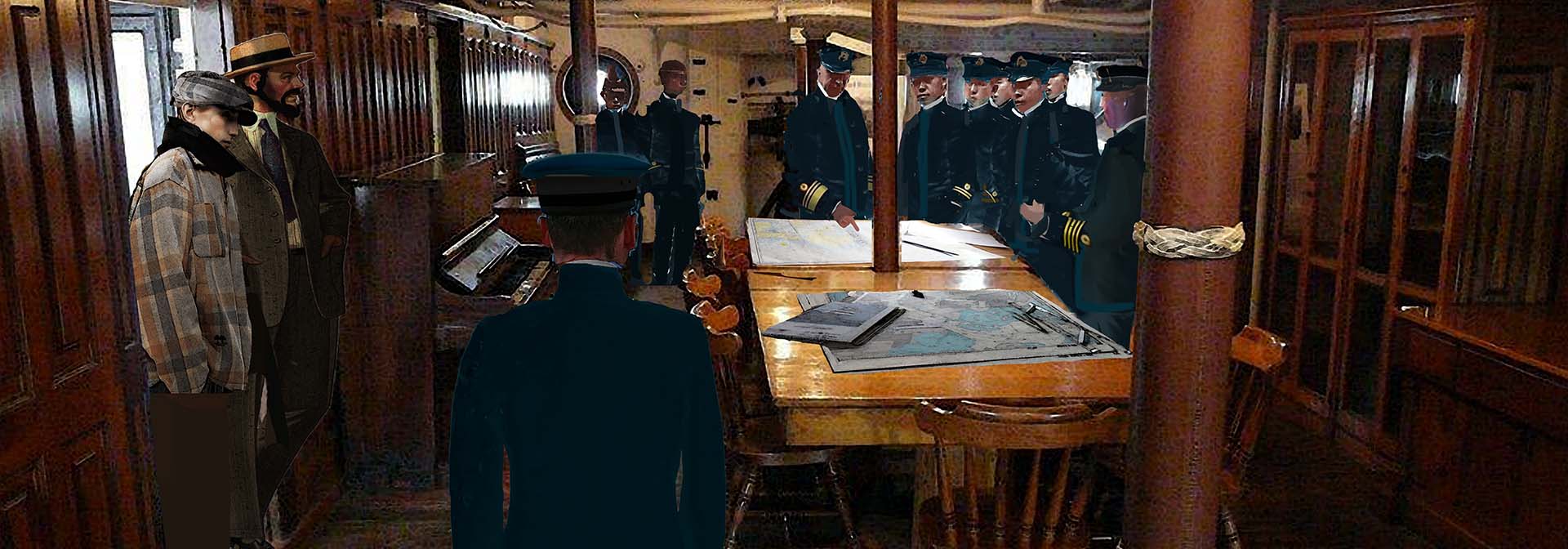
(Figure 2-1-12) A battle plan briefing was being held on the "Haichi" flagship, and Korniloff happened to be entering with Paul.
"I'm sorry to have invited you to Tsingtao in this way!" Admiral Shen said, "Lieutenant Jiang Yanzhong! Please explain our plan to Ensign Draken." "Bai Chongxi's Southern Revolutionary Army has surrounded Shanghai, and the Foochow Navy has defected. We need to teach them a lesson..." Captain Jiang pointed at the nautical chart with a stick and said, "The plan is for the Chenhai to depart from Tsingtao on the 25th with two seaplanes. Our ship will depart from Yantai on the 26th and catch up at a high speed of 18 knots. On the same day, the Yung Shiang will also depart from Tsingdao to deceive the enemy. On the morning of the 27th, the Chenhai and Haichi will meet in the open sea and enter the Yangtze River, taking advantage of the high tide to rush through the shallows at the mouth of the Huangpu River. This day is Sunday, so the enemy should be relatively relaxed. The Chhenhai will launch planes to bomb Shanghai, while the Haichi will continue to enter and wait for opportunities to bombard the Fookien ships. We must be fast and not linger in battle. We must withdraw completely before the tide goes out." Although I was a mercenary who had been kidnapped, I became more and more excited as I listened to Admiral Shen's plan. Although countries had begun to pay attention to naval aviation and had established aircraft carrier combat capabilities, there were still very few real combat examples. As for the East, this might be the first time, and it was being led by a local navy of a weak country. How could a student who had just graduated from flight school be excited to witness such a grand event? "These next few days, you will practice piloting and dropping bombs with Deputy Squadron Leader Korniloff. You are not allowed to leave the ship before departure, and you are not allowed to communicate with the outside world. Korniloff will supervise you! You will stay on the Chenhai ship." After Admiral Shen finished speaking, he gestured for us to leave. I only had less than two days to familiarize myself with the performance of this French-made seaplane and practice accurately dropping bombs. Actually, I hadn't even taken such advanced courses at my flight school in the UK, but I had no choice but to get started. Korniloff practiced with me every day. He was a good pilot and easy to get along with, though he loved to drink and had a somewhat carefree personality. He told me that he was originally a naval pilot in Tsarist Russia, but after the Russian Revolution, he fled to the Far East and joined the Northeast Army under Marshal Zhang Zuolin in China to make a living.
|
 Uncle Johnston is famous for having served as the English tutor to the deposed Ch'ing emperor Puyi. Few people know that this position originally belonged to my father. It was only because my father was about to be transferred to St. Petersburg to serve as the British King's special envoy that he recommended his classmate, Johnston, who was then serving as the deputy administrator of the Weihaiwei colony, to take his place. The most prestigious position in Chinese society, "Imperial Tutor," thus fell to him.