|
|

8. The Outbreak of the WWI
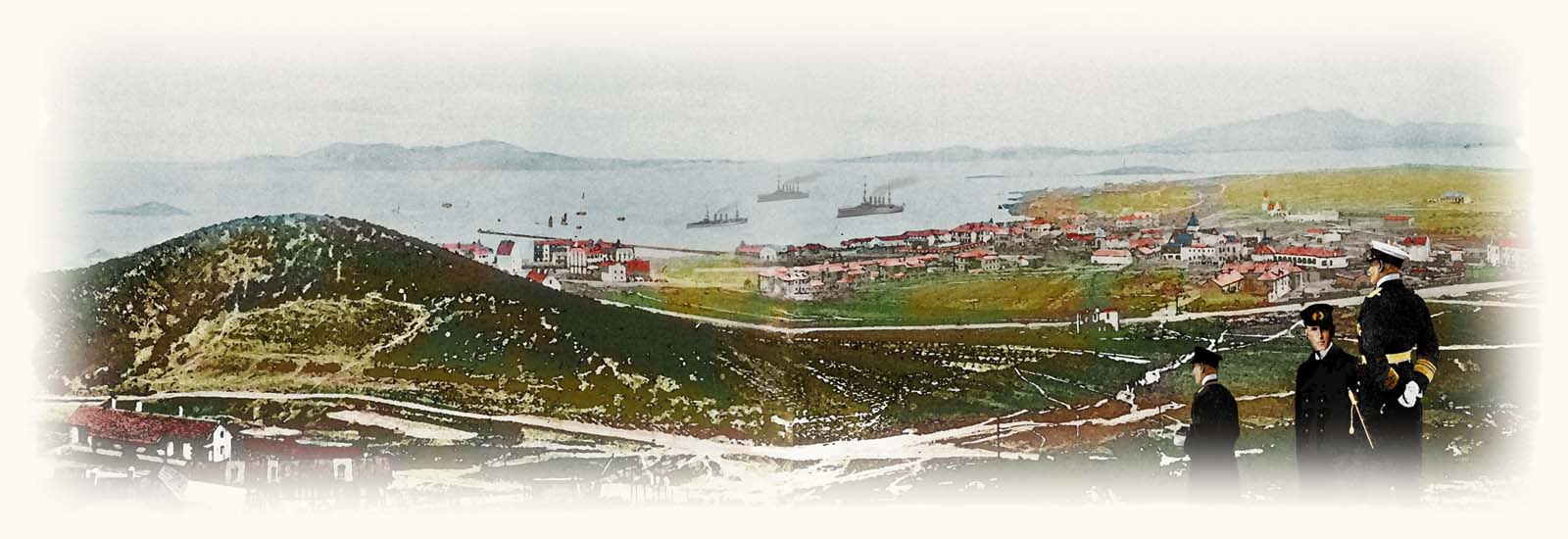
(Fig. 1-8-1) Earl Spee and his two sons overlook the German colony of Chiao-chou Bay from a mountaintop in Tsingtao.
When we were in Tianjin, we were often invited by various countries to visit military exercises. My father would usually take me with him. The farthest we went was to the German colony of Tsingtao in Shantung. We traveled there directly from Tagu on a British warship, so the journey was not arduous. My father loved Tsingtao. It was a beautiful port city with very well-developed infrastructure. It was hard to imagine that the Germans had completed all of this in just sixteen years.
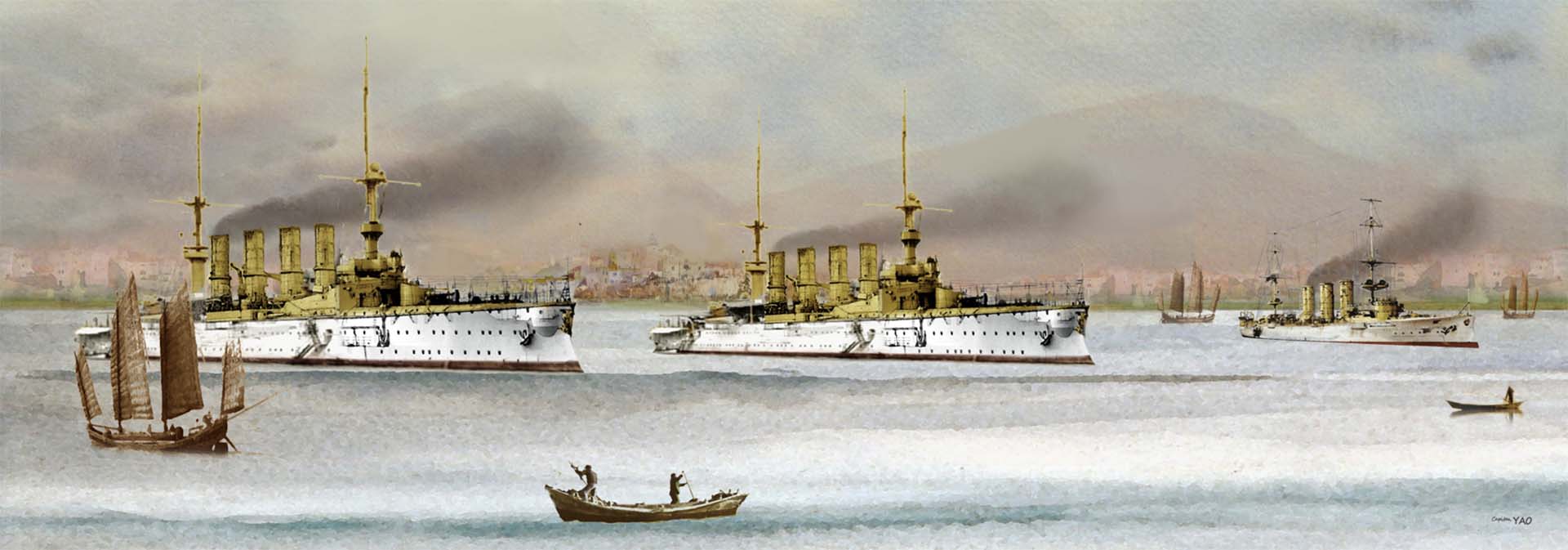
The origin of the Tsingtao colony dates back to 1897 when Germany, using the "Juye Incident" in Shantung, which involved the massacre of German priests, forced the Ch'ing government to sign the "Chiao-chou Bay Lease Treaty." This treaty leased the Chiao-chou Bay area for 99 years, along with railway construction rights and mining rights. The Germans also established the Tsingtao naval base there and dispatched the "East Asia Squadron" (Ostasiatische Kreuzergeschwader) to be stationed there. This was the largest fleet that Germany had deployed overseas besides its own "High Seas Fleet" (Hochseeflotte). Its last commander was the famous Vice Admiral Count Maximilian von Spee, who took office in 1912.
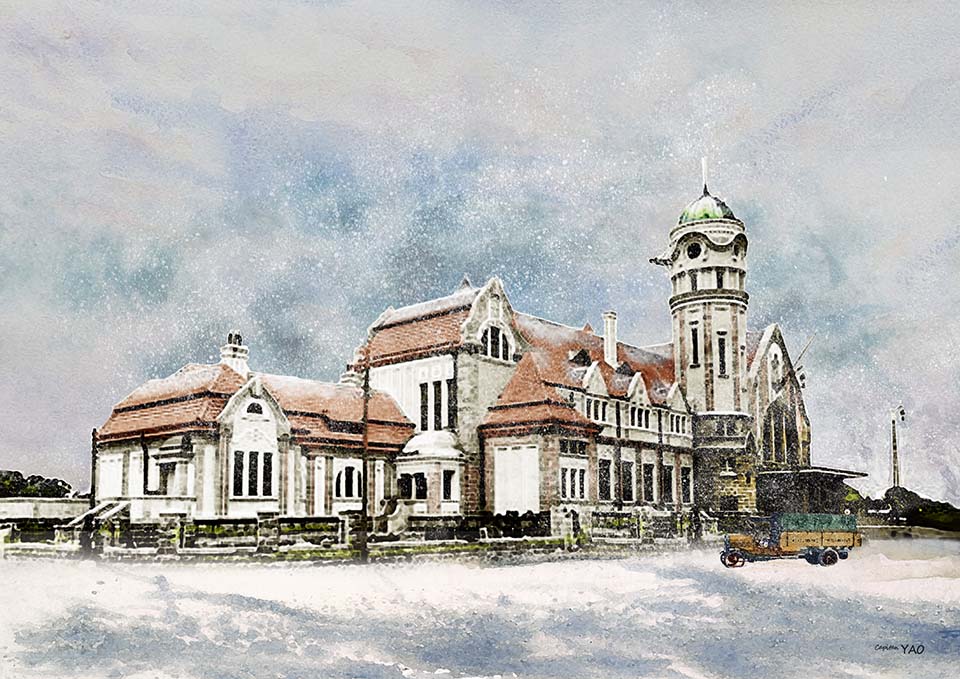 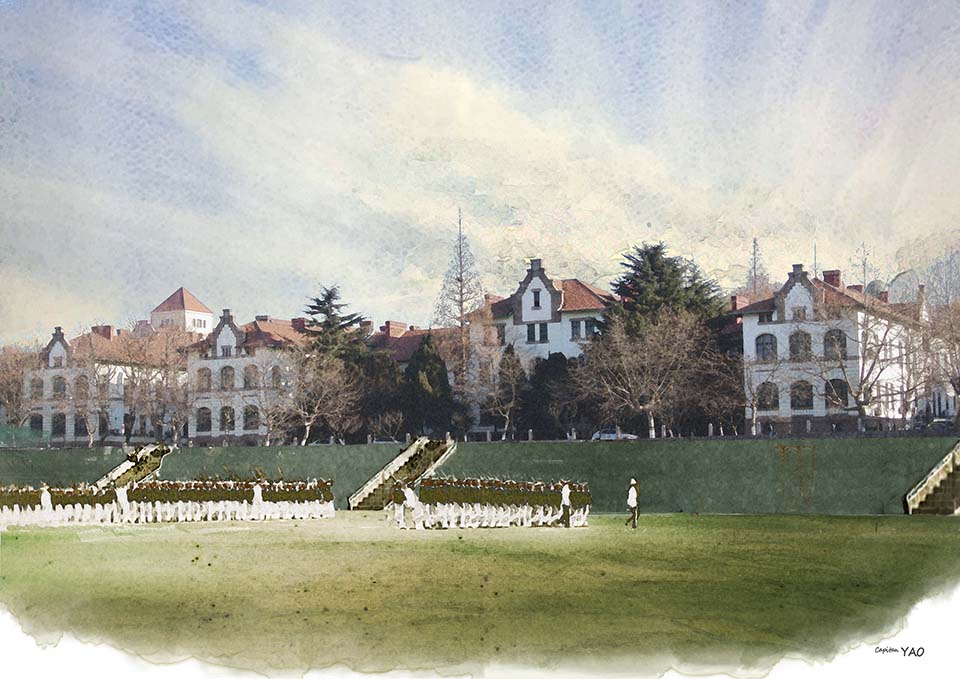
(Figure 1-8-3) Jinan Railway Station on the Tiantsin-Pukou Railway, built by the Germans. (Figure 1-8-3) Bismarck's Barracks in Tsingtao.
My father took me aboard the flagship armored cruiser SMS Scharnhorst for a visit, where we were personally received by Commander-in-Chief Earl Spee. He also introduced us to his two sons, Otto von Spee and Heinrich von Spee, who were serving in the fleet at the same time. At that time, Anglo-German relations were quite good. Kaiser Wilhelm II of Germany was the grandson of Queen Victoria and a cousin of the British Emperor. Wilhelm II was particularly fond of the navy and spent a huge amount of money to build a large fleet in a very short period of time. Although it could not yet challenge the Royal Navy's naval supremacy, it did serve to deter Britain from harboring any unwarranted ambitions towards Germany. This was Germany's so-called "Fleet in being" strategy.
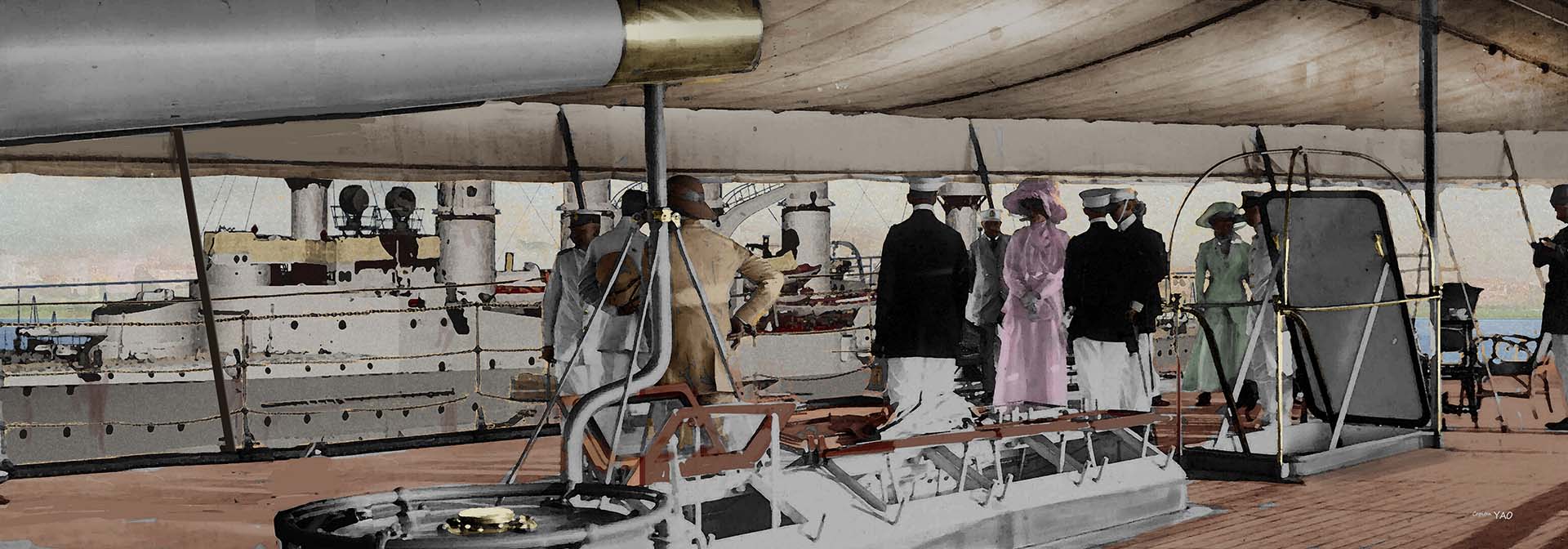
(Figure 1-8-5) Foreign guests boarded the flagship of the German East Asia Squadron, the "SMS Scharnhorst", in Tsingtao for a visit.
Wilhelm II never intended to challenge British naval supremacy, but possessing a powerful fleet was unacceptable to Britain. Germany, caught in the trap of its perceived superiority, was forced onto the altar as Britain's hypothetical enemy. Wilhelm II was completely unaware of this. When Britain conferred upon him the title of Honorary Admiral of the Navy, he was overjoyed and even had a Royal Navy admiral's uniform ordered to accept the honor. Wilhelm believed that being awarded the title of admiral by a long-established naval power was an affirmation of his professional naval standing, completely oblivious to the impending disaster.
On June 28, 1914, Austria declared war on Serbia following the assassination of Archduke Franz Ferdinand von Österreich-Este and his wife in Sarajevo. On August 1, Britain, France, and Russia, bound by the Entente Powers, also declared war on the alliance of Germany, Austria, and Turkey. In the Far East, Japan, bound by the Anglo-Japanese Alliance, also joined the Allied powers. The world's major powers were thus drawn into an unprecedented war, though most people at the time were unaware that Sarajevo was even there.
Most Western countries with colonial interests in China joined the war, but China remained neutral at the time. According to the war treaty, both sides in a neutral zone must disarm. Therefore, the Chinese government could theoretically disarm all the troops of Britain, France, Russia, Austria, Germany, Italy, and Japan in China. However, due to China's historical weakness, it dared not forcefully exercise this legitimate right. As a result, the diplomatic embassies of various countries in China used their own methods to secretly carry out the disarmament.
The most common method was to change the name. For example, the German troops in the "German Compound" were all concentrated in Tsingtao at the very beginning of the European war, and on August 18, the compound was registered under the name of a private association and entrusted to the Americans, who were also neutral countries at the time. When such things happened, my father had to find loopholes in the other party's laws and protest to the Chinese Ministry of Foreign Affairs every day, so he was particularly busy during this period.
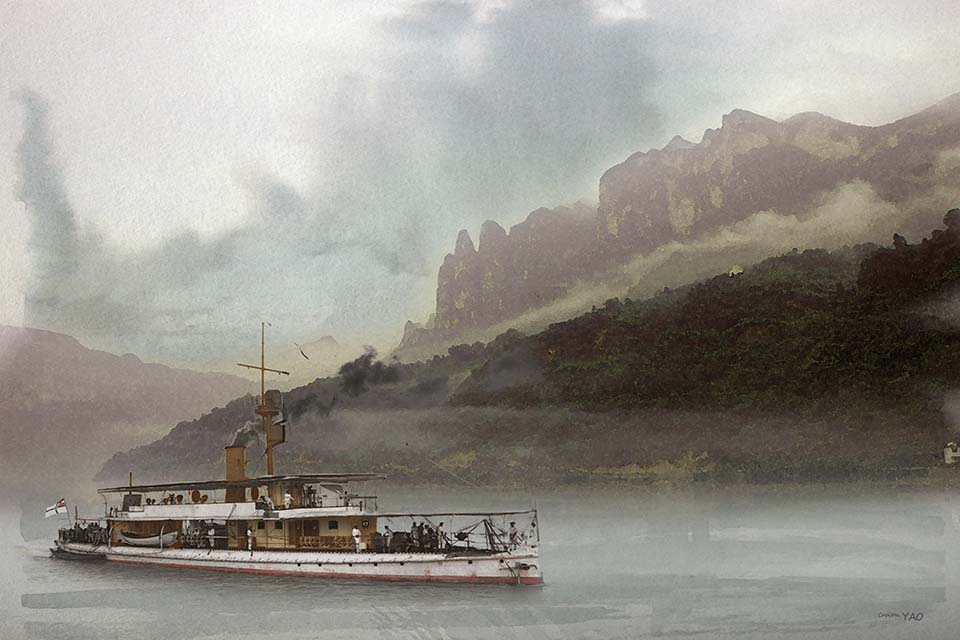 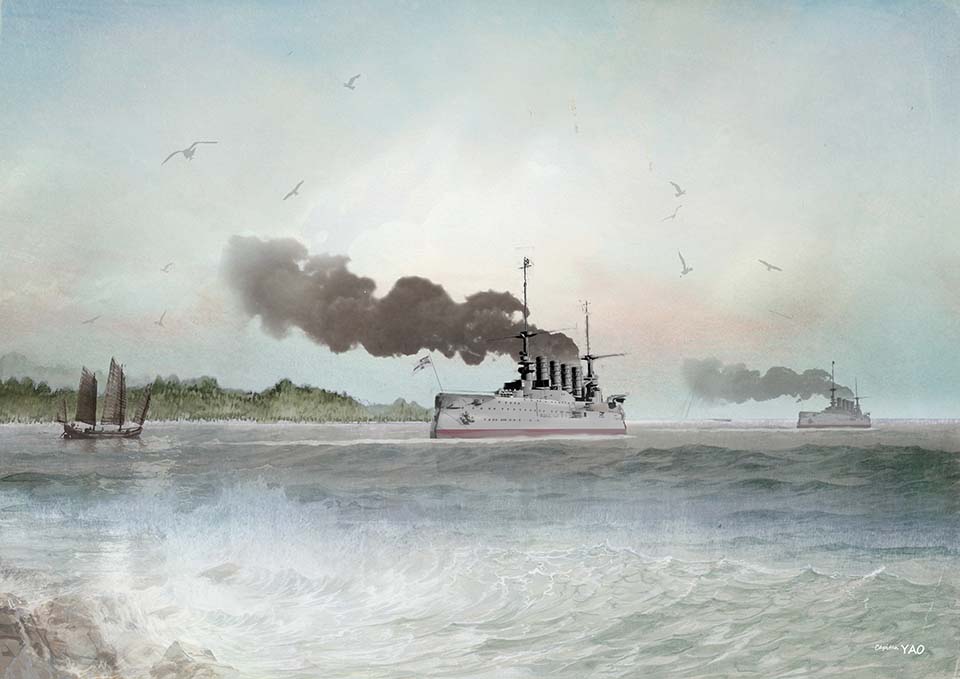
Some vessels that couldn't be changed in time were automatically disarmed. Of course, this was merely a facade. For example, Japan had many shallow-draft gunboats used for "gunboat diplomacy" on Chinese inland waterways. These were renamed civilian ships, but in reality, everything remained the same. However, the Chinese government turned a blind eye and pretended not to see it. This was also thanks to Britain's relative strength in China. Germany, on the other hand, suffered more. The large warships of the Far East Squadron sailed out of Tsingtao to the open ocean early to avoid being blockaded. Smaller ships or shallow-draft gunboats that couldn't go to sea were either taken over by China or scuttled. With its motherland thousands of miles away and preoccupied with the war, Germany simply couldn't attend to its colonies in the Far East.
The Graf Spee squadron, which hastily departed port, consisted of six main warships, including two armored cruisers, SMS Scharnhorst and SMS Gneisenau, and four light cruisers, SMS Dresden, SMS Emden, SMS Leipzig, and SMS Nürnberg.
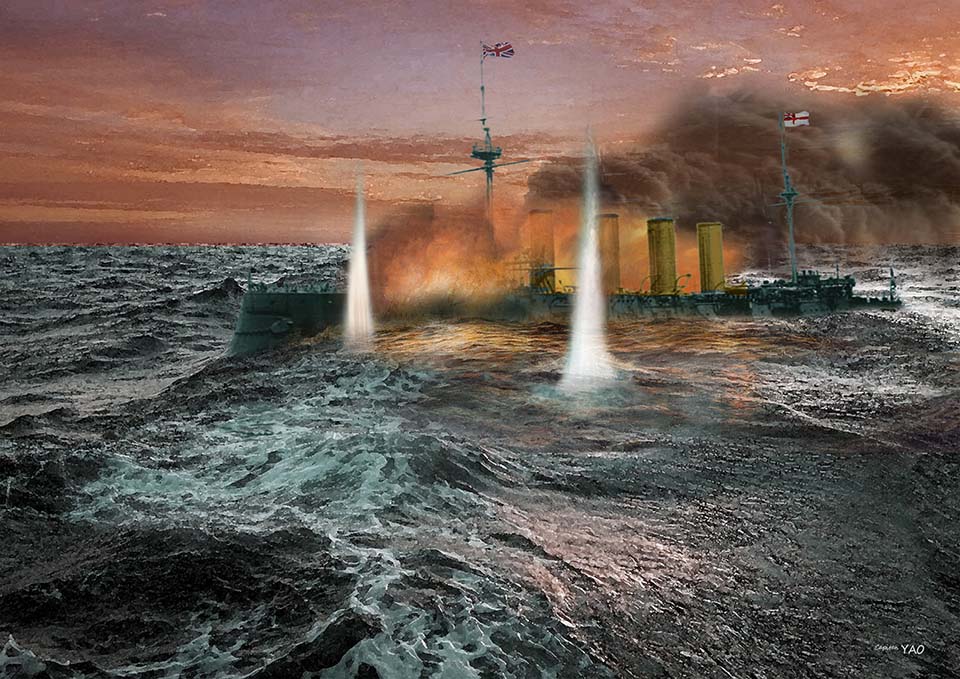 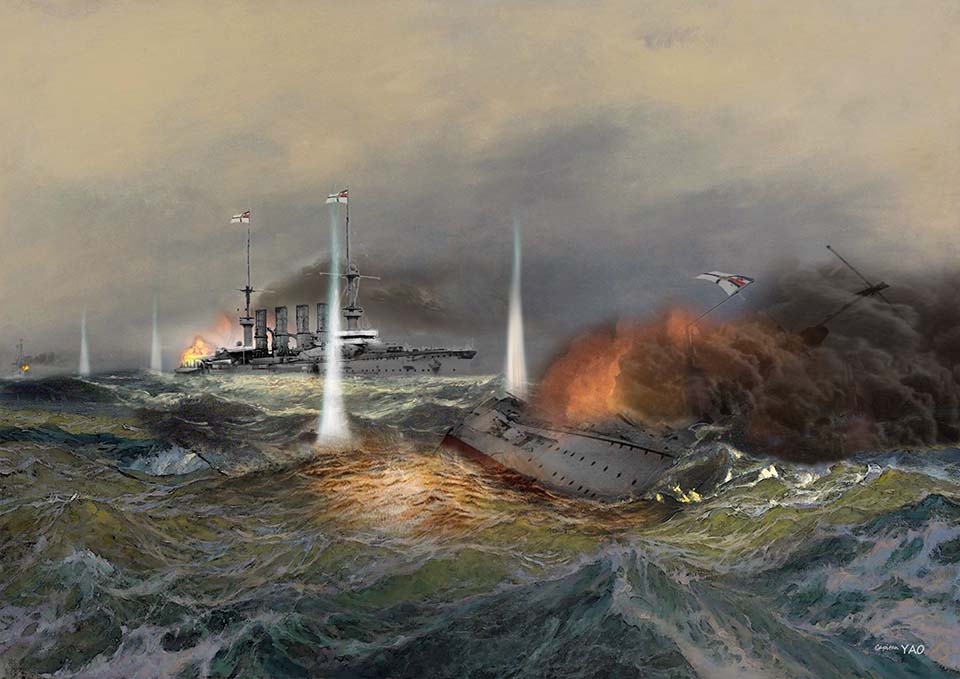
Spee's squadron crossed the Pacific and engaged the British Royal Navy in the Battle of Coronel off the coast of Chile, South America, on October 21, 1914. The British sank two armored cruisers and lost over 1,600 men, including Rear Admiral Sir Christopher Cradock, while Spee's squadron suffered almost no losses. Later, on December 8, in the Battle of the Falklands, the SMS Scharnhorst and SMS Gneisenau were both sunk by the Royal Navy, and the Earl of Spee and his two sons were killed in the battle.
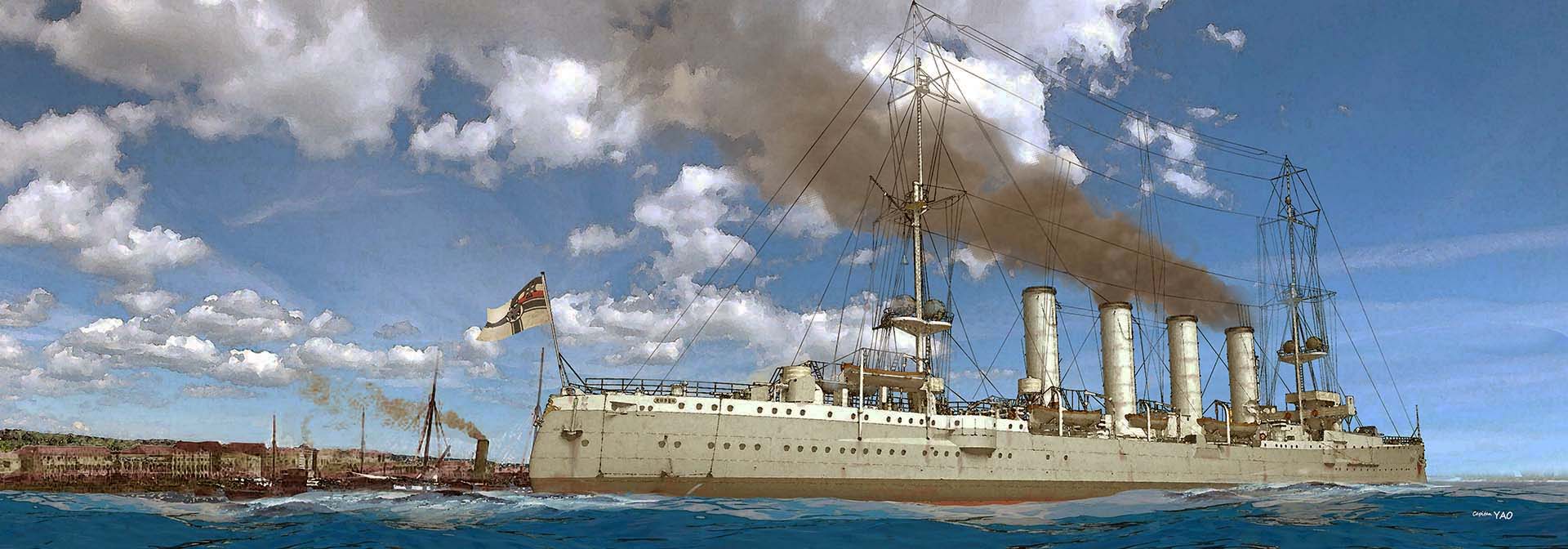
As for the light cruiser HMS Enden, she separated from Spee Squadron en route to become a privateer engaged in commerce raiding. Her elusive and dramatic combat history is quite remarkable. She once disguised herself as a British warship by adding a fake funnel, infiltrated the harbor of Penang, Malaya, and sank a Russian cruiser and a French destroyer before escaping unscathed. However, Enden was eventually intercepted by the Australian cruiser HMAS Sydney and, after being severely damaged in an engagement on March 13, 1915, was scuttled. The Royal Navy finally avenged its defeat at the Battle of Coronel. With the Spee Squadron destroyed, Britain was no longer concerned about its rear overseas and could concentrate its fleet to return to Britain for defense, ultimately starving the German High Seas Fleet and holding out at the Battle of Jutland, winning the final victory in World War I. However, the Spee Squadron's departure from Tsingtao became a matter for the Admiralty and had nothing to do with my father; these are things I only learned after the war.
Back in China, in August 1914, encouraged by the British government, Japan declared war on the German forces in Tsingtao. After more than 10,000 Japanese soldiers were killed and a cruiser was sunk, the German governor of Tsingtao, Alfred Meyer-Waldeck, finally surrendered on September 17.
This battle was entirely planned behind the scenes by my father. The key was to use the German colony of Tsingtao as bait to lure Japan into launching a major attack, while Britain only sent two battalions of Indian troops to make a show of it. In any case, Tsingtao did not belong to the British in the first place. This was tantamount to using someone else's property to ingratiate themselves with the Japanese, so that they would be willing to sacrifice and launch a full-scale attack. No matter how many casualties or losses the Japanese suffered, it was none of Britain's business.
The ability to deplete the enemy's military strength without spending any of one's own money or effort is a typical British strategy of meticulous calculation, and my father, Sir Draken, had mastered it to perfection by this time.
However, Japan was no pushover either. After the Battle of Tsingtao, it was discovered that the military forces of the major powers in China, whether British or German, had been largely diverted due to the war in Europe. At that time, Japan was the only remaining major power in China. This gave the Japanese an opportunity. If they took the opportunity to make unreasonable demands on China, the major powers would not have the energy to interfere, and might even tacitly approve them in order to keep Japan in the Allied camp. This is the origin of the "Twenty-One Demands Incident". But here I would like to insert a story that I am particularly interested in: "Flying Out of Tsingtao".

The protagonist of "Flying Out of Tsingtao" is German naval aviator Gunther Plüschow, who was born in Munich, Bavaria, and was serving in Tsingtao as a naval ensign when the outbreak of World War II. At that time, two Etrich Taube aircraft were shipped from Germany to Tsingtao in disassembled and crated form. After assembly, Plüschow served as the pilot and observer for the first aircraft, while the second aircraft was piloted by Ensign Friedrich Müllerskowski, who unfortunately crashed his plane shortly afterward, leaving Plüschow to continue flying alone.
 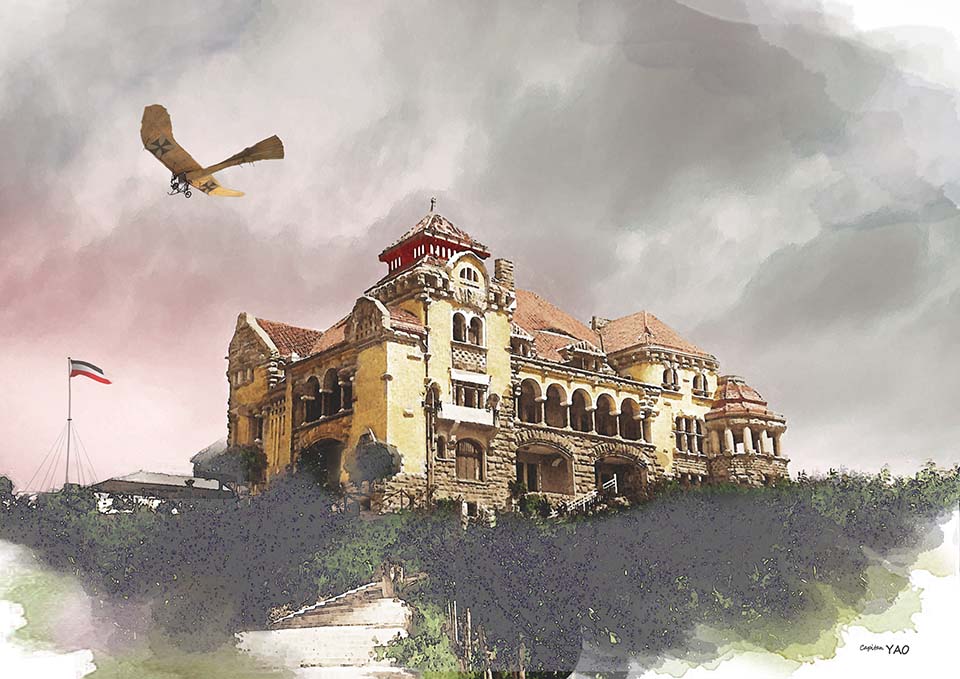
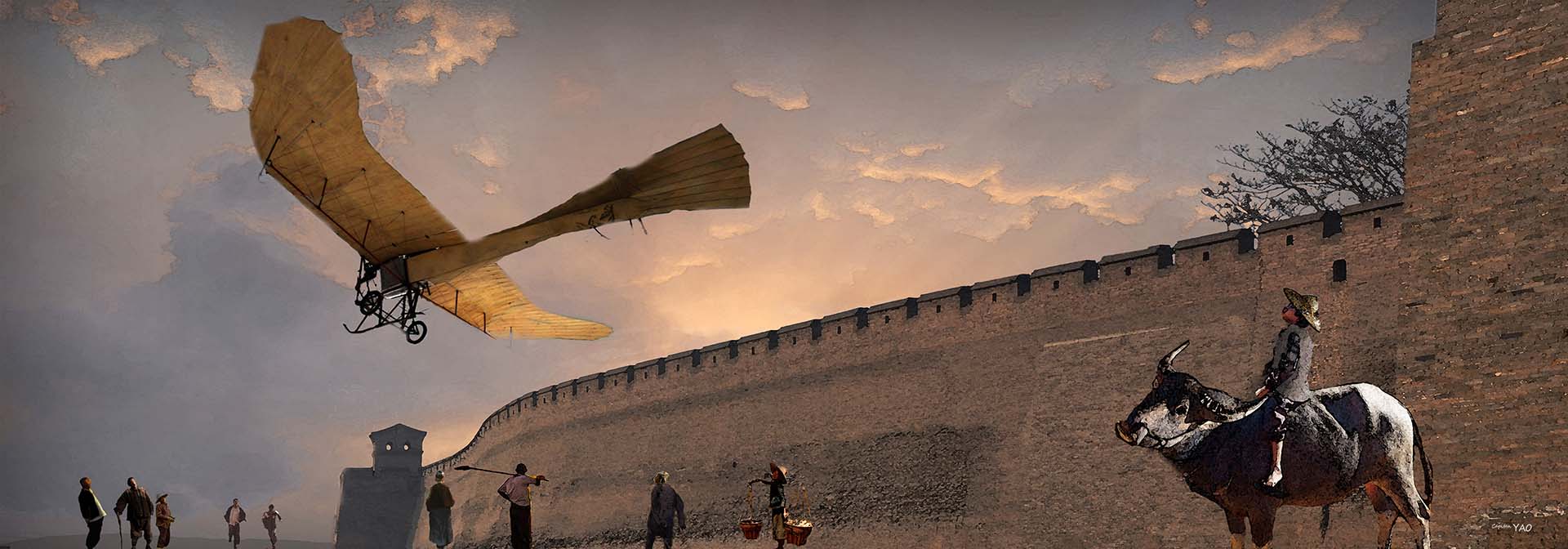
(Figure 1-8-15) After flying about 250 kilometers, Plüschow ran out of fuel and crashed into a rice field in Haizhou, Kiangsu Province.
By November 1914, the German forces in Jiaozhou Bay were doomed. On November 6th, Plüschow , under orders from the governor, carried confidential documents and flew out of Tsingtao amidst enemy fire. After flying approximately 250 kilometers, he ran out of fuel and crashed into a rice paddy in Haizhou, Jiangsu Province. He removed the steering wheel, set the plane on fire, and then began walking back to Germany. Upon hearing that a plane had flown out of Tsingtao, My father immediately notified the British consulates and garrisons along the route to closely monitor the situation and demand that the local government transfer Plüschow to the German-Austrian prisoner-of-war camp in Nanking in accordance with international treaties of engagement.
Plüschow managed to obtain a pass from the Chinese and traveled down the river by wooden boat to Nanking. There, he was pleased to find that Chinese officials openly supported Germany, but under pressure from the British, he still faced the risk of arrest and imprisonment in a concentration camp. He immediately jumped into a rickshaw and rushed to the train station, bribing a guard to let him board a train to Shanghai. In Shanghai, Plüschow met the daughter of a diplomat he had known in Berlin. She provided him with a fake passport under the name E.F. McGarvin, travel expenses, and a ticket for the SS Mongolia, bound for San Francisco via Nagasaki and Honolulu.
He arrived in San Francisco on December 5th and identified himself as Ernst Smith, a Swiss national. In January 1915, he traveled by train across the American continent to New York City. Plüschow did not want to report to the German consulate because he now held a Swiss passport. Worse still, he had become a celebrity; New York newspapers reported his arrival and even included photos—information provided by my father.
He had another stroke of luck. In New York, he met a friend he had met in Berlin who helped him obtain travel documents and a ticket for a ship bound for Italy on January 30, 1915. On board, someone asked about his background, and he claimed to have been a British naval officer, but his claim was inconsistent in the details. This wouldn't have been a big deal, but things didn't go as planned. Bad weather forced the ship to make an unscheduled stop in Gibraltar, a British colony. The British suspected his identity and arrested him, only to discover soon that he was the German pilot who had become famous for "flying away from Tsingtao."
On July 1, 1915, Plüschow, along with other German prisoners of war, was sent to the Donington Hall prisoner-of-war camp in Leicestershire, England, a 17th-century manor house. However, by this time he was already a seasoned escapee; the camp walls offered little respite. In just three days, he and another German prisoner, Oskar Trefftz, escaped during a torrential downpour, walking 24 kilometers to Derby to catch a train to London. The Metropolitan Police issued an alert, appealing to the public for assistance in capturing the two escapees, especially a man with "dragon tattoos."
With their names and characteristics published, they had to part ways for safety, and Oskar Trefftz was soon captured. In London, Plüschow used shoe polish and Vaseline to make his blond hair greasy black, and smeared coal dust and soot on his clothes to make him look like a dockworker. He posed for photos at a souvenir photography booth at the London docks, clearly believing it to be a safe place. He spent his time reading books about Patagonia, a practice that had a significant impact on his later life; he would sleep in the British Museum at night.
During wartime London, for security reasons, the government prohibited the announcement of any ship departure times or schedules. However, he was fortunate to meet a female companion who provided him with information about the departure of the SS Princess Juliana ferry to neutral Netherlands. He took a train to Essex port, and after four failed attempts, swam onto the ferry, hid in a lifeboat, and safely crossed the Channel to Flushing in the Netherlands, from where he transferred to Germany. Upon arriving in Germany, he was arrested as a spy, as no one believed he could have accomplished such a feat!
His incredible story was finally officially recognized, and Plüschow was hailed as "the hero from Tsingtao." He was awarded the Iron Cross First Class and promoted to captain, and assigned to command the Libau naval base in occupied Latvia. In June 1916, he held his wedding in the aircraft hangar at Libau.
When my father heard that Plüschow had returned to Germany, he regretted not being able to stop him, but he also had to admire his courage and perseverance. Based on his experiences, Plüschow wrote his first book, "The Adventures of a Pilot from Tsingtau" (Die Abenteuer des Fliegers von Tsingtau), which sold over 700,000 copies. I bought a copy when I was learning to fly at aviation school, and his legendary experiences deeply attracted me, making me a fan.
After the war, Plüschow worked as a sailor and went on adventures in South America. When he returned to Europe, I made a point of visiting him, and he mentioned his plan to sell his sailboat to buy an airplane. Sure enough, in December 1928, he bought a Heinkel HD 24 D-1313 aircraft, which was shipped to South America and assembled by engineer Ernst Dreblow. Predictably, it was named "Tsingtao." At that time, I had already begun my flying career in China, and when I saw the news in a magazine, I sent him a congratulatory telegram.
In 1929 and 1930, Plüschow flew a plane to deliver mail in Argentina and Chile, and explored and filmed documentaries in Patagonia and the Antarctic ice sheet. On January 28, 1931, the "Tsingtao" crashed near Brazo Rico, killing both Pélissau and Drebro.
Shortly after the Battle of Tsingtao, in the spring of 1915, my father was summoned to Chongnanhai to meet with President Yuan Shikai. Japan had presented China with a very harsh set of demands—the Twenty-One Demands. If these demands were met, China would essentially become like Korea, a colony. Given that Britain was the leading power in China, Yuan Shikai had no choice but to request the assistance of the British Minister, Sir John Jordan. This also demonstrated Yuan's shrewdness—using the conflicts between the great powers to thwart Japan's ambitions.
This makes sense. Given Britain's position in China at the time, maintaining the status quo was the most advantageous option. Therefore, it was necessary to prevent any of the great powers from attempting to change this balance of power, such as Japan. However, this matter was also somewhat tricky because Japan and Britain were allies. Special care had to be taken during this sensitive time of war to avoid provoking Japan to join the alliance with Germany and Austria-Hungary.
Therefore, Minister Jordan needed someone with good relations with the top echelons of the Chinese government and whom President Yuan trusted to secretly orchestrate the deal. Among the British diplomats in China, my father was clearly the most suitable candidate, which is why he went to Beijing to meet with President Yuan Shikai. However, because Japan had warned Yuan Shikai beforehand not to disclose the contents of the contract, my father had to travel in secret.
After understanding Japan's intentions, my father suggested to Yuan Shikai that the contents of the Twenty-One Demands be published through the media to trigger tensions among the great powers and put pressure on Japan. Because the media traditionally couldn't disclose their sources, this would provide more room for maneuver than if the Chinese government published the demands itself, making it harder for Japan to blame China.
Therefore, on February 9th, the Times of London was the first to publish the full contents of the Twenty-One Demands. The United States, Britain, Russia, and other countries immediately instructed their ministers in Tokyo to verify the information with the Japanese government. The Japanese government was alarmed but couldn't retaliate against China, so it simply claimed that the Times' report was unverified. Meanwhile, it dispatched personnel to quickly communicate with the great powers, giving China time to maneuver.
My father then advised Yuan Shikai not to treat the Twenty-One Demands as a package, but to break them down one by one. He suggested that Yuan should proactively agree to the less damaging terms as leverage to reject the more damaging ones, and employ delaying tactics to buy time, negotiating each clause slowly until the war in Europe subsided, allowing the major powers to intervene. Because my father had served in Japan and was very familiar with the Japanese political landscape, this strategy proved effective. In the end, only twelve of the twenty-one demands remained, but Yuan Shikai still refused to sign. By the end of April, the Japanese were getting impatient. It was rumored that the Japanese Minister to China, Hioki Eki, had told Yuan that if he still refused, Sun Yat-sen would offer even better terms, forcing the Japanese government to support Sun Yat-sen. This tactic struck at Yuan Shikai's weak point, and the terms were finally signed on May 9th.
It is said that Sun Yat-sen's condition was that if Japan supported him in seizing power, he would agree to cede the three northeastern provinces to Japan after taking power.
Yuan Shikai later became a historical sinner because he wanted to become emperor. The Kuomintang's history even regards the signing of the Twenty-One Demands as evidence of his treason. However, according to my father, the truth is probably the opposite.
My father and Sun Yat-sen were acquainted when they were in Japan. Although they were friends, my father had some reservations about Sun Yat-sen's style of doing things. When Sun Yat-sen died in 1925, my father said in an interview with a British newspaper: "Fortunately, Sun Yat-sen died before the revolution succeeded, which made him a political idol of all China. If he had actually succeeded in the revolution and become the leader of China, it would probably have been a great disaster."
My father sympathized with Yuan Shikai's failed attempt to become emperor, believing it was a missed opportunity. He thought that if Yuan had directly replaced the Ch'ing dynasty in 1912 and immediately implemented a constitutional monarchy, China's fate would likely have been very different. His imperial position would have come from the previous dynasty, thus reducing political turmoil. Moreover, Yuan Shikai's governing abilities far surpassed those of Sun Yat-sen, and China might have become prosperous and peaceful, or at least avoided the turmoil that followed for half a century.
However, when he accepted the position of President of the Republic of China and then wanted to become emperor, he became a national thief deserving of death, because the transition from imperial system to republic was irreversible. Yuan Shikai was shrewd all his life, but he failed to see this trend and was ultimately infamous for all eternity.
|
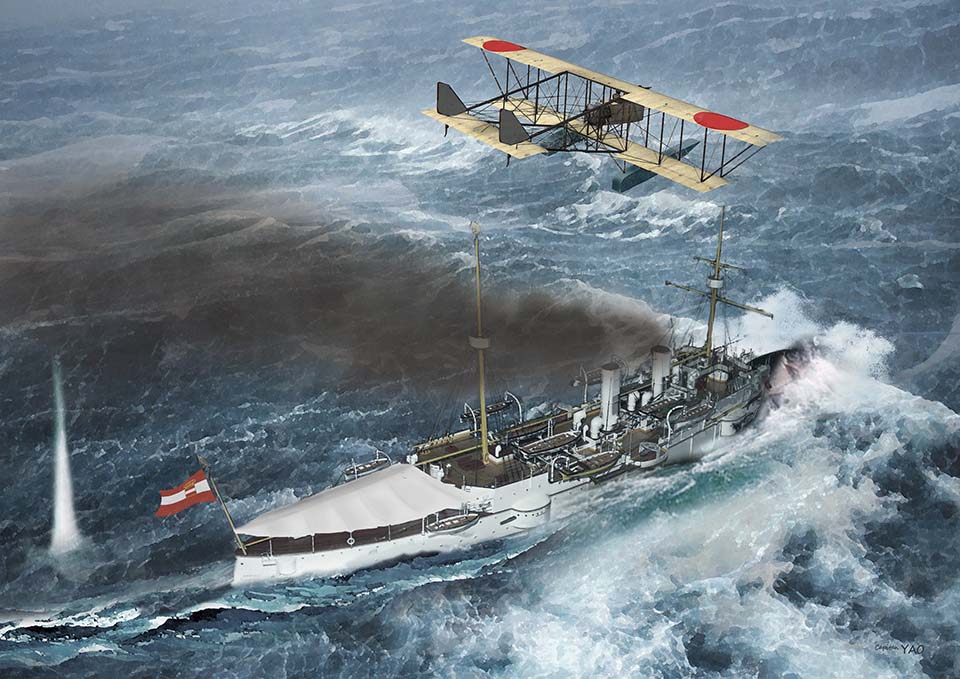
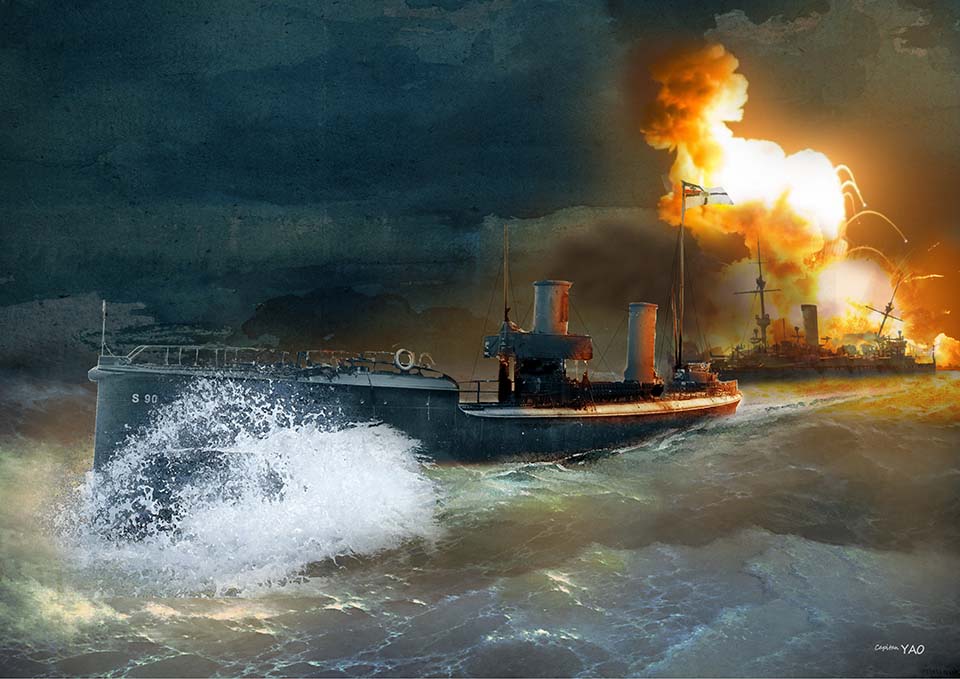 (Figure 1-8-11) On October 18, 1914, the German Royal Navy torpedo boat SMS S90 sank the Japanese cruiser Takachiho in Tsingtao.
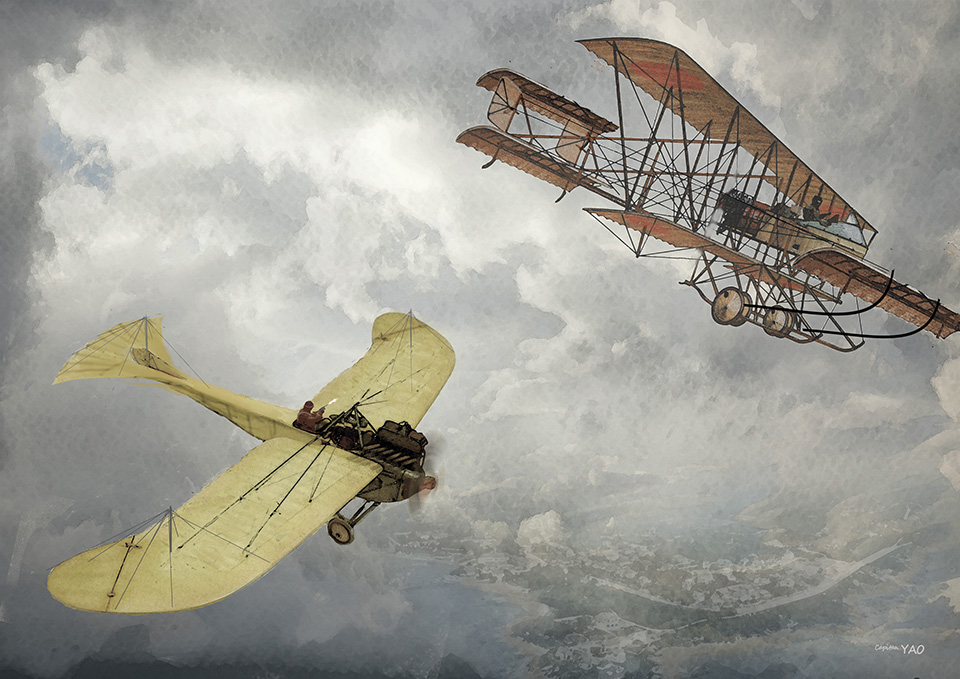
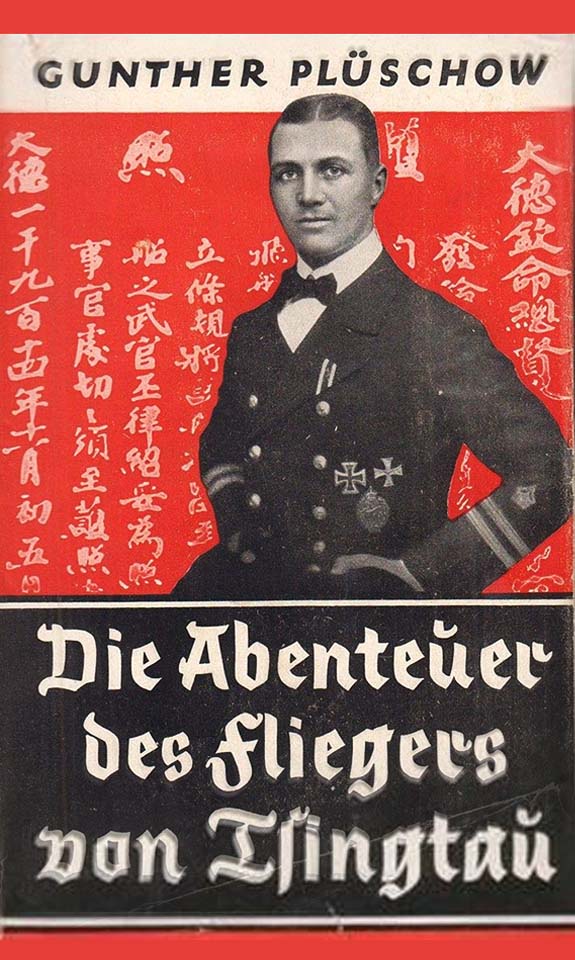 (Figure 1-8-16) The cover of Plüschow's book "The Adventures of a Pilot from Tsingtau" (Die Abenteuer des Fliegers von Tsingtau). The Chinese characters in the background are a "passport" issued in Chinese by the German governor at the time.
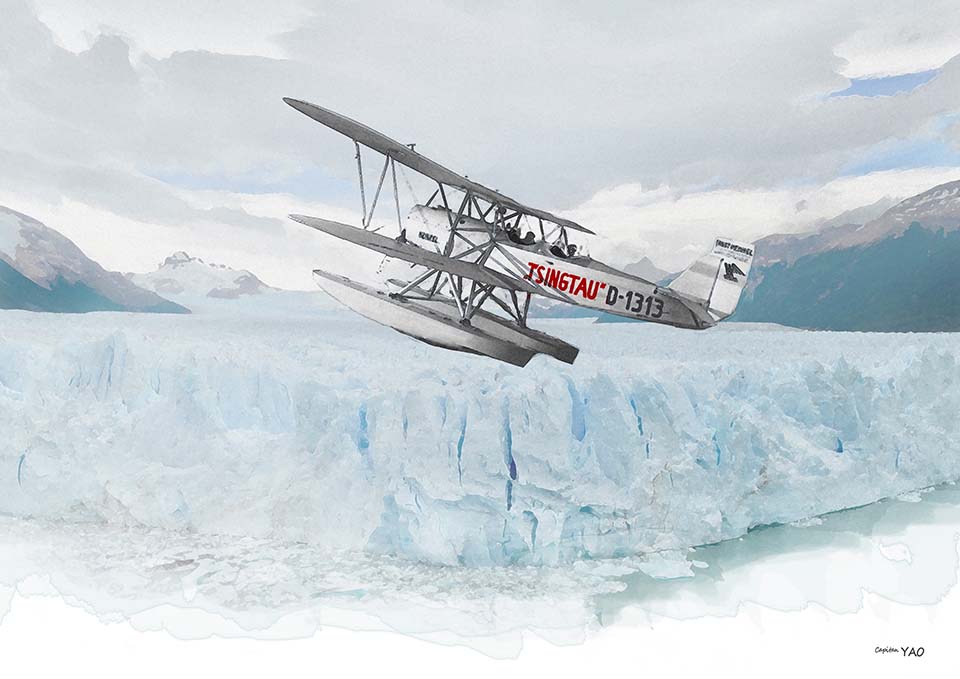 (Fig. 1-8-17) Plüschow’s Heinkel HD 24 D-1313 “Tsingtao” aircraft.
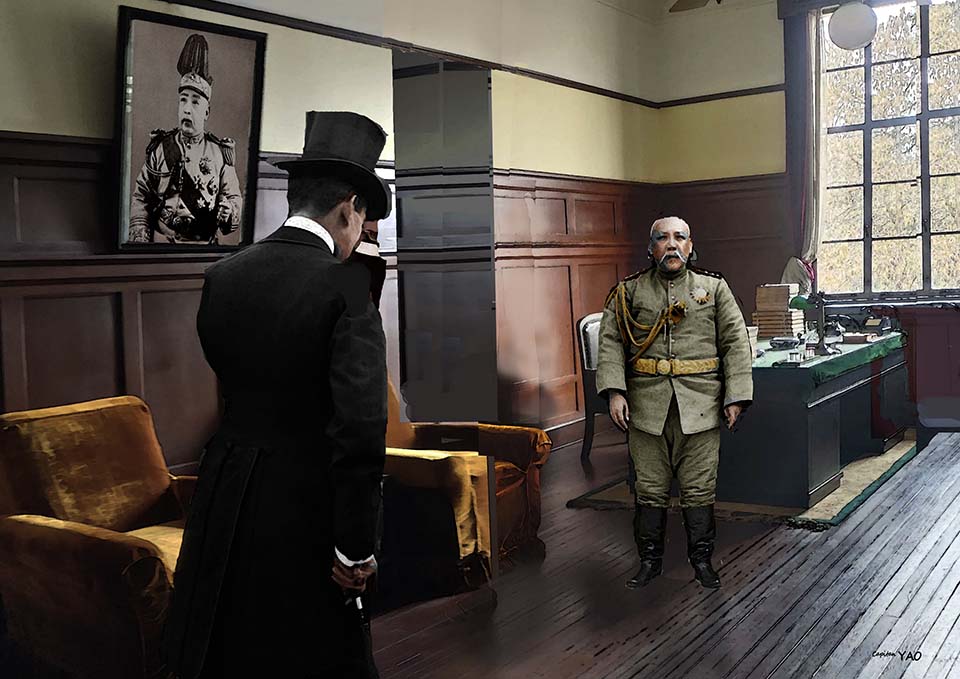 (Fig. 1-8-18) Sir Draken met with President Yuan Shikai..