7. Son of China
The screams from the Eastern Tombs didn't reach Tiantsin. For most Westerners in China, Empress Dowager Cixi's funeral was unimportant. That day, Sir Draken returned home from get off work. As he left the consulate, he looked back at the Union Jack rising halfway up the flagpole and told the sergeant guard at the gate, "Starting tomorrow, there's no need to fly the flag at half-mast!"
The tall, mustachioed Indian sergeant said, "Yes, sir! That's wonderful! We can finally start decorating for Christmas!"
Now, the first thing Sir Draken does when he gets home every day is to have his nanny hold little Paul, that is, me, and play with me. This is the happiest thing for him all day. Although I lacked a mother, I spent a happy childhood in Tiantsin under my father's care.
Tiantsin was the place in North China with the largest concentration of Westerners. My home was located in the former foreign concessions, facing the Haihe River, next to the so-called "German Barracks" (German military barracks in Tiantsin). What impressed me most at the time was a towering spire in the barracks that looked like a European castle. As a child, I always looked at it and imagined that fairy tales of knights and princesses were unfolding in the barracks. Later I learned that it was just a water tower.
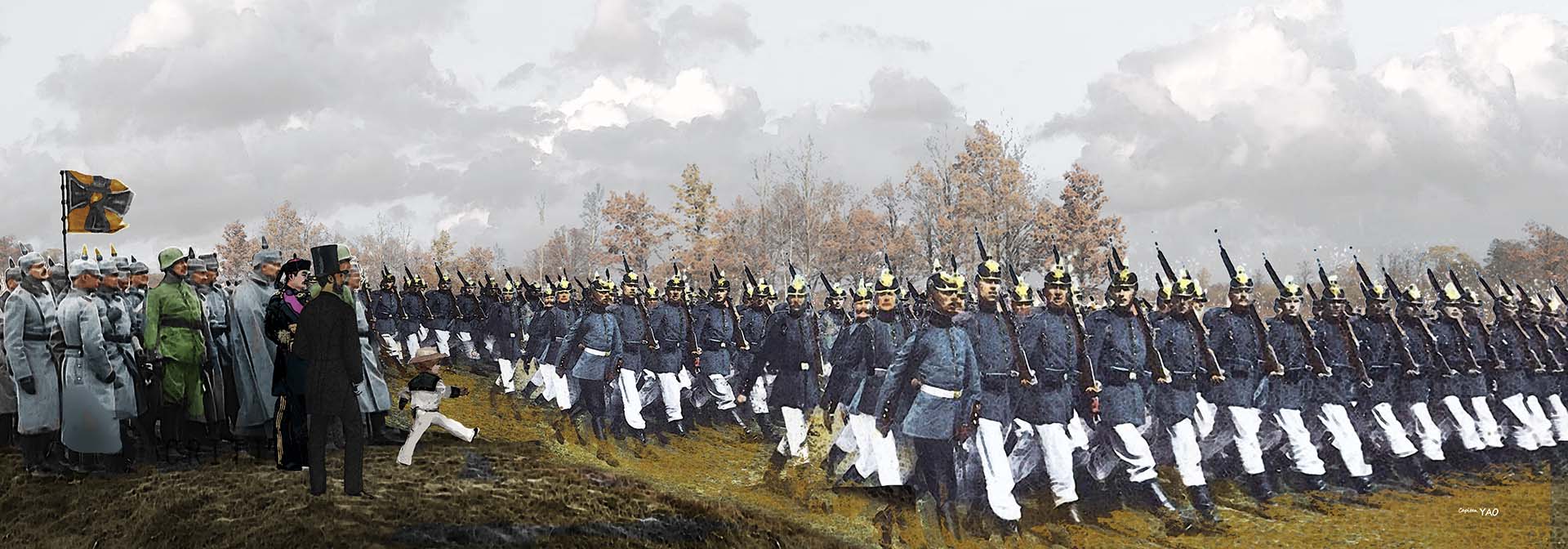
Visiting the German military parade was one of my favorite things to do as a child. The German army held parades almost every weekend, but they were only open to foreign guests on special and important holidays. The German-style military drills were unique, called "goose-stepping." Soldiers would extend their legs and kick forward, the simultaneous stomping of numerous boots creating a spectacular sound. My father, Sir Draken, as a consular official from an important country, always got the best position next to the commander during the parades. I would often imitate the German soldiers' goose-stepping in front of the crowd, making the adults burst into laughter. Seeing my enjoyment of the drills, my father specially asked someone to buy me a set of toy soldiers from England.
Westerners in Tiantsin were deeply concerned about the situation in China at the time. Before the military parade, my father whispered to the German military attaché, "I heard that the revolutionary party has occupied Wuchang. Will the Ch'ing Dynasty be doomed?"
"Impossible! Their Minister of War, Tie Liang, graduated from our military academy, and his troops are equipped with the best of our country's equipment. It is impossible for them to be defeated by the rabble of the rebels!" The German military attaché said confidently from a purely military perspective.
"Yuan Shikai is not only the prime minister now, but he also controls the army. The Manchu Tie Liang only controls the First Division; the other five are under Yuan Shikai's control. If Yuan shows any disloyalty, the Ch'ing Dynasty might be finished!" My father, however, held a different view.
At this moment, the military flag team and the band passed by the reviewing stand, and everyone saluted, ending the conversation between the two.

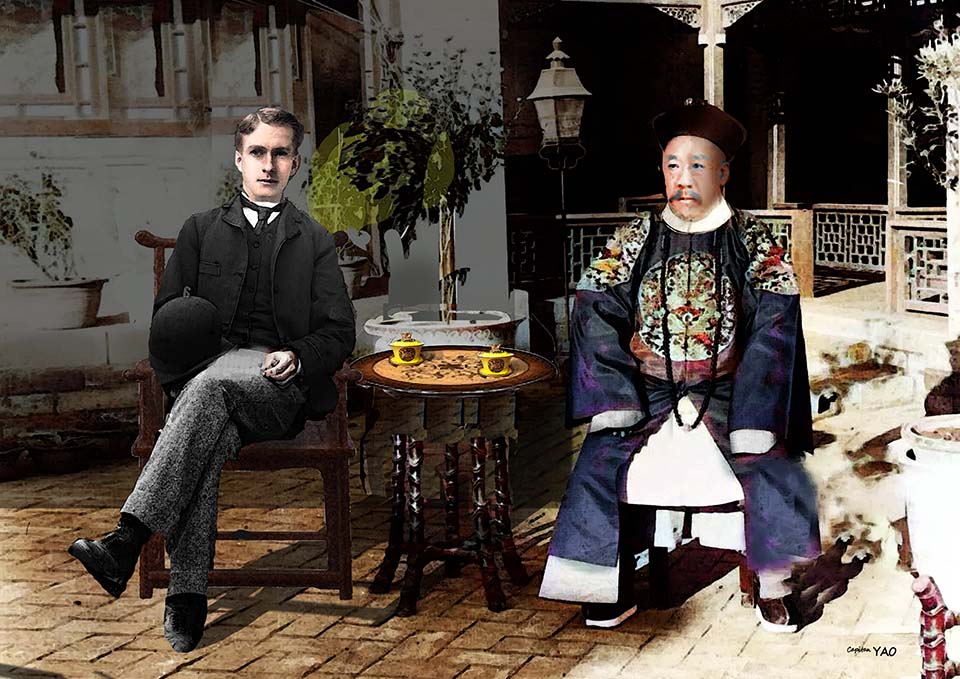
My father had been in contact with Chinese revolutionaries since his time in Yokohama, Japan. In addition to his friendship with Sun Yat-sen, he also had close relationships with other revolutionaries in exile in Japan, such as Huang K'o-ch'iang: of the Hunan Restoration Society. In the spring of 1911, Huang K'o-ch'iang:'s attack on the Governor-General's office in Guangzhou failed, resulting in the deaths of many party elites. Huang K'o-ch'iang: was also injured in the hand and fled to Hong Kong. It was at this time that my father, who was in Hong Kong on official business, met with him again.
"Many comrades have died. Is there any hope for the revolution?" Huang K'o-ch'iang: said dejectedly, extending his right hand, which only had three fingers left.
"I don't think Kwangchow is a suitable location..." the father analyzed objectively. "Kwangchow is too far from Peking. Even if we succeed, it won't affect the overall situation. If we really want to start an uprising, the closer to Peking, the better!"
Perhaps influenced by Sun Yat-sen's own geographical connections, most of the revolutionary party's actions before this were concentrated in the Kwangchow and Guangxi regions, and of course, none of them were successful.
"I've thought about that too, but the further north we go, the fewer resources we can get, and we don't know where to start," Huang said.
"I know you've recruited quite a few people in the new army, and they're currently stationed in various places. This could be an opportunity," my father said. "If we shift our focus northward to the Yangtze River region, such as Wuchang and Hankou, the impact of the uprising would certainly be much greater than in Canton. At the very least, we could divide the country along the river and control the wealthy areas south of the Yangtze. Only then would we have a chance to gain recognition and support from Western countries."
"Hmm! What you said makes a lot of sense. However, Wuhan's location on the banks of the Yangtze River also makes it easy for the Ch'ing government to send naval vessels to bombard it. We can't withstand the cannons of those warships," Huang said.
"That's true!" Sir Draken said, bowing his head in thought. "Let me think about this. You go and try to persuade the comrades in the new army."
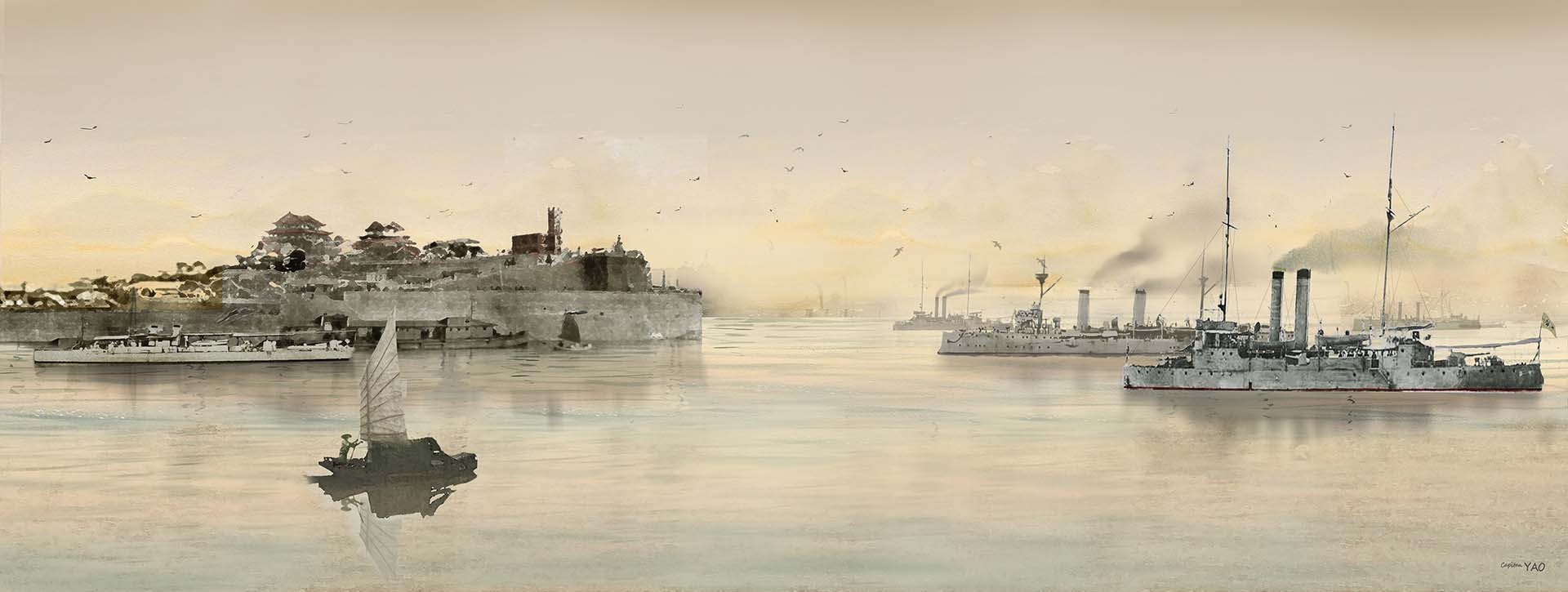
In fact, my father already had a plan in mind at the time, and he actually succeeded. When the revolutionaries occupied Wuchang in October of that year, the Ch'ing government mobilized a large fleet to bombard the Yangtze River. The navy's large-caliber guns and its elusive maneuverability made it difficult for the revolutionary army, which only had small cannons, to cope. However, the cruiser "Haichi," the largest in the Ch'ing navy and equipped with the largest eight-inch caliber gun in China, did not participate. Why? This has to do with my father's cleverly arranged plan to lure the enemy away from their stronghold!
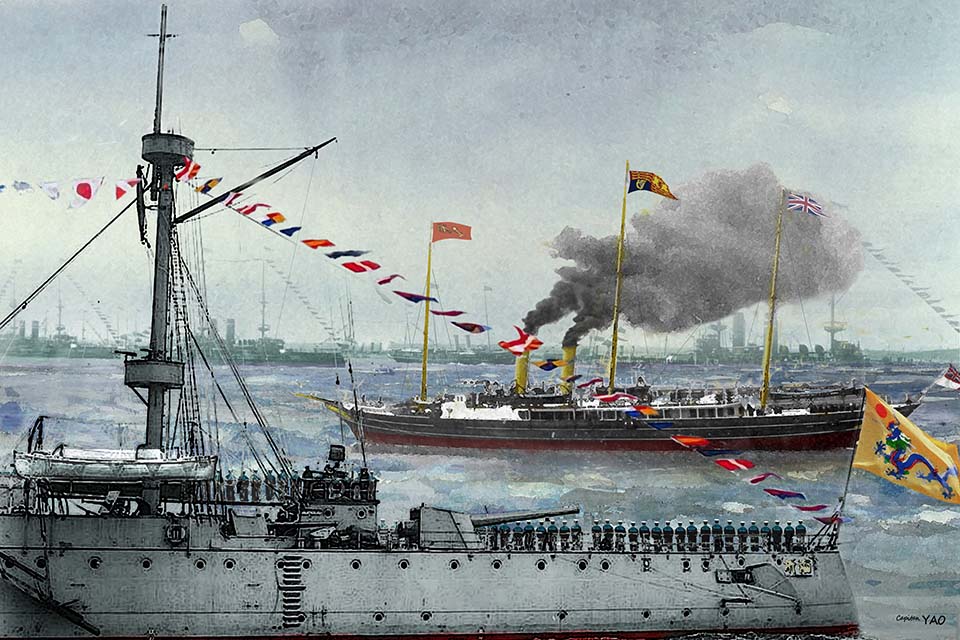
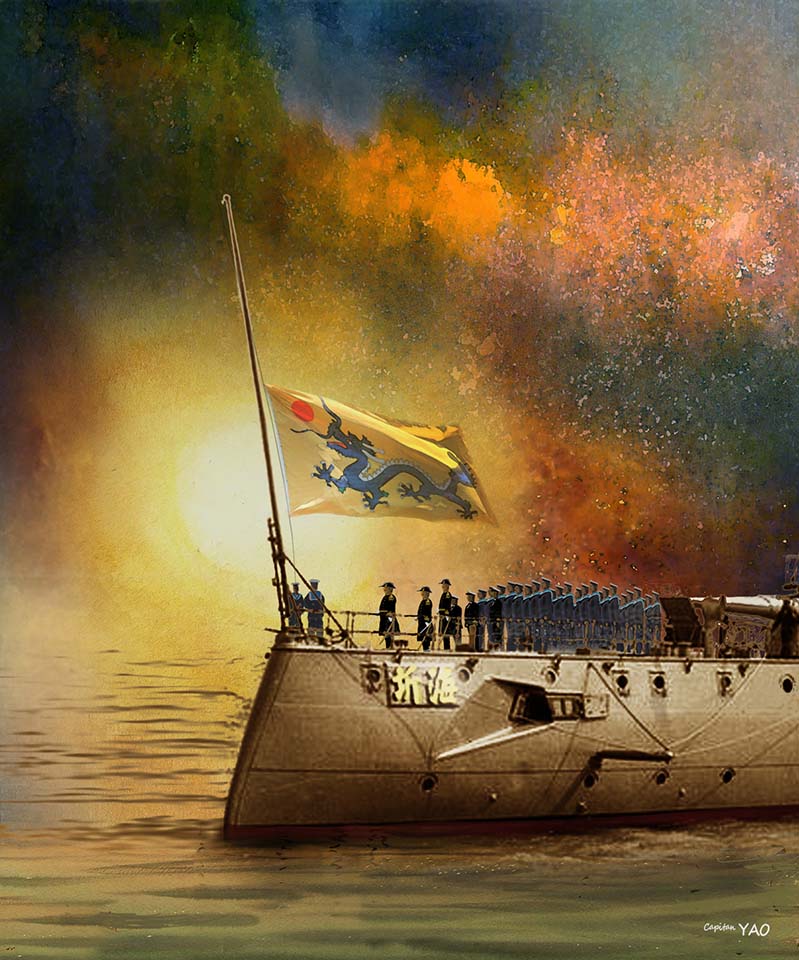
First, we must introduce the cruiser "Haichi". She and her sister ship "Haitian" were built by Armstrong Shipyard in England. They were launched in 1896, completed on January 24, 1898, and arrived in China in the summer of 1899. The cost of each ship was £328,242, making them the largest warships in China at the time.
The Haichi-class ships were 424 feet long, 46.9 feet wide, and had a draft of 16.75 feet, displacing 4,300 tons. Their decks were covered with heavy armor up to five inches thick. They had eight boilers and two reciprocating steam engines, producing 17,000 horsepower and a speed of 24 knots. The crew consisted of 45 officers and 431 enlisted personnel. Armament included two 8-inch main guns (one in the bow and one in the stern single-mounted turret), ten 4.7-inch guns (located on the bridge, on both sides, and aft), twelve 3-pounder guns, three 1-pounder guns, five Mark II machine guns, and five 18-inch torpedo tubes below the bow. In all aspects, they were the most powerful warships in China at the time.
However, the "Haitian" was ran aground on a reef off Dingxing Island in Kiangsu Province on April 26, 1904. The entire ship was wrecked, with the bow rising and the stern submerged. The captain at the time was Liu Guanxiong, a position that should have been executed. However, in order to consolidate his power, Yuan Shikai not only spared Liu's life but also promoted him to Minister of the Navy. From then on, Liu Guanxiong became a devoted follower of Yuan Shikai. This was Yuan's art of managing people.
However, from then on, the Haichi became the only Chinese warship with an eight-inch main gun. For the revolutionaries, the biggest nightmare was to find the Haiqi on the riverbank the morning after the uprising, but this never happened.
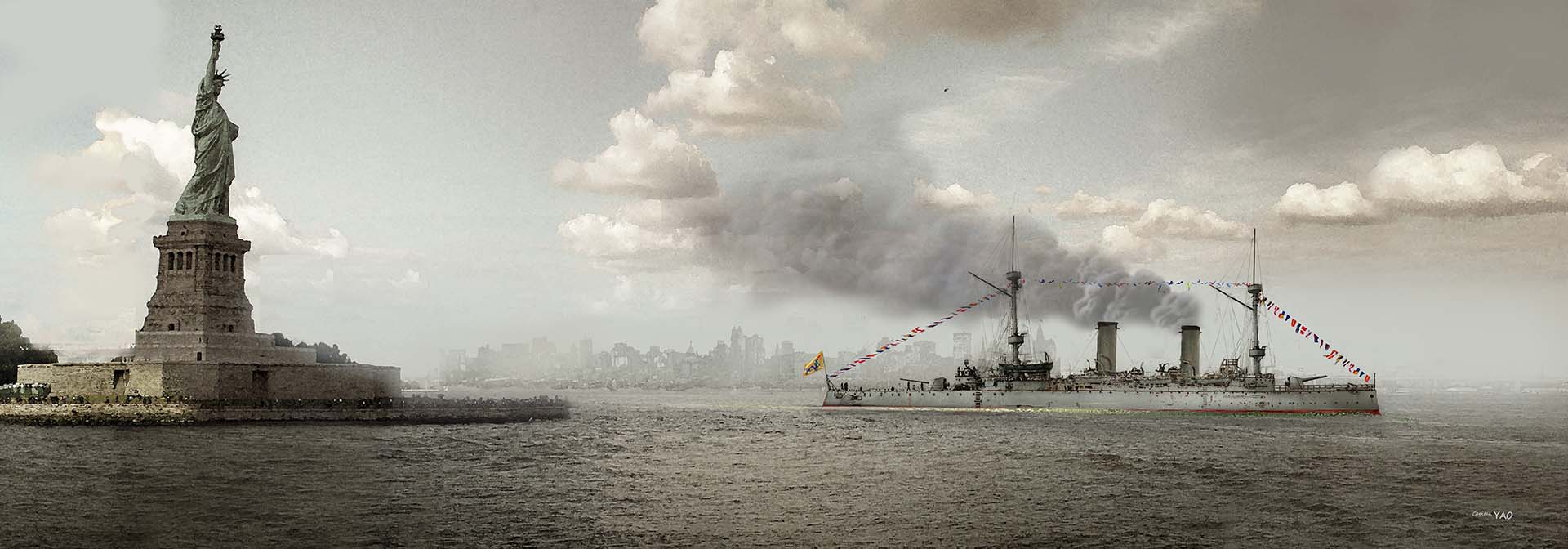
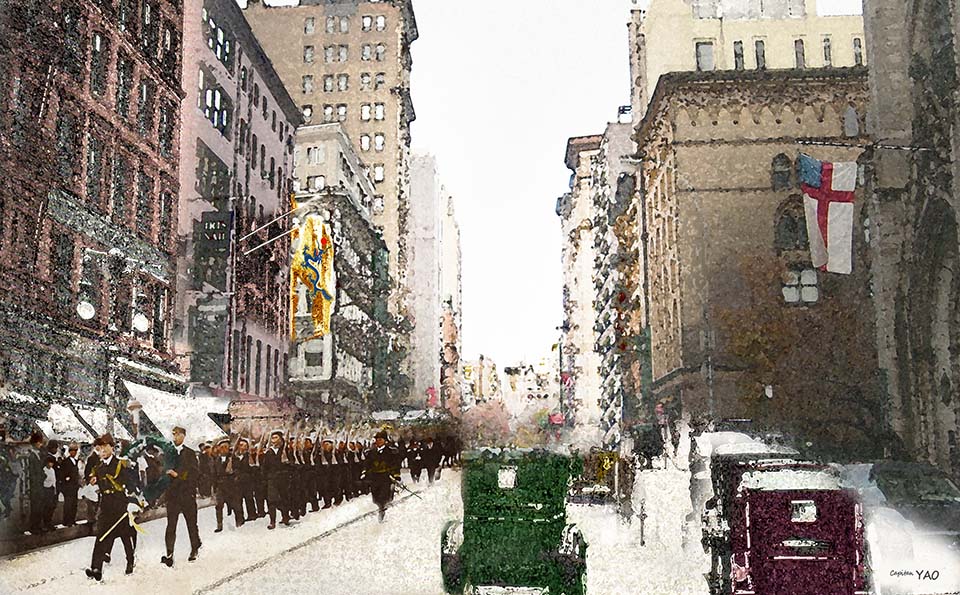
(Figure 1-7-5) The Haichi cruiser enters New York Harbor.
It turned out that while my father was secretly meeting with Huang K'o-ch'iang, London had already sent a telegram inviting China to send a warship to participate in the naval review for King George V's coronation ceremony on June 24th of that year. Naturally, my father was responsible for negotiating this matter with the Chinese government. He suggested that China send its largest warship, the Haichi, to Britain to show its respect, and at the same time, let the Haichi take the opportunity to return to the shipyard for major repairs. In short, the goal was to get the Haichi out of China and not to return until the matter was settled.
My father had considered the matter very carefully. To prevent the "Haichi" from being recalled by the Ch'ing government midway and having to turn back, he specifically recommended Admiral Cheng Biguang as the leader. Cheng was from Canton and had served as the captain of the "Kuangping" cruiser during the Sino-Japanese naval battles of 1894-1895, enjoying considerable prestige within the navy. His younger brother, Cheng Kuiguang, was a follower of Sun Yat-sen and was killed by the Qing government along with Lu Haodong after the failure of the first Kwangchow Revolution. However, the court did not connect these two events and agreed to my father's suggestion.
On April 21, Cheng Biguang led the "Haichi" cruiser out of Shanghai. Upon setting sail, he immediately ordered all officers and men to cut off their queues (traditional Manchu hairstyles). After the coronation ceremony and naval review on June 24, the cruiser underwent major repairs in dry dock. Following the repairs, it traveled to the United States and Cuba for visits before sailing the warship back to Britain. In October, news arrived that the revolutionary army had captured Wuchang. Cheng Biguang, who was still in Britain at the time, immediately declared his support for the revolution. At this time, his colleague, Admiral Sa Zhenbing, was leading the remaining fleet to bombard Wuchang from the river. However, without the "Haichi's" eight-inch cannons, their firepower was insufficient. Ultimately, Sa Zhenbing abandoned the fleet and retired to Shanghai. The entire fleet immediately declared its support for the Republic and joined the revolutionary army. Having lost its entire fleet, the Ch'ing government realized its fate was sealed and finally abdicated in February 1912.
In fact, the Ch'ing court was initially quite confident in suppressing the Wuchang Uprising, as evidenced by Sa Zhenbing's telegram to the court upon his arrival in Wuhan. However, many naval officers had studied in Britain and were deeply drawn to Western modern democratic political systems, resulting in widespread support for the revolution. Upon arriving in Wuhan, the fleet's officers and men nominated Tang Xiangming to Sa Zhenbing to lead the uprising. Meanwhile, Li Yuanhong, the Hubei military governor elected by the Wuchang revolutionaries (Li had previously served in the Beiyang Fleet), also sent a secret envoy to Sa Zhenbing, posing as a student, to promote the revolution. Sa Zhenbing, a veteran who had studied in Britain and had traveled abroad multiple times to receive ships, possessed considerable knowledge of and endorsed Western democratic politics. However, he was psychologically unable to accept leading a rebellion and waging civil war, especially disagreeing with Sun Yat-sen's advocacy of "expelling the Manchus." This brings us to Sa Zhenbing's background.
The Sa family had lived in Foochow for generations, but their ancestor was a Semu (a non-Han ethnic group) named Sa Tu-la, who served as a general stationed in Foochow during the Yuan Dynasty, thus settling there. In modern history, the Sa family produced many notable figures in the naval, academic, and financial fields. Sun Yat-sen's advocacy of "expelling the Manchus" was actually deeply racist. Although Sun explained that the general Chinese public didn't understand democratic revolution and that using the long-standing popular idea of "overthrowing the Qing and restoring the Ming" was easier to promote, it was particularly unacceptable to the non-Han Sa Zhenbing. When the Han officers in the fleet confronted Sa Zhenbing, he was forced to either resign from his command and let them do as they pleased, or face armed conflict. Caught in this dilemma, Sa Zhenbing left the fleet and took a small steamer to Shanghai at night to retire. As he departed, he used the ship's lights to notify the other ships: "I am leaving. From now on, you ships and boats shall take care of yourselves in military matters." At that time, my father was in Shanghai dealing with the impact of the revolutionary turmoil on diplomacy. He made a special interview with Sa Zhenbing to understand the situation at the front. The above is what Sa Zhenbing said to him face to face.
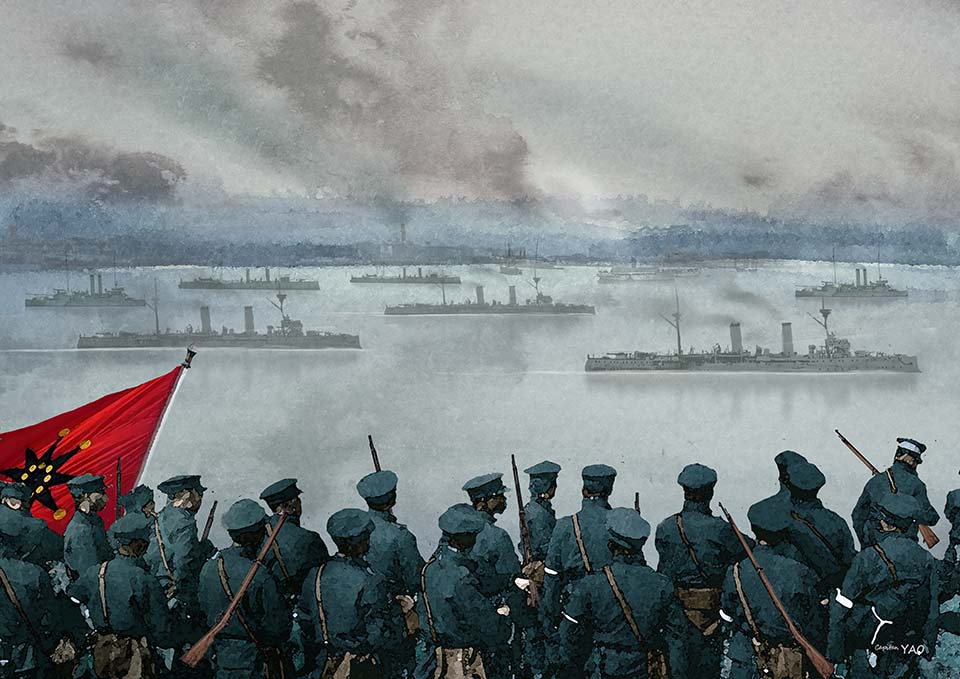 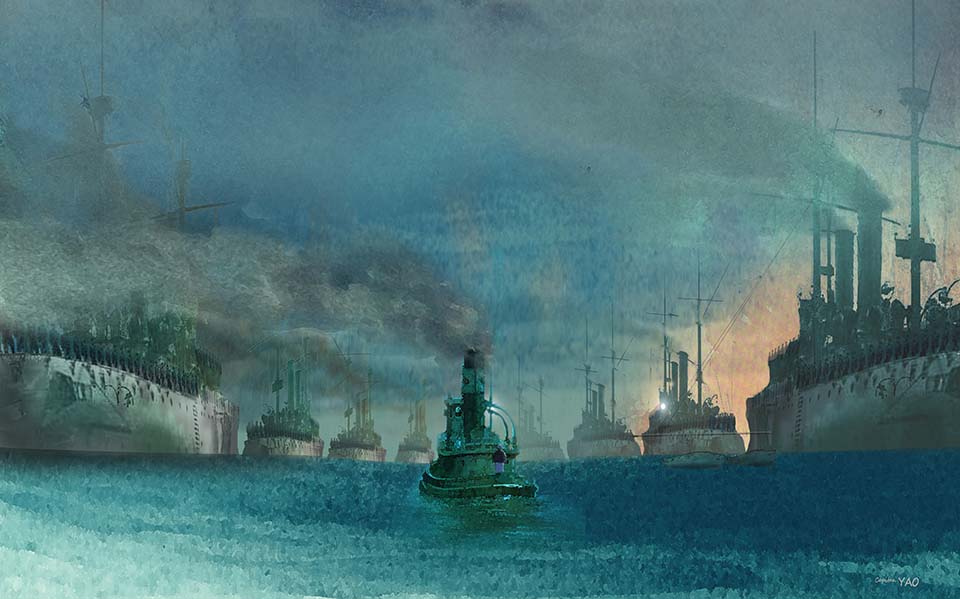
If the Wuchang Uprising hadn't resulted in widespread repercussions, Britain might have helped the Ch'ing government eliminate the revolutionaries. However, the Ch'ing dynasty's fate ultimately sealed at that moment, the key factor being Yuan Shikai. In 1909, when the Xuantong Emperor ascended the throne, Yuan Shikai fled Peking to Tiantsin overnight, fearing that Zaifeng would avenge his brother. Zaifeng was the younger brother of the Guangxu Emperor and the biological father of Puyi. This so-called revenge referred to Yuan Shikai's betrayal of the Guangxu Emperor during the Hundred Days' Reform, informing the Empress Dowager and leading to the tragedy of Guangxu's imprisonment and death in Yingtai by Empress Dowager Cixi.
When the Wuchang Uprising broke out, the entire court was in chaos, and no one could make a decision. At this time, everyone thought of Yuan Shikai again, but Yuan was well aware of the intricacies of Chinese officialdom. He used the excuse of "unhealed foot ailment" to hide in his hometown in Henan and refused to come out of retirement. Only after repeated pleas from the court did he reluctantly agree to return to Peking. Under these circumstances, Yuan Shikai seized the advantage of home ground, and Zaifeng dared not utter a word even if he wanted to retaliate.
Unexpectedly, the cunning Yuan Shikai took advantage of the court's need to reinstate him in order to deal with the revolutionaries, and used this opportunity to force the emperor to abdicate. It is said that he used the example of the French Revolution to intimidate Empress Dowager Longyu, who was so frightened that the widow and orphan had no choice but to agree to abdicate in order to save their lives. He then used this as a credit to extort money from the revolutionaries in the south, and in 1912 he made himself the first president of the Republic of China.
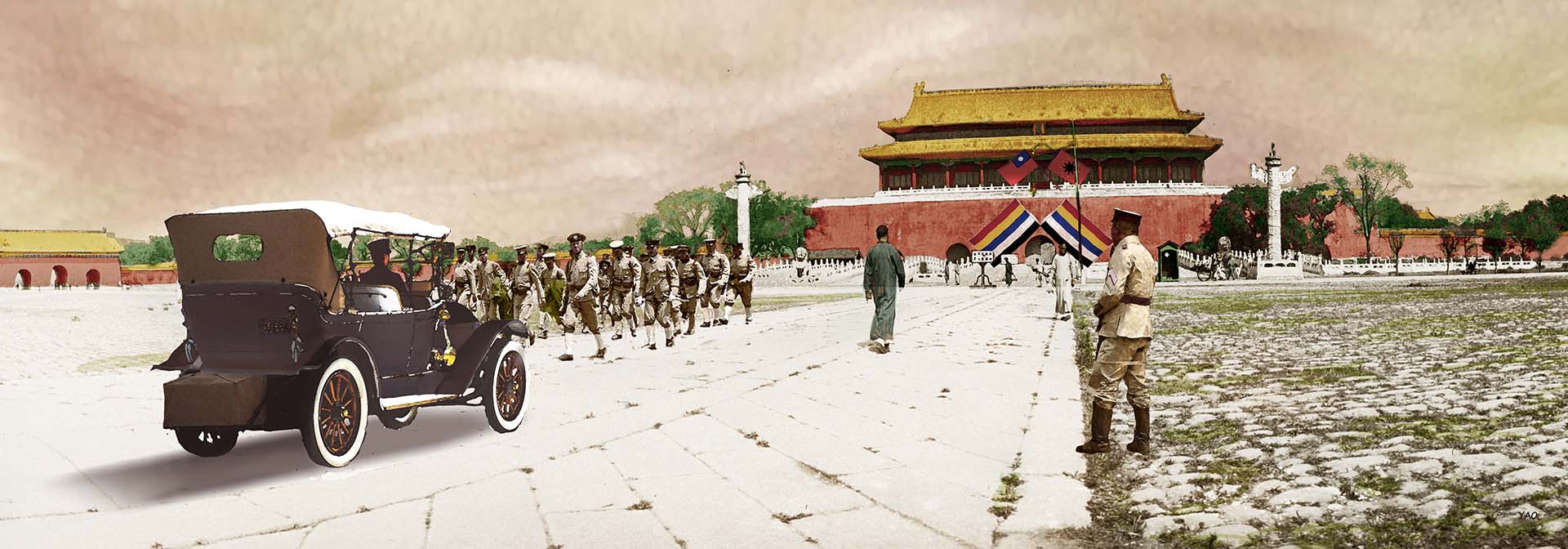
(Figure 1-7-10) Yuan Shikai took office as the first president of the Republic of China in Peking.
However, the new government still allowed the old emperor to retain his imperial organization and ceremonies within the Forbidden City, creating the peculiar phenomenon of "a country within a country." This was Yuan Shikai's cunning tactic: using the young emperor to win over the hearts of the royalists while simultaneously weakening the revolutionaries' momentum, thus preventing the revolution from achieving its full potential.
When the Ch'ing Dynasty imperial family and the Republic of China government signed this contract, fearing that the other party might breach it, they specifically asked the British Minister, Sir John Jordan, to act as a witness. My father, Sir Draken, assisted in handling that matter. Puyi's father, Zaifeng, also secretly entrusted my father to buy a large house in the British concession in Tiantsin as a residence should the young emperor be expelled from the Forbidden City. I still remember the address was No. 166, Thirteenth Road; I often passed by there when I was a child.
Soon after, my father received a summons from the palace requesting that he bring me to the capital to meet the emperor. Everyone was completely baffled. It turned out that the ministers believed that the modern emperor also needed to learn English, so the palace needed to select several trustworthy children of similar age who could speak both Chinese and English to serve as the emperor's study companions. I was one of them, recommended by Prince Su. Before going to the palace, my father specially sought out some former palace staff to instruct me on the etiquette for meeting the emperor. I, in turn, brought a small group of my beloved British-made toy tin soldiers as a gift.
We took the train from Tiantsin to Peking. This was my first time returning to this ancient capital since I was old enough to understand things. The bustling streets, with their camels, mules, horses, cars, and crowds, were a sight to behold. When my father and I arrived at the palace gate, an attendant eunuch announced our arrival. Because I was a young child, I was granted the privilege of riding in a sedan chair. Two eunuchs carried the small sedan chair, one in front and one behind, into the palace, while my father walked alongside.
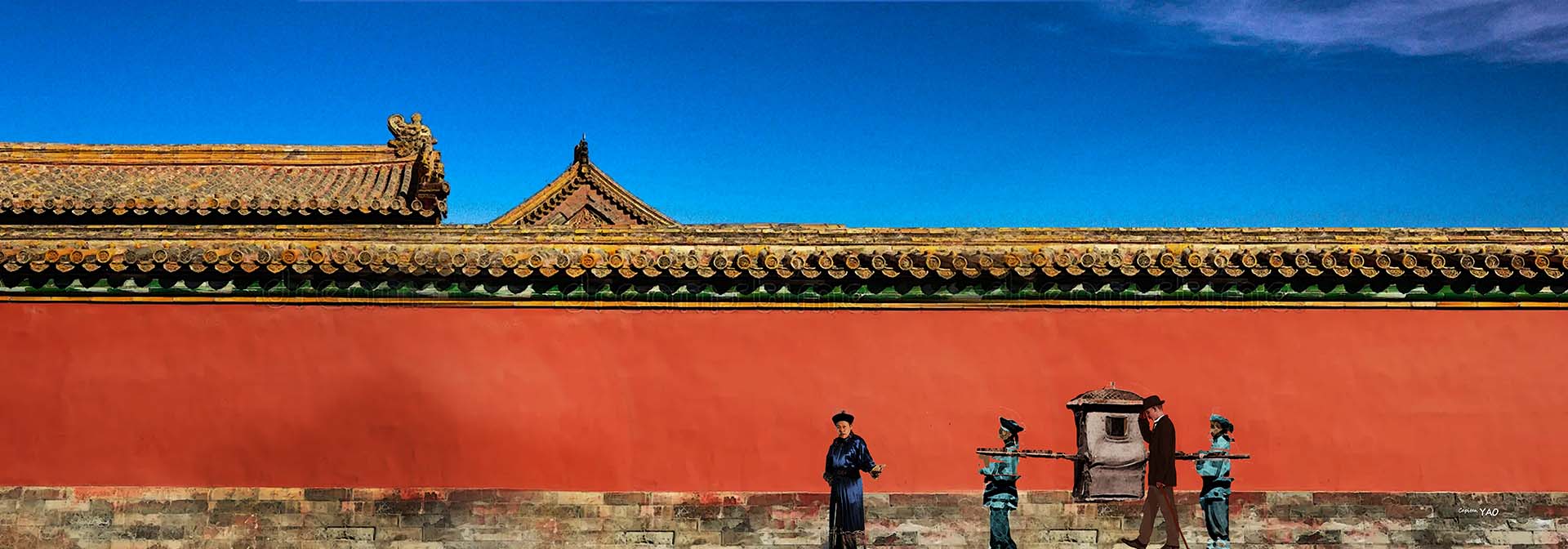
(Figure 1-7-11) Paul was granted a sedan chair by the emperor, with Sir Draken accompanying him, and entered the Forbidden City to serve as Puyi's playmate.
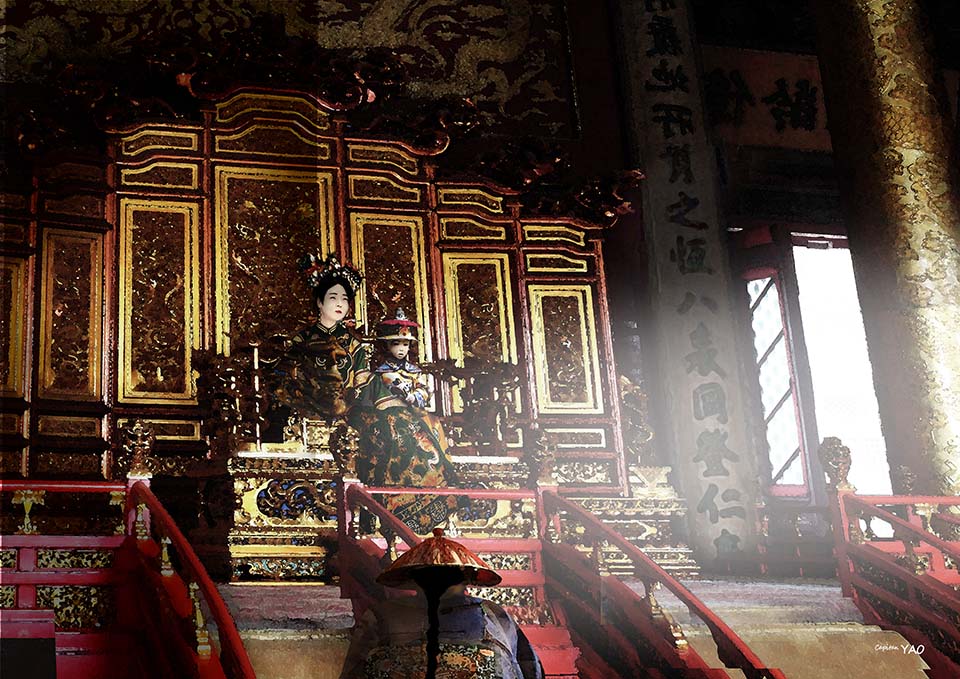
The Forbidden City is incredibly vast, with countless rooms but hardly any trees. As we passed through the square, the dazzling sunlight reflected off the yellow glazed tiles, making it particularly blinding. After much effort, we finally met the Emperor at the Yuqing Palace. He was thin and small, seemingly about my age, wearing a bright yellow robe embroidered with blue dragons. At first, we all had to address him as "Your Majesty" or "Emperor," but after our teacher gave him an English name, we privately called him "Henry."
Those who accompanied us included the emperor's younger brother, Pujie, and others. There was only one girl, Kim Bihui, the daughter of Prince Su, whose formal name was "Fourteenth Princess," but we all called her by her childhood name, "Dongzhen"(Oriental treasures). She was born in 1907, just like me.
Puyi didn't formally learn English until several years later, when another Englishman, Sir Reginal Fleming Johnston, arrived. Our relationship with Puyi was more like playing together than studying together. But how do you play with the emperor? After greeting him, everyone stood there at a loss. I remembered the gift I had brought and took it out to present to the emperor. A eunuch rushed forward and took it, waiting for the emperor's signal before slowly opening the box. When everyone saw the exquisitely crafted British toy soldiers, their faces lit up with excitement. Several children immediately lay down on the ground to play with them. Dongzhen was clearly also enthusiastic about this kind of game that only boys played!
Henry exclaimed with delight, "Finally, I have a squad of guards under my command!" This was probably the largest army he would ever directly command in his life.
Sir Draken and Prince Su had not seen each other for a long time, so they went to the next room to enjoy tea and conversation. Last year, when the Ch'ing Emperor abdicated, Prince Su, with the help of his Japanese ronin friend, secretly moved his family to Lushun to live in seclusion. Now that the situation has stabilized somewhat, he has taken the opportunity to return to Peking to look for opportunities.
"How is the Prince doing in Lushun lately?"
"So the whole family is starving, living off their savings, Sir Draken!"
"Your Highness, you're joking! The Emperor is still in the Forbidden City, and you, a prince, have already run away?" Father said mischievously. "But the Republic of China government has actually been quite good to the old imperial family, allowing you to maintain this small court within the palace. If this were a revolution in the West, most of the royal family and nobles would have lost their heads!"
"Hmph! This is clearly Yuan Shikai bullying orphans and widows while pretending to be a kind person. Listen to the 'Long Live the President' chants coming from Chongnanhai, is this reasonable?"
Sure enough, from Yuan Shikai's residence in Chongnanhai, near the Forbidden City, came the sounds of military music and shouts of "Long live the President!" Prince Su gritted his teeth and said, "Hmph! This traitor, if the Empress Dowager were still alive, would he dare?"
"Speaking of the Empress Dowager, you were present at her funeral. Is there anything I can ask you?"
"Go ahead and say it! There are no taboos anymore!"
"Did you know that the Empress Dowager had a luminous pearl from the Western Regions by her side when she was alive...?"
"Why would you ask about this thing?" Prince Su's face darkened. "Even if I were crazy about getting rich, I wouldn't dare to even think about it!"
"Oh! Your Highness has misunderstood, that's not what I meant... That's a national treasure of the court!" the father quickly explained.
"Protecting the nation, my foot! To my Great Ch'ing Empire, this is nothing but an ominous object!"
The prince changed the subject: "I don't want to talk about this anymore! Speaking of treasures, do you know how my daughter got her name, 'Dongzhen'?"
"Forgive my lack of knowledge, Your Highness, for I humbly request your guidance!" the father said, deliberately using flowery language.
"It means 'Treasure of the Orient,' a name given by my Japanese friend, Mr. Naniwa Kawashima. I'm currently considering whether to send her to England or Japan for her education..."
"I suggest sending her to England for her education to become a lady, which is necessary for a princess, and if you allow, she can live in my house..."
"Whether she is a lady or not is not important. Mr. Kawashima believes that Dongzhen is no ordinary girl. She is the last hope for the revival of our Great Ch'ing Dynasty. Therefore, he plans to personally train her and even adopt her as his goddaughter!" Prince Su said.
Just then, the sounds of children playing and laughing in the next room caught Prince Su's attention. He asked his father, "And where is your son?"
"I don't have any particular plans. If I were in England, I would have Paul attend Eton, but I'm stationed abroad most of the time..." Sir Draken said, "Oh, right! I heard I'm being sent to St. Petersburg, Russia soon!"
Had my father not been appointed as the King's special envoy to St. Petersburg, the position of "Imperial Tutor" would have been rightfully his. Before leaving China, my father recommended his Oxford classmate, Johnston, who was then the Deputy Administrator of the Weihaiwei Colony, to take his place, which changed the course of his life.
|