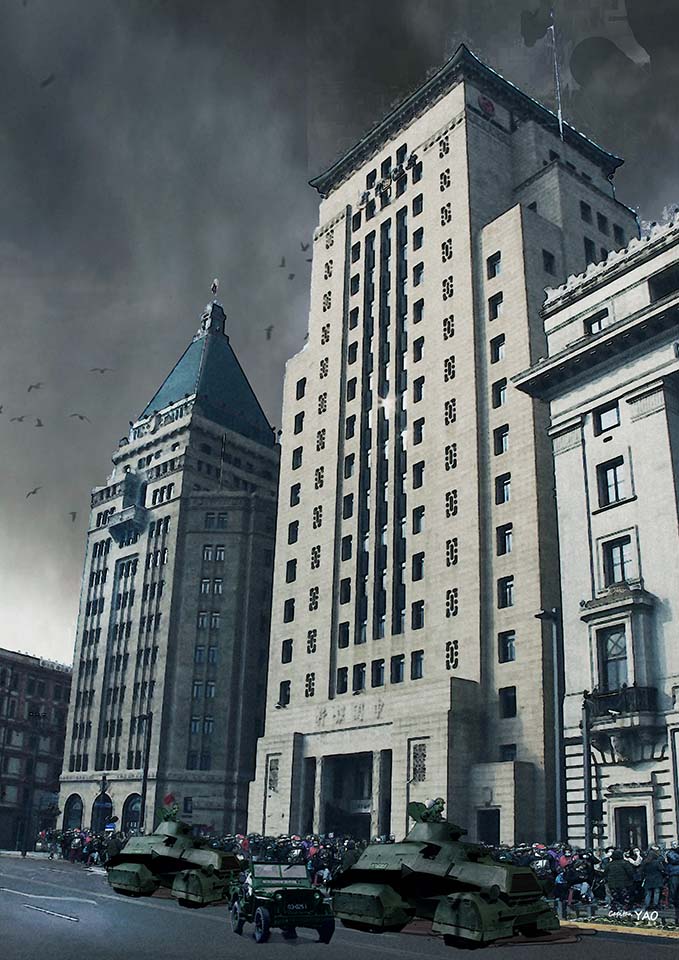
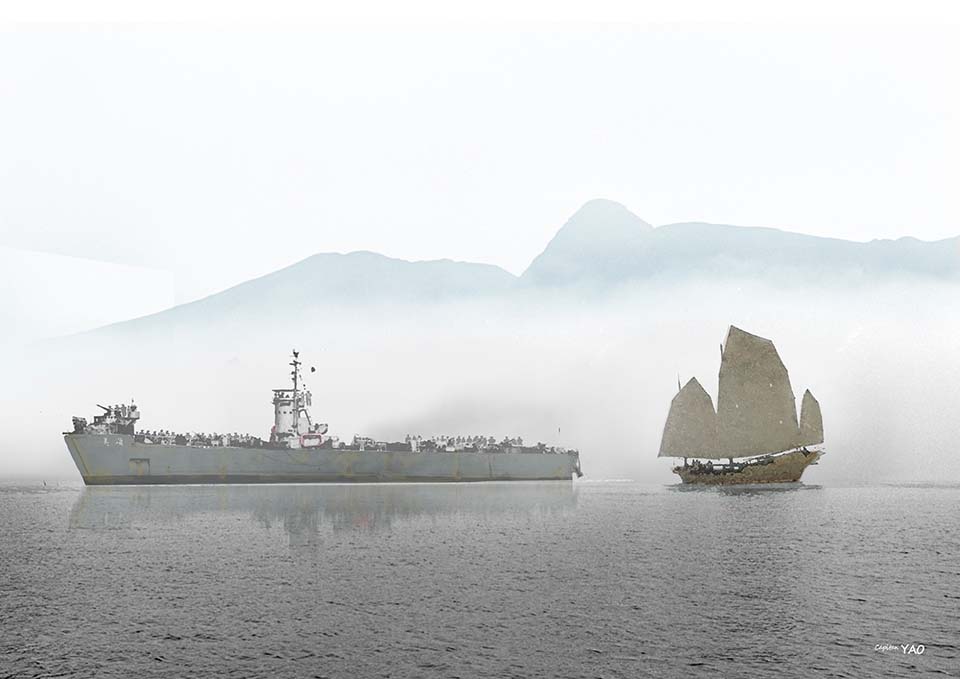
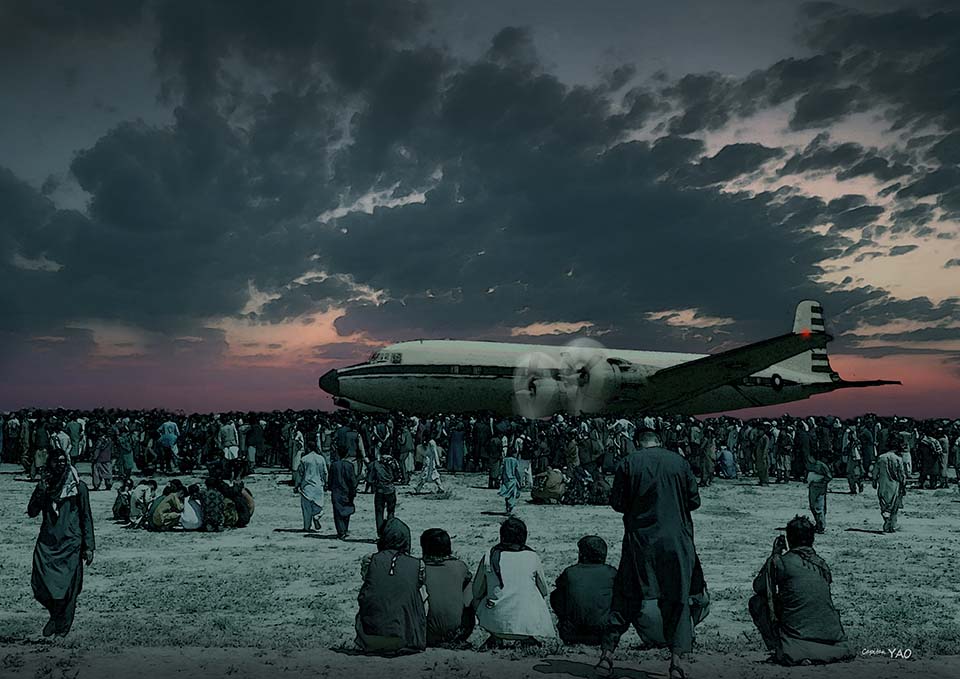
(Figure 6-9-1) The collapse of the gold yuan led to clashes among the crowds in front of the Bank of China, and the military and police deployed armored vehicles to suppress the protests.
In early 1949, the entire Chinese economy was on the verge of collapse. Since August of the previous year, the Kuomintang government had ordered a ban on private ownership of gold, silver, and foreign currency, and forced people to exchange them for gold yuan notes at banks by September 30, or they would be confiscated. Furthermore, it had imposed an administrative order to freeze prices. Chiang Kai-shek personally sent his son Chiang Ching-kuo to Shanghai to "fight tigers," that is, to monitor prices and arrest merchants who hoarded and speculated.
However, the Kuomintang government did not strictly control the total amount of gold yuan issued. With military defeats and the cessation of American aid, the Kuomintang government intensified the printing of gold yuan to support huge fiscal expenditures. The amount issued reached 240,000 times the original amount, causing severe inflation. The gold yuan depreciated by at least 20,000 times, and prices rose three times a day, with varying prices in different days. The gold yuan in the hands of the people became a pile of worthless paper.
Chiang Ching-kuo came to Shanghai hoping to restore public confidence in the gold yuan. He executed several merchants who hoarded and speculated on goods. However, economic issues could not be resolved by such brute force, especially when dealing with powerful figures he could not control, such as Tu Yuesheng's son Tu Weiping and Kong Hsianghsi's son Kong Lingkan. This created a double standard. When Chiang Ching-kuo was summoned to Nanking by Soong Mei-ling to be forced to release Kong Lingkan, it was tantamount to declaring the "tiger-hunting" campaign a complete failure. Chiang Ching-kuo resigned in disgrace at the end of October.
Those most affected by the gold yuan were military personnel, civil servants, teachers, urban residents, and the middle class. These people were originally the foundation of support for the Kuomintang. After the gold yuan bankrupted them, they completely lost trust in the Kuomintang, which was an important reason for the rapid collapse of the Kuomintang regime in mainland China.
On May 3rd, while I was busy dealing with the "HMS Amethyst", the Communist army had unknowingly occupied Hangchow, south of Shanghai, completing the encirclement of Shanghai. At this time, although the citizens of Shanghai were suffering from hyperinflation and had to use a sack of gold yuan worth tens of millions of yuan to buy a sack of flour, they had become numb to the approaching war. The football stadium was in the middle of the final match with tens of thousands of spectators, and the brightly lit dance halls continued to revel every night until the evening of the 26th.
In Shanghai, the wealthy who could flee had already done so. Those with connections could go to America, Europe, or Australia; others could go to Hong Kong or Taiwan. Those who couldn't escape had no choice but to accept their fate and live for the moment. That's how I wrote my social observation report on Shanghai in May 1945. I felt that we might have truly reached the point where we had to turn off the lights and leave forever, but I didn't feel that way in 1941.
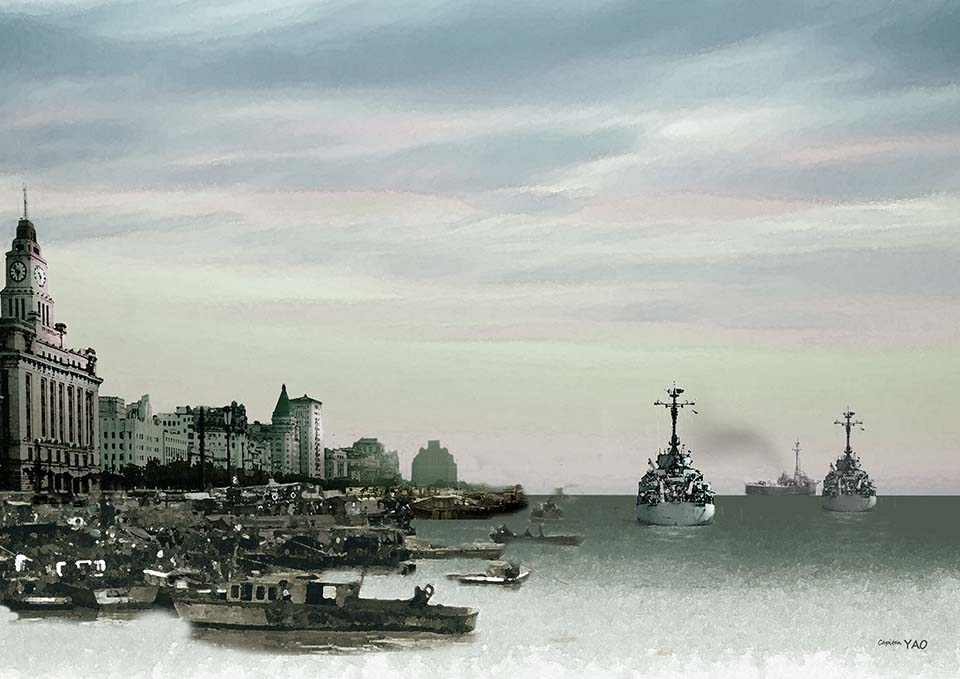
(Figure 6-9-2) Two American-made minesweepers abandoned by the Customs in Shanghai were towed to Taiwan by the Navy's frigate "Yingkou" for repairs and recommissioned to the Navy. In the end, large ships disappeared from the Whampoo River.
Every day, I watched as boats of all sizes, laden with people and goods, flowed endlessly past my window on the Whampoo River. Some of these boats, clearly overloaded or unsuitable for overseas transport, were requisitioned by the Kuomintang army to expedite the transport of more supplies to Taiwan before the fall of Shanghai. Yet, the docks remained crammed with goods and refugees, as if the journey would never end. One day in early May, the sound of artillery fire came from the direction of Pudong; the People's Liberation Army had finally reached the city.
Many people don't understand why Shanghai was liberated so quickly. Not long ago, the Kuomintang general Tang Enbo publicly declared that Shanghai's defenses were as solid as a fortress, with 200,000 elite troops, support from the Shanghai Air Force, and ample supplies and food. He thought it could hold out for half a year without any problem. How could it have fallen in less than a month?
In fact, Chiang Kai-shek never intended to defend Shanghai to the death from the very beginning, and even the capital Nanking was on the list of things to be abandoned. After the Huaihai Campaign, Chiang Kai-shek was well aware that his army could not defeat the Communist army in the indefensible area between Nanking and Shanghai. The safest way was to retreat to Taiwan across the strait, leaving the Communist army, which had no navy, to sigh in despair. In this respect, Chiang Kai-shek was quite farsighted.
After Chiang Kai-shek stepped down, President Li Chongren failed to see this point and repeatedly asked Chiang Kai-shek, who had stepped down but still controlled the army, to send more troops to defend Nanking. At that time, the remaining Kuomintang forces were concentrated around Shanghai by Chiang's favorite general, Tang Enbo. Li Chongren asked Tang Enbo for reinforcements to protect the capital, but Tang, who had received Chiang's secret orders, ignored the acting president's orders. As a result, Nanking was completely liberated within three days of the Communist army crossing the Yangtze River.
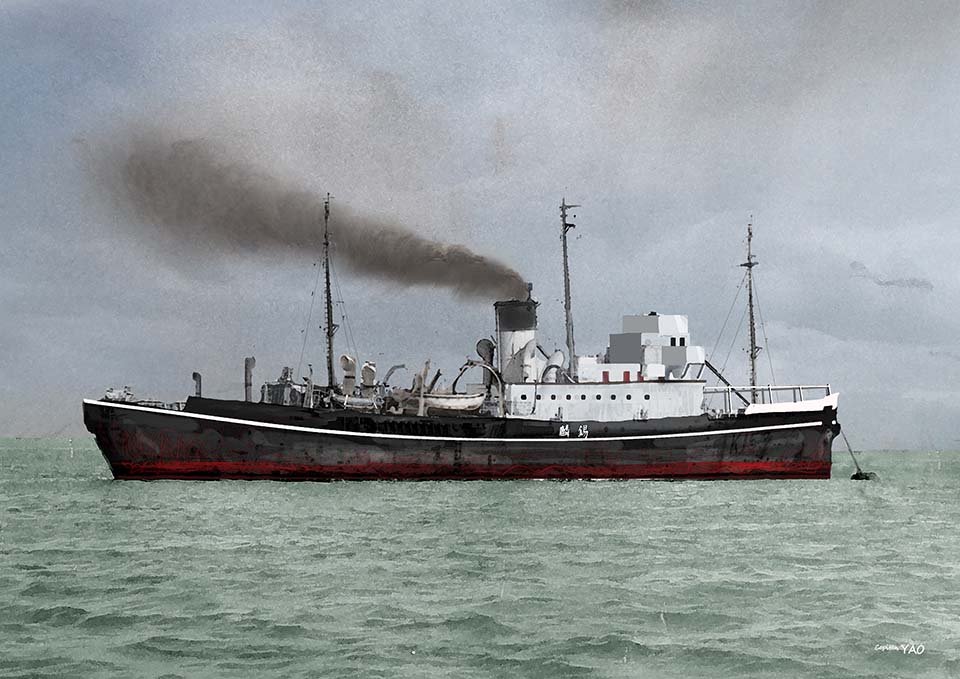
(Figure 6-9-3) The China Merchants Steam Navigation Company's "Hsilin" became the command post for Tang Enbo's defense of Shanghai.
But Chiang Kai-shek didn't really want to defend Shanghai; that was just a pretext. What he really wanted was Shanghai's supplies. Tang Enbo's large troop presence was only to ensure the safe transport of these supplies. Once the gold, silver, national treasures from the Forbidden City, machinery, and raw materials were all shipped to Taiwan, he would leave a metropolis that had to feed millions of people every day to the Communists, leaving them in a state of chaos.
The fact that Tang Enbo set up his command post on the China Merchants Steam Navigation Company's "Hsilin" reveals a mindset of being ready to flee rather than holding out. The "Hsilin" was originally the Canadian "Castle-class" patrol ship "HMS Hedingham Castle". After the war, it was purchased by the CMSMC for use as a fast passenger ship. During the Battle of Shanghai, it was requisitioned by Tang Enbo's headquarters and subsequently sailed to Amoy to continue the defense of the city that summer, also transporting gold stored on Gulangyu Island to Taiwan. After evacuating to Taiwan, the "Hsilin" and its sister ship, the "Chiutsin," were taken over by the navy, fitted with cannons, and restored to their original patrol ship status.
About 50,000 Kuomintang troops escaped Shanghai by boat before the Communist army entered the city on the 27th. The remaining 100,000 or so were all annihilated or captured. Before leaving, the Kuomintang took away everything they could carry, and destroyed what they couldn't take. For example, three oil tankers belonging to the China Tanker Company were sunk under my window on the Whampoo River in front of the Bund, blocking the waterway.

Because the CCP does not recognize the status of embassies and consulates of all Western countries, my work has been greatly affected. After the PLA entered the city, it was obviously no longer safe here, so I decided to evacuate to Hong Kong to observe for a while. On May 26th, I flew my own "China Pearl II" to Hong Kong. Upon landing at Kai Tak Airport, I saw dozens of China National Aviation Corporation (CNAC) and Central Air Transport Corporation (CATC) planes crowding the tarmac. I then realized that both airlines had already withdrawn their planes to Hong Kong. CNAC and CATC were the two most important airlines in China at the time, far exceeding the size of Chennault's civil aviation fleet. CNAC was a joint venture between the Ministry of Transportation of the Nationalist Government and Pan Am Airways of the United States. CATC was restructured from Eurasia Aviation Corporation, a pre-war joint venture between the Ministry of Transportation of the Nationalist Government and Germany. During World War II, the Chinese side took over the German shares, making it a state-owned enterprise and renaming it Central Air Transport Corporation. By the end of 1948, the two airlines held a market share of approximately 80% to 90%, with nearly 100 aircraft of various types and a total of nearly 7,000 air and ground crew members, based in Shanghai; their strength far exceeded that of Chennault's civil aviation fleet. However, starting in 1948, due to the gradual loss of mainland routes, CNAC and CATC successively moved dozens of aircraft from Shanghai to Hong Kong to avoid the war. On November 9, 1949, Liu Jingyi, general manager of CNAC, and Chen Zhuolin, general manager of CNAC, commanded twelve aircraft to take off from Kai Tak Airport in Hong Kong bound for mainland China. One aircraft flew to Peiking, while the others flew to Tiantsin. Upon arrival, the planes were warmly welcomed by CCP officials. Employees of the two airlines' offices in Hong Kong and overseas issued statements defecting to the CCP and subsequently returned to mainland China. This was the famous "Two Airlines Incident" of that year. 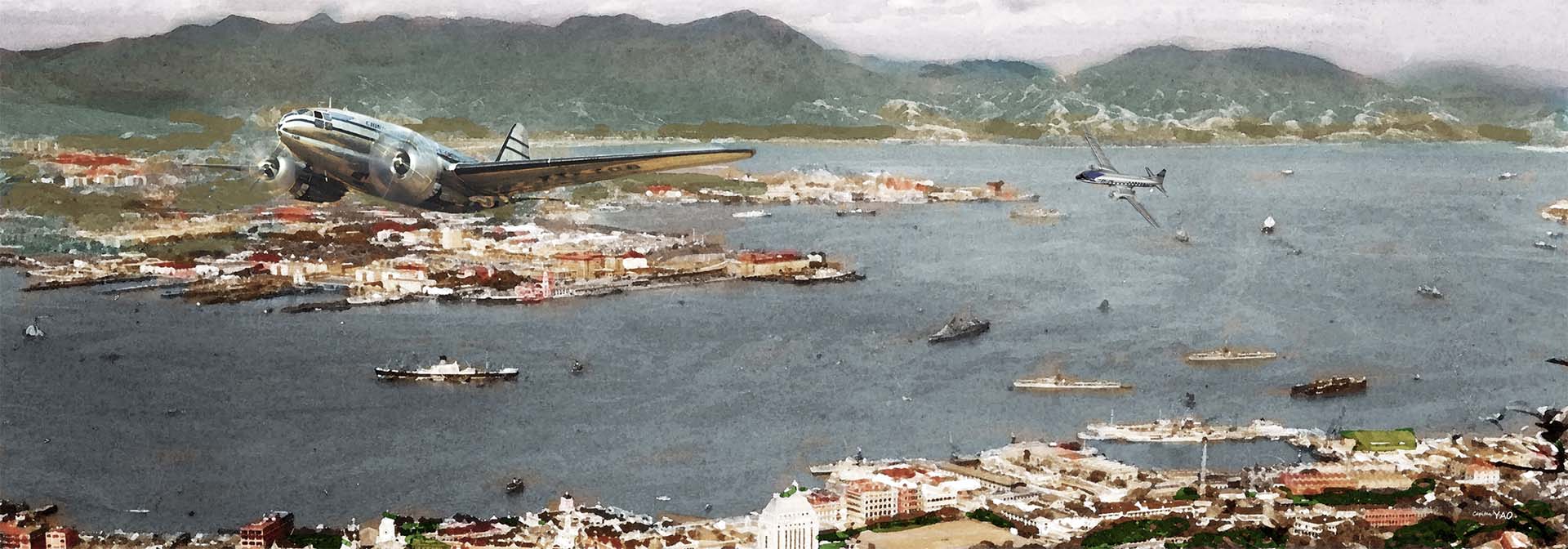
(Figure 6-9-4) The “Two Airlines Incident” occurred in Hong Kong. At this point, Chiang Kai-shek played another card, secretly selling the plane to a civil aviation company established by Chennault in the United States, making it American property, and having Chennault handle the lawsuit. From the beginning, this was a politically sensitive case, involving Britain, the United States, China, and Taiwan. Therefore, it became something our intelligence group had to pay attention to. In addition, I was familiar with Chennault himself, so my superiors relied heavily on my intelligence. When Chennault came to Hong Kong, he would often meet with me. I guessed that the British government did not want to return the aircraft to Peiking, because the Korean War had already broken out and Britain had sent troops to participate in the war. Secondly, I did not believe that the British government would dare to disobey the Americans. Although the Hong Kong court had ruled against Chennault, I believed that this was based on the Hong Kong government's own considerations. I believed that such a politically sensitive matter would ultimately be decided by London, so I told Chennault to rest assured. The matter eventually reached the King of England, and the advisor the King relied on was none other than my father. "Shouldn't these aircraft be returned to the new Chinese regime according to law, Sir Draken?" "Your Majesty, if we truly follow the law, many of our items in the British Museum will have to be returned to China!" Upon hearing my father's reply, the emperor finally decided to overturn the Hong Kong court's verdict. Finally, the Privy Council in London ruled in favor of Chennault's Civil Aviation Company, thus thwarting the CCP's attempt to establish airlift capabilities to attack Taiwan. However, after a long period of exposure to the elements, few of the aircraft remained usable. Later, the United States sent an aircraft carrier to Hong Kong to transport the remaining aircraft back to the United States. Chennault's Airline Transport Company was later sold to the CIA and became Taiwan's only airline for a long time. I also served as one of his pilots until the company ceased operations in Taiwan. Chennault was unaware of the roles my father and I played in the Airline and Airlines Incident during his lifetime.
After leaving Shanghai at the end of May, I would occasionally take a ship back to the vicinity of the Yangtze River estuary to stand by. On the one hand, I needed to contact the "HMS Amethyst" to arrange the departure, and on the other hand, I also needed to supervise the Royal Navy to ensure that British merchant ships sailing from Hong Kong to Shanghai were not harassed by Kuomintang naval vessels from Taiwan. After retreating from Shanghai, the Kuomintang ordered its naval vessels to completely blockade all ports under the control of the Communist forces on the mainland, especially Shanghai, located at the mouth of the Yangtze River, in order to prevent the CCP from obtaining overseas supplies from Hong Kong. The KMT did not call this action a "blockade," as blockades are usually used between two belligerent nations. However, the KMT viewed the CCP as a rebellious group in the civil war and was unwilling to grant them equal status, so it used the strange term "closeure" which left foreign merchant ships unsure of its legal validity under international law. They continued to sail to mainland ports, requesting escorts from the British Navy. 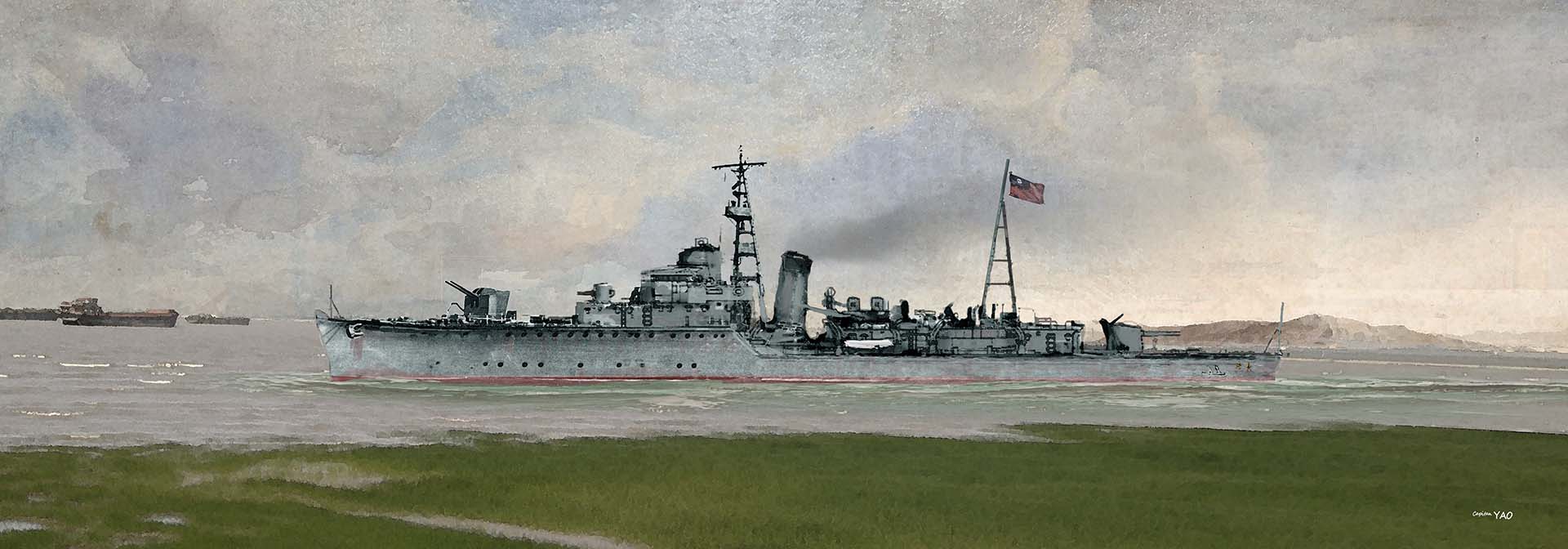
(Figure 6-9-5) The First Fleet flagship "Changzhi" was also dispatched to carry out the "seclusion" mission.
The "Changzhi" was originally the flagship of the Japanese inland gunboats fleet stationed in China, the "Uji," which surrendered after the war and was taken over by the Nationalist Navy. The "Changzhi" was a relatively new ship with complete and advanced equipment. After the cruiser "Chungking" defected, it became the most powerful warship in the hands of the Nationalist Party and served as the flagship of the First Coastal Defense Fleet at the time.
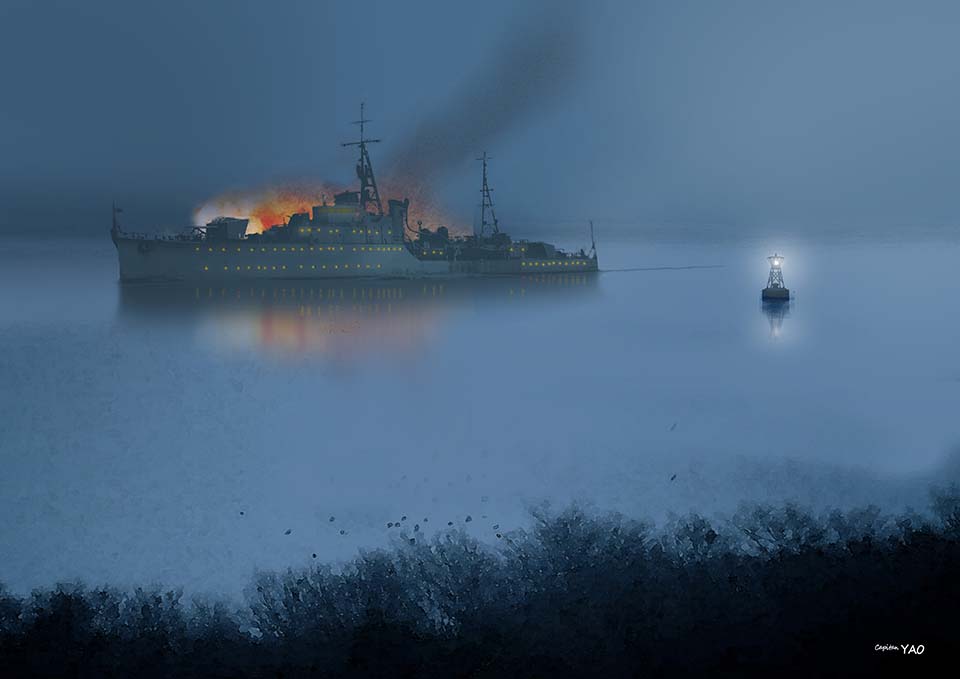
(Figure 6-9-6) A bloody mutiny occurred on the "Changzhi" warship, resulting in the killing of the captain and other officers.
Before the "Changzhi" was deployed, the captain had just been replaced by Captain Hu Tsingduan, and this was his first mission. I know this Captain Hu; he was the captain of the torpedo boat "Shi 102" from Ouyang Ge's M.C.S. School, which raided the Japanese flagship "Izumo" in Shanghai.
In mid-September, when I received intelligence that the "Changzhi" was being deployed, I was on a British destroyer providing cover for a merchant convoy from Hong Kong preparing to enter the Yangtze River estuary. Upon hearing the news, the entire ship immediately went on high alert. On the night of the 18th, a heavy rain brought very poor visibility, and our convoy temporarily anchored at the Yangtze River estuary, preparing to enter Shanghai port early the next morning. At this time, I vaguely heard the sound of explosions in the darkness. Soon after, we saw a warship with its bow on fire passing by at high speed in the distance, with a machine gun at the stern firing intermittently. Through my binoculars, I saw that its silhouette, illuminated by the firelight, resembled the "Changzhi," which made me very suspicious. However, it completely ignored us and sailed away.
The next morning, the merchant fleet anchored and entered the Yangtze River. Our destroyer turned back to port. When we passed through the Taiwan Strait, the telegraph operator said that he had intercepted a telegram from the Kuomintang Navy, requesting assistance in finding the "Changzhi" ship. Only then did I remember seeing the warship speeding past with flames in the morning. Could that be the "Changzhi"? Later I learned that the "Changzhi" had indeed mutinied. Perhaps having learned from the failed mutiny of the "Yunghsing" ship, this situation was more serious than any of the previous ones. The mutinous people killed twelve officers, including the captain, deputy captain, navigator, communications officer, and gunnery officer, making it the bloodiest mutiny ever.
Chiang Kai-shek was most afraid that the Communist army would possess amphibious transport docks, especially powerful new warships like the "Changzhi". He immediately dispatched air force planes from Taiwan to search along the river, and finally sank the "Changzhi" on September 22 in Tatung, Anhui. However, the CCP later salvaged it and sent it to the Kiangnan Shipyard for repairs. It was renamed "Nanchang" and put back into service, becoming the flagship of its East China Sea Fleet.
(Figure 6-9-7) The unsuccessful mutiny of the medium-sized landing ship "Meison" in the waters off Hong Kong resulted in the execution of its captain, Lt Cdr Mao Chuefei, executed in Zuoying.
On October 14, 1949, another Kuomintang medium landing ship (LSM) named "Meison" mutinied after refueling in Hong Kong, led by its captain. By the time we went to seize it, the mutiny had already failed, and Kuomintang warships came from Macau to escort the "Meison" back to Taiwan.
Historically, whenever regime change occurred in China, some warships would seek refuge in Hong Kong. If the "Mei Song" was in Hong Kong waters, Kuomintang warships would have no right to enter. The defection of the "Hai Chi" and other ships from Chen Tsitang's regime in Kuangchow to Hong Kong in 1933 is an example. However, whether the Hong Kong British government, after abandoning unequal treaties, still had this right is probably a matter for judges to determine. In any case, we were unaware that the "Mei Song" was taken away by Kuomintang warships, and we were bound to be reprimanded by our superiors. At the time, I was busy arranging for the escort fleet to enter Shanghai, and I was not in Hong Kong, so it was difficult to take care of everything. However, it is said that the "Mei Song" was anchored in the Lingdingyang at the time, a location at the mouth of the Pearl River, between Hong Kong's New Territories and Macau. Whether it was actually in Hong Kong waters is probably hard to say.
In reality, the mutiny on the "Meisong" never took place. The captain, Lt Cdr Mao, brought back some leftist propaganda materials from Hong Kong and convened a meeting of the ship's officers to discuss their future. He was detained by officers from the Tsingtao clique, who considered this a mutiny, because Lt Cdr Maowas a graduate of the MCS School. Mao was later sent to Taiwan and executed by firing squad in Zuoying early the following year. His brother, Mao Fuzheng, was also sentenced to imprisonment. His wife and children, with the help of classmates, were picked up in Chushan by a mainland fishing boat.
On November 24th, I once again boarded the flagship of the Far East Fleet's destroyer squadron, the "HMS Black Swan," led by Captain ADH Jay, along with four other destroyers, the "HMS St. Bridesbay", "HMS Gardiganbay" and "HMS Mountsbay" to escort seven cargo ships belonging to the British companies Jardine Matheson & Co. and Eric Moller & Co., which were sailing from Hong Kong to Shanghai. This time, I plan to land in Shanghai with the merchant ship and establish a shore-based liaison agency for escorting ships. If time permits, I may be able to spend Christmas in Shanghai and lay a bouquet of flowers at Anne's memorial, something I always do every Christmas Eve. As the fleet approached the mouth of the Yangtze River, I was resting in my cabin when I suddenly heard a loud alarm. I rushed to the bridge, and Captain Jay pointed ahead and said, "Nationalist Navy ships!" 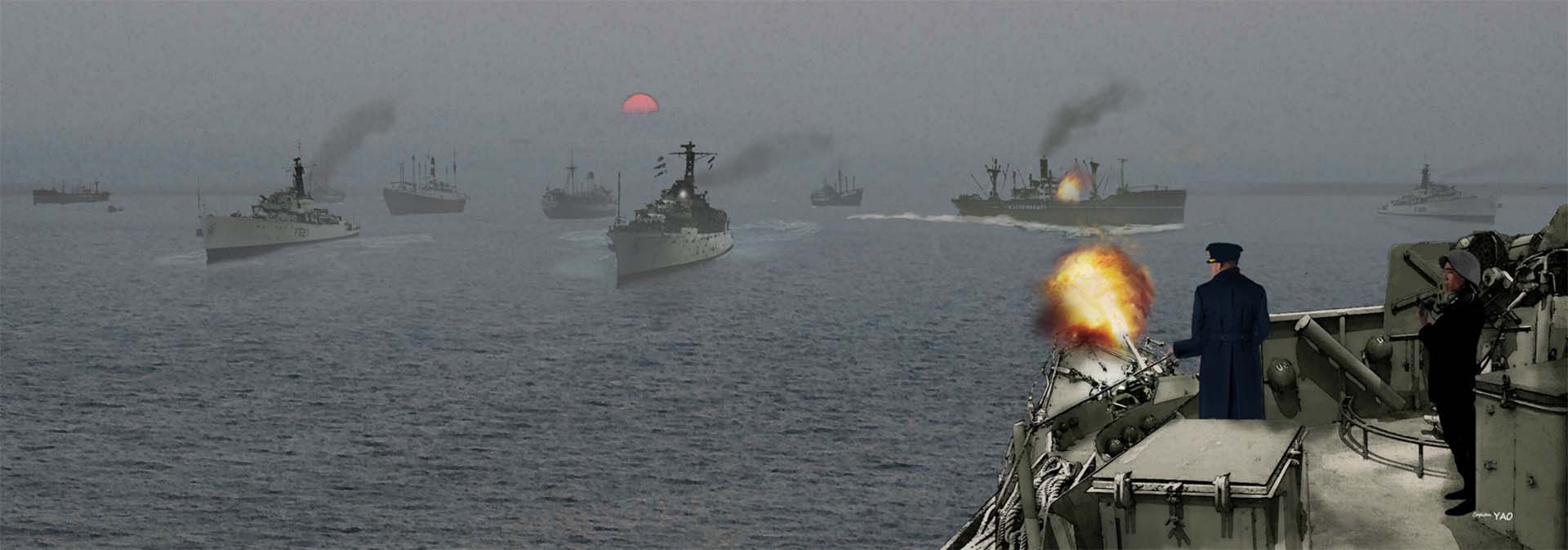
(Figure 6-9-8) The British Royal Navy escort fleet and the Kuomintang fleet blockading the mouth of the Yangtze River confront each other. Captain Jay asked for my opinion: "Captain Draken, what's your take? Instead of sitting here waiting for reinforcements, why don't we just charge in now?" "Don't make a fuss!" I said. "The Kuomintang doesn't have many ships to send as reinforcements. We might as well anchor and wait and see." "Let's have some tea then!" Captain Jay said. The two sides remained deadlocked. The next day, I picked up my binoculars and discovered that what was originally just one escort destroyer had become three, one of which was flying the flag of a Rear Admiral. "What's wrong with them? Half of the Kuomintang's main fleet is here!" After careful observation, I identified the four Kuomintang warships as the "Taikang," "Taiping," "Taihe," and "Yungtai." I said to Captain Jay beside me, "I'm sorry, I misjudged them. I didn't expect them to bring out all their belongings." "What's there to be afraid of? We have eighteen 4-inch main guns, while they only have eleven 3-inch main guns. Our firepower is more than double theirs, so I'm sure they won't dare to stop us," Captain Jay said. "I suggest we ask them who their commander is first." Through the communication via the lights of both sides, I knew that it was Liu Kuangkai, the commander of the First Fleet. He repeated the order to close the gates, still not allowing passage. "Hmm...it's KK...this situation isn't good!" I know Liu Kuangkai, nicknamed "KK". He is from the Tsingtao clique, a disciple of Shen Honglie, and one of the few warrior in the Kuomintang Navy. If you encounter him, you will definitely fight. At the time, the two warships were very close, each aiming its main guns at the other's vitals. No one was confident they could avoid being hit before sinking the other in one fell swoop; the most likely outcome was mutual destruction. Captain Jay estimated that once the guns were fired, all four Kuomintang warships would sink, and our side would also lose at least two and severely damage two more. This seemed somewhat absurd; the Royal Navy obviously had no reason to perish alongside the Kuomintang ships for the sake of the Chinese Communist Party. I suggested to Captain Jay that the fleet withdraw to Hong Kong to avoid battle. At this moment, an American merchant ship took advantage of the Kuomintang ships' inattention and darted into the Yangtze River. The Kuomintang warships immediately opened fire and pursued, riddling the American ship with bullets. Many people on the "HMS Black Swan" , including Captain Jay, had participated in the battle during the "Amethyst Incident" in Chenkiang in May. Seeing the fate of the American ships, they knew it was for real and quickly called a retreat. The merchant ships reluctantly turned back to Hong Kong, and I was unable to go to Shanghai.
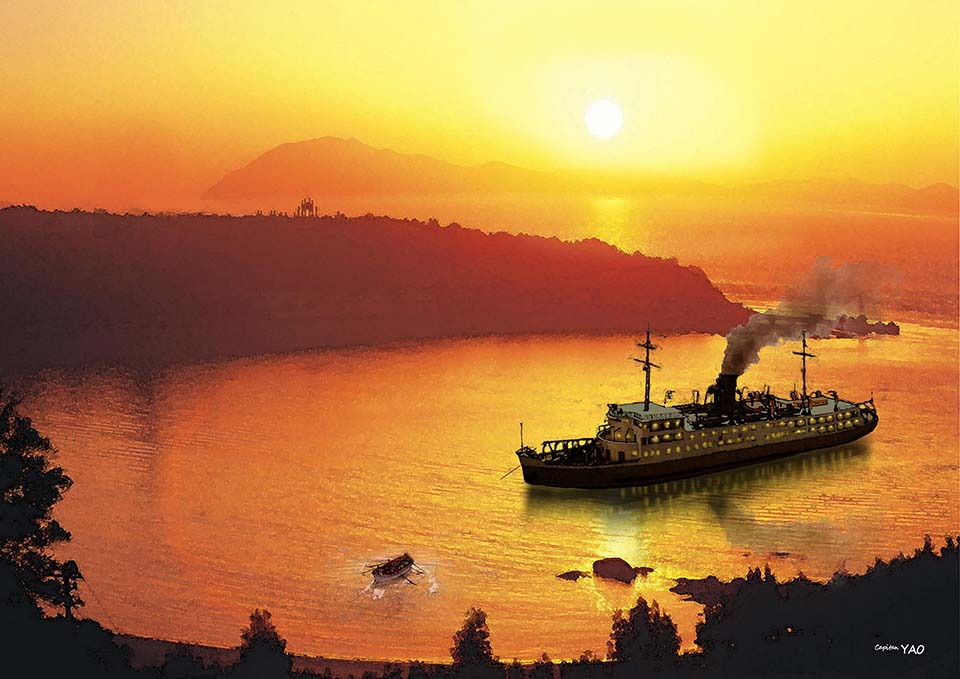
(Figure 6-9-9) Chiang Kai-shek inspected the harbors and islands in the Chushan waters aboard the "SS Kiang King".
In May, the Battle of Shanghai began. Chiang Kai-shek departed Shanghai for Chushan aboard the China Merchants Steam Navigation Company's "SS Kiang King" to observe the local coastline, islands, ports, and outposts. Chiang Kai-shek used the "SS Kiang King" as his temporary residence, with Chiang Ching-kuo also on board. The "SS Kiang King" was escorted by the "Tai Kang" escort destroyer, whose captain was Li Yu-hsi. The father and son stayed on the ship for ten days before boarding a special plane on May 17th to Penghu, then transferring to Tainan, thus bidding farewell to their hometown.
Chiang Kai-shek had by this time decided to use Taiwan as his base and was concerned about its defense capabilities. Sun Liren, who had been transferred to southern Taiwan to train the New Army due to a disagreement with Tu Yuming on the Northeast battlefield, unexpectedly benefited from this situation. He not only escaped responsibility for the defeat in the Northeast and the misfortune of being captured, but the New Army he trained also became the only hope for defending Taiwan. When Chiang Kai-shek asked Sun Liren if Taiwan was safe, Sun replied, "With me here, you'll be safe!" This seemed normal, but "the speaker meant no harm, but the listener took it to heart." Chiang felt Sun was arrogant and domineering, and from then on, he became wary of him.
At that time, Chiang Kai-shek had not yet completely despaired of the situation on the mainland and frequently flew from Taiwan to various battlefields to inspect military affairs. After Nanking and Shanghai were captured by the Communist army at the end of April and the end of May 1949, respectively, the focus of the war shifted to Fookian. In the Battle of Amoy, Tang Enbo's troops suffered a crushing defeat. On the night of October 25, 1949, the People's Liberation Army began landing on Quemoy. This battle, which the Communist army considered a sure thing, was disrupted by an unexpectedly appearing warship.
At the time, the Kuomintang Navy's tank landing ship "Chung Jung" departed from Keelung Harbor, originally bound for Tinghai, but was ordered to change course and head towards Quemoy. The "Chung Jung" was carrying a large quantity of Taiwanese sugar that its crew had jointly purchased for a smuggling project to Tinghai. Under these circumstances, they had to trade it locally in Quemoy. However, Quemoy had few local products, only peanuts, so they decided to exchange the sugar for peanut oil. Due to the large quantity, local oil mills couldn't keep up with production, even operating overnight. The "Chung Jung's" crew, unwilling to invest at a loss, used the excuse of rough seas to stay behind. This last-minute change caught the Communist spies off guard. By midnight, when the People's Liberation Army landed, it was too late. The "Chung Jung" became the most heavily armed naval fortress in the area, hitting and burning the Communist landing boats, preventing them from turning back to transport a second wave of troops. The three regiments that had already landed were completely annihilated. This battle, known as the "Battle of Guningtou," finally brought the Kuomintang army a long-awaited victory.
When I heard the news from Taiwan while I was in Hong Kong, I burst out laughing: "The reason for the Communist army's defeat was actually because of the corrupt Kuomintang army's smuggling?" This is truly a huge black joke.
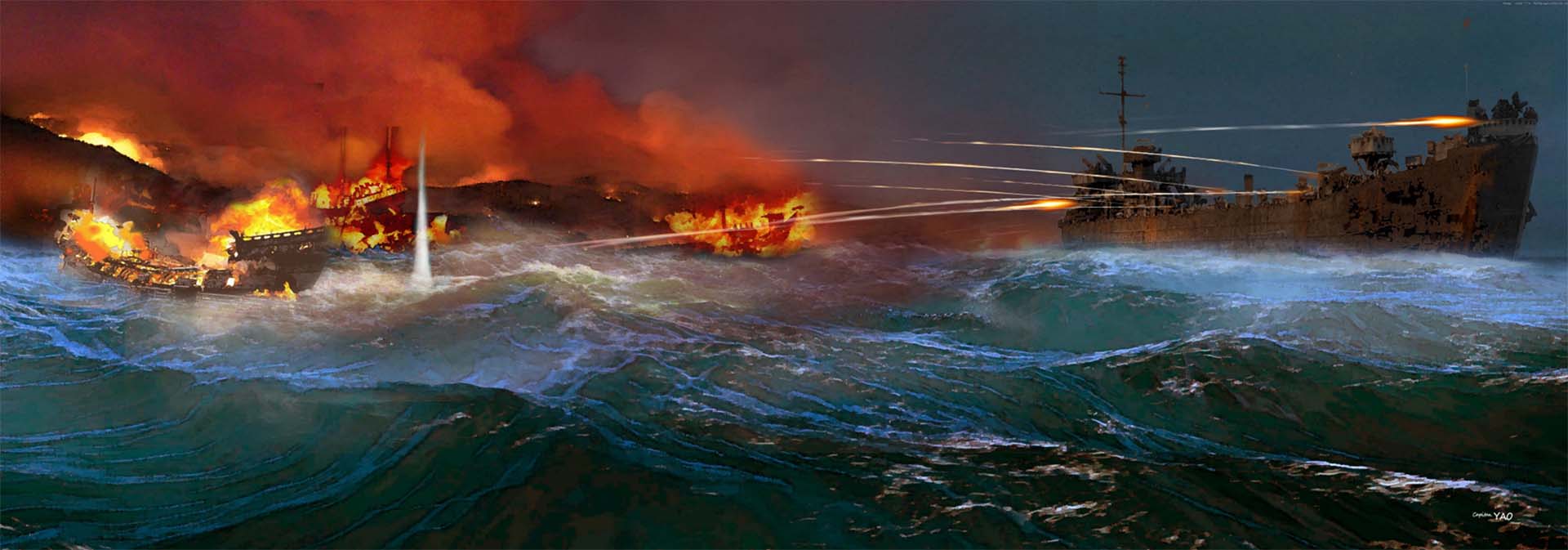
(Figures 6-9-10) The LST "Chung Jung" was left behind because of the peanut oil trade and unexpectedly became the largest firepower platform in the area, enabling the Kuomintang army to win the "Battle of Guningtou". On October 1, Mao Tsetung announced the founding of the People's Republic of China from Tiananmen Square in Peiking, marking a new phase in the Chinese Civil War. Although Chiang Kai-shek did not recognize it as a civil war, using the term "suppression of rebellion" instead and defining his opponents as "bandits," with the establishment of the People's Republic of China, the Communist Party became the legitimate government on the Chinese mainland, while the Kuomintang was on the verge of becoming "bandits". On October 14th, the Communist army liberated Kuangchow and took over all government agencies, including the Executive Yuan. This Nationalist government had been moved from Nanking to Kuangchow by Sun Ke when he became Premier in February. Legally speaking, the Republic of China government had already ceased to exist at this point. The Nationalist government that later appeared in Taiwan was based on the Taiwan Provincial Government and had no direct succession to the original Nationalist government. In early December, Acting President Li Chongren, citing illness and the need for medical treatment, traveled via Hong Kong to the United States. The history of the Kuomintang in China could be considered to have come to a close at this point.
(Figure 6-9-11) Chiang Kai-shek flew back to Taiwan from Chengdu Phoenix Mountain Airport on December 10, and never set foot on the mainland again.
Although Chiang Kai-shek had settled in Taiwan by this time, he remained determined to continue the war in Sichuan and the southwest. He personally flew to Chungking and Chengdu to deploy his forces, but found the local military leaders to be evasive and potentially hostage to the Communist army. Sensing the danger, Chiang boarded a special plane at Chengdu Phoenix Mountain Airport on December 10th to return to Taiwan. At that time, Communist troops were approaching the airport, surrounded by artillery fire, refugees were crowding the runway, and abandoned property was scattered everywhere; the situation was chaotic and they almost couldn't take off. This was the last time Chiang Kai-shek set foot on Chinese soil; he never returned. Some of his troops went to Burma, which later became an international issue.
On Christmas Day 1949, I couldn't stand on the Whampoo River watching the lights of the Bund. I was in Lan Kwai Fong, Hong Kong, at the "Sailors' Bar" where I said goodbye to Lomui on Christmas Eve 1927. More than twenty years later, it was still open in the same spot, still packed with sailors from all over the world. I was only twenty years old then, and now I'm a middle-aged man in my forties. The 20th century is almost halfway over. The first half was filled with war and massacres. What about the second half?
After 1927, I spent most of my time developing my career in China, personally participating in many major events that changed history, which earned me some minor fame in the intelligence community. I don't consider myself particularly capable, but I was very lucky, always able to come up with solutions at crucial moments. However, my career advancement seemed rather unsuccessful; after the war, captain was probably the highest position I could ever reach.
|