In early May, with the operation to land in Europe and open a second front imminent, I asked Director Menzies for permission to accompany the troops to observe the battle. The director flatly refused, saying, "You know so many secrets; what if you get captured by the Germans?"
"Then at least let me watch the battle from the warship, right?" I said, still unwilling to give up.
Director Menzies remained noncommittal, but one day in late May he approached me and said, "Didn't you want to go on a mission to observe the battle? The Navy has dispatched a task force and needs an intelligence officer who understands coded communications to accompany them, preferably someone with a naval background. It seems you are the most suitable candidate."
Then he led me into the map room, pointed to the location of the English Channel on the map, and whispered, "This is the deception fleet. You must make a big show of it to attract the attention of the Germans, making them think that this is the main attack force; and listen to German communications to see if the deception has been successful. This task is simple. Once it's done, come back quickly and don't cause any trouble."
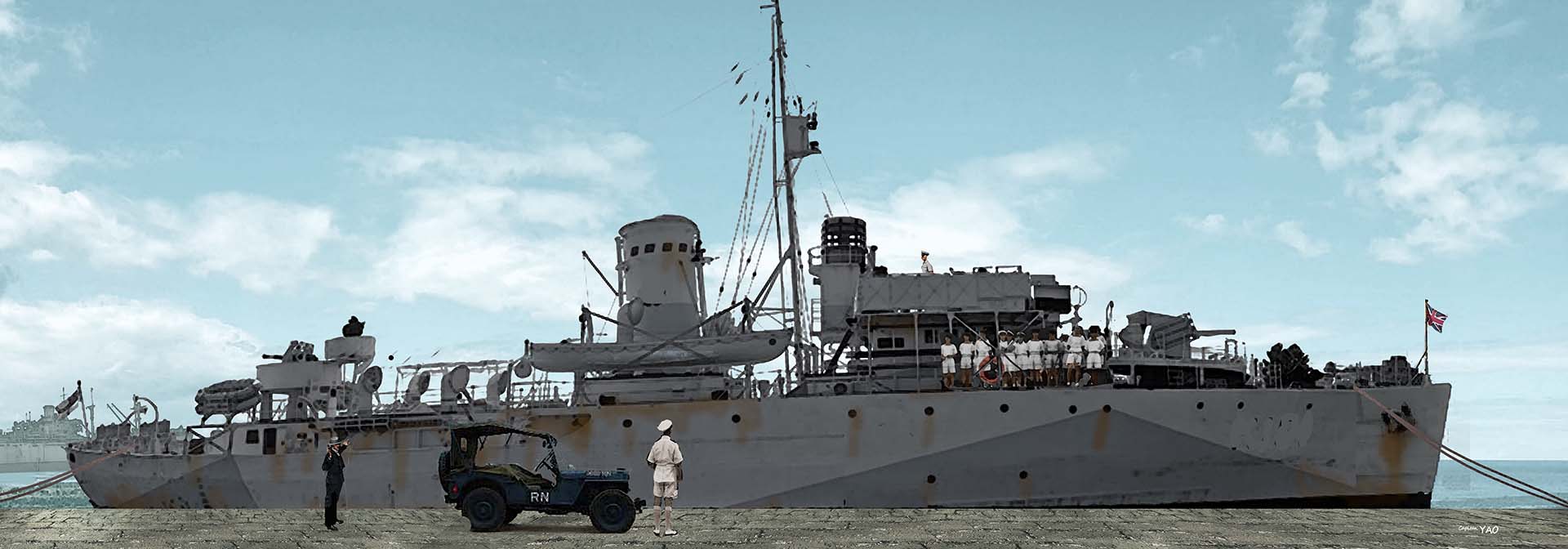
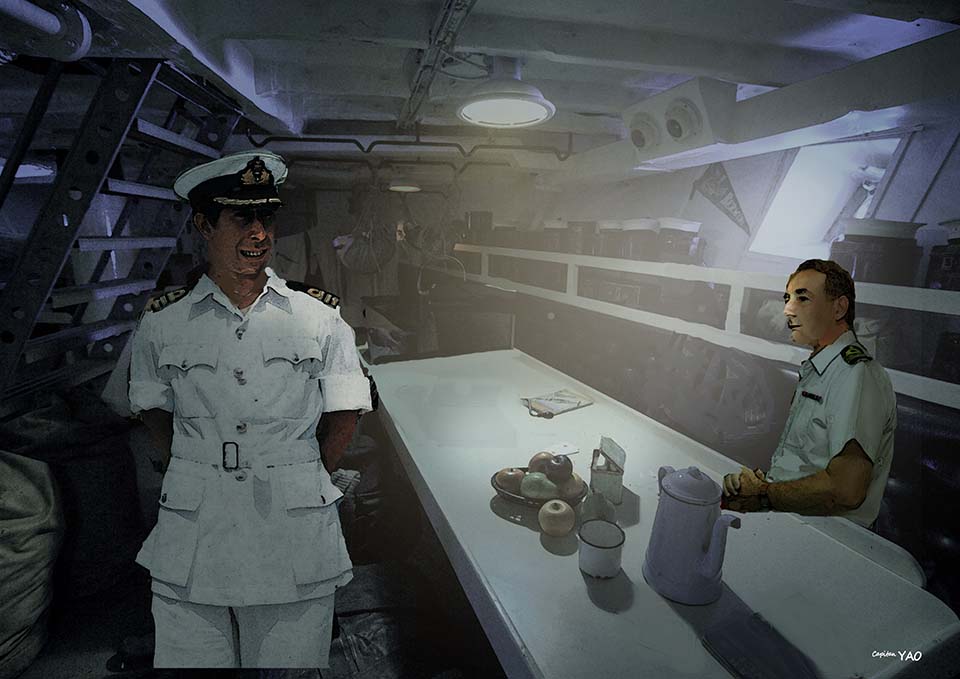
(Figure 5-8-1) Paul Draken reports to the flagship of the "Decoy Fleet" at Dover Harbor. Willie was very welcoming and immediately invited me to his ship for afternoon tea. It was a dilapidated corvette, recently decommissioned from a fierce anti-submarine escort mission in the Atlantic and now serving as the flagship of Willie's small fleet. We discussed mission preparations over tea in the cramped officer quater.
(Figure 5-8-2) Paul and Willie have tea in the officer quater on the corvette.
The original plan was to hang many angular reflectors on various parts of the ship, tow a raft at the stern, and raise a balloon containing a radio transmitter to send out communications simulating a large fleet. All of these measures were intended to make these small boats appear dozens of times larger than they actually were on the enemy's radar screen, in order to deceive the enemy.
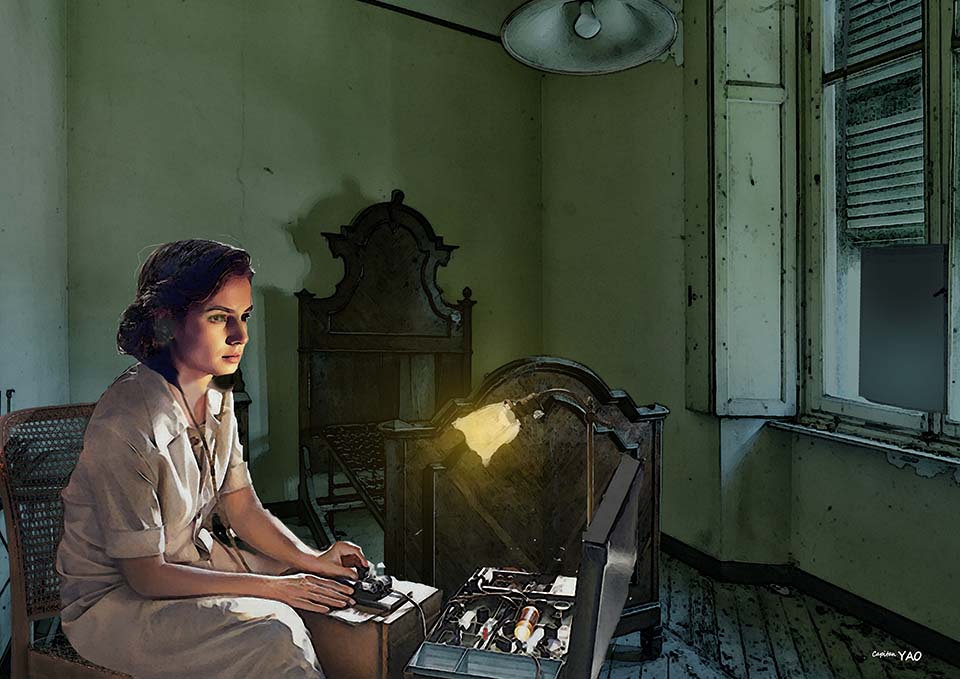
My main task was to carry a "Deep Purple" cipher machine to intercept German communications in order to confirm that the enemy had taken the bait. This was top secret, which is why it could not be entrusted to others. Just like on the "HMS Peterel", I personally carried the cipher machine and the self-destruct device onto the ship, and reinforced the explosives around the room. If there was any possibility of the ship being captured, we would blow it up immediately. We must not allow any intelligence related to the cipher machine to fall into enemy hands.
For security reasons, I couldn't leave the port area after reporting for duty, and I ate and slept on the ship every day, so I had a lot of time to chat with Willie.
Willie told me that after he was dismissed and sent back to the England in 1933 due to the grounding of the gunboat "HMS Peterel", he served on many ships in Asia, Europe and Africa, but he could not get along with his superiors. In the end, he volunteered to join this small fleet that no one wanted to join.
"Finally, I've become a fleet commander!"
Willie remained true to his carefree and optimistic personality, expressing his regret over the sinking of the "HMS Peterel": "That was a good ship, sunk in such a good place!"
Of course, I couldn't tell him the real reason why the "HMS Peterel" sank, so I fabricated a story about a Japanese officer who took over the ship and took the initiative to signal to the Japanese ships to fire on the "HMS Peterel" along with himself, a story that resembled a kamikaze attack. Unexpectedly, this fabricated story later became an official historical record.

(Fig. 5-8-3) The "Decoy Fleet" set sail from Dover on the night of June 5.
Calais was directly opposite Dover. We hadn't been out of port long when we could see the French coast. I went into the communications room to listen to the cipher machine's messages. The Germans had spotted us and were on high alert. A large number of torpedo boats were preparing to leave port. I paid particular attention to the movements of the German armored forces, because this indicated that they truly believed this was the Allied main attack direction. At that moment, several low, muffled thuds came from the French coast. The German coastal defense guns had begun bombarding the small fleet.
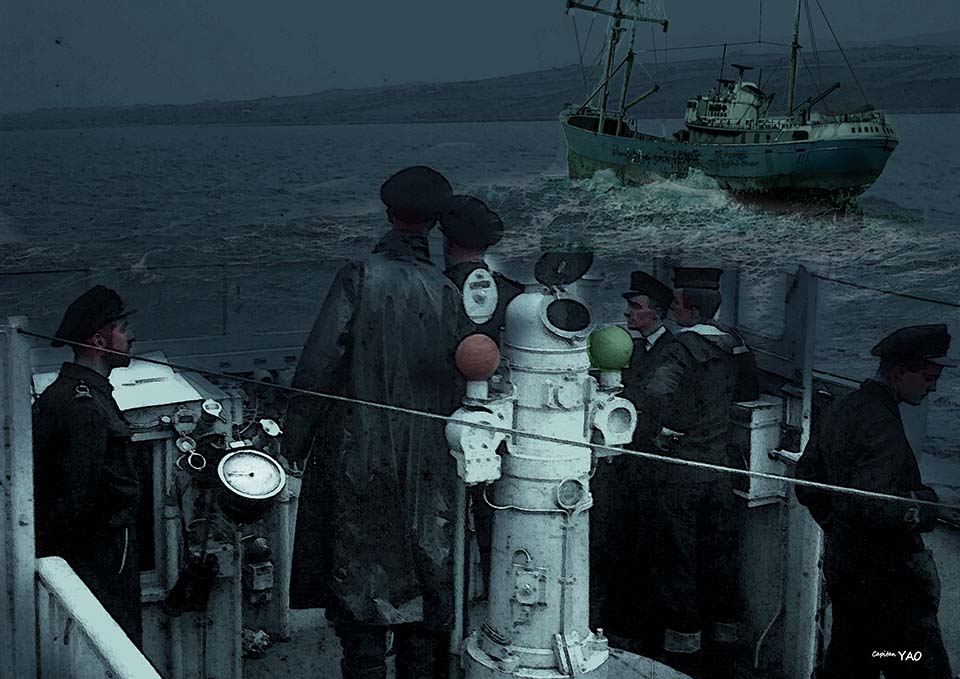
I rushed to the bridge. A near-miss shell splashed water onto the open bridge, soaking everyone. Looking back, apart from a few small boats burning, the rest of the ships were nowhere to be seen. Then a violent rocking shook everyone off their feet. At that moment, the engine room reported to the bridge that the ship had been hit by enemy fire and the stern had been damaged, so the ship could only spin in place. Willie immediately ordered nearby ships to be notified by light to come and tow it.
Soon after, the sound of engines came from the starboard bow. The sailors on the foredeck prepared to pull the mooring line, but I felt something was off about the sound. I picked up my binoculars and saw in the darkness that several German torpedo boats were rushing towards us. I recognized their shape because the first prototype of this type of torpedo boat was sold to Ouyang Ge's M.C.S. school. I had even taken a test ride on one when I was in China. No wonder the sound of their engines seemed familiar.
The searchlight beam swept towards our ship from the torpedo boat, followed by a volley of 20mm machine gun fire. The situation was serious! I believe the torpedo boat captain also realized that our ship had lost its maneuverability. I couldn't be sure what action they would take next. Ideally, they would launch torpedoes to sink our ship to avoid the risk of leaking secrets, but their commander didn't think that way!
"British men, take note! You have been captured! Shut down the engines, raise the guns to face the sky, and all men stand on the port side to await our arrival. All our torpedoes are pointed at you. Don't do anything foolish!" came a German-accented English over the torpedo boat's loudspeaker.
Unexpectedly, I encountered the same fate as the "HMS Peterel" in Shanghai at the end of 1941. I immediately jumped into the cabin and rushed to the telecommunications room to press the timer of the self-destruct device. When I rushed out of the cabin and was about to jump into the sea to escape, I saw Willy and the German torpedo boat officer who came to take over the ship on the bridge in a stalemate. Was he thinking about the myth of the "HMS Peterel" that I told him?
"Willie, run! The ship's going to explode!"
I shouted a warning, and as soon as Willie turned around, the German officer fired his pistol and hit him. At that moment, the explosives detonated, and the whole ship was engulfed in flames. Everyone jumped into the sea. Seeing that things were not going well, the German torpedo boat turned around and headed towards France.
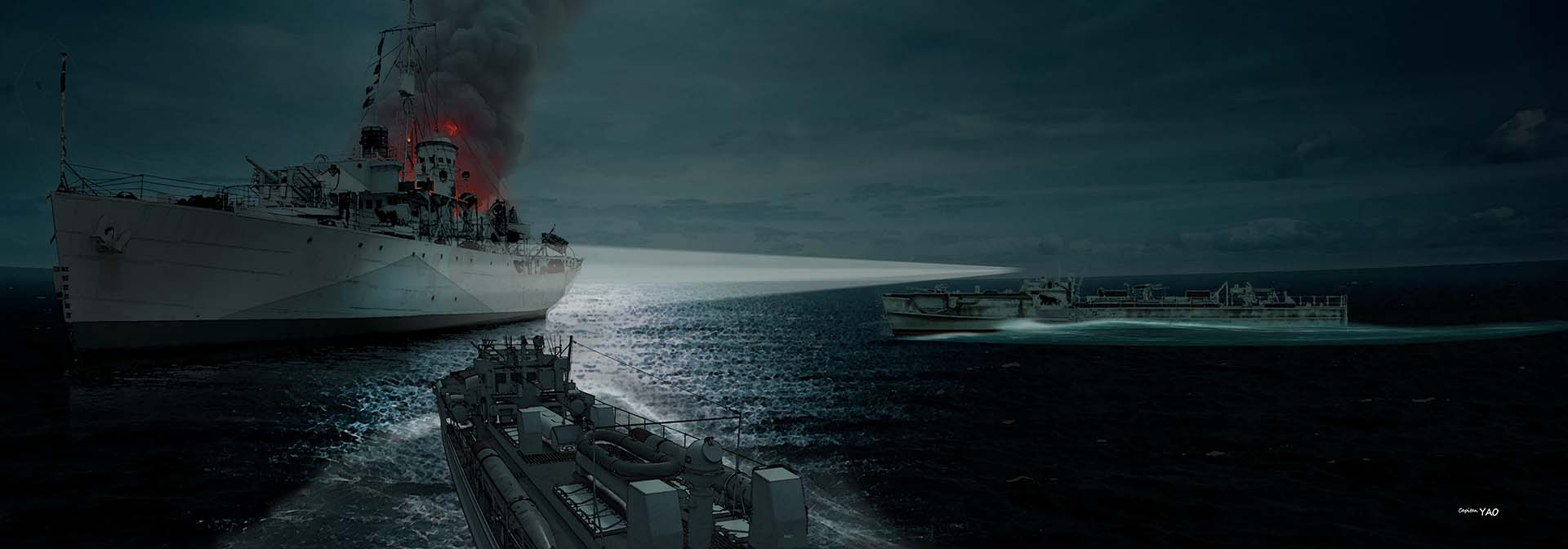
(Figure 5-8-4) When the German torpedo boats attempted to capture the flagship of the British "Decoy Fleet", the ship's self-destruct mechanism exploded. Willie's small fleet was part of the Allied plan to lure the enemy into the Normandy landings in 1944. Other components included the establishment of a fictitious US Third Army headquarters in Dover, led by General Patton, and the dissemination of various false intelligence through double agents. The aim was to convince the Germans that Calais was the primary Allied target, and Normandy merely a diversionary attack, thus preventing the Germans from concentrating their main forces there. I believe the presence of torpedo boats aroused German suspicion about this fleet, but the successful Allied landings in Normandy prevented the Germans from ever returning to investigate. After the war, the Royal Navy secretly retrieved the cipher machine using divers, keeping it a closely guarded secret to this day. We were minor figures in this massive campaign, only participating in a part of it; many things we learned after the war from reports or memoirs of famous figures.
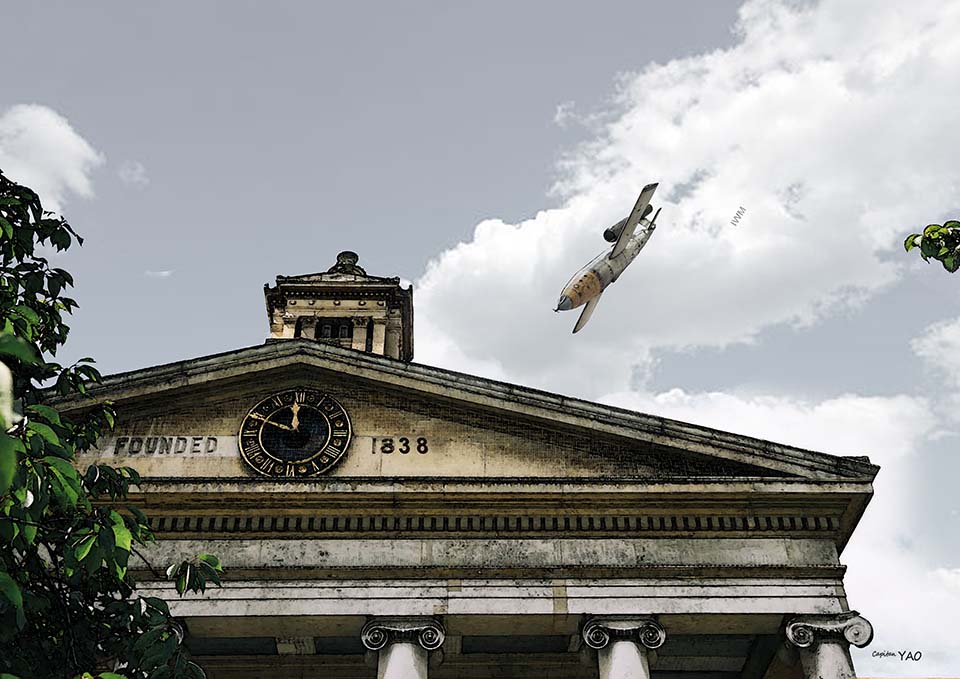
(Figure 5-8-5 A V-1 missile is about to hit the Guard Chapel in London.)
June 18th was a Sunday. My father had gone back to his home in the Oxford countryside, and I, needing to stay behind, didn't have time to go back. So I strolled over to the Guard Chapel, not far from Buckingham Palace, for worship. Actually, I don't usually do this, but for some reason, after returning from the battlefield, I really wanted to go to church. When my father was in London, the Guard Chapel was a place he frequented, and sometimes I would accompany him, so I chose this place.
By 11 o'clock, the church was packed with people, many of whom were relatives and friends of the soldiers who had participated in the Normandy landings, there to pray for them. Since I wasn't a local church member, I chose to sit in the last row. As the choir began to sing hymns, a strange hissing sound came from afar. Just then, a deafening roar erupted as the roof collapsed over the congregation, followed by a massive explosion inside the church and a burst of bright light mixed with the smell of burning fuel. I was thrown out of the church onto the street by the powerful shockwave.
Civil defense and fire departments rushed to the scene and pulled the injured out of the rubble one by one; people lying there, groaning and moaning, were everywhere. A civil defense worker helped me to my feet, and I brushed the dust off myself, feeling fine, so I told him to go and help others. I limped back to my office, my whole body aching for a month.
It was later learned that Hitler, in an attempt to salvage the defeats on the French front, ordered the launch of his secret weapon, the V-1 missile, at London. One of the missiles struck the Guard Chapel precisely, causing a tragedy that killed 121 people and wounded 141 others. The church was also completely destroyed. This was the largest casualty incident caused by the V-1 bombing of London.
At that time, it was common to see young women being paraded through the streets of Paris with their heads shaved, all because they had German boyfriends. But Coco Chanel was no ordinary person. Many of the shareholders of her Chanel perfume company were prominent figures in upper-class European society, and their wives were all avid users of Chanel No. 5. If this matter were to be made public, the Chanel brand would be finished. Not only would their investments be wasted, but the ladies would also be unable to buy Chanel No. 5 anymore. So these people privately discussed asking Churchill to intercede with General de Gaulle, asking him to make an exception for Coco Chanel. I came here to assist with this matter. Please don't think that MI6 would send its agents to handle such private matters. My main mission in Paris was to assist the SOE in taking over the German intelligence agencies in Paris. I was responsible for receiving the coded communications and files on behalf of MI6. Chanel's matter was just a matter of delivering a message to de Gaulle at Churchill's request. Because such matters could not be handled through official channels, they could only be entrusted to private channels. Since our two families are old friends, I felt it was only right to do a favor for my elders. Perhaps it was because I had lived in China for a long time and thought it was a matter of course. I never expected it to cause trouble in the sensitive political circle. Churchill tried to persuade de Gaulle by citing Chanel's past interactions with the British on behalf of anti-Hitler German officers, but I wasn't sure if the seemingly arrogant French general would accept this rather far-fetched reason. At the time, I was also puzzled; this was a French matter, so why weren't they approaching de Gaulle, but instead turning to Churchill? At the time, the war in Europe was still ongoing, and German spies were still occasionally shooting at the streets of Paris, which were full of joy. De Gaulle, who was busy forming a new government, seemed to have no time to deal with this trivial matter. But I came with Churchill's secret letter, so I couldn't be turned away. However, my repeated requests to see him went unanswered. Then one evening, a colonel in charge of intelligence for the Free French government came to my lodgings: "Commander Draken, please stop making a fuss! We won't get involved in this. Do whatever you want; we'll just pretend we didn't see anything!" It turned out that the shareholders had originally gone to see de Gaulle. These prominent figures were people de Gaulle couldn't afford to offend if he wanted to form a new government smoothly. But how could de Gaulle, who was hailed as a hero of national restoration, be seen as having wavering in his anti-Nazi stance on this matter? He cleverly shifted the problem to Churchill. "Our general will not see you, and this matter must not be implicated in him. Otherwise, public pressure will force the general to immediately order their execution by hanging. You must come with me now, and at the same time, call the airport to arrange a flight!" We jumped into the jeep and drove to the prison, making no mistake in their path. We only stayed in the prison for less than five minutes before a bewildered Chanel and Dincklage were pulled from their respective cells and pushed into the back of the jeep, where we sped off towards the airport. A British Royal Air Force C-47 transport plane was already prepared, and I watched them board and fly to Switzerland, where they remained for many years after the war, remotely controlling Chanel's global market.
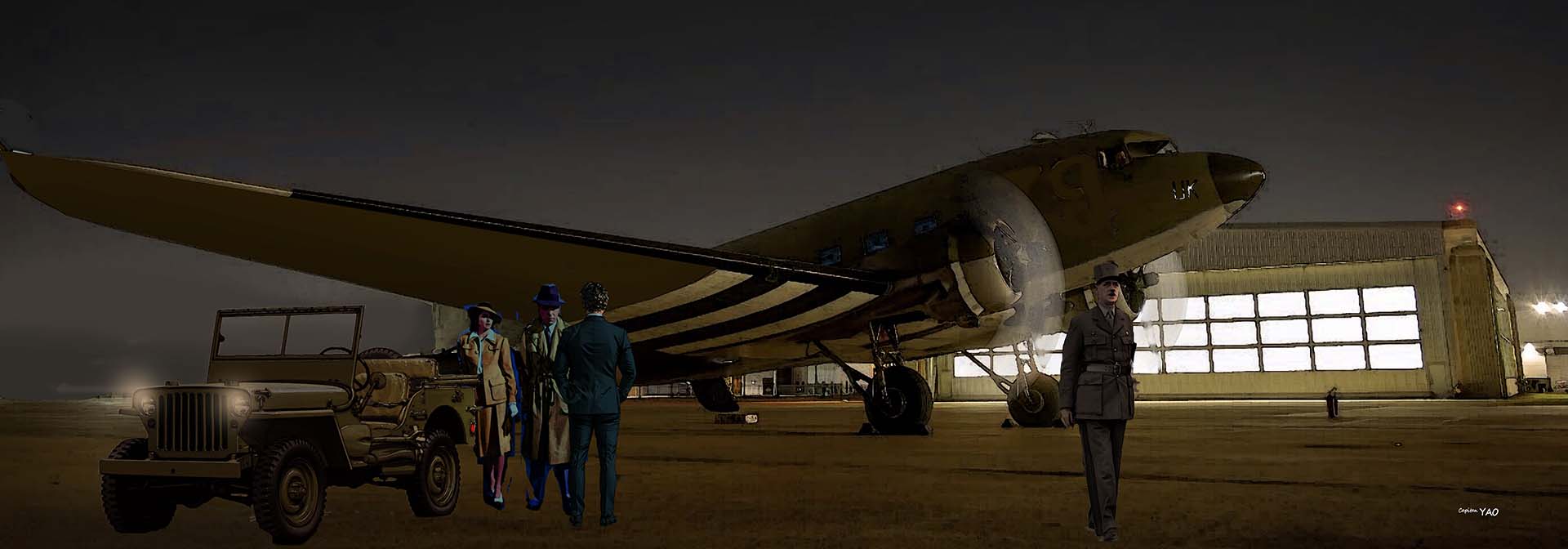
(Figures 5-8-6) Paul Draken rescued Chanel and Dincklage, and personally drove them to the airport in a jeep, where they boarded a British transport plane and escaped to Switzerland. In fact, Churchill was right; this was exactly what de Gaulle was thinking. He was determined to restore France's glory after the war, which meant he had to ally with post-war Germany rather than Britain. This had nothing to do with whether he was pro-Nazi or not; it was the path he, as the future leader of France, had to take. But while the war was still raging and Churchill was still leading the anti-German alliance among the European governments in exile in the British Isles, de Gaulle had no choice but to submit. Churchill even ordered that de Gaulle be arrested if he dared to leave Britain. Now that Paris has been liberated and de Gaulle is about to become the leader of the new French Republic, he gradually distances himself from Churchill. Of course, de Gaulle is aware that Churchill suspects his stance and believes it is a trap deliberately set by Churchill, so he is unwilling to walk into it. This is one of the reasons why I repeatedly ran into obstacles when trying to contact him. We can see from France's repeated opposition to Britain and the United States in European affairs that if de Gaulle wanted to become the new hegemon of Western Europe after the war, he had to exclude British influence on the European continent, even though it was the British army that helped de Gaulle defeat the Nazis and restore France during World War II. This is the reality of the international situation. Unfortunately, my act of secretly delivering messages for Churchill was discovered by a Communist spy within the bureau and passed on to the Labour Party. This became a sore spot for Churchill during his 1945 re-election campaign, resulting in his defeat to Clement Attlee of the Labour Party. This further fueled Churchill's hatred for communism, leading him to first use the term "Iron Curtain" in a speech in 1946.
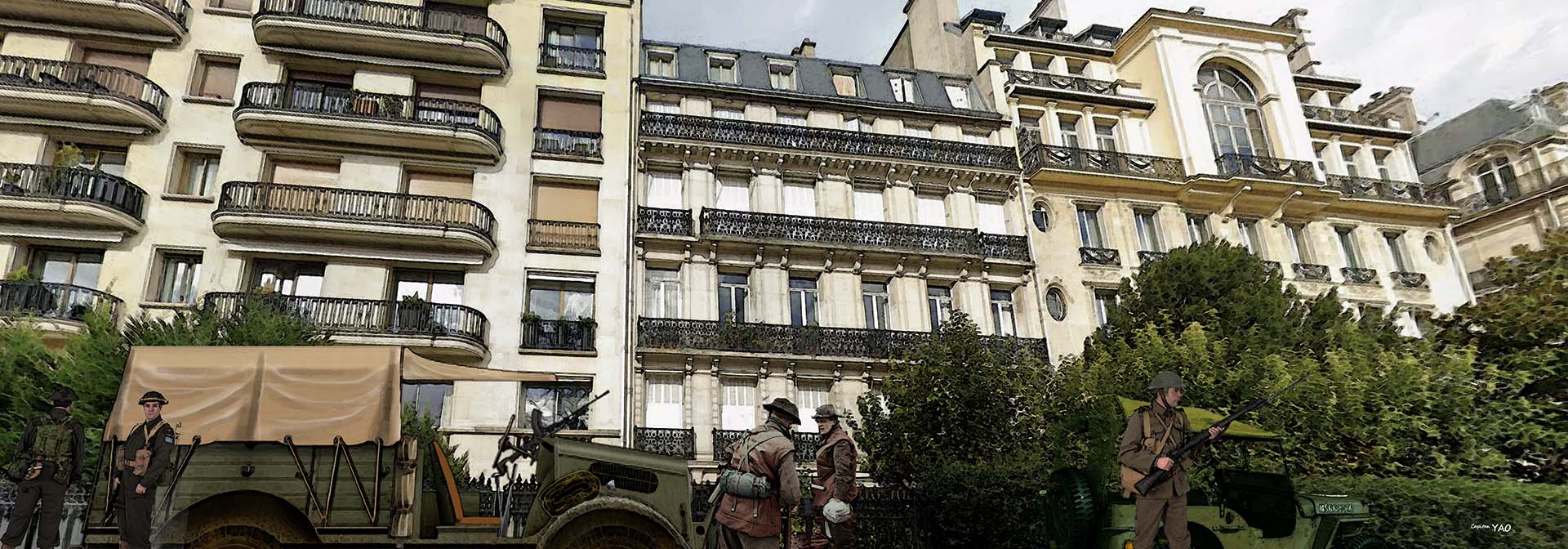
(Figure 5-8-7) Paul Draken and SOE agents lead troops to take over the headquarters of the Nazi SD in Paris. I suddenly remembered Noor, who was sent to Paris by the SOE in June 1943 and later went missing, so I asked, "Do you know of an Indian woman named Noor something?" I regretted it as soon as I finished speaking, because I had just been warned by the SOE, not to inquire about people who were hiding behind enemy lines. But then he raised the folder in his hand and said, "This is Noor's information. She was arrested on October 13 last year and has now been sent to Dachau concentration camp." It turns out that the SOE agents were also looking for her; after all, Noor was their "beautiful baby", and many wanted to rescue her. However, Dachau concentration camp was located in Germany, and the Allies hadn't yet managed to liberate it. They later learned that she was still alive when we were in Paris. Three weeks later, on September 12th, she was executed along with three other female SOE agents, and their bodies were cremated at the camp's crematorium. Dachau was liberated by American forces on April 29, 1945. Through interrogation by American troops, the events gradually came to light, but the SOE never confirmed this, and the files remain unpublished to this day. At that time, women were not allowed to fight on the front lines and could only serve in logistical support. Therefore, Noor initially joined the Royal Auxiliary Air Force, but she was not content with this and managed to transfer to the Special Operations Service. Since SOE members were not considered soldiers, they were not subject to the restriction that women were not allowed to go to the battlefield. However, they were also not protected by the prisoner-of-war preferential treatment regulations and could be executed directly if captured. This is why Noor was sent to Dachau concentration camp instead of a prisoner-of-war camp.
According to the recollections of an agent who infiltrated Paris, Noor, codenamed "Madeleine," was often in danger due to her absent-minded personality. On one occasion, she forgot the code word and showed a passerby the classified map she was responsible for delivering, attempting to elicit a response. Another time, she left her codebook and a handbook containing the names of all members of the Paris Resistance in her hotel room, fortunately being protected by sympathetic French people. On yet another occasion, she set up a safe house next to the Gestapo headquarters, hiding a radio transmitter; the noise from her late-night transmissions was clearly audible to all the neighbors. She also misinterpreted the headquarters' instruction to "handle the codebook carefully," interpreting it as "keep all used codebooks safe," which led to the Germans confiscating them all when she was arrested. The Germans used these codebooks to send messages to the SOE headquarters, luring more agents into their trap. Therefore, during the post-war investigation, she was suspected of defection, but fortunately, the Germans confirmed in court that she had consistently resisted and refused to yield, thus preserving Noor's innocence.
Noor's death was linked to a tip-off. A French woman, Renée Garry, became jealous when her boyfriend, also a SOE agent, showed interest in Noor. She reported Noor to the Gestapo and was arrested. Tragically, Noor's beauty became the cause of her death. It is said that her last words before being executed were "Liberte!", spoken by a Dutch slave laborer who witnessed the scene.
Noor's martyrdom reminded me of Cheng Pingru. Both women came from privileged backgrounds and were exceptionally beautiful. In times of peace, they would undoubtedly have lived lives of luxury as socialites, but war tragically took their lives in the prime of their youth. I didn't know Cheng Pingru, but Noor joined the intelligence organization because of me. Noor's family were Sufism Muslims who believed in Gandhi's non-cooperation movement. However, their passive resistance and refusal to attack were not suited for espionage. Noor, however, believed that contributing to Britain's cause during its time of crisis would elevate the status of Indians and provide leverage for future independence. Noor steadfastly adhered to this belief, even refusing to leave Paris when the SOE wanted to withdrawing her, as she was the only remaining radio operator in Paris. Noor's convictions were pure and unwavering, but the British Empire, which she so desperately wanted to help, deliberately incited religious hatred during India's independence movement, causing national division and ultimately leading to the assassination of Gandhi, who advocated for unification, by separatists.
Compared to Annie, Kawashima Yoshiko, Empress Wanrong, and Li Yunhe, "Princess Noor" is more respectable and more pitiful. Does Noor's death prove once again that Chiu Taochi's "curse of the empress and princess" is true?
It turns out they were connected to the Nazi Party, working for Major General Walter Friedrich Schellenberg, the head of the Nazi intelligence service. Schellenberg was extremely active; he was responsible for the kidnapping of the MI6 Dutch station chief at the border in 1939. The next mention of "Operation Modellhut" made my eyes widen even further. This plan involved Schellenberg exploiting Chanel's relationship with Churchill (the two had known each other since the 1920s) to persuade Britain to leave the Allied and make a separate peace with Germany. This was similar to Yamamoto Isoroku's idea, but given Churchill's strong anti-Nazi image, was this even possible?
The archives also contain the name of the Duke of Windsor, and it appears he had a relationship with Chanel before Wallis Simpson. Therefore, the Duke of Windsor's connection to the Nazis may not have begun with Wallis Simpson, but rather with Coco Chanel. We had already heard that Chanel used her privileges with the Germans to monopolize supplies during the war and embezzled the assets of the original Jewish investors in Chanel No. 5 perfume; now we discover she was also a spy.
Did Churchill want me to rescue Chanel, ostensibly to preserve the brand value of Chanel No. 5 perfume, but the real reason being that if Chanel remained in French hands, this earth-shattering secret would eventually be revealed, completely shattering Churchill's image as a staunch anti-Nazi? Therefore, it was imperative to move her as soon as possible. Does this mean I was being used as a pawn by Churchill? Secondly, why did De Gaulle tacitly allow me to take Chanel away? Did they genuinely not know, or did they have ulterior motives?
After World War II, "Nazi" became a purely negative term. However, before the war, Nazi ideology had a considerable market in various countries, including Britain and the United States, where legal Nazi organizations were openly active. Many politicians admired Nazi ideology, from the Prince of Wales (later Edward VIII) to Chiang Kai-shek in China. Therefore, when Churchill went against the tide and publicly declared his anti-Nazi stance, he became a political liability. It wasn't until the outbreak of war in 1939, when Germany became an enemy, that the British Nazi Party was banned. So, was Churchill's anti-Nazi stance based on ideology and belief? Probably not; it was more likely based on personal political interests. If it was ideology, why did he oppose communism after opposing Nazism? Aren't these two extremes on the political spectrum? I hadn't thought about it that much before, but something felt off after the Chanel affair, and I gained a new perspective on Churchill.
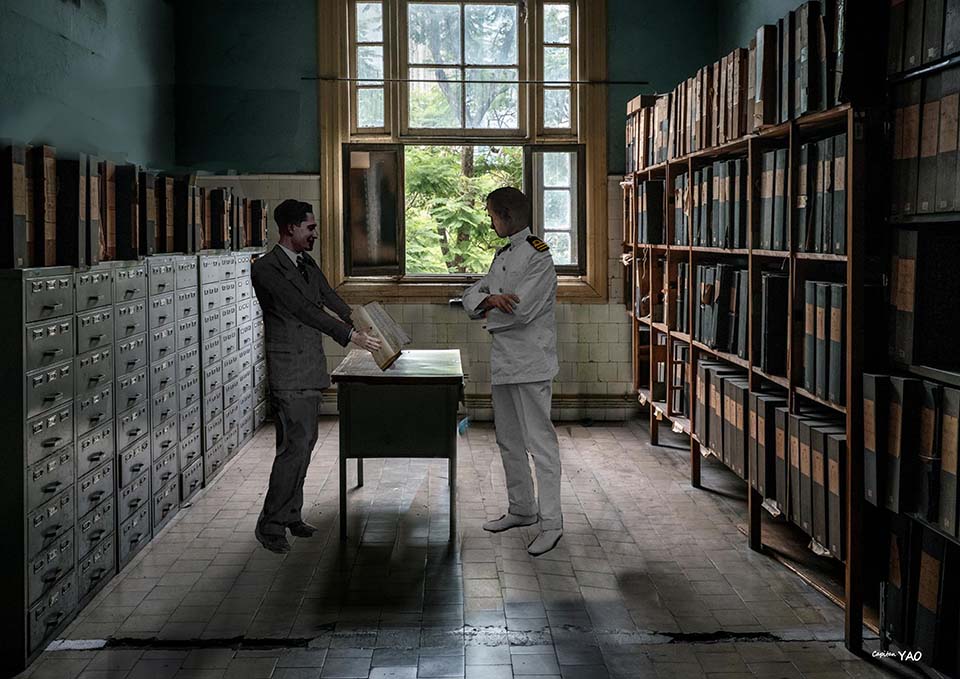
At SD headquarters, I often went to the interrogation room on the top floor (fifth floor) to reflect. Noor was tortured here. Although the scene had been cleaned up, I could still feel her helplessness and despair. This was also where Chanel accompanied Dincklage and Schulenberg, issuing orders. I could imagine their arrogant and domineering demeanor at the time. In the end, I released Chanel but couldn't rescue Noor. This conflicted feeling was particularly acute when I was at SD headquarters.
I cannot stay in France for long. If I had time to investigate further according to the SD files, the consequences would be unimaginable. I could also be "silence" because of it. There were many such cases at the end of the war, such as General George Smith Patton, who died in a mysterious car accident in 1945. So I can only keep silent and bury this secret in my heart. It has not been made public for half a century.
After finishing my business in France and returning to England, I rested briefly before preparing for another long journey. The war in Europe was clearly coming to an end soon, and I had to hurry back to the East to see what else I could catch up with.
|