8. The Mukden Incident
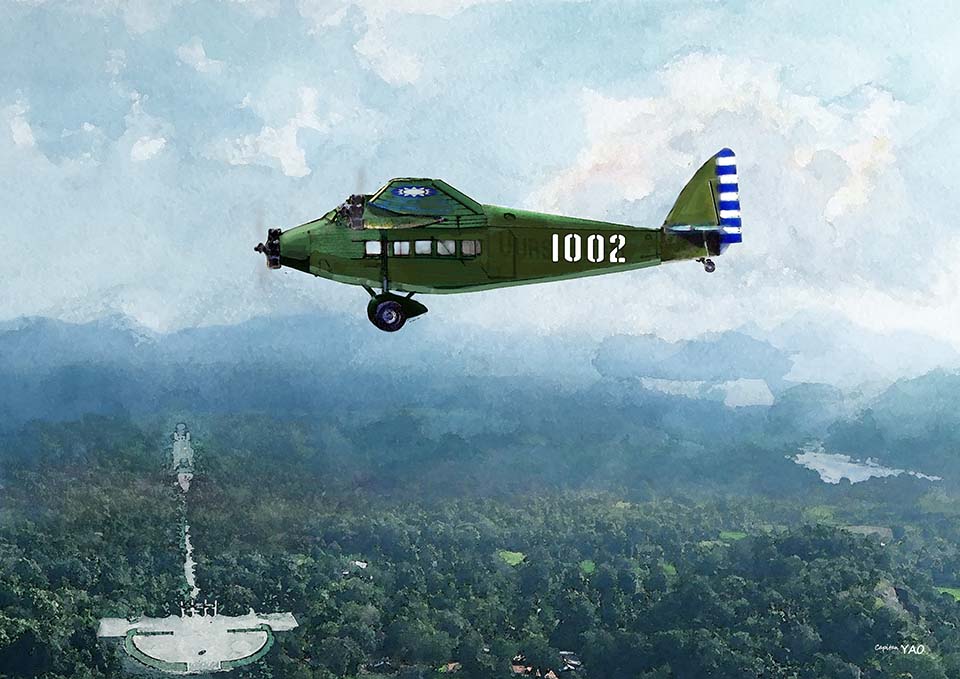
The luminous pearl's subsequent developments profoundly influenced modern Chinese history. After leaving Loulan, Jin Bihui went directly to Tiantsin to see her former superior, Kenji Doihara. Doihara had just been appointed head of Japanese intelligence in North China, and he was the one who arranged for the small plane to pick her up. Because Kim Bihui's scheme failed and lost the luminous pearl, she couldn't explain herself to her Japanese masters. Therefore, she conspired with Doihara to create unrest in Manchuria and Shanghai to divert attention. On September 18th of that year, the Liutiaohu Incident occurred in Mukden (Fengtian, or Shenyang). Due to Chang Hsueh-Liang 's policy of non-resistance, the Kanton Army occupied the entire Manchuria.
On January 28th of the following year, Kim Bihui again instigated a conflict between Japanese monks and Chinese workers in Shanghai, triggering a fierce battle between Japanese marines and Chinese troops. Both sides occupied strongholds in the streets of Shanghai, piled up sandbags, and bombarded each other with guns and cannons. The Japanese navy even launched attacks from aircraft carriers offshore, bombing Chinese positions. Because the intelligence organization led by Doihara and Kim Bihui had repeatedly performed meritorious service, no one held Kim Bihui accountable for the loss of the luminous pearl.
However, Kim Bihui was still unwilling to give up and tried several times to return to Loulan to excavate, but he could not enter because Sinkiang had become part of the Soviet Union's sphere of influence. Later, Kim Bihui had an affair with Ueda Kenkichi, the commander of the Kanton Army, and persuaded him to send troops to bypass Mongolia and enter Sinkiang. As a result, the Kanton Army and the Soviet Red Army fought a major battle at Nomonhan on the border of Manchuria and Mongolia in May 1939. The Japanese infantry and cavalry were no match for General Zhukov's tanks and artillery. The 23rd Division was completely annihilated by the Red Army on the grassland. More than 20,000 Japanese soldiers were killed and in the end, they had no choice but to humiliatingly sue for peace with the Soviet Union.
Having caused such a humiliating incident, Kim Bihui's lover, General Ueda, was dismissed from his post and returned to his country. From then on, Kim Bihui lost all interest in the luminous pearl and began to turn her attention to another tomb-raiding treasure: the Chianlong sword that General Ueda left her when he returned home. But these are all stories for later, and more details will be explained in later chapters.
The interest in luminous pearls wasn't limited to the Japanese; the British were also drawn to them. As early as April of last year, the renowned British archaeologist Aurie Stein secretly arrived in China. This Stein was the same man who stole the Dunhuang manuscripts to England in 1907. My father had arranged to go on an archaeological expedition to Loulan with him, but his lateness led to all these subsequent events. It's fair to say that if he had met my father on time, I might not exist.
Because of this connection, Stein became the person besides his father who knew most about the ancient Loulan Kingdom and the luminous pearl. From 1907 onwards, he schemed relentlessly to obtain the pearl. Stein was a cunning and ruthless man; I had heard my father talk about him before. This time, he had come to China eight months early to make arrangements, and I heard he had bribed the Nanking government's Ministry of Foreign Affairs to obtain permission to transport the treasure out of India. The problem was that Stein's past theft of the Dunhuang manuscripts had severely damaged his image in China. Chinese archaeologists jointly petitioned the government to ban him from any archaeological activities in China, and Stein was eventually expelled from the country.
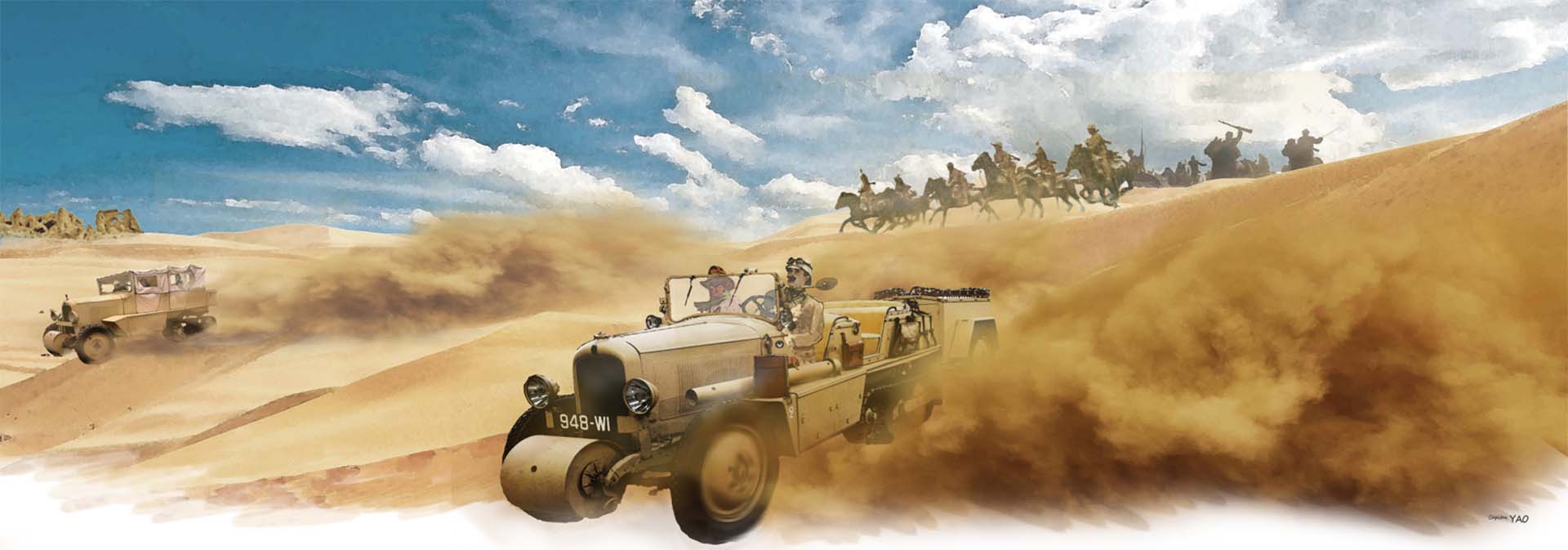
Besides the Japanese and British, even the French got involved in the scramble for the luminous pearl. In 1931, the French Citroën automobile company specially ordered 14 C4 P17 half-track (Autochenilles) off-road vehicles, which were led by the famous explorer Georges-Marie Haardt on an archaeological expedition in Sinkiang, China, under the name "Croisière Jaune" (Yellow Journey), but in reality, their main purpose was to find the luminous pearl.
The plan was to split into two teams of seven vehicles each. The western team (also known as the Pamir Group) departed from Beirut in April, while the eastern team (also known as the China Group) joined with the Chinese government as the "19th Anniversary Expedition" and departed from Tiantsin in May. The two teams were scheduled to meet at Lop Nur in Sinkiang. However, during the journey, the French leader of the "China Group," Victor Point, assaulted a Chinese team member, which seriously hurt the self-esteem of the Chinese people. As a result, the Chinese government revoked its cooperation permit. Coupled with the obstruction of warlords along the way, only the western team managed to reach Peiping by the end of 1932 after many hardships. The team leader, Hart, fell ill with pneumonia upon arrival and died in Hong Kong after treatment proved ineffective. The expensive Citroën "Yellow Journey" ultimately yielded nothing.
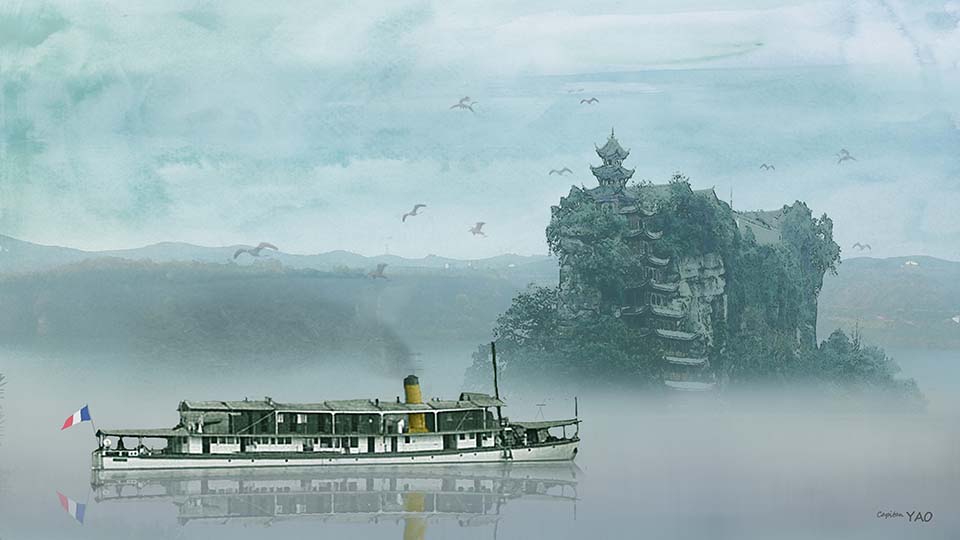
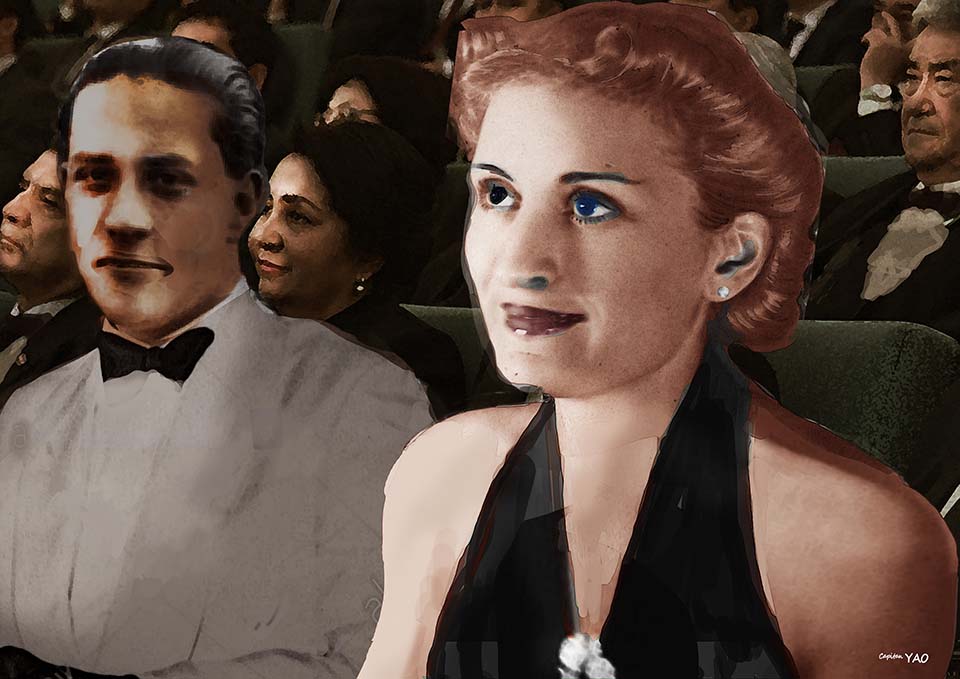
Victor Point, who assaulted the Chinese team member, is worth mentioning. He was a lieutenant and deputy commander on the French naval river gunboat "Doudart de Lagree," stationed in China. He came to the Far East in 1925 and participated in the evacuation of the French consulate in Chongking during the anti-foreign movement of 1927. At the time, Point was having an affair with the French actress Alice Cocéa. This Romanian-born Cocéa was then the wife of a count in France and, with her aristocratic title, was a well-known socialite in upper-class European society. Cocéa was very beautiful but promiscuous, and was also being kept by a wealthy businessman. Point, who had just returned to France from China, discovered this,
heartbroken Point shot himself in front of Cocéa on a French ship in August 1932. It is said that Point's colleagues were dissatisfied with Cocéa's betrayal and shouted Point's name and booed her during her performance, which led Cocéa to announce her retirement from the entertainment industry, becoming a sensational gossip news at the time.
I paid close attention to these attempts by various forces to excavate the luminous pearl, not because I cared who obtained it, but because I believed that if handled poorly, it could bring utter disaster to humanity. My mother, the High Priestess Fairy, and Master Chiu both said so. Originally, my superiors hoped I could participate in the "Croisière jaune", but at that time I was on the mission of the Minister to find the so-called luminous pearl, and no one dared to disobey the Minister's orders, so the plan was abandoned. Moreover, I had just returned from Lop Nur and had little desire to go again. Therefore, I recommended another Russian, who also worked for British intelligence, Vladimir Petropavlovsky.
Petropavlovsky, nicknamed "Petro", was a Russian-born violinist and engineer. He had a rich and varied background, serving as a Russian artillery officer during World War I and later joining the Légion Étrangère (French Foreign Legion). We knew him because he had worked as an engineer for Marshal Chang Zuolin, building dams. Petro was then classified as a "White Russian," referring to a stateless Russian of Russian descent, similar to Korniloff. He spoke fluent Mandarin and several other dialects, had traveled extensively throughout China, and was more familiar with Chinese society than I was. When Point met Petro, he considered him a valuable asset and immediately gave him important responsibilities.
During World War II, Petro worked with me in Chongking at the British intelligence unit SOE (Special Operations Executive). His wife, Barbara Rose, stayed in Hong Kong to work at the American consulate. During the war, she was imprisoned by the Japanese along with Major Boxer, and later repatriated to the United States with Emily Hahn. Therefore, Pietro and Emily Hahn were close friends who had been through thick and thin together. These stories will be told later.

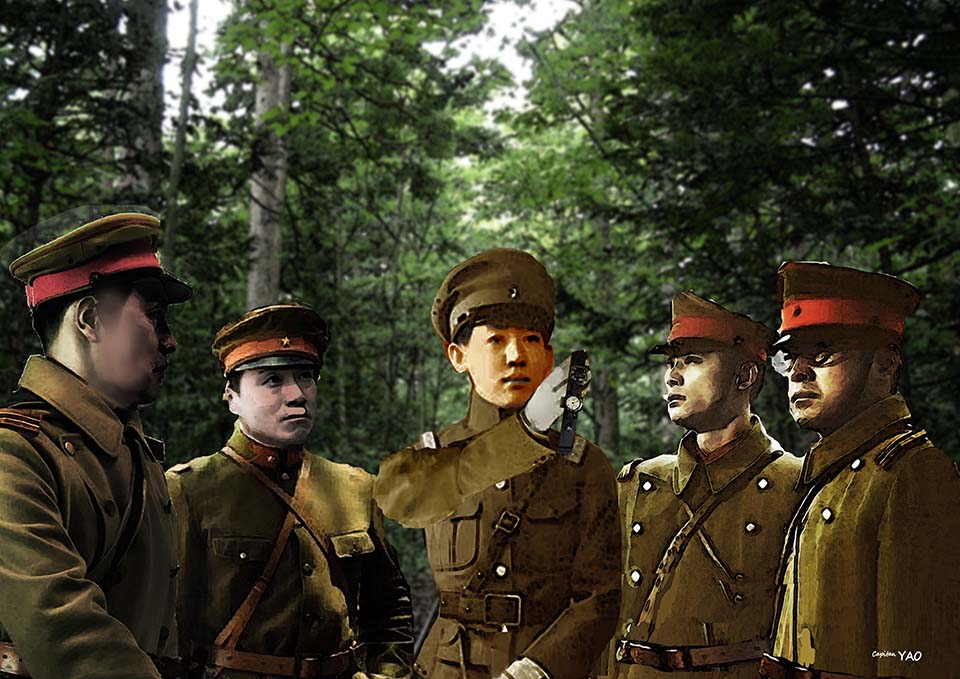
The Manchurian Incident was directly related to Kim Bihui. In August of that year, when Doihara took office as the head of the Mukden Special Service Agency at the Kanton Army Headquarters, Kim Bihui also followed him. At that time, Japanese intelligence agencies were taking advantage of Chang Hsueh-Liang's absence from Manchuria to send multiple groups of spies to gather military intelligence throughout the region. One of these groups, led by Captain Nakamura Shintaro, was captured by Chang Hsueh-Liang's troops and secretly executed on the spot. This incident would normally have gone unnoticed, but things changed when it came to Yoshiko Kawashima, i.e., Kimn Bihui. "You idiot! You think you can get evidence from the enemy? You have to create it yourself!"
Jin Bihui loudly berated the Japanese intelligence agents who had just come under her command, her gaze landing on the wrist of one of them: "What kind of watch is that?"
It was a uniquely designed watch that was not commonly seen in the market. The subordinate, who was asked about it, was puzzled and replied hesitantly, "It is a commemorative watch with three beams that we, the same group of intelligence officers, ordered when we finished our training."
"Does Captain Nakamura have one too?"
"Yes!"
"Take it off and give it to me." Before her subordinate could react, Yoshiko Kawashima snapped, "Take the watch off and give it to me right now!"
The subordinate then quickly took off his watch and handed it to Yoshiko Kawashima.
"See that? This is the evidence!" Yoshiko Kawashima proudly held up his watch. "Take it to the local pawnshop and say it was pawned by the Chinese army after they killed Captain Nakamura!"
Using this as a pretext, the Japanese Kanton Army launched a punitive expedition, and on September 18th, they blew up the railway at Liutiaohu to frame the Chinese, triggering the Mukden Incident. I was a direct participant in the Mukden Incident. It began with an investigation into the sinking of the submarine "HMS Poseidon." I stayed in Weihaiwei and Tsingtao from June until early September. During this time, I received considerable assistance from Admiral Shen Honglie, the commander of the Northeast Navy. After the matter was completed, I specifically went to thank him. Admieral Shen said, "I'm returning to Mukden tomorrow to handle the relocation of my parents' coffins. Would you be interested in accompanying me?"
Although I had been away from Shanghai for several months, since Admiral Shen had taken the initiative to invite me, and given our teacher-student relationship, I felt it would be impolite to refuse, so I readily agreed. Another reason I was willing to accompany Admiral Shen back to Mukden was to help sell British warships.
At that time, the Northeast Navy had the most powerful fleet in all of China, and theoretically, the probability of purchasing large warships should have been the greatest. Moreover, just think about it, he could only talk to me along the way, what a great sales opportunity this was!
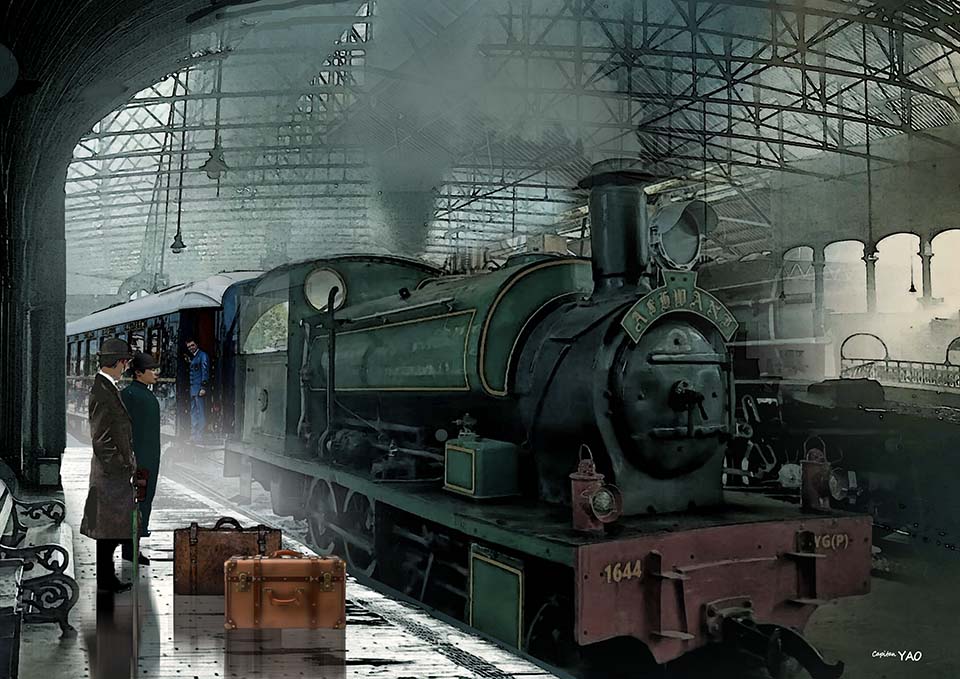
The next day, I met Admiral Shen Honglie on the train platform. He was wearing a long robe and carrying a briefcase. He didn't look like a powerful general at all; he looked more like a merchant. I knew he was a very frugal person who kept his personal and public affairs separate. This trip was purely for personal matters, and he would not use public funds or employ his subordinates. He even insisted on paying for my train ticket out of his own pocket.
During the drive, I found an opportunity to say, "The Northeast Fleet used to be the most powerful of the three navies in China, but the three main battleships, Haichi, Haichen, and Chaohe, are all decades old. Recently, the Fookian-based fleet built a new cruiser, Ninghai, in Japan, equipped with six 5.5-inch guns. Once completed, it will surely swagger around everywhere, and your control of the seas in North China will be in jeopardy. Admiral Shen, can you swallow this insult?"
I tentatively asked, "Have you considered ordering some new warships from Britain?"
"You know that many of us in the Northeast Navy, including myself, studied in Japan. You also know the influence of the Japanese in the Northeast. It's difficult for us to buy new warships without dealing with the Japanese," Shen Honglie said. "However, we will have to fight Japan sooner or later. It would be unreasonable for us to buy warships from the Japanese. I strongly disagree with Chen Shaokuan's decision to order warships from Japan."
Chen Shaokuan was the Minister of the Navy of the Fookian-based Central Navy and a sworn enemy of Admiral Shen.
"In my opinion, the Northeast Navy should purchase at least two more light cruisers and six new destroyers." I then offered a compromise: "If we lease existing warships, we won't have to wait for them to be commissioned immediately, and we can also silence the Japanese. I can arrange things with the British government and the Royal Navy."
"Hmm! That's a feasible method. Go back and do it immediately." Admiral Shen nodded, then added, "I also need to add twelve torpedo boats."
I knew I wouldn't be leaving empty-handed this time! Two light cruisers, six destroyers, plus twelve torpedo boats—that's a huge order. Willie, Willie, I'll get you back to the intelligence group soon!
We arrived in Mukden on September 15th. Admiral Shen didn't go to the headquarters but went directly to the place where his parents' coffins were kept to keep vigil; his brother was already there waiting for him. When I said goodbye, he reminded me, "Get back and take care of it immediately!"
I found an old acquaintance, Golden, who used to work at the Marshal's Mansion. He now drives a taxi for a Japanese company and knows all the best places to eat and have fun in Mukden. So I hired him to take me sightseeing in Mukden and its suburbs. The autumn air was crisp and the scenery was picturesque. Plus, Admiral Shen's business was already secured, so I was in a very pleasant mood.
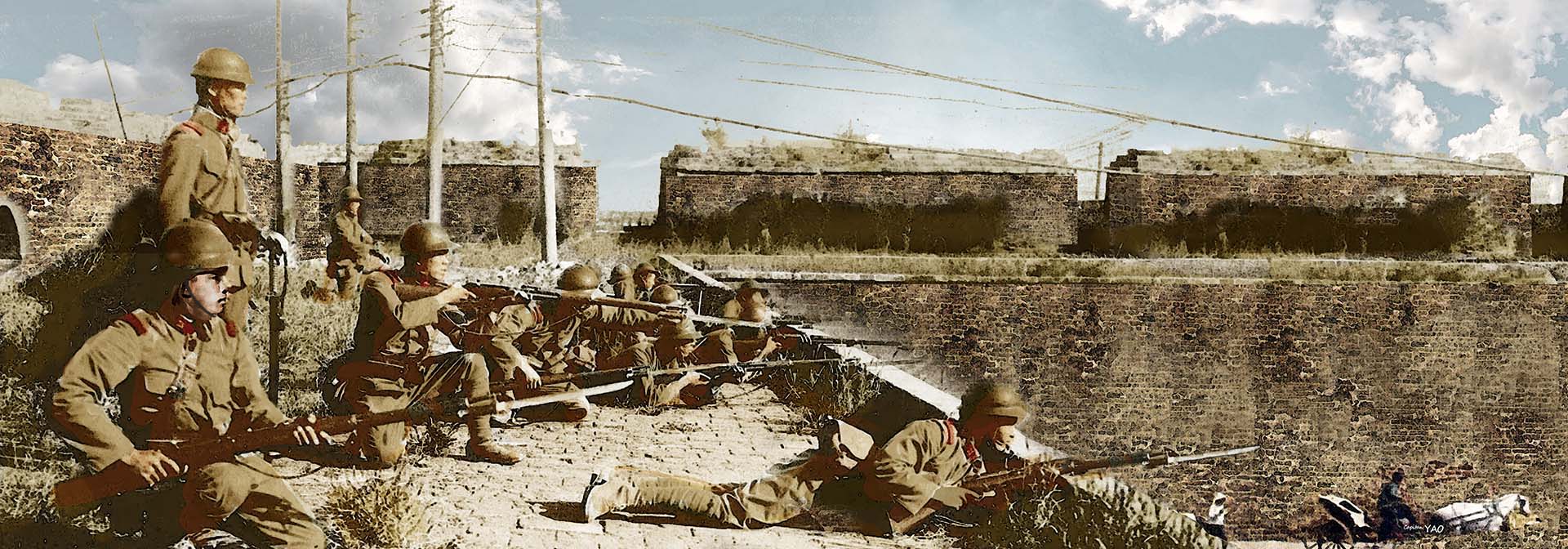
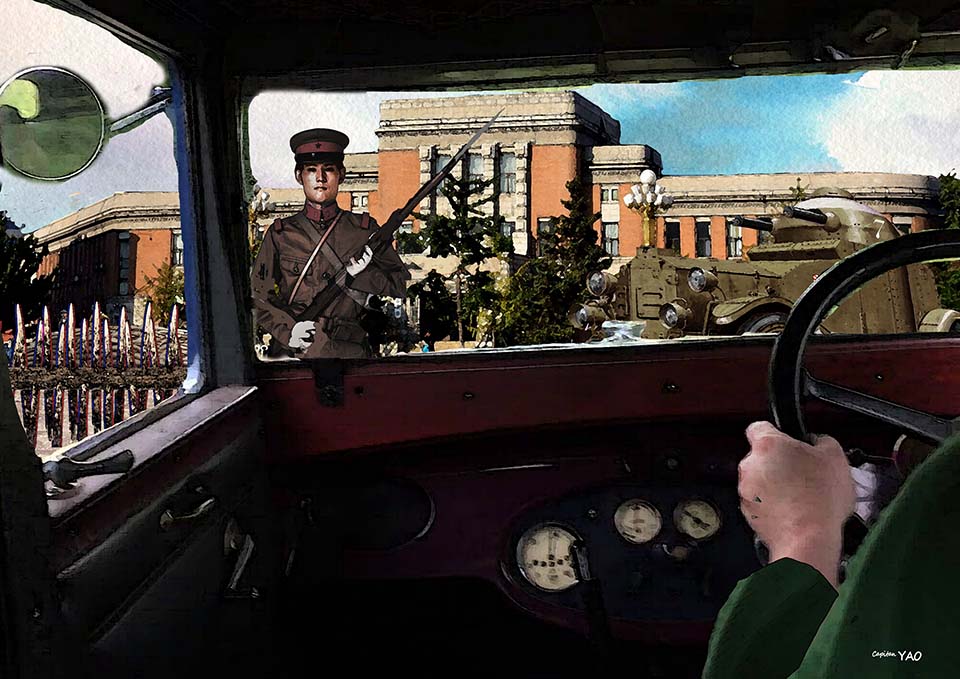
(Figure 3-8-5) The Kanton Army occupied Mukden City.
Along the way, I passed many checkpoints. I noticed that the guards were not Northeast Army soldiers but Japanese soldiers. However, since the incident had just begun, there were still many loopholes to exploit. In addition, Golden's car was from a Japanese company, so there was always a way to get through. We finally arrived at the place where Admiral Shen was keeping vigil and saw him pacing back and forth, looking utterly helpless and frustrated. He was overjoyed to see me, grabbed my hand, and said, "Please take me to headquarters; I must rush back to take command!"
(Figure 3-8-6) From the car, Paul Draken saw that the Northeast Army Headquarters had been taken over by the Japanese Kanton Army.
Golden knew the way to Mukden like the back of his hand and quickly drove us to our destination. However, from a distance, we could see that the guards standing at the gate had been replaced by Japanese soldiers, and from the window we could see a group of people rummaging through drawers and cabinets looking for things.
"Damn it! The Japanese are looking for me. I have to leave as soon as possible, otherwise they'll definitely try to make me a traitor!"
What is a traitor?
"A traitor is..." Golden interrupted, wanting to explain, but swallowed her words when she saw Admiral Shen's ugly expression. "Should we go to the train station?"
When we arrived at the train station, we saw a special train carrying the families of the Marshal's family heading south into the pass, ready to depart. We quickly found someone we knew to help us board the train and find a hiding place. Before departure, the Japanese boarded the train to search, but because the high command of the Kanton Army had ordered that the families of the Marshal's family not be detained, they only glanced at them and let them pass. Because railway workers along the way had scattered and fled, and the road conditions ahead were unknown, the train could only stop and start frequently, taking many days to reach Tiantsin. I ended up spending my 24th birthday on this escape train.
I said goodbye to Admiral Shen in Tiantsin. He was going back to Tsingtao, while I planned to take a China Airlines mail plane back to Shanghai. I had been away from Shanghai for four months, and I wondered how Annie was doing.
Due to the loss of Manchuria, Chang Hsueh-Liang concentrated all his fleet in Tsingtao. With a large number of people but limited resources and uneven distribution, everyone felt hopeless about the future. As a result, the "Laoshan Incident," in which Admiral Shen was kidnapped, and the failed assassination attempt on Shen by Lieutenant Feng Chichong occurred. After dealing with the incidents, he was unable to resolve the situation. In July 1933, Kiang Yanzhong (who was a captain and staff officer when I bombed Shanghai in 1927, and is now a captain and has changed his name to Kang Hsiyuan) led the three largest warships of the Northeast Fleet, the "Haichi," "Haichen," and "Chaohe," south to join the Chen Jitang regime in Canton. Having lost its three main warships, the once mighty Northeast Navy never recovered, and Admiral Shen consequently left the navy in disgrace. As for my huge order? It simply vanished into thin air! The failure of Chang Hsueh-Liang and the Northeast Army to provide effective resistance during the Manchurian Incident caused a national uproar. At the time, the Japanese Kanton Army was actually limited in strength; had Chang Hsueh-Liang's 400,000 troops fought bravely, the Japanese could never have occupied the vast Manchuria within a few months. Public opinion throughout China criticized Chang's lack of resistance, and the British government was also puzzled by this development, as it would affect the balance of power among the great powers in China and thus harm British interests. Therefore, I was sent to investigate. I know that Kim Bihui had visited Chang Hsueh-Liang in Peiping beforehand, and Chang later admitted to it, but he said he was not interested in Kim. Based on my understanding of Chang and Kim, I have my doubts about this. Later, rumors circulated that Chang Hsueh-Liang had been ordered by Chiang Kai-shek not to resist. Chang neither confirmed nor denied this, leaving Chiang to take the blame. But Chang had long ago told me privately, "How could my army possibly defeat the Japanese? It sounds nice, but fight? Let the Central Army fight! If I fight alone, I'll be left with nothing but my own troops, completely vulnerable to being slaughtered!" Essentially, Chang Hsueh-Liang inherited his father's warlord ideology, but Chiang Kai-shek was also adept at using opportunities to weaken others. When Chang refused to resist the Japanese, Chiang ordered him to suppress the Communists. To preserve his power, Chang still refused, and under the pretext of resisting Japan, he orchestrated the Sian Incident in 1936, in which Chiang Kai-shek was taken hostage. Afterwards, Chang was surprisingly hailed as an anti-Japanese hero. History truly has a way of playing tricks! My views on intelligence analysis often differed from those of my colleagues and superiors, but I was usually right in the end because I understood Chinese behavior patterns better than most Westerners. The ambitions displayed by the Japanese in the Manchurian Incident also alerted London. Since the beginning of this century, the good alliance between Britain and Japan had gradually faded, replaced by a new Eastern maritime power seeking to challenge and replace the old Western maritime power. As a result, the proportion of intelligence on the Japanese Navy in my work gradually increased. However, I increasingly felt that my superiors in London were unable to grasp the reality of the situation. MI6, which was originally led by officers from the Navy, was now under the control of the Foreign Office. As a result, we all became staff members of British embassies and consulates abroad responsible for issuing passports and visas. Our identities were easily known to the other side, and once war broke out, we would all have to evacuate the embassies and return home, and the intelligence network that we had worked so hard to build would be destroyed overnight. I frequently reminded my superiors of this issue, but I never received a direct answer. MI5, responsible for domestic counterintelligence, was then under the jurisdiction of the Ministry of the Interior, so there were relatively few problems.
September. Every day, I could see students rallies and marches on the streets, chanting anti-Japanese slogans. The police in the concessions were on edge, fearing that the students would cause trouble and get out of control, and that the Japanese would take the opportunity to provoke us. As a result, the confrontation between the students and the concession authorities escalated day by day.
I expressed my concerns about this situation in my weekly reports, but my superiors still seemed oblivious. The anti-Japanese movement in Shanghai indeed provided Jin Bihui with an opportunity, and in January 1932, he instigated another major upheaval in Shanghai.
Annie wasn't idle while I was away. Her flight instructor, Charles Lindbergh, and his wife were visiting China by plane at my invitation from the United States last year. I hadn't expected to be stuck in Mukden and unable to personally receive them. Lindbergh was a world-renowned hero and naturally received a lot of attention from the Chinese government. However, after arriving in China, Lindbergh insisted on flying to Hankow to inspect the Yangtze River floods. So Annie accompanied him on several flights. I only treated them to dinner on my birthday, the 27th, after returning to Shanghai, and afterwards, I asked the British Navy for assistance with transport and maintenance.
Lindbergh was originally going to continue his round-the-world flight, but he received a telegram that his father-in-law had passed away, so he canceled his trip and rushed back to the United States in early October. When he left, he repeatedly encouraged Annie to do the round-the-world flight. Annie seemed very interested, while I was sweating bullets.
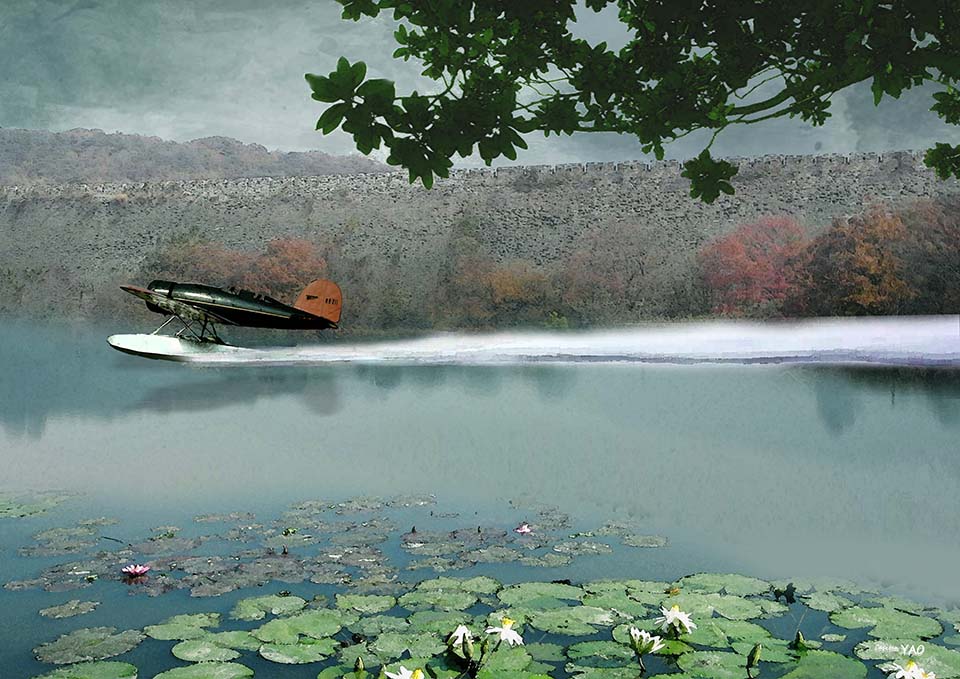
(Figure 3-8-7) Charles Lindbergh’s plane took off from the waters near Nanking.
Germany, having lost its privileges in China after its defeat in World War II, gradually gained control of China's national defense after Chiang Kai-shek brought in German military advisors. The Soviet Union, after the Russian Revolution, also lacked privileges in China, but a large influx of nobles and aristocrats into Shanghai brought with them refined Western tastes, which was quite unique. Speaking of emerging foreign powers in China, I must specifically mention Italy. Italy was originally a second-rate European country, but since Benito Mussolini came to power, it actively projected its national strength. He sent his son-in-law, Count Galeazzo Ciano, to China as Consul General in Shanghai. His beautiful wife, Edda Mussolini, Mussolini's daughter, was a prominent figure in Shanghai's diplomatic circles. I often had the opportunity to meet her; her deep-set eyes and alluring figure captivated countless Westerners in Shanghai at the time.
However, she was the wife of the Consul General, while I was merely a lowly intelligence officer. How could I have possibly climbed such a social ladder? It was all thanks to Annie. Annie's fame in Shanghai's social circles was comparable to Aida's, and many dignitaries considered it an honor to be invited to travel on the "China Pearl." As the pilot, I received many benefits as a result. But I must emphasize that my approach to her was purely for work-related purposes.
Later, I introduced Ada to Chang Hsueh-Liang. It was rumored that the two had a very close relationship, but I will not comment on that. However, it is a fact that she persuaded Chang Hsueh-Liang to buy an Italian-made airplane.
Speaking of aircraft, the Ciano couple's diplomatic success in China led the fledgling Chinese Air Force to choose the Italian system, which provided everything from organization and training to equipment production. They even established an aviation school in Luoyang to rival the Kien-chiao Air Force. Furthermore, Mussolini specially gifted Chiang Kai-shek a Savoia-Marchetti S.72 transport plane as his personal aircraft. It's fair to say that at the time, the Italians practically monopolized a large portion of the Chinese Air Force.
This made me very jealous, because I was also tasked with persuading the Chinese government to adopt the British air force system. Although I had met and discussed this matter with Madame Chiang Kai-shek, who was in charge of the construction of the Chinese air force, my persuasive power was far inferior to that of Countess Ciano.
Aida's competence put considerable pressure on me. Fortunately, she and her husband were soon recalled to England. Not long after, the British government's policy changed. Due to pressure from Japan, Britain no longer dared to sell aircraft to China. Japan even went so far as to buy all the aircraft parts that Italy was preparing to ship to China for assembly into Japanese bombers, all in an effort to win over Italy. Subsequently, the Italian advisors also gradually left. Without the help of Western countries, the Chinese government had no choice but to fully align itself with the Soviet Union after the outbreak of the Sino-Japanese War.
I'm not criticizing, but the Italian system was terrible in terms of both the solidity of its training and the reliability of its equipment. The Chinese government spent a lot of money building up its air force, only to find that it was all just a facade and easily shattered, with no combat capability whatsoever. On the eve of the war against Japan, they hurriedly sought help from the Soviet Union and the Americans, but by then they had wasted many precious years.
If we had adopted the British system, we wouldn't have struggled so much in the early stages of the war against Japan, and the outcome might have been completely different. Just look at the performance of our pilots in the Battle of Britain in 1940.
However, I devoted most of my energy to the Chinese, whether they were high-ranking officials in the Nanking government or warlords in various regions. Most Western diplomats or intelligence personnel in China could not penetrate the Chinese as deeply as I could; they often only saw the surface, which easily led to misjudgments, because the Chinese are masters of superficiality.
One of the Chinese I frequently interacted with was Dai Chunfeng, now known as Dai Yunong. Although his official rank wasn't high, I could see he was gradually gaining power within the Nanking intelligence system. He was a natural-born spy, utterly loyal to Chiang Kai-shek, and also had close ties with figures like Du Yuesheng of the Shanghai Ch'ing Gang. I had to be extremely cautious in dealing with him, because we both wanted to use each other; he was eager to know the policies of Britain and even the great powers, while I wanted to know the true thoughts within the Chinese government.
|