1. The Chinese Pearl
After 1929, I gradually became familiar with the operations of the naval intelligence group. My superiors valued me highly. Although I had little experience and no professional training, I understood Chinese society better than others and had many special connections. For example, Anne's godfather, Huang Jinrong, the "Godfather of Shanghai," helped me a lot. In addition, I was very lucky. For example, the mission to persuade Chang Hsueh-Liang to side with Nanking at the end of last year was completed by accident. However, I think there is another important factor that made me successful in the intelligence group: my father was a founding member and senior advisor of MI6, and was their direct superior.
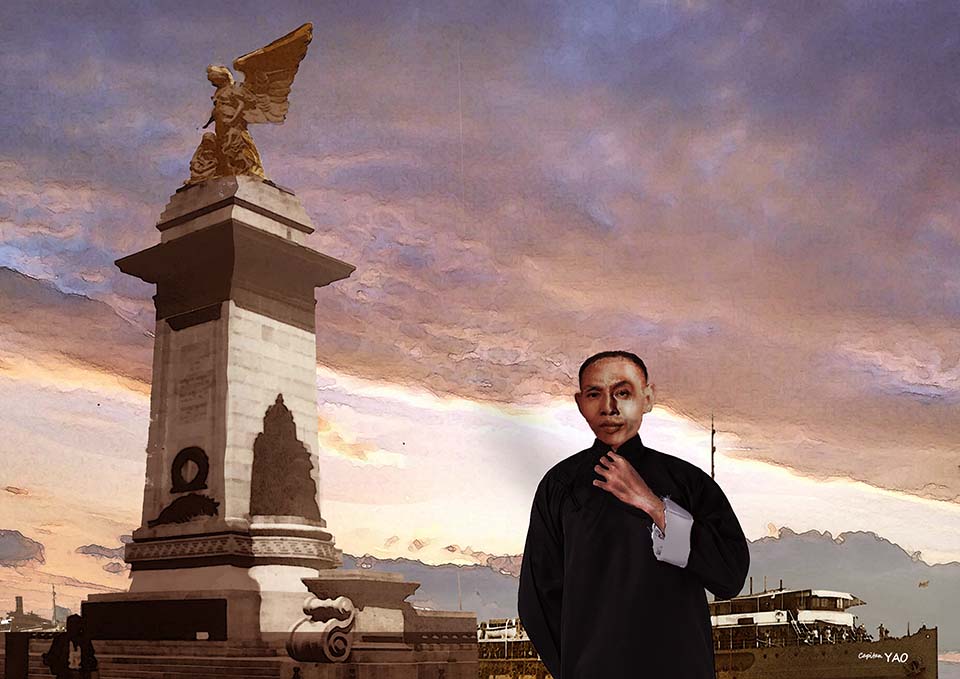
At his sixtieth birthday banquet, Huang Jinrong, the "Godfather of Shanghai" mentioned earlier, introduced me to his disciple, Du Yuesheng, nicknamed "Big-Eared Du." Du Yuesheng was tall and thin, and his prominent ears made his appearance unforgettable. Big-Eared Du was gradually rising in power at this time. In April of the previous year, when the revolutionary army from the south entered Shanghai, he used the Green Gang's influence to pave the way for Chiang Kai-shek. It was said that he killed many pro-communist workers' pickets at the time. Therefore, the West generally held a positive attitude towards Du. Although he was a Chinese mafia boss, my superiors still supported my association with him.
Du Yuesheng was now a prominent figure in Nanking. Through him, I had the opportunity to get close to high-ranking officials around Chiang Kai-shek. More importantly, I got to know Chiang's new wife, Soong Mei-ling. Once, when she came to Shanghai, she specially called to summon me.
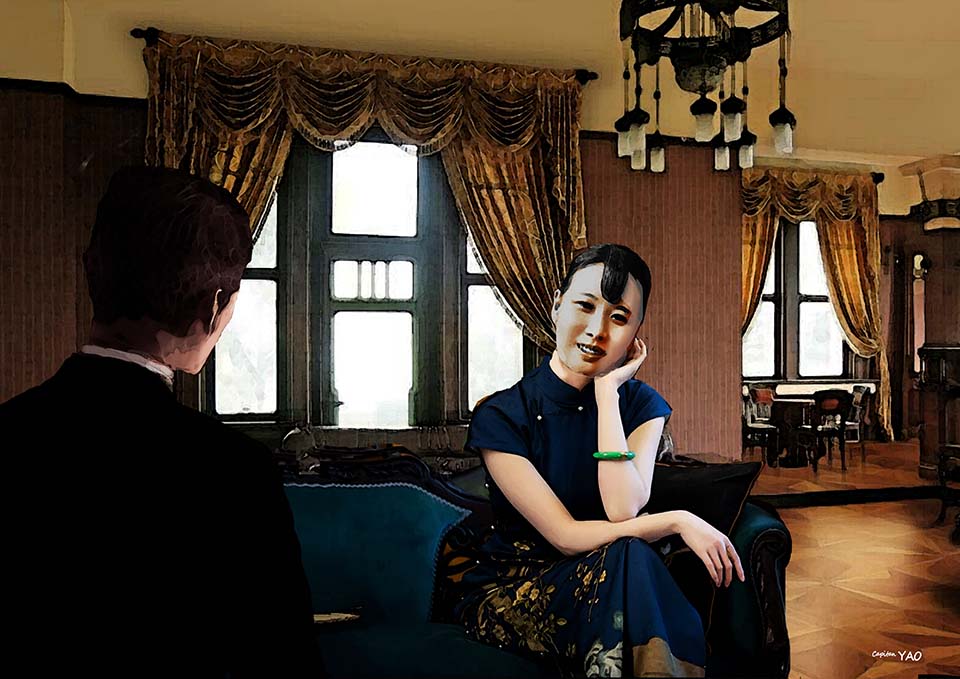
I sat nervously before the First Lady of the new China. She was petite, wearing a Chinese-style cheongsam, with exquisite makeup and her hair neatly combed back in a bun. She spoke to me in elegant, Southern American English.
"You were in Kuangchow in 1923?" she asked when she learned about my experiences in China.
"Yes, Madam!" I remembered that Soong Ching-ling was her sister: "In the summer of 1923, I took a plane with your sister, Madame Sun, in Kuangchow!"
"Really? I heard her mention it! So that boy was you!"
"It was because of that experience in the air that I was able to become a pilot today."
"Great! I'm currently in charge of building up China's air force, and you can come and help me train pilots."
"this……"
I'm not sure if she knew I was a British intelligence officer, but it was still an opportunity to infiltrate the newly established Chinese Air Force, and this opportunity came to me of its own accord. Later, I learned that Soong Mei-ling would be serving as the Secretary-General of the reorganized Aviation Commission and hoped to find many Western experts to assist her. My timely intervention initiated a long-standing relationship between me and her, as well as the Chinese Air Force.
My other purpose in approaching Soong Mei-ling was the luminous pearl. There were rumors that after Sun Dianying robbed Empress Dowager Cixi's tomb, he presented the luminous pearl to Soong Mei-ling under pressure from the government's investigation, asking her to intercede with Chiang Kai-shek on his behalf. I kept an eye on her while we talked, but I couldn't find any clues about her.
Besides the high-ranking officials in Nanking, Du also introduced me to some people from all walks of life around him. One of them, Dai Chunfeng, used to run errands for Du and was now a captain intelligence officer who specialized in collecting intelligence for Chiang Kai-shek. This person later became close to me, but I won't go into details here.
My intelligence work is going well. My only regret is that I am just a junior lieutenant who graduated from the Naval Aviation School and have never been to the Royal Naval College, Greenwich. If I don’t hurry up and try to get a chance to study, I’m afraid I’ll be stuck at this rank for the rest of my life.

Looking back at Annie's birthday gift, the "China Pearl," this aircraft was mostly dismantled and transported from England to Shanghai on a cargo ship, then sent directly to the Kiangnan Shipyard for assembly. However, at that time, the Kiangnan Shipyard was busy converting a large number of civilian ships into warships for the newly established Nanking government to meet the needs of the civil war. But with the help of her godfather, Huang Jinrong, Annie was able to get the aircraft manufacturing department of the Kiangnan Shipyard to continue working overtime, and finally completed the assembly of the "China Pearl" in early June.
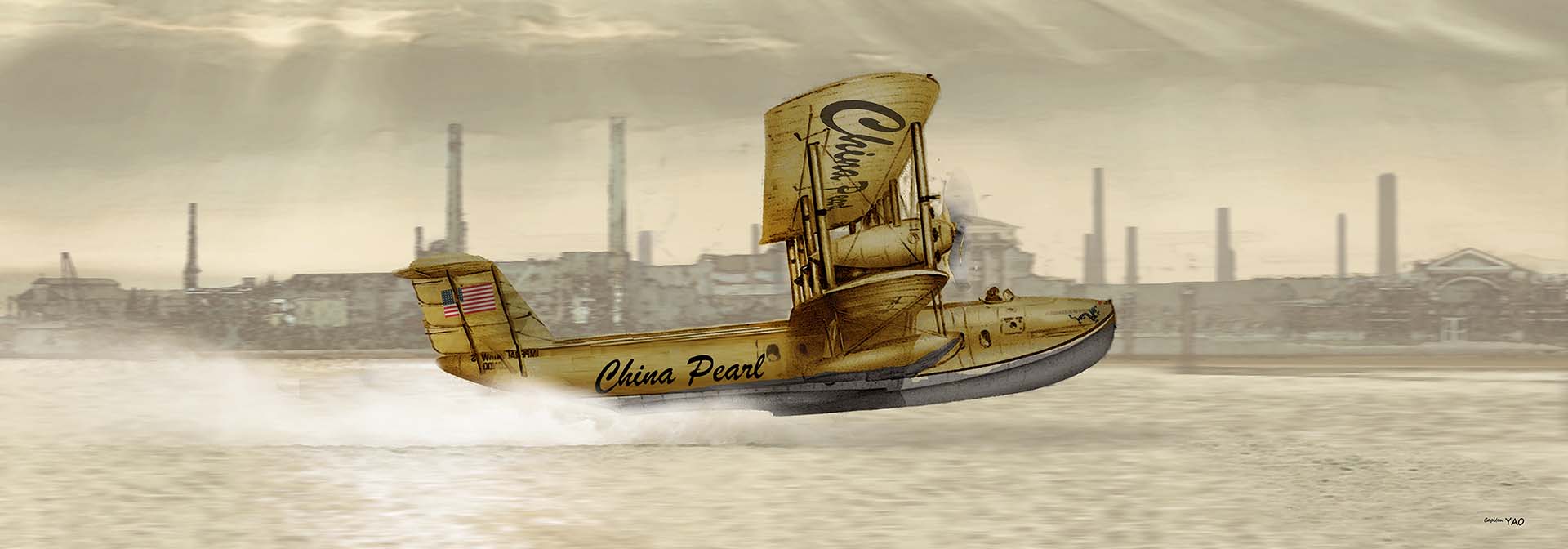
(Figure 3-1-3) The "China Pearl" is conducting a test flight on the Huangpu River.
After the completion of the "China Pearl", I flew it several times over the Huangpu River. I felt that although the aircraft was huge, its handling performance was not bad. The only problem was that the horsepower was a little insufficient.
The cabin interior has been redesigned and renovated, starting from the bow: master bedroom/bathroom, chart and communications room, bridge, living room and dining room, bar and kitchen, crew sleeping quarters, storage room, and tail compartment.
The cockpit of the "China Pearl" allows pilots to stand with their heads sticking out of the opening in the roof, or to operate the aircraft from inside the cockpit during rain. Behind the cockpit is a set of black carved spiral iron stairs that leads to the top of the aircraft and the wings. When parked, it is a very pleasant place to have afternoon tea, hold banquets, or go fishing.
The bridge of the "China Pearl" used a wheeled steering wheel similar to those used on ships, and it was also equipped with the most advanced autopilot instruments available at the time to accommodate long-distance voyages. The chart room, which could only accommodate one person, was located next to the bridge. The navigation equipment used was similar to that of ordinary ships, and the communication equipment mainly used a telegraph machine that could send and receive Morse code.
Interestingly, there are cables strung between the upper and lower wings, allowing communication with neighboring aircraft via signal flags, much like the mast of a ship. Inter-aircraft communication is conducted using a transducer.
The tail hatch of the "China Pearl" could be lowered to become a temporary dock, and a small boat was installed inside to be launched into the water when the aircraft was moored as a means of transportation to the shore. Later, during long voyages, I also put my motorcycle in this tail hatch, so that I had my own means of shore transportation available at any port, which was very convenient.
Annie painted the "China Pearl" in the bright yellow reserved for the Chinese imperial family, with the words "China Pearl" written on the fuselage and wings. The bow was also painted with a blue dragon chasing a red sun, the same pattern as the national emblem of the Ch'ing Dynasty, making it very special and eye-catching.
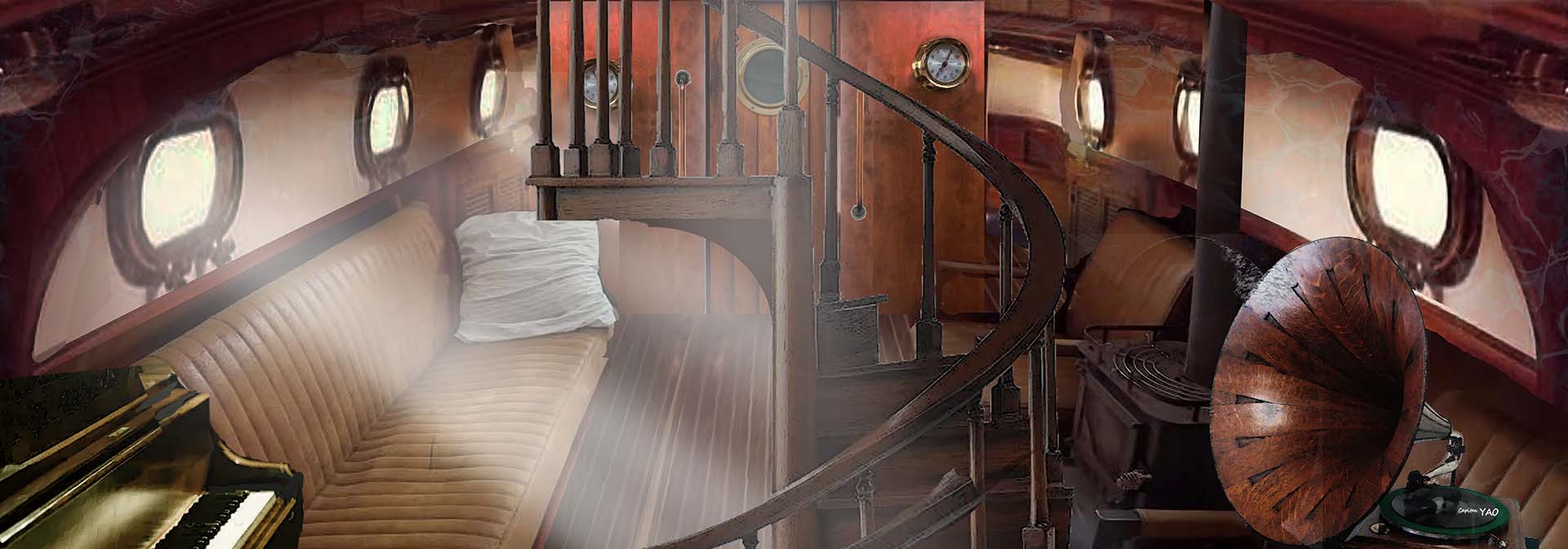
(Figure 3-1-5) As per Annie's request, the interior of the "China Pearl" is like that of a yacht.
Anne wasn't too concerned about the aircraft's weight. For example, the miniature piano she insisted on bringing onto the plane, despite its special weight-reduction design, was still quite heavy. To ensure a refined dining experience during the flight, she specially ordered a batch of porcelain tableware from Jingdezhen, Jiangxi. All the cups and plates were decorated with dragon patterns matching the aircraft's livery, making it very impressive. The silverware was imported from England through a trading company in Shanghai, and each piece was engraved with the words "China Pearl." The birthday gift cost Annie's father approximately £50,000, of which £30,000 was reportedly spent on ordering the aircraft from the British Short Aircraft Company. This amount could have built almost two similar aircraft at the time, but the price was high due to the single order and shipping costs. Later, the Short Aircraft Company made slight modifications to the aircraft design and developed the famous Calcutta long-range seaplane, which flew transoceanic passenger routes between Britain and Australia. The assembly and interior decoration at Kiangnan Shipyard cost only £6,000, which was excellent value for money! Because the Chinese workers at Kiangnan Shipyard were very skilled, their meticulous craftsmanship turned the "China Pearl" into a work of art that blended Eastern and Western elements. The remaining money was spent on purchasing supplies, refueling, repairing the berth, and our food, drinks, and entertainment!
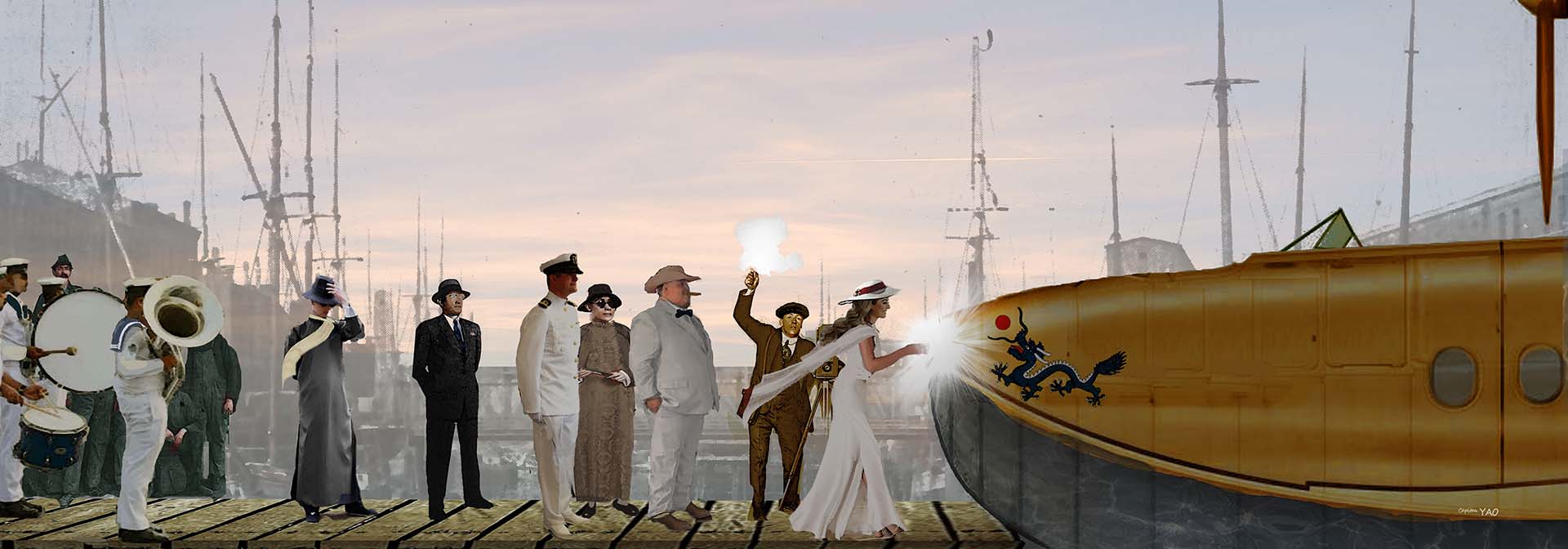
(Figure 3-1-6) The christening ceremony of the "China Pearl" at Kiangnan Shipyard.
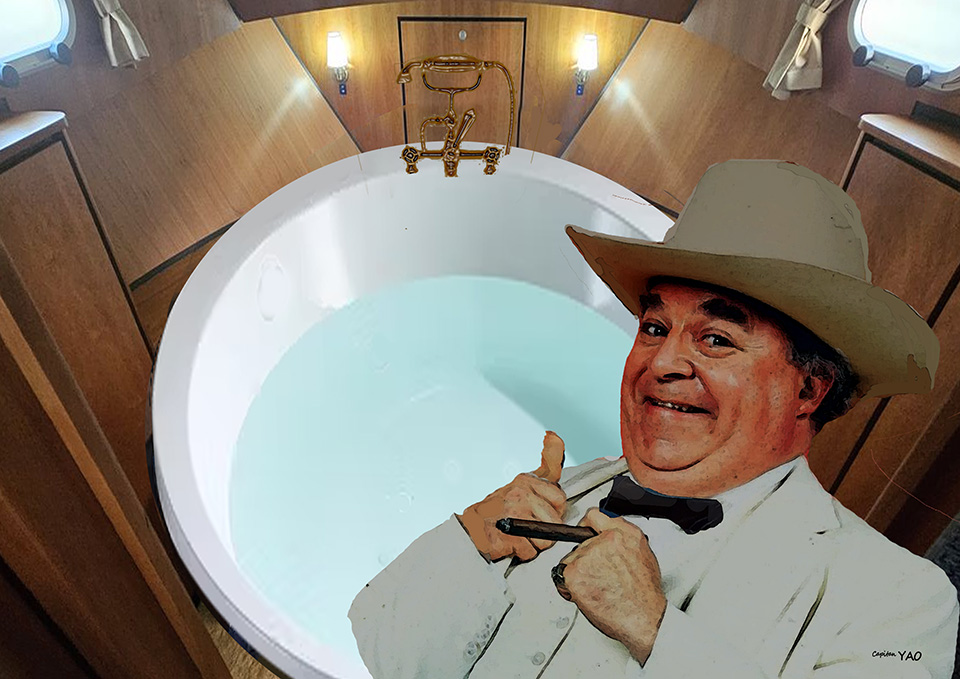
"This is Mr. Xu Zhimo!" That's how I met Lin Huiyin's ex-boyfriend. Interestingly, Weng Ruiwu was also there. He had financial ties with Kiangnan Shipyard. Last year, Annie and I kept seeing playboys with Xu Zhimo's new wife, Lu Xiaoman, in Franch club. Annie's father, Mr. Stephen Kennedy, also made a special trip from Singapore, partly to personally hand over the gift to his beloved daughter, and partly to catch up with his old friends in Shanghai, including Huang Jinrong. Stephen was wearing a white suit and a Panama hat. He was a portly man with a ruddy complexion, a large cigar in his mouth, and spoke in a loud and brash manner. He looked a bit like a nouveau riche; that was my first impression of him. As the ceremony began, Annie, with her father's help, smashed a bottle of champagne tied with ribbons against the bow of the "China Pearl." The bottle shattered, and champagne sprayed onto the bow. At that moment, everyone applauded, military music played loudly, and shipyard whistles sounded. Annie came over and kissed me. The manager of Kiangnan Shipyard approached Stephen and said, "Mr. Kennedy, these were all designed and manufactured according to Miss Kennedy's wishes. There's only one of these in the whole world!" Annie also pouted at her father and said, "Do you think it's worth it to give me a birthday present like this?" "It's all worth it as long as you like it!" Mr. Stephen replied with a smile, and then Annie took his hand and said, "Come on! I'll show you inside the cabin." "She's been spoiled by me, please be more tolerant..." Stephen turned to me and said, "But I have a favor to ask of you, Mr. Draken!" "Please don't say that, Mr. Kennedy. Just let me know what you need!" Stephen whispered to Annie, "Please don't let her fly the plane alone. You absolutely must do me this favor. I can pay you double the pilot's rate!"
"But….."
Annie, who had already walked ahead, turned back and pulled Stephen, saying, "Daddy, I'll take you to see the bathroom! There's an enamel bathtub inside!"
Stephen chuckled and followed, "A bathtub on the plane? Hehehe..."
I shook my head and smiled wryly, then walked to the window and looked out. I saw many Chinese wooden boats passing by on the river, rowed by coolies.
Back in the intelligence group, I reported to my superiors that Stephen wanted to hire me as a pilot. To my surprise, they were very supportive, which greatly surprised me. I went to ask Willie.
"Flying around in civilian planes as a civilian pilot is a great cover!" Willie said. "I heard the higher-ups are even considering using intelligence funding to let you continue running the airline!"
"Is that really true?"
|