
13. The Kanton Earthquake
After finishing his business in Kuangchow, my father planned to take a trip to Japan. He received an invitation to the opening ceremony of the new Imperial Hotel in Tokyo, as he was a good friend of the hotel's owner. The new building was designed by the renowned American architect Frank Lloyd Wright at great expense, and was scheduled to open on September 1, 1923.
My father had not returned to Japan since leaving Yokohama in 1906; in just 17 years, Japan had transformed from a small island nation in the East into a world-class power, so he longed to revisit his homeland. We returned to Hong Kong from Kuangchow in mid-August, stayed for a few days, and then boarded a Japanese ship on August 26th for a direct voyage from Hong Kong to Yokohama.
On August 29th, the ship entered Tokyo Bay, Japan. As it passed Yokosuka Naval Base, my father pointed to an old-fashioned warship in the distance on the port side and told me that it was the "Mikasa," the flagship of Admiral Togo during the Russo-Japanese War. He had met with Admiral Togo Heihachiro several times on board. It sank after the Russo-Japanese War due to an explosion in its gunpowder magazine, but because it was a victory memorial ship, it was salvaged. It was originally slated for scrapping and dismantling at the Washington Naval Arms Limitation Conference a few years ago, but thanks to the efforts of the Japanese representatives, it was preserved as a training ship, not included in the order of combat.
The ship entered Yokohama port and docked. A young clerk from the British Consulate in Yokohama was already there to greet us and led us to the consulate to rest. The next day, my father and I took a train to Tokyo. Along the way, we saw many factories with towering chimneys and rows of wooden houses. This was my first time in Japan, and everything was so new and interesting.
On the train, my father told me that post-World War I Japan's political democratization reached its peak, with socialist, communist, and anarchist ideologies merging and coexisting, a period known as the "Taisho Roman". However, he said that since this year, things seemed to be tightening up, and the rise of far-right ideology would stifle this brief democratic wave. Japan was very likely to transform into a police state, and his job was to closely monitor this change, as it was closely related to British interests in the Far East. My father always took every opportunity to educate me, ensuring that I gained a deep understanding of the political, social, and economic conditions of Eastern countries from a young age.
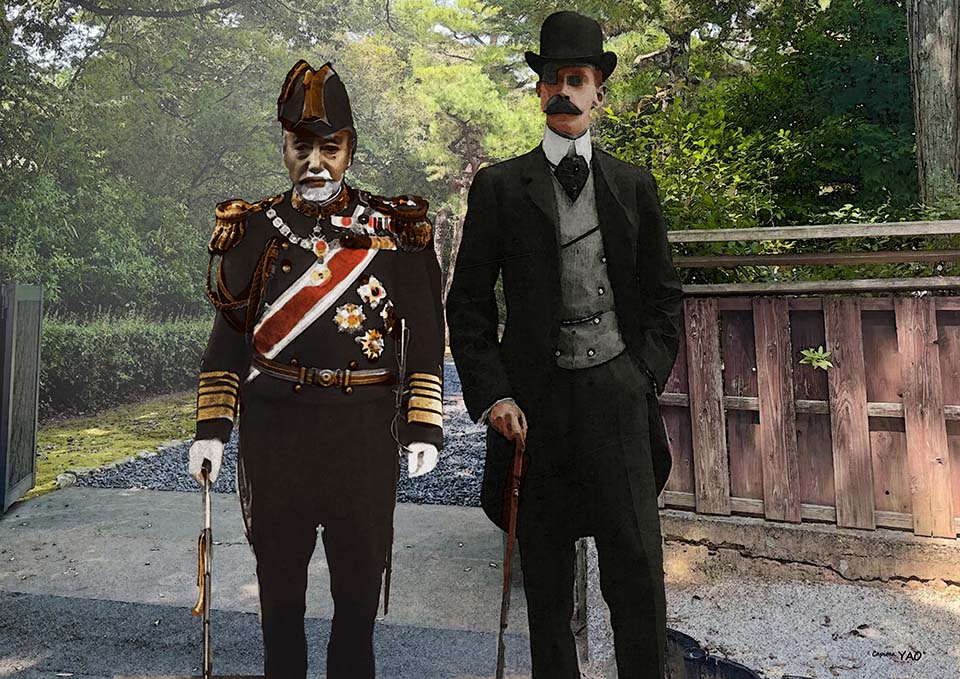
(Figure 1-13-1) Sir Draken visits his old friend, Admiral Togo Heihachiro, in Tokyo.
My father took me to visit his old friend, Admiral Togo Heihachiro, who now enjoys a leisurely retirement. Due to his victory over the Russian fleet in the Russo-Japanese War, he not only retained his lifetime honorary title of Admiral of the Navy but was also revered as a "war god" in Japan. Another "war god," General Nogi Maresuke of the Army, committed suicide with his wife more than a decade earlier, following the death of Emperor Meiji.
Admiral Togo once privately told my father that during the Russo-Japanese War, Nogi Maresuke's poor command led to the deaths of his two sons and tens of thousands of soldiers in the battle for Port Arthur's 230 Hill. Victory was only achieved thanks to the resourceful Chief of Staff Kodama Gentaro's behind-the-scenes intervention. Although Nogi gained the status of a "war god" for this battle, he felt deeply ashamed of the many subordinates who died because of him. His suicide upon Emperor Meiji's death also carried a sense of atonement.

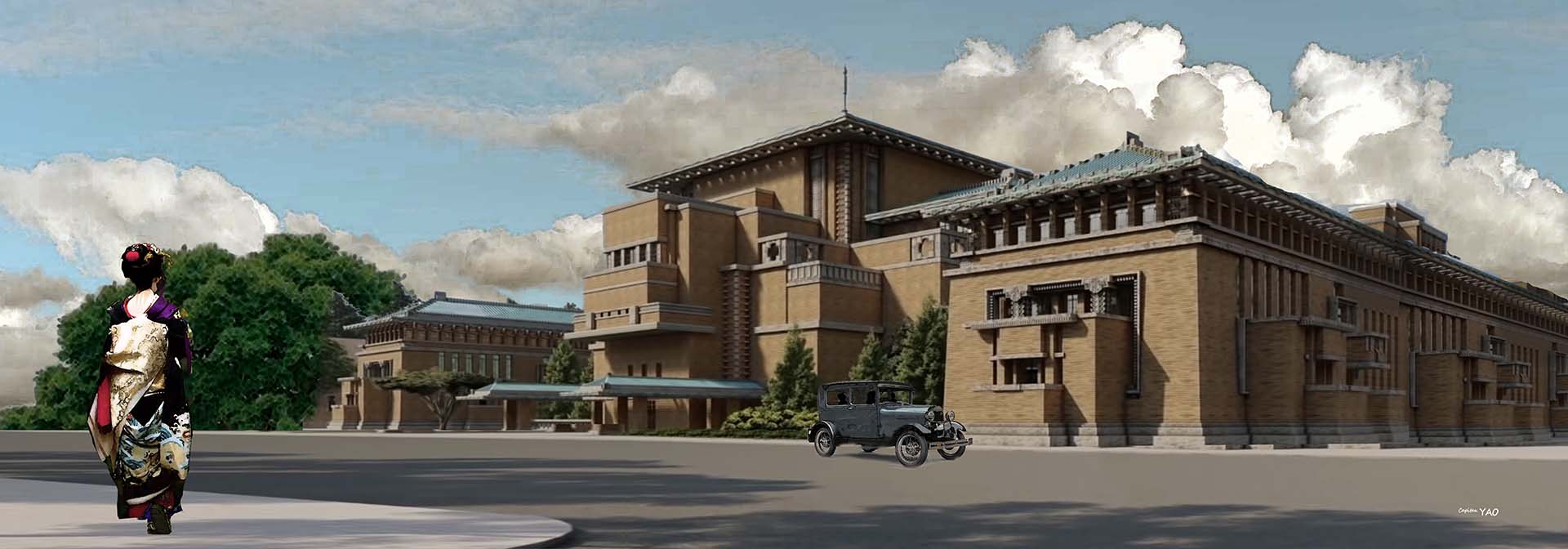
(Figure 1-13-2) The Imperial Hotel in Tokyo, designed by the famous American architect Frank Lloyd Wright.
In Tokyo, we stayed at the new Imperial Hotel, which had not yet officially opened. Located next to the Imperial Palace, its architecture, facilities, and services were all Western and of the highest standard of luxury; however, I felt that it looked a bit like a Mayan temple featured in the LIFE magazine.
When we arrived, there were already many VIPs and media reporters touring the museum. Some of them were my father's old friends, and of course, there was a round of pleasantries as they met, and he introduced his son to everyone. My father introduced one couple as the famous Japanese writers and critics, Sakae Osugi and Noe Ito. That evening, the four of us went out to dinner together.
During dinner, Ito Noe recounted her experiences participating in the social and women's liberation movements. She also spoke of how, ten years prior, her complicated four-way love affair with her ex-husband and Osugi led to a sensational murder case. My father remarked that it was incredible that such a bold and unconventional woman as Ito could exist in a male-dominated society like Japan. As everyone said goodbye at the restaurant entrance after dinner, my father specifically warned them to be careful. I found this strange, and only later, back at the hotel, did my father secretly tell me that someone had been following them from the moment they entered the restaurant.
September 1st was a Saturday, and the opening ceremony of the new Imperial Hotel was truly a grand affair, with a magnificent decoration. However, the endless speeches from royalty and dignitaries were rather tedious, and I was already feeling restless. I decided to pass the time by doodling on the hotel's invitation cards. Finally, at 11:30, the ceremony ended, and everyone moved towards the banquet hall. Hungry, I kept glancing at my watch, hoping the food would arrive soon. Just as the minute hand of my watch pointed to 58 minutes past the hour, suddenly the earth began to shake violently.
Because I had never experienced an earthquake before, I initially had no idea what was happening. Everyone crouched under the large dining table to avoid the constantly falling cups, plates, glass, bricks, and plaster walls. The heavy table even slid back and forth between the two ends of the hall with each earthquake. The shaking seemed endless, and no one knew how long this new building could hold out before collapsing above us.
After the earthquake stopped shaking, everyone rushed outdoors and saw that most of the surrounding buildings had collapsed, and flames were raging throughout Tokyo. Looking back, the Imperial Hotel stood firm, showing no damage except for a few broken windows. (The Imperial Hotel withstood the earthquake and had an unforgettable opening ceremony; their subsequent advertisements used this as a selling point.)
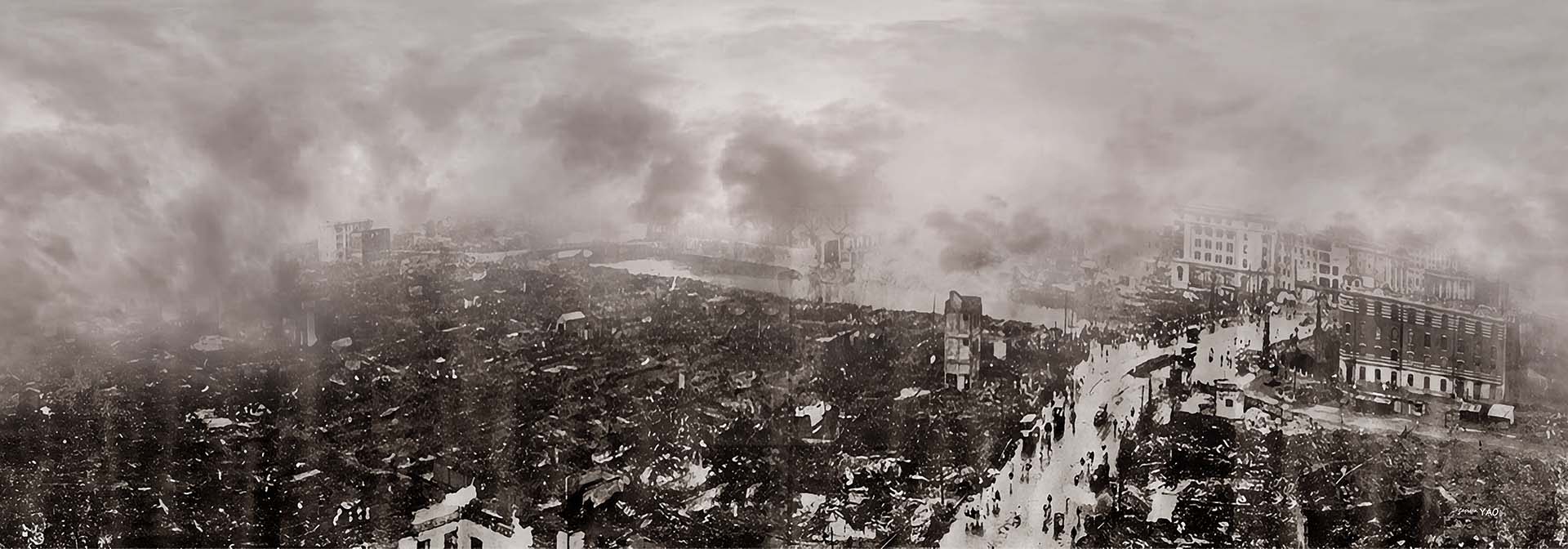
(Figure 1-13-3) The number of people who died from fires in the Kanton Earthquake far exceeded the number of people who were crushed to death by collapsing buildings.
In fact, most of the victims of the so-called Kanton Earthquake were not crushed to death but burned to death. Because most of the buildings in the Tokyo area were densely packed wooden houses, and gas was being used during lunch preparations, the earthquake ignited a massive fire. Strong winds fueled the fire, which burned for three days and three nights, causing devastating casualties. The entire city was reduced to rubble. Later reports indicated that the Kanton Earthquake was a magnitude 7.9 earthquake, causing a total of 91,544 deaths in Japan. Only 128,266 houses collapsed directly from the earthquake, but 700,000 were destroyed by fire. It is said that many people who had escaped and gathered in plazas suffocated to death because the surrounding burning buildings depleted the oxygen supply.
Because the Imperial Hotel was the only undamaged building in the vicinity, many Western consulates and media outlets moved their offices to the hotel's basement. Japanese troops also came to patrol and protect it the following day. Rumors spread most easily during disasters. One day, I saw a group of Japanese ronin parading through the streets carrying samurai swords. Several of them held long bamboo poles with bloody human heads propped up on them. They claimed that they had heard Koreans had poisoned the wells used by the Japanese, and therefore launched a large-scale revenge campaign (it is said that 60,000 Koreans were killed in this incident throughout Japan, and many Chinese expatriates were also caught in the crossfire). These terrifying rumors made all the expatriates extremely nervous, and they all scrambled to find ways to leave Tokyo.
On the morning of September 5th, while my father and I were having breakfast, the waiter said that a Japanese officer wanted to see my father. Then, a military police captain with a round face, wearing glasses, but with a very arrogant expression appeared in front of us.
"Mr. Draken, I am Captain Masahiko Amakasu, the military police platoon leader. I hereby declare you persona non grata!"
"Why?"
"Because you've been in contact with anti-government figures!" He tossed out photos as evidence for his accusation: "So you must leave the country immediately!"
"Oh? Is this an order from your Ministry of Foreign Affairs? Please show me the document!"
(Figure 1-13-4) Captain Masahiko Amakasu, the platoon leader of the military police, came to the Imperial Hotel to inform the Draken father and son to leave the country.
"Martial law is now in effect. I am the supreme commander here. My words are orders; no official documents are required!"
"That's great! Everyone wants to leave this awful place, but unfortunately there's no transportation. How do you plan to get me out?"
"I'll find a way!"
"Alright! Go and get it done!" The father waved him away. The captain, his face ashen, bowed and left with a quick tap of his heels. The father called after him deliberately, "Would you like a slice of buttered toast, Captain Amakasu? It's not easy to find anything to eat outside these days!"
At 8:30 a.m. the next morning, all the Western guests of the Imperial Hotel walked 3 miles to the riverbank to board a barge, and then transferred to three US Navy destroyers in the port area to go to Yokohama. We boarded the USS Stewart, number 224, a small warship with four funnels.
Because of my father's status, the captain specially gave up his cabin for us to rest. I was quite bored in the small room, and since I happened to have a hotel invitation card with me, I took it out and started doodling. I drew the "Stuart" because I was very impressed with the shape of its four funnels. Just then, I heard a voice say, "Wow, you're drawing our warship, and it's really well done!"
I looked up and saw the captain had come in. I said, "You like it? Then I'll keep it for you!"
"Really? Thank you so much!"
After the captain took my graffiti, he put it into a hidden compartment next to the bulkhead. This compartment was very well hidden, and you couldn't tell from the outside that you could hide things inside.
"This is a secret document hiding place I designed myself. It's not standard naval design; no other ship has it, and nobody on this ship knew about it. But now you do!"
"Since I'm not going to board this ship again, it doesn't really matter if I find out, right?"
"Just kidding, hahaha!" At that moment, a sailor came in to report that they were almost at Yokohama Port, so the captain got up, saluted, and went out again.
At the time, I was convinced that I would never again board that American warship, which I had only met by chance. But fate had other plans, and more than 20 years later I boarded the USS Stuart in Japan.
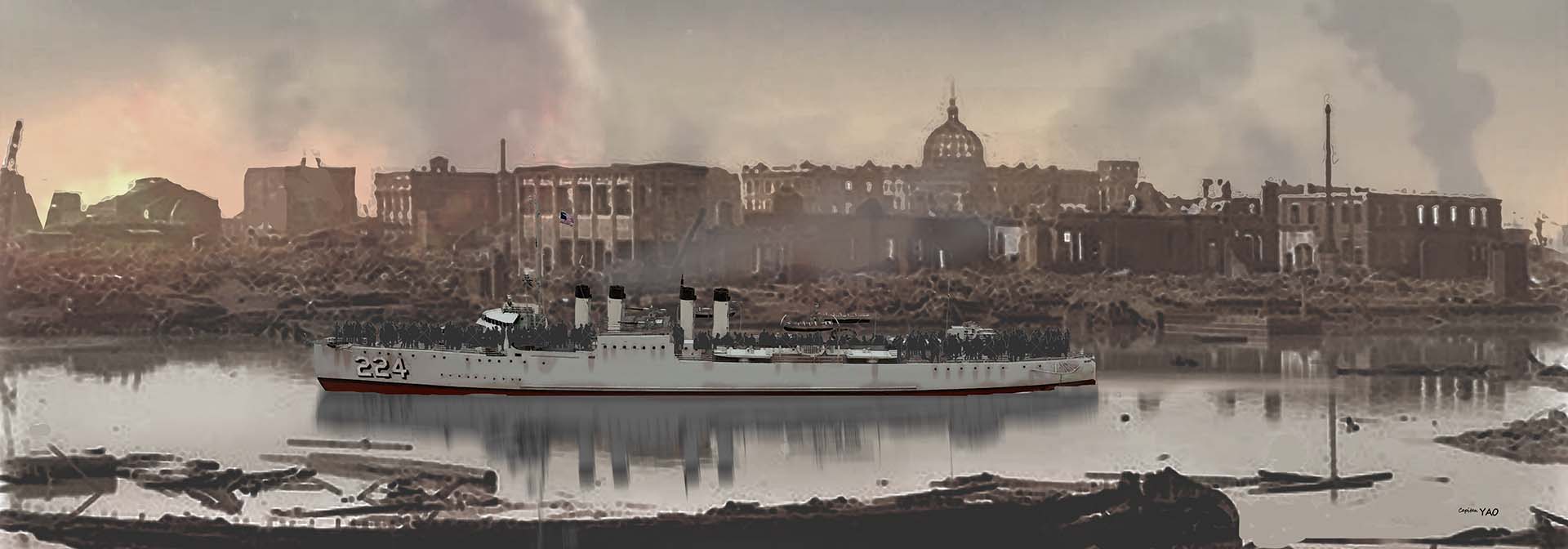
(Figure 1-13-5) Foreigners departed Tokyo aboard the U.S. Navy destroyer USS Stuart and traveled to Yokohama to board a ship for their departure.
When we arrived in Yokohama, we found the harbor crammed with ships and warships, including those that had come to the rescue and those that had sunk in the harbor. Large slicks of pungent oil floated on the sea. We heard that the Yokosuka Naval Oil Depot had cracked on the day of the earthquake, causing a large amount of oil to spill onto the sea and start a fire in the harbor.
All the passengers were temporarily housed on the French ship "SS Andre Lebon" which was under repair, while waiting to be assigned a place to leave. When the father returned to the consulate, he found that they were busy assisting the local British expatriates with the evacuation. He felt it was inconvenient to disturb them, but he was also very worried about the safety of Osugi Sakae and Ito Noe, so he privately asked a friend at the consulate to help keep an eye on them.
My father decided to return to England via the United States. On September 10th at noon, we boarded the SS President Pierce and left Yokohama for San Francisco. When we passed Yokosuka, we discovered that the battleship Mikasa, which he had previously shown me as Admiral Togo's ship, had been sunk by the tsunami caused by the earthquake. In fact, a new island stretching for dozens of miles had risen off the coast of Yokohama.
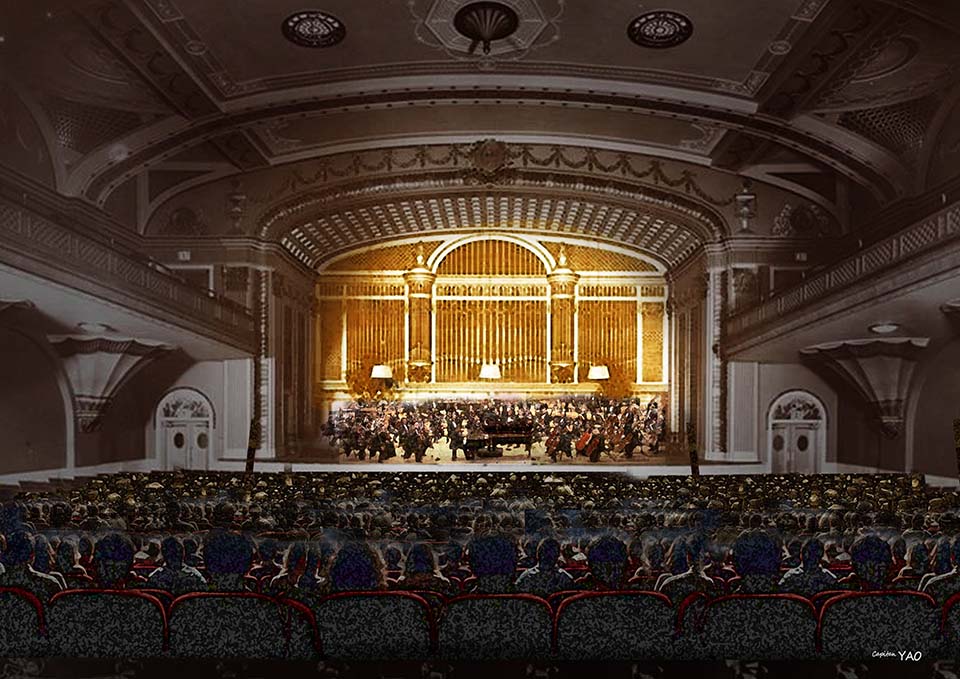
(Figure 1-13-6) George Gershwin's "Rhapsody in Blue" premiere concert at the Iorian Concert Hall in New York.
When I was in New York, my father took me to Aeolian Hall for a historic concert. I remember it was February 12, 1924, the premiere of George Gershwin's "Rhapsody in Blue," with Paul Whiteman conducting a large orchestra and Gershwin himself playing the piano. It was a jazzy symphony, a completely new experience for me, coming from conservative and old-fashioned London.
Back in England, I didn't have many opportunities to listen to jazz, but some classmates who had been to France said that Parisian jazz was fantastic! I thought the French loved to be unconventional, so they were probably just copying what the Americans were doing. Later, I heard that American jazz originated in New Orleans, a French-speaking region, and I couldn't help but wonder if jazz was invented by the French, or at least closely related to French music.
The concert attracted many musical masters from New York, and my father happened to run into many of his old friends from Russia, such as the composer and pianist Sergei Vasilyevich Rachmaninov and Igor Fyodorovich Stravinsky, both of whom had fled Russia after the 1918 revolution. Several other famous musicians were also present that day, but I can't recall them now. Through their introductions, my father discovered that most of his Russian friends had now emigrated to the United States.
"Do you remember me? Sir Draken!" A gentleman in his thirties from the surrounding crowd came forward to greet him.
"Mr. Sekowski?" The father looked him over carefully, and the two immediately embraced warmly. "What are you doing in America?"
"Alas! After the plan to use a plane to carry the Tsar out of St. Petersburg was exposed, I was pursued by the Red Party's secret police and had no choice but to flee to America." Mr. Sekowski said, "The pilot, Lieutenant Korniloff , also fled to China."
"Where are you working now?" the father asked.
"I came here five years ago. I used to work at Edison's company, but I wasn't very happy with it. At my lowest point, I even tutored the children of Russian immigrants in math," Mr. Sekosky said. "Last year, I finally returned to my old profession and opened a small company on Long Island, New York, hoping to build seaplanes."
"An airplane?" I exclaimed excitedly upon hearing the word. "But why must we build seaplanes?"
"Young man, by the time you grow up, airplanes might be able to take off and land vertically, and we won't need to build airports anymore!" He patted my shoulder and said, "But right now, seaplanes are still the most popular!"
This Mr. Igor I. Sikorsky did indeed later invent the helicopter, and the "small company" he founded in May 1923 has now become the world's largest helicopter manufacturer.
Afterwards, we traveled from New York to Washington, D.C., where my father visited Herbert Hoover, then Secretary of Commerce. Hoover was an old friend my father had known since landing in Tiantsin in 1900. Hoover had worked as an engineer at the Kaiping Coal Mine in Tiantsin and had rescued my father from the Boxers during the Boxer Rebellion; the two were sworn brothers. Hoover had made a considerable fortune in the Chinese coal mining business before returning to the United States to enter politics. Two years earlier, he had become Secretary of Commerce under President Harding. During our conversation at his home, he mentioned that he wouldn't rule out running for president as a Republican in the future, and indeed, he was elected the 31st President of the United States in 1928.
Interestingly, almost half of the conversations between the father and Hoover were in Chinese, with a Tianjin accent.
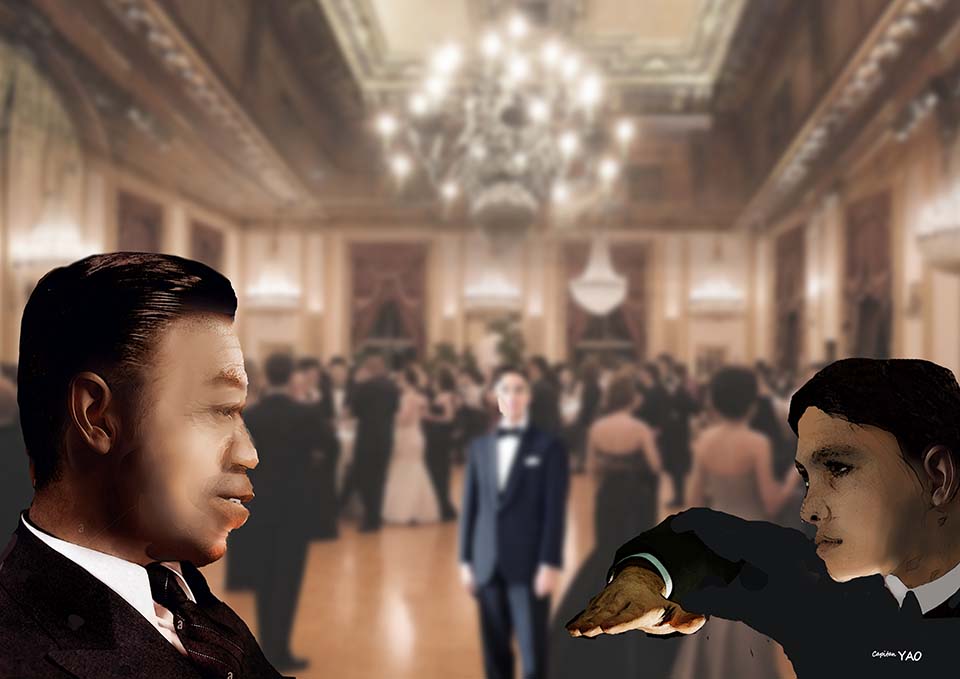
(Figure 1-13-7) At the reception hosted by the Japanese military delegation, Paul’s boasting about his flying experience inspired Captain Isoroku Yamamoto’s understanding of naval aviation, and thus changed history.
"Hey! Kid, what do you want to be when you grow up?" Yamamoto asked.
"I want to be a pilot!"
"A pilot? Can you fly a plane?"
"Of course! I've flown planes in China!"
I'm talking about a few months ago when I was on the "Rosamond" in Kuangchow. The pilot let me try operating the plane. Of course, this is a far cry from actually flying a plane, but I'm going to use this limited experience to brag about it now.
"Wow! So you think airplanes can attack warships?"
"Of course!" I recalled looking down over the Pearl River at that slow-moving Chinese gunboat, which seemed completely defenseless. If the plane had been carrying a bomb, it would have blown it to smithereens.
"Look, airplanes are dozens of times faster than warships. Flying high in the sky, they are out of the reach of naval gun. The bombs they carry are much larger than gun shells. With the speed of free fall and the speed of a dive, how can warships possibly compete with them?"
I shared my Pearl River experience with him, along with some physics knowledge I learned in school, and exaggerated it tenfold.
"Hmm! That makes sense! Countries lacking a sufficient number of warships should compensate by developing their naval air force; the investment cost is even more worthwhile." Yamamoto turned and asked, "Then... how difficult is it to fly a plane?"
"This..." Caught off guard by his question, I realized I had no choice but to lie. Since it was just casual conversation and probably wouldn't hurt, I patted my chest and assured him, "It's not difficult at all! Even I can do it!"
"To be honest, I come from a traditional naval branch and am nearing middle age. I was only recently promoted to captain, and I'm facing a career decision. I was even planning to retire and go into business, but after listening to your words today, I've had a sudden realization. I've decided to say goodbye to warships and cannons from now on. After returning to Japan this time, I'll report to the naval air force to learn how to fly planes!"
Mr. Yamamoto stood up solemnly, saluted me, and said, "Thank you for your guidance, sir!"
As expected, Captain Isoroku Yamamoto became the vice-commander of the Kasumigaura Air Group at the end of that year, learning basic flight alongside young men at the age of 40. Seventeen years later, he became the commander of the Japanese Combined Fleet, using the air superiority he had built to launch a surprise attack on Pearl Harbor. My boasting changed the rest of his life and the fate of many countries.
We boarded the RMS Mauretania in New York Harbor to return to the UK. As we departed, the captain specially invited us to visit the bridge. Pointing to the long blue flag fluttering on the mast, he said that this old ship, completed in 1907, had won the Blue Riband award for the fastest transatlantic crossing seven times, a record that had stood for 17 years without any other ship breaking it. A fire more than two years ago kept her in the dock for over a year, during which time the boiler system was changed from coal to heavy oil, and she planned to break her own record again this year.
Sure enough, on August 25th of that year, she won the Blue Stream Award again with an average speed of 26.25 knots. But this was her last feat. Five years later, the ambitious German ship broke her record of more than 20 years and took the Blue Stream Award from the British. Soon after, the RMS Mauritania was decommissioned.
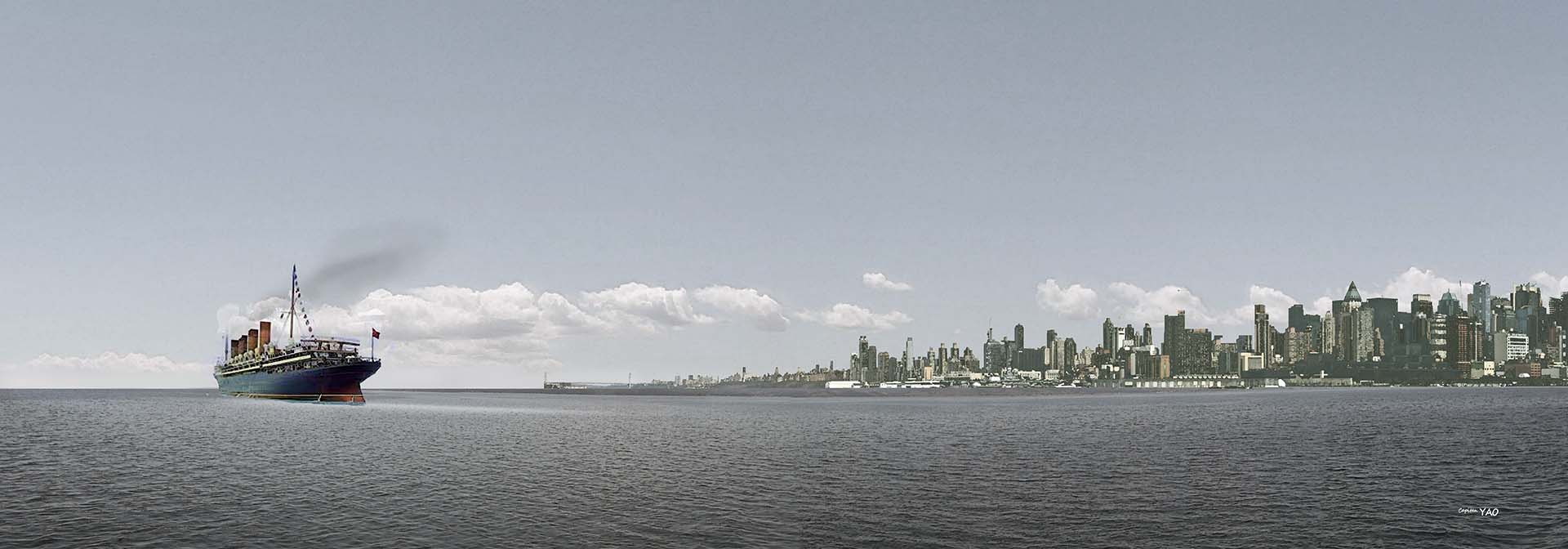
The journey from New York to London on the RMS Mauritonia took only four or five days. We returned to our home in England in early March. A telegram from the Yokohama consulate was already on the table. The telegram said that my father’s Japanese friends, Sakae Osugi and Noe Ito, had been lured and killed by right-wing soldiers on September 16. The mastermind was none other than the arrogant Captain Masahiko Amakasu!
We later learned that on September 16, 1923, Captain Masahiko Amakasu, the commander of the Kojimachi branch of the Tokyo Military Police, took advantage of the chaos caused by the Kanton Earthquake to assassinate anarchists Sakae Osugi and his wife Noe Itō, along with their nephew Soichi Tachibana, and threw their bodies into a well to destroy evidence. This incident was discovered by the Mainichi Shimbun and Yomiuri Shimbun on September 20. On December 4, Masahiko Amakasu was sentenced to 10 years in prison by a military court, but was released in October 1926. He was then sent to France for further studies at the army's expense. After returning to Japan, he transformed himself into a cultural figure, serving as the chairman of the Manchurian Film Association, but secretly he actually controlled the intelligence and espionage power of Manchukuo.
Masahiko Amakasu is famous for discovering the renowned actress Li Hsiang Lan, whose real name was Yoshiko Yamaguchi. Born in Northeast China, Li Hsiang Lan rose to fame in the 1930s for her films and songs such as "Night Fragrance," "When Will You Return," and "Suzhou Nocturne." I even met her back then. After the war, Li Hsiang Lan was tried for treason, but was later released and returned to Japan after being proven to be Japanese. She then married a diplomat, changed her name to Yoshiko Otaka, and served as a member of the Japanese Diet for many years.
Masahiko Amakasu committed suicide with potassium cyanide at the end of the war in 1945. This legendary role was played by Ryuichi Sakamoto in the film "The Last Emperor".
|
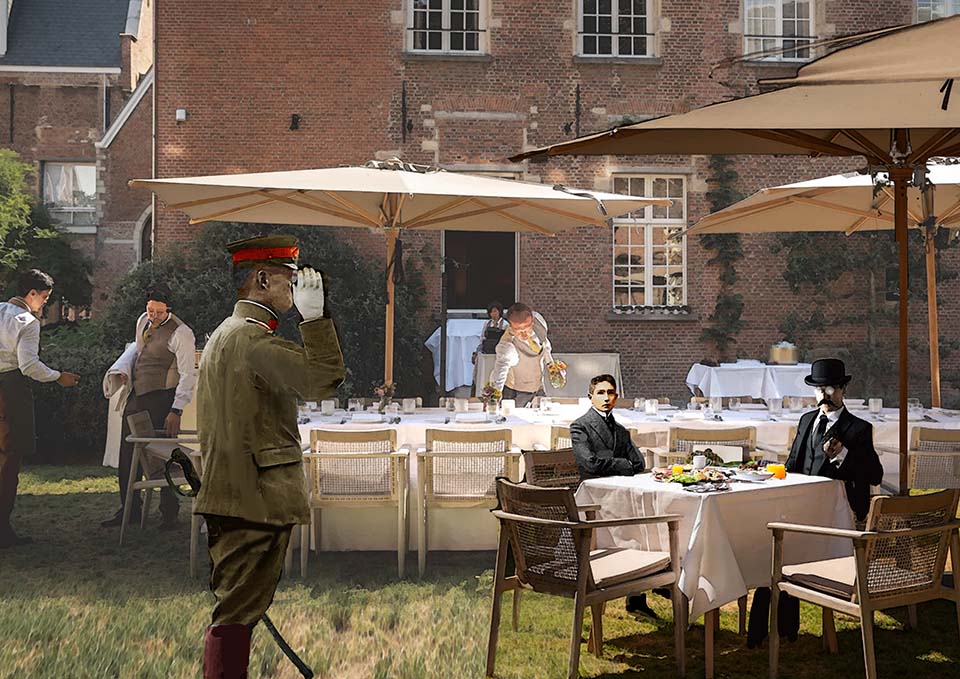
 In Washington, we also met with a military inspection team from Japan, arranged by Admiral Togo via telegram. The team leader, General Kenji Ide, was an old friend of my father's from his time stationed in Japan, and his adjutant was Navy Captain Yamamoto, about 40 years old. While my father and the general reminisced about their past, Yamamoto chatted idly with me. This Mr. Yamamoto was a stocky man with excellent English, though some of his American slang was difficult for me to understand.