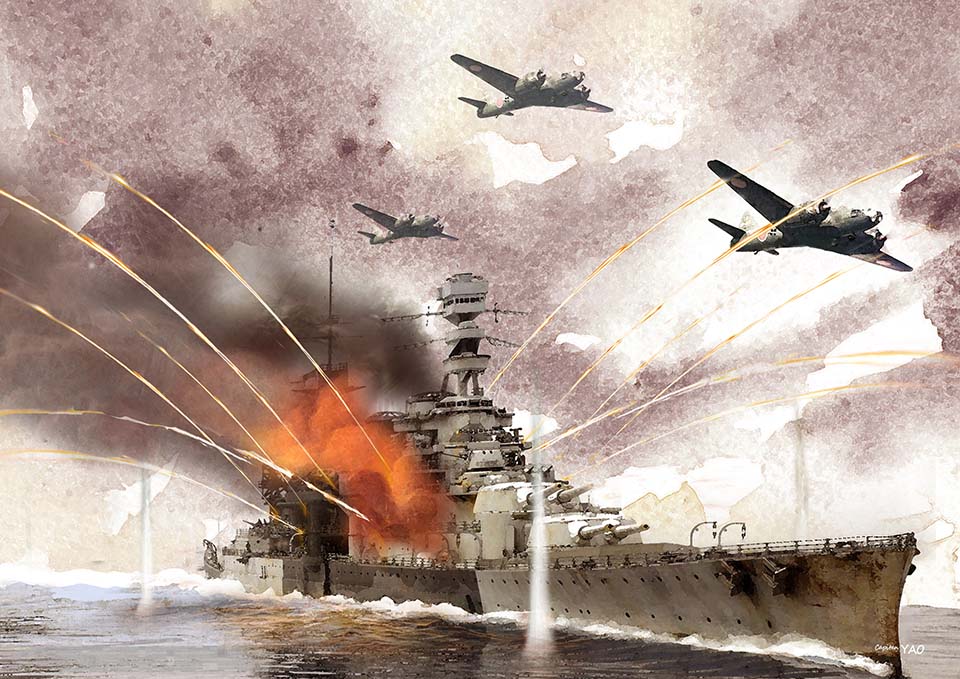
On December 10th, we learned from surveillance footage that "HMS Prince of Wales" and "HMS Repulse", two of Britain's most powerful battleships, had been sunk by Japanese aircraft in the waters off Malaya. Admiral Sir Tom Phillips, commander of the Far East Fleet, was killed in action, and all hope of reinforcements vanished. The attack was launched by Japanese Type 96 bombers, which took off from Vietnam. This was because Japan had previously forced the Vichy government in France to allow Japanese aircraft to be stationed there; otherwise, Japan had no bases to bomb Singapore and Malaya at the time.
Starting on the 18th, Japanese troops began landing at multiple locations on Hong Kong Island. The main defensive force, the Canadian brigade, was annihilated, and its commander was killed in action. Our second torpedo boat squadron, which we planned to use for our escape, also lost three boats in the fighting over the past few days, leaving only five. As for the Chinese troops far inland, although there were rumors of troop movements, no concrete attacks or diversionary actions were ever seen.
The war in Hong Kong was actually a case of knowing it was impossible but still doing it. Although the Japanese tried to persuade them to surrender several times, Governor Sir Mark Aitchison Young was determined to maintain the dignity of the British Empire and refused to give in easily. This led to the massacre of wounded soldiers and prisoners of war in hospitals when the Japanese army later entered Hong Kong.
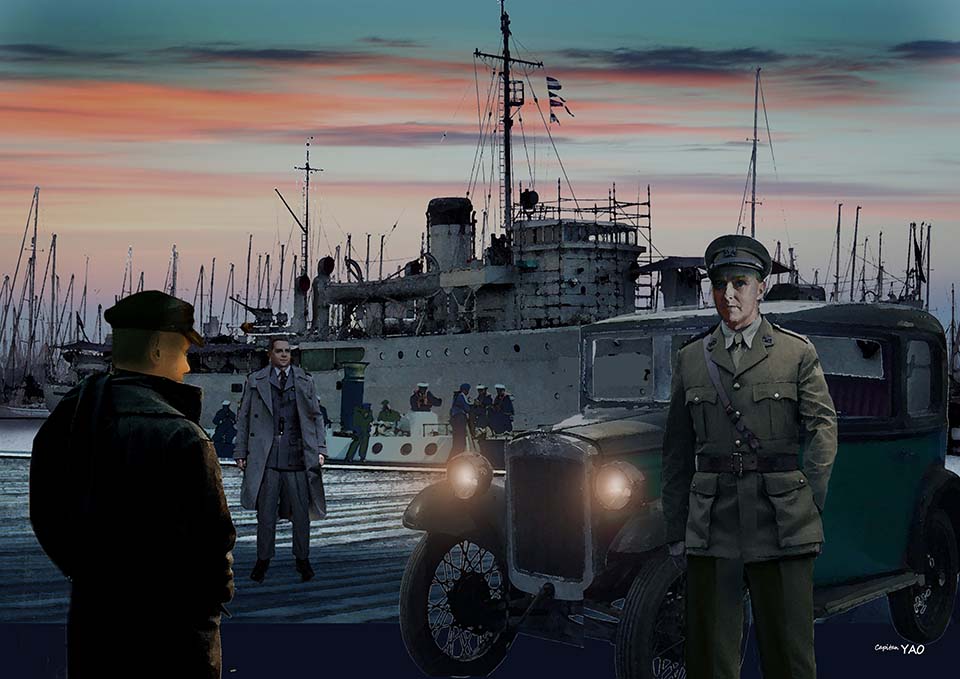
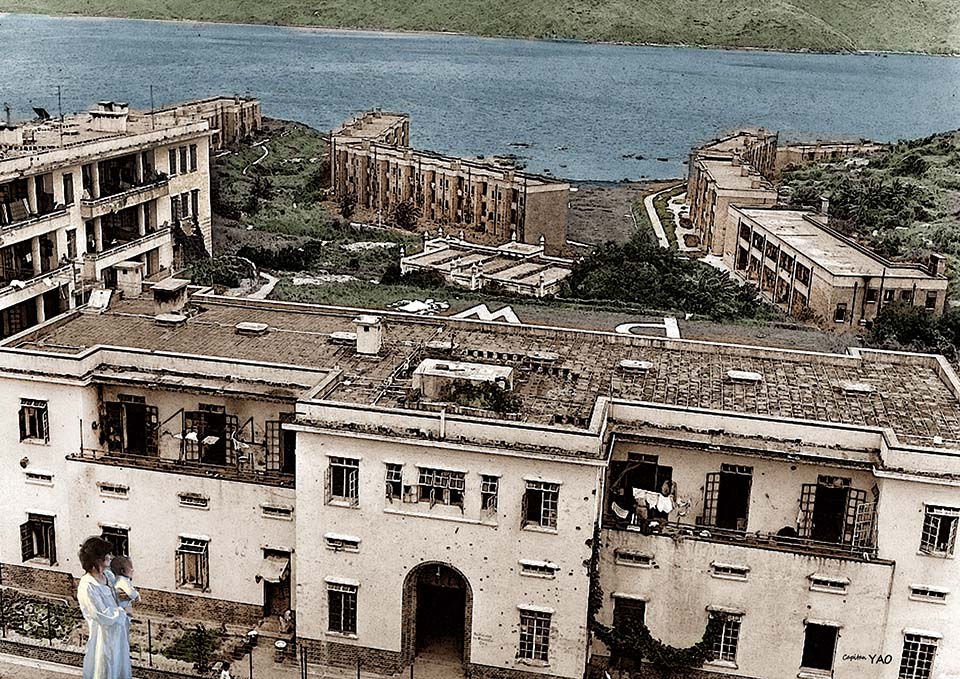
December 25th was Christmas Day, and the fate of Hong Kong for the next three and a half years of darkness was decided that evening. At 6 pm that day, the Governor announced a ceasefire and surrender. I had already learned of the news through channels before the Governor's announcement, and I quickly notified Uncle Chak to prepare and gather the intelligence team members to evacuate to the Asia Pacific House in Central. I rushed to the Aberdeen Naval Pier first. Five torpedo boats were about to set sail to avoid Japanese air raids. I coordinated with the captains to have them wait in the waters off Aberdeen Island and agreed on a contact signal. We would then take another tugboat, "C410," to arrive later. Around 4:30 pm, Uncle Chak's convoy arrived. I found that in addition to the intelligence team members, there were several senior officials from the Governor's House, bringing the total number to more than twenty. The boat I had prepared couldn't hold so many people, and I couldn't order anyone to stay behind. I was so anxious that I was stamping my feet on the pier like a cat on a hot tin roof.
At this moment, Uncle Chak came up, patted my shoulder, and pointed to the side of the dock. It turned out there was an old motorboat there, but it had been out of service for a long time and had neither fuel nor electricity. So I immediately sent a colleague from the intelligence team out to find fuel and batteries, while the others carried guns and supplies onto the boat. After a flurry of activity, everyone was finally assigned a seat on the boat. Uncle Chak and more than ten others took the motorboat, while I and five or six others took the tugboat "C410". When we were taking a headcount, we suddenly realized that Major Boxer was missing? He was an important high-ranking intelligence officer. How could we leave him out?
Just then, a car sped up, and Major Boxer stepped out. I was both happy and worried. I was happy that he had finally come, but worried about who I should take his place. At that moment, Boxer spoke first: "I am injured and unable to travel far, so I have come to see you all off."
I heard he was sniped on the Kowloon front, a bullet hitting his helmet. But since he came to the pier, there's no reason he couldn't leave. I guess his main reason was that he couldn't leave Emily Hahn and her daughter behind. But Boxer is the translator of the "Deep Purple" coded message, and he's seen all the important intelligence we have. If he stays, he'll inevitably be captured by the Japanese. Will the Japanese find out that we've cracked the code? This is a risk we absolutely cannot take. I considered whether to kidnap him and bring him onto the boat, or even shoot him on the spot if he refuses. I subconsciously reached for the pistol at my waist, only to remember that it had sunk to the bottom of the sea at Kai Tak Airport two weeks ago along with my "Super Marlin S6". Just as I was hesitating, I heard gunfire all around. The Japanese were approaching the outer perimeter of the pier. Uncle Chak was calling me from the speedboat to board immediately, so I had to abandon the idea and cast off.
The sun sets early in winter, and by nearly six o'clock it was almost completely dark. The two boats set off together, and I noticed that Uncle Chak's motorboat was heading east in the direction of the Japanese attack. I immediately felt uneasy, and sure enough, gunfire erupted and the boat began to sink. Our helmsman saw this and immediately turned west. Soon we saw an island, and based on the nautical chart I had with me, I thought this should be Ap Lei Chau (Aberdeen Island). However, after circling the island in the darkness, we couldn't see any torpedo boats. No one on our boat was familiar with this area, and we weren't even sure if this was Ap Lei Chau. Everyone else thought I had mistaken the place. To avoid staying too long and being discovered by the Japanese, we immediately turned and headed away.
We continued searching the area for a long time but still couldn't find the torpedo boat fleet. I realized that going around in circles wasn't a solution; we would definitely be discovered by the Japanese at dawn. So, I made a decisive decision and headed towards the mainland. Although landing without Chen Chak's assistance might be dangerous, it was better than being used as live targets by Japanese planes and warships at sea. At least we could try to break through using Uncle Chak's name.
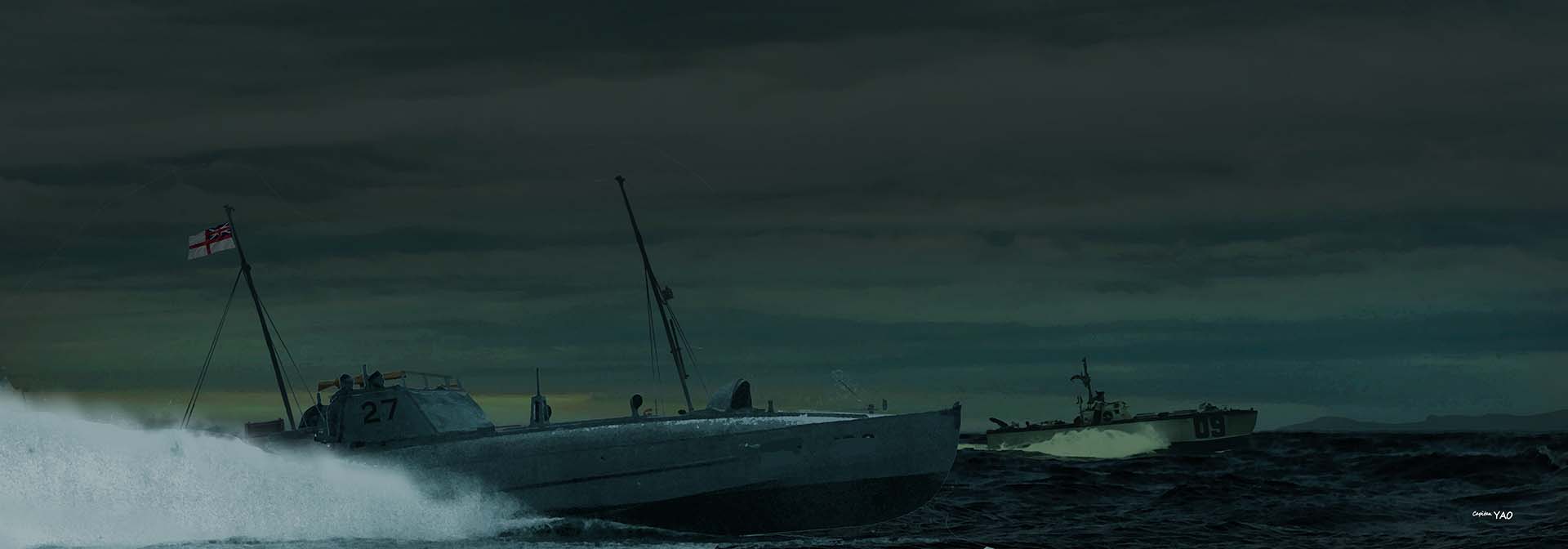
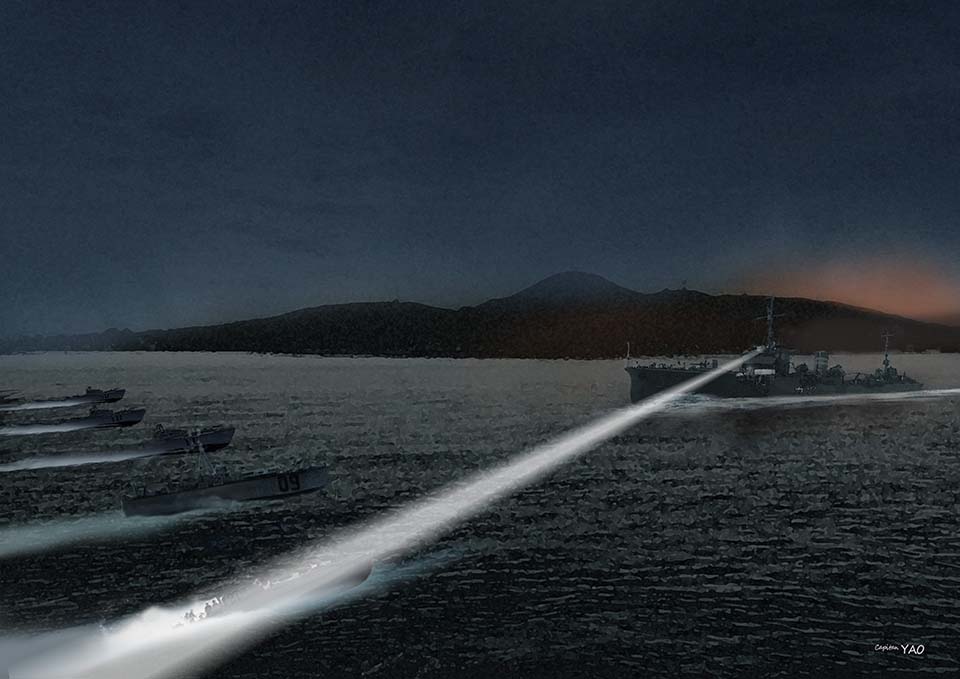
(Figure 5-2-3) After picking up Chen Chak at Ap Lei Chau Island, the torpedo boat squadron sped toward the mainland coast. The people on the torpedo boat told us that this was Peng Chau, and most of the breakout team had arrived, except for a few who had been killed or lost. They had just met with Captain Wong of the local guerrillas, who would take them to Lantau Island to find Captain Leung of the guerrillas. We arrived just in time. Then each boat set off for Lantau, arriving at around 3 a.m. After the ship anchored at Lantau, I saw Uncle Chak emerge from the torpedo boat's hold. His left hand was wrapped in cloth, suggesting an injury, and his face was somewhat pale. I quickly jumped onto his boat to greet him and took off my uniform jacket to drape over him. Soon after, a motorboat arrived, led by a young man in his twenties. Uncle Chak and the young man conversed in Cantonese across the gunwale, seemingly quite pleased. Having lived in Hong Kong, I understood some Cantonese and knew what they were saying. Then Uncle Chak turned to the surrounding British people and explained in English that this was Leung Wing Yuan, the local guerrilla commander, who had previously been his platoon leader in the Marines. Commander Leung then assured everyone that he would be responsible for their food, drink, and safety from this point onward, which relieved everyone. I found the torpedo boat captain and complained about why they hadn't waited for us at the agreed location. After some arguing, we discovered they were actually hiding on the shore behind Ap Lei Chau Island. They had even seen our boat, but were too afraid to call out because they weren't sure of our identities. They only noticed us when we turned and sailed away, but it was too late. The reason we hadn't noticed them was that the torpedo boat was so well camouflaged that we didn't realize the few rocks jutting out of the water were actually them.
I also learned from them that after Chan Chak sank the ship and was shot by the Japanese, he swam to Yali Chau Island. The others left Uncle Chak behind, crossed the island, and found the torpedo boat squadron to come back and pick him up, but they found that Uncle Chak was missing. It turned out that he had climbed to the top of the mountain to hide from the burning grass caused by the Japanese artillery fire, and then fell asleep due to excessive blood loss from his injuries, so they couldn't find him. When everyone finally found him and boarded the boat together, they encountered a Japanese destroyer "Tsuga". The four torpedo boats had nowhere to escape and had to form an attack formation. When the captain of the Japanese destroyer saw that things were not going well, he turned off all the lights on the ship and fled at high speed.
While Uncle Chak and Leung Wing Yuan were whispering and discussing, I deliberately walked away to the stern of the boat. Looking at the dark sea in front of me, I thought of how every year at this time I would be on the Bund in Shanghai, watching the brilliant Christmas lights and fireworks reflected on the Whampoo River, holding Annie and waiting for the clock to strike twelve at the Maritime Customs House. Today is Christmas Eve! What am I doing on this desolate seaside in southern China? Suddenly, I heard a commotion behind me.
It turned out that Uncle Chak had ordered all the weapons, equipment and food on the torpedo boats to be moved ashore, and then the boats to be sunk in the sea to cover up the evidence so that the Japanese army would not be able to track them down. Although the officers and soldiers of the torpedo boats were reluctant, they had no choice but to obey. They carefully lowered the naval flag, opened the sea valve and pushed the boats out to sea. Amid the tearful salutes of all the officers and soldiers, the boats gradually sank into the dark sea.
Because Uncle Chak was unable to walk easily and was weak from his injuries, the others helped him make a makeshift sedan chair out of bamboo poles, which the soldiers took turns carrying inland. By then it was already dawn. According to Captain Lueng, the journey ahead was fraught with difficulties, involving Japanese troops, puppet troops, Communist troops, bandits, guerrillas, and various local forces. Without Captain Lueng's armed escort, ordinary people would not have been able to pass safely. Leung Wing Yuan must have spent a lot of money on this trip, but Uncle Chak also rewarded him handsomely. In addition to securing an official unit designation and supplies for him from the Chinese garrison after arriving in Chuchow, Uncle Chak also gave him all the weapons and ammunition unloaded from the torpedo boat. Several British-made machine guns made him the most heavily armed guerrilla force in Canton at the time.
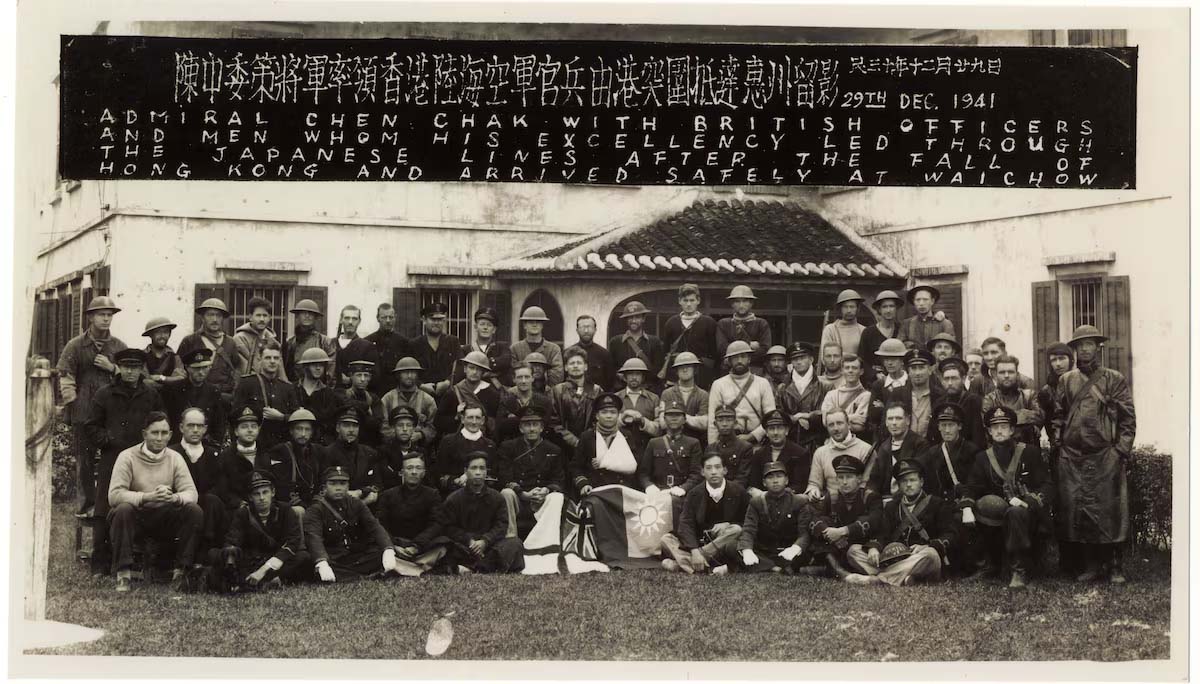
Under the escort of Captain Lueng and the guerrilla brothers, we walked for three days and safely arrived at the Chinese army's defense position in Huichow. We then took a boat to Longchuan, and from Longchuan we transferred to a car to Chukiang. Here we received a warm welcome from the Chinese army and people. The local leaders thoughtfully arranged for our group of fellow prisoners to take a group photo. I was originally standing directly behind Chen Chak, but just as the photographer pressed the shutter, I suddenly remembered that I was going back to Shanghai to go undercover. How could I leave my picture in this photo that would inevitably be published in all the newspapers and allow the enemy to track me down? So I immediately squatted down, turned around and hid behind the crowd. That's why there is an empty seat behind Chen Chak in the group photo of 64 people that you see now. That was originally my seat. Later, I also asked to have my name removed from all records.
We parted ways in Chukiang. Most of the officers and men of the Hong Kong Second Torpedo Boat Squadron went to Kunming, then through Burma and India, to return to Britain to continue their service. Uncle Chak stayed in Chukiang to treat his hand injury. Later, he and Tsui Hang were both awarded medals and titles by the King of England. This was my suggestion, intended to ease the already strained Sino-British relations and facilitate my work. I went to the hospital to shake hands with Uncle Chak. He showed me the Japanese bullet that had been removed from his left wrist, jokingly saying he would frame it in gold as a memento.
I was ordered to report to the British Embassy in Chungking, the wartime capital of China during the War of Resistance against Japan. While passing through Liuchow, I discovered that the batch of torpedo boats I had bought for the M.C.S. school were now being transported by train from the Yangtze River to form the "Canton-Cansi River Defense Command". Many graduates of the M.C.S. school were working in this command and the speedboat squadron. I learned from them that Ouyang Ge had been executed by Chiang Kai-shek.

I've heard many rumors about him in MI6, but none of them have direct evidence. Moreover, after the Cold War began, everyone focused on catching Soviet spies, and the old almanac between him and Japan during World War II were largely forgotten. In addition, after the war, Boxer left the military and went into academia, and never commented on his World War II experience, so this matter was gradually forgotten. Unexpectedly, recently someone has brought it up again, but it's still just everyone talking about their own version of events without any evidence.
Emily Hahn's experience during her stay in Hong Kong is also worth mentioning. She was initially considered an American and should have been imprisoned in a concentration camp, but she said that she had married a Chinese man and therefore could not be considered an enemy foreigner. She was referring to the fact that Shao Sinmay had formally taken her as a concubine. Although the Japanese found it a bit unbelievable, they eventually accepted her explanation and did not imprison her in a concentration camp. This may be related to the fact that Hong Kong adopted the Ch'ing Dynasty law, which allowed concubinage, for Chinese people.
Emily Hahn rented a room near the concentration camp with her daughter, Carola, and waited, exchanging teaching English to Japanese officers for supplies. However, two years later, in December 1943, she and her daughter were still deported to the United States as Americans. Upon returning to New York, Hahn was interrogated by intelligence officers and FBI agents about her relationship with the Japanese. Why hadn't she been imprisoned in a concentration camp? Why had she associated with high-ranking Japanese officers and received favors? They even directly asked her if she was a Japanese spy. These men suspected that given Hahn's charm, her relationship with high-ranking Japanese officers was definitely not just about teaching English; there were too many examples of this during the war for survival.
After being released following the end of the War, Boxer divorced his first wife in 1947 and married Emily Hahn. They had second daughter, Amanda, and emigrated from England to the United States. During the McCarthy era in the 1950s, Shing was labeled a leftist because she and Shao Sinmay had translated Mao Zedong's "On Protracted War" into English and widely disseminated it in Shanghai. In the 1950s, while working for the CIA, FBI Director Edgar Hoover specifically asked me about my relationship with Emily Hahn, intending to label her as left-leaning. However, my understanding of Hahn was merely that of a young woman seeking romance and excitement in exotic lands, not of any political stance. Although she had been an adventurous and unconventional woman, her youthful passion had cooled, and she had become a well-paid full-time writer, no longer seeking thrills.
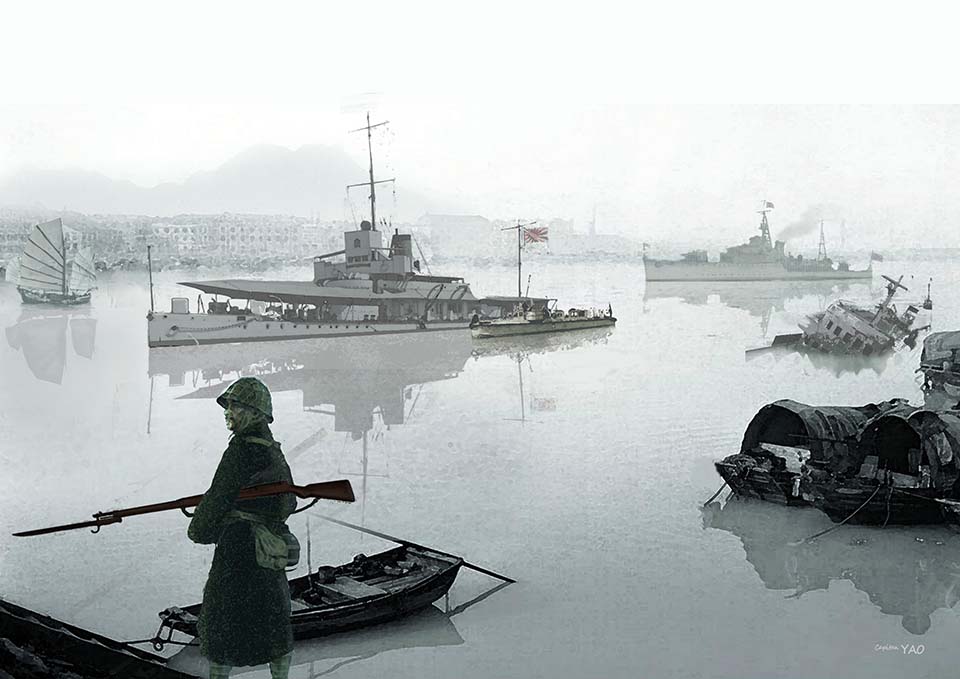
(Figure 5-2-7) During the Japanese occupation of Hong Kong, British ships that were unable to evacuate were scuttled. The river gunboat "HMS Moth" is in the background.
Before the Japanese occupation of Hong Kong, most of the Royal Naval vessels stationed there had evacuated to Singapore. Apart from the escaped Second Torpedo Boat Squadron, only one destroyer, several Hong Kong-built minesweepers, and river gunboats unable to reach the open sea were scuttled. Another vessel used as a base, the "HMD Tamar" the same ship where Mr. M's office was located in 1927, was also scuttled. From then on, "Tamar" became merely a place name, with no ships ever associated with it. Furthermore, during the Battle of Shanghai in August, six Chinese Customs patrol vessels sought refuge in Hong Kong but were requisitioned by the Hong Kong government. Their whereabouts after the war are unknown; they may have sunk or been captured by the Japanese. This incident became a focal point of the postwar dispute between China and Britain regarding the donation of the cruiser "Chungking."
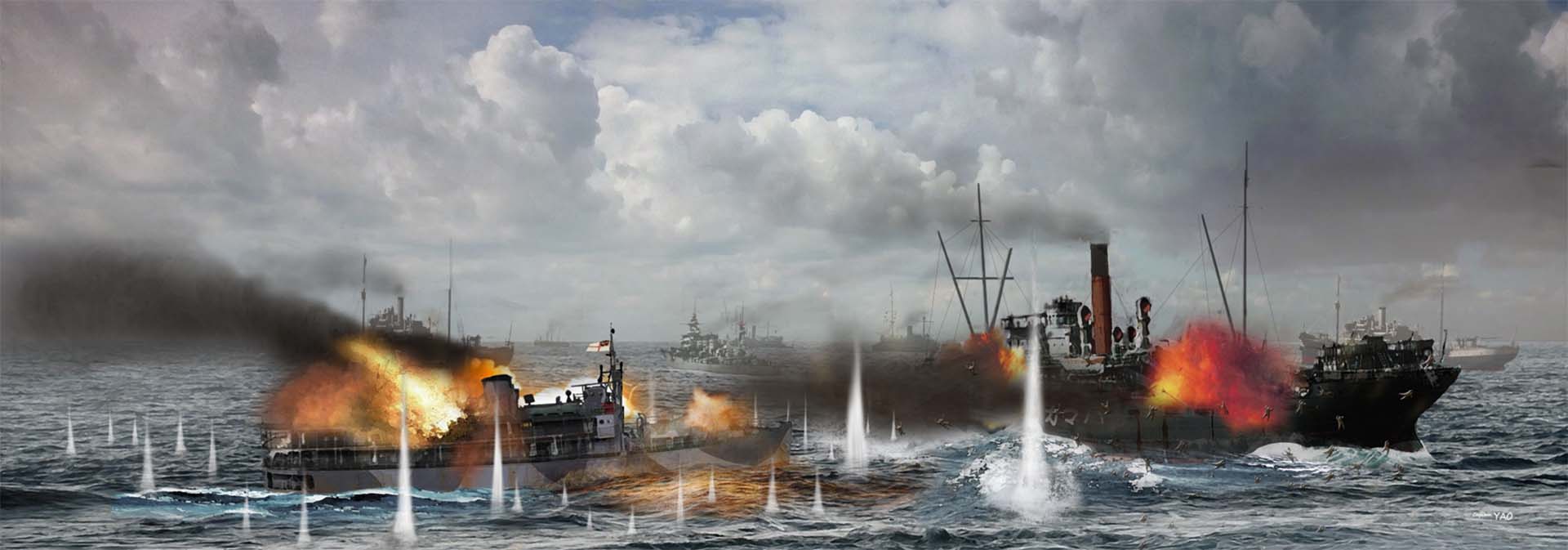
Besides warships, many Jardine Matheson or Swire merchant ships were requisitioned and converted into auxiliary warships, and evacuated to Singapore with the navy. Among them, the "SS Liwo" became a legend in world naval history for its heroic deeds in the Sumatra campaign. The "SS Liwo" was built in 1938 at the Whampoa Dock Company in Hong Kong, with a displacement of about 700 tons. As a small merchant ship of Jardine Matheson, it could have lived an ordinary life, but World War II made it famous. In 1940, the "SS Liwo" and other Jardine Matheson merchant ships were requisitioned by the British Navy. A 4-inch gun was added to the bow, and two machine guns were mounted on each side. It was named "HMS Liwo" and served as an auxiliary patrol ship. After the fall of Hong Kong at the end of 1941, the ship was transferred to Singapore. In early 1942, the Japanese attacked Singapore. On February 13, it evacuated to Batavia with other ships. Along the way, it encountered four air raids. Many of its friendly ships were sunk by Japanese aircraft, and the "HMS Liwo" was also badly damaged. When they were about to reach their destination, they discovered a large fleet ahead. It turned out that it was the main force of the Japanese army attacking Sumatra.
Because of its small size and camouflage paint, the "HMS Liwo" was initially undetected by the Japanese and had a chance to escape quietly. However, Lieutenant Thomas Wilkinson (formerly captain of Jardine Matheson), upholding Admiral Nelson's spirit of "fighting the enemy at all costs" took the initiative to engage the entire fleet. The closest Japanese transport ship was hit repeatedly by the HMS Liwo's only 31 4-inch shells. The Japanese crew on board suffered heavy casualties from machine gun fire, and many jumped overboard to escape, while others were crushed by the propellers. Finally, the "HMS Liwo" rammed the port side of the transport ship at 12 knots, causing it to take on water and sink. The" HMS Liwo" was also sunk by the arriving ships Yura, Fubuki, and Asagiri. Of the 84 men on board, only 12 were rescued and captured by the Japanese ships. Captain Wilkinson went down with the ship and was posthumously awarded the Victoria Cross.
The heroic deeds of "HMS Liwo" became a ray of light in the darkness of retreat, salvaging some face for the British Empire. However, it was not created by soldiers, but by a group of merchant sailors who risked their lives. The story of "HMS Liwo" is still dedicated to a chapter in Jardine Matheson's company profile.
|