13. The Vanished Pearl
Pressured by Amelia Elhart's declaration of becoming the first woman to circumnavigate the world solo, and encouraged by Lindbergh 's departure from China last year, Annie has been preparing for a solo circumnavigation of the globe in the "China Pearl". She plans to depart after Christmas, taking the South Pacific route, passing the Philippines, Singapore, the Dutch East Indies, Tahiti, South America, back to North America, and then returning to Shanghai via the Eurasian route. At that time, it will be summer in the Southern Hemisphere, making the itinerary reasonable. She insists on flying solo to set a record, and I can't stop her. I can only ask the British naval bases along the route for assistance, the problem being that most of this route is not British territory.
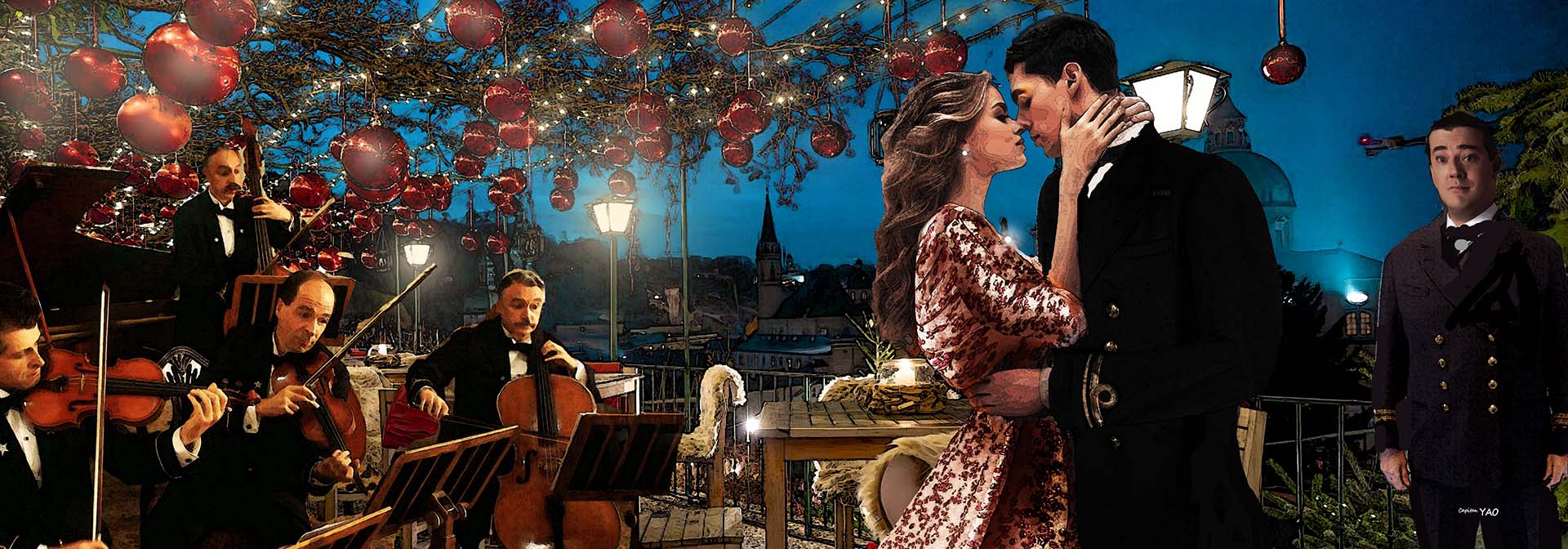
(Figure 3-13-1) Paul proposed to Annie on Christmas Eve at the rooftop restaurant of the Sassoon House in Shanghai.
If Annie hadn't been about to embark on an adventure, I might not have even thought of proposing. In the past year, due to my busy work schedule, I've had very little time to see Annie. Moreover, she has a notorious reputation among Westerners in Shanghai, so I wasn't even sure if she would accept my proposal. But she accepted me without hesitation, and I couldn't help but wonder if I had let her down during this time. However, the unexpected trip to Hong Kong disrupted our original plans, but we treated it as a warm-up before the long flight, so we didn't worry too much. Since everything was prepared beforehand, the "China Pearl" didn't return to the shipyard for maintenance after arriving in Shanghai; it simply docked at the Kiangnan Shipyard, waiting for orders. On the morning of January 15th, before dawn, I drove my motorcycle with Annie to the pier. The luggage and supplies had already been loaded onto the plane. After boarding, I habitually sat in the driver's seat to start warming up the aircraft; Annie pulled me out, saying, "No way! To break a record, I have to do it all myself from start to finish!" Annie started the engine, and a puff of smoke billowed out behind us. I got off the plane and returned to the pier. At that moment, Annie seemed to remember something and suddenly ran off the plane, rushed to the pier, and kissed me: "Wait for me to come back and we'll get married!" I returned a deep, passionate kiss. Suddenly, there was a flash of light, and I realized that a group of reporters had gathered on the pier. 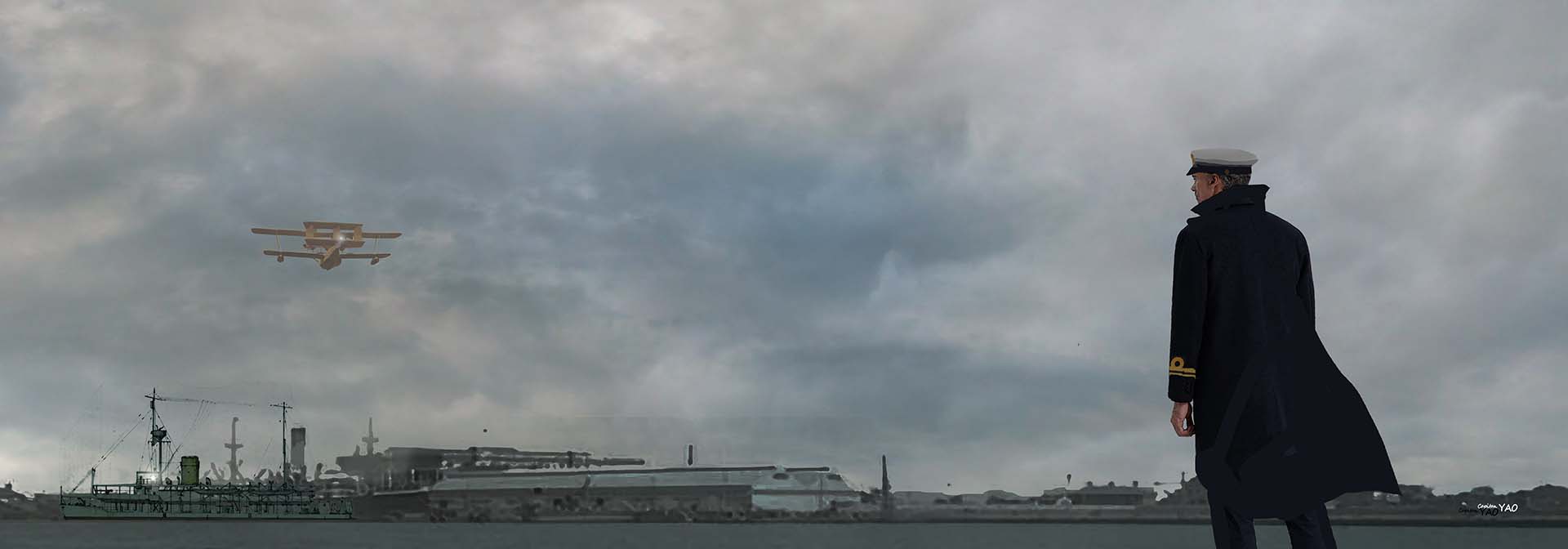
(Figure 3-13-2) Paul Draken bids farewell to the "China Pearl" at the dock of Kiangnan Shipyard.
On February 6, 1932, Lunar New Year's Eve, Willie and I spent the night on the gunboat "HMS Peterel", anchored on the Whampoo River. The Royal Navy, following Chinese customs, also celebrated the Chinese New Year. Sitting in a wicker chair on the deck, gazing at the brightly lit Bund, the winter wind blowing across the river was particularly biting. A sailor brought us a cup of hot cocoa, and just then, the clock on the Kianghai Customs House rang out, eliciting cheers from the officers and soldiers in the cabin. Counting on my fingers, it had been almost six years since I returned to China in early 1927. Annie sent telegrams from Manila, Singapore, and Batavia. Although they were only a few lines long, the tropical atmosphere of the equator brought a touch of warmth to the chilly Shanghai. Especially now that she was my fiancée, I felt even sweeter, and I had already started thinking about the details of the wedding. Annie insisted on having the church at the St. Ignatius Cathedral in Zikawei, which I had no objection to. I wanted Willie to be my best man; perhaps I could be promoted to Lieutenant before the wedding, in which case the two equally thick gold stripes on the sleeves of my dress would look better. As for Annie's dress, I didn't need to worry about it; she said she would have it custom-made in New York and bring it back. I've always had confidence in Annie's taste. As for the band, Willie suggested the White Russian band that Chiang Kai-shek used at his wedding... Every spare moment I had was filled with daydreams of every moment of the wedding. 
Annie disappeared while en route from Fiji to the Samoan Islands. Her father used his connections to mobilize the US Pacific Fleet to launch a search, and the Dutch, British, and French colonial offices along the route also joined the assistance. The weather conditions for this leg of the voyage were good, and even if they became lost, they could land on the water and wait for rescue. The aircraft had ample water and food supplies for one person, and as long as the search began immediately, the chances of survival were high. I privately asked British naval intelligence in the South Pacific to monitor radio signals, hoping to find something on the deserted island through indigenous organizations. However, as the days passed without results, rumors began to circulate that the "Chinese Pearl" had been shot down by the Japanese and that Annie had been captured and taken to Tokyo. Similar rumors had also surfaced when Amelia Elhart disappeared while crossing the Pacific in 1937. During World War II, the Japanese broadcast to the Allies called "Tokyo Rose," which was rumored to be about Annie or Elhart, but these were all later proven false. After Annie disappeared, I always believed that she must have been stranded on a deserted island waiting for my rescue, but the search operation finally stopped, and to this day no wreckage or oil stains have been found. The "China Pearl" and Annie disappeared from the earth. I find it hard to believe that this is true. Didn't she say, "I'll get married when I come back!" But like a photograph, Annie is forever frozen in the image of a young and beautiful woman, and she is still as vivid as ever today, more than sixty years later.
I'm not sure what happened to Annie, but I later realized that letting her fly the "China Pearl" alone was a huge mistake. It was a large aircraft, and transoceanic flights should ideally include a navigator, mechanic, and telegraph operator in addition to the pilot and co-pilot. In the past, I handled all these roles myself, so she didn't realize their importance. Now, one person had to do multiple things. It was fine under normal circumstances, but in special situations, she would inevitably neglect some tasks, which could easily lead to an accident. Later, large, long-range aircraft were required to have a specific flight crew, supposedly influenced by Anne's disappearance on the "China Pearl."
Secondly, I think the route arrangement was poorly considered. The equatorial route is up to 40,000 kilometers long, and traditional intercontinental voyages mostly take the northern route. For example, at 51 degrees north latitude in Greenwich, it's only 25,000 kilometers around the Earth. With the "China Pearl's" limited range, the equatorial route would require at least 28 refueling stops. Since there aren't many land-based bases along the way, refueling at sea would have to be arranged, increasing coordination difficulties and uncertainties. If weather or deviation from the course prevents timely refueling, a crash is inevitable. Furthermore, observing celestial at low latitudes is difficult; Polaris is almost at sea level, sometimes even invisible. If sailing to the Southern Hemisphere, the celestial bodies are completely different, which is difficult for those accustomed to sailing in the Northern Hemisphere to grasp. If two people are traveling together, one can focus on piloting while the other handles navigation and communication, but if only one person is flying, it's very difficult to manage both.
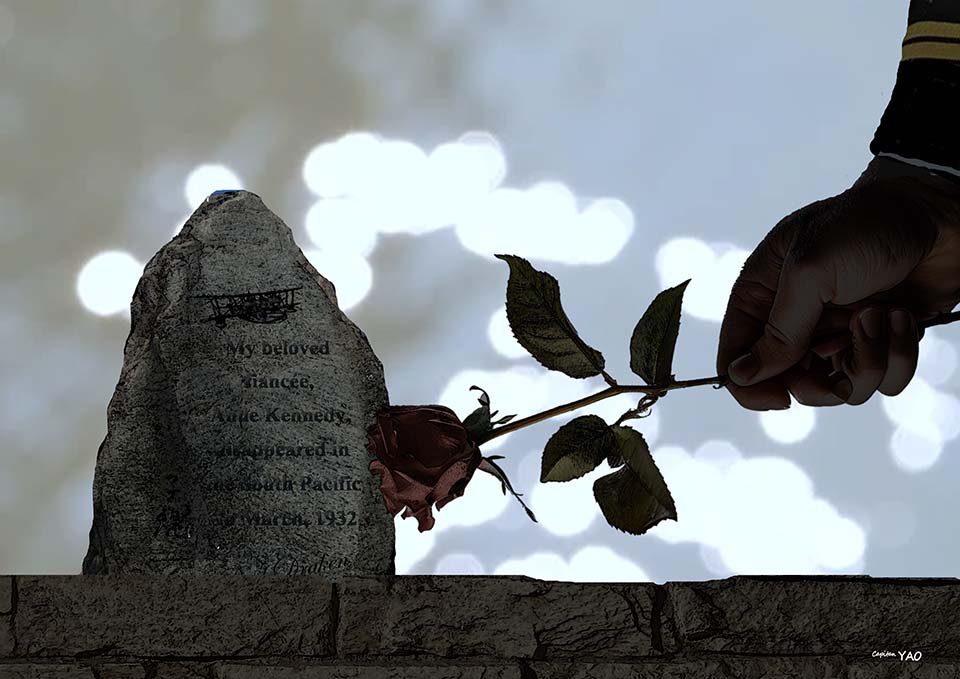
Annie Kennedy's journey began in China, a fact little international media knew about, so her disappearance didn't garner the same attention as Elhart's disappearance four years later, and even fewer people know about it now. I once erected a small stone monument on the riverbank near the Kiangnan Shipyard, the final departure point of the "China Pearl," engraved with an image of the "China Pearl" and the words "Annie Kennedy, disappeared in the South Pacific in March 1932". Every Christmas, I would come here to lay a bouquet of flowers, but this small stone monument was destroyed by the Red Guards during the Cultural Revolution in the 1960s.
|