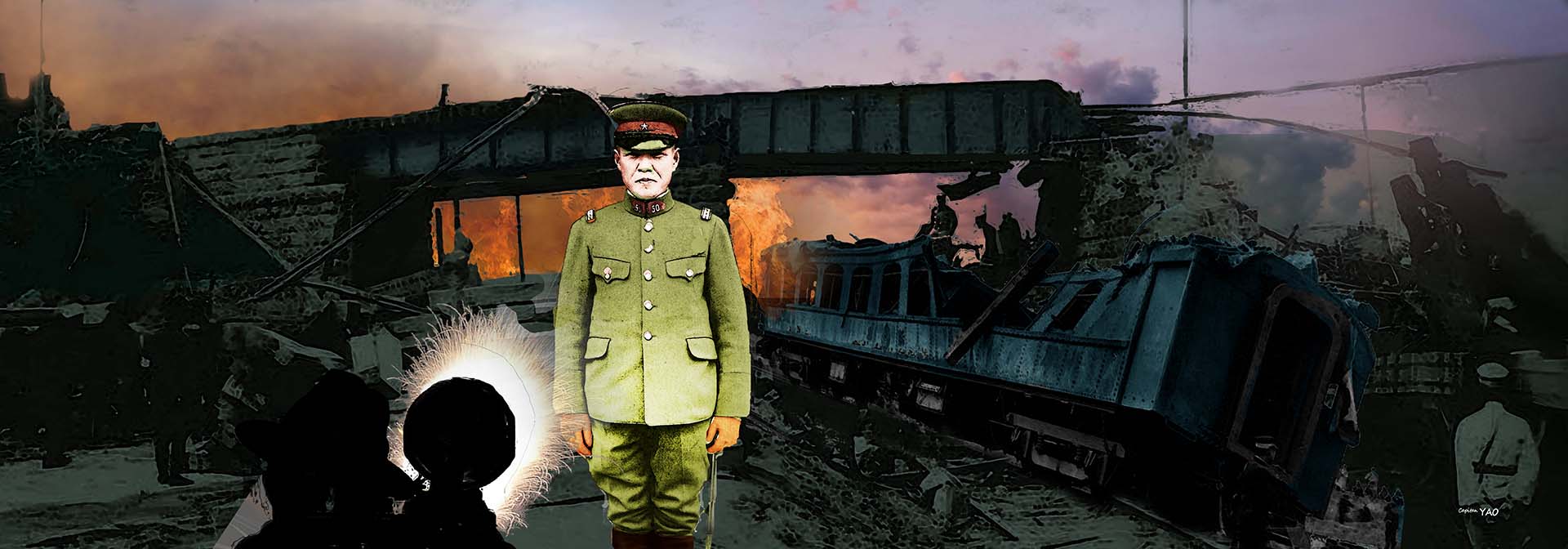
12. Mukden Journey
My superiors agreed to Willie's suggestion, so I was sent to Fengtian to meet with Chang Hsueh-Liang . My primary mission was to persuade him to cooperate with the British, and if that failed, to persuade him to cooperate with Chiang Kai-shek; at the very least, to "prevent" him from siding with the Japanese. After receiving my assignment, I asked Willie, "Willie, in your intelligence terminology, what is the definition of 'prevent'?"
Willie drew a line across his neck with his hand and said, "That's the idea!"
I stuck out my tongue.
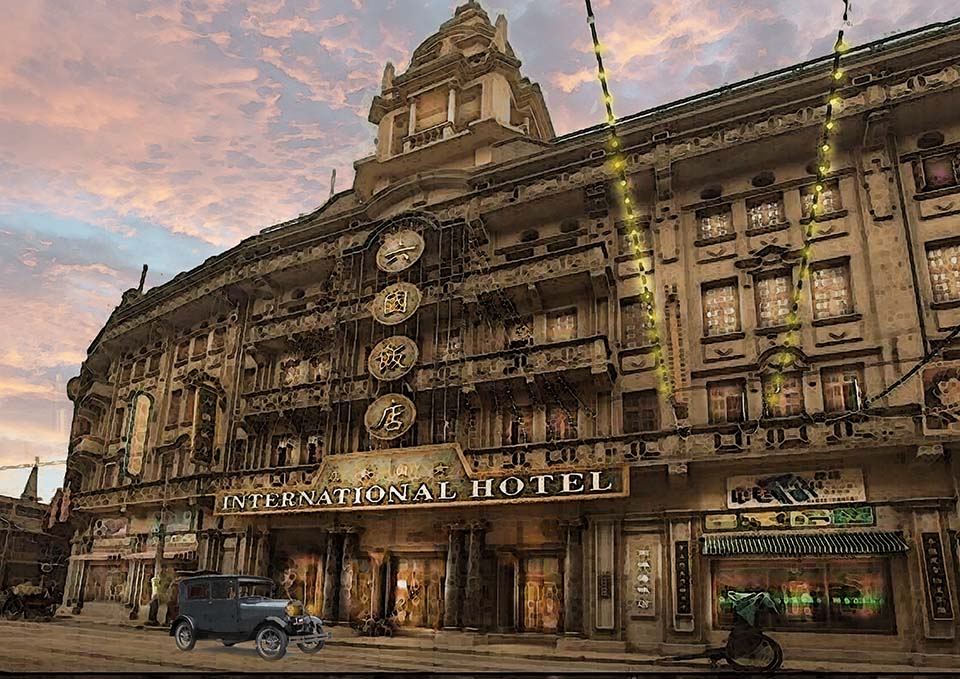
I arrived in Peking in early October and stayed at the Six Nations Hotel, planning to stay for a few days before taking the train to Mukden. Recalling how I fled Tsingtao to Hong Kong like a stray dog a year ago, and now returning to Peking to see the endless yellow roofs of the Forbidden City again, I was filled with emotion. Every time I saw it, it coincided with a change of dynasty in China, and this time was no exception. The revolutionary army from the south entered Beijing on June 8th through war and exchanges of interests, achieving a formal unification of China within the Great Wall. However, the area outside the Great Wall remained the territory of Chang Hsueh-liang, the young marshal of the Mukden clique. The future fate of China would depend on the interaction between Chiang Kai-shek and Chang Hsueh-Liang .
Chiang Kai-shek arrived in Peking on July 6th. He, along with Feng Yuxiang, commander-in-chief of the Second Army Group, Yan Xishan, commander-in-chief of the Third Army Group, and Li Zongren, commander-in-chief of the Fourth Army Group, paid their respects at the Biyun Temple in the Western Hills of Peking, where Sun Yat-sen's coffin was temporarily interred. They reported the completion of the Northern Expedition and the unification of China, and simultaneously renamed Peking as Peiping. But was China truly unified? Clearly not. How could such a large area as Manchuria in Northeast China be considered unified when it was still under Chang Hsueh-Liang 's control? Ironically, whether China could be unified depended on the success of my mission, Paul Draken!
Of course, from Britain's perspective, whether China is unified or not is another matter; the immediate priority is to prevent Chang Hsueh-Liang from siding with Japan. This task has been a real headache for me. I stayed in Peiping for a few days to calmly consider my options before heading to Mukden. My only hope was that the Young Marshal might still have some old feelings for me and be willing to listen to me. Apart from that, I couldn't see any other leverage I had.
Lying on my hotel bed, I tried to piece together the whole story. First, did Chang Hsueh-Liang know who was behind the bombing of Zhang Zuolin? If he knew the British were involved, I'd better hurry back to Shanghai, or I'd be walking into a trap! They might even kill me to appease the Marshal!
Fortunately, the Japanese spread rumors that the Southern Revolutionary Army was behind the attack. They even deliberately placed the bodies of two Chinese men carrying a forged assassination order at the explosion site to divert attention and sow discord between Chang Hsueh-Liang and Chiang Kai-shek, thus undermining any possibility of unification. At a time when assassinations between different warlord factions were rampant in China, this explanation was quite believable.
I was completely at a loss, so I decided to go for a walk to clear my head. As I went downstairs and passed through the lobby, I saw a group of Western tourists surrounding an old man. I looked up and thought, "Great! Isn't that the fortune teller Chiu Taochi? It seems that now is the time when I need him the most!"

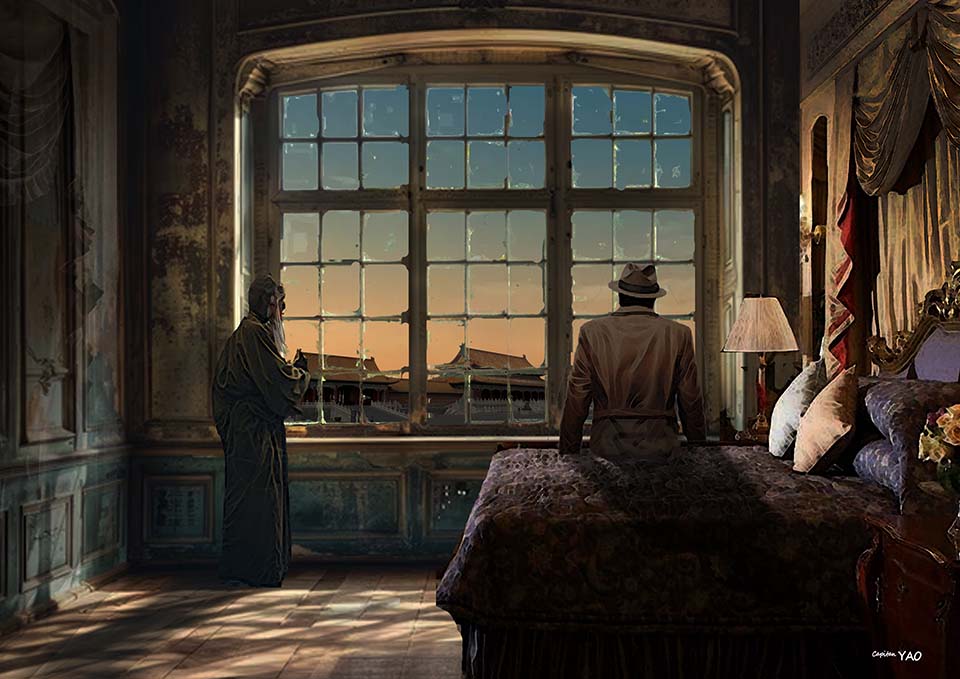
"Master Chiu has such a good memory! It really has been more than a year since we last met!" I said. "The Prince Consort looks worried; he must be wondering whether this trip will bring him good fortune or misfortune," Chiu said. "Master Chiu's words have hit the nail on the head; please enlighten me." "Things will work themselves out when they reach the bridge!" "Master Chiu's explanation is too simplistic; I don't even know how to pole a boat!" Chiu Taochi quietly pulled me aside and said, "It's not convenient to talk here, let's go to your room." So we left the hall and went upstairs.
After returning to his room and closing the door, Qiu Daoji's tone immediately changed. He said to me, "Your three purposes for going to Mukden are: first, to win over the Young Marshal to the British; second, to persuade him to submit to the Nanking government; and third, to do everything in your power to prevent him from turning to the Japanese. Am I right, Your Highness?"
After hearing Chiu's, I was so shocked that I couldn't speak for a moment, and just stared at him blankly.
"The first plan is to win over the Young Marshal and align him with Britain. Given his personal inclination towards Western lifestyles, it's not impossible. However, the three northeastern provinces are already under the control of the Japanese Kanton Army and the South Manchuria Railway Company. It would be difficult for Britain to do anything there. It would be pointless to win over the Young Marshal at the expense of the three northeastern provinces!"
Chiu continued, "The third plan is to prevent him from siding with the Japanese. There is a way to do this: simply expose the fact that the Japanese are the masterminds behind the assassination of the Marshal. However, it would be inappropriate to assassinate the Young Marshal if he refused, because the Young Marshal's pro-Japanese stance is due to circumstances. But if the Young Marshal dies, the power in the three northeastern provinces will inevitably fall into the hands of the truly pro-Japanese Yang Yuting, which would be doing Japan a great favor!"
"The most feasible plan at present is the second one, which is to persuade the young marshal to submit to the Nanking government. This is what the young marshal really wants, but it is inconvenient to say so before the murderer of his father is found out," Chiu said. "However, the Kanton Army will definitely not accept this, and it will not be long before they launch a military operation to occupy the entire Northeast. I predict that it will be all for naught in less than three years."
"So when I say the boat will straighten itself when it reaches the bridge, that only applies to the bridgehead. What happens after it crosses the bridge? What would truly benefit both China and Britain is for the Young Marshal to be able to feign compliance with the Japanese like the Old Marshal did, maintaining the status quo, and then skillfully utilize the Russians as a counterbalancing force once their power has grown again." Chiu continued, "But the Young Marshal is young and impetuous; I'm afraid he can't do that! Worse still, if the Young Marshal loses the Northeast, once he enters the interior, he'll be at the mercy of Nanking, and his later life will likely be nothing more than a tragic hero!"
"What Master Chiu said makes a lot of sense. I don't think this is something an ordinary fortune teller could say," I said.
"Hahaha! You are trying to figure me out! The I Ching, Tui Bei, and Zi Wei Dou Shu are my family's traditional arts, but I studied in Japan in my early years, and I'm either classmates or friends with important figures in Japanese politics today. They might be able to fool others, but they can't fool me!"
"So, in your opinion, how will the situation evolve in the future?"
"The biggest variable in East Asia right now is Japan. From the perspective of your British interests, you must not let Japan be pushed to the brink of war. As long as the balance of power among the great powers is maintained, Britain will still be the biggest beneficiary. But if a major war breaks out, the British interests in the Far East will be seized by the Japanese. If Britain does not have the strength to fight the Japanese in the Pacific, then it will have to rely on the United States. As a result, after the war, the Far East will become the sphere of influence of the United States, and the Pacific Ocean will become the inland sea of the United States," Chiu said.
"Furthermore, the great powers do not pay attention to Russia now, thinking that Russia's power has declined after the Soviet revolution. They will all regret it in the future! Revolution is a kind of religious influence, just like the Taiping Heavenly Kingdom, which will surely sweep across the world, including China."
"But the Taiping Rebellion ultimately failed, didn't it?" I asked.
"So religious fervor can only last for a moment, and in the end, life still goes on! But a man who is not reckless in his youth is not truly young, and every generation is unwilling to let itself go without causing trouble at least once! This is the inescapable cycle of human destiny!" Chiu Taochi said with a hint of mystery.
"In any case, Britain will find no significant role to play in these future changes!"
It was getting late, so Chiu Taochi stood up to take his leave, saying, "Come see me again next time you're in the capital. I have something to tell you!"
I wanted to ask what it was about, but Chiu Taochi shook his head, smiled without saying a word, opened the door, and strode away.
Master Chiu's words gave me a new perspective on the future situation, helping me make the right judgments at many crucial moments in the future. However, the decline of the British Empire was an inevitable trend that even if you knew all the secrets of heaven, you could not change. I looked out the window at the sunset over Peking and thought that the British Empire, which had lasted for hundreds of years, would eventually fall.
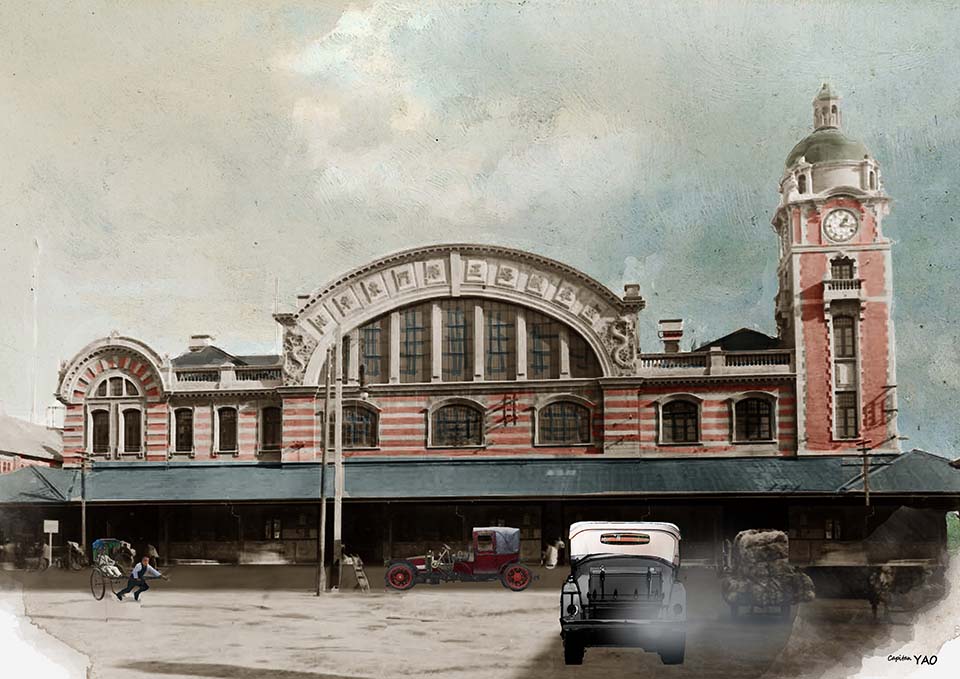
I arrived in Mukden by train from Peiping on October 10th. After the death of Marshal Zhang, an eerie atmosphere permeated the city, and one could almost smell the various conspiracies brewing in the air. Rumors circulated in the streets of Fengtian that not long after Marshal Chang's death, at a meeting on June 24th, pro-Japanese figures among the veteran officials, such as Yang Yuting and Chang Yinhuai, had conspired to stage a forged will in an attempt to seize power, but the attempt failed because another faction of veteran officials, Zhang Zuoxiang, refused to cooperate.
Chiu Taochi introduced me to his student, Wang Jiazhen, a trusted confidant who handled negotiations with Japan for the Young Marshal. I went to talk to him and asked him to convey my request to meet the Young Marshal. In Chinese society, the status of a teacher is very special, sometimes even more important than that of a superior. For example, although Chiang Kai-shek held all the important positions in the party, government, and military, he valued the principal of the Whampoa Military Academy the most. In the Southern regime, being able to address Chiang as "Principal" indicated one's close lineage and extraordinary relationship, far more intimate than being called "Commander-in-Chief" or "Chairman." Having my esteemed teacher introduce me to Wang Jiazhen, I certainly didn't dare to neglect him, and he provided me with considerable help and information.
I learned from Wang Jiazhen that the Japanese military and the Ministry of Foreign Affairs used the opportunity of sending important officials to the Marshal's Mansion to pay their respects to put pressure on Chang Hsueh-Liang, hoping to control the Mukden clique after the old marshal's death. At the same time, they spread rumors that the Southern Revolutionary Army had bombed Marshal Zhang, saying that it was "the work of Chiang Kai-shek's plainclothes troops," in an attempt to create hatred between Chang Hsueh-Liang and the Nanking government.
In fact, Chiang Kai-shek's representative, Fang Benren, had been frequently visiting the Marshal's Mansion, conveying the Nanking government's expectations. Because Chang Hsueh-Liang seemed inclined to cooperate with the South, the Kanton Army General Staff and Colonel Kawamoto Daisaku had planned to remove Chang Hsueh-Liang and allow Yang Yuting to succeed him as Marshal. However, things suddenly took a dramatic turn. Major General Qin Zhenci, head of the Mukden Special Service Agency, contradicted this, suggesting to General Muraoka Chotaro, Commander-in-Chief of the Kanton Army, that Chang Hsueh-Liang should succeed him. Thus, with Japanese support, the Young Marshal temporarily secured his position. It was in this atmosphere that I entered the Marshal's Mansion and met with Young Marshal Zhang. I was also certain that Japanese spies were monitoring the purpose of my visit.
Upon entering the Marshal's Mansion, it was customary to surrender one's weapon. I usually didn't carry a pistol, but this time I happened to have brought the Mauser C96 pistol that Chang Hsueh-Liang had given me for my birthday last year. The guard sergeant, seeing the inscription "Presented by Hanching" on the gun, was filled with respect and knew that the relationship was extraordinary. He immediately informed the staff.
Soon after, the guard captain, Tan Hai, ran out and politely led me into the young marshal's reception room.
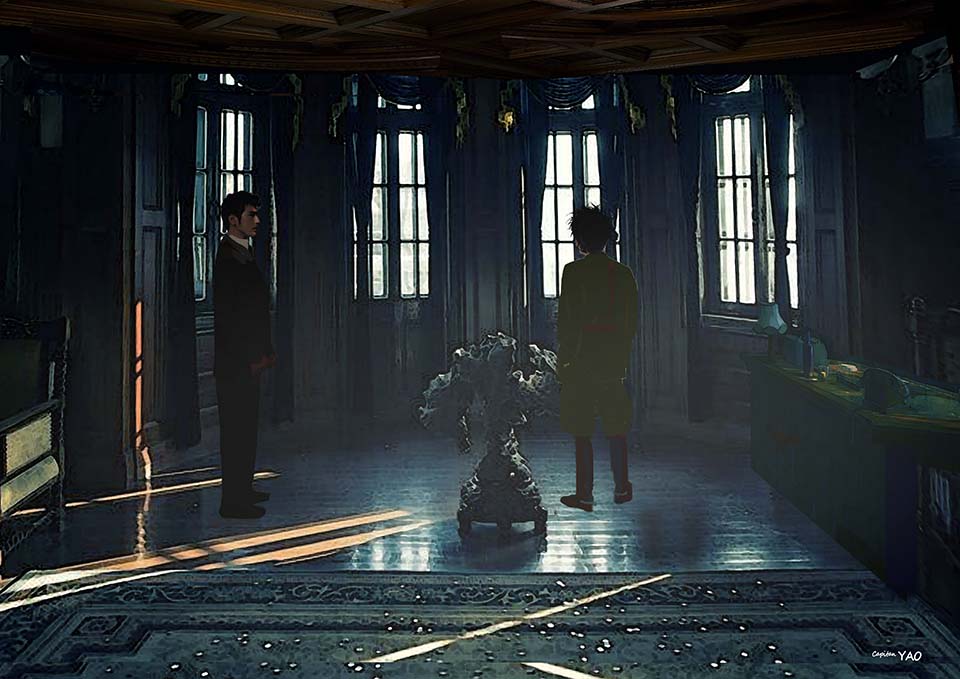
In the dimly lit, unlit room, I saw Chang Hsueh-Liang slumped in his chair, his eyes sunken, his hair and beard disheveled, and his spirits low. He looked as if he were under immense pressure.
"Hanching, it's regrettable to hear this news. Please accept my condolences!" I said.
"Paul, we're sworn brothers, so let's not stand on ceremony. These past few days, everyone I've seen—from inside and outside, from high and low, from all directions—has come to me seeking something!" Chang Hsueh-Liang rose and walked towards me, his bloodshot eyes fixed on me like copper bells. "You've come here to ask something of me too?"
Although the living room of the Marshal's Mansion was heated, I still felt a chill rise up my spine. How was I supposed to answer this sharp and provocative question? I suddenly thought of the teacher-student relationship between Chiu Taochi and Wang Jiazhen. The Chinese say "Heaven, Earth, Ruler, Parents, and Teacher," and the relationship between a teacher and student is already extraordinary. If it were parents, it would be even more profound. If... A flash of inspiration struck me! I've got it!
"No! I came here specifically to pay respects to my godfather!"
"Godfather?" Upon hearing this, one could feel Chang Hsueh-Liang's heart skip a beat.
I mustered my courage and continued, "My Chinese name, Long Baoluo, was given to me by the Commander-in-Chief. My life in China was a gift from him. He is like a father to me. Now that my father has been murdered, how can I, as his son, not come to pay my respects and avenge him?"
Chang Hsueh-Liang suddenly grabbed his hair, banged his head against the corner of the table, and burst into tears: "How can I not avenge my father's murder? Well said! I, this useless and unfilial son, don't even know who the murderer is today, yet I have the right to sit here all day pointing fingers and giving orders..."
"Hanching, do you really not know who killed the commander-in-chief?" I asked, knowing the answer already.
"I suspect it was the Japanese, but the Japanese say it was from Nanking, and they even have evidence! I'm completely confused!"
"I have obtained compelling evidence from British intelligence, and I have come here to help you!"
Upon hearing this, Chang Hsueh-Liang gestured for silence and said, "Don't talk about it here. We'll find a place tonight, and I'll send Tan Hai to pick you up."
At 8 PM, Tan Hai came to pick me up from the hotel. We took a car to a residence where a woman, who appeared to be Miss Zhao Si, was also there. Chang Hsueh-Liang was eager to see my evidence. Before I came here, I had already thought of a plan. The first was to clearly prove that the Japanese were plotting to kill Marshal Zhang, but it was necessary to focus on the individual actions of radical officers and not spread to the Japanese government and military, so that Chang Hsueh-Liang would not act impulsively against Japan and disrupt the current balance in Northeast China. The second method was to link pro-Japanese figures such as Yang Yuting and Chang Yinhuai with radical Japanese officers, creating the impression of them murdering their master and usurping power, and then eliminate them all at the same time. My definition of the highest-ranking radical Japanese officer only extends to Colonel Daisaku Kawamoto, a senior staff officer in the Kanton Army. This is because the evidence obtained by British intelligence consisted of a photograph taken by his subordinates shortly after the bombing, showing Colonel Kawamoto standing triumphantly at the scene. The Japanese are truly remarkable; in their eagerness to claim credit, they left themselves with evidence. I predicted that once this evidence surfaced, the Japanese government and military would sacrifice a pawn to protect their king, making Colonel Kawamoto bear all the blame, and this proved to be exactly what happened.
A photograph is worth a thousand words. I stood aside without offering any explanation to strengthen the objectivity of my evidence. Chang Hsueh-Liang stared at the photograph for a long time, then slammed his fist on the table and exclaimed, "That Kawamoto Daisaku, I'll tear you to pieces!"
Then I handed over another photograph, one of Yang Yuting and Chang Yin-huai chatting happily with Kawamoto Daisaku. Actually, this photograph was taken on a different occasion, but because it was placed next to the previous photograph, it served as a suggestion. Coincidentally, Yang and Chang had recently been extremely disrespectful to Chang Hsueh-Liang, acting arrogantly due to their seniority. Coupled with the previous incident involving the fake will, Chang Hsueh-Liang had long harbored suspicions about them. The appearance of this photograph reinforced the impression that Yang Yuting wanted to use the Japanese to eliminate the Young Marshal and seize the position of Commander-in-Chief of the Northeast Security Command.
Sure enough, the moment my photographic evidence was released, the Japanese side was in an uproar. It turned out that Prime Minister Tanaka Giichi, who had reported to the Emperor that the Huanggutun Incident was "caused by Chiang Kai-shek's plainclothes troops," had to quickly dismiss Colonel Kawamoto and classify the incident as an individual act. He then submitted another report stating that "some Japanese soldiers were involved in this matter, and they will be severely punished after the truth is found."
However, the Emperor had grown increasingly distrustful of Tanaka's inconsistent statements, while radical military officers reacted against Kawamoto's dismissal. Tanaka's political enemies also seized the opportunity to launch a massive attack, leaving the Tanaka cabinet besieged on all sides and ultimately collapsing. This situation meant that when Chang Hsueh-Liang announced the "change of flags" in Northeast China on December 29th—that is, the adoption of the Nanjing government's Blue Sky with a White Sun flag—Japan was unable to find a strong point of attack to mount a significant counterattack.
Twelve days after the flag change, on the night of January 10, 1929, Chang Hsueh-Liang lured Yang Yuting and Chang Yinhuai to the Marshal's Mansion to play mahjong, and then ordered his guards to execute them on the spot. The Young Marshal Zhang had finally accomplished an "impossible mission," in which I played a crucial but undisclosed role. As for Britain's responsibility in this incident, no one investigated it.
However, the balance of power under the shadow of Japanese dominance was extremely fragile. In addition, the young marshal himself was not good at maintaining this balance. It was only a matter of time before the young and radical Japanese officers launched a counterattack. Therefore, only three years after the Huanggutun Incident, the September 18 Incident and Puyi's "Manchukuo" were launched. From then on, the Japanese firmly controlled the Northeast. All of this was within Chiu Taochi's expectations.
As for Colonel Daisaku Kawamoto, who was relieved of his military post, he benefited from the misfortune. His peers either died in battle, committed suicide, or were sentenced to death as war criminals. Only he survived until after the war and died in 1953.
|