10. Naval Intelligence Group
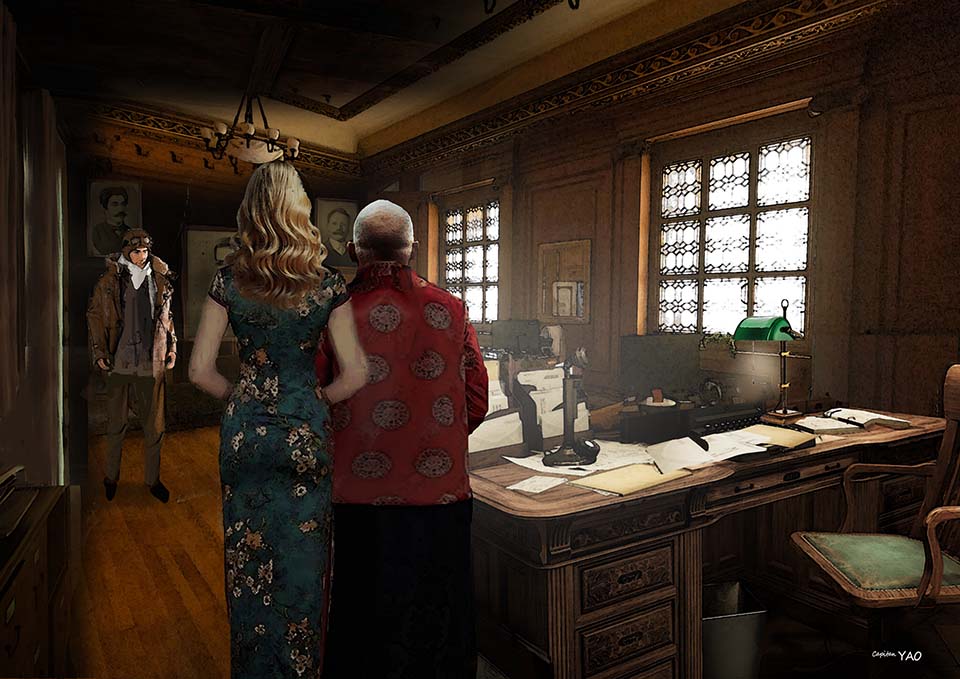
Upon arriving at the French Concession police station, I was led into a large office. A Chinese man, about 60 years old, with a stocky build and wearing a long robe, stood before me, with a translator standing beside him.
"You must be Paul Draken? I'm Inspector General Huang Jinrong! Please have a seat!"
I had long heard of Huang Jinrong, the Shanghai tycoon known for his connections in both the legitimate and underworld circles. He was Du Yuesheng's mentor and the highest-ranking Chinese detective in the French Concession police force. No Chinese dared to disobey him. But I was British, and an officer in MI6, having only received my assignment half an hour ago! This guy was used to bullying the Chinese, and now he was actually trying to climb all over me. He clearly didn't understand the situation. Let me teach this foreign lackey a lesson.
"Inspector General Huang! I understand your identity, and I hope you understand mine. I am not Chinese; I am a naval officer of the British Empire. Our country and France have always been friendly. Please explain your reasons for doing this, otherwise it may cause diplomatic problems between our two governments!"
I stood tall and refused to sit down, and declared the position of a British officer in what I thought was a very solemn tone.
"Mr. Draken, you've misunderstood. This is a private matter, not an official business one," Huang Jinrong replied with a smile, then turned around and called out, "My goddaughter, come out here! I've brought Young Master Draken."
Then a woman emerged from behind the door and hid behind Huang Jinrong. I looked closely and was shocked: "Annie, it's you? You...you're kidnapping me!"
Huang Jinrong grinned and pulled Annie close to me, saying, "Young Master Draken! Annie's father and I were old friends back when he was doing business in Shanghai. I watched her grow up; she's a bit spoiled, so please don't take offense! I told her that her godfather will definitely help her find Young Master Draken's man. As for the rest of the relationship, godfather can't help with that!"
"I went to your office several times but you weren't there. I was worried something had happened to you, so in my panic I had to ask my godfather for help. Who knew he would... bring you here."
Annie lowered her head more and more as she spoke, like a schoolchild who had done something wrong. She was wearing a Chinese-style cheongsam, which made her look particularly elegant and beautiful, a stark contrast to her usual flamboyant self.
"Annie came back to Shanghai this time because I'm celebrating my 60th birthday this year. She came to see me on behalf of Mr. Kennedy. After I turn 60, I'll be retiring from my position as the Chief Inspector of the Chinese Detective Agency. Then I'll be just an ordinary citizen again, and I'll have to ask Young Master Draken for a meal!"
"I dare not accept such praise! I must give the Inspector General face, and I apologize for any offense I may have caused!"
"Okay! Don't forget to invite me to your wedding banquet when you get married. I'll have the driver take you home now!"
Huang Jinrong turned to his henchmen and shouted, "Prepare the car!"
"I'm coming too!" Annie said. I rolled my eyes at her, but she pretended not to notice.
"I would like to invite Mr. Draken to my sixtieth birthday banquet."
At the police station entrance, Huang Jinrong personally saw me to my car. After all that commotion, the streetlights were already on. The car slowly made its way along the congested Nanking Road. Annie quietly asked, "Are you still angry with me?"
"How dare I? You have a rich father and a powerful godfather, who would dare mess with you?"
Annie didn't reply, but instead tightened her grip on my arm and buried her face in my chest.
Perhaps because of this serendipitous encounter, no one in Shanghai dared to cause me trouble afterward. The gang organization also greatly facilitated my intelligence work later on. Strangely enough, I always thought Huang Jinrong was the top figure in the Shanghai Ch'ing Gang, only to later learn that he didn't have any official title or seniority; he simply took on disciples like other gang leaders because of his power in the police station. Furthermore, Huang Jinrong had actually retired from his position as chief inspector and become an advisor, but his successor was also someone he appointed as a disciple or grand-disciple. He was essentially the supreme ruler of the Chinese detectives and police in the French Concession, still wielding considerable power, and occasionally even visiting the police station.

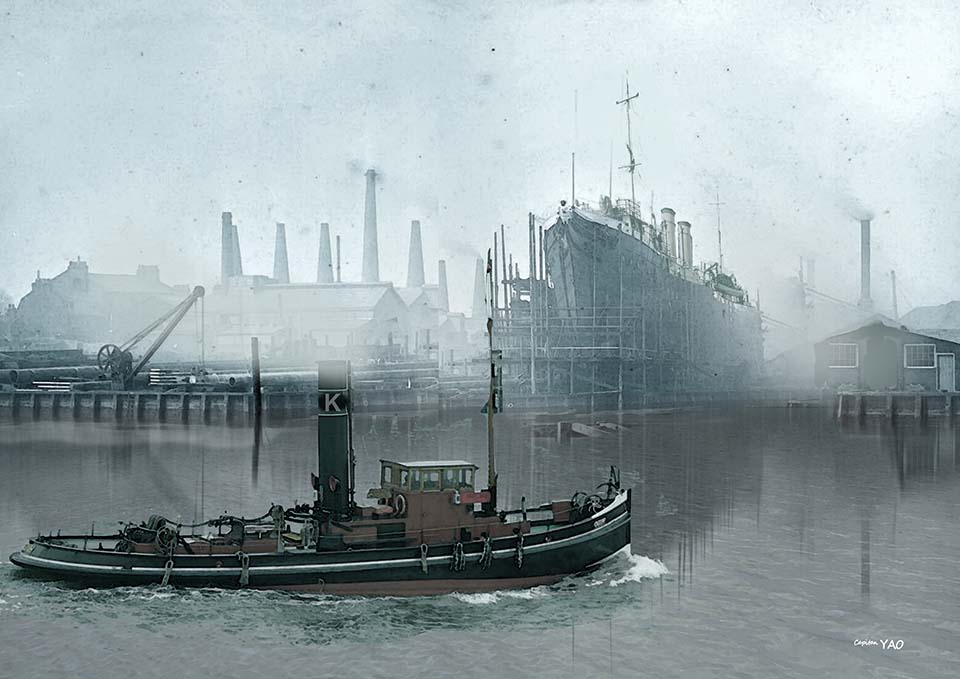
I was initially reluctant to go because I had just bombed that area last year. What if my enemies recognized me, or even set a trap? After hearing my concerns, Annie said, "You were flying the plane from the air. How could they possibly recognize you from the ground? Don't worry! My godfather will back you up if anything happens!" From another perspective, the Kiangnan Shipyard had been under the management of the Navy since the Kuomintang's Northern Expedition entered Shanghai. All Chinese naval vessels were repaired there, and normally it was difficult to even get in. Now, swaggering in under the guise of a customer was a perfect opportunity to gather intelligence. I was about to take up my post as the British naval intelligence officer in China, and perhaps I could achieve some results to impress my superiors and get off to a good start. Thinking about it, I didn't mind going to the Kiangnan Shipyard with Annie. When we arrived at the Kiangnan Shipyard in Gaochangmiao, Shanghai, the Chinese manager in charge of business greeted us. He treated Anne like a queen, and it seemed that he really wanted to win the business. I asked curiously, "Why is Kiangnan Shipyardalso building airplanes?" The manager said, "To be honest, our Kiangnan Shipyard and Foochow Arsenal have long been competitors. We've won most of the warship business, but they started earlier in aircraft manufacturing, so we're currently at a slight disadvantage. We really hope this cooperation with Ms. Kennedy will be a good start, so the terms we've offered are very generous, practically at a loss! We hope to increase our technical capabilities and performance in seaplane manufacturing so we can persuade our superiors to move all the aircraft manufacturing business from Mawei to Shanghai." I'm so lucky to have heard so much news in just a couple of sentences. The manager of Kiangnan Shipyard is right. Two years after the assembly of the Annie aircraft was completed, in 1931, the Chinese government decided to close the Mawei seaplane manufacturing plant and move all the equipment and materials to the Kiangnan Shipyard in Shanghai. Annie's business played a key role in this.
We then discussed the details of assembly and test flights. After our discussion in the evening, as we boarded a steam boat sent by the Kiangnan Shipyard to return to the Bund, we saw a nearly completed warship, about four or five hundred tons, lying on the slipway. I knew that due to the civil war and the embargo imposed by the great powers, China hadn't built any regular warships for ten years, so the appearance of this warship piqued my curiosity. I deliberately asked the manager, "Wow! What a beautiful warship! Was it ordered by the British Royal Navy?"
The manager said proudly, "This is the "Hsienning", a newly ordered warship by our Navy. It's the first time in ten years that this has happened. I heard that Commander-in-Chief Chiang Kai-shek will personally preside over the completion ceremony!"
I noticed that the ship's appearance was very similar to a scaled-down version of the six inland river gunboats that Kiangnan Shipyard built for the US Navy last year. Although the ship was small, it had the appearance of a large warship. In addition to the huge amount of money involved in this US Navy order, the blueprints from the US were a treasure trove for Kiangnan's designers. They learned many closely guarded secrets from them, which enabled them to later design a series of ships for the Chinese Navy.
The "Hsienning" gunboat was completed on August 16th of the following year. Chiang Kai-shek indeed personally presided over the ceremony. In his speech, he declared that he would take this as a starting point to build a 600,000-ton navy for China within ten years. I was also present at the time and couldn't believe my ears. In my report, I pointed out that this was absolutely impossible. Chiang Kai-shek's declaration was indeed broken, and in the end, even the 60,000-ton navy could not be built.
Due to delays by the British company Short, the aircraft parts would not arrive in Shanghai until the end of the year. So Annie decided to stay in Shanghai and have some fun. This trip would lead to a lot of trouble later on!
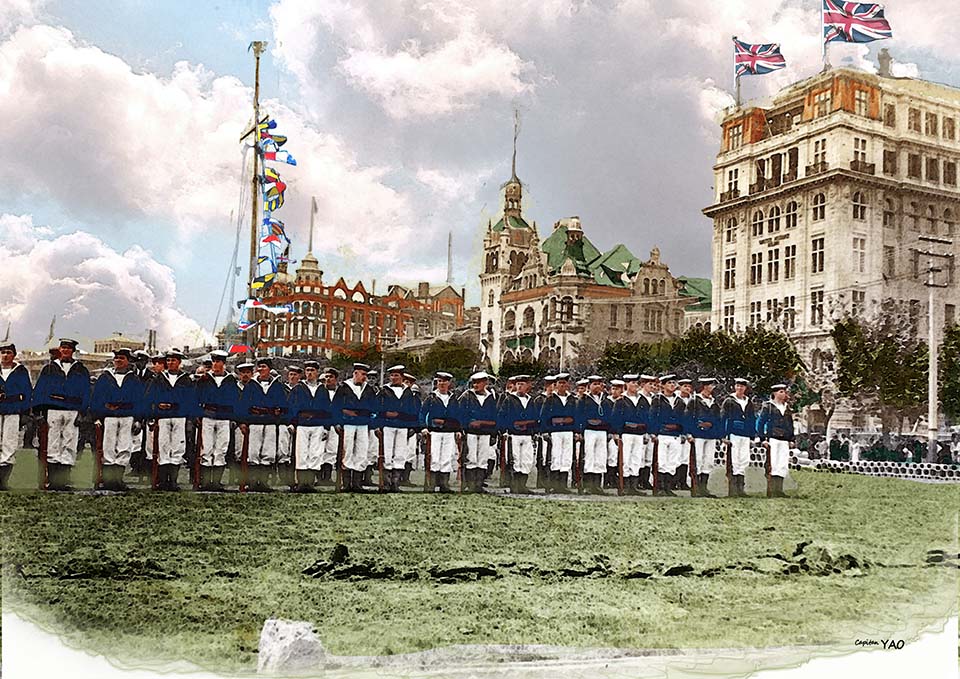
On the day I was to report to the British Naval Intelligence Group in Shanghai, I made a point of wearing a full summer uniform as a naval ensign, complete with a sword, to the Consulate General in Shanghai, looking quite dashing. This uniform, along with other dress uniforms, was custom-made at a tailor shop in Shanghai. Because of the large number of British naval personnel and sailors in Shanghai, there was a plentiful market and sufficient supplies to operate this business; as long as you had the money, you could order custom-made items, and they were of good quality and inexpensive.
The British Consulate General in Shanghai was also located on the Bund, just a short walk from my "Shanghai Dragon Airlines" office. When I arrived at the consulate, I met the Consul General and the military attaché. They told me that the intelligence group's office was in another location, so I hired a rickshaw to find it at the address the consulate had given me. I discovered that it was the same garden villa where Mr. M and Colonel Lawrence had spoken last time. It was situated in the middle of a residential area and was quite inconspicuous.
As soon as I arrived, I saw Willie Davis, my former Eton alumnus, sitting leisurely on a chair in the garden smoking. Dressed in white casual clothes and wearing a straw hat, he called out to me as soon as he saw me, "Paul, you've finally arrived! Quickly put away that terrible sword, let's go have lunch together."
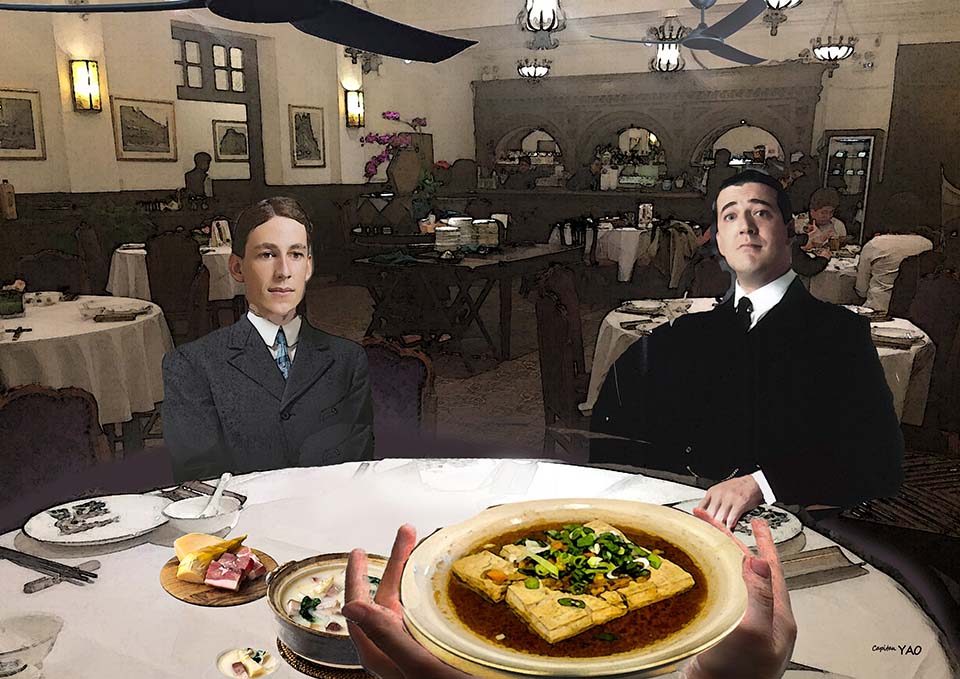
Willie lent me a set of casual clothes, and we hopped into a rickshaw to a Chinese restaurant. Willie expertly ordered a lot of Shanghai snacks, and squinting at me, he said, "First, don't even think about doing intelligence work in that outfit. Second, if you want to do intelligence work in China, you'd better learn how to eat Chinese food first!"
I remember one of the dishes he ordered was steamed stinky tofu. When it was served, I thought to myself, "My God! How could anyone eat something like that?" Willie, on the other hand, ate it with great relish and kept provoking me: "Someone who does intelligence work can't even taste a piece of stinky tofu?"
I suddenly remembered my experience in Kuangchow last year, which would surely make him admit defeat. I asked Willie, "Have you ever eaten monkey brains?"
He stared at me wide-eyed, and I embellished the story, describing in detail how I ate monkey brains. This made Willie vomit up the stinky tofu he'd just eaten, repeatedly saying, "I'm completely defeated! I'm completely defeated! I'm truly impressed!"
After dinner, I asked Willie, "I still don't know what our naval intelligence group's mission is?"
Willie lit a cigar and said, "What's the rush? Let's put it this way: we're using the consulate as a cover to gather intelligence on the navies of various countries in China, but it's not necessarily limited to the navy. For example, Chiang Kai-shek's shift from a communist general to a pro-Western stance was thanks to our naval group. Oh, and I forgot the third rule: never discuss work in a Chinese restaurant!"
"Oh? I'm sorry!"
"Let's talk about something else! By the way, do you know about the recent theft of Empress Dowager Cixi's tomb?" Willie said.
I shook my head and pretended not to know. Actually, Sergeant Show had already told me last time, but I hoped to find out from Willie if there was anything Lao Xiao had missed.
"This happened in July. It was done by the Chinese warlord Sun Dianying. His army was starving, so they had to dig up imperial tombs!" Willie leaned closer and whispered mysteriously, "I heard that when he ordered a soldier to climb onto Empress Dowager Cixi's body, pry open her mouth, and take out a luminous pearl, the pearl suddenly emitted a bright light that blinded the soldier! There was also a shaman buried alive in the tomb named Chang Shu. When the tomb was opened, his body was already rotten, but his soul possessed an officer and left the tomb together. Now his whereabouts are unknown..."
Good heavens! He told the story even better than Sergeant Show, no! Colonel Lawrence, who was there in person. Willie's rank was Royal Navy Lieutenant, and he was responsible for getting me familiar with my new job. Before that, I had absolutely no intelligence training, and my arrival must have felt like a hot potato to him, but he was really a good person, and I still miss him very much.
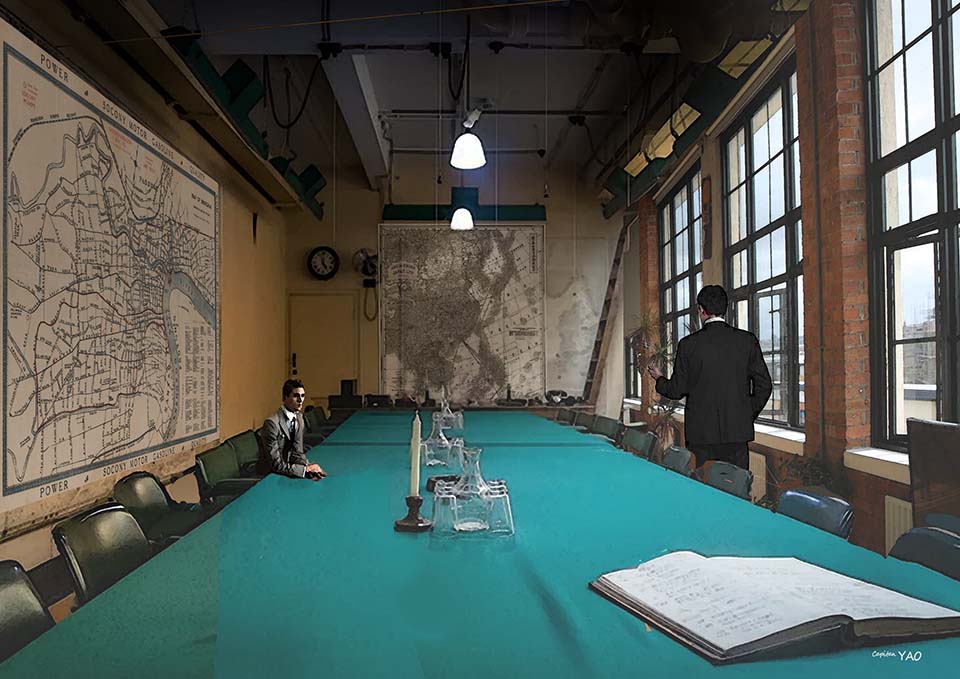
(Figure 2-10-5) Willie is giving a mission briefing to Paul Dragon in the intelligence team's conference room.
The next day, I went to the intelligence team's office again. Willie gave me a work briefing and assigned me my future tasks. His first words were, "Don't tell anyone you work here. To the outside world, this is just a private residence!"
Oh no, I've already given Annie my phone number and address.
"Secondly, don't let people tell you you're a Royal Navy officer by your appearance!" Having learned my lesson yesterday, I changed into civilian clothes today.
"Third, unless you're on a business trip or vacation, you'll need to write a weekly work report; otherwise, you can arrange your time as you see fit!"
"Sounds pretty good!" I interjected, asking Willie, "So, what's my mission?"
"Don't rush! Let me first explain the situation of our naval intelligence group. We use the consulate as a cover to collect intelligence on the navies of various countries in China, but it's not necessarily limited to the navy. For example, as I mentioned yesterday, Chiang Kai-shek went from being a red general to leaning towards the West overnight, which was orchestrated behind the scenes by our naval intelligence group."
"I met Chiang Kai-shek in Kuangchow in 1923. It was my father who suggested to Sun Yat-sen that he be sent to the Soviet Union for an inspection," I said.
"In fact, Japanese spies knew long ago that Chiang Kai-shek's 'Red General' was a fake, and their aim was to obtain Soviet aid. They relied on the accounts of Chiang's closest associates, including Dai Chuanxian, Wu Tiecheng, and Zhang Jingjiang. Unfortunately, the Japanese high command was rigid in their thinking and refused to believe them, thus missing the opportunity. We, on the other hand, traced Chiang Kai-shek's stock speculation in Shanghai and deduced that if the Jiang-Zhe financial magnates could provide financial assistance, Chiang Kai-shek would prefer the West to the Soviet Union. The key to this change was the Nanjing Massacre. The Communist Party representative instigated the revolutionary army to burn, kill, and loot Western industries, which alerted Chiang Kai-shek that his troops were out of control. This led him to launch the April 12 Incident to purge the workers' pickets when he entered Shanghai, officially siding with the West."
Willie lit a cigar and continued, "Let's talk about Shanghai. Shanghai is China's largest metropolis. The International Settlement and the French Concession here are areas that the Chinese government cannot control. On the contrary, the more intense the warlord wars are outside, the more prosperous our concessions become. Most of China's industry is concentrated in Shanghai, so the workers have become a breeding ground for the Communist Party. Their anti-Western tendencies are something we need to pay special attention to. However, Shanghai's businessmen still tend to be Western, and many of them live in the concessions."
"In addition, there is another force, the Ch'ing Gang, a triad. I am not clear about their true political stance, but last year Chiang Kai-shek used the Ch'ing Gang to kill a lot of workers' pickets in Shanghai, so I think they are more inclined to support us."
When Willie was talking about the Shanghai underworld, it reminded me of Annie's godfather, Huang Jinrong.
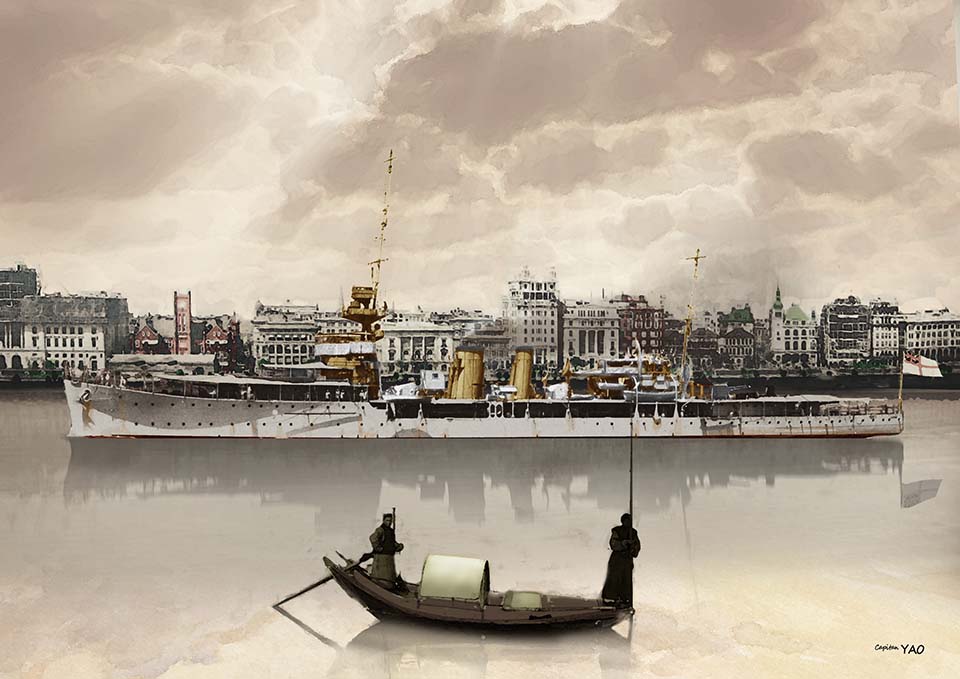
Willie pulled open the door panel on the wall, revealing a map inside, and said, "Currently, we have a detachment of the Far East Fleet in Shanghai. We usually have at least one cruiser and several destroyers stationed there. In addition, we have an inland gunboat squadron patrolling the Yangtze River, reaching as far as Chongking. Other countries with warships stationed in China include Japan, the United States, France, and Italy. As for the Chinese navy, it's insignificant and not a major concern. You should pay special attention to the Japanese, especially this person: Colonel Kenji Doihara, the head of Japanese intelligence in Tianjin. He's a ruthless character!"
I looked at the photo Willie had left on the table. It was a man with a broad face and thick eyebrows who looked somewhat Chinese. This guy would be very suitable for intelligence work in China. He would be hard to spot among a large group of Chinese people, unlike us foreigners who are so obvious.
"Before leaving Shanghai for Moscow, Mr. M specifically instructed us to keep an eye on this guy; they seem to be plotting something lately!"
"Oh? Mr. M has already left?" I asked.
Mr. M was assigned to Moscow as the intelligence chief. Before World War I, Britain and Russia were allies with good channels for intelligence exchange and cooperation, but this was completely severed after the Russian Revolution of 1917. Diplomatic relations were not re-established until after Lenin's death in February 1924, but intelligence work had never been restored. Recently, the Soviet Union under Stalin's rule underwent significant changes, and the higher-ups were eager to rebuild the intelligence organization. Because Mr. M had worked in St. Petersburg during World War I, he was urgently transferred from China to Moscow.
Unexpectedly, another of my Eton classmates, Ian Fleming, also arrived in Moscow in 1929 as a journalist and was recruited by Mr. M as an MI6 agent. We became colleagues, but at the time we were unaware of each other's identities.
"If that's the case, what is the attitude of the British Empire? And what is our reason for helping the Japanese bomb Marshal Zhang?"
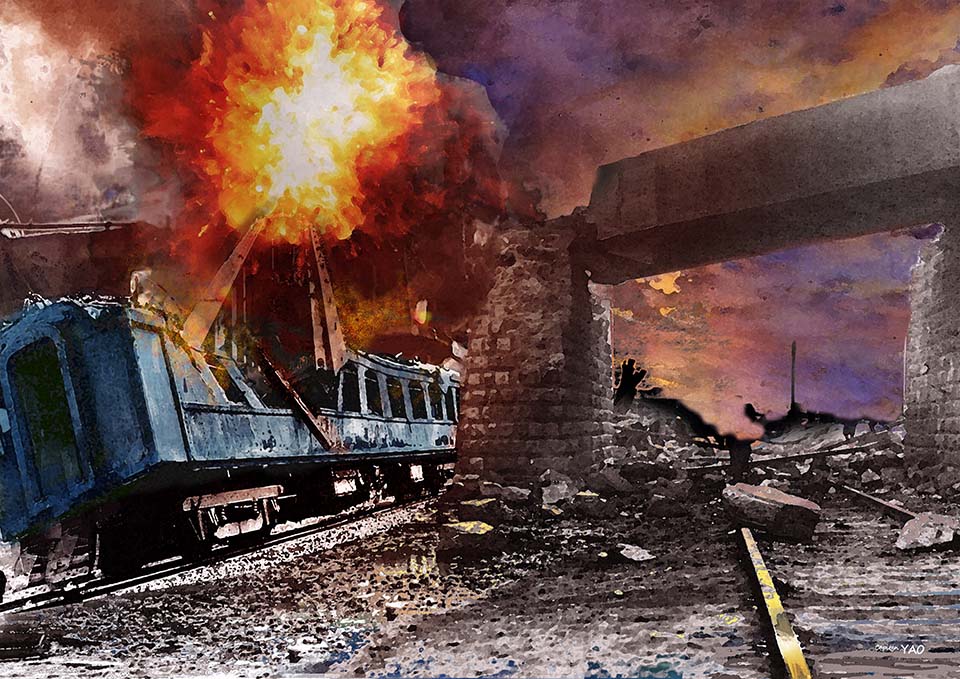
"How did you find out too? This is top secret, you absolutely mustn't tell anyone..." Willie was taken aback, and whispered in my ear, "Our starting point in this matter is basically the same as the Japanese's, which is to never let the Marshal leave the pass. So we cooperated with the Kanton Army to create the Huanggutun Incident. But our destinations are different. We don't want the Marshal to leave the pass, declare independence, and completely side with the Japanese. The Japanese, on the other hand, plan to simply kill the Marshal so that they can control the Young Marshal themselves."
"Hahaha! The Japanese are dreaming! How could the young marshal be so easy to control?" I laughed.
How can you be so sure?
"Willie, do you know how I got my Chinese name, "Long Pao Lo"?
"I don't know!" Willie shook his head and said.
Let me tell you a story.
So I told Willie the story of how I was kidnapped in Peking last year and taken to Tsingtao, where I joined the Northeast Navy's air force to bomb Shanghai, how Marshal Zhang personally named me "Long Pao Lo" and made me his squadron leader, and how I was framed and fled to Hong Kong to start an airline. He was dumbfounded.
"Your story is truly amazing!" Willie said.
"I know the young marshal's temper all too well. He'll turn on anyone who tries to control him, even his own father!" I said. "I suspect he might do something earth-shattering even before the Japanese hang a puppet on him!"
"Perhaps we should send you to Mukden to have a talk with the young marshal?" Willie said.
"What are we going to talk about? Talk about how we supplied explosives that allowed the Japanese to blow up his father?"
"At the very least, we need to find a way to prevent him from siding with the Japanese! We were tricked by the Japanese in Huanggutun, don't you want to get revenge?"
As expected, my superiors agreed to Willie's suggestion, and I was ordered to go to Mukden at the end of September to meet with Marshal Zhang. I was being too talkative; this was a mission that put my life in my hands. After the Huanggutun Incident, I couldn't predict how the Marshal would react when he met me, but I would never forget the incident last year when his father, Marshal Zhang, sent troops to search the Soviet embassy and execute Li Dazhao.
|