Dynasty Following the Boxer Rebellion in 1900, the princes, nobles, and ministers of the Ch'ing Empire reversed their previous xenophobic attitudes and began to curry favor with foreigners. Meanwhile, the issue of reform was brought to the forefront. Issues such as constitutionalism, parliamentary elections, and the abolition of the imperial examination system—considered treasonous during Kang Youwei's "Hundred Days' Reform" in 1898—were now openly discussed in the imperial court. Empress Dowager Cixi also began direct contact with Westerners, even summoning the two daughters of the ambassador to France, Yu Geng, Yu Deling and Yu Rongling, to the palace to serve as ladies-in-waiting and translators. The Ch'ing Empire seemed to be moving towards a more enlightened direction.
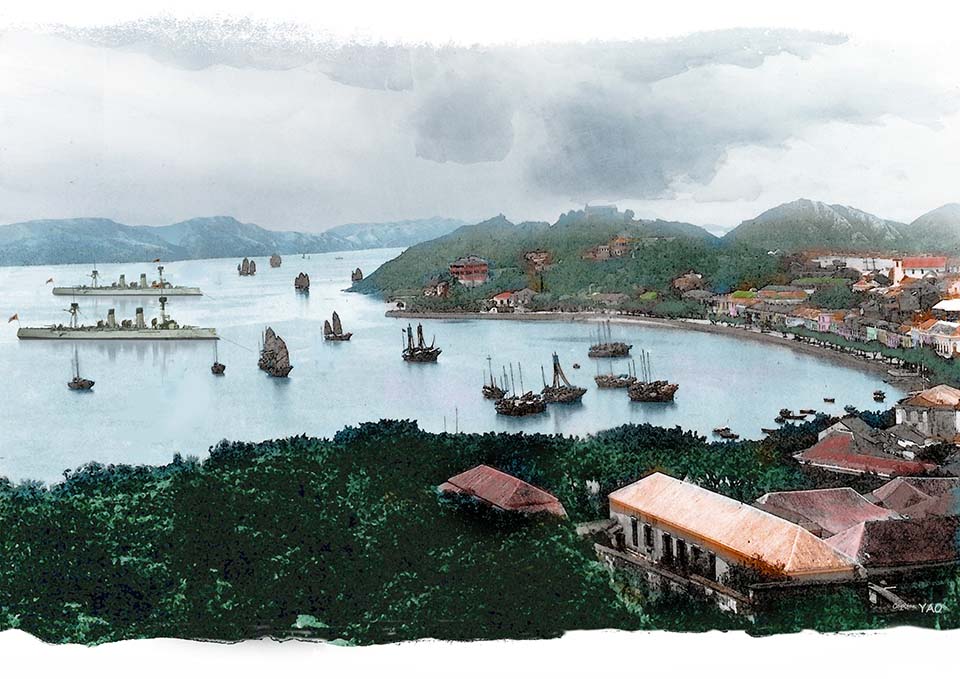
n 1907, He Pinzhang led the cruisers "Hai Rong" and "Hai Chou" to visit Southeast Asian ports such as Saigon and Singapore to comfort overseas Chinese. In 1908, the Portuguese in Macau illegally dredged the sea and reclaimed land. The Qing government considered this a violation of the lease agreement and negotiated with them. During the negotiations, the cruisers "Hai Chou" and "Hai Rong" were stationed at the Macau border to deter them, and the Portuguese Macau government finally backed down. In 1909, the ship "Hai Qi" led the "Hai Rong" to visit Hong Kong, Singapore, Jakarta, Saigon and other places in Southeast Asia.
By this time, the C'ing court seemed to have mastered the art of "gunboat diplomacy." The underlying reason was that officials of the Zongli Yamen (Foreign Ministry) frequently consulted my father on international affairs, effectively making him the Ch'ing court's underground diplomatic advisor. This gave him the opportunity to manipulate policy in a direction favorable to Britain. For example, the aforementioned incidents involved Portugal, France, and the Netherlands. My father advised the Ch'ing court to adopt a firm stance and not allow foreigners to take advantage of them. These foreigners, of course, did not include Britain, as Britain was the leading Western power in China, and maintaining stability was paramount. Any provocations needed to be dealt with immediately to prevent future troubles. If Britain itself was unable to intervene, it could secretly support the Ch'ing court as the host nation. Furthermore, my father encouraged the Zongli Yamen to send warships to conduct "gunboat diplomacy." Initially, Ch'ing officials hesitated, but my father not only encouraged them but also assured them that the Royal Navy would provide strong support behind the scenes. With this backing, they dared to take the plunge.
Meanwhile, my father also noticed the situation in the South China Sea. In 1908, Li Zhun, the Admiral of the Canton Navy, saw the Japanese flag being raised over Pratas Island (Dongsha Island) while patrolling the sea. He discovered that 120 Japanese men, led by the Japanese merchant Nishizawa Yoshiji, had illegally built houses, factories, and light rails on the island, mined guano, and fished. They even erected a wooden monument naming the island "Nishizawa Island." Li Zhun considered the situation serious and informed Zhang Renjun, the Governor-General of Canton and Kuang-hsi, to protest to the Japanese consul. In early spring of 1909, Wu Jingrong, a member of the Nanyang Fleet, boarded the "Fei Ying" ship to the island to collect evidence. In early summer, he again led a customs patrol ship to the island to take photographs and collect evidence to confirm the facts. Due to the Qing government's firm stance, on October 11, 1909, the two sides signed the "Treaty on the Dongsha Issue." The Chinese government purchased the Japanese merchant's assets for 160,000 taels of silver, and the Japanese paid 30,000 taels as compensation for the damage to the temple property on the island. This established China's sovereignty over Pratas Island and expelled all Japanese from the island.
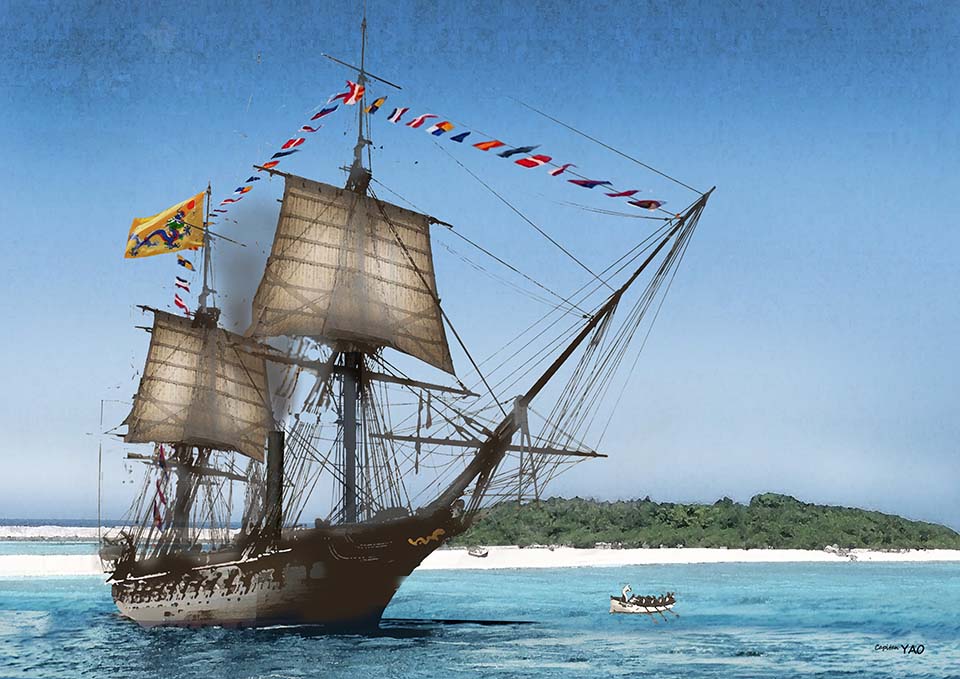
(Figure 1-5-2) In 1909, he led three warships, "Fupo", "Chenhang" and "Kwankin", to patrol the islands in the South China Sea.
Inspired by the example of Pratas Island , Li Zhun decided to conduct a comprehensive survey of the islands in the South China Sea. In 1909, he led three warships—the Fupo, Chenhang, and Kwankin—under the command of Lin Guoxiang, Wu Jingrong, and Wang Rentang, along with surveyors and agricultural and fisheries experts, to the Paracel Islands (Xisha Islands) for investigation. They used modern surveying techniques to create nautical charts and named the islands and reefs after the warships. After returning to Guangzhou, Li Zhun also held the "South China Sea Islands Exhibition" at the Admiral's Office and published the nautical chart atlas "Illustrated Explanation of the Canton Naval Defense Fortresses" to proclaim to the world. This was entirely in accordance with international practice, thereby establishing China's sovereignty over the Paracel Islands.
My father was astonished to discover, from the telegrams of the Zongli Yamen (Foreign Ministry), that such a capable minister existed among the Ch'ing officials. However, Chinese history has not given Li Zhun the recognition he deserves. This is because of Huang Xing's Kwangchow Uprising on March 29, 1911. Li Zhun, with his talent, quickly quelled the unrest among the revolutionaries, causing numerous deaths and injuries among the party's elite. Therefore, the official history of the Kuomintang inevitably speaks ill of Li Zhun, even demonizing him. In fact, the failure of the Kwangchow Uprising was largely due to the revolutionaries' chaos and incompetent command. The only achievement of the Kwangchow Uprising was its propaganda, using the blood of young people to arouse national attention; tactically, it was a complete failure.
When Li Zhun came to Beijing in 1912 to serve as Yuan Shikai's military advisor, my father made a special trip to visit him, and the two had quite a few interactions. Later, due to the exclusion by the revolutionaries, Li Zhun retired to Tiantsin and lived as a recluse, spending his days entertaining himself with calligraphy and writing plays. When I traveled to Tiantsin in 1927, my father specifically asked me to bring gifts to Li Zhun's residence on his behalf.

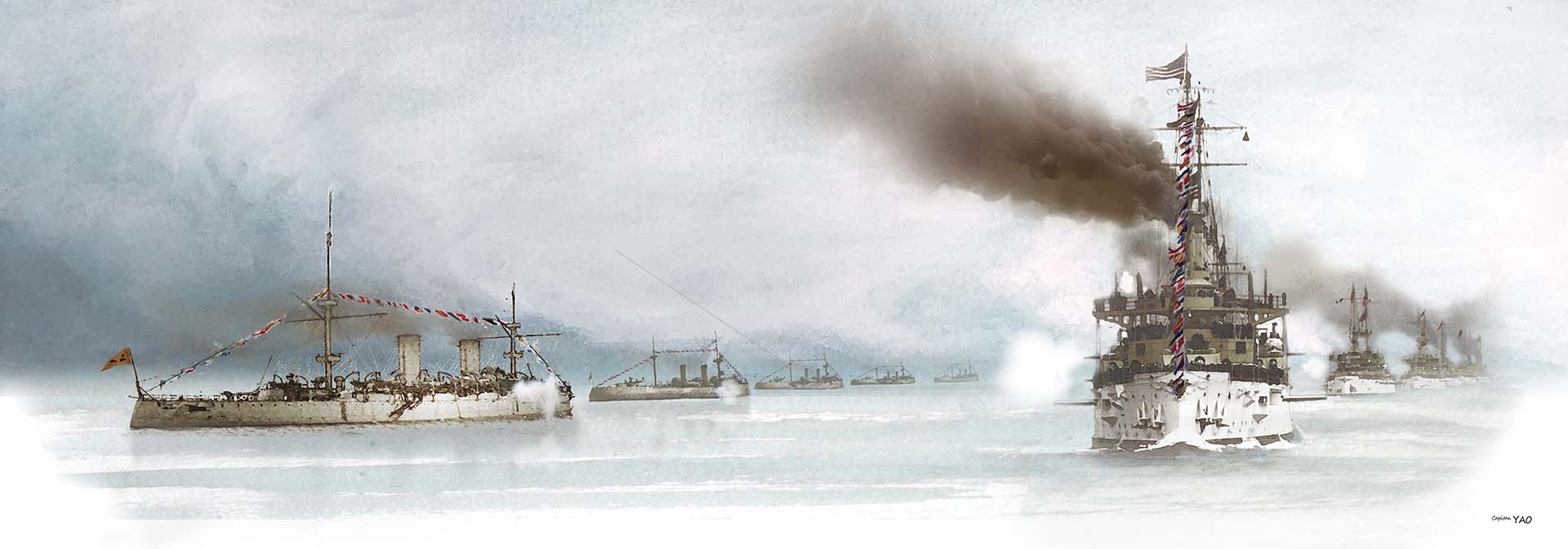
(Figure 1-5-3) The U.S. Navy's "Great White Fleet" visited Amoy during its round-the-world voyage.
In 1907, to promote American power, U.S. President Theodore Roosevelt assembled more than ten warships and armored cruisers from the Atlantic and Pacific fleets to form the "Great White Fleet," which toured the world and visited ports around the world. In China, it chose to anchor in Amoy, where the Ch'ing government organized a welcoming event, making it a major naval event at the time.
On December 16th of that year, the Great White Fleet set sail from the Servton Naval Base in Virginia, USA. The fleet sailed south along the Atlantic Ocean, visiting Brazil and Argentina, then crossed the Strait of Magellan and sailed north through Chile, Peru, and Mexico, arriving in San Francisco on the west coast of the United States for a two-month rest before setting sail again, passing through Honolulu, Hawaii, and then visiting New Zealand, Australia, the Philippines, and Yokohama, Japan, before finally arriving in Amoy, China.
The so-called "Great White Fleet" is because all the warships are painted a bright white. The fleet consisted of 16 warships, but not all of them came to China. Only eight ships visited China, including the USS Louisiana (BB-19), USS Ohio (BB-12), USS Missouri (BB-11), and USS Virginia (BB-13) of the Third Combat Ship Division, and the USS Wisconsin (BB-9), USS Illinois (BB-7), USS Kentucky (BB-6), and USS Kearsarge (BB-5) of the Fourth Combat Ship Division. In addition, there were six transport and supply ships, as well as medical ships, supply ships, workboats, etc., with a total of about 6,000 officers and sailors. The eight warships of the first and second combat squadrons remained in Subic Bay, Philippines.
On October 26, 1908, the Ch'ing court dispatched Prince Yulang, holding the rank of "Minister of Labor and Inquiry," and Liang Dunyan, Vice Minister of Foreign Affairs, to Amoy aboard the cruiser "Haichi," accompanied by Sa Zhenbing, Commander-in-Chief of the Northern and Southern Fleets. My father also accompanied them on the ship as part of a diplomatic mission. This large-scale display of American power was actually aimed at Britain, because before this, the United States was considered a second-rate country far away by Europeans. In 1900, during the Spanish-American War, the United States occupied the Spanish colony of the Philippines, establishing its first base in the Far East and becoming a potential challenger to Britain's dominant position in China. My father, of course, knew the reasons behind this show of force, and therefore had no choice but to come.
At 8:00 AM on October 30th, the visiting Chinese fleet arrived outside Amoy Port. At 9:00 AM, Chinese Navy Admiral Sa Zhenbing led four new cruisers, "Haichi," "Hairong," "Haichow," and "Haichen," along with the destroyer "Feiying," the training ship "Tongchi," the gunboats "Fu'an" and "Yuankai," the customs patrol ship "Bingzheng," and the customs submarine cable laying vessel "Feichie," to meet the Chinese fleet and guide them to anchor in the waters between Daerdan Island and Erdan Island.
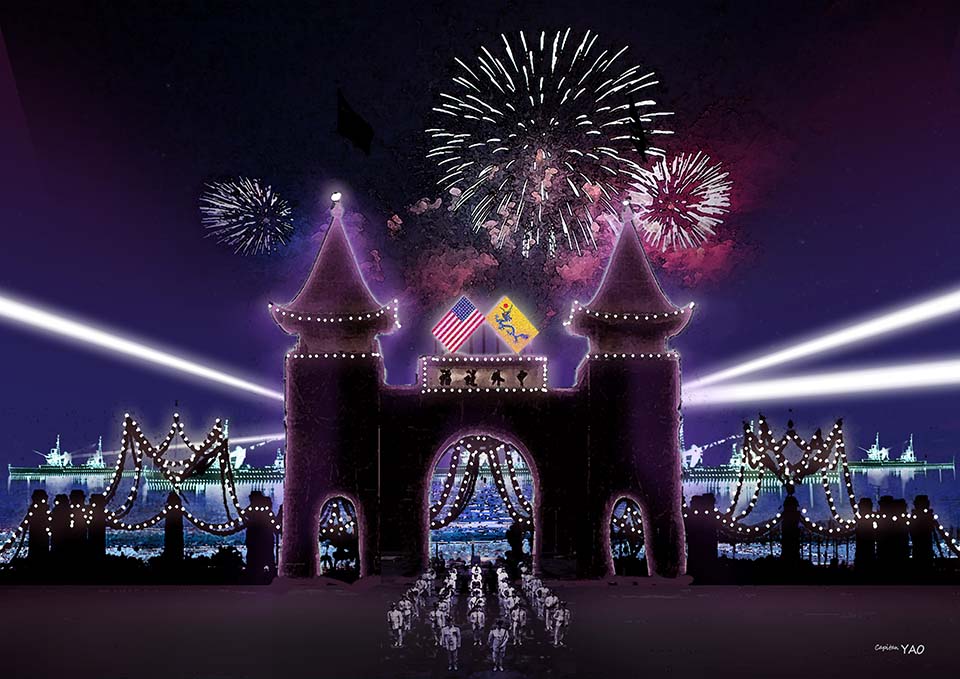
Naval officers and sailors from both the Ch'ing and American navies exchanged ideas at a temporary camp set up by the Ch'ing government on Amoy Island. The Feichie and Bingzheng were even opened to the public as display ships. During their stay, which coincided with Empress Dowager Cixi's birthday, both warships were fully decorated, adorned with flags, and fired salutes in celebration. My father seized the opportunity to visit every American warship. He had an excellent memory; although he couldn't take notes on the spot, he meticulously recorded everything afterward—he was a natural-born spy.
After leaving China, the Great White Fleet arrived at Subic Bay in the Philippines on November 7th, where it rendezvoused with the First and Second Squadrons for reorganization and training. The entire fleet then passed through Ceylon, crossed the Red Sea, and entered the Mediterranean Sea via the Suez Canal. It visited ports in Turkey, Greece, Italy, and France, before finally passing through the Strait of Gibraltar into the Atlantic Ocean to return to the United States. China's reception of the Great White Fleet demonstrated the demeanor of a mature nation integrated into the international community. Unfortunately, the time was not right; the Ch'ing Empire was already in its final, fleeting phase.
Shortly after my father returned to Tiantsin, he received a telegram from the legations ordering him to go to Peking immediately. It turned out that on the morning of November 13th, Empress Dowager Cixi summoned the diplomatic corps in Peking and announced the investiture of Puyi, the three-year-old son of Emperor Guangxu's younger brother Zaifeng, as the Crown Prince. Upon hearing this news, the Legation Quarter erupted in chaos, with telegraph machines from various embassies constantly reporting this latest development in Peking's political arena to their respective home countries. At the time, the various countries leaned towards opposition but were reluctant to openly express their views. Because my father was more familiar with the situation in the court, he was summoned to the legations for discussion.
|