My father, Sir James Draken, was born into an English noble family. His ancestors could be traced back to the Vikings who invaded from the north in the 8th century. "Draken" and "Drake" are of the same origin, both coming from the Latin word "draco," which means "dragon." The Draken family has a tradition of adventure, and in the 16th century, during the reign of Elizabeth I, they even produced several famous pirates, including Sir Francis Drake. The king even called the family "those Draken madmen." My father obviously inherited this family tradition along with his hereditary title. The Draken family had connections with the East very early on. My great-uncle, Howard Draken, became one of Hong Kong's earliest "taipan" (master lords) in the mid-19th century by selling opium to China. However, he was fatally wounded in a turf war with another taipan, Dirk Struan, and his entire fortune was seized. My father developed a fascination with the East from a young age, hearing stories of his great-uncle's adventures from his family. During his school years, he devoted himself to studying Chinese and Oriental history.
My father studied Chinese and Sinology under Herbert Allen Giles while studying at Oxford University. Giles was our neighbor in Oxford; his father was a local clergyman. Giles was not only a scholar, writer, and Chinese educator, but also served as a translator and consul in consulates in Tientsin, Hankow, Kwangchow, Swatow, Amoy, Foochow, Shanghai, Tamshui, and Ningpo for twenty-five years until he returned to England in 1893. It was during this time that my father studied Chinese under him. Giles's experience in China deeply influenced my father, and he even recommended my father for a position in the Foreign Office. When asked which region he preferred for posting, my father answered without hesitation: "China, of course!"
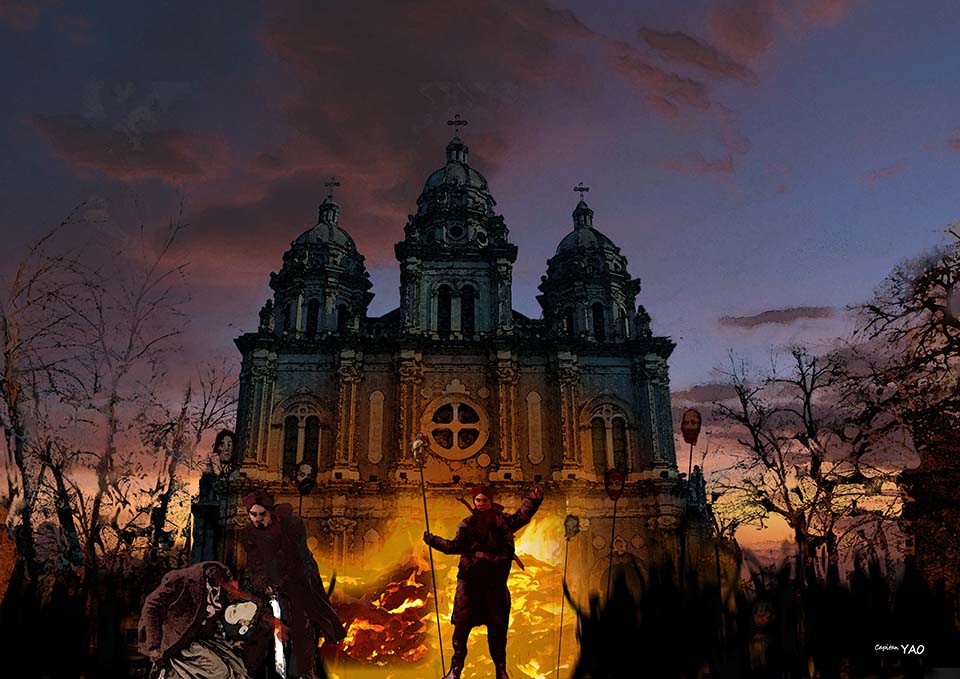
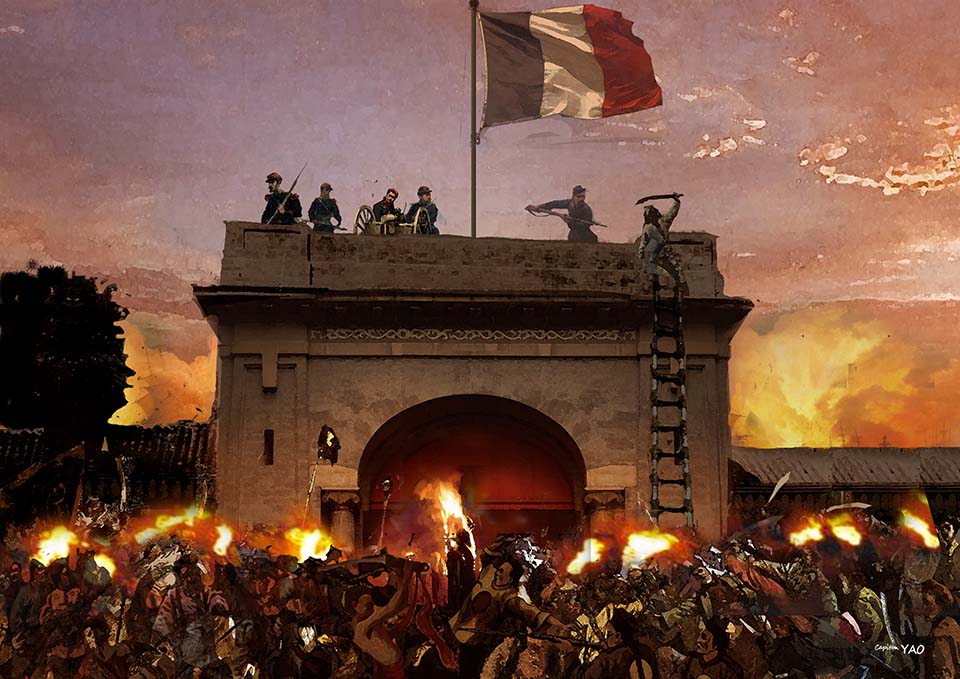
In 1900, he finally achieved his goal of becoming an official at the British Consulate in Peking. In early June of that year, he and his newlywed wife, Elizabeth, disembarked at Taku from London by ship. However, the Boxer Rebellion, an extremely xenophobic movement, had broken out in northern China at that time. My father was eager to go to Peking due to his duty. Ignoring advice, he left the Allied Forces' protected area in Tianjin and headed to Beijing. On the way, he indeed encountered the Boxers. His newlywed wife was captured by the bandits and beheaded on the spot with a large knife. He was rescued by Herbert Clark Hoover, an American engineer working in the Kaiping Coal Mine in Tientsin. He managed to escape and seek refuge in the nearby Allied Forces' positions, thus escaping danger.
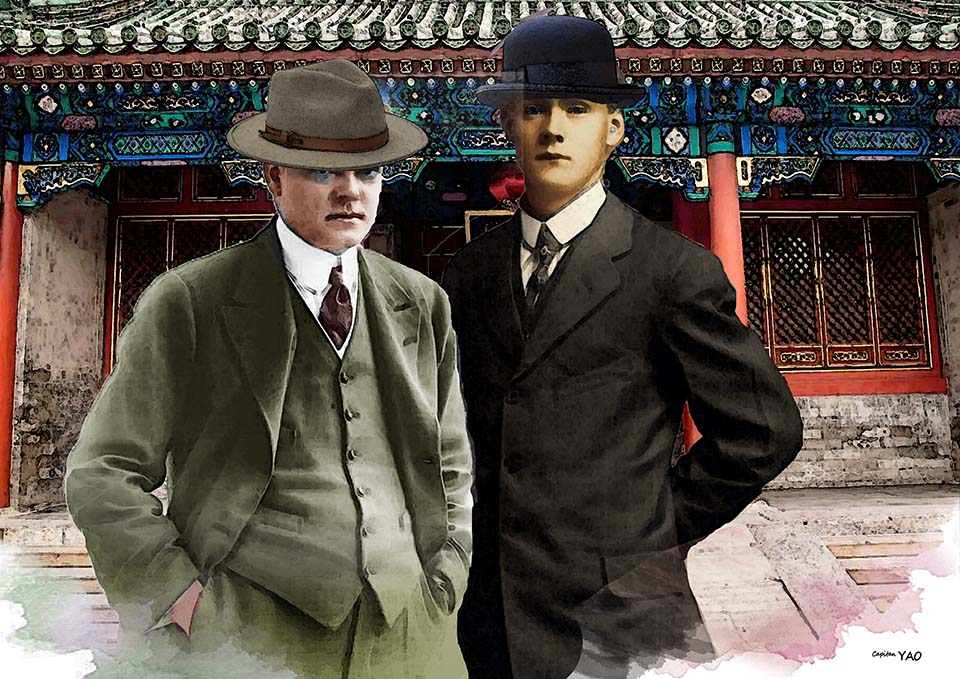
(Figure 1-1-4) American engineer Herbert Hoover (left) and British legation official James Draken (right) became sworn brothers during the Boxer Rebellion. Herbert Hoover later became the 31st President of the United States.
Also escaping with him was a Chinese Christian from Peking. When he learned that my father still insisted on going to Peking, he was deeply moved and secretly drew a map for my father. It turned out that this Chinese man had previously worked at the British Legation and knew that there was a gate underwater in a certain part of the city wall, which was the outlet of the drainage channel connecting the Legation Quarter to the outside of the city. From there, it was easy to attack the inner city without being discovered by the defenders.
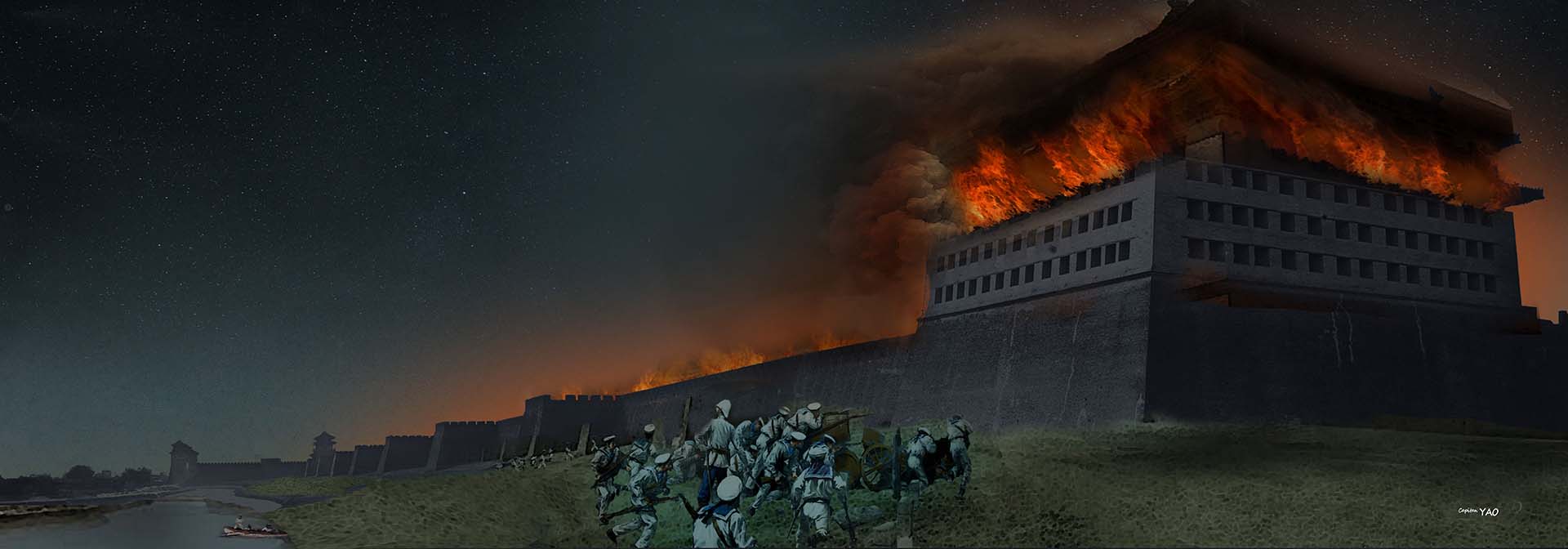
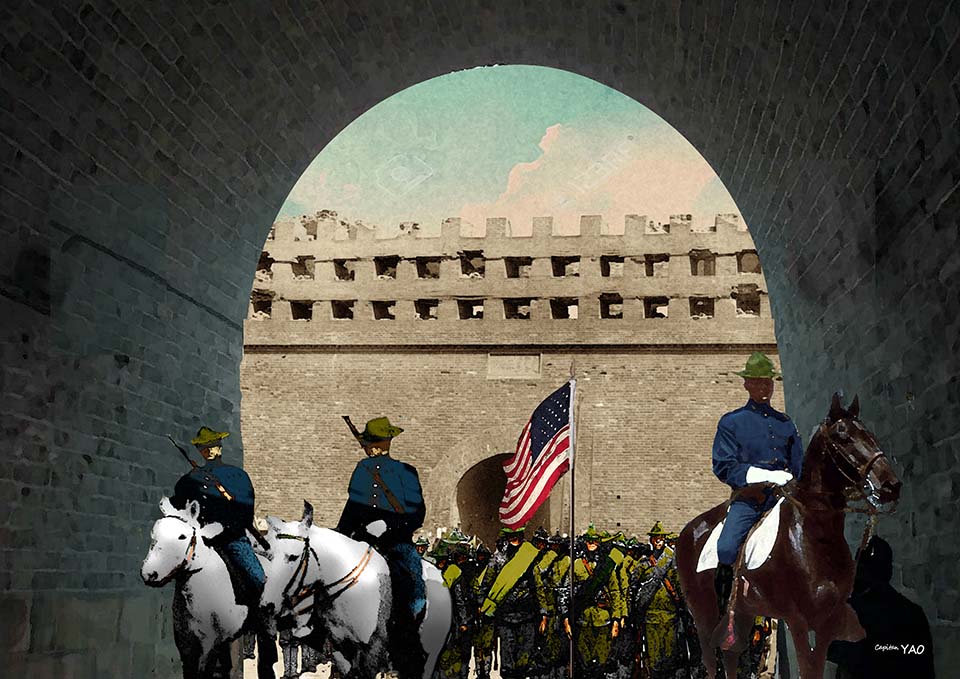
My father arrived in Peking with the attacking British troops and personally found the iron gate to break it open, allowing the British army into the inner city. On August 14th, he walked across mountains of corpses to take up his post in the Legation Quarter in the Eastern Suburbs, which had been besieged for 55 days. The British Minister to China at the time, Mai Donnell RG, described my father thus: "He led the troops to liberate the Legation Quarter!"

As soon as my father took office, he was busy negotiating a peace treaty with the Chinese government. Finally, on September 7, an agreement was reached in which the Chinese government paid an indemnity of 450 million taels of silver, which was equivalent to five years of China's total income. With interest, it would take about forty years to pay off. My father also received part of the compensation because his wife was killed.
How was the figure of 450 million taels calculated? It turns out that China at the time claimed to have 450 million people, and each person was responsible for paying one tael of salt – that's how it came about. But here's the question: China didn't have a rigorous household registration system, and a census was impossible. How was the population figure of 450 million calculated? My father, curious, asked a British official at the Qing Dynasty's customs office. The official replied, "With salt!" Because there's a rough estimate of how much salt a person consumes per day, the salt tax revenue was used to estimate the national salt consumption, and then divided by the individual salt consumption, resulting in the figure of 450 million. My father was greatly astonished upon hearing this.
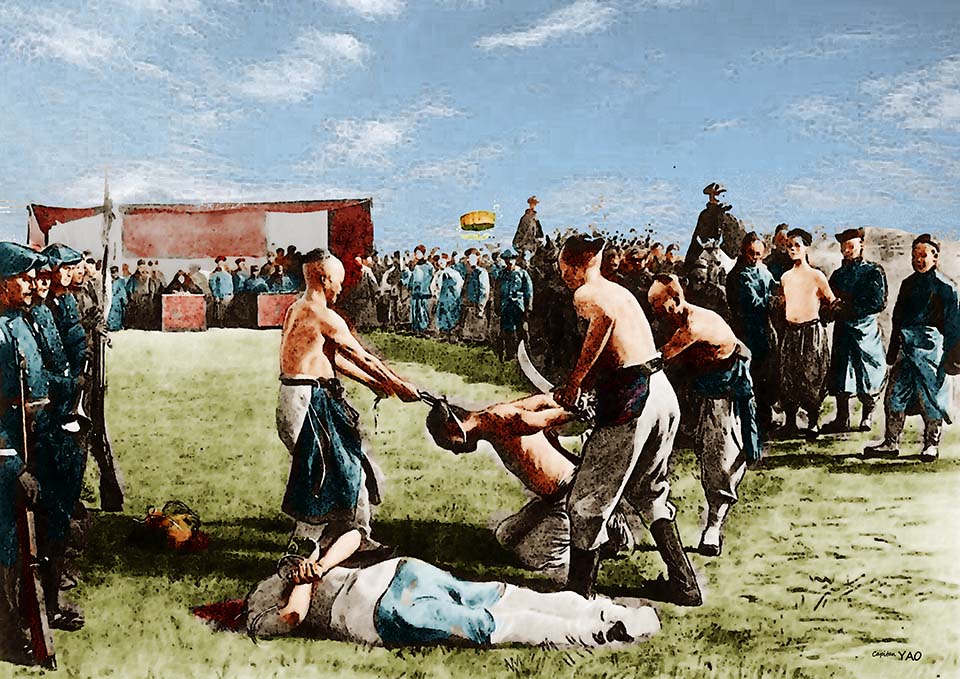
In addition, China also had to execute ministers involved in the matter, as well as many leaders of the Boxers. On such occasions, the Chinese government would invite foreign diplomats to be present to supervise and witness. So at that time, my father went to the execution ground almost every day to watch the beheadings. In the end, he couldn't even eat anymore.
Of the ministers executed, only two were beheaded, four had already committed suicide, and the remaining three were "given death" by the emperor. This was quite novel to Westerners, so my father went to see it. There were many ways to be given death, and this time it was by suffocating them by sticking wet paper to their mouths and noses. Before dying, the condemned had to kneel and kowtow to the palace to thank the emperor for his boundless grace, which was quite unbelievable. My father explained that in China, if the emperor agreed to let one head of the household die to bear the punishment for the entire clan, it was considered a very merciful act, so they had to kowtow in gratitude; otherwise, their entire family would be executed!
"Imperial execution" was a privilege reserved for high-ranking officials in the court; everyone else was beheaded. Unlike the mechanized guillotine of the West, beheading in China involved the condemned kneeling with their hands bound behind their backs and a wooden plaque bearing their name and crimes. Two assistants would gag the condemned with a rope, crossing it behind their head and pulling it taut. The assistant behind would tighten the rope binding their hands to allow the neck to extend horizontally. The executioner, gripping a large sword, would then swoop down, instantly separating the head from the body, blood spurting onto the ground. According to Chinese custom, severed heads were displayed publicly for several days, sometimes propped high on bamboo poles, sometimes hung in iron cages from lampposts, in crowded places like streets, markets, or city gates.
While busy dealing with the aftermath of the Boxer Rebellion, early 1901 also brought the death of Queen Victoria and the accession of a new emperor. This was an important task for the embassies abroad, as they had to handle various celebrations of the accession after receiving condolences from heads of state and dignitaries of friendly nations. Because Queen Victoria had reigned for so long, such an event had not been held for over sixty years, and everyone was inexperienced, resulting in several months of chaotic and hectic work.
My father believed that Empress Dowager Cixi's position was similar to that of Queen Victoria. They ruled around the same time, but while Her Majesty's power stemmed from a formal succession, Empress Dowager Cixi's power came from court intrigue. However, this also demonstrated her competence and shrewdness. After the fall of Peking, Empress Dowager Cixi and Emperor Guangxu fled to Sian and did not return to Peking until early 1902.
|